


Squeaking or clunking front end causes usually come from parts that move under load—suspension joints, rubber bushings, steering links, brakes, or even a wheel/tire issue that “talks” when weight shifts. The fastest path to an answer is matching the sound to the moment it happens: braking, turning, bumps, or steady cruising.
Next, you’ll learn how to separate a light squeak (often friction, dry rubber, or small movement) from a heavier clunk (often play, looseness, or metal-on-metal contact), so you don’t replace the wrong part.
After that, you’ll get a practical inspection flow you can do safely at home—what to look at first, what to touch, and what symptoms mean “stop driving and tow.”
Giới thiệu ý mới: Below is a systematic way to pinpoint the most likely culprit before you spend time, money, or effort on unnecessary repairs.
What are the most common squeaking or clunking front end causes?
The most common squeaking or clunking front end causes fall into five groups—suspension joints, rubber bushings, steering linkage, brakes/hardware, and wheel/tire or hub-related looseness—because these parts carry load and move every time the front end articulates.
To start, here’s a visual of a typical front suspension layout so you can map the sound to real components.
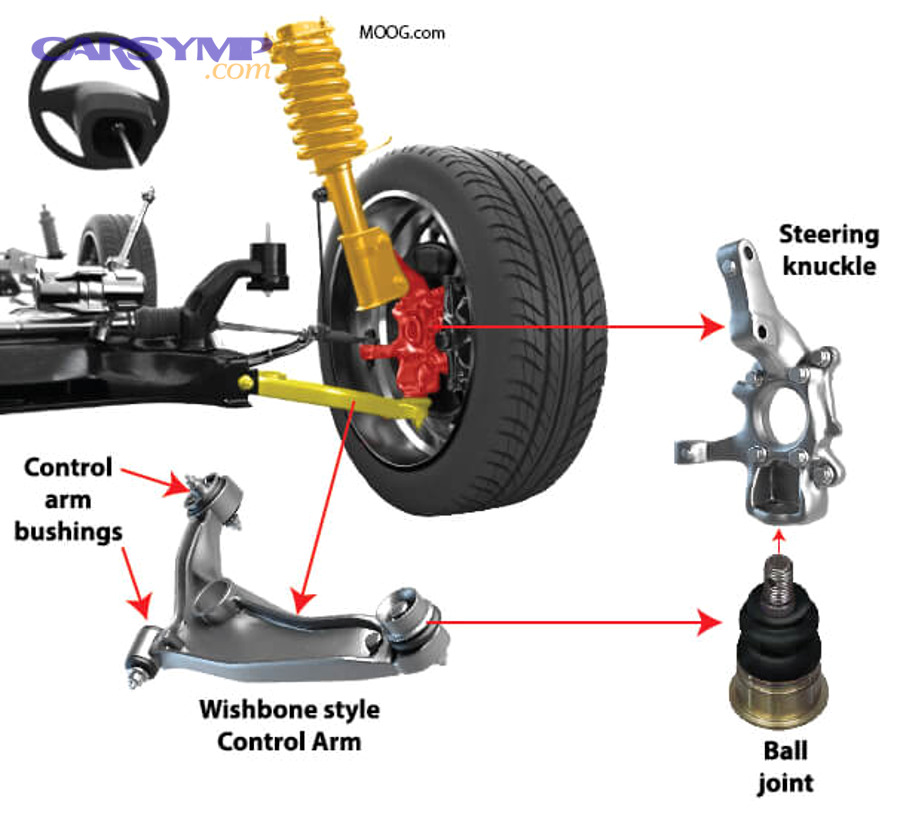
1) Suspension joints that carry vertical load
These include ball joints, strut mounts/bearings, and sometimes sway bar links. A squeak often shows up as a short “eeeek” when the wheel rises/falls; a clunk can appear when a worn joint shifts abruptly under a bump or during braking weight transfer.
Next, focus on whether the sound is tied to up-and-down movement (bumps, driveway transitions) because that strongly points to suspension articulation rather than steering-only movement.
2) Rubber bushings that twist under torque
Control arm bushings, sway bar bushings, and subframe mounts can squeak when rubber dries out or tears and the sleeve moves; they can clunk when the bushing allows a hard shift. Bushings are frequent offenders because they age from heat, oil exposure, and repeated twisting.
To connect the dots, if the noise appears when you brake or accelerate (front end “nodding”), bushings that control fore-aft movement jump to the top of the list.
3) Steering linkage that changes angle under load
Inner/outer tie rod ends and steering rack mounts can clunk when there’s play, especially over small bumps or when you quickly rock the steering wheel. Squeaks are less common here, but boots that lose grease can lead to friction sounds as parts articulate.
Then, confirm whether the sound happens during steering input at low speed (parking lot turns) because steering components are most stressed there.
4) Brake hardware and caliper movement
Loose pads, worn anti-rattle clips, sticking slide pins, or a caliper that shifts can create a sharp clunk right as you apply or release the brakes. Some brake-related squeaks also occur—especially if hardware is dry, rusted, or binding.
After that, watch for a “single clunk” the moment braking begins, which often indicates something taking up slack rather than a continuous rubbing squeak.
5) Wheel/tire, hub bearing, or fastener issues
A loose wheel, worn hub bearing, damaged wheel, or tire with uneven wear can make rhythmic noises that mimic suspension problems. A clunk can occur if something is truly loose; a squeak can happen when a tire slips slightly during steering or when a shield rubs intermittently.
Finally, always rule out basic safety items first—lug nuts torqued correctly and no obvious wheel wobble—because these can be dangerous if ignored.
How can you tell squeak vs clunk by when it happens?
You can tell squeak vs clunk by timing: squeaks usually track continuous rubbing or twisting during movement, while clunks usually happen at a single “load change” moment when a loose part shifts and hits its stop.
To make the diagnosis faster, use a simple “when it happens” grid and match it to likely systems.
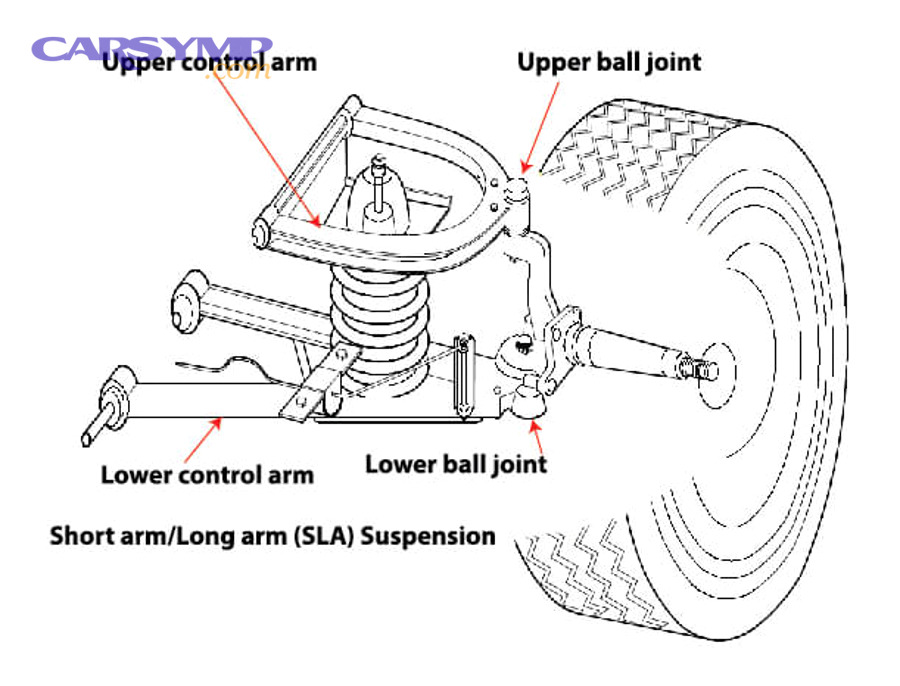
This table helps you connect the driving situation to the most probable source area so you can inspect in the right order.
| When you hear it | Sound pattern | Most likely area | Quick check that confirms/denies |
|---|---|---|---|
| First touch of brake pedal | Single clunk | Brake caliper/pads, control arm bushings | Repeat at low speed; listen for one-time “take-up” on apply/release |
| Turning into a driveway / over speed bumps | Creek/squeak or double clunk | Ball joints, bushings, sway bar links | Slow roll with windows down; note if it follows suspension travel |
| Parking-lot steering at low speed | Squeak or pop | Strut mount bearing, tie rods, rack mounts | Turn wheel left/right while stationary; listen at each corner |
| Small chatter bumps at 20–40 mph | Rattle/clunk | Sway bar links, loose brake hardware, tie rods | Light braking vs coasting over same road; compare changes |
| Steady cruising | Rhythmic hum/click | Wheel bearing, tire wear, shield rub | Change lanes gently; if it changes with load shift, suspect hub/tire |
Use the “repeatability test”
If you can reliably reproduce the noise with one input (brake tap, steering sweep, or a specific bump), you’re close to the answer. Specifically, a repeatable clunk on brake apply/release often points to something taking up clearance—hardware, bushings, or mounts.
Next, isolate one variable at a time (only steering, only braking, only bumps) so you don’t confuse overlapping symptoms.
Use the “left vs right load shift” clue
Many front-end noises change when weight moves to one side. For example, if a noise gets louder when turning left (loading the right side), the right-side joint/bearing/bushing often deserves extra attention.
After that, don’t assume—use this clue to prioritize inspection, not to declare a final verdict without checking.
Use the “temperature and moisture” clue
Squeaks often get worse in cold or after rain if rubber and friction surfaces behave differently. Clunks tend to be less temperature-sensitive and more related to mechanical play, though cold can stiffen bushings and make impacts feel harsher.
Then, note whether the noise fades after a few minutes of driving, which can hint at rubber compliance or lubrication effects.
Which suspension joints and bushings usually squeak or clunk?
The suspension parts most likely to squeak or clunk are ball joints, control arm bushings, sway bar bushings/links, and strut mounts because they pivot and twist constantly while supporting the vehicle’s weight and absorbing road impacts.
To visualize the components that commonly wear, compare a joint diagram with real-world wear patterns.
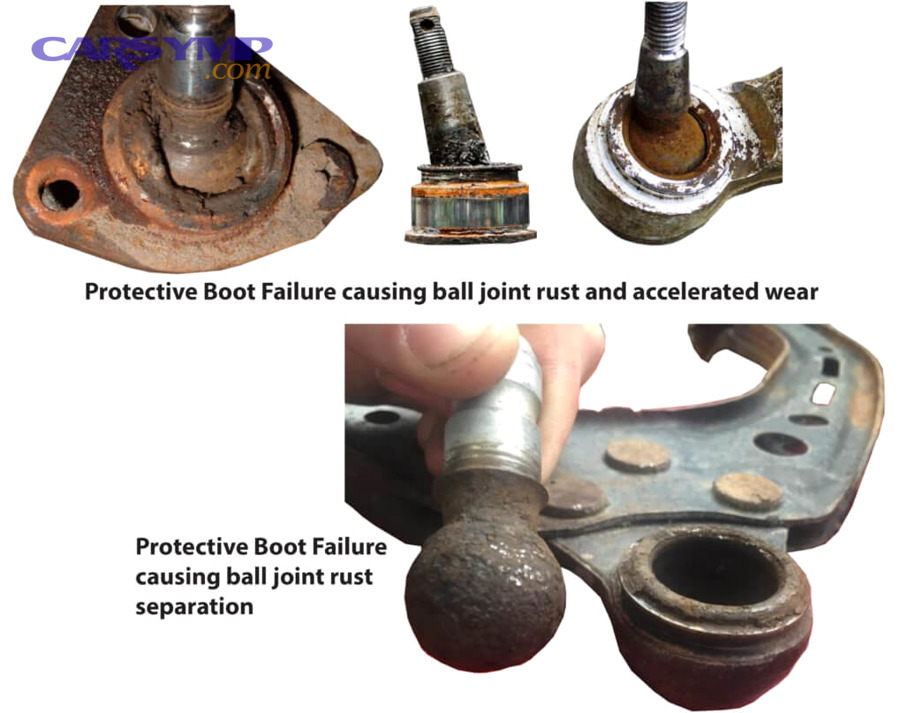
Ball joints: squeak when dry, clunk when loose
Ball joints can squeak when their protective boot cracks and lubrication is compromised, letting surfaces rub rather than glide. They can clunk when internal clearance grows enough that the stud shifts under load, especially over bumps or during braking dive.
Next, if you hear a deeper “thunk” over bumps plus vague steering feel, treat it as a safety priority rather than a comfort issue.
In many repair plans, people jump straight to ball joint replacement; the key is confirming play first so you don’t replace a joint that’s still tight while missing the real culprit nearby.
Control arm bushings: squeak from twisting rubber, clunk from shift
Control arm bushings can squeak when rubber dries, tears, or gets contaminated by oil, causing the bushing sleeve to move with friction. They can clunk when the bushing allows the arm to shift fore-aft or side-to-side during braking and acceleration transitions.
To anchor this to a real part, here’s what a typical bushing looks like.
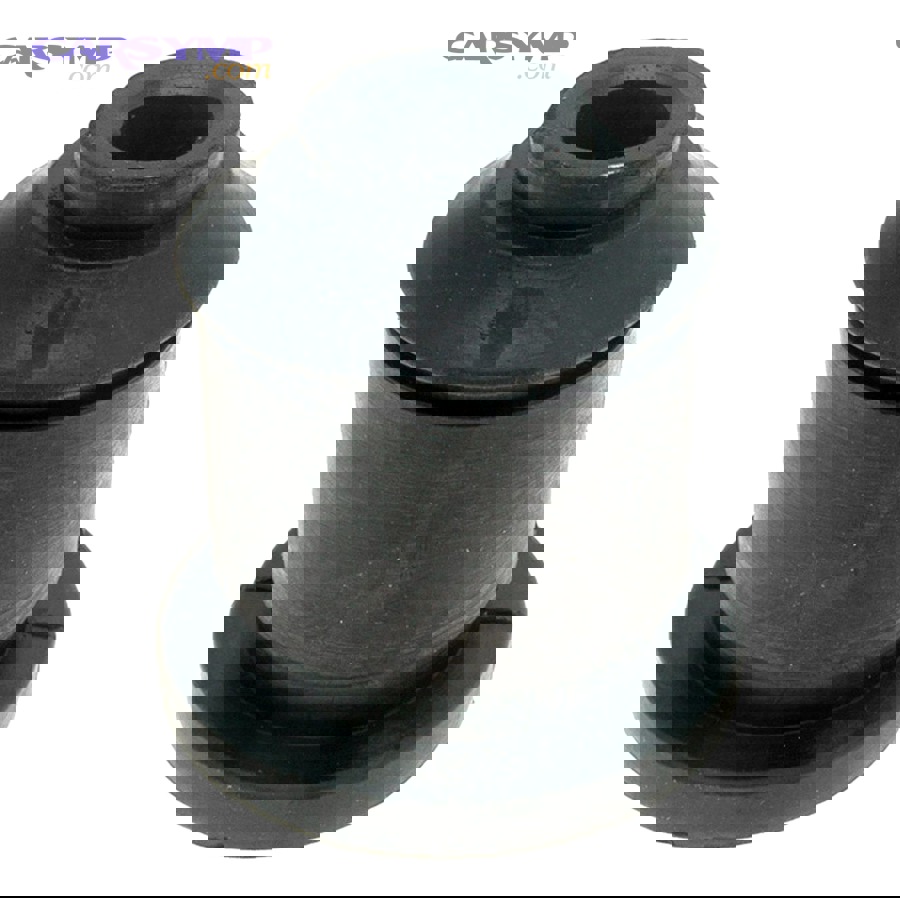
After that, pay attention to noises that happen at the same moment the car “sets” into braking or “lifts” out of braking—classic bushing-load-change timing.
Sway bar links and bushings: the “chatter bump” specialists
Sway bar links often clunk on small repetitive bumps because their joints see rapid angle changes. Sway bar bushings can squeak if dry or if the bar surface is rough/rusted where it rotates in the bushing.
Next, if the noise is a rapid rattle over rough pavement but almost silent on smooth roads, prioritize sway bar hardware.
Strut mounts and bearings: squeak or groan during steering
On many vehicles, the strut mount includes a bearing that lets the strut rotate when you steer. If it binds, you may hear a groan, squeak, or popping sensation during slow turns, sometimes felt through the steering wheel.
Then, listen during a stationary steering sweep: if the sound occurs without the car moving, the mount/bearing becomes a stronger suspect than lower joints that need suspension movement.
Can steering components create front-end clunks and squeaks?
Yes—steering components can create front-end clunks and sometimes squeaks because tie rod ends, rack mounts, and related joints can develop play, and that play reveals itself as a knock when steering force reverses or when bumps feed shock into the linkage.
To make this concrete, here’s a diagram showing inner and outer tie rod ends and where they sit in the steering system.
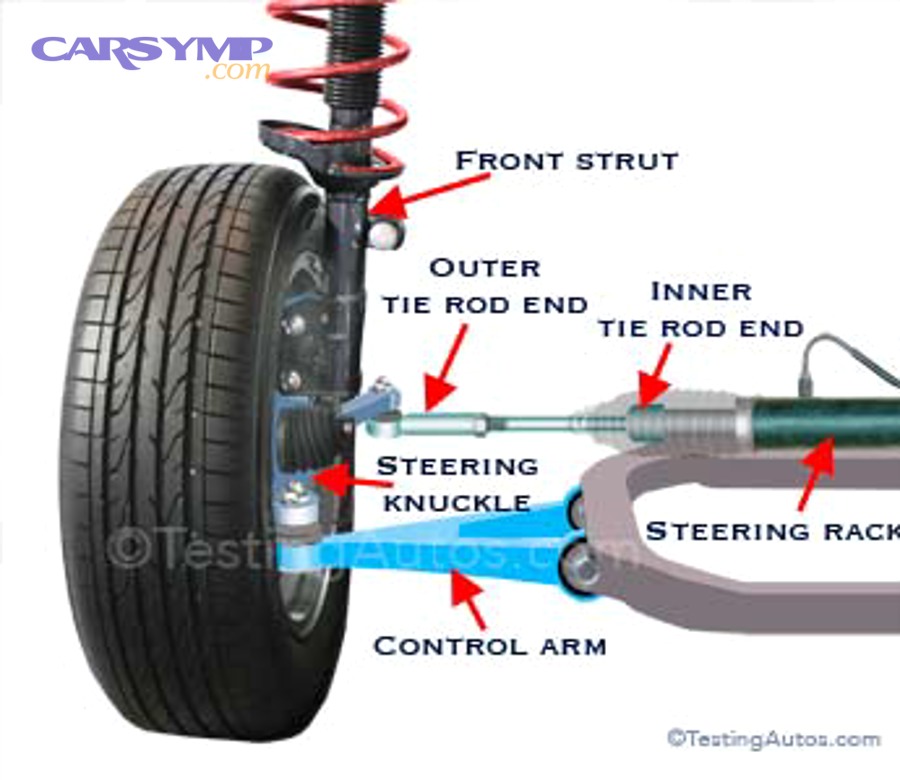
Outer tie rod ends: clunk over bumps, knock when rocking the wheel
Outer tie rods can clunk when worn, especially on uneven roads where the wheel tugs back through the linkage. A common at-home clue is a knock you can feel when you gently rock the steering wheel left-right while parked.
Next, if the steering feels slightly delayed or “wandery” on the highway in addition to noise, treat tie rods as a high-priority check.
Inner tie rods and rack mounts: hidden play that sounds like suspension
Inner tie rods and rack mounts can loosen without obvious external symptoms. The sound is often a dull clunk that happens on small bumps, and it can be misdiagnosed as a strut or control arm issue.
After that, if you hear noise mostly near the center of the car (not at one wheel well), rack mounts become more likely.
Steering stops, splash shields, and rubbing points
Some squeaks happen when a splash shield, brake dust shield, or plastic liner rubs a tire during steering—especially after minor impacts or when fasteners are missing. This can sound dramatic while being relatively simple to fix.
Then, look for shiny rub marks or fresh scuffing as a quick confirmation before you chase deeper mechanical issues.
Could brakes, wheels, or tires be the real noise source?
Yes—brakes, wheels, and tires can absolutely be the real noise source because loose brake hardware can clunk, sticking calipers can squeak, and tire or hub issues can mimic suspension noises by changing with speed and load.
To keep the mental model clear, here’s a brake caliper, pad, and rotor diagram you can reference while inspecting.
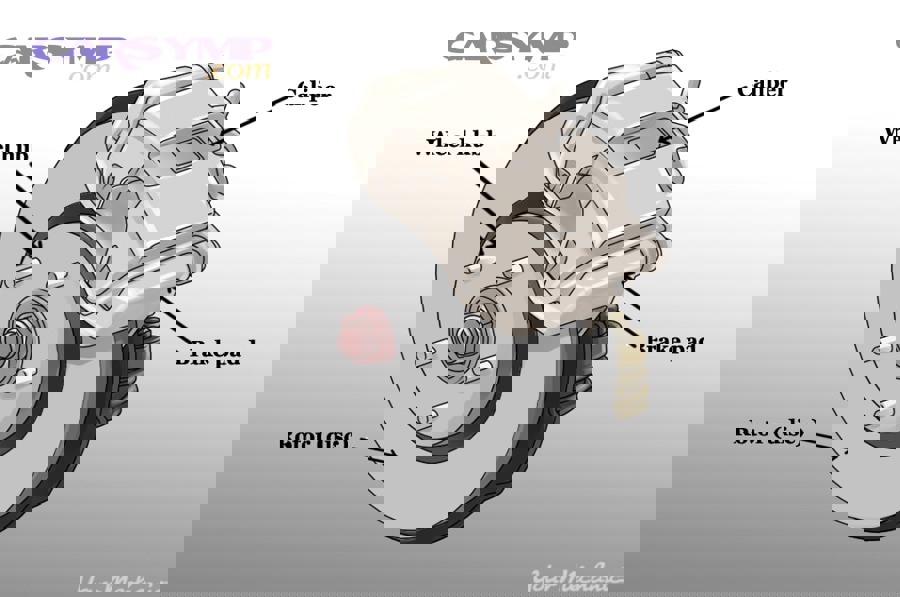
Brake pad hardware and caliper slides: “one clunk” on apply/release
If the clunk happens exactly when you apply the brakes and again when you release, suspect pad movement or caliper slide issues. Worn anti-rattle clips, missing shims, or dry slide pins can cause the caliper to shift and “tap” its bracket.
Next, test on a quiet road at 5–10 mph with gentle brake application: a consistent single clunk is a classic signature.
Dust shield contact and rotor rub: squeak that changes with steering
A bent dust shield can scrape the rotor intermittently, creating a squeak that changes as the wheel turns. Because the shield is thin, a small bend can produce an annoying sound without affecting braking performance much.
After that, inspect for a narrow shiny ring on the shield edge—evidence of contact.
Tire wear patterns and loose wheel fasteners: safety-first checks
Cupped tires can make rhythmic thumps that people describe as clunks, while loose lug nuts can create a dangerous shifting sensation and noise. Even if you’re sure it’s suspension, verify wheel fasteners and tire condition first.
Then, if you notice vibration plus noise at specific speeds, put tire balance and tread wear higher on the list.
Hub bearings: noise that changes with left/right loading
A worn hub bearing often makes a growl or hum, but it can also create a subtle clunk if there’s significant play. The hallmark is change with gentle lane changes: load the suspect side and the noise often gets louder.
Next, if you feel heat differences at the hubs after driving (careful—hot surfaces!), that can further support the suspicion, but it’s not a definitive test by itself.
How do you inspect safely at home before a shop visit?
You can inspect safely at home by using a basic step-by-step flow—visual checks, movement tests, and sound reproduction—while keeping the car securely supported and never placing yourself under an unsupported vehicle.
To begin, start with a reference image of key front-end parts so you know what you’re looking at as you check each corner.
Step 1: Reproduce the noise with minimal risk
On flat ground, do a slow steering sweep left-right while stationary, then a slow roll forward and repeat. If the squeak occurs stationary, suspect strut mount/bearing, rack mounts, or rubbing shields; if it requires rolling, suspect lower joints, bushings, or brakes.
Next, do a gentle brake apply/release test at walking speed to see if you get a single clunk on each transition.
Step 2: Visual inspection with a flashlight
Look for torn boots (joints), cracked rubber (bushings), shiny rub marks (shields/liners), missing bolts, and fresh metal dust near brackets. Oil-soaked bushings often degrade faster, so leaks around control arms matter.
After that, check whether anything is obviously contacting the wheel or rotor as you turn steering lock-to-lock.
Step 3: Wheel shake tests (only if safely lifted)
If you have proper jack stands and know safe lift points, gently check for play. A common approach is shaking at 3-and-9 o’clock (steering play) and 12-and-6 o’clock (bearing/joint play), but interpretations vary by suspension design, so treat this as a clue, not a verdict.
Then, if you feel a distinct “click” or see movement at a joint, stop and plan a professional inspection—especially if steering or suspension safety is involved.
Step 4: Decide what is DIY-friendly vs not
Simple fixes like tightening a loose shield, replacing missing clips, or correcting a liner rub can be DIY-friendly. However, jobs involving press-fit joints, alignment-critical parts, or safety-critical fasteners require the right tools and experience.
In particular, consider the DIY ball joint replacement risks: improper seating, damaged boots, incorrect torque, and skipping alignment steps can turn a noise problem into a control problem.
When is it unsafe to drive and what should you do next?
It is unsafe to drive if the clunk is loud and worsening, steering feels loose, the vehicle pulls suddenly, or you can feel a “shift” in the front end—because these symptoms can indicate significant play in a load-bearing joint or steering component.
To keep safety front-and-center, use this image as a reminder of how critical front-end attachment points are to keeping the wheel aligned and controlled.
Red flags that justify towing
If you hear a heavy clunk combined with steering wander, vibration that suddenly appears, or a wheel that looks like it’s not sitting straight in the arch, stop driving. Also tow if braking causes a sharp pull or if you feel the steering “catch” during turns.
Next, remember that intermittent noises can become sudden failures when the last bit of clearance disappears—so treat worsening symptoms as urgent.
What to tell a shop to speed up diagnosis
Give a short, structured report: when it happens (braking/turning/bumps), which side seems loudest, whether it’s squeak vs clunk, and whether it changes with temperature or after rain. Mention any recent tire work, brake service, or curb/pothole impacts.
After that, ask the shop to road-test with you if possible so you can reproduce the noise together; that often saves time and reduces misdiagnosis.
Repair planning notes you should understand
When you replace any component that affects alignment (many steering and suspension parts do), you often need an alignment afterward. Also, if one side is worn due to age and mileage, the opposite side may be close behind, so budgeting matters.
Finally, when people plan ball joint replacement, it’s smart to pair it with a broader inspection so you don’t silence one noise while another worn part remains and becomes the next clunk.
To go deeper into a hands-on diagnostic walk-through, here is a video that demonstrates common front-end noise checks in real time.
Why do front-end noises change with temperature, load, or modifications?
Front-end noises change with temperature, load, or modifications because rubber stiffness, lubrication behavior, and suspension geometry shift with conditions—so the same worn part may squeak in the cold, clunk under added load, or only appear after a height change.
To visualize the load paths that change with ride height and weight transfer, refer again to this suspension layout.
Cold weather squeaks: rubber and grease behave differently
In cold weather, rubber bushings can stiffen and transmit more vibration, making small movements sound louder. Grease can also thicken, changing how smoothly joints articulate until they warm up.
Next, if the noise fades after 10–15 minutes, it often points toward compliance or lubrication rather than a suddenly “fixed” mechanical clearance problem.
Added load: passengers, cargo, towing, or braking dive
More front-end load increases bushing twist and joint pressure. That can turn a mild squeak into a pronounced groan, or turn a minor clearance into a noticeable clunk as parts hit stops harder.
After that, if the noise only appears when the car is full of people or when towing, prioritize bushings and mounts that control fore-aft motion.
Modifications and geometry changes
Lift kits, lowering springs, oversized wheels/tires, or worn ride-height components can change angles and create new contact points. Sometimes the “new noise” is simply a liner rub or shield contact introduced by geometry change.
Then, inspect wheel-well liners, sway bar end link angles, and clearance to the strut body as early checks before replacing parts.
Maintenance habits that reduce repeat noise
Clean underbody components, fix oil leaks that soak rubber, keep tires properly inflated, and address worn shocks/struts that allow excessive oscillation. Over time, these habits reduce stress on joints and bushings and can lower the chance of recurring noises.
In the same spirit, many owners focus on Preventing premature ball joint wear by avoiding torn boots, keeping contaminants out, and addressing worn suspension damping that overloads joints during repeated impacts.
FAQ: Front-end squeak and clunk questions
These FAQs answer the most common follow-up questions drivers have after identifying squeaking or clunking front end causes, especially when deciding whether to keep driving, inspect at home, or book professional service.
Can I drive if the front end squeaks but doesn’t clunk?
Sometimes yes, but only if steering and braking feel normal and the sound is mild and unchanged; however, a squeak can be an early warning of a dry joint or torn boot, so schedule an inspection rather than ignoring it indefinitely.
Why does it clunk only when I brake?
A brake-only clunk often indicates something taking up slack—pad hardware shifting, a caliper moving on dry slides, or a control arm bushing allowing a fore-aft jump under braking force.
Why does it clunk only over small bumps?
Small-bump clunks often point to sway bar links, loose brake hardware, or steering linkage play because these parts can rattle quickly on rapid, low-amplitude suspension movements.
Is the fix always “replace parts”?
No. Some noises are caused by contact (shields, liners), missing clips, or dry slide pins—repairs that don’t always require replacing major components. The key is matching the sound to the condition and confirming with inspection.
What should I do after replacing steering or suspension parts?
Plan for alignment when appropriate and re-check torque after a short settling period if recommended by the manufacturer or shop. This prevents new noises caused by fasteners loosening or geometry being out of spec.