


When changing wheels, you should transfer existing TPMS sensors if they’re less than 5 years old and you plan to keep the original wheels, but buy new sensors if the current ones are aging, you’re permanently upgrading, or the transfer cost exceeds new sensor prices. This decision hinges on three critical factors: sensor age and battery lifespan, the permanence of your wheel change, and total cost comparison including labor fees. Most TPMS batteries last 5-10 years with realistic averages around 5-6 years, meaning sensors approaching this age threshold warrant replacement rather than transfer to avoid premature failure after installation.
Understanding technical compatibility requirements helps prevent costly mistakes and ensures legal compliance. TPMS sensors must maintain functionality when switching to aftermarket or custom wheels due to federal regulations, specifically the NHTSA “make inoperative” prohibition under 49 USC 30122(b). Compatibility issues arise from valve stem hole sizes, mounting methods, and wheel anatomy differences between OEM and custom designs. Direct TPMS systems with physical sensors require different approaches than indirect systems that monitor tire rotation through ABS sensors, particularly regarding programming and reset procedures.
Cost-benefit analysis reveals significant financial implications beyond the sticker price of sensors. Transferring sensors involves dismounting fees of $12-24 per tire, potential service kit replacements, and risk of damage during the process, while new sensors range from $25-100 each depending on OEM versus aftermarket choice. The decision becomes more complex when considering resale value of original wheels with sensors intact, long-term reliability differences between sensor types, and programming fees that can add $20-50 to the total bill.
Programming and reset procedures vary dramatically across vehicle manufacturers, with some systems auto-learning new sensors within minutes of driving while others require professional tools and manual relearn processes. Understanding your specific vehicle’s TPMS architecture determines whether you can complete a DIY installation or need dealership assistance. Below, we’ll explore each decision factor in detail to help you make the right choice for your specific situation.
Should You Transfer Your Old TPMS Sensors or Buy New Ones When Changing Wheels?
You should transfer old TPMS sensors when they’re less than 5 years old and you plan seasonal tire changes, but buy new sensors if they’re aging beyond 5-7 years, you’re permanently upgrading wheels, or transfer costs approach new sensor prices.
The decision between transferring and replacing depends heavily on your specific circumstances. To begin, evaluate the age of your current sensors as the primary determining factor. TPMS sensors contain non-replaceable lithium-ion batteries with finite lifespans, making age the most critical consideration. If your vehicle is less than three years old and you’re installing a second set of wheels for seasonal use, transferring makes excellent financial sense since the sensors have substantial remaining life.
However, sensor age isn’t the only consideration. The permanence of your wheel change significantly impacts the optimal choice. Drivers installing winter wheels for seasonal tire change benefit from transferring sensors to maintain both sets as complete, functional packages. This approach allows quick swaps between summer and winter tires without repeated sensor transfers or programming sessions. Conversely, enthusiasts permanently upgrading to larger aftermarket wheels should lean toward new sensors, particularly if they plan to sell their original wheels.
When Should You Transfer Existing TPMS Sensors?
Transfer existing TPMS sensors when the vehicle is less than 3-5 years old, you’re maintaining multiple wheel sets for seasonal changes, the sensors are OEM units with proven reliability, and you want to preserve resale value of original wheels by keeping sensors intact.
Specifically, newer vehicles with low-mileage TPMS sensors provide the strongest case for transfer. A three-year-old vehicle with 30,000 miles likely has sensors with 3-7 years of remaining battery life, making transfer economically sensible. The labor cost of $50-100 for removing and reinstalling four sensors becomes justified when those sensors would otherwise sit unused in a garage or reduce the resale value of your original wheel set.
Seasonal tire change scenarios particularly favor sensor transfer. Drivers in northern climates who swap between summer performance tires and winter snow tires twice annually need both sets ready for immediate installation. Transferring sensors means each complete wheel-and-tire package can be swapped in 30-45 minutes at any tire shop without programming delays or additional fees. This convenience factor alone justifies the initial transfer investment for many drivers.
OEM sensor reliability provides another compelling reason for transfer. Factory-installed sensors typically meet higher quality standards than budget aftermarket alternatives, with more consistent battery life and better temperature resistance. Vehicle manufacturers design these sensors to withstand extreme conditions, from subzero winter temperatures to summer heat exceeding 150°F in tire interiors. Preserving these proven components makes sense when they have substantial remaining service life.
When Should You Buy New TPMS Sensors?
Buy new TPMS sensors when existing units exceed 5-7 years of age, you’re permanently replacing wheels, transfer costs would exceed new sensor prices, you’re selling original wheels with sensors to maximize resale value, or custom wheels present compatibility challenges with existing sensor mounting.
Age-related replacement becomes necessary as sensors approach their battery life limits. A seven-year-old vehicle with original sensors faces imminent battery depletion, making new sensor investment smarter than transferring aging units. The frustration and expense of sensor failure weeks or months after wheel installation far exceeds the upfront cost of new sensors. Many tire shops report increased TPMS battery failures in sensors beyond six years, regardless of mileage or apparent functionality.
Permanent wheel upgrades fundamentally shift the cost-benefit equation. Enthusiasts installing custom wheels as a long-term modification should prioritize new sensors for several reasons. First, keeping original wheels complete with functional sensors maintains their resale value—buyers expect OEM wheels to include working TPMS. Second, aftermarket wheels often require different mounting methods or valve stem configurations incompatible with original sensors, necessitating new units anyway. Third, the psychological benefit of a complete, fresh installation with warranty-backed components provides peace of mind.
Financial calculations sometimes favor new sensors even with relatively young existing units. When transfer labor approaches $100-120 for four sensors and new aftermarket sensors cost $25-35 each, the total investment difference narrows significantly. Adding the risk of sensor damage during transfer—tire shops typically charge $50-75 per broken sensor—can tip the balance toward new sensors. Some tire retailers bundle new sensors with wheel-and-tire packages at discounted rates, making new sensors cheaper than separate transfer services.
Custom wheel compatibility issues frequently demand new sensors with different mounting configurations. Deep-dish wheels, forged racing wheels, and specialty designs often lack standard valve stem holes or require different seal designs. Preventing lug nut and stud damage during installation becomes easier with purpose-designed sensors matched to your specific wheel specifications rather than forcing original sensors into incompatible mounting points.
What Are the Costs of Transferring vs. Buying New TPMS Sensors?
Transferring TPMS sensors typically costs $50-120 total for labor and service kits, while new sensors range from $100-400+ depending on OEM versus aftermarket choice, with programming fees adding $20-50 to either option.
Cost comparison requires examining both immediate expenses and long-term value. However, understanding the complete financial picture means looking beyond sensor prices to include labor, service components, and potential risk factors that can dramatically alter total investment.
The transfer versus new decision involves hidden costs that catch many vehicle owners by surprise. Dismounting and remounting tires represents the largest labor component, with shops charging per tire rather than per vehicle. Service kits containing valve cores, seals, and mounting hardware add incremental costs that accumulate across four or five sensors. Programming or relearn procedures may incur separate diagnostic fees depending on vehicle manufacturer and shop policies. Finally, the risk of sensor damage during transfer creates potential for unexpected replacement costs that can eliminate any anticipated savings.
How Much Does TPMS Sensor Transfer Cost?
TPMS sensor transfer costs $50-120 total, including $12-24 per tire for dismounting and remounting labor, $5-15 per sensor for valve stem service kits, plus potential diagnostic fees of $20-30 for programming or system reset.
Labor constitutes the primary expense in sensor transfer operations. Tire shops charge $12-24 per tire to dismount rubber from the old wheel, remove the TPMS sensor, mount the tire on the new wheel, and reinstall the sensor. This per-tire pricing means a complete four-wheel transfer costs $48-96 for labor alone before any parts or additional services. Wheel diameter affects pricing, with larger wheels (19-inch and above) commanding premium rates due to increased difficulty and equipment requirements.
Valve stem service kits represent a frequently overlooked but essential component cost. Each TPMS sensor requires a new service kit containing a valve core, valve stem seal, valve cap, and mounting nut. These kits cost $5-15 per sensor depending on quality and vehicle requirements. Skipping service kit replacement creates risks of air leaks, corrosion, and premature sensor failure. Professional shops insist on new service kits for liability reasons—a $60 service kit investment across four sensors prevents thousands in potential warranty claims and customer complaints.

Sensor damage risk introduces financial uncertainty into transfer calculations. Even experienced technicians occasionally break valve stems or crack sensor housings during tire removal, particularly with corroded components or aftermarket wheels with tight clearances. Most shops charge full replacement cost for damaged sensors—typically $50-100 for aftermarket or $75-150 for OEM units. The probability of damage increases with sensor age, corrosion exposure in salt-belt states, and previous tire service history. Factoring a 5-10% damage risk across four sensors adds $10-30 to expected total costs.
Programming and diagnostic fees vary by vehicle manufacturer and shop capabilities. Some vehicles auto-learn transferred sensors within minutes of driving, incurring no additional charges. Others require manual relearn procedures using specialized TPMS tools, prompting shops to charge $20-50 for programming services. Dealerships typically charge higher diagnostic fees ($40-80) than independent shops, though their manufacturer-specific tools sometimes provide more reliable results with newer vehicle models.
How Much Do New TPMS Sensors Cost?
New TPMS sensors cost $100-400+ total, with OEM sensors priced at $50-100 each, aftermarket sensors at $25-60 each, plus installation labor of $10-20 per sensor and programming fees of $20-50 for system initialization.
OEM sensor pricing reflects manufacturer quality standards and vehicle-specific engineering. Dealership parts departments charge $50-75 for most passenger car sensors, while truck and luxury vehicle sensors reach $80-120 each due to additional features or specialized designs. These prices include manufacturer warranties (typically 1-2 years) and guaranteed compatibility with vehicle systems. OEM sensors eliminate compatibility concerns and programming complications, justifying their premium cost for drivers prioritizing reliability and hassle-free installation.
Aftermarket sensor options provide significant cost savings with variable quality levels. Budget aftermarket sensors from unknown brands sell for $25-35 each on online marketplaces, mid-tier brands like Schrader or Doran cost $40-55, and premium aftermarket options approach $60-70. Quality differences manifest in battery life consistency, temperature resistance, and signal reliability. Forum discussions reveal higher failure rates with budget sensors, particularly Chinese-manufactured units that may use lower-grade batteries or less precise frequency calibration.
The following table compares total costs for a four-sensor installation across different scenarios:
| Scenario | Sensor Cost | Labor Cost | Programming | Service Kits | Total Cost |
|---|---|---|---|---|---|
| Transfer Existing | $0 | $48-96 | $0-50 | $20-60 | $68-206 |
| Budget Aftermarket | $100-140 | $40-80 | $20-50 | $0 (included) | $160-270 |
| Mid-Tier Aftermarket | $160-220 | $40-80 | $20-50 | $0 (included) | $220-350 |
| OEM Sensors | $200-400 | $40-80 | $20-50 | $0 (included) | $260-530 |
Installation labor for new sensors costs less than transfer labor because technicians mount new sensors during the initial tire installation rather than requiring separate dismounting and remounting cycles. Most shops charge $10-20 per sensor for installation when combined with new tire mounting, though standalone sensor installation approaches transfer labor rates. Bundle pricing from tire retailers often includes free sensor installation when purchasing complete wheel-and-tire packages, effectively eliminating this cost component.
Programming fees for new sensors depend on sensor type and vehicle compatibility. Universal programmable sensors require initialization to match your vehicle’s frequency (315MHz or 433MHz) and may need cloning from existing sensors, adding $30-50 to total costs. Pre-programmed sensors configured for specific vehicle makes reduce this fee to $20-30 for system relearn procedures. Some modern vehicles perform automatic sensor recognition, eliminating programming charges entirely—though shops may still charge diagnostic fees to verify proper system operation.
Package deals and seasonal promotions significantly impact real-world costs. Tire retailers like Discount Tire, Tire Rack, and Costco frequently bundle sensors with wheel-and-tire packages at discounted rates, offering four sensors for $120-150 when purchasing complete assemblies. Seasonal tire change promotions in spring and fall often include reduced installation labor or free programming services. Smart shoppers can achieve total costs comparable to sensor transfer by timing purchases to coincide with these promotional periods.
Are TPMS Sensors Compatible with Aftermarket and Custom Wheels?
Yes, TPMS sensors are compatible with aftermarket and custom wheels, but compatibility requires matching valve stem hole sizes, selecting appropriate mounting methods for wheel design, and ensuring legal compliance with federal NHTSA regulations prohibiting disabled TPMS systems.
Compatibility extends beyond simple physical fitment to encompass mounting security, signal reliability, and long-term durability. To illustrate, standard valve stem holes measure 0.453 inches for most passenger vehicles, but aftermarket wheels may feature 0.625-inch holes requiring different sealing methods. Custom wheels with deep-dish designs, specialty materials, or unique spoke patterns sometimes lack proper valve stem access points entirely, necessitating alternative mounting solutions.
Federal law mandates functional TPMS systems on all vehicles originally equipped with these safety features. The NHTSA “make inoperative” prohibition under 49 USC 30122(b) makes it illegal for shops or owners to disable TPMS during wheel installation. This regulation carries significant implications for custom wheel installations—you cannot simply ignore TPMS sensors to avoid compatibility challenges. Shops refusing to install wheels without maintaining TPMS functionality protect themselves from legal liability while ensuring customer vehicles remain compliant.
What Types of TPMS Mounting Methods Work with Different Wheels?
Four main TPMS mounting methods accommodate different wheel designs: snap-in valve stems for standard holes, clamp-in sensors for oversized holes, band-mount kits for wheels without proper valve access, and specialty adapters for unique wheel geometries.
Snap-in valve stems represent the most common mounting method, using rubber grommets to seal sensors in standard 0.453-inch or 0.625-inch valve holes. The sensor housing integrates with a rubber valve stem that compresses into the wheel hole, creating an airtight seal through friction and grommet expansion. This method works ideally with cast aluminum wheels featuring properly sized, deburred holes with adequate clearance for sensor bodies. Installation requires only basic tire-changing equipment, making snap-in sensors the preferred choice for most applications.
Clamp-in mounting systems use threaded nuts and washers to secure sensors in oversized valve holes or wheels lacking proper grommet retention. A metal valve stem passes through the wheel hole, with a nut tightened from the outside to compress a sealing washer against both wheel surfaces. This method accommodates hole size variations and provides more robust mounting for wheels experiencing high lateral forces or frequent dismounting. Clamp-in sensors cost $10-20 more per unit than snap-in variants but offer superior reliability for performance applications and custom wheels with non-standard hole dimensions.
Band-mount kits solve compatibility issues with wheels lacking proper valve stem holes or featuring obstructed access points. These systems use stainless steel bands to secure sensors directly to the wheel’s drop center, positioning the sensor inside the tire cavity without penetrating the wheel rim. A separate traditional valve stem handles air filling duties while the banded sensor monitors pressure wirelessly. Band mounting adds $15-25 per wheel to installation costs and requires careful positioning to avoid tire bead interference. This method works particularly well for custom forged wheels, certain multi-piece designs, and specialty applications where drilling valve holes would compromise structural integrity.
Specialty adapters address unique wheel geometries found in deep-dish designs, wheels with thick barrel sections, or constructions using exotic materials. Extended valve stems reach through extra-thick wheel barrels, angled adapters navigate spoke interference, and material-specific sealing compounds prevent galvanic corrosion between dissimilar metals. Custom wheel manufacturers sometimes offer TPMS-compatible versions of their designs with properly engineered valve locations, eliminating the need for aftermarket solutions. Consulting wheel specifications before purchase prevents expensive compatibility surprises after installation.
What Are the Legal Requirements for TPMS When Changing Wheels?
Federal law prohibits disabling TPMS systems when changing wheels, with NHTSA regulations under 49 USC 30122(b) making it illegal for service providers to render TPMS inoperative and requiring functional tire pressure monitoring on all originally equipped vehicles.
The “make inoperative” prohibition creates clear legal obligations for both shops and vehicle owners. Service providers violating this regulation face potential fines and civil liability if accidents result from disabled safety systems. Shops must either decline wheel installation on vehicles where TPMS cannot be maintained, transfer existing compatible sensors, or convince customers to purchase new sensors ensuring continued system functionality. This regulation explains why reputable tire shops insist on TPMS solutions even when customers request installations without sensors.
Legal compliance extends beyond initial installation to ongoing system maintenance. Vehicle owners cannot permanently disable TPMS warning lights through dashboard modifications, electronic bypasses, or sensor removal without replacement. Annual safety inspections in many states include TPMS functionality checks, potentially resulting in inspection failures for vehicles with disabled systems. These enforcement mechanisms ensure TPMS remains operational throughout vehicle life, protecting tire investment and enhancing road safety.
The regulatory framework treats TPMS similarly to other mandated safety systems like airbags and anti-lock brakes. Just as removing a catalytic converter for performance gains violates emissions regulations, disabling TPMS to avoid sensor costs violates federal safety standards. This perspective helps frame the TPMS investment not as optional but as legally required vehicle maintenance. Insurance liability concerns compound legal obligations—accidents involving tire failures on vehicles with deliberately disabled TPMS could impact claim settlements and coverage determinations.
Consumer protection aspects of TPMS regulations benefit vehicle owners despite creating additional costs. Functional tire pressure monitoring prevents the estimated 11,000 annual accidents caused by underinflated tires, reduces fuel consumption by maintaining optimal tire pressure, and extends tire life by alerting drivers to slow leaks before irreparable damage occurs. The safety and economic benefits of working TPMS systems justify regulatory requirements and the associated installation costs when changing wheels.
How Long Do TPMS Sensor Batteries Last and When Should They Be Replaced?
TPMS sensor batteries last 5-10 years with realistic averages of 5-6 years before requiring complete sensor replacement, as batteries are sealed non-replaceable units designed for vehicle lifespan but often failing before reaching maximum theoretical life.
Battery lifespan represents a critical consideration in transfer-versus-replace decisions because sensor functionality depends entirely on battery power. More specifically, TPMS sensors contain lithium-ion batteries sealed within the sensor housing during manufacturing. This design choice prioritizes durability and waterproofing over battery serviceability, meaning battery depletion requires complete sensor replacement rather than simple battery changes.
Understanding battery degradation patterns helps predict sensor replacement timing. Batteries don’t fail suddenly in most cases—instead, sensors exhibit increasing transmission failures, intermittent warnings, and reduced range as battery voltage drops. Cold weather accelerates apparent failures as low temperatures temporarily reduce battery output, causing morning warning lights that disappear after driving. These symptoms indicate approaching end-of-life even when sensors occasionally function normally.
What Is the Typical Lifespan of TPMS Sensor Batteries?
TPMS sensor batteries typically last 5-10 years, with most sensors failing between 5-6 years due to transmission frequency, temperature cycling, and manufacturing quality variations affecting battery degradation rates.
Manufacturing specifications cite 10-year battery life under ideal conditions, but real-world factors significantly reduce actual longevity. Temperature extremes common in tire interiors—from below-zero winter temperatures to 150°F+ summer heat—accelerate chemical degradation within lithium-ion cells. Frequent driving triggers more transmission events as sensors broadcast pressure readings, consuming battery capacity faster than vehicles driven occasionally. Geographic location impacts lifespan through climate exposure and road salt corrosion affecting sensor electronics that draw battery power.
Battery life varies between OEM and aftermarket sensors due to component quality differences. OEM sensors typically use premium lithium batteries from established suppliers, engineered to survive temperature cycling and vibration for extended periods. Budget aftermarket sensors may incorporate lower-grade batteries with reduced cycle life and temperature tolerance, explaining the 3-4 year failures reported in online forums. Mid-tier aftermarket sensors from reputable manufacturers like Schrader or VDO approach OEM longevity through comparable battery selection and quality control.
Sensor design influences battery consumption rates beyond simple battery quality. Older TPMS designs transmitted constantly at fixed intervals, draining batteries faster than modern sensors using motion-activated transmission. Contemporary sensors incorporate accelerometers that detect wheel rotation, activating transmission only when the vehicle moves and entering sleep mode when stationary. This intelligent power management extends battery life by 20-30% compared to older constant-broadcast designs, explaining why newer vehicles often exceed 7-8 years on original sensors.
Vehicle age provides a practical battery life indicator more reliable than mileage alone. A seven-year-old vehicle almost certainly approaches TPMS battery replacement regardless of 30,000 or 130,000 miles driven. Conversely, a three-year-old vehicle with extremely high mileage (150,000+ miles) might show battery symptoms earlier than age would predict due to constant transmission activity. Time-based battery degradation dominates mileage-based wear in TPMS applications, making calendar age the primary replacement criterion.
Should You Replace Sensors Based on Age or Wait for Failure?
Replace TPMS sensors proactively at 6-7 years of age rather than waiting for failure, because preemptive replacement during planned wheel changes costs less than emergency replacement after battery depletion and prevents the inconvenience of warning lights and system malfunctions.
Proactive replacement during wheel installation timing provides optimal cost efficiency. When changing wheels with 6-7 year old sensors, combining sensor replacement with the already-scheduled service eliminates duplicate labor charges. You pay for tire dismounting and mounting once rather than twice—first for wheel installation, then again months later when batteries fail. This integration saves $50-100 in redundant labor while ensuring fresh sensors match your new wheel investment.
Risk management favors preemptive replacement over reactive response. Sensor failures rarely occur at convenient times—more often, battery depletion triggers warning lights during road trips, before important drives, or during seasonal tire change rushes when shops book solid for weeks. The frustration and potential safety implications of delayed service outweigh the marginal cost savings of extracting maximum battery life. Professional fleet managers routinely replace TPMS sensors on age schedules rather than running components to failure, applying the same total cost of ownership logic that drives oil change intervals and brake service timing.
Reactive replacement strategies make financial sense only in specific scenarios. Drivers planning to sell vehicles within 1-2 years might reasonably defer sensor replacement, letting future owners address battery depletion. Budget-constrained owners of older vehicles with minimal remaining service life may choose to address failures individually rather than replacing all four sensors preemptively. However, these situations represent exceptions—most drivers benefit from proactive replacement aligned with wheel service timing.
Failure patterns typically cascade rather than occurring individually. When one sensor reaches battery depletion, the remaining three sensors of similar age approach failure within months. Replacing sensors one at a time as each fails costs significantly more than single-service replacement of all four, due to repeated labor charges and multiple shop visits. The first sensor failure serves as an early warning that wholesale replacement makes economic sense even if the other three still function.
What Programming and Reset Procedures Are Required After Changing Wheels?
Programming and reset procedures range from automatic recognition requiring only 5-15 minutes of driving for systems with auto-learn capability, to manual relearn procedures using specialized TPMS tools and taking 10-30 minutes of technician time depending on vehicle manufacturer requirements.
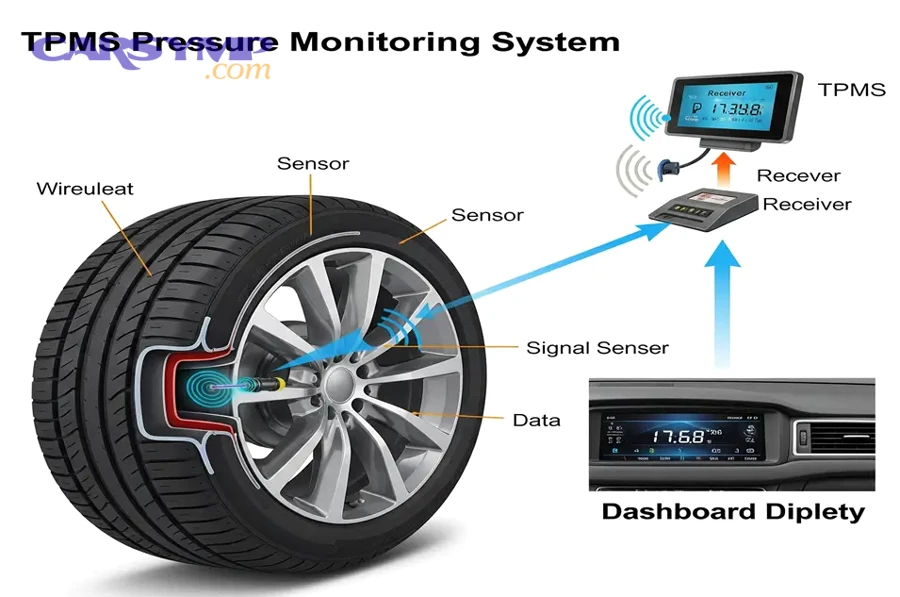
Understanding your vehicle’s specific TPMS architecture determines whether you can complete a DIY wheel change or need professional programming assistance. Specifically, vehicle manufacturers employ three distinct approaches to TPMS sensor recognition: fully automatic systems that learn new sensors without intervention, semi-automatic systems requiring simple user-initiated relearn procedures, and manual systems demanding specialized diagnostic equipment.
Programming complexity varies dramatically across makes and models, with domestic manufacturers generally employing more user-friendly systems than European or Asian brands. Ford, Ram, and Chrysler vehicles typically feature auto-recognition that requires no special tools or procedures—simply drive normally and the system identifies new sensors within miles. General Motors vehicles require manual relearn procedures using the vehicle’s driver information center and a specific sequence of tire deflation or tool-triggered sensor activation. European brands like BMW, Mercedes, and Audi often demand dealership-level diagnostic tools for sensor programming, though some models permit owner-initiated relearn through dashboard menu systems.
Do TPMS Sensors Automatically Recognize New Wheels?
Yes, TPMS sensors automatically recognize new wheels on most Ford, Ram, Chrysler, and newer Toyota vehicles through auto-learn systems that identify sensor IDs within 5-15 minutes of driving, but GM, Honda, and many European vehicles require manual relearn procedures using diagnostic tools or dashboard menu sequences.
Auto-learn systems represent the most user-friendly TPMS technology, eliminating programming hassles during wheel changes. These systems continuously monitor sensor broadcasts, automatically updating the vehicle’s body control module (BCM) with new sensor identification codes when detected. The BCM compares received sensor IDs against its stored database, adding new IDs and removing absent sensors without user intervention. This technology particularly benefits drivers with multiple wheel sets who frequently swap between summer and winter tires—the system seamlessly transitions between sensor sets without repeated programming.
The auto-recognition process requires specific conditions for successful completion. Sensors must transmit reliably, which occurs only when wheels rotate above threshold speeds (typically 15-25 mph) for sufficient duration. Most auto-learn systems complete recognition within 5-15 minutes of normal driving, though some vehicles require up to 30 minutes or specific drive cycles including various speeds and turning maneuvers. Tire pressure must fall within acceptable ranges—underinflated or overinflated tires may prevent recognition as safety protocols prioritize alerting drivers to pressure problems over learning new sensors.
Auto-learn limitations affect certain vehicle configurations and scenarios. Vehicles equipped with location-specific TPMS that displays individual tire pressures sometimes require manual position relearn even when sensors auto-recognize. The system knows four new sensors exist but needs guidance assigning each sensor to its physical wheel position (left front, right front, etc.). Additionally, storing original wheels near the vehicle can confuse auto-learn systems as the BCM receives signals from eight sensors simultaneously. Moving original wheels 30+ feet away or disabling their sensors by deflating tires solves this interference issue.
Manual relearn systems offer more control but demand more effort from users or technicians. GM’s relearn procedure illustrates typical manual processes: access the vehicle’s relearn mode through the driver information center, reduce tire pressure to trigger each sensor in specified order (left front, right front, right rear, left rear), and confirm system programming through dashboard messages. This process takes 10-15 minutes with proper tools but requires specific knowledge and can frustrate DIY attempts without clear instructions. When to switch between summer and winter tires becomes more complicated with manual systems, as each seasonal change demands complete relearn procedures rather than automatic recognition.
What Are the Different TPMS Programming Methods?
Four main TPMS programming methods exist: OEM auto-recognition requiring no tools, manual relearn using vehicle menus and sensor activation, aftermarket sensor cloning copying OEM frequencies, and universal sensor programming requiring specialized tools to initialize new sensors.
OEM auto-recognition systems prioritize convenience for customers and service efficiency for dealerships. These systems work seamlessly with OEM replacement sensors manufactured to identical specifications as original equipment. The sensors broadcast standardized protocols recognized by the vehicle’s TPMS receiver module, which stores the new sensor IDs automatically during the drive cycle following installation. This method costs nothing beyond sensor hardware and works reliably for vehicles designed with auto-learn capability—primarily Ford, Chrysler, Ram, and select Toyota/Lexus models from 2015 onwards.
Manual relearn procedures provide manufacturer control over sensor recognition while minimizing required equipment investment. Vehicle-specific relearn methods vary widely: Toyota owners hold the TPMS reset button while inflating tires to specified pressures, Nissan drivers activate sensors using a small magnet or TPMS tool held near each valve stem, and Honda vehicles require specific driving patterns including figure-eight maneuvers at prescribed speeds. These procedures appear in owner’s manuals and service documentation, enabling DIY completion for mechanically inclined owners. However, the variation between manufacturers creates confusion and potential errors without proper research.
Aftermarket sensor cloning technology bridges compatibility gaps between universal sensors and vehicle-specific TPMS protocols. Cloning tools read the identification code and transmission frequency from an original sensor, then program a new aftermarket sensor to broadcast identical signals. The vehicle’s TPMS module perceives the cloned sensor as the original unit, eliminating compatibility issues and often bypassing relearn requirements entirely. Cloning costs $30-50 per set at shops equipped with appropriate tools, making it attractive for vehicles with complex programming requirements or limited auto-learn capability. However, cloning requires one functioning original sensor per vehicle—not possible when replacing all sensors on vehicles where originals have failed completely.
Universal programmable sensors offer maximum flexibility for shops servicing multiple vehicle makes and models. These sensors arrive blank from the manufacturer, requiring initialization to specific vehicle protocols using advanced TPMS programming tools. The technician selects the vehicle year, make, and model from the tool’s database, which uploads appropriate transmission frequency, protocol, and sensor ID parameters to the universal sensor. This approach allows shops to stock one sensor part number serving hundreds of vehicle applications rather than maintaining inventory of vehicle-specific sensors. However, universal sensor programming demands expensive equipment ($500-2000 for professional-grade tools) and technical knowledge, limiting this method to professional shops rather than DIY applications.
Required tools range from nothing for auto-learn systems to sophisticated programming equipment for universal sensors. Basic manual relearn procedures often need only the vehicle’s built-in functions, though some manufacturers require inexpensive magnetic activation tools ($10-30) to trigger sensors. Cloning requires mid-range TPMS tools ($200-500) capable of reading and writing sensor data, while universal sensor programming demands professional-grade equipment with annual subscription fees for software updates. DIY enthusiasts can purchase budget TPMS tools for $50-150 capable of basic sensor testing and some relearn procedures, though functionality limitations compared to professional equipment may frustrate certain applications.
Programming service fees at professional shops reflect equipment investment and technician time. Basic auto-learn verification—confirming sensors recognized successfully after installation—typically costs $0-20 as shops perform this service quickly using basic scan tools. Manual relearn procedures requiring specific activation sequences cost $20-40 for technician time and tool usage. Sensor cloning commands premium pricing at $40-60 due to specialized equipment and extra time reading original sensors. Universal sensor programming falls mid-range at $30-50 as the process takes longer than basic relearn but requires less total time than cloning. Mobile TPMS service providers sometimes charge higher fees due to travel costs, while tire chains with high-volume operations often discount or waive programming fees when purchasing sensors and installation services together.
Should You Use OEM or Aftermarket TPMS Sensors?
Use OEM TPMS sensors for maximum reliability and guaranteed compatibility at $50-100 per sensor, or choose quality aftermarket sensors at $25-60 each when budget constraints outweigh concerns about potential compatibility issues and variable longevity.
The OEM versus aftermarket decision parallels similar choices across automotive parts—balancing cost savings against reliability guarantees and warranty coverage. However, TPMS sensors present unique considerations because functionality depends on precise electronic compatibility and programming rather than simple mechanical fitment. A slightly inferior aftermarket brake pad might reduce stopping power marginally, but an incompatible TPMS sensor fails completely or causes persistent warning lights frustrating daily driving.
Quality tiers within the aftermarket sensor market complicate simple cost comparisons. Premium aftermarket brands like Schrader, VDO, and Huf manufacture sensors for OEM applications under contract, then sell identical or similar sensors through aftermarket channels at reduced prices. These tier-one suppliers often provide quality approaching or matching OEM standards. Mid-tier brands offer solid reliability at moderate prices, while budget sensors from unknown manufacturers create compatibility and longevity concerns reflected in online reviews and forum complaints.
What Are the Pros and Cons of OEM TPMS Sensors?
OEM TPMS sensors provide guaranteed compatibility, plug-and-play installation, manufacturer warranty coverage, and proven long-term reliability, but cost $50-100+ per sensor compared to $25-60 for aftermarket alternatives, and may require dealership programming adding further expense.
Guaranteed compatibility represents OEM sensors’ most significant advantage, particularly for newer vehicles with advanced TPMS features. Vehicle manufacturers engineer sensors specifically for their TPMS receiver modules, ensuring proper frequency transmission, protocol compatibility, and feature support like individual tire location display or pressure history recording. This engineering integration eliminates troubleshooting time when sensors inexplicably fail to program or transmit reliably—issues occasionally plaguing aftermarket sensors despite claimed compatibility.
Plug-and-play installation streamlines the wheel installation process when using OEM sensors. Technicians simply mount sensors following standard procedures without checking compatibility charts, selecting programming modes, or troubleshooting recognition failures. The sensors work as originally designed, often auto-learning without manual intervention on vehicles equipped with that capability. This simplicity benefits DIY installers lacking specialized tools or technical knowledge—OEM sensors minimize the expertise required for successful installation.
Manufacturer warranty coverage provides recourse if sensors fail prematurely. OEM sensors typically include 1-2 year warranties covering defects in materials and workmanship, though battery depletion falls outside coverage as a consumable wear item. Warranty claims process through dealership parts departments with established procedures and ready parts availability. Aftermarket warranty claims often involve shipping sensors to distributors and waiting days or weeks for replacements, creating service delays and potential tire shop conflicts over labor coverage for repeated installations.
Long-term reliability data favors OEM sensors based on both engineering validation and real-world service history. Vehicle manufacturers conduct extensive testing validating sensor performance across temperature extremes, vibration exposure, and electrical interference scenarios before production approval. OEM sensors installed on new vehicles provide baseline performance data through warranty claims and service records, establishing proven longevity patterns. Aftermarket sensors lack this comprehensive validation and service history, introducing uncertainty around battery life and component durability.
Higher cost represents the primary OEM sensor disadvantage, significantly impacting budgets when replacing all four or five sensors. The $50-100 per sensor pricing creates $200-500 total costs before installation labor and programming fees. Vehicle makes with premium pricing—BMW, Mercedes, Land Rover—command even higher OEM sensor costs sometimes approaching $150 per unit. These expenses become particularly burdensome for budget-conscious owners of older vehicles where sensor replacement costs approach significant percentages of vehicle value.
Dealership programming requirements add expense and inconvenience for certain OEM sensors. European luxury brands often employ proprietary TPMS protocols requiring manufacturer diagnostic tools unavailable to independent shops. Audi and BMW dealerships charge $80-150 for TPMS programming services using factory scan tools, adding substantially to total installation costs. While independent shops increasingly access aftermarket programming equipment supporting European vehicles, dealership-level functionality sometimes proves necessary for complete feature activation and troubleshooting.
Parts availability varies by vehicle age and model popularity. Dealership parts departments stock sensors for current model years and recent vehicles with high service volume, but may require special orders for older or less common models. Special order sensors incur waiting periods of 2-7 days, potentially delaying wheel installations until sensors arrive. Aftermarket sensors with broader application ranges provide better availability for obscure vehicles, though at the cost of guaranteed OEM compatibility.
What Are the Pros and Cons of Aftermarket TPMS Sensors?
Aftermarket TPMS sensors cost 40-60% less than OEM at $25-60 per sensor, offer universal programmable options fitting multiple vehicles, and provide quick availability, but present compatibility risks, variable quality across manufacturers, potential programming complications, and uncertain long-term reliability.
Cost savings drive most aftermarket sensor purchases, with quality units priced at $30-50 compared to $60-90 for equivalent OEM sensors. Budget-conscious owners replacing all four sensors save $120-200 through aftermarket choices, meaningful amounts for older vehicles or tight budgets. Premium aftermarket brands from tier-one OEM suppliers like Schrader or VDO offer OEM-equivalent quality at 20-30% discounts, providing middle-ground options between budget sensors and full OEM pricing.
Universal programmable sensors provide inventory efficiency benefits that translate to availability advantages for customers. Tire shops stocking one universal sensor part number can serve hundreds of vehicle applications rather than maintaining extensive OEM sensor inventories. This breadth means aftermarket sensors often ship same-day or sit in stock at local shops, while OEM sensors require parts department special orders. The availability advantage proves particularly valuable for unusual vehicles or urgent installations where waiting days for OEM sensors creates unacceptable delays.
Programming flexibility allows aftermarket sensors to adapt to changing vehicle ownership and wheel configurations. A universal sensor programmed for a Toyota initially can be erased and reprogrammed for a Ford later, providing reuse options if you sell wheels or change vehicles. This reprogrammability creates value recovery opportunities impossible with vehicle-specific OEM sensors permanently matched to one manufacturer’s protocol. Performance enthusiasts maintaining multiple vehicles or frequently changing setups benefit from aftermarket sensors’ flexibility.
Compatibility risks represent the primary aftermarket sensor disadvantage, manifesting in various frustrating ways. Some sensors fail to program despite claims of vehicle compatibility, others program successfully but transmit intermittently, and certain combinations work initially but develop communication problems later. Online forums document these issues across all aftermarket brands, though budget sensors show dramatically higher failure rates than quality alternatives. Preventing lug nut and stud damage during repeated installations to troubleshoot sensor problems costs time and money while creating safety concerns.
Quality variability across aftermarket manufacturers creates uncertainty in purchase decisions. Premium brands manufacturing OEM sensors under contract provide reliability approaching factory standards, while mid-tier options offer acceptable performance for most applications. Budget sensors from unknown suppliers sometimes use inferior batteries failing within 2-3 years, while others suffer early electronic failures or intermittent transmission problems. Product reviews and forum discussions help identify problematic brands, but the aftermarket sensor landscape changes frequently as new suppliers enter markets and established brands modify sourcing.
Programming complications occasionally arise with aftermarket sensors despite compatibility claims. Universal sensors require proper initialization using capable TPMS tools—shops with outdated equipment or inadequate training sometimes struggle with programming procedures. Sensor cloning occasionally fails when attempting to copy worn OEM sensors with weak transmissions. Vehicle-specific aftermarket sensors sometimes arrive pre-programmed incorrectly, requiring return and exchange. These complications increase installation time and potential costs compared to straightforward OEM sensor installations.
Long-term reliability questions persist with aftermarket sensors due to limited service history and validation testing. While premium aftermarket brands approach OEM reliability, budget sensors show higher failure rates based on warranty claim data and customer reports. Battery life particularly varies, with some budget sensors failing at 3-4 years compared to 6-8 years for quality alternatives. Electronic component quality affects temperature tolerance and vibration resistance, potentially causing premature failures in harsh climates or aggressive driving conditions. The lack of comprehensive testing and validation before market introduction means aftermarket sensor reliability remains somewhat uncertain until real-world service data accumulates.
What Additional TPMS Considerations Apply to Specialized Wheel Scenarios?
Specialized wheel scenarios require additional TPMS considerations including multi-set sensor management for seasonal changes, pressure threshold recalibration for modified tire sizes, system type differences between direct and indirect monitoring, and installation best practices preventing common sensor damage.

These advanced topics address situations beyond simple wheel replacement on standard vehicles. More specifically, enthusiasts running multiple wheel sets, lifted trucks with oversized tires, owners of vehicles with indirect TPMS systems, and anyone seeking to avoid installation mistakes benefit from understanding these specialized considerations.
The complexity increases substantially when managing multiple complete wheel sets versus maintaining a single set year-round. Seasonal tire change schedules in northern climates create unique programming challenges, sensor activation conflicts, and storage considerations affecting battery life and system reliability. Similarly, vehicle modifications altering tire sizes from manufacturer specifications introduce pressure calibration issues potentially triggering false warnings despite correct inflation.
How Do You Manage TPMS When Running Multiple Wheel Sets (Summer/Winter Tires)?
Managing TPMS with multiple wheel sets requires either equipping both sets with sensors for seamless swaps, using manual relearn procedures twice annually during seasonal changes, or accepting warning lights on one set if budget constraints prevent dual sensor installations.
Dual sensor installations provide optimal convenience for drivers alternating between summer and winter tires. Each complete wheel-and-tire package contains functional TPMS sensors, allowing shops to swap sets in 30-45 minutes without sensor transfers or programming delays. Auto-learn vehicles recognize the swapped sensors automatically within minutes of driving, while manual relearn systems require brief procedures performed once per seasonal change. This approach costs more initially—requiring 8-10 sensors total instead of 4-5—but eliminates recurring labor charges for sensor transfers and reduces tire change appointment duration.
Financial analysis favors dual sensor investment over repeated transfers for drivers maintaining separate wheel sets long-term. Two sensor transfers annually cost $100-150 in labor, adding $500-750 over five years compared to $250-400 for purchasing a second sensor set initially. The accumulated savings justify dual sensor investment by the third year, after which continued operation incurs no additional sensor-related costs. Additionally, dual sensors eliminate damage risk during transfers—shops occasionally break sensors when removing aged, corroded units from wheels, creating unexpected replacement expenses.
Storage considerations affect sensor longevity when maintaining multiple equipped wheel sets. Sensors left mounted on stored wheels continue transmitting periodically, slowly draining batteries even without vehicle operation. However, the battery impact remains minimal—sensors enter sleep mode without wheel rotation, reducing transmission frequency to once daily or less. Deflating stored tires completely may extend battery life marginally by preventing pressure-triggered transmissions, though the practical benefit proves negligible compared to time-based degradation. Storing wheels indoors at moderate temperatures provides more meaningful battery preservation than any activation management.
Sensor activation conflicts occasionally occur when both wheel sets remain near the vehicle simultaneously. The TPMS receiver module detects transmissions from stored wheels in garages or nearby sheds, potentially confusing auto-learn systems or triggering erroneous warnings. Moving stored wheels 30+ feet from the vehicle eliminates signal interference, allowing the active set to register exclusively. Alternatively, some advanced TPMS systems employ signal strength analysis, recognizing mounted sensors by stronger transmission power compared to distant stored units.
Manual relearn procedures require completion after each seasonal wheel swap on vehicles lacking auto-learn capability. This twice-annual requirement creates inconvenience but represents the only cost-effective approach for budget-constrained owners unwilling to invest in dual sensor sets. Shops typically charge $20-40 for relearn services combined with tire changeovers, adding $40-80 annually to seasonal maintenance costs. DIY owners following manufacturer relearn procedures avoid these fees while accepting the 10-20 minute time investment learning and performing required steps.
Single sensor set management through seasonal transfers remains viable despite accumulated costs over time. Owners planning short-term vehicle ownership (1-3 years) may reasonably avoid dual sensor investment, accepting transfer costs as temporary expenses. Similarly, drivers in borderline climates running winter tires only occasionally might transfer sensors only when seasonal conditions demand rather than maintaining fixed annual schedules. However, these scenarios represent exceptions—most drivers operating separate wheel sets long-term benefit financially and operationally from dual sensor configurations.
Can You Recalibrate TPMS Pressure Thresholds for Modified Tire Sizes?
Yes, TPMS pressure thresholds can be recalibrated using specialized diagnostic tools that adjust warning parameters, but most consumer-level equipment lacks this capability, requiring professional services costing $40-80 and potentially new door placard labeling for legal compliance.
Pressure recalibration becomes necessary when installing tire sizes significantly different from manufacturer specifications. Lifted trucks running 35-inch or larger tires often require 10-15 PSI lower pressures for proper ride quality and contact patch geometry compared to stock tire recommendations. Similarly, plus-sized performance fitments may demand pressures 3-5 PSI higher for adequate load support and handling response. These pressure modifications trigger TPMS warnings if threshold parameters remain at factory settings calibrated for original tire specifications.
Professional TPMS diagnostic tools provide threshold adjustment functionality through manufacturer service menus. Technicians access the vehicle’s TPMS module using dealer-level or high-end aftermarket scan tools, navigating to calibration parameters where warning thresholds appear as configurable values. Typical adjustments modify low-pressure warnings from factory settings of 25% below recommended pressure to accommodate new target pressures. For example, a truck originally running 35 PSI tires now fitted with 33-inch tires requiring 28 PSI would need low-pressure threshold adjustment from approximately 26 PSI (75% of 35 PSI) to approximately 21 PSI (75% of 28 PSI).
Door placard replacement accompanies legitimate pressure recalibration for legal and safety compliance. Federal regulations require vehicles to display accurate tire information including sizes and pressures on door jamb placards. Modified vehicles running non-stock tire sizes technically need updated placards reflecting actual specifications. Some TPMS diagnostic tools include label printing capability, generating replacement placards showing recalibrated pressures and tire sizes. However, placard replacement remains uncommon in practice—most shops performing pressure recalibration simply note modifications in service records without physical placard updates.
Recalibration limitations affect certain vehicle architectures and TPMS designs. Some manufacturers employ fixed threshold algorithms calculated as percentages of stored recommended pressures, making independent threshold adjustment impossible without changing base pressure values. Other systems hardcode warning parameters in non-volatile memory that diagnostic tools cannot access or modify. European vehicles particularly resist pressure recalibration attempts, as manufacturers prioritize system security and tampering prevention over modification flexibility. Attempting recalibration on incompatible systems wastes diagnostic time and service fees without achieving desired results.
Alternative approaches avoid recalibration complexity when threshold modification proves difficult or expensive. Some owners accept occasional low-pressure warnings when running tires at appropriate but non-standard pressures, recognizing warnings as expected rather than concerning. Others inflate tires to pressures preventing warnings despite suboptimal ride quality or handling, prioritizing warning elimination over performance optimization. Neither approach satisfies ideally, but both provide workable compromises when proper recalibration exceeds budget or capability.
What Are the Differences Between Direct TPMS and Indirect TPMS Systems?
Direct TPMS uses physical pressure sensors in each wheel broadcasting real-time measurements, while indirect TPMS monitors wheel rotation speeds through ABS sensors to detect underinflation by identifying diameter changes, with direct systems providing accurate pressure readings but requiring sensor hardware and maintenance, and indirect systems offering lower costs but reduced accuracy and inability to detect simultaneously low tires.
Direct TPMS sensor-based systems represent the most common technology in modern vehicles, mandated in the United States since 2008. Each wheel contains a battery-powered sensor measuring tire pressure and temperature, transmitting data wirelessly to a receiver module in the vehicle body. The system displays actual pressure values for each tire position, alerting drivers to slow leaks, temperature-related pressure changes, and rapid deflation events. This precision and real-time monitoring justify direct TPMS despite higher costs and maintenance requirements for sensor batteries and hardware.
Indirect TPMS systems employ existing ABS wheel speed sensors for tire pressure monitoring, avoiding dedicated TPMS hardware entirely. The system logic compares rotational speeds across all four wheels, recognizing that underinflated tires have slightly smaller diameters causing faster rotation at identical vehicle speeds. When detected rotation differences exceed calibrated thresholds, the system triggers low-pressure warnings. Honda Civic tenth-generation models, some Toyota vehicles, and certain European manufacturers employ indirect TPMS to reduce manufacturing costs and eliminate sensor maintenance requirements.
Functional differences between direct and indirect systems create distinct user experiences. Direct TPMS displays actual pressure readings, allowing drivers to monitor gradual pressure loss and maintain precise inflation matching manufacturer recommendations or personal preferences. Indirect TPMS provides only binary warnings—tire pressure acceptable or unacceptable—without indicating which tire experiences issues or pressure magnitudes. Direct systems detect problems in individual tires even when others remain properly inflated, while indirect systems fail to alert when all four tires deflate simultaneously at similar rates maintaining equivalent rotational speeds.
Wheel change implications differ dramatically between system types. Direct TPMS installations require transferring or installing sensors, adding $50-200 to wheel change costs depending on chosen approach. Programming, relearn procedures, and potential compatibility issues complicate direct TPMS wheel installations. Conversely, indirect TPMS eliminates sensor considerations entirely—simply mount wheels and tires, then initiate system recalibration through vehicle menus. Recalibration takes 2-5 minutes using dashboard controls, establishing baseline rotational speeds for the new tire sizes. This simplicity makes indirect TPMS particularly attractive for enthusiasts frequently changing wheel configurations.
Accuracy and reliability favor direct TPMS despite added complexity. Direct sensors measure actual pressures within 1 PSI accuracy, providing reliable data across all driving conditions. Indirect systems infer pressure indirectly through rotation speeds, introducing error sources from tire wear, load distribution, and cornering forces affecting wheel speeds independent of pressure. Tire rotations require system recalibration for indirect TPMS, while direct systems require only position relearn on location-specific configurations. Direct TPMS reliably detects slow leaks over days or weeks, while indirect systems may miss gradual deflation affecting all tires proportionally.
What Are Common TPMS Sensor Installation Mistakes to Avoid?
Common TPMS installation mistakes include over-torquing valve stem nuts causing sensor damage, reusing worn service kits creating air leaks, improper tire mounting breaking sensor bodies, forcing incompatible sensors into non-standard valve holes, and storing equipped wheels too close to vehicles causing sensor confusion.
Over-torquing valve stem mounting nuts represents the most frequent installation error damaging sensors. Proper torque specifications range from 35-80 inch-pounds depending on sensor type and valve stem material, but inexperienced technicians often apply excessive force during installation. Over-tightening cracks plastic sensor housings, strips aluminum threads, or deforms sealing surfaces causing slow leaks. Using calibrated torque wrenches prevents over-torquing damage, though many tire shops rely on technician feel rather than measured torque application. The resulting damage manifests immediately as air leaks or develops gradually as microcracks propagate through stressed materials.
Service kit reuse creates reliability problems despite apparent cost savings. TPMS service kits containing valve cores, rubber seals, mounting nuts, and valve caps cost $5-15 per sensor, tempting budget-conscious owners or shops to reuse original components. However, rubber seals compress during initial installation, losing resilience and sealing capability if removed and reinstalled. Valve cores develop deposits and corrosion affecting sealing performance and air retention. Mounting nuts corrode from road salt exposure, particularly in northern climates, making removal difficult and reinstallation unreliable. Reputable shops insist on new service kits for every sensor installation, building replacement costs into service quotes and refusing installations without proper components.
Improper tire mounting techniques damage sensor bodies and valve stems despite careful handling intentions. Tire mounting machines use metal bars to lever tire beads over wheel rims, occasionally contacting sensor bodies during the process if technicians fail to position sensors properly. Sensor damage ranges from broken valve stems requiring complete replacement to cracked housings causing immediate air loss. Training tire technicians on TPMS-aware mounting procedures reduces damage incidents, though accidents occasionally occur even with experienced staff. Some shops charge customers for damaged sensors regardless of fault, while others absorb costs as business expenses reflecting installation risks.
Forcing incompatible sensors into non-standard valve holes creates dangerous situations potentially causing tire failure. Custom wheels sometimes feature valve holes sized differently than sensor specifications, prompting impatient technicians to force sensors into place rather than sourcing appropriate mounting solutions. This practice damages sensor grommets, preventing proper sealing and creating slow leak paths. More dangerously, forced sensors may separate from wheels during driving, causing rapid deflation and potential accidents. Proper installation requires matching sensor mounting methods to wheel specifications or employing adapter solutions designed for specific combinations.
The “TPMS pipe bomb” myth deserves addressing despite being discredited by testing and real-world experience. Some owners attempt storing sensors in sealed containers with compressed air, theorizing the pressurized environment will keep sensors active for faster recognition when remounting wheels. However, modern sensors incorporate accelerometers detecting wheel rotation, entering sleep mode without motion regardless of ambient pressure. The sealed container approach fails to achieve intended benefits while creating explosion risks if containers rupture from internal pressure. This dangerous practice provides no legitimate benefit and should be avoided entirely.
This comprehensive guide covers the essential decisions and technical considerations for TPMS sensors when changing wheels. Whether transferring existing sensors or purchasing new units, understanding costs, compatibility, programming requirements, and specialized scenarios helps you make informed choices protecting your tire investment while maintaining legal compliance and system functionality. The transfer-versus-replace decision ultimately depends on sensor age, your specific use case, budget considerations, and long-term vehicle ownership plans—but armed with this information, you can confidently navigate wheel changes while maintaining reliable tire pressure monitoring.