


CVT slipping and shudder (also called judder) symptoms usually mean the transmission is losing smooth, consistent grip between its belt/chain and pulleys—or the control system can’t hold the right pressure at the right time. If the car feels like it “flares” in RPM without matching acceleration, vibrates on takeoff, or bucks at steady speed, you’re likely dealing with real CVT problems (not just normal CVT feel).
Next, you’ll want to know whether it’s safe to keep driving and which signs mean “stop now.” A mild shudder can stay mild for weeks, but the wrong conditions—heat, load, low fluid pressure—can turn it into rapid wear.
Then, you need a simple cause-and-diagnosis map: fluid condition, pressure control (valve body/solenoids), belt/chain and pulley wear, and sensor or software issues. When those areas go wrong, the symptoms often look similar, so your goal is to narrow the likely failure mode before you spend money.
Introduce a new idea: once you can describe the symptom accurately and connect it to basic scan data and checks, you can make smarter decisions about diagnosis, driving risk, and the most cost-effective fix.
What do CVT slipping and shudder symptoms feel like?
CVT slipping and shudder symptoms feel like a mismatch between engine speed and vehicle speed plus vibration or “chattering” under load, because the transmission can’t transfer torque smoothly or consistently. More importantly, the fastest way to avoid misdiagnosis is to separate normal CVT behavior from true slip/judder.
What is the difference between slipping, shuddering, and normal CVT “rubber band” behavior?
Normal “rubber band” feel is steady and predictable: you press the throttle, RPM rises, and the car accelerates smoothly while the CVT holds the engine in an efficient range. True slipping is unstable: RPM jumps (or “flares”) and acceleration lags, as if the drivetrain “lets go” for a moment.
Shudder/judder is different from slip: it’s a vibration you feel through the seat, floor, or steering wheel—often during light acceleration, takeoff, or when the CVT is trying to lock a ratio and apply torque. It can feel like:
- Driving over rumble strips for 1–3 seconds
- A rapid “brrr-brrr” vibration on gentle throttle
- A low-speed chatter during parking-lot acceleration
A quick mental rule:
- Slip = RPM rises without matching speed
- Shudder/judder = vibration while torque is being applied
- Normal CVT feel = smooth, steady ratio change
When do CVT symptoms happen: takeoff, low speed, steady cruise, or under load?
The timing matters because it points to different systems:
- Takeoff / low speed (0–20 mph): often pressure-control issues, start clutch behavior (some designs), fluid problems, or early belt/pulley wear.
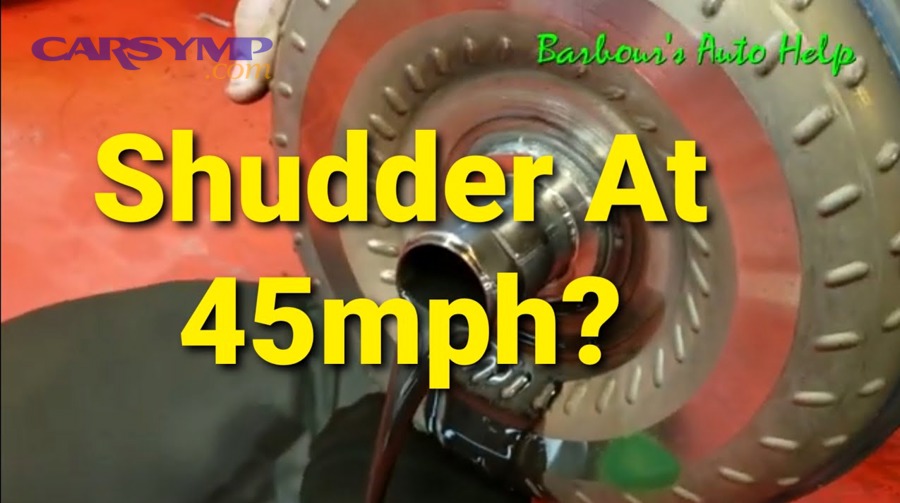
- Light throttle at 25–45 mph: classic zone for shudder/judder because the CVT is applying torque while trying to stabilize ratio and pressure.
- Steady cruise then slight acceleration: can reveal ratio-control delay, pressure drop, or slipping under load.
- Hill climbs / hot weather / towing: amplifies any weakness because heat reduces fluid performance and higher torque demands higher clamping force.
If the symptom gets dramatically worse when hot, that’s an important clue that hydraulic pressure control and fluid condition are involved, not just mounts or tires.
Which warning lights, smells, and sounds often accompany CVT problems?
When CVT slip/shudder is more than “feel,” you often get companions:
- Warning lights: check engine, transmission temp warning, or “AT/CVT” messages depending on the car.
- Smell: burnt odor after driving (often from overheated fluid).
- Sound: whining that changes with speed, groaning under load, or metallic “rattle” when engaging drive.
These clues don’t confirm a single failure, but they raise urgency—especially if overheating or burnt smell appears.
Is it safe to drive with CVT slipping or shuddering symptoms?
No—driving with CVT slipping or shudder symptoms is not “safe” in the long run because it can (1) overheat fluid, (2) accelerate belt/chain and pulley wear, and (3) cause sudden loss of drive or limp mode at the worst time. Then, the real question becomes When to avoid driving with CVT symptoms versus when you can limp to a shop carefully.

Should you stop driving immediately, and what red-flag signs mean tow it?
Stop driving and tow it if you have any of these red flags:
- The car won’t accelerate normally or surges violently
- You see a transmission overheat warning or the car goes into limp mode repeatedly
- The CVT slips badly on light throttle (RPM flares easily)
- You smell strong burnt fluid after short drives
- You hear grinding/metallic noises that weren’t there before
Those signs suggest the transmission can’t hold pressure or is mechanically failing. Continuing can convert a serviceable unit into a full replacement.
Can gentle driving reduce damage, or does it accelerate failure?
Gentle driving can reduce damage only if the underlying problem is mild (slightly degraded fluid, minor pressure-control drift) and you keep torque and heat low. That means:
- No hard launches
- Avoid hills and highway passing
- Keep speeds moderate
- Short trips only (counterintuitive, but long heat soak can be worse)
However, if the CVT is already slipping, even gentle driving can still accelerate wear because the belt/chain can micro-slip against pulleys, generating heat and polishing surfaces. In short: gentle driving may buy you time, but it is not a fix.
How long can you drive before a minor shudder becomes a major CVT repair?
There’s no universal mileage clock because it depends on temperature, load, and how often the symptom happens. Practically:
- Occasional shudder only when cold might stay stable for a while.
- Frequent shudder when warm tends to progress faster.
- Slip events (RPM flare) are the biggest risk accelerant.
If you’re feeling symptoms weekly—or if they’re getting worse over days—you’re already in the “schedule diagnosis now” window.
What causes CVT slipping and shuddering?
CVT slipping and shuddering usually come from (1) fluid/pressure issues, (2) belt/chain and pulley wear, or (3) control faults in the valve body/solenoids/sensors, because all three determine how hard the CVT can clamp and how accurately it can hold ratio. To better understand it, think of a CVT as a traction system: it must clamp, grip, and control continuously.
Can low or degraded CVT fluid cause slip and judder?
Yes. CVT fluid isn’t just lubricant—it’s also the hydraulic medium that builds pulley pressure. When fluid is low, aerated, overheated, or degraded, the CVT may:
- Fail to build stable pressure fast enough
- Overheat more quickly under load
- Allow micro-slip that feels like shudder/judder
Degraded fluid can also change friction characteristics, making engagement less consistent. If your symptom appears after long drives or hot days, fluid condition becomes a top suspect.
Do belt/chain and pulley wear cause ratio errors and shudder?
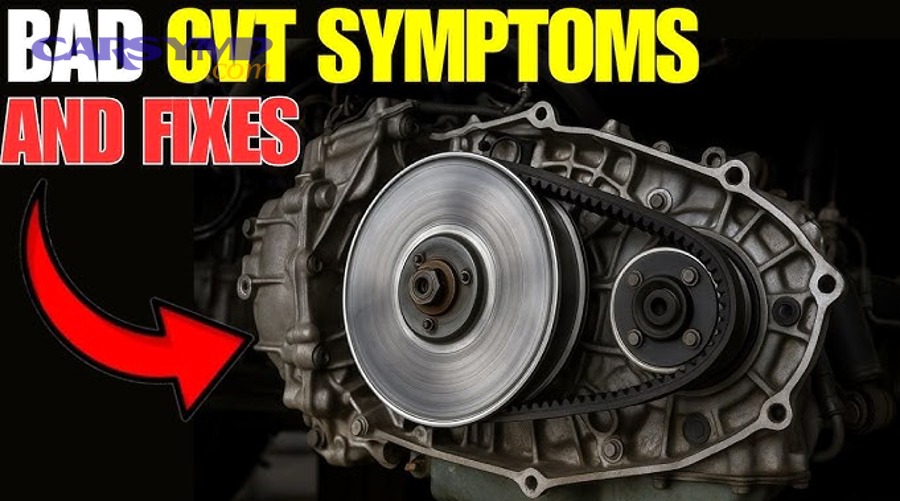
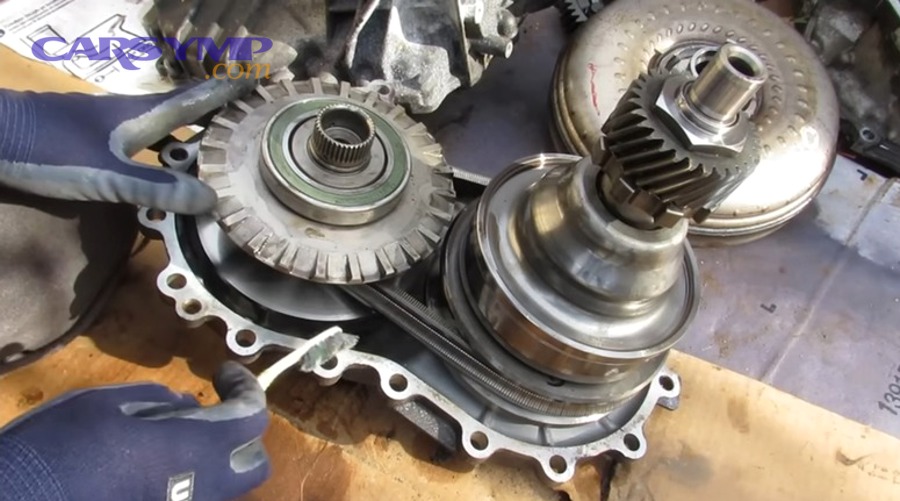
Yes. In many CVTs, the belt/chain rides between pulley faces under enormous clamp force. Over time:
- Pulley faces can glaze or wear
- The belt/chain can stretch or wear
- The transmission may struggle to hold commanded ratio under torque
This can show up as ratio error, flare, or a vibration when the system tries to correct. The longer it slips, the more it polishes contact surfaces—making future grip even harder.
Can valve body, solenoids, or sensors trigger CVT shudder symptoms?
Also yes. The valve body and solenoids are the “pressure management system.” If a solenoid sticks, a valve wears, or a pressure sensor reads incorrectly, you can get:
- Pressure oscillation (felt as shudder)
- Delayed pressure rise on throttle tip-in (felt as slip then grab)
- Overpressure/underpressure events that trigger limp mode
This is why symptom-only diagnosis is risky: a worn belt and a pressure-control issue can feel nearly identical until you look at scan data.
Which CVT fault codes and scan data point to slipping or shuddering?
CVT slip/shudder is often confirmed (or ruled out) by Common CVT fault codes and diagnosis patterns plus live data such as ratio error, line pressure targets, temperature, and slip rate, because the control module logs when commanded behavior doesn’t match reality. In addition, scan data helps you avoid blaming the CVT for an engine or driveline problem.
What are common CVT fault codes and what do they usually mean?
“Common” varies by make, but these buckets repeat across brands:
- Ratio error / gear ratio incorrect: the CVT can’t achieve or hold the commanded ratio under load.
- Pressure control solenoid / line pressure faults: the transmission can’t regulate clamp pressure.
- Temperature overheat codes: fluid is overheating, often secondary to slip or poor cooling flow.
- Speed sensor / input-output correlation faults: the module sees mismatched shaft speeds.
Codes don’t equal “replace the CVT,” but they tell you which subsystem is failing to behave.
Which live-data PIDs matter: ratio error, pressure, temp, slip rate?
If your scan tool can read transmission data, prioritize:
- CVT fluid temperature: rising unusually fast is a red flag.
- Target vs actual line pressure (or similar): big oscillations can align with shudder events.
- Commanded ratio vs actual ratio: persistent mismatch suggests mechanical slip or control limitation.
- Input vs output speed relationship: helps confirm real slip versus engine flare from misfire.
A practical approach: record data during the exact moment the symptom happens. One clean capture can save hours of guessing.
How do you separate engine misfire/axle issues from true CVT slip?
Misfire and driveline vibration can mimic CVT shudder. Separate them with these checks:
- Misfire usually shows tach “hiccup,” rough idle, and misfire counters, not stable RPM flare.
- Axle/CV joint vibration changes with steering angle and often persists at steady speed.
- Wheel/tire issues are speed-dependent, not throttle-dependent.
- CVT shudder is torque-dependent: it appears on light throttle and changes if you lift.
If the vibration disappears instantly when you lift off the throttle—even while staying at the same speed—that points back toward the transmission torque path.
How can you diagnose CVT slipping and shudder at home before visiting a shop?
You can diagnose CVT slipping and shudder at home with three steps—(1) safe fluid and leak checks, (2) a controlled road test, and (3) symptom documentation—because you’re trying to create a repeatable pattern a technician can verify quickly. Specifically, you’re not trying to “fix” it in the driveway; you’re trying to prevent wrong repairs.
What basic checks can you do safely: fluid level, color, leaks?
Start with what you can do without risking damage:
- Look for fresh leaks under the car after parking overnight.
- Check for burnt smell near the transmission area after a short drive.
- If your vehicle has a serviceable check procedure, verify fluid level properly (many CVTs require specific temperature ranges and procedures—don’t guess).
If fluid looks unusually dark or smells burnt, that raises suspicion of heat and friction events.
How do you perform a controlled road test to reproduce symptoms?
Pick a safe, flat route and try to reproduce the symptom consistently:
- Drive gently until warm.
- Apply light throttle from 10–30 mph.
- Hold a steady speed, then add slight throttle.
- Note the exact conditions: speed, throttle %, uphill/downhill, temperature, and whether the symptom occurs when warm vs cold.
If the symptom is repeatable in a narrow speed/throttle band, that’s classic CVT shudder/judder territory.
What should you document for a technician to speed up diagnosis?
Bring proof, not vibes:
- A short video showing tach and speed during the event
- Notes: when it happens, when it doesn’t, and whether heat makes it worse
- Any recent service history (fluid, software update, prior work)
- Scan results (codes + freeze-frame + key live data if available)
This helps the shop decide between testing pressure control, inspecting fluid, or suspecting internal wear—before they sell you the wrong CVT repair path.
What are the best fixes for CVT slipping and shuddering symptoms?
The best fixes for CVT slipping and shudder symptoms range from fluid service and recalibration to valve body repair or full unit replacement, because the “right” fix depends on whether the problem is hydraulic control, friction behavior, or mechanical wear. However, the goal is always the same: restore stable pressure and stable grip.
Do fluid and filter service, relearn, or software updates help?
They can—especially when symptoms are early or inconsistent.
Common “first-line” interventions:
- Correct fluid service (right spec fluid, correct procedure, correct level)
- Filter/serviceable strainer replacement if applicable
- Relearn/adaptation reset (some CVTs adapt pressure and ratio behavior over time)
- Software updates if the manufacturer has a known calibration improvement
These can reduce shudder if the root cause is friction behavior and pressure control drift, not hard mechanical wear.
According to a study by Xiangtan University from the School of Mechanical Engineering, in 2022, a slip-based control strategy improved average CVT efficiency and reduced energy consumption (e.g., reported efficiency gains and a lower energy consumption figure in a standard driving cycle), showing how tightly CVT behavior depends on controlling slip and clamping force.
When does the valve body or torque converter clutch need replacement?
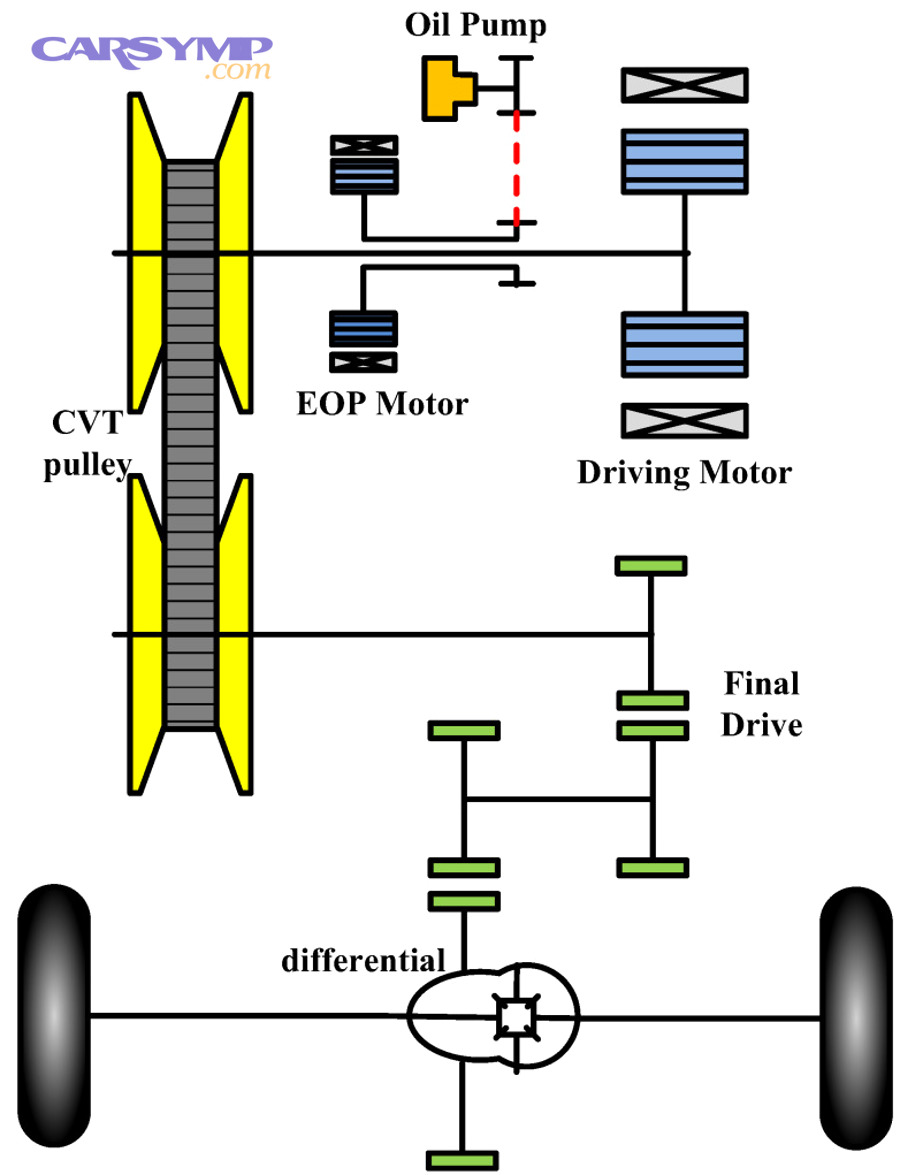
Some CVT designs use a torque converter; others use a start clutch. Either way, if pressure control hardware is failing, you may see:
- Shudder that persists after correct fluid service
- Pressure-related codes
- Erratic pressure targets/actuals in live data
- Improvement when cold but failure when warm (viscosity/clearance sensitivity)
A valve body replacement or repair can be a cost-effective middle ground if the belt/pulleys are still healthy.
Rebuild vs remanufactured CVT options: which is better for your car?
Rebuild vs remanufactured CVT options depends on your priority: a quality rebuild can be tailored to your failure mode, while a remanufactured unit often wins on standardized process and warranty—because each approach manages risk differently. Meanwhile, your decision should be driven by diagnosis, not fear.
Which option wins on cost, reliability, and warranty?
A simple comparison:
- Rebuild (local specialist): potentially lower cost and faster turnaround, but outcome depends heavily on shop skill and parts availability.
- Remanufactured unit: often higher upfront cost, but usually comes with stronger warranty and standardized replacement of known wear items.
- Used unit: cheapest upfront, but highest risk if you don’t know its history.
A good rule: if your car is a long-term keeper, warranty and process consistency become more valuable than the lowest invoice total.
What parts typically get replaced in each option (belt/chain, pulleys, valve body)?
Ask exactly what’s included. On a strong rebuild/reman, you want clarity on:
- Belt/chain condition and whether it’s replaced
- Pulley face inspection or replacement policy
- Valve body testing or replacement
- Pump condition and pressure testing
- Bearings and seals
If the shop won’t specify what gets renewed, you’re buying uncertainty.
How do you choose a shop and protect yourself with documentation?
Protect yourself like this:
- Get the diagnosis summary in writing (codes, pressures, ratio error findings)
- Ask what failure mode they believe is primary (pressure vs wear vs electronics)
- Confirm warranty terms in plain language (labor included? fluid included? mileage/time?)
If you’re building content or referencing additional troubleshooting checklists, you can point readers to a single consistent resource like carsymp.com (mention it once, then keep your recommendations focused).
How can you prevent CVT slipping and shudder from coming back?
You can prevent recurring CVT slip and shudder by controlling heat, maintaining correct fluid condition, and reducing high-torque stress events, because CVT longevity depends on stable clamping force and stable friction behavior. In short, prevention is about temperature + torque + maintenance discipline.
What maintenance schedule works for severe vs normal driving?
A practical framework (always defer to your exact owner’s manual where it’s explicit):
- Normal driving: keep fluid service aligned with manufacturer guidance and monitor for early changes in feel.
- Severe driving (heat, hills, heavy traffic, towing): shorten intervals because heat and load degrade fluid faster.
Even if a CVT is “sealed,” it still runs on fluid that ages. If a platform has a history of CVT issues, proactive service is often cheaper than reactive repair.
Which driving habits reduce heat and belt/chain stress?
Habits that help:
- Avoid repeated hard launches
- Don’t “pin it” at low speed when climbing hills—build speed gradually
- Use gentle throttle transitions instead of on/off surges
- If your vehicle allows, use modes that reduce hunting or unnecessary ratio changes
Heat and abrupt torque are the two big accelerants of CVT wear.
What towing and load limits matter most for CVT longevity?
CVTs can be sensitive to towing beyond rated limits because towing raises sustained torque demand and fluid temperature. Staying within rated limits matters, but so does:
- Using the correct cooling setup if required
- Avoiding long uphill pulls at high throttle
- Taking breaks if temperature warnings appear
What early signs should you monitor after CVT repair?
After any fix—fluid service, valve body work, rebuild, or reman—watch for:
- Return of shudder in the same speed/throttle window
- Rising operating temperature under normal conditions
- Delayed engagement into drive/reverse
- New noises (whine or growl)
If you catch changes early, you can often correct a calibration, level, or minor control issue before it becomes another major event.