


A CV axle shaft and CV joint inspection is a practical, step-by-step way to confirm whether a torn boot, lost grease, or abnormal joint play is behind clicking turns, vibration under load, or new clunks—without guessing or replacing parts blindly.
Next, you’ll learn how to set up the car safely, where to look first, and what specific boot and grease patterns matter most, so your inspection results are clear enough to act on rather than “maybe.”
Then, you’ll connect symptoms to findings—outer joint clicking versus inner joint vibration—so your quick road check supports what you see under the vehicle instead of contradicting it.
Introduce a new idea: once you can inspect consistently, you can also decide confidently whether to monitor, reboot, or replace the CV axle assembly, and you’ll avoid common misdiagnoses that mimic CV joint failure.
What is a CV axle shaft and CV joint, and what parts are you inspecting?
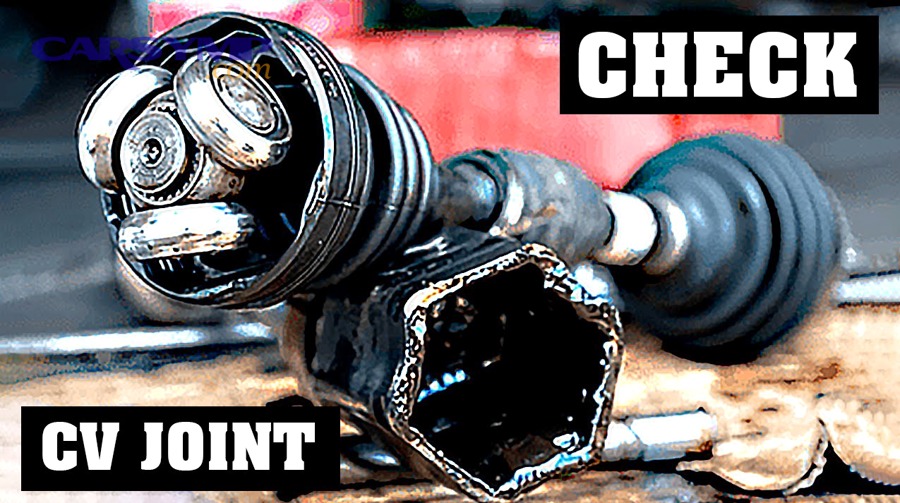
A CV axle shaft and CV joint is a drivetrain assembly that transfers engine torque to the drive wheels while allowing suspension movement and steering angles, using a booted, grease-packed joint to keep motion smooth and constant-velocity.
To better understand what you’re inspecting, it helps to picture the joint as a protected bearing system: if the protection fails, the wear accelerates fast.
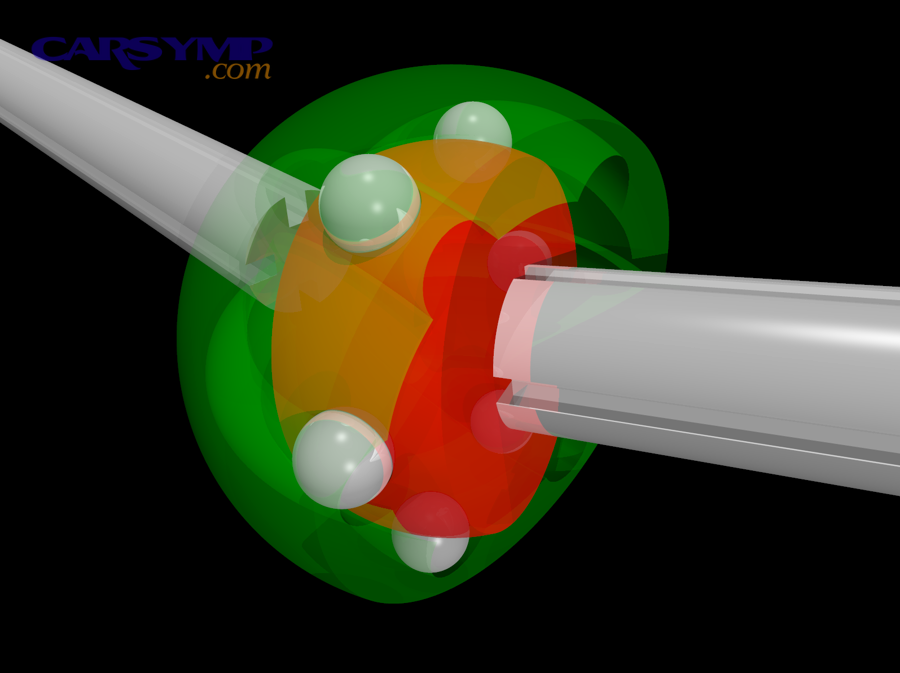
When DIY car owners say “CV axle,” they often mean the whole half-shaft assembly: a shaft with an inner CV joint at the transmission side and an outer CV joint at the wheel side. Your inspection targets are not mysterious—each one answers a simple question:
- Boot condition: Is the rubber boot intact, flexible, and sealed?
- Grease condition: Is grease staying inside, or has it leaked/splattered out?
- Clamp condition: Are the clamps holding the boot tight at both ends?
- Joint play/feel: Does the joint feel smooth and tight, or loose, rough, and noisy?
- Evidence of contamination: Has dirt or water entered through a crack or tear?
A strong inspection stays consistent in terminology and sequence. You do not “diagnose the axle” in one glance; you inspect the boot, confirm grease containment, and check for abnormal play—three parts of the same story. That story matters because CV joints rely on lubrication and controlled contact surfaces; once grease is lost or contaminated, the joint often transitions from “fine” to “noisy” quickly.
What is the difference between the inner CV joint and outer CV joint during inspection?
The outer CV joint is usually the main source of clicking during turns, while the inner CV joint more often contributes to vibration under acceleration, because each joint handles torque and angle changes differently.
However, you should still inspect both joints every time, because a torn inner boot can hide longer, and a contaminated inner joint can still create drivability issues.
Outer CV joint (wheel-side):
- Handles large steering angles and wheel articulation
- Common symptom: clicking/popping on tight turns
- Inspection focus: boot cracks near the folds, grease sling inside the wheel well, joint roughness when rotating/angling
Inner CV joint (transmission-side):
- Handles plunge (in-and-out movement) as suspension travels
- Common symptom: vibration/shudder under acceleration (especially straight-line load)
- Inspection focus: boot leaks that sling grease onto the subframe or underbody, looseness under load, abnormal axial movement beyond normal plunge behavior
If you remember one macro rule, use this: outer joint = steering angle stress, inner joint = load and plunge stress. Your inspection steps will mirror that reality.
Do you need to lift the car to inspect a CV axle and CV joint safely?
Yes—you usually need to lift the car to inspect a CV axle and CV joint safely because you must see the inner boots, check the clamps closely, and feel joint play without the tire blocking access; doing it properly reduces missed cracks, false alarms, and unsafe guesswork.
Next, treat lifting as part of the inspection itself, because a rushed setup leads to rushed conclusions.
A quick visual check with the wheels on the ground can catch obvious boot tears, but it commonly fails to detect:
- Small cracks hidden on the back side of the boot folds
- Inner boot leaks blocked by shields or the subframe
- Grease sling patterns that only appear when the wheel is turned or removed
- Loose clamps that look “fine” until you touch them
When you’re doing a drivetrain inspection, you are not just looking for damage—you are building enough confidence to decide the next action. That level of confidence typically requires safe lift access.
What tools and setup do DIY car owners need before starting the inspection?
You need a basic tool and safety setup: stable lifting equipment, good lighting, and simple inspection aids, because CV boot cracks and grease patterns are easiest to confirm when the area is clean and well-lit.
Then, once the car is secure, your inspection becomes repeatable rather than improvisational.
Basic checklist (DIY-friendly):
- Floor jack rated for your vehicle
- Jack stands (never rely on the jack alone)
- Wheel chocks
- Lug wrench or impact (optional)
- Flashlight or headlamp
- Nitrile gloves + shop rags
- Brake cleaner (optional, for cleaning grease off the outside only)
- Small pry bar or large screwdriver (for gentle movement checks, not aggressive prying)
Setup sequence that prevents mistakes:
- Park on flat ground and set the parking brake.
- Chock the wheels that stay on the ground.
- Break lug nuts loose before lifting (if you’ll remove wheels).
- Lift at manufacturer-approved points and place jack stands securely.
- Give the car a firm shake test before going underneath.
This process sounds basic, but it is also your first quality-control step. A stable car lets you inspect calmly, and calm inspection reduces “phantom problems.”
Is a quick driveway inspection without removing the wheel enough to spot a bad CV boot?
Yes, a quick driveway inspection can be enough to spot a bad CV boot if the boot is clearly torn, grease is visibly flung around the wheel well, and the crack is easy to see; but it is not enough when the tear is small, the inner boot is hidden, or the leak is slow.
More importantly, if you plan to base a repair decision on the result, the extra access from wheel removal usually pays off.
A wheel-on check works best when you see one of these obvious signs:
- A split boot rib with wet grease around it
- Grease sprayed in a circular pattern inside the rim or wheel well
- A clamp hanging loose or missing
It fails when:
- The crack is on the “back side” of the boot folds
- Undertrays or shields hide the inner boot
- Grease leakage is minor, intermittent, or dried into a thin film
Treat the driveway check as triage. For a definitive answer, continue the full inspection steps below.
What are the step-by-step CV boot inspection steps for tears, cracks, and grease leaks?
The best method is a step-by-step CV boot inspection in 6 steps—clean the area, inspect the boot folds, verify clamp sealing, trace grease sling patterns, compare inner vs outer boots, and re-check after turning the steering—so you can confirm leakage and contamination risk with clarity.
Next, follow the same order every time, because consistency is what separates a reliable inspection from a lucky one.
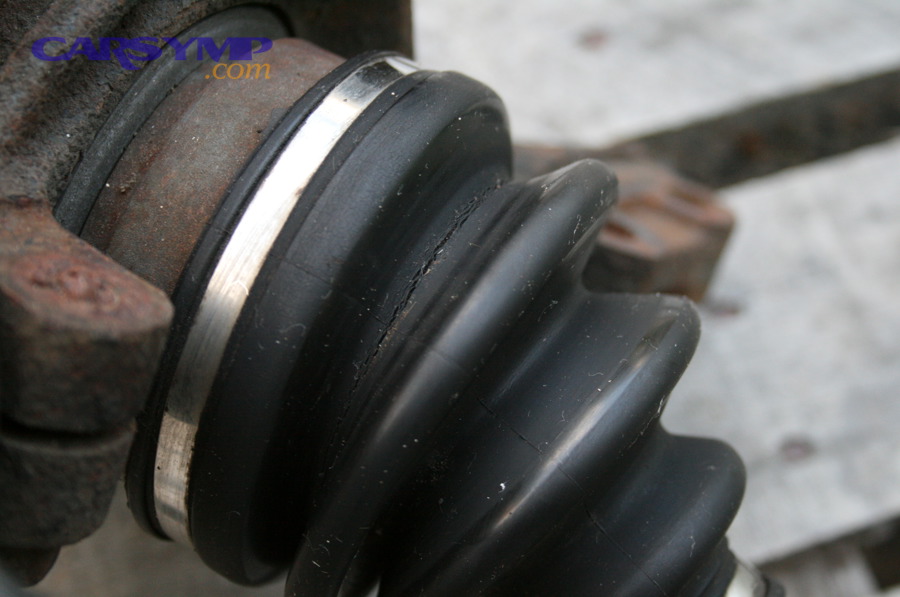
Step-by-step workflow (use this exact sequence)
Step 1: Clean the outside of the boot (lightly).
Wipe off heavy dirt and old grease so cracks and fresh leaks become visible. Do not spray cleaner into a torn boot opening; you don’t want to wash debris into the joint.
Step 2: Inspect the boot folds—especially the valleys.
Boots usually crack where rubber flexes most: the deep fold valleys. Rotate the steering to change the boot angle, then check again. Look for:
- Hairline cracks that widen when flexed
- Splits at the fold valley
- Rubber that looks dry, shiny, or brittle
Step 3: Inspect both ends of the boot and both clamps.
A boot can look intact but still leak at the clamp. Confirm:
- Clamps are tight and evenly seated
- No grease is pushing out in a ring at the clamp edge
- Boot lip is not folded or pinched
Step 4: Trace grease sling patterns outward.
Grease moves with rotation. If it escaped, it often leaves a pattern that tells you where it came from.
Step 5: Compare inner and outer boots side-by-side (left vs right).
A great trick is comparative inspection: the “good side” becomes your reference. If one boot is darker, wetter, or dirtier, ask why.
Step 6: Re-check after changing steering angle or wheel position.
Turn the steering lock-to-lock (engine off) and re-check the folds. Some cracks only show under flex.
This process is also useful for Pre-purchase drivetrain inspection tips, because it helps you catch a torn boot before you buy a vehicle that “only needs a little work.”
What grease leak patterns indicate a failing CV boot vs normal residue?
A failing CV boot typically shows wet grease actively escaping (often flung in a wide arc), while normal residue is usually a light film near the clamp with no spray pattern and no fresh wetness.
However, you must evaluate the pattern together with boot condition, because residue without cracks can be old work or minor seepage, not a current failure.
Patterns that strongly suggest failure:
- Radial spray inside the wheel well or on suspension components (grease sling)
- Wet grease collecting on control arms, strut, or inner fender liner
- Grease spots on the inside of the rim (outer joint leak)
- Grease on the subframe or underbody near the transmission side (inner joint leak)
Patterns that can be “normal-ish” or non-urgent:
- Thin oily film around a clamp with no cracks and no sling
- Old dried grease that looks dusty and not wet (but still investigate boot integrity)
A key nuance: fresh grease looks wet and tacky, while long-term leakage often turns into a dirt-caked paste. That dirt is the real problem, because it signals contamination potential once the boot seal is compromised.
How do you inspect inner CV boots when splash shields or undertrays block access?
You inspect inner CV boots by changing viewing angles, using steering position to open sight lines, and checking for grease traces on nearby surfaces (subframe, exhaust heat shields, undertrays), because inner boots often leak in hidden areas before you can see the tear directly.
Then, if visibility is still poor, wheel removal and a better light angle usually reveal the boot folds.
Practical access techniques:
- Turn the steering to full lock to create space behind the axle line
- Use a headlamp and look from the front and rear of the wheel well
- Feel the boot folds gently with a gloved hand (cracks can be felt)
- Check the underside of splash shields for fresh grease spots
- Look for grease accumulation on the subframe directly below the inner joint
If you see grease but cannot find the crack, do not dismiss it. Grease sling is evidence; it means the boot seal was compromised at some point, even if the tear is small.
How do you check CV axle and CV joint play (movement) without damaging components?
You check CV axle and CV joint play by testing movement in three directions—rotational lash, radial wiggle, and axial in-and-out motion—while supporting components gently and avoiding prying against seals, so you can detect looseness and roughness without creating new damage.
Specifically, your hands are the best “tools” here, because they can feel roughness and clunks that eyes miss.
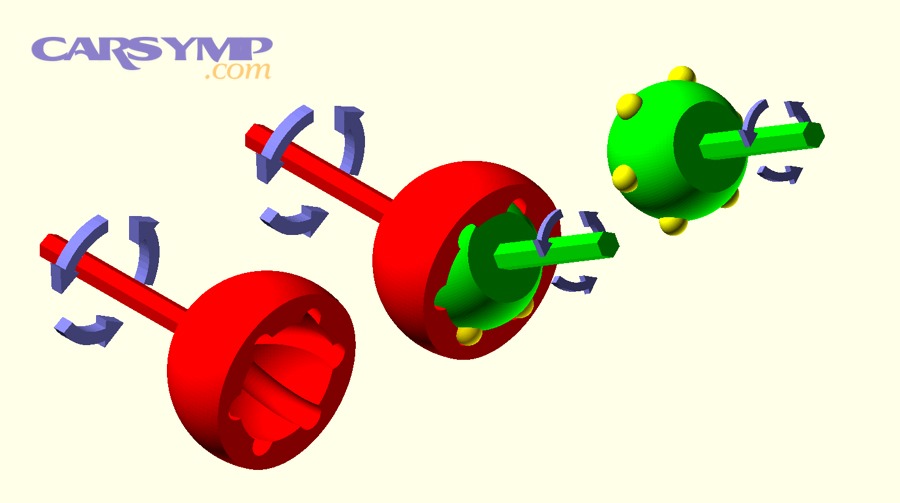
The safe “three-feel” method
1) Rotational feel (lash and smoothness):
Grab the axle shaft and rotate it back and forth gently. A small amount of lash can be normal due to drivetrain tolerances, but sharp clunks or gritty feeling are not.
2) Radial feel (wiggle):
With the wheel off (best), hold the outer joint housing area and try to wiggle. You are checking for excessive looseness or a feeling like the joint “knocks” in its housing.
3) Axial feel (in-and-out movement):
The inner joint typically allows some plunge movement. You are not looking for “any movement,” but for movement that feels uncontrolled, clunky, or inconsistent.
A common DIY mistake is using too much leverage with a pry bar. If you pry hard against a seal or bearing surface, you can create a leak or a noise that wasn’t there. Keep movements controlled and diagnostic, not forceful.
Is any CV joint play normal, and what amount of looseness is a red flag?
Yes, some CV joint play can be normal because the drivetrain has designed clearances and the inner joint often plunges as suspension moves; but excessive looseness is a red flag when you feel clunks, rough notchiness, or see visible wobble that does not match the other side.
More importantly, “red flag play” usually comes with another sign—grease loss, a torn boot, or a repeatable noise.
Use this simple decision logic:
- Likely normal: slight smooth plunge at inner joint, no noise, boot sealed, no grease sling
- Concerning: noticeable knock when changing direction, rough/gritty rotation, boot cracked or greasy, symptoms present
- High risk: loud clicking/clunking, severe vibration under load, torn boot with visible contamination paste
If your hands detect roughness and your eyes confirm boot damage, treat that as a consistent finding, not an opinion.
How do you tell CV joint noise from suspension or brake-related noises during the check?
CV joint noise is more likely when the sound changes with steering angle or torque load, while suspension or brake-related noises often change with bumps, braking, or wheel rotation independent of torque; separating them requires controlled movement tests that isolate steering, load, and rotation.
Then, once you isolate the condition that triggers the noise, your inspection findings become easier to trust.
Isolation tips (simple but effective):
- If noise appears mainly during tight turns at low speed, suspect outer CV joint first.
- If vibration appears mainly during acceleration, suspect inner joint or driveline load path.
- If noise appears during braking, check brakes, dust shields, and wheel bearings before blaming CV joints.
- If noise appears over bumps, suspect sway links, struts, or mounts.
This is where a small “elimination pass” prevents wasted repairs. CV joints are common, but they are not the only source of clicks and clunks.
Which symptoms match CV joint vs CV axle problems, and how do you confirm with a short test drive?
There are four main symptom patterns that match CV joint vs CV axle problems—clicking on turns, vibration under acceleration, clunking on load changes, and grease sling evidence—and you confirm them with a short, controlled test drive using low-speed circles and gentle acceleration.
Next, treat the test drive as a confirmation tool, not a replacement for the physical inspection.
A reliable approach is to combine what you feel with what you see. The “hook chain” matters: symptoms suggest where to look, and inspection confirms whether the suspicion is true.
A practical “Drivetrain noises and vibration checklist”
The checklist below summarizes the most common symptom-to-source mapping and how to confirm it without special equipment:
- Clicking/popping while turning tightly (especially under light throttle): likely outer CV joint
- Vibration/shudder during acceleration (often straight-line): commonly inner CV joint or driveline load issue
- Clunk when shifting from drive to reverse (or on/off throttle): could be CV joint/axle, mounts, or driveline lash
- Grease sprayed in wheel well or on subframe: strong boot leak indicator
- Noise that changes with braking, not with steering/load: more likely brake or wheel bearing related
If you are doing a broader drivetrain inspection, include a quick scan for Driveshaft U-joint wear symptoms too (on vehicles that have a driveshaft): rhythmic clunking, vibration that changes with speed, or visible rust powder around U-joint caps can point away from CV joints and toward U-joints.
Does clicking when turning usually mean an outer CV joint issue?
Yes, clicking when turning usually points to an outer CV joint issue because the outer joint operates at the largest steering angles and a worn joint can click as the bearing surfaces load and unload repeatedly; it is also common because outer boots are exposed to more flex and road debris.
However, you still need at least two confirmations: a repeatable turning test and inspection evidence like boot damage or grease loss.
Turning confirmation method:
- In an empty lot, turn full lock and drive slowly in a tight circle.
- Repeat in the opposite direction.
- Note whether the clicking is louder on left or right turns.
Then, correlate the louder direction with the suspected side. If clicking is louder during left turns, the right outer joint is often the suspect (because it is loaded more), but always confirm with the physical inspection rather than relying on a single rule.
Does vibration under acceleration point to the inner CV joint more often than the outer joint?
Yes, vibration under acceleration often points to the inner CV joint more than the outer joint because the inner joint’s plunge and load handling can create vibration when wear, grease loss, or internal friction changes under torque; the effect can feel like a shudder that fades when you lift off the throttle.
Besides, the strongest confirmation is when the vibration is torque-dependent and your inner boot inspection shows grease leakage or damage.
A useful cue: speed-only vibration can be tires or wheel balance, while load-only vibration pushes suspicion toward the driveline (including inner CV joints). That distinction keeps your diagnostics grounded.
According to a study by Kookmin University from the School of Mechanical and Automotive Engineering, in 2010, researchers found that idle vibration characteristics in driveline systems with constant-velocity joints were affected by factors like spider position variation and axial vibration characteristics. (Source: link.springer.com)
When does a CV axle inspection result mean “repair now,” “monitor,” or “replace the axle”?
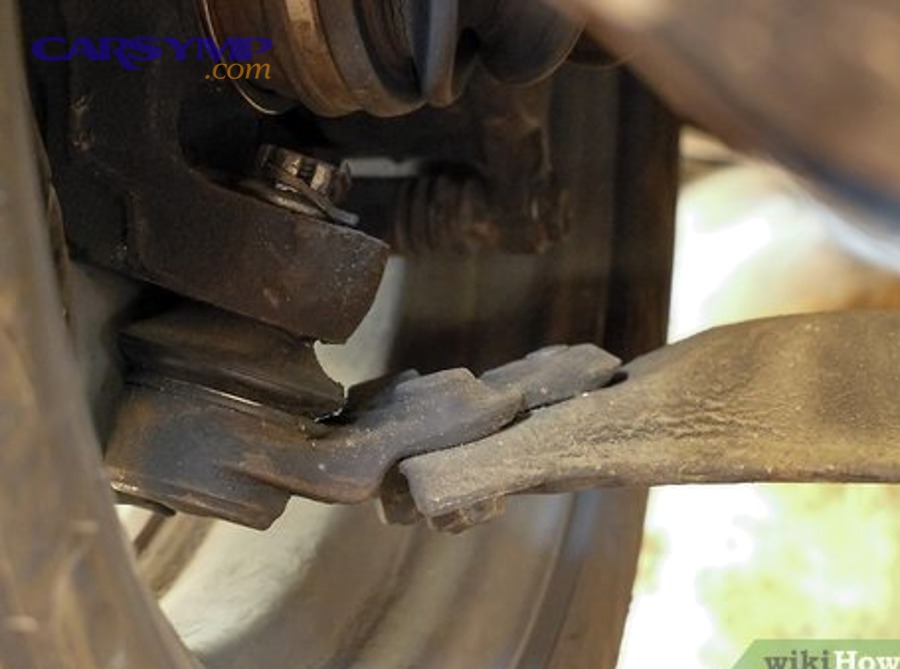
A CV axle inspection result means “repair now” when the boot is torn with grease loss or contamination, “monitor” when the boot is intact with only minor surface aging and no symptoms, and “replace the axle” when there is noise, roughness, or significant play that suggests internal wear beyond a simple seal issue.
Next, use a decision framework so you do not overreact to harmless residue or underreact to a joint that is already wearing rapidly.
A helpful way to think about it is risk and time. Boots are preventative; joints are mechanical. A boot problem can become a joint problem quickly if contamination starts.
Should you replace just the boot or replace the entire CV axle assembly?
Replacing just the boot wins when the tear is fresh, the joint is quiet and smooth, and contamination is unlikely; replacing the entire CV axle assembly is best when there is clicking, vibration, roughness, or long-term grease loss, because the joint’s internal surfaces may already be worn.
However, the deciding factor is not “boot vs axle” in theory—it is what your inspection suggests about grease retention and internal condition.
Boot-only is reasonable when:
- Crack/tear appears recent (fresh wet grease, minimal dirt paste)
- No clicking on turns and no vibration under acceleration
- Joint feels smooth during rotational checks
- You can confidently clean and reseal without pushing debris into the joint
Full axle replacement is usually smarter when:
- Clicking is present and repeatable
- Vibration under load is present
- Grease leakage looks long-term (dried paste, heavy dirt stuck to grease)
- Joint feels rough, notchy, or clunky
- A clamp is missing and the boot has been open to the environment
This is why pre-purchase checks matter: torn boots are common reasons CV axles are replaced, and once the joint is worn, resealing alone may not restore quiet operation.
What inspection findings mean you should stop driving and get it fixed immediately?
There are five inspection findings that mean you should stop driving and fix it immediately: a wide-open torn boot with grease loss, loud clicking that worsens, severe acceleration vibration, clunking that suggests extreme looseness, and visible joint damage or near-separation signs.
More importantly, these findings are urgent because a failed joint can leave you stranded or damage nearby components.
High-urgency findings (do not ignore):
- Boot is ripped open and grease is actively exiting
- Grease is everywhere and the joint area is gritty or dry
- Loud, rhythmic clicking during turns that is worsening
- Strong vibration that appears under acceleration and feels unsafe
- Noticeable “knock” when changing between drive and reverse (beyond mild drivetrain lash)
If you see these, treat your inspection as completed: you have enough evidence to act, and continued driving is the real risk.
What can be mistaken for a bad CV joint, and how do you avoid false diagnoses?
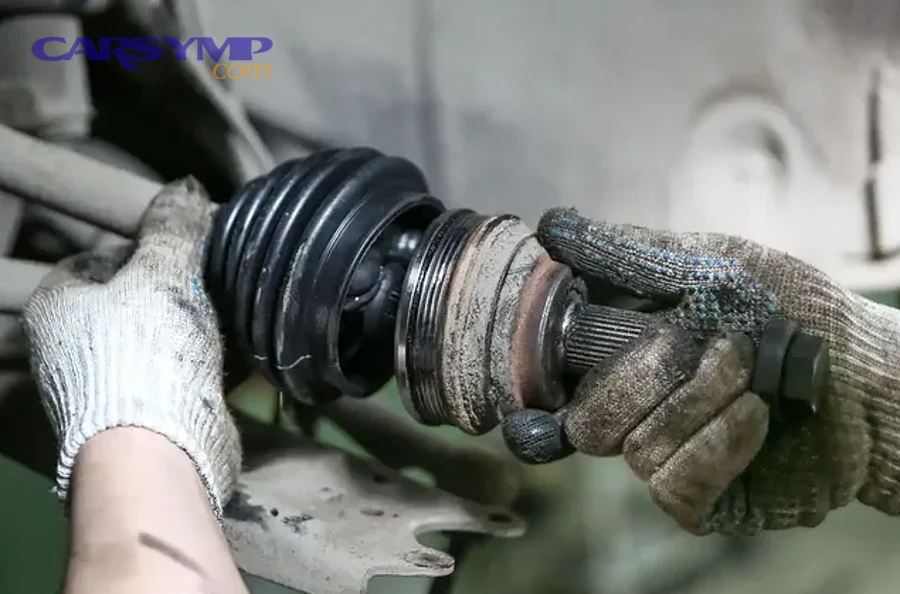
Many problems can be mistaken for a bad CV joint, and you avoid false diagnoses by separating steering-angle noises from brake noises, isolating torque-load vibration from speed-only vibration, and performing a quick elimination check of bearings, shields, mounts, and U-joints before committing to CV axle replacement.
In addition, this is where micro-level inspection habits protect your budget: a wrong part replacement is still an unfixed problem.
What problems mimic CV joint clicking or clunking but are not CV-related?
There are seven common non-CV problems that mimic CV joint clicking or clunking: brake dust shield contact, loose lug nuts, worn wheel bearings, sway bar links, loose strut mounts, worn engine/trans mounts, and on some vehicles, driveshaft U-joint wear symptoms.
To illustrate how they trick you, many of these noises appear during turning or transitions, just like CV joint sounds, but the trigger is different.
Fast elimination checks:
- Dust shield: Look for shiny rub marks; lightly bend it away from the rotor if it’s touching.
- Lug nuts: Confirm torque and seating; loose hardware can “click” or “pop.”
- Wheel bearing: Listen for growl that changes with speed, not necessarily torque; feel for rough rotation with the wheel off.
- Sway links/strut mounts: Noise often correlates with bumps and body roll rather than steady turning load.
- Engine/trans mounts: Clunk often appears on throttle on/off transitions; visual movement can confirm.
- U-joints (where applicable): Clunk and vibration that track driveshaft speed can point to U-joints rather than CV joints.
The point is not to replace CV joints less often—it is to replace them for the right reason, supported by consistent evidence.
How does AWD/4WD change CV axle inspection scope compared to FWD?
AWD/4WD changes CV axle inspection scope by increasing the number of axles and joints you must check and by adding shields, angles, and rear components that can also generate drivetrain noises, so a complete inspection must be more systematic than a simple front-only check.
Meanwhile, the core inspection targets stay the same: boots, grease, clamps, and play.
What changes in practice:
- You may have front and rear CV axles, and each can leak or wear.
- Access can be more restricted due to undertrays, differentials, and heat shielding.
- Noise diagnosis can be trickier because more rotating components are involved.
If you’re applying Pre-purchase drivetrain inspection tips for an AWD vehicle, expand your routine: inspect all boots you can see, trace grease patterns on both subframes, and note whether vibration seems front-biased or rear-biased during the test drive.
Can heat, road salt, or off-road use cause CV boot failure sooner, and what should you look for?
Yes, heat, road salt, and off-road use can cause CV boot failure sooner because rubber ages faster with heat cycles, salt accelerates clamp corrosion, and off-road debris can physically nick boots and stress the folds; the inspection clue is early cracking, clamp corrosion, and grease seepage that appears intermittently.
Especially in harsh climates, your best protection is earlier detection, not later replacement.
Environmental wear indicators:
- Fine cracking across multiple boot folds
- Clamps with rust, looseness, or distortion
- Grease seepage that appears after long drives (heat-thinned grease)
- Small boot nicks with dirt accumulation around the cut
If your vehicle sees rough conditions, plan to inspect more often and treat “small cracks” as an early warning rather than a cosmetic issue.
What is the difference between tripod (inner) and Rzeppa (outer) joints, and does it change the inspection feel?
Tripod joints (often used as inner joints) emphasize plunge movement with roller bearings, while Rzeppa joints (often used as outer joints) use a ball-and-cage design for higher steering angles; the difference can change the inspection feel because tripod issues may present as load-dependent vibration, while Rzeppa issues often present as turn-dependent clicking.
Thus, the joint type helps you interpret your symptom pattern, but it does not change your inspection fundamentals.
What stays the same:
- A torn boot is still a torn boot.
- Grease loss still raises wear risk.
- Roughness and clunks still matter.
What changes slightly:
- Inner tripod joints may feel “in-and-out” smoother by design (plunge), so you focus more on uncontrolled clunks than on the mere presence of axial movement.
- Outer Rzeppa joints are more sensitive to steering angle, so clicking confirmation during tight turns is particularly meaningful.
If you keep your inspection consistent—boot integrity, grease containment, clamp sealing, and abnormal play—you’ll get reliable answers regardless of joint design.