


A worn driveshaft U-joint usually announces itself the same way every time: vibration that follows vehicle speed, clunks during throttle changes, squeaks/chirps, and shuddering under load—and you can use these patterns to spot the problem early before it escalates.
Next, you’ll learn how to confirm U-joint wear with a simple DIY inspection, so you’re not guessing based on noise alone and you can describe the issue clearly if you decide to visit a shop.
Then, you’ll see how U-joint symptoms compare to other common causes of driveline vibration and clunking, so you don’t replace the wrong part when the real culprit is tires, mounts, a bent driveshaft, or a support bearing.
Introduce a new idea: the most helpful symptom guide also tells you when to stop driving and what conditions make U-joints wear faster, so you can move from “I notice something” to “I know what to do next” with confidence.
What is a driveshaft U-joint (universal joint), and what does it do in the drivetrain?
A driveshaft U-joint (universal joint) is a cross-shaped driveline coupling that transfers torque while allowing angle changes between the transmission, driveshaft, and differential, so the shaft can keep spinning as the suspension moves.
To better understand why wear symptoms feel so specific, it helps to picture what the U-joint is doing every second you drive: it’s flexing, spinning, and carrying load at the same time.
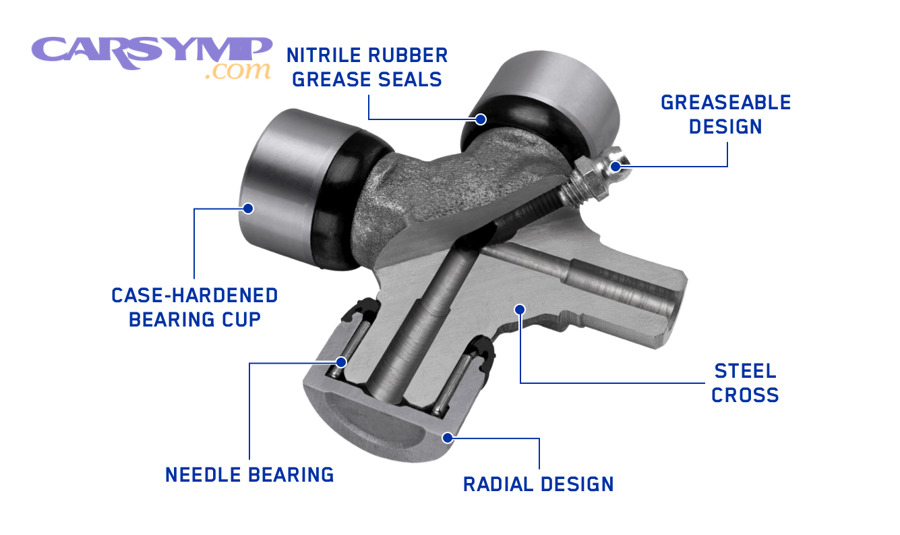
At a basic level, a U-joint is made of:
- A steel cross (spider) that forms the “X” shape
- Bearing cups pressed into the yoke ears on each side
- Needle bearings inside each cup that let the cross rotate smoothly
- Seals that keep grease in and contaminants out (water, grit, salt)
That construction matters because U-joint “wear” is rarely a single event. Most of the time, it’s a progression:
- Grease degrades or washes out.
- Needle bearings start to run dry or contaminated.
- Metal surfaces develop micro-damage and friction increases.
- The joint either becomes loose (play) or binds (stiff spots)—or both, depending on which bearing cap is failing.
In practical terms, the U-joint’s job is to keep torque flow smooth even when the drivetrain isn’t perfectly straight. As MOOG explains, universal joints allow the driveshaft to move with suspension travel while continuing to deliver power. (moogparts.com)
What are the most common driveshaft U-joint wear symptoms you can feel while driving?
There are 4 main driveshaft U-joint wear symptoms—speed-related vibration, clunking on load changes, squeaking/chirping, and acceleration shudder—and you can classify them by when they happen (steady speed vs throttle changes) and where you feel them (seat/floor vs steering).
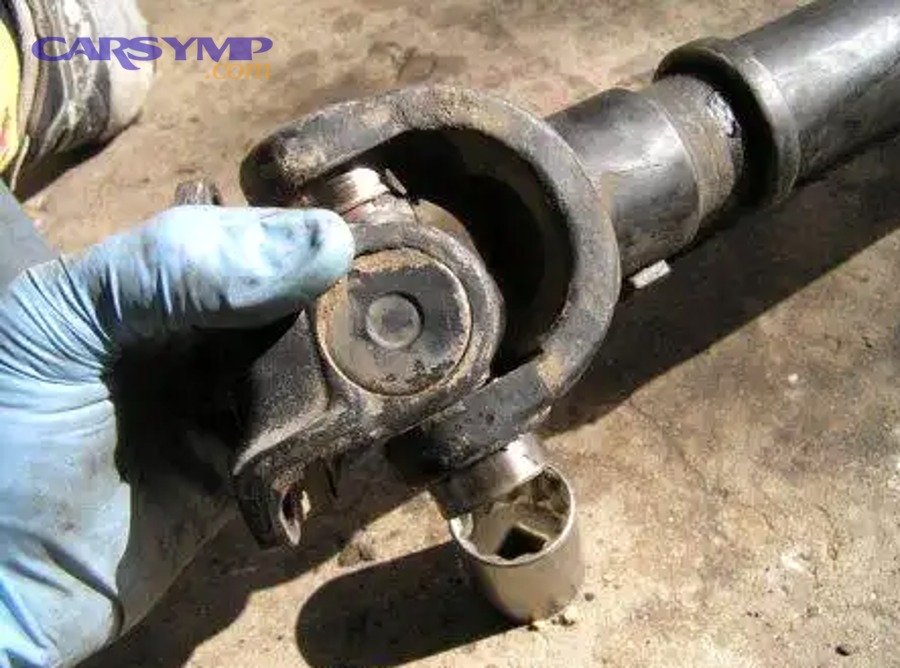
Specifically, the key is to match the symptom to the U-joint’s real-world stress moments: higher shaft speed (vibration), torque reversal (clunk), dry rolling surfaces (chirp), and articulation under load (shudder).
Does a worn U-joint cause vibration at certain speeds?
Yes—worn driveshaft U-joint wear symptoms often include vibration at specific speeds for at least 3 reasons: the joint’s rotating mass becomes inconsistent, looseness increases oscillation under load, and driveline angles amplify the shake as speed rises.
More specifically, U-joint vibration usually feels like it’s coming from under the vehicle, not through the steering wheel. Drivers describe it as:
- A buzz or shake in the seat and floor
- A vibration that tracks vehicle speed (often worse at 40–70 mph)
- A shake that may change when you accelerate vs coast
Why the speed connection? A driveshaft spins faster than the wheels, so small joint imperfections can create noticeable vibration once rotational speed reaches a certain threshold. If the vibration changes dramatically with engine torque (on-throttle vs off-throttle), that points even more toward driveline components instead of tires.
Can a bad U-joint cause clunking when shifting from Drive to Reverse or during throttle changes?
Yes—bad U-joint wear symptoms commonly include clunking on Drive/Reverse shifts or throttle tip-in/tip-out for at least 3 reasons: joint play creates driveline lash, worn caps let the cross “snap” into load, and torque reversal magnifies any looseness instantly.
Next, focus on timing because clunks are pattern-based. A U-joint clunk often shows up:
- Right as you shift D ↔ R and the driveline takes up slack
- On takeoff from a stop
- When you lift off the throttle and then reapply it
- When you shift under load (especially in trucks/SUVs)
The important detail is that U-joint clunks are usually single, heavy knocks from under the vehicle—not rapid clicks like some CV joint issues. If the clunk is paired with a mild shudder right afterward, the joint may be moving and then re-centering under load.
Is squeaking or chirping a sign of U-joint wear?
Yes—squeaking or chirping is a classic U-joint wear symptom for at least 3 reasons: dry needle bearings create friction noise, contaminated grease turns into abrasive paste, and seals that fail let water in and lubrication out.
Then, listen for how the sound behaves:
- A U-joint chirp often changes with vehicle speed, not engine RPM.
- It may be most noticeable at low speeds with the windows down.
- It can sound like a rhythmic squeak that speeds up as you roll faster.
A helpful clue: if the sound briefly changes after driving through water or after a car wash, that can indicate a compromised seal and contaminated bearing cups—especially if the noise returns quickly.
What does a driveline shudder or “jerk” during acceleration suggest about U-joint condition?
A driveline shudder during acceleration suggests the U-joint may be binding or unevenly rotating, which can happen when needle bearings wear flat spots, lubrication fails, or one cap corrodes and stiffens—forcing the joint to articulate in jerky steps.
Moreover, shudder is a “load symptom.” You’re most likely to feel it:
- When accelerating uphill
- When towing
- When merging (moderate-to-heavy throttle)
- When the vehicle transitions from coast to power
This is where people get misled: some assume shudder must be engine-related. But if the shudder is strongest under the floor and follows torque demand, the driveline deserves attention.
How can you confirm U-joint wear with a simple DIY inspection (without special tools)?
You can confirm U-joint wear with a simple 5-step driveway inspection—secure the vehicle, check for play, check for binding, inspect for rust/grease clues, and compare what you find to normal driveline slack—so you move from symptoms to evidence.
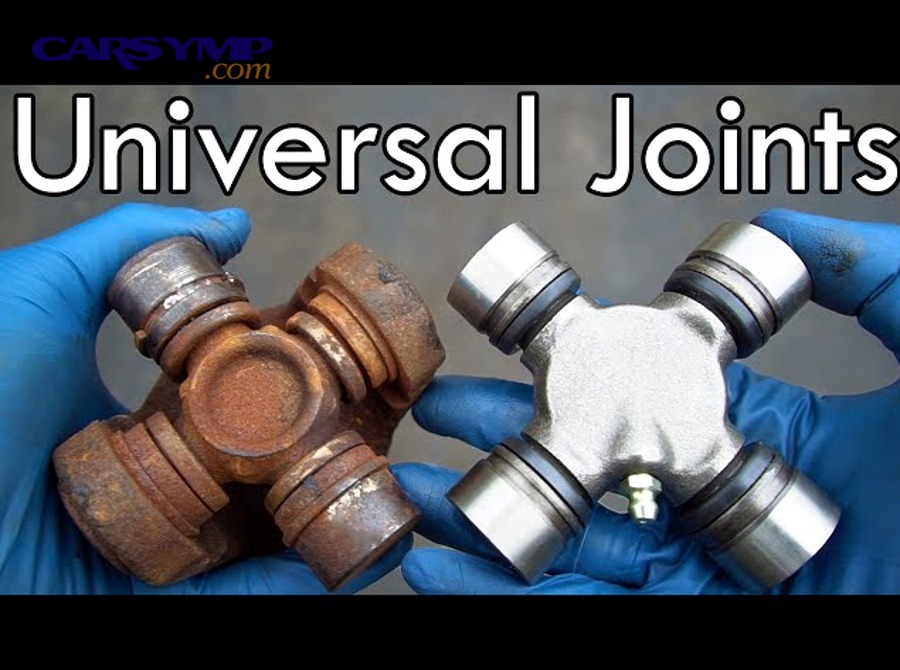
To better understand what you’re feeling on the road, the inspection should recreate the same conditions that cause noise and vibration: load reversal and articulation.
Before you start, use basic safety rules:
- Park on level ground, set the parking brake, and chock wheels.
- If you lift the vehicle, use jack stands—never rely on a jack alone.
- Keep hands clear of pinch points, especially near yokes and flanges.
Is any looseness (“play”) in the U-joint acceptable?
No—visible or feelable looseness in driveshaft U-joint wear symptoms is not acceptable for at least 3 reasons: it indicates bearing clearance has grown, it creates impact loads that accelerate damage, and it can lead to driveline vibration and eventual failure.
Next, separate two different “movements” people confuse:
- Normal driveline slack: tiny movement from gears/backlash in the differential.
- U-joint play: a distinct click or shift right at the joint when you twist the shaft.
A practical check:
- Put the transmission in Park (or in gear for manuals, engine off).
- Grab the driveshaft near the U-joint.
- Try to rotate it back and forth while watching the joint.
If the shaft moves but the joint appears solid, the slack may be elsewhere. If you see the joint shift inside the caps or hear a sharp click at the joint, that’s a strong sign of wear.
How do you check for a binding or seized U-joint?
To check for binding, rotate and articulate the driveshaft through its range and look for stiff spots or notchy movement—because a healthy U-joint moves smoothly, while a failing one resists motion where needle bearings are damaged or corroded.
Then, do it methodically:
- With the vehicle safely supported (if needed), rotate the driveshaft by hand.
- Move the joint through slight angles while rotating.
- Feel for “hinge points” that don’t want to move or that jump suddenly.
Binding often pairs with acceleration shudder because the joint can’t articulate fluidly under load. In other words, a joint can be “quiet” but still wrong if it’s stiff.
What visual signs indicate U-joint wear (rust dust, damaged seals, thrown grease)?
There are 4 common visual signs of U-joint wear—rust dust at the caps, torn seals, thrown grease, and cap/yoke abnormalities—and they indicate contamination, overheating, or loss of lubrication.
More importantly, these clues are easy to miss unless you know what they mean:
- Rust powder near a bearing cap often points to moisture intrusion and bearing degradation.
- Wet grease splatter around the joint can mean a seal failed or a greasable joint pushed grease out unevenly.
- Cracked or missing seals invite dirt and water, accelerating wear.
- Off-center caps or damaged snap rings/clips can indicate the cap has moved (a serious issue).
If you’re already performing a broader drivetrain inspection, treat the U-joint as one checkpoint in a chain: driveshaft → yokes/flanges → mounts → differential pinion area.
Can you diagnose U-joint wear just from noise and vibration alone?
U-joint wear is the most likely cause when vibration is floor/seat-based and changes with torque, but tire imbalance is more likely when steering-wheel shake dominates—so you should use symptoms to suspect U-joints and inspection to confirm them.
In addition, symptom-only diagnosis fails in two common situations:
- Multiple issues exist at once (e.g., worn tires plus a failing U-joint).
- A driveline geometry issue (angles/phasing) mimics joint wear.
So the best workflow is: feel it → pattern it → inspect it. That sequence prevents the classic mistake of replacing parts based on a single symptom.
How do U-joint symptoms compare to other common causes of driveshaft vibration and clunking?
U-joint wear is most consistent with torque-sensitive floor vibration and clunks, tire imbalance is best explained by speed-only shake (often steering-related), mount problems are strongest at idle/load transitions, and driveshaft imbalance/bends produce persistent speed-related vibration regardless of throttle.
However, comparisons work best when you anchor them to a few repeatable criteria: where you feel it, when it happens, and what changes it.
To make the differences easy to scan, the table below summarizes the most common symptom patterns and what they usually point to.
| Symptom pattern you notice | Most likely source | Why it fits |
|---|---|---|
| Seat/floor vibration that changes on/off throttle | U-joint or driveline angles | Torque and articulation amplify joint issues |
| Steering wheel shake at specific speeds | Tires/wheels | Front-end vibration transmits to steering |
| Clunk on D↔R or tip-in/tip-out | U-joint or mounts | Load reversal exposes slack/movement |
| Constant speed-related vibration (little change with throttle) | Driveshaft imbalance/bent shaft | Rotational imbalance persists |
| Thump under center of vehicle (two-piece shaft) | Center support bearing | Support rubber/bearing transmits thump |
U-joint wear vs tire imbalance: how can you tell the difference?
U-joint wear wins as the cause when vibration is torque-sensitive and felt in the floor, while tire imbalance is best for speed-only shake felt in the steering wheel, because tires create a wheel-speed oscillation and U-joints create a driveline-speed/load oscillation.
Specifically, use these differentiators:
- Steering wheel shake → suspect tires/wheels first.
- Seat/floor vibration that changes under acceleration → suspect driveline/U-joint.
- Vibration that worsens after a tire rotation/balance → points toward tires.
- Vibration that changes with throttle even at the same speed → points toward driveline.
U-joint wear vs bad engine/trans mounts: what feels different?
U-joint wear is most linked to movement during torque reversal and speed-related vibration, while bad mounts are best linked to engine movement, thumps at idle-to-load transitions, and vibration you can feel even when not moving, because mounts isolate engine/trans motion rather than driveshaft rotation.
Meanwhile, mounts often show additional hints:
- A clunk when shifting into gear while stopped
- Excessive engine rock when revving in Park/Neutral
- Vibration present at idle in Drive (foot on brake)
Mount issues can coexist with U-joint wear, especially in older vehicles where drivetrain components age together—so it’s smart to check both if your symptoms are mixed.
U-joint wear vs driveshaft imbalance or bent driveshaft: what are the telltales?
U-joint wear is best indicated by clunks and throttle-sensitive vibration, while driveshaft imbalance or a bent shaft is best indicated by persistent, speed-related vibration that remains steady across throttle changes, because imbalance is a rotating-mass problem more than a load-reversal problem.
To illustrate, ask one practical question:
Does the vibration significantly change when you gently lift off the throttle at the same road speed?
- If yes, driveline joints/angles often move higher on the suspect list.
- If no, imbalance/bent shaft becomes more likely.
Also consider “sudden onset.” A vibration that begins right after hitting something in the road can point to a bent shaft. A vibration that grows slowly over weeks can fit bearing wear.
U-joint wear vs center support bearing (two-piece driveshaft): what changes?
U-joint wear is more associated with clunks and joint play at the ends, while a center support bearing is more associated with a thump or vibration near the middle of the vehicle, because the support bearing carries the shaft and its rubber isolator transmits noise when it deteriorates.
Especially in long-wheelbase vehicles and trucks, a failing support bearing can mimic U-joint vibration. The difference is location: with a support bearing issue, you may feel the harshness closer to the vehicle’s center rather than at the front or rear.
If your vehicle is AWD/4WD and you’re comparing symptoms across multiple driveline components, include a Transfer case inspection for AWD/4WD in your diagnostic workflow—because a transfer case output issue can also create load-dependent vibration that feels “driveline-like.”
When is driveshaft U-joint wear urgent, and should you stop driving?
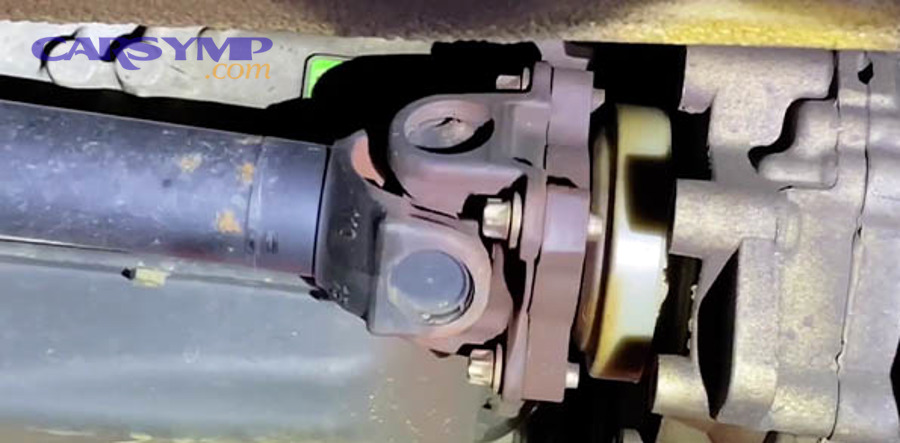
Yes—you should treat driveshaft U-joint wear symptoms as urgent and stop driving when warning signs escalate for at least 3 reasons: the joint can fail and separate the shaft, worsening vibration can damage other drivetrain parts, and sudden driveline changes can increase crash risk.
Next, use a simple severity filter so you’re not overreacting to minor noise—but you also don’t ignore true danger signals.
Stop driving and inspect immediately if you notice:
- A sudden increase in vibration or a new heavy clunk
- A repeated banging sound that feels like something is striking the floor
- Driveshaft movement that looks abnormal (visible wobble)
- A U-joint that is obviously loose or binding during inspection
Schedule prompt repair (soon) if you notice:
- Mild speed-related vibration that’s slowly getting worse
- Occasional chirping/squeaking that follows vehicle speed
- Light clunks only during load changes
A real-world safety reminder comes from NHTSA recall documentation describing how driveline angles out of spec can cause premature U-joint wear and eventual failure, and noting increased vibration/noise as a warning before more serious outcomes. (static.nhtsa.gov)
Can a failing U-joint break and cause major damage?
Yes—a failing U-joint can break and cause major damage for at least 3 reasons: driveshaft separation can strike components or the road, continued driving can damage yokes/transmission/differential interfaces, and loss of smooth torque delivery can compromise vehicle stability.
Then, connect that risk to the symptom progression: “a little vibration” isn’t the scary part—rapidly worsening vibration paired with clunks is what often precedes major failure.
If you’re diagnosing an AWD/4WD vehicle, don’t let a rear-shaft symptom blind you to the rest of the system. Pair your U-joint check with a brief transfer-case look (fluid leaks, abnormal noises, output flange play) so your driveline conclusion is complete.
At this point, you’ve identified the core symptom patterns, verified U-joint condition with hands-on checks, and used comparisons to avoid common misdiagnoses. The next section expands into what makes U-joints wear faster and which drivetrains tend to show different symptom “flavors.”
What factors make U-joints wear faster, and which drivetrains are most affected?
There are 4 main factors that accelerate U-joint wear—excess driveline angle, lubrication breakdown, contamination (water/dirt), and high torque/RPM use—and these factors hit lifted trucks, tow vehicles, and AWD/4WD drivetrains especially hard.
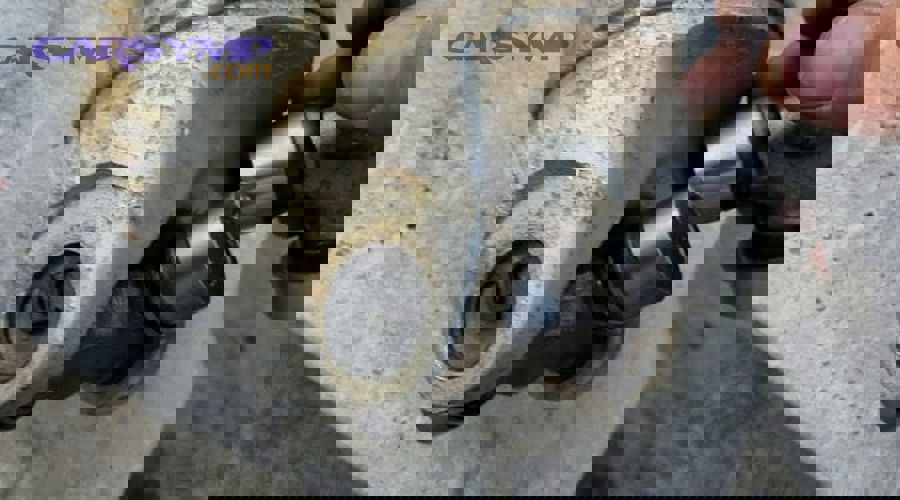
More importantly, these factors explain why two vehicles can show the same wear symptoms at very different mileages: the joint doesn’t only “age,” it lives under conditions.
Do lifted trucks and steep driveline angles increase U-joint wear compared to stock height?
Yes—lifted trucks and steep driveline angles increase U-joint wear compared to stock height for at least 3 reasons: higher operating angles raise bearing load, greater articulation increases heat and friction, and angle-induced speed fluctuations intensify vibration forces across the joint.
Specifically, the driveline-angle effect is not just a feel issue—it’s a physics issue. A mechanical engineering thesis from Middle East Technical University (Mechanical Engineering Department, 2019) explains that increasing misalignment angle increases fluctuation in output shaft twist and angular velocity, and it reports steady-state output twist amplitudes on the order of tenths of a degree in modeled cases (e.g., ~0.22° output twist amplitude in one configuration). (etd.lib.metu.edu.tr)
Practical takeaway for lifted vehicles:
- If you lift and immediately get vibration, check angles and phasing before condemning parts.
- If you lift and vibration grows over time, U-joint wear becomes more likely as the joint runs hotter and harder.
Are greasable (serviceable) U-joints less likely to fail than sealed U-joints?
Greasable U-joints win for longevity when maintained, sealed U-joints win for convenience, and either type can fail early if contaminants enter or angles/loads are excessive—so the “best” choice depends on maintenance habits and operating conditions.
However, the real difference is controllability:
- With a greasable joint, you can periodically flush out moisture and replenish lubrication.
- With a sealed joint, you’re relying on factory grease and intact seals for life.
If you choose greasable joints, avoid two common mistakes:
- Under-greasing (never servicing until symptoms appear).
- Over-greasing (damaging seals or forcing grease past where it’s needed).
Do front driveshaft U-joints on 4WD/AWD show different symptoms than rear U-joints?
Front driveshaft U-joints in 4WD/AWD are more likely to show symptoms during engagement, load transfer, or specific drive modes, while rear U-joints more commonly show steady-speed vibration and throttle-change clunks—because the front shaft’s load profile changes more dramatically across modes.
In addition, AWD/4WD vehicles can create “layered” driveline sensations: you may feel vibration that seems to appear only when torque is routed forward. That’s why a front-shaft check pairs naturally with Transfer case inspection for AWD/4WD—the transfer case is the traffic director, and its outputs can influence what you feel.
Can driveline phasing or installation mistakes mimic “bad U-joint” symptoms?
Yes—driveline phasing or installation mistakes can mimic bad U-joint wear symptoms for at least 3 reasons: misphasing creates cyclic speed fluctuations, incorrect clip/cap seating introduces play that feels like wear, and wrong angle relationships can generate vibration even with new parts.
Then, use a simple rule: if symptoms started immediately after driveshaft/U-joint work, suspect installation/geometry before assuming the new part failed.
A few “mimic” scenarios to watch for:
- Incorrect phasing after reassembly (yokes not aligned as designed)
- Caps not fully seated or clips not installed correctly
- Changed driveline angles after suspension work
- Imbalance introduced by missing weights or improper assembly
Finally, remember that not every clicking or popping near the wheels is a U-joint issue. If you’re hearing noises primarily during turns or near the hubs, add CV axle and joint inspection steps to your diagnostic flow: check CV boots for tears/leaks, look for grease sling, and listen for turn-related clicking that points toward CV joints rather than a driveshaft U-joint.
Evidence (if any): According to a study by Middle East Technical University from the Mechanical Engineering Department, in 2019, increasing driveline misalignment angle increased fluctuations in output shaft twist and angular velocity, and the thesis reports steady-state output twist amplitudes in modeled cases (e.g., ~0.22° at the output in one configuration). (etd.lib.metu.edu.tr)