


If you want to recognize shift solenoid failure symptoms in an automatic transmission, the most useful starting point is simple: a failing shift solenoid usually shows up through harsh shifting, delayed shifting, gear hesitation, stuck gears, warning lights, or limp mode. Those symptoms matter because the solenoid helps control hydraulic flow inside the transmission, so when it stops working correctly, the whole shift process becomes unstable. To begin, this article explains what the part does, what failure feels like from the driver’s seat, and how to connect symptoms to the likely fault.
Those symptoms alone are not enough, however, because several transmission problems can look similar. Dirty fluid, overheating, low pressure, wiring faults, valve body issues, and worn internal clutches can all create comparable complaints. More specifically, understanding the cause behind the symptom pattern helps car owners avoid replacing the wrong part and helps them decide whether a shift solenoid bad condition is the real issue or just one possibility among several.
Diagnosis also matters because modern automatic transmissions rely on electrical commands, hydraulic pressure, and control-module logic working together. A scan tool, basic symptom mapping, and a careful road test can reveal whether the problem points to a single solenoid, an integrated solenoid pack, a fluid condition issue, or broader transmission wear. In addition, knowing the difference between electrical and hydraulic failure patterns makes the repair path much more accurate.
Repair decisions come last, but they still shape the whole ownership experience. Some vehicles allow easier service access, while others require much deeper labor. That is where transmission solenoid replacement, service strategy, and post-repair verification become important. Next, the main content walks through the part’s function, the symptoms, the causes, the diagnostic logic, the right fix, and the less common symptom patterns that expand the topic without losing the main search intent.
What Is a Shift Solenoid in an Automatic Transmission?
A shift solenoid is an electronically controlled valve inside an automatic transmission that directs hydraulic fluid to the correct circuits so the transmission can change gears at the right time. To better understand shift solenoid failure symptoms, it helps to first understand how this small component affects the much larger shifting process.
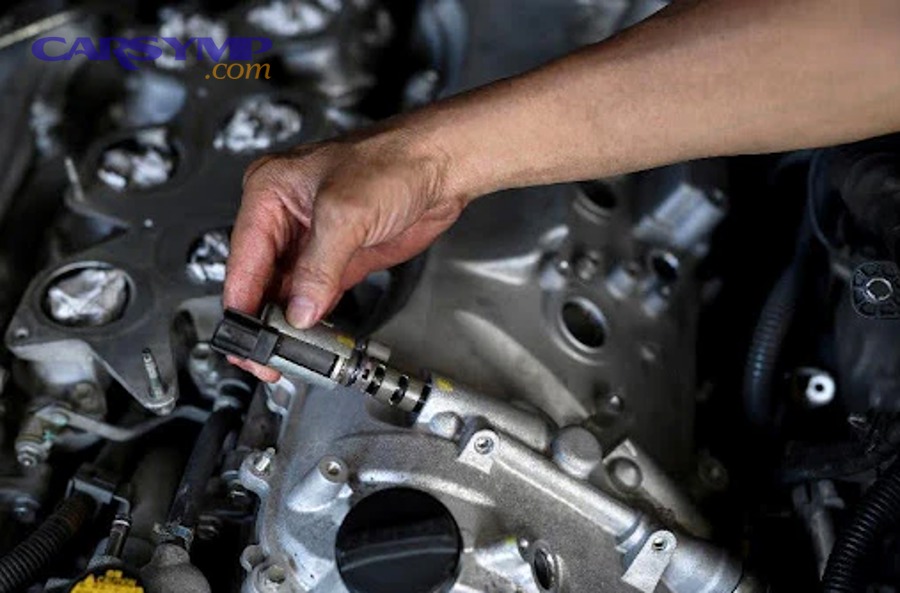
In an automatic transmission, gear changes do not happen by magic or by simple mechanical linkage alone. The transmission control module, sometimes integrated with the powertrain control module, watches vehicle speed, throttle position, load, fluid temperature, and other inputs. Based on those inputs, it commands one or more shift solenoids to open or close. That action routes transmission fluid through specific passages in the valve body, which then applies or releases clutch packs and bands. In short, the solenoid acts like a switch between electronic decision-making and hydraulic execution.
A driver rarely thinks about this process when the transmission works normally. The gear change feels clean, consistent, and predictable. But when the solenoid sticks, loses electrical control, reacts slowly, or fails internally, the result shows up as timing problems. The transmission may shift too hard, shift too late, skip a gear, hesitate to engage, or stay locked in one gear. That is why a bad shift solenoid can feel like a much bigger transmission problem than its size suggests.
The exact design varies by manufacturer. Some vehicles use individual solenoids for different shift events, while others use a solenoid pack assembly that combines several functions in one unit. Some units sit in areas that are relatively accessible after removing the transmission pan, while others are buried deeper inside the transmission. This is where Access: pan-drop vs full teardown differences becomes important. On many conventional automatic transmissions, servicing a failed solenoid may involve only dropping the pan and valve body access. On other designs, especially those with integrated internal assemblies, the labor can become much more extensive.
The shift solenoid also does not work in isolation. It depends on clean fluid, stable voltage, intact wiring, proper valve body operation, and healthy internal seals. Because of that, the part is both a component and a system touchpoint. When owners search for “solenoid failure symptoms,” they are often really searching for a complete explanation of why the vehicle shifts abnormally, not just the definition of a single part.
Is a Shift Solenoid an Electrical Part or a Hydraulic Control Component?
A shift solenoid is both an electrical part and a hydraulic control component because electricity activates it, but hydraulic pressure is what it ultimately manages. More specifically, the electrical side tells the solenoid when to move, while the hydraulic side turns that movement into an actual gear change.
The electrical side includes the control module, the wiring harness, the connector, the internal coil inside the solenoid, and the voltage or pulse-width signal that commands it. If the coil opens, shorts, overheats, or receives unstable power, the solenoid may fail to respond correctly. That kind of problem often creates stored fault codes, inconsistent behavior, or immediate fail-safe operation.
The hydraulic side includes the valve body passages, fluid pressure, spool movement, and the clutch-apply circuits the solenoid influences. If varnish, debris, metal particles, or degraded fluid cause the solenoid to stick or respond slowly, the electrical command may still exist, but the hydraulic result will be wrong. That is why some vehicles show clear solenoid-related codes while others mainly show drivability complaints.
This dual nature explains why diagnosis must account for both circuits. A technician who checks only electrical resistance may miss a mechanically sticking solenoid. A technician who blames fluid alone may miss a coil fault or connector corrosion. In short, a shift solenoid failure can begin electrically, hydraulically, or in a combination of both.
What Does a Shift Solenoid Do During Normal Gear Changes?
A shift solenoid controls fluid routing during normal gear changes so the transmission can apply and release the right internal elements in the right sequence. For example, when the vehicle accelerates from first gear to second gear, the control module commands one hydraulic path to release and another to apply. The shift solenoid helps make that timing happen.
During a healthy upshift, the transmission wants enough pressure for a clean handoff without creating a harsh bang. During a healthy downshift, it wants smooth re-engagement without delay. The solenoid supports that balance by moving fluid quickly and predictably. If it acts late, sticks, or bleeds pressure internally, the shift event loses precision.
That is why drivers notice solenoid issues in daily situations such as leaving a stop sign, accelerating onto a highway, coasting into traffic, or selecting reverse after parking. A bad shift sequence often feels worse during these moments because the system is asking for exact timing and exact pressure changes. When that request is not met, the transmission behavior becomes obvious to the driver.
According to technical service literature used across the automatic transmission industry, electronic shift control depends on accurate solenoid response times and stable hydraulic pressure for consistent clutch application, which is why small control faults can create large drivability symptoms.
What Are the Most Common Shift Solenoid Failure Symptoms?
The most common shift solenoid failure symptoms are harsh shifting, delayed shifting, missed shifts, stuck gears, warning lights, poor acceleration, limp mode, and abnormal engagement into drive or reverse. More importantly, these symptoms tend to appear in patterns, and that pattern is what helps identify a failing solenoid rather than a random transmission complaint.
A healthy automatic transmission usually delivers repeatable behavior. It may not be perfect in every condition, but it should not suddenly slam into gear one day and hesitate the next without a reason. When a shift solenoid begins to fail, the change in behavior often feels abrupt, especially if the vehicle previously shifted normally.
One common symptom is a delayed shift during acceleration. The engine revs higher than normal before the next gear engages, or the vehicle seems to pause before completing the shift. Another common sign is a harsh shift, where the transmission bangs into gear with more force than usual. Drivers may also notice that the transmission skips a gear, refuses to upshift, or gets stuck in one gear for longer than expected. In more severe cases, the vehicle enters limp mode and limits performance to protect itself.
Dashboard warnings often appear alongside drivability symptoms. The check engine light may come on, and some vehicles display a specific transmission warning. Not every solenoid failure sets a code immediately, but many do once the control module recognizes an electrical problem or a commanded shift that did not produce the expected result.
Reverse engagement problems can also appear. A vehicle may hesitate before backing up, engage reverse with a bang, or fail to move promptly when shifted into reverse. While reverse issues can also point to low pressure or internal wear, a bad shift-control circuit may still be part of the picture depending on the transmission design.
The severity of symptoms depends on how the solenoid fails. An intermittent electrical fault may cause occasional problems only when hot. A stuck mechanical valve may create repeatable hard shifting every day. A totally failed unit may immediately trigger fail-safe operation. This is why symptom observation should include when the problem happens, how often it happens, and whether it changes with temperature or load.
Can a Bad Shift Solenoid Cause Hard Shifting, Delayed Shifting, or Missed Shifts?
Yes, a bad shift solenoid can cause hard shifting, delayed shifting, and missed shifts because it disrupts timing, pressure control, and hydraulic routing during gear changes. Specifically, when the solenoid responds too slowly, sticks, or fails electrically, the transmission cannot complete the commanded shift smoothly.
Hard shifting happens when the clutch or band applies too abruptly. The driver feels a bang, jolt, or strong bump during the shift. This can happen if pressure rises too sharply or if the transition occurs too late. Delayed shifting happens when the transmission waits too long to complete the shift, which often makes the engine rev higher than usual. Missed shifts happen when the transmission does not complete the expected gear change at all or briefly flares between gears.
These problems may appear in one gear change only, such as a rough 2-3 shift, or across several gears if the transmission uses a solenoid pack or if fluid contamination affects multiple control passages. The vehicle may behave one way when cold and another way when warm, which often confuses owners. However, that variation still fits the pattern of a solenoid or fluid-control issue.
The phrase shift solenoid bad often appears in owner forums because these exact symptoms are what prompt the search. Drivers feel the shift become abnormal, but they do not always know whether the problem is electronic, hydraulic, or mechanical. The symptom cluster points them toward the solenoid, even before a diagnostic scan confirms it.
What Symptoms Group Together When a Shift Solenoid Starts Failing?
There are four main groups of shift solenoid failure symptoms: shift-quality symptoms, gear-selection symptoms, warning-system symptoms, and drivability-protection symptoms. To illustrate, grouping the symptoms this way makes diagnosis easier because each cluster points to a different kind of failure behavior.
The table below groups the most common signs drivers notice when a shift solenoid starts failing.
| Symptom group | Common examples | What it may suggest |
|---|---|---|
| Shift-quality symptoms | Hard shifts, delayed shifts, flare shifts, shudder during gear change | Poor timing or unstable pressure control |
| Gear-selection symptoms | Stuck in gear, missed upshift, skipped gear, reverse hesitation | Commanded shift not completing correctly |
| Warning-system symptoms | Check engine light, transmission warning, stored DTCs | Electrical fault or failed commanded response |
| Drivability-protection symptoms | Limp mode, reduced power, fixed gear operation | Control module detected a major shift-control issue |
Shift-quality symptoms usually appear first. The vehicle still moves, but the shifting no longer feels normal. Gear-selection symptoms often follow when the problem worsens. Warning-system symptoms can appear early or late depending on how the control logic monitors the fault. Drivability-protection symptoms are usually the most severe because the vehicle is actively limiting operation.
This grouped view also helps separate a mild early issue from a more urgent one. A single slightly firm shift on a cold morning is not the same as repeated flare shifts plus a warning light plus limp mode. The more symptom groups that appear together, the more seriously the problem should be taken.
According to diagnostic guidance widely used in professional transmission repair, symptom pattern recognition is a key first step because electrical control faults often present as repeated behavior under similar operating conditions, rather than as a completely random event.
What Causes Shift Solenoid Failure?
Shift solenoid failure is usually caused by dirty transmission fluid, overheating, internal wear, electrical faults, connector corrosion, valve body contamination, or broader transmission damage that affects fluid control. More specifically, the cause matters because it determines whether replacing the solenoid alone will solve the problem or whether additional service is necessary.

The most common cause is fluid-related contamination. Automatic transmission fluid does more than lubricate. It transfers hydraulic force, cools internal parts, and supports precise control. When that fluid breaks down from age or heat, it can leave varnish deposits on valves and solenoid bores. Those deposits make the moving parts respond slowly or stick. If clutch material or metal debris circulates in the fluid, the contamination can interfere even more.
Heat is another major cause. High transmission temperatures reduce fluid quality, harden seals, and accelerate coil and connector stress. Vehicles that tow, operate in stop-and-go traffic, climb steep grades, or suffer from cooling problems are more vulnerable to heat-related control issues. A transmission that overheats repeatedly may not only damage the solenoid but also create other internal problems that mimic solenoid failure.
Electrical faults are also common. The solenoid coil can open or short, internal resistance can go out of range, wiring insulation can deteriorate, and connectors can corrode. In some vehicles, the transmission harness is exposed to moisture or vibration that gradually damages the circuit. An intermittent open circuit may create a symptom that appears only during vibration, temperature change, or certain driving conditions.
Mechanical and hydraulic wear inside the transmission also plays a role. If the valve body wears, internal leakage can lower effective pressure even when the solenoid is working. If clutch packs wear badly, the control system may command a shift correctly but fail to achieve the expected result. In those cases, solenoid-related symptoms may appear even though the deeper cause is not the solenoid alone.
Maintenance history matters too. Long service intervals, incorrect fluid type, neglected leaks, and repeated overheating all raise the chance of control-system problems. Solenoids do not always fail because they are weak parts. They often fail because the environment around them becomes harsh.
Can Dirty Transmission Fluid or Overheating Damage a Shift Solenoid?
Yes, dirty transmission fluid and overheating can damage a shift solenoid because they promote sticking, varnish buildup, poor lubrication, and unstable electrical performance. Specifically, fluid contamination changes how freely the solenoid moves, while heat accelerates wear and breakdown across the whole control system.
Dirty fluid often contains oxidized additives, clutch material, microscopic metal, and degraded friction byproducts. Those contaminants circulate through narrow valve body passages and across the moving surfaces that the solenoid depends on. Even a small amount of sticking or delayed response can change shift timing enough for the driver to feel it.
Overheating worsens that process. As fluid temperature rises beyond normal operating levels, oxidation speeds up and the fluid loses some of its protective qualities. Heat also stresses seals, insulation, and electronic components. A solenoid that might have survived longer under controlled temperatures may fail much sooner in a constantly overheated transmission.
This is why many repair decisions include fluid inspection. If the fluid is dark, smells burnt, or contains visible debris, the problem may involve more than one part. In that situation, transmission solenoid replacement might still be necessary, but it should happen within a broader service plan rather than as a blind single-part swap.
Is Shift Solenoid Failure Caused by Electrical Problems or Internal Transmission Wear?
Shift solenoid failure can be caused by electrical problems, internal transmission wear, or both, but electrical faults usually cause cleaner on-off symptoms while internal wear creates broader hydraulic instability. However, the distinction is not always obvious from a short road test alone.
Electrical problems often include circuit codes, intermittent warnings, sudden limp mode, and gear-specific control loss. The vehicle may shift normally one moment and then fall into a fixed-gear strategy the next. Resistance testing, wiring checks, and live-data monitoring often help confirm this path.
Internal transmission wear tends to create symptoms such as slipping under load, burnt fluid, delayed engagement, multiple abnormal shifts, or noise that continues even after the control signal appears correct. Worn clutches, leaking seals, and valve body wear can all mimic a bad solenoid because the end result is still poor clutch application. Yet the deeper cause lies elsewhere.
The comparison matters because replacing a solenoid in a worn transmission may improve one symptom while leaving the real failure untouched. That is why accurate diagnosis should evaluate the part, the fluid, the hydraulic system, and the internal mechanical condition together rather than in isolation.
How Can You Tell If the Shift Solenoid Is the Real Problem?
You can tell if the shift solenoid is the real problem by combining code scans, symptom patterns, fluid inspection, live data, electrical testing, and road-test behavior to confirm a control fault instead of a broader transmission failure. Let’s explore this carefully, because diagnosis is where many owners either save money or waste it.
The first step is always to define the complaint. Does the vehicle shift hard only when warm? Does it get stuck in second or third gear? Does reverse engage late? Does the check engine light appear every time the problem occurs, or only sometimes? Symptom timing is a diagnostic clue, not just a complaint description.
The next step is scanning for diagnostic trouble codes. Codes related to solenoid performance, circuit range, stuck-on or stuck-off conditions, or shift timing errors help narrow the field. Still, codes alone are not enough. A code may identify the circuit that the control module dislikes, but it does not automatically prove that the solenoid itself is physically bad. A wiring fault, connector issue, voltage problem, or valve body issue can trigger similar codes.
Fluid inspection follows. Clean, correctly filled fluid supports more confidence in an electrical fault if the symptoms and codes line up. Burnt or contaminated fluid lowers that confidence because it suggests a larger hydraulic or internal issue. Then comes live-data analysis, where the technician compares commanded gear, actual behavior, solenoid states, input speed, output speed, and slip information.
A road test matters because some faults only appear under certain loads. A transmission may behave normally at light throttle and then fail during a highway merge. It may delay only the 2-3 shift. It may work cold and fail hot. These conditions help separate mechanical sticking from hard electrical failure.
If necessary, resistance checks, voltage supply checks, continuity checks, and inspection of connectors or internal harnesses can confirm whether the electrical circuit is intact. In professional shops, hydraulic testing and deeper valve body inspection may follow if the evidence remains mixed.
What Codes and Warning Signs Often Point to a Bad Shift Solenoid?
Codes and warning signs that often point to a bad shift solenoid include transmission-related trouble codes, a check engine light, limp mode activation, and repeated abnormal shifting under the same conditions. More specifically, the strongest clue is when the warning system and the drivability complaint appear together.
Many vehicles store generic OBD-II codes or manufacturer-specific codes related to shift solenoid circuits and performance. Some indicate an electrical fault in a particular solenoid. Others indicate that the commanded gear ratio or shift timing did not occur as expected. When the module commands a shift and sees the wrong response through speed-sensor feedback, it may conclude that the circuit or the hydraulic result is out of range.
The check engine light matters because transmission control faults often communicate through the engine-management warning system. Some vehicles also illuminate a dedicated transmission light or message. Limp mode is even more significant. If the module sees a fault severe enough to threaten safe operation, it may lock the transmission into a limited gear strategy. That response protects the hardware but also narrows the diagnostic field toward a serious control problem.
Warning signs outside the dashboard also matter. A sudden hard 2-3 shift every day after ten minutes of driving, a repeated refusal to upshift on the highway, or a delayed reverse engagement after hot soak can each support the code data. The code tells you where the system saw a problem; the behavior tells you how that problem feels in real use.
According to the OBD-II diagnostic framework used across the U.S. light-duty fleet, the control module stores faults when monitored circuits or commanded outcomes fall outside acceptable ranges, which is why repeated shift-control problems often result in stored diagnostic information.
How Is Shift Solenoid Failure Different From Low Fluid, Valve Body Problems, or Worn Clutches?
Shift solenoid failure differs from low fluid, valve body problems, and worn clutches because solenoid faults usually center on command and response errors, while the others create pressure loss, leakage, or friction failure for different reasons. However, these problems overlap enough that comparison is essential.
Low fluid often causes delayed engagement, flare, slipping during turns or acceleration, and inconsistent operation that worsens when fluid sloshes away from the pickup or pressure drops. A simple level error can mimic a bad control part, especially if the symptoms are intermittent.
Valve body problems often create similar issues to a bad solenoid because both live in the control side of the transmission. A worn valve bore, sticking valve, or cross-leak can produce harsh shifting, delayed shifts, or incorrect gear application. The difference is that the solenoid may be receiving the correct command while the valve body fails to translate it cleanly.
Worn clutches usually show up more strongly under load. The engine revs rise without proportional acceleration, burnt fluid is more likely, and the issue may persist even if the electrical control side checks out. A worn clutch can also make a commanded shift feel like a bad solenoid because the new gear never holds properly.
The table below compares these common look-alike problems.
| Problem | Typical clues | What makes it different |
|---|---|---|
| Bad shift solenoid | Repeatable gear-control issue, codes, limp mode, gear-specific problems | Strong link between command fault and shift event |
| Low fluid | Delayed engagement, flare, worsening on incline or during turns | Pressure loss linked to fluid supply |
| Valve body issue | Harsh or delayed shifts, mixed symptoms, inconsistent apply timing | Hydraulic leakage or sticking outside the solenoid itself |
| Worn clutches | Slipping under load, burnt smell, poor acceleration in gear | Friction element cannot hold once applied |
This comparison matters because accurate diagnosis protects the owner from unnecessary parts replacement. A solenoid may still be involved, but it is not always the whole story.
What Is the Right Fix for Shift Solenoid Failure?
The right fix for shift solenoid failure is to confirm the fault, correct any related fluid or wiring issue, replace the failed solenoid or pack when needed, and verify the repair through adaptation and road testing. More importantly, the best fix is not just part replacement; it is restoring normal shift control with the correct service depth for the transmission design.
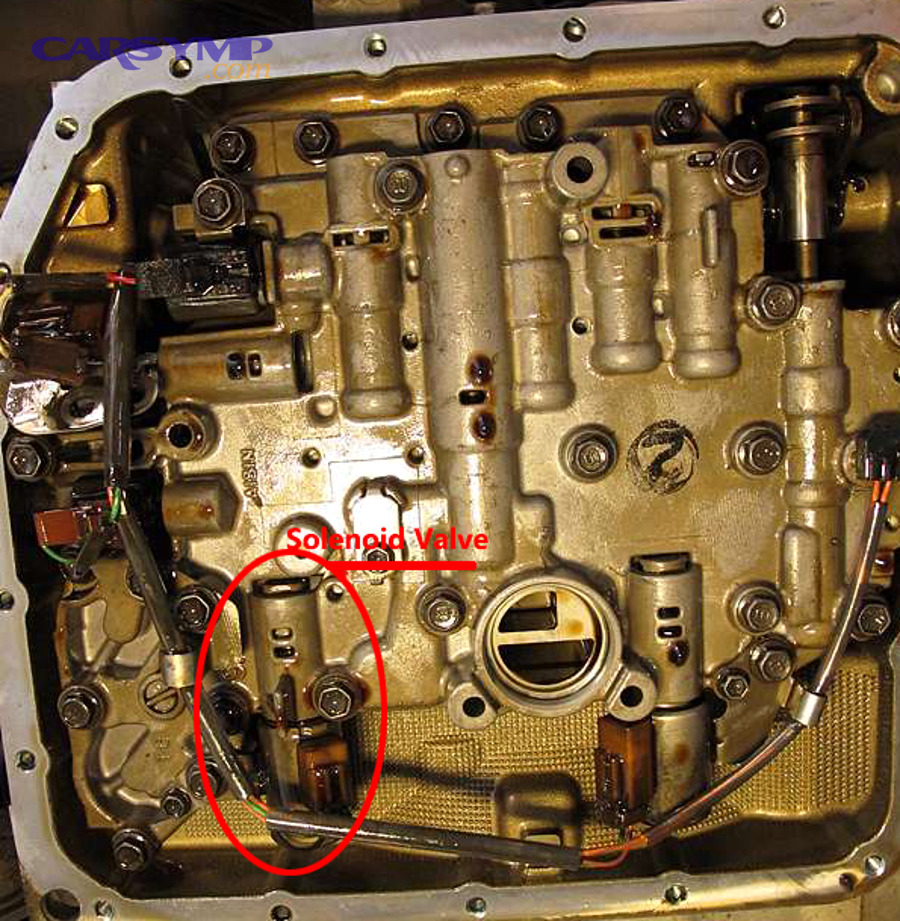
Some vehicles need only moderate disassembly. The technician removes the transmission pan, drains the fluid, removes the filter, accesses the valve body area, and services the affected solenoid. Others require deeper work, special procedures, or replacement of an integrated control module or solenoid pack. This is why repair planning must start with the transmission design, not just the symptom.
If the diagnostic evidence clearly supports a failed solenoid, then transmission solenoid replacement is often the practical solution. Yet the technician should still inspect the fluid, pan debris, harness condition, and valve body surfaces. Replacing the part without checking the environment that damaged it can create repeat failures or incomplete repairs.
Fluid and filter service may be recommended at the same time, depending on the design and condition. In some cases, the owner also needs updated software, relearn procedures, or reset adaptations after the repair. That is why good repair shops do not stop at bolting in a new part. They complete the full verification cycle.
Labor cost depends heavily on access. Access: pan-drop vs full teardown differences is not a minor detail. A pan-drop service path often keeps labor moderate. A full teardown path can push the repair into a much higher cost range and may trigger a broader discussion about overall transmission health, especially on high-mileage vehicles with contaminated fluid.
Can You Repair a Bad Shift Solenoid, or Does It Usually Need Replacement?
A bad shift solenoid sometimes responds to cleaning-related service conditions, but it usually needs replacement because electrical failure, worn internal components, and repeat sticking rarely improve permanently without a new part. Specifically, replacement is the more reliable fix when the fault has been confirmed.
If the root cause is minor contamination and the solenoid has not suffered electrical damage, fluid service and cleaning may improve operation temporarily. This is more likely when symptoms are mild, the fluid condition has only recently worsened, and the transmission has no major internal wear signs. Even then, improvement is not the same as certainty.
Replacement becomes the better choice when the coil is out of specification, the circuit code repeats, the unit sticks repeatedly, or the vehicle enters limp mode because the control system no longer trusts that circuit. In those cases, keeping the old solenoid usually costs more time and creates more repeat diagnosis than simply replacing it.
Owners should also ask whether the vehicle uses an individual solenoid or a combined assembly. If the design uses a solenoid pack, one failed control channel may lead to replacement of the entire pack. If access requires major labor, many shops also consider whether replacing related wear items during the same visit makes financial sense.
Should You Keep Driving With Shift Solenoid Failure Symptoms?
No, you should not keep driving with shift solenoid failure symptoms if the vehicle shifts harshly, enters limp mode, delays engagement, or shows repeated warning lights, because continued driving can worsen heat, clutch wear, and internal transmission damage. More importantly, the risk rises quickly when the symptoms are severe or repeatable.
A mild early symptom may not destroy the transmission in one short trip. However, harsh shifts create shock loads, delayed engagement increases heat, missed shifts raise stress, and limp mode indicates the system already sees a problem serious enough to protect itself. Continuing to drive without diagnosis turns a control fault into a broader durability risk.
The safest approach depends on severity. If the vehicle shows one minor symptom and still shifts predictably, it may be able to travel carefully to a repair facility. If it bangs into gear, refuses certain shifts, slips badly, or lights multiple warnings, it should be driven as little as possible. Towing may be the smarter choice.
After any repair, the job is not finished until verification is complete. A proper Post-repair adaptation and road test checklist should include:
- Confirming fluid level at the correct temperature
- Clearing stored codes and checking for immediate returns
- Performing any required shift adaption or relearn procedure
- Verifying normal engagement into drive and reverse
- Road-testing light throttle, medium throttle, and deceleration shifts
- Rechecking for leaks, abnormal noise, or new warnings after the test
That checklist matters because a repaired transmission must prove that it can repeat normal behavior under real conditions, not just idle correctly in the shop.
What Less Common Shift Solenoid Failure Patterns Should Car Owners Know?
Less common shift solenoid failure patterns include gear-specific complaints, temperature-dependent symptoms, limp-mode-only behavior, and model-specific repair differences that do not always appear in basic symptom lists. In addition, these patterns expand the topic beyond the common signs and help owners understand why some cases look obvious while others stay confusing for weeks.
By the time a reader reaches this section, the main search intent has already been answered: what a shift solenoid is, how failure feels, what causes it, how it is diagnosed, and what fix makes sense. Now the focus shifts to deeper semantic coverage. These are the patterns that do not always show up in short guides but still matter in real-world ownership and real-world diagnosis.
Some transmissions show a problem in only one gear transition, such as a rough 2-3 shift and nothing else. Some fail only after heat soak in traffic. Some enter limp mode so quickly that the owner never gets to observe intermediate symptoms. Some use solenoid pack architectures that change both cost and repair method. These are not fringe topics; they are secondary patterns that often explain why one owner’s experience looks very different from another’s even though both are dealing with shift-control problems.
Can Shift Solenoid Failure Symptoms Change by Gear or Driving Condition?
Yes, shift solenoid failure symptoms can change by gear or driving condition because different solenoids, pressure demands, and clutch-apply events are active in different shift scenarios. Specifically, a fault may appear only during one upshift, only under load, or only during a downshift.
A vehicle that shifts normally from first to second but bangs from second to third may point toward a specific control path rather than total transmission failure. A vehicle that behaves in city traffic but fails during highway merging may reveal a pressure-demand issue that shows up only under heavier throttle. A vehicle that hesitates only when selecting reverse after parking may point to a different circuit or apply event than one that fails during forward upshifts.
This gear-specific behavior is one reason owners should describe the problem precisely. “The transmission shifts badly” is far less useful than “the 2-3 shift flares after ten minutes of driving” or “reverse engages late only when hot.” Those details help narrow the likely solenoid path, the valve body channel involved, and the conditions needed to duplicate the problem.
Is There a Difference Between Cold Transmission Symptoms and Hot Transmission Symptoms?
Yes, there is a difference between cold transmission symptoms and hot transmission symptoms because fluid viscosity, electrical resistance, and internal leakage change as temperature changes. More specifically, cold symptoms often point toward sticking or thick-fluid response issues, while hot symptoms often expose leakage, heat damage, or intermittent electrical weakness.
Cold symptoms may include delayed initial movement, stiff early shifts, or a brief hesitation that improves as the fluid warms. If varnish or debris affects a solenoid bore, the part may move poorly until heat reduces fluid viscosity. On the other hand, hot symptoms may include repeated flare, limp mode after traffic driving, delayed reverse after parking, or a fault that appears only after sustained operation. Heat can increase resistance, soften seals, and expose marginal circuits or hydraulic leakage.
Temperature-based symptom tracking is valuable because it converts a vague complaint into a testable pattern. A technician can duplicate hot or cold conditions and check data accordingly. Without that detail, an intermittent solenoid problem may be hard to reproduce in the shop.
Can a Bad Shift Solenoid Trigger Limp Mode or Fail-Safe Mode?
Yes, a bad shift solenoid can trigger limp mode or fail-safe mode because the control module may limit transmission operation when it detects a serious control fault that could damage the unit or make gear control unreliable. More importantly, limp mode is one of the strongest signals that the issue has moved beyond a minor nuisance.
In limp mode, the vehicle may stay in one gear, avoid certain shifts, reduce acceleration, and illuminate warnings. This strategy protects the transmission by avoiding complex or potentially damaging shift events. From the driver’s perspective, the car suddenly feels weak, slow, and strangely limited. From the control system’s perspective, this is a protective decision.
Limp mode does not always prove that the solenoid alone failed. A wiring issue, major ratio error, pressure-control problem, or other transmission control fault can also trigger it. Still, when limp mode appears alongside harsh shifting, code storage, and repeatable gear-control errors, the odds of a significant shift-control problem rise sharply.
How Do Solenoid Pack Designs and Vehicle Models Change the Repair Approach?
Solenoid pack designs and vehicle models change the repair approach because some transmissions allow individual service access while others combine multiple functions into sealed or integrated assemblies that raise labor and parts cost. To sum up, repair strategy depends as much on design architecture as on the failure symptom itself.
Older or more conventional designs may allow access by removing the pan and valve body components. That makes inspection easier and often keeps labor lower. Integrated packs, mechatronic units, or deeply buried assemblies can increase labor, require programming, or push the repair closer to overhaul territory. This is where the earlier idea of Access: pan-drop vs full teardown differences becomes practical rather than theoretical.
Vehicle model also influences fluid specification, adaptation procedures, code interpretation, and failure patterns. One transmission may commonly suffer from connector issues. Another may be known for bore wear. Another may combine control electronics and hydraulics in a way that requires a different diagnostic path altogether. That is why a good repair plan is always vehicle-specific, even when the general symptom looks familiar.
According to long-standing transmission service practice across OEM repair procedures, component layout and control architecture directly affect both diagnosis time and repair depth, which is why the same symptom can lead to very different labor estimates across different vehicles.
In short, recognizing shift solenoid failure symptoms starts with the driver’s experience but ends with a system-level diagnosis. The most reliable path is to connect the symptom pattern, the warning data, the fluid condition, and the transmission design before choosing the fix.