


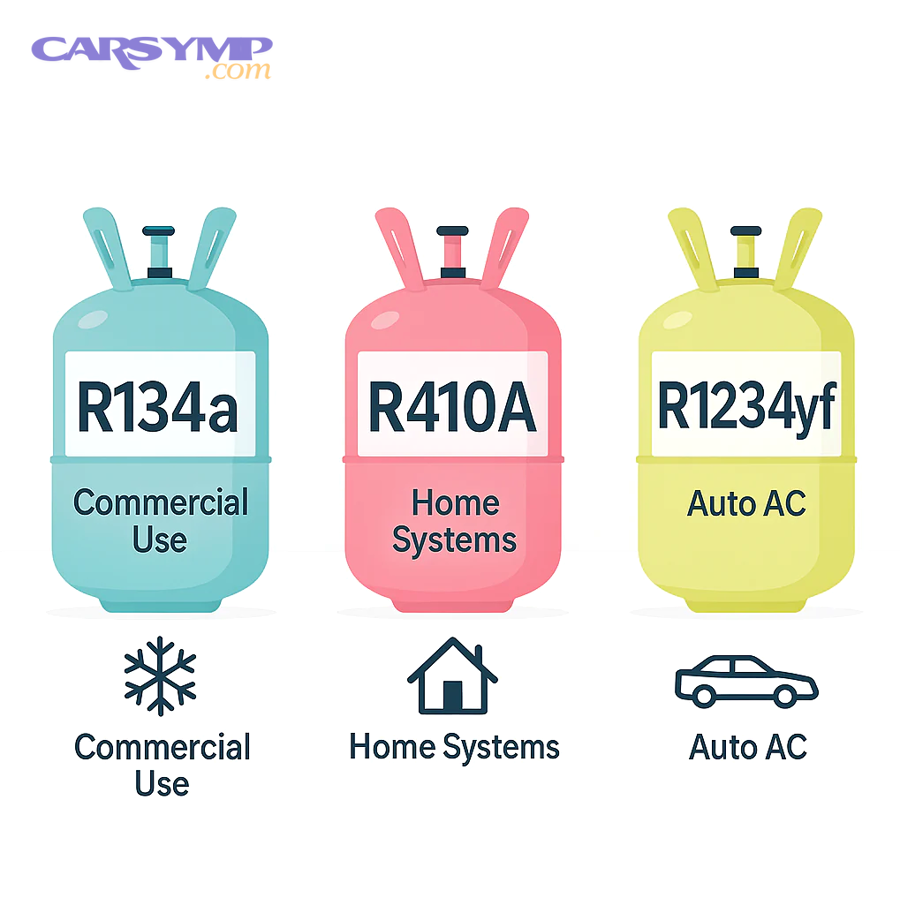
R134a service is usually cheaper, while R1234yf service is often costlier because the refrigerant itself is pricier and the service process typically requires dedicated A2L-rated handling equipment and stricter contamination control.
To make the comparison useful, this guide breaks the bill into the parts you can actually verify: refrigerant price per unit, evacuate-and-recharge steps, shop labor time, equipment overhead, and the “hidden” add-ons that inflate quotes.
We’ll also translate the same job into real-world line items—so you can ask the right questions, compare quotes across shops, and avoid paying for a recharge when the real issue is a leak or a failing component.
Giới thiệu ý mới: below is a practical cost framework you can apply to your vehicle’s refrigerant type, model year, and repair scenario—before you authorize any work.
Why is R1234yf service usually more expensive than R134a?
R1234yf tends to be costlier because material prices are higher, service tooling is more specialized, and shops must manage greater safety and contamination constraints than with R134a. To connect the dots, start by separating “refrigerant cost” from “process cost.”
In practice, the price gap comes from three compounding layers:
- Material cost: R1234yf often costs substantially more per kilogram/pound than R134a, so any recharge that requires a meaningful quantity will show a bigger parts line.
- Process constraints: R1234yf is classified as A2L (mildly flammable), pushing shops toward approved recovery/recycle/recharge (RRR) equipment and safety-compliant procedures.
- Contamination control: R1234yf systems use dedicated fittings and service equipment to reduce cross-contamination, which can add time and overhead—especially when a system is contaminated or mischarged.
However, the magnitude of the gap varies. If your system only needs a small top-up (rarely recommended without diagnosis), the difference may be modest; if it needs a full evacuation and recharge, the material and labor multipliers can dominate.
The gap also grows when additional diagnostics are required: dye injection, electronic leak detection, UV inspection, pressure-temperature checks, and post-service vent temperature verification.
The quickest reality-check is to ask the shop: “How much refrigerant (by weight) are you charging, what is your per-unit price, and what steps are included?” This question forces transparency and makes quotes comparable.
Theo nghiên cứu của Center for Climate and Energy Solutions (C2ES) từ báo cáo phân tích thị trường HFO-1234yf, vào 04/2017, giá bán HFO-1234yf cho nhà sản xuất xe được nêu khoảng $75–80/kg trong khi HFC-134a khoảng $6–8/kg, tức chênh lệch xấp xỉ mười lần ở mức thị trường/nguồn cung thời điểm đó.
How much of the price difference comes from the refrigerant itself?
Most of the difference often starts with refrigerant unit price, but the final delta depends on charge size, how empty the system is, and whether the shop can recover and reuse what’s already in the system. To see why, compare “price per kg” and “grams needed.”
Two realities matter more than brand names:
- Charge size varies by vehicle: Many passenger vehicles carry a few hundred grams to around a kilogram of refrigerant. A larger charge amplifies price differences.
- Whether the system is empty: If the system is low but not empty, a full RRR cycle may still be recommended to verify exact charge weight and oil balance—especially with modern variable-displacement compressors.
Even if a quote doesn’t show it clearly, refrigerant cost is typically passed through as (quantity × shop unit price) plus waste/handling. With R1234yf, that line item is often the first thing you’ll notice.
To make this tangible, use a simple estimate: if your car needs 600 g (0.6 kg), and the per-kg price difference is large, the refrigerant line alone can swing by tens to hundreds of dollars depending on the shop’s markup and regional supply.
What you should request is the label spec (under-hood sticker) and the billed charge weight. A reputable shop will charge by weight, not by pressure alone.
Theo nghiên cứu của Center for Climate and Energy Solutions (C2ES) từ báo cáo chi phí sản xuất & giá thị trường, vào 04/2017, báo cáo nêu mức giá thị trường HFC-134a khoảng $6–8/kg và HFO-1234yf khoảng $75–80/kg ở kênh cung cấp cho OEM, cho thấy phần “vật tư” có thể tạo chênh lệch lớn ngay cả trước khi tính công lao động.
What extra equipment and safety steps add cost for R1234yf?
Yes—R1234yf service commonly adds equipment and safety overhead because the refrigerant is classified A2L (mildly flammable) and standards exist for approved recovery/recycle/recharge equipment. Next, connect the safety classification to what shops must buy and maintain.
In many markets, modern R1234yf service is tied to dedicated RRR machines that are designed and certified for mildly flammable refrigerants. That affects cost in multiple ways:
- Capital equipment: Shops invest in R1234yf-capable machines, calibration tools, and dedicated couplers/hoses.
- Operational controls: Proper ventilation practices, ignition-source control, and safe handling protocols add training and workflow steps.
- Compliance and leakage control: Better recovery performance and contamination control reduce emissions and mixing, but take time and maintenance.
Another cost driver is that equipment designed for this flammability class must have acceptable electrical components and protective design features—raising purchase and upkeep costs relative to older, simpler equipment.
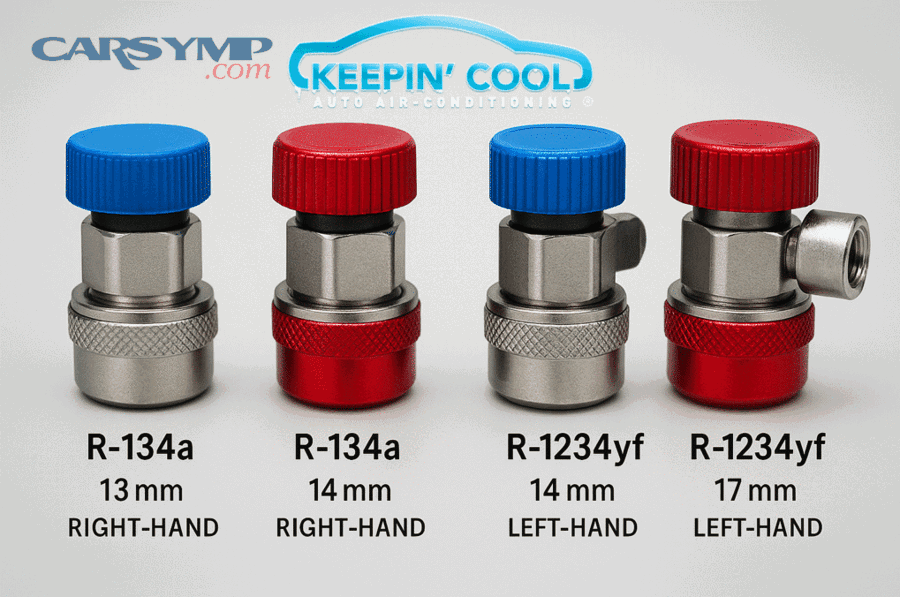
Also, R1234yf systems generally use different service fittings to prevent accidental mixing with R134a tooling. That is good for system integrity but can slow down multi-refrigerant shops or require duplicative tool sets.
Theo nghiên cứu của U.S. Environmental Protection Agency (EPA) từ Office of Air and Radiation trong tài liệu Federal Register, vào 03/2021, EPA mô tả R-1234yf được ASHRAE phân loại “mildly flammable/A2L” và việc áp dụng các tiêu chuẩn SAE J2843/J2851/J3030 nhằm hướng kỹ thuật viên dùng thiết bị xử lý môi chất phù hợp để đảm bảo an toàn và giảm rủi ro trộn lẫn môi chất.
What is included in an evacuate-and-recharge, and why does it change the bill?
An evacuate-and-recharge typically includes recovery, vacuum evacuation, leak checks, and recharging by weight; it costs more with R1234yf when material price and specialized handling increase the same workflow’s overhead. To keep it practical, map each step to a line item.
Here’s the core workflow most professional shops follow:
- Recover: pull refrigerant into the machine’s recovery cylinder (and measure what came out).
- Evacuate: vacuum the system to remove air and moisture.
- Hold test: verify the vacuum holds (basic leak indication, not a full diagnosis).
- Recharge by weight: add the exact specified charge and, if needed, correct oil quantity.
- Performance verification: pressure/temperature checks, vent output, and system cycling behavior.
To make sure you are comparing apples to apples, ask the shop to spell out “What’s included in evac and recharge service” in plain language—especially whether it includes a leak inspection or only a vacuum hold test.
Below is a quick comparison table that helps you understand which parts of the service are “the same job” and which parts can legitimately cost more under R1234yf.
| Line item | R134a service impact | R1234yf service impact | Why it changes cost |
|---|---|---|---|
| Recovery/recycle/recharge machine use | Common, widespread tooling | Often dedicated A2L-rated tooling | Higher equipment cost + stricter handling |
| Refrigerant charge (by weight) | Lower material cost baseline | Higher material cost baseline | Unit price difference multiplies by grams/kg |
| Contamination prevention | Important but less constrained | More rigid couplers/controls | Reduces mischarge and mixing risks |
| Vacuum + moisture control | Required | Required | Same technical need; time similar |
| Post-service verification | Recommended | Recommended | Ensures proper charge and performance |
Theo nghiên cứu của U.S. Environmental Protection Agency (EPA) từ Office of Air and Radiation trong tài liệu Federal Register, vào 03/2021, EPA nhấn mạnh thiết bị theo SAE J2843/J2851/J3030 có khả năng thu hồi gần như toàn bộ môi chất và giúp giảm trộn lẫn, qua đó tác động trực tiếp đến quy trình “recover–recycle–recharge” trong dịch vụ này.
How do labor time and shop overhead differ between R134a and R1234yf jobs?
R1234yf jobs can cost more in labor because the workflow may be slower, equipment may require more setup and verification, and shops must protect against contamination and safety risks. To understand the quote, separate flat-rate labor from diagnostic time.
Labor differences show up in a few predictable places:
- Machine cycle time: Some R1234yf-capable machines have longer recovery and recharge cycles, especially when performing internal checks and ensuring safe handling.
- Extra verification: Shops may add additional checks to avoid comebacks—particularly because “nearly right” charge weights can still produce poor performance in modern systems.
- Training + compliance overhead: Handling an A2L refrigerant often means stricter procedures and a higher burden of shop training and documentation.
However, labor is also where quotes can be padded. A fair quote should either (a) show a standard labor time for the service, or (b) show hourly labor with clear steps (diagnosis, leak test, service, verification).
In consumer-facing estimates, some services suggest the refrigerant type alone can add a noticeable increment. For example, one estimate notes that R1234yf can add an extra $100–$250 to the same type of service compared with R134a, largely due to material cost and system differences.
When you’re comparing quotes, insist on the same scope: diagnostic fee (if any), evacuation time, refrigerant weight, and verification steps. Otherwise, you’re comparing different jobs—not just different refrigerants.
Theo nghiên cứu của International Council on Clean Transportation (ICCT) từ báo cáo chuyên đề về mobile air conditioning, vào 03/2019, ICCT lưu ý chi phí R1234yf vẫn cao hơn R134a và điều này tạo động cơ nạp sai môi chất rẻ hơn—một rủi ro khiến các cơ sở dịch vụ phải tăng kiểm soát quy trình để hạn chế trộn lẫn và sai nạp.
When does the refrigerant type matter less than leaks, parts, and system condition?
If you have a leak or a failing component, the refrigerant type matters less than the underlying repair—because parts and labor dominate the total. To connect this to your wallet, treat refrigerant as one slice of a bigger AC system diagnosis.
Many drivers focus on the refill price, but the expensive outcomes usually come from:
- Active leaks: O-ring seals, condenser damage from road debris, or evaporator leaks. Recharging without repair often leads to repeat failures.
- Compressor or control issues: clutch/control valve problems, internal compressor wear, or sensor/control faults that mimic “low refrigerant.”
- Airflow and blend-door problems: issues in cabin airflow can feel like low refrigerant but require different fixes.
So the most cost-effective approach is to pay for a targeted diagnosis first, then decide whether a recharge is the correct next step. This is where overall AC repair cost is determined more by “what’s broken” than “what gas is inside.”
Also, a shop that pushes a recharge without showing evidence (UV dye traces, electronic sniffer confirmation, pressure/temperature behavior) may be selling short-term cooling, not a durable fix.
Use a symptom checklist to guide your questions—some drivers call this a “Car Symp” approach: what you feel (warm air at idle, cycles rapidly, oily residue at condenser) should map to a likely failure mode and test plan, not an automatic refill.
Theo nghiên cứu của International Council on Clean Transportation (ICCT) từ báo cáo mobile air conditioning, vào 03/2019, ICCT ước tính phần lớn phát thải vòng đời liên quan đến điều hòa xe đến từ năng lượng vận hành và rò rỉ môi chất; điều này ngụ ý rằng hệ thống “leaky” và phải nạp lại thường xuyên sẽ tạo chi phí lặp lại vượt xa chênh lệch giá mỗi lần nạp.
How do quotes differ at dealerships vs independent shops?
Dealerships can be higher, while independents can be more variable—because labor rates, parts sourcing, warranty practices, and equipment investment differ by business model. Next, translate these differences into what you can ask and verify.
Here’s why the same service can price differently:
- Labor rate and flat-rate guides: Dealer hourly rates are often higher, and flat-rate times may include additional checks or required documentation.
- OEM vs aftermarket parts: Dealers commonly quote OEM parts by default; independents may offer options.
- Warranty stance: Dealers may be more conservative and replace assemblies rather than repair subcomponents, increasing cost but lowering comeback risk.
- Tooling and training: Some independents invest heavily in R1234yf tooling; others outsource or avoid certain jobs, which can change pricing and availability.
When comparing Dealer vs independent AC repair pricing, ask both sides for the same three numbers: diagnostic fee, service labor, and refrigerant line item (quantity and unit price). If any quote can’t provide these, it’s not a comparable estimate.
One more practical note: dealerships may follow strict OEM procedures for evacuation time, oil balancing, and verification. That can be worth it when the vehicle is newer or under warranty, but it may be overkill for older vehicles depending on your goals.
Theo nghiên cứu của U.S. Environmental Protection Agency (EPA) từ Office of Air and Radiation trong tài liệu Federal Register, vào 03/2021, EPA mô tả việc áp dụng tiêu chuẩn SAE cho thiết bị R-1234yf nhằm tăng lựa chọn thiết bị phù hợp; điều này gián tiếp lý giải vì sao cơ sở có đầu tư máy đạt chuẩn có thể báo giá khác cơ sở không có hoặc phải thuê ngoài.
How can you estimate your total cost before authorizing service?
You can estimate total cost by combining diagnosis + service labor + refrigerant by weight + any confirmed repairs, then validating each line item against observable evidence. To make it actionable, follow a simple step-by-step checklist.
- Confirm the refrigerant type: check the under-hood label (R134a or R1234yf) and the required charge weight.
- Ask for scope: is it diagnosis only, recharge only, or evacuate-and-recharge with leak checks?
- Request weight-based pricing: how many grams will be charged, and what is the unit price?
- Separate diagnosis from repair: pay for a clear test result before you approve parts replacement.
- Demand proof for leaks: dye, sniffer, pressure decay under controlled conditions, or visible oil residue—something tangible.
Then add a contingency: if a leak is confirmed, expect parts and labor to dominate the total—especially if the condenser or evaporator is involved.
If you’re collecting multiple quotes, keep the scope identical. Many “cheap recharge” ads exclude diagnosis, vacuum time, or post-service verification. A higher quote can be fair if it includes the steps that prevent repeat failure.
Finally, if the shop offers a “recharge only” without recovery and evacuation, treat that as higher risk—especially for R1234yf vehicles—because charge accuracy and moisture control matter more in modern systems.
Theo nghiên cứu của Center for Climate and Energy Solutions (C2ES) từ báo cáo phân tích chi phí dài hạn, vào 04/2017, báo cáo chỉ ra giá HFO-1234yf chịu ảnh hưởng bởi số nhà sản xuất hạn chế và bằng sáng chế, hàm ý biến động giá vật tư có thể làm chi phí dịch vụ thay đổi theo thời điểm và khu vực.
Contextual border: Up to this point, you’ve seen the main drivers that explain most price quotes. Beyond this border are the less obvious factors that can widen—or sometimes shrink—the R134a vs R1234yf gap in specific regions, shops, and vehicle generations.
Supplementary: Hidden factors that widen or shrink the R134a–R1234yf cost gap
Several “quiet” factors can shift pricing even when the same service is performed, including labeling clarity, contamination risk, regional supply swings, and policy-driven handling costs. To connect these, look at what changes the shop’s risk and waste.
How do model-year transitions and labeling affect service pricing?
Model-year transitions matter because mixed fleets force shops to keep multiple machines and coupler sets, and labeling mistakes create expensive rework. Next, ensure the shop verifies refrigerant type before connecting equipment.
Misidentification can lead to contamination, and contamination can turn a simple service into a recovery-and-disposal problem with added labor and material loss.
Why does cross-contamination sometimes make R1234yf service much more expensive?
Contamination can dramatically increase cost because mixed refrigerant is harder to reclaim and may require special handling or disposal. In other words, preventing mixing is cheaper than fixing it—so shops price the risk into their workflow.
The EPA highlights that equipment meeting certain SAE standards helps reduce mixing and supports near-complete recovery, which is good for safety and emissions but reinforces the need for dedicated tooling and controls.
How do regional supply and market dynamics influence the price gap?
Regional price swings occur due to supplier availability, distribution costs, and how quickly inventories turn over—especially for newer refrigerants. To manage this, compare quotes within the same metro area and time window, not across seasons or states.
Additionally, as patents expire and more producers enter, pricing pressure can reduce the gap over time—but local market conditions can still dominate short-term pricing.
Do environmental fees and compliance practices change the final invoice?
Yes—some shops include environmental handling fees, recovery cylinder charges, or compliance surcharges that can be more visible on R1234yf invoices. Next, ask for an itemized breakdown so you can distinguish mandatory compliance costs from discretionary add-ons.
FAQ: R134a vs R1234yf service cost differences
This FAQ answers the most common cost questions drivers ask when they see widely different quotes for similar AC work. To keep it useful, each answer ties back to a cost driver you can verify on an invoice or with a simple question.
Can I convert an R134a system to R1234yf to save money later?
No—most vehicles are engineered for a specific refrigerant, and converting is typically not recommended due to safety, component compatibility, and regulatory considerations. Instead, focus on fixing leaks and servicing correctly to minimize repeat recharges.
Is it safe to “top off” R1234yf instead of doing a full service?
Usually not the best idea: without recovery and evacuation, you can’t verify the correct charge weight or remove moisture and air, and accuracy matters more in modern systems. A short-term top-off can lead to worse cooling, higher pressures, or repeat failures.
Why do some shops refuse R1234yf service or quote extremely high prices?
Some shops don’t have the required dedicated equipment, training, or supply chain for R1234yf, so they either outsource (adding cost) or price the job high to discourage it. Ask directly whether they have R1234yf-capable RRR equipment and charge by weight.
What questions should I ask to avoid overpaying?
Ask for (1) refrigerant type and specified charge weight, (2) grams charged and unit price, (3) what tests were performed, and (4) whether the quote is diagnosis-only or includes service and verification. If the shop can’t answer clearly, get another quote.