


P0420/P0430 code diagnosis is about proving whether the catalytic converter is truly underperforming or whether another issue is impersonating a weak converter—especially oxygen-sensor bias, exhaust leaks, misfires, or fuel-control problems.
Most drivers want three things quickly: a clear meaning of the code, a fast path to confirm the real root cause, and a repair plan that won’t waste money or trigger repeat failures after the check-engine light turns off.
Just as important, you need to understand what the OBD system is “seeing” when it runs the catalyst monitor, because a passing converter can still set the code if the inputs are distorted by upstream problems.
To begin, “Giới thiệu ý mới”: the steps below build a proof-based workflow—scan data, simple inspections, and targeted tests—so you can separate a true converter problem from look-alikes and choose the right fix.
What do P0420 and P0430 actually mean in plain English?
P0420 means the computer thinks Bank 1 catalyst efficiency is below its threshold, while P0430 is the same judgment for Bank 2 on a V-engine. Next, the key is understanding how the catalyst monitor makes that judgment from sensor behavior and operating conditions.
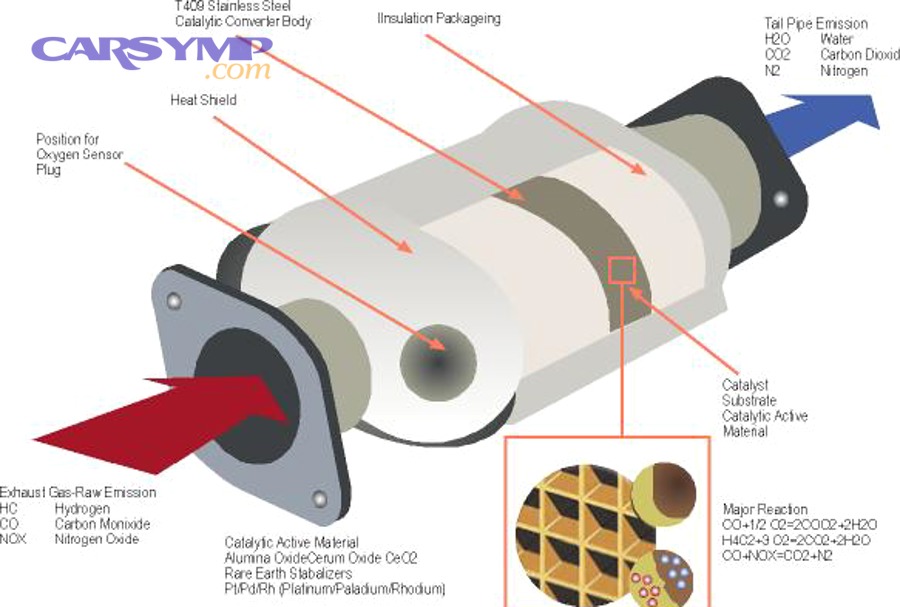
Entity map: P0420, P0430, catalytic converter (TWC), upstream O2 sensor (Sensor 1), downstream O2 sensor (Sensor 2), catalyst monitor, fuel trims, misfire monitor, exhaust leak, freeze frame, readiness monitors.
Cụ thể, most OBD-II strategies infer catalyst oxygen-storage and conversion performance by comparing how “active” the downstream sensor looks relative to the upstream sensor under specific steady conditions. When the downstream signal resembles the upstream too closely (or the calculated efficiency metric drops), the monitor can fail and eventually store P0420/P0430.
The code itself is not a parts verdict. It is a diagnostic conclusion generated from patterns, and patterns can be faked by upstream air-fuel problems, sensor response issues, or leaks that change what the sensors sample.
Theo nghiên cứu của Manufacturers of Emission Controls Association (MECA) từ mục “implementation of on-board diagnostic (OBD II) systems” vào thập niên 1990, OBD II uses exhaust oxygen sensors and the onboard computer to monitor emission controls including the catalytic converter over the vehicle’s useful life.
Can you keep driving with a P0420/P0430 code without immediate damage?
Yes, you can often drive short-term with P0420/P0430, but you should not ignore it because the underlying cause may be damaging (misfire, rich running, oil burning) and can quickly destroy the converter. However, your next move should be a risk-based triage using symptoms and scan data.
Cụ thể hơn, treat these as “stop-and-diagnose soon” situations: flashing MIL (active misfire), strong fuel smell, loss of power with overheating underbody, rattling substrate noises, or repeated pending P0420/P0430 right after clearing codes.
If the car feels normal, you can usually drive to gather better evidence: record freeze frame, check Mode $06 if available, and watch short- and long-term fuel trims. But don’t keep resetting codes to “make the light go away,” because you erase the data that tells you when and why the monitor failed.
Theo nghiên cứu của California Bureau of Automotive Repair (BAR) từ “On-Board Diagnostic Test Reference,” vào May/2015, readiness and OBD status rules were implemented for smog checks, and monitors may need to be rerun after repair-related resets.
What are the most common causes behind catalyst-efficiency codes?
There are four main cause groups: a truly aged/poisoned converter, upstream air-fuel control problems, sensor or wiring faults, and exhaust leaks that distort readings. Next, you’ll narrow the group by matching symptoms, freeze frame conditions, and quick checks.
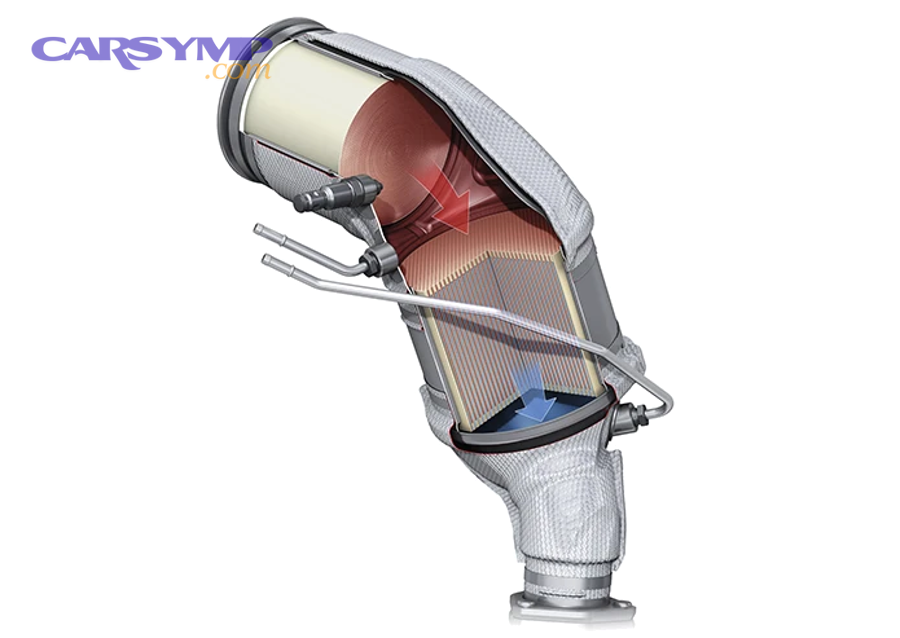
Để minh họa, here’s what tends to matter most in real diagnostics:
- Converter damage/aging: thermal meltdown from misfire or rich running, contamination from oil/coolant, physical break-up/rattle, or long-term loss of oxygen-storage capacity.
- Fuel-control problems: vacuum leaks, MAF skew, leaking injectors, lazy upstream O2/A/F sensor, incorrect fuel pressure, or evap purge stuck open. These can force the converter to “chase” mixtures it cannot clean efficiently.
- Sensor issues: slow downstream response, heater circuit problems, connector corrosion, incorrect sensor type, or wiring damage near hot exhaust.
- Exhaust leaks: small leaks ahead of (or near) sensors that pull in fresh oxygen, making mixtures appear lean and making sensor patterns misleading.
This table helps you match cause groups to practical clues and fast confirmation steps.
| Cause group | Common clues | Fast confirmation |
|---|---|---|
| True converter inefficiency | Code repeats under steady cruise; downstream mirrors upstream; no major trims/misfire codes | Compare S1 vs S2 waveforms; Mode $06 catalyst test results; temperature rise test (where safe) |
| Rich/lean fueling problem | Fuel trims high/low; black tailpipe; poor MPG; other fuel codes | Check trims at idle and 2500 rpm; smoke test intake; verify MAF and fuel pressure |
| O2/A/F sensor bias or slow response | Heater codes; sensor stuck/high/low; slow switching upstream | Heater power/ground check; response test with snap throttle; verify sensor part number |
| Exhaust leak influence | Ticking noise cold; soot marks; lean codes; odd downstream behavior | Cold-start feel/listen; smoke test exhaust; inspect flanges/gaskets/bellows |
Theo nghiên cứu của MECA từ mục “performance requirements,” vào bối cảnh chương trình EPA aftermarket converter, tiêu chuẩn nêu mức hiệu quả chuyển đổi tối thiểu sau giai đoạn độ bền (ví dụ 70% HC, 70% CO, 30% NOx trong chương trình liên bang).
How do you use freeze frame and scan data to pick the right test path?
Start with freeze frame because it tells you the exact operating window where the monitor failed, then choose tests that recreate that window. Next, you’ll correlate RPM, load, coolant temperature, and fuel trims to decide whether you’re chasing a converter problem or a control problem.
Cụ thể, pull and record: engine RPM, vehicle speed, load, ECT (coolant temp), IAT, STFT/LTFT, O2/A/F readings, and whether the code is pending or confirmed. If freeze frame shows the fault happened at warm steady cruise, prioritize catalyst-monitor evidence (S1 vs S2 patterns, Mode $06). If it happened during warm-up, prioritize leaks and sensor heaters because the system is most sensitive then.
Đặc biệt, watch for “cluster codes.” If you also have misfire codes (P030x), rich/lean codes (P0171/P0172), or fuel-trim anomalies, treat them as upstream causes first—because they commonly trigger catalyst codes as downstream consequences.
Theo nghiên cứu của BAR từ “On-Board Diagnostic Test Reference,” vào July/2019, Permanent Diagnostic Trouble Codes were added to certain smog check logic and cannot be erased by simply clearing codes; the vehicle must verify the defect is gone.
How can you confirm whether the catalytic converter is truly weak?
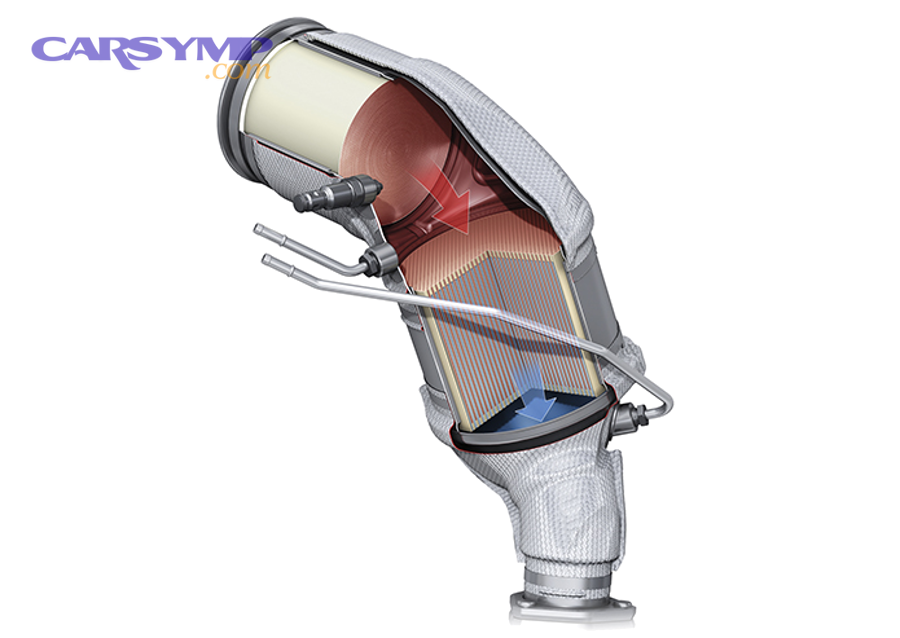
Confirm a weak converter by proving the downstream sensor pattern and monitor data indicate reduced oxygen storage after you’ve ruled out obvious upstream faults. Next, you’ll use a combination of waveform comparison, Mode $06 (if supported), and basic thermal/flow checks to build confidence.
Để bắt đầu, compare Bank 1 Sensor 1 (upstream) to Bank 1 Sensor 2 (downstream) on a graphing scan tool (or scope). A healthy system usually shows upstream switching activity while the downstream is comparatively steadier (lower amplitude, slower movement). If the downstream switches rapidly in sync with the upstream during stable cruise, that is consistent with reduced oxygen-storage capacity.
Bên cạnh đó, check Mode $06 results for catalyst-related test IDs if your scan tool translates them. Mode $06 can show whether the monitor’s calculated values are near the failure limit even before the MIL turns on.
Ngược lại, don’t “convict” the converter if you see unstable fueling: large trim swings, upstream sensor slow response, or misfire counts. Fix those first, then re-check catalyst evidence.
Theo nghiên cứu của MECA từ phần “OBD II systems use sensors… including the catalytic converter,” vào giai đoạn 1996 model year adoption, oxygen sensors plus onboard computation are used to monitor catalyst performance and regulate long-term compliance.
How do you rule out O2 sensor bias and heater issues before blaming the converter?
Rule out sensor bias by testing heater power/ground, verifying the correct sensor type, and checking response speed under controlled changes in mixture. Next, you’ll verify wiring integrity near heat sources and confirm that upstream control is stable enough for the catalyst monitor to be trustworthy.
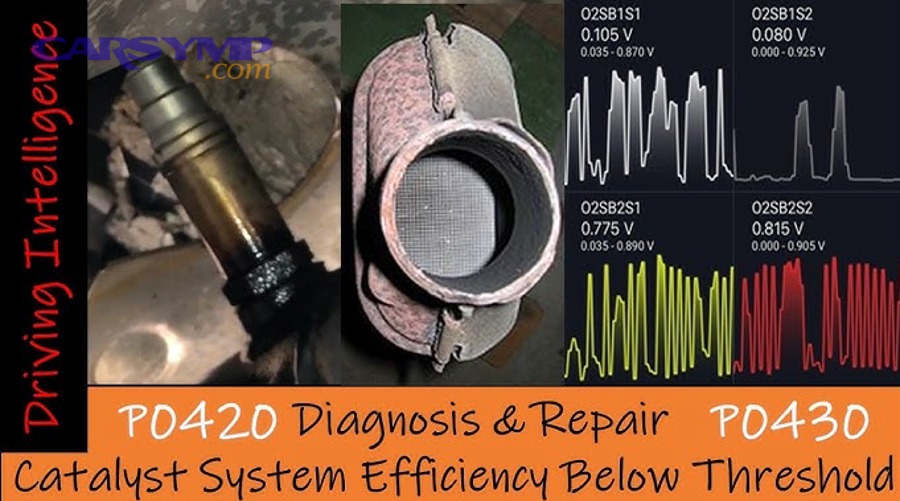
Cụ thể, do three quick checks:
- Heater check: verify heater circuit power and ground (KOEO) and look for heater-related DTCs. A cold or slow-heating sensor can skew warm-up monitor behavior.
- Part verification: confirm the sensor is the correct part number for upstream vs downstream and for the engine family; wrong sensors can have different switching behavior.
- Response check: observe upstream response to a quick throttle snap (rich) and decel (lean). A “lazy” upstream can cause rich running and overload the converter.
Hơn nữa, inspect harness routing: melted insulation, stretched wires, and corroded connectors are common where the loom passes close to the manifold or heat shield.
Theo nghiên cứu của MECA từ mục “implementation of OBD II systems,” vào thập niên 1990, oxygen sensors are core inputs for monitoring emission control performance; therefore sensor integrity is foundational before interpreting catalyst-monitor outcomes.
How do you find exhaust leaks that mimic a bad catalyst?
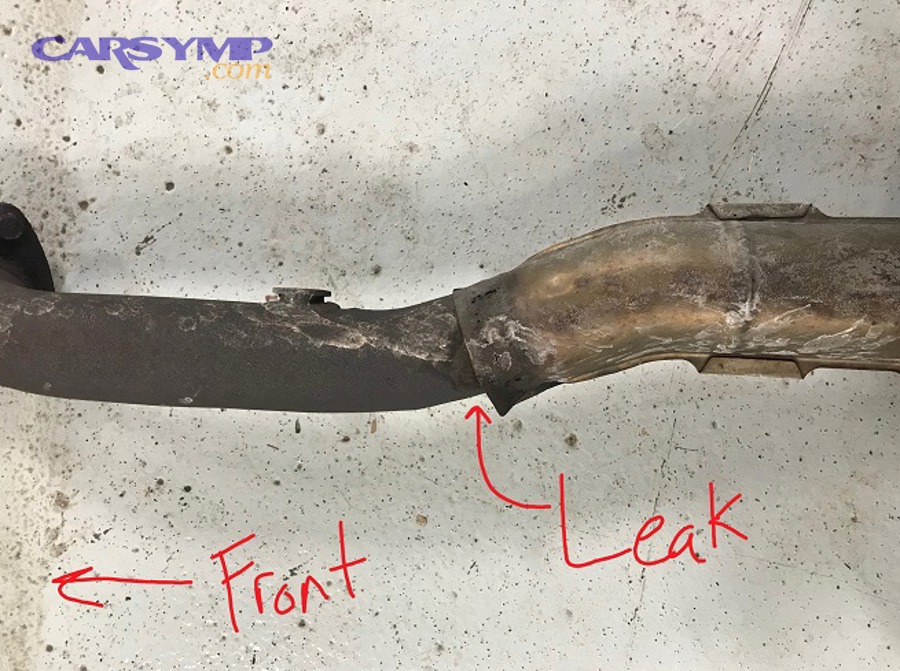
Find exhaust leaks by inspecting for soot marks and ticking noises on cold start, then confirm with smoke testing or pressure methods around flanges, bellows, and manifold joints. Next, you’ll focus on leaks upstream of sensors because those most distort oxygen readings.
Để hiểu rõ hơn, why leaks matter: fresh outside air can be pulled into the exhaust stream (especially during decel pulses), adding oxygen that changes what the sensors “think” is happening. That can make the downstream sensor look more active or leaner than it should, confusing catalyst-efficiency calculations.
Practical checks:
- Cold start listen: a sharp ticking near the manifold or flange that fades as metal expands often indicates a leak.
- Visual soot trail: black/gray soot around a gasket seam is a strong clue.
- Smoke test: introduce smoke into the exhaust and watch for wisps at joints; this is often the fastest proof.
Quan trọng hơn, if you see lean codes plus P0420/P0430, treat leak-hunting as a priority because it can create a cascade of misleading evidence.
Theo nghiên cứu của MECA từ mục “installation… unrepairable exhaust leaks,” vào bối cảnh điều kiện lắp đặt trong chính sách aftermarket, exhaust leaks severe enough to be unrepairable are recognized as a legitimate replacement situation—highlighting how leaks can be central to emissions outcomes.
What scan tool patterns usually separate a real catalyst failure from look-alikes?
A real catalyst failure usually shows downstream activity that increasingly resembles upstream under steady cruise, while look-alikes typically show unstable fuel trims, misfire counts, or sensor response problems that explain the downstream pattern. Next, you’ll use a few repeatable “pattern checks” to classify what you’re seeing.
Để minh họa, these pattern checks are practical:
- Steady cruise compare: hold 45–60 mph on level road; graph S1 and S2. A weak converter tends to let S2 swing more and track S1.
- Fuel trim sanity: if LTFT is very high at idle and improves at cruise, suspect a vacuum leak; if it worsens at cruise, suspect MAF/fuel delivery.
- Misfire counters: even “small” misfires can overheat and poison the substrate; address misfire first.
- Downstream stuck/flat: a dead-flat S2 can be a sensor/heater/wiring issue, not a “perfect” converter.
Below is a video walkthrough that shows common catalyst-monitor graphing patterns and how to interpret them during real driving.
Theo nghiên cứu của MECA từ mục “performance requirements… worst case vehicle testing,” vào bối cảnh xác minh hiệu năng, testing and confirming emissions performance over durability is necessary because patterns can vary by vehicle and operating conditions.
What repairs fix P0420/P0430 most reliably without wasting money?
The most reliable fix is the one that removes the root cause: correct fueling/misfire/leaks first, then replace the converter only if evidence still indicates low efficiency. Next, you’ll choose a repair order that prevents repeat converter failure and avoids “parts darts.”
Cụ thể, a cost-safe repair order looks like this:
- Address misfires and rich running first: coils, plugs, injectors, compression issues, MAF errors, fuel pressure problems. A new converter can be ruined quickly if these remain.
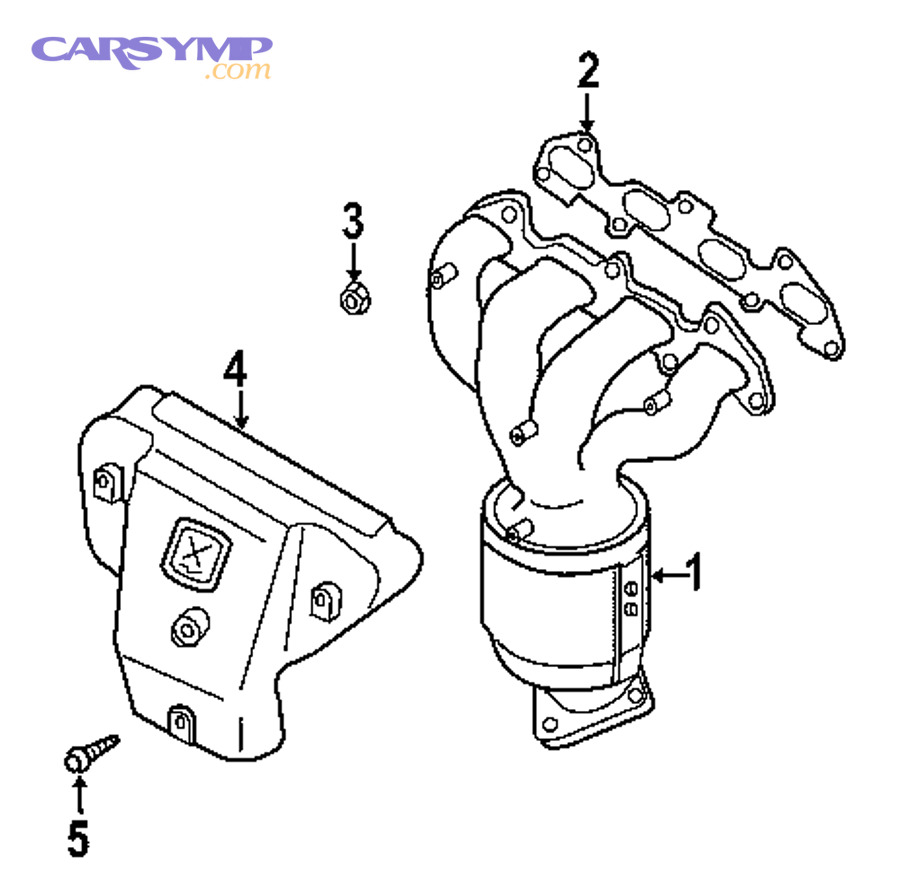
- Fix exhaust leaks ahead of sensors: gaskets, flex joints, cracked manifolds, flange hardware.
- Verify sensor integrity: correct parts, heater function, wiring, and response speed.
- Re-test catalyst evidence: only then decide whether converter efficiency is truly below threshold.
In many cases, the converter is actually the last domino to fall. When upstream faults are corrected, some vehicles stop failing the monitor without any converter replacement—especially if the substrate is not physically damaged and contamination wasn’t severe.
Theo nghiên cứu của MECA từ mục “EPA estimated… OEM converter could range,” vào giai đoạn chương trình replacement, cost pressures historically drove aftermarket markets and made accurate diagnosis critical to avoid unnecessary replacement.
Contextual Border: The main workflow above focuses on proving the cause. Next, the section below expands into ownership details—monitor readiness after repairs, legal/quality constraints, and warranty pathways—so your fix also “sticks” through inspections and long-term use.
What changes after the repair: monitors, legality, and warranty outcomes?
After the repair, you must re-run readiness monitors, document compliance where required, and verify warranty eligibility—because a correct mechanical fix can still fail an inspection if monitors are incomplete or if the part choice is non-compliant. Next, use the four topics below as a post-repair checklist.
How do readiness monitors behave after clearing codes or disconnecting the battery?
Readiness monitors may reset to “not ready” after power loss or code clearing, and they need specific driving conditions to complete. Next, plan normal mixed driving (city + steady cruise) and check monitor status periodically instead of repeatedly clearing codes.
Để minh họa, BAR notes that readiness monitors are self-tests and that completion depends on operating conditions and properly functioning components; monitors must be rerun after repair activity like disconnecting the battery or replacing an emissions component.
Include this phrase in your documentation notes (not in headings): Break-in and readiness monitors after replacement.
How do you choose the right part quality and avoid “monitor-unfriendly” replacements?
Pick parts that are designed to work with OBD catalyst monitoring, because monitor logic is sensitive to converter washcoat/substrate design. Next, verify the part is correct for your vehicle application and avoid “universal” shortcuts unless the manufacturer explicitly approves that application.
Theo nghiên cứu của MECA từ mục “tight quality control… compatible with OBD II,” vào bối cảnh OBD compatibility, manufacturers implemented tighter controls so catalysts won’t illuminate the MIL when functioning properly.
Use this phrase naturally in your service notes: catalytic converter replacement.
How does warranty coverage actually work for converters?
Warranty coverage depends on whether you’re within federal emissions warranty, state rules, and whether failure is caused by defects versus misuse (misfire, oil burning). Next, confirm mileage/age, keep receipts, and document diagnosis before authorizing work.
Theo nghiên cứu của U.S. Environmental Protection Agency (EPA) từ “Frequent Questions… Transportation, Air Pollution,” vào October/2015 (EPA-420-F-15-035 referenced) và trang FAQ cập nhật, specified major emission control components—including catalytic converters—are covered for 8 years or 80,000 miles under federal emissions warranty conditions.
Include this exact phrase in your planning text: Warranty coverage for catalytic converters.
What about aftermarket rules and documentation—especially in strict states?
Aftermarket converter rules can require approved applications, labeling, and minimum warranty terms, and installers may have recordkeeping obligations. Next, if you’re in a strict jurisdiction, verify the part meets local requirements before installation and keep the paperwork.
Theo nghiên cứu của California Air Resources Board (CARB) từ tài liệu Q&A về yêu cầu lắp đặt, vào bối cảnh quy định hậu mãi, aftermarket catalytic converters must be warranted for 5 years or 50,000 miles and the warranty can cover loss of conversion efficiency and OBD-detected malfunctions under normal use.
Use this exact phrase in your diagnostic write-up: Converter vs O2 sensor vs exhaust leak diagnosis.
FAQ
Why does P0420 come back right after repairs even when the car feels fine?
Because the monitor needs a specific drive pattern and stable inputs to “prove” the fix; if trims are still unstable or a small leak remains, the monitor can fail again. Next, re-check freeze frame conditions and confirm all enabling conditions are met before re-testing conclusions.
Is it normal to have no drivability symptoms with P0430?
Yes—catalyst-efficiency codes can be “quiet” because they often reflect emissions performance rather than immediate drivability, especially on Bank 2. Next, rely on data patterns and supporting checks rather than waiting for symptoms.
Should you replace upstream or downstream sensors first to “try something”?
No—blind replacement risks wasting money; test heater function, response, and wiring first, and only replace if evidence shows a fault. Next, validate fuel control and leaks so sensor data is trustworthy before you interpret catalyst efficiency.
What single mistake most commonly ruins a new converter?
Leaving misfires, rich running, or oil/coolant consumption unresolved—those conditions can overheat or poison the substrate quickly. Next, treat the converter as the final step after upstream root causes are repaired and verified.