


Emissions test implications and fixes come down to one practical goal: identify what your inspection is actually checking, then repair the specific fault that caused the failure instead of replacing parts blindly.
Most drivers fail for a small set of root causes—unready OBD monitors, an active malfunction indicator, or out-of-range exhaust gases—so the fastest path is matching the failure type to the right diagnostic flow.
When you understand what the station measures (and what it doesn’t), you can choose fixes that reset compliance without triggering new problems like incomplete monitors, repeated “not ready,” or a quick re-fail.
To start, we’ll map the inspection logic, then move into diagnosis-by-symptom, and finally “Giới thiệu ý mới” by turning your results sheet into a step-by-step repair plan you can trust.
What do emissions test implications and fixes really mean for your car?
Emissions test implications and fixes mean your vehicle either meets legal pollution limits right now, or it needs targeted repairs to restore emissions control performance and pass the specific checks used in your area.
Để bắt đầu, it helps to think in three layers: what the law requires, what the inspection station measures, and what the engine control module believes is working.
Layer 1: Compliance implications are about registration, renewal deadlines, retest windows, and whether you must fix the problem before you can legally drive or renew. In many jurisdictions, an emissions failure can block registration renewal even if the car still feels “fine” on the road.
Layer 2: Measurement implications depend on your test type. Some places only plug into the diagnostic port and check computer readiness and fault status. Others also measure tailpipe gases under idle or a simulated driving load. A visual inspection may also check for missing or obviously tampered emissions hardware.
Layer 3: System implications are about why the car failed: incomplete readiness monitors, an active malfunction indicator, or a gas reading that suggests fuel control, combustion, or after-treatment isn’t doing its job.
Practically, “fixes” should follow a strict order: confirm the failure mode → verify the root cause with quick tests → repair the cause → confirm the system can complete self-checks → retest.
The health and policy side is real too: reducing vehicle pollution isn’t just paperwork. Theo nghiên cứu của Johns Hopkins Bloomberg School of Public Health (Department of Environmental Health Sciences), vào 10/2012, meeting stricter ozone standards was associated with thousands of avoided premature deaths annually in U.S. health impact estimates.
Emissions inspection, OBD-II readiness, tailpipe test, MIL status, HC CO NOx, evaporative system, fuel control, catalyst efficiency, repair verification
Which test type are you facing: OBD scan, tailpipe, or visual inspection?
There are three main test types—OBD scan, tailpipe analysis, and visual checks—and your fastest fix depends on which one you’re actually taking because each test “fails” for different reasons.
Tiếp theo, use your paperwork and station receipt to identify the test method before you buy parts or clear codes.
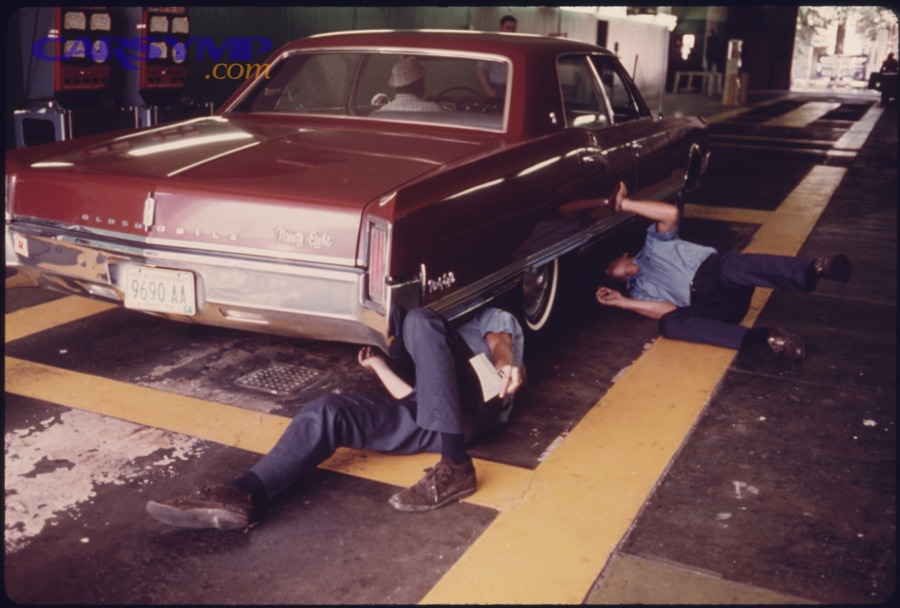
1) OBD scan test: The station reads your diagnostic system. Common fail triggers include an illuminated malfunction indicator, stored emissions-related trouble codes, or too many monitors marked “not ready.” This test is common on newer vehicles.
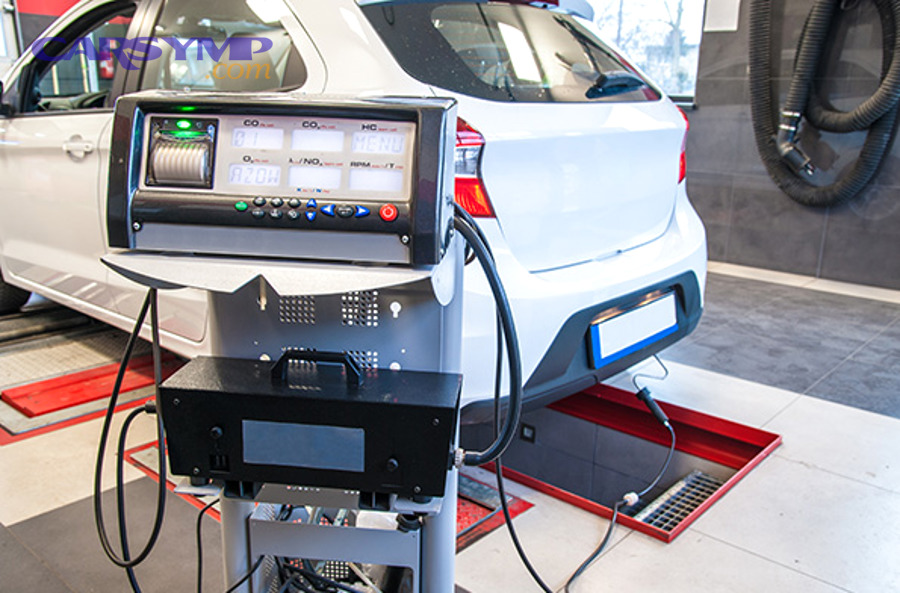
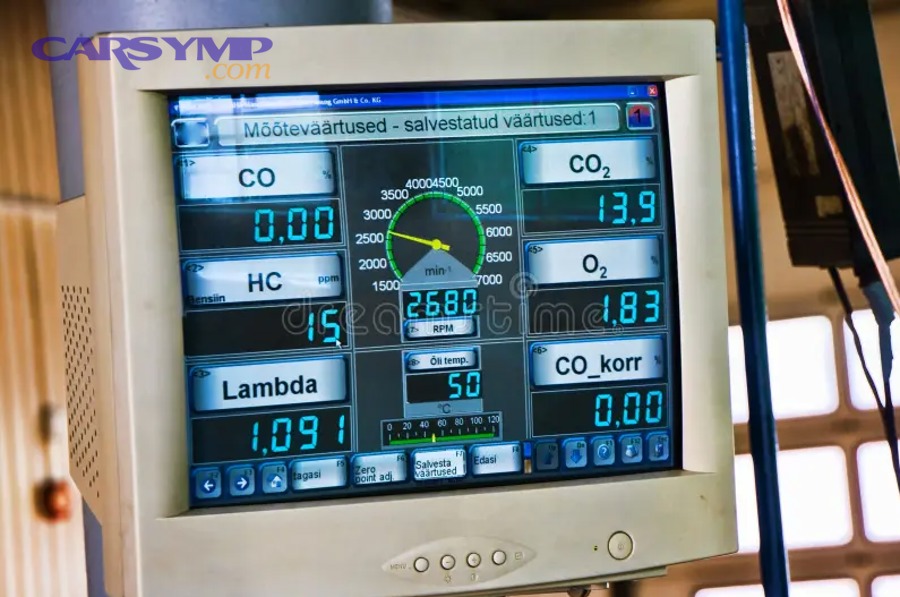
2) Tailpipe test: The station measures exhaust gases—typically hydrocarbons (HC), carbon monoxide (CO), and sometimes nitrogen oxides (NOx)—at idle or under a simulated load. This test is more sensitive to combustion quality, fuel control, and exhaust leaks.
3) Visual inspection: The inspector checks for missing or obviously modified emissions components, damaged hoses, or other visible issues. Some regions include this as part of an OBD or tailpipe test.
If your area uses OBD, your repair success isn’t just “the part is replaced”—it’s “the computer agrees the system passed self-tests.” If your area uses tailpipe, your repair success is “the measured gases are within limits during the procedure.”
To avoid guessing, the table below shows what each test is best at detecting and what typically causes a failure.
| Test type | What it checks | Common failure triggers | Best first move |
|---|---|---|---|
| OBD scan | Computer fault status + self-test completion | MIL on, stored emissions DTCs, too many “not ready” monitors | Scan tool data + readiness + freeze frame review |
| Tailpipe | Measured HC/CO/NOx at the pipe | Rich/lean fueling, misfire, exhaust leaks, weak after-treatment | Check fuel trims, misfires, exhaust integrity |
| Visual | Presence/condition of emissions hardware | Missing, disconnected, or visibly damaged components | Restore correct routing, clamps, and hardware |
Evidence matters because programs are designed to reduce real-world emissions. Theo nghiên cứu của Tecnológico de Monterrey (Escuela de Ingeniería y Ciencias), vào 07/2020, an inspection-and-maintenance program scenario was estimated to reduce mass emissions of HC, CO, and NO by about 69%, 42%, and 28% in a case study region.
OBD inspection, tailpipe emissions, visual inspection, HC CO NOx, compliance failure modes
Does a check-engine light automatically fail emissions, and why?
Yes—on most OBD-based inspections, an illuminated check-engine light (malfunction indicator) typically means an automatic fail because it signals the computer has detected an emissions-relevant fault or cannot confirm emissions systems are operating correctly.
Cụ thể, the “why” is simple: the station is allowed to treat the warning light as proof that the vehicle is not currently in a verified compliant state.
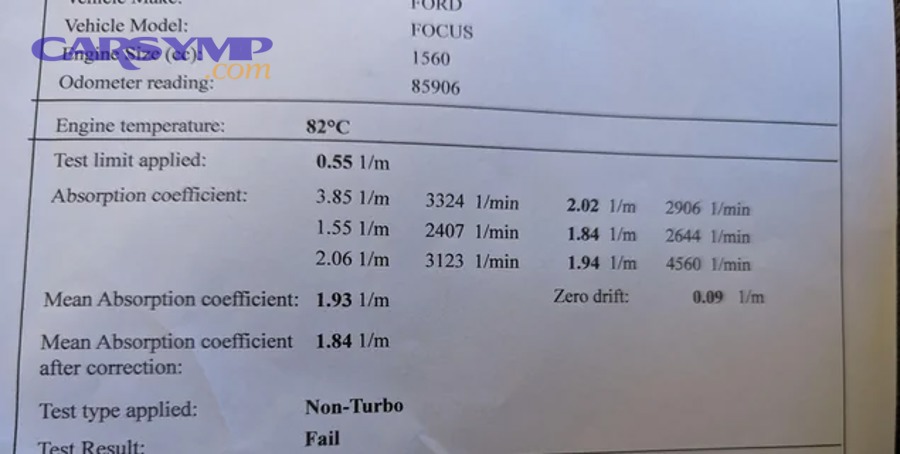
Reason 1: The warning light is tied to emissions diagnostics. Many faults that trigger the light also affect emissions directly—misfires, fuel control issues, air leaks, or after-treatment efficiency problems.
Reason 2: The system may be in protective logic. When certain faults occur, the computer can suspend other self-tests or substitute fallback values, which prevents reliable emissions control and can keep monitors from completing.
Reason 3: Clearing the light without fixing the cause doesn’t restore compliance. You can erase codes, but many regions detect incomplete readiness afterward, and the fault often returns quickly under the same driving conditions.
So your first action should be scanning for diagnostic codes, capturing freeze-frame data, and checking readiness status—before any reset. This preserves the evidence needed to isolate the fault efficiently.
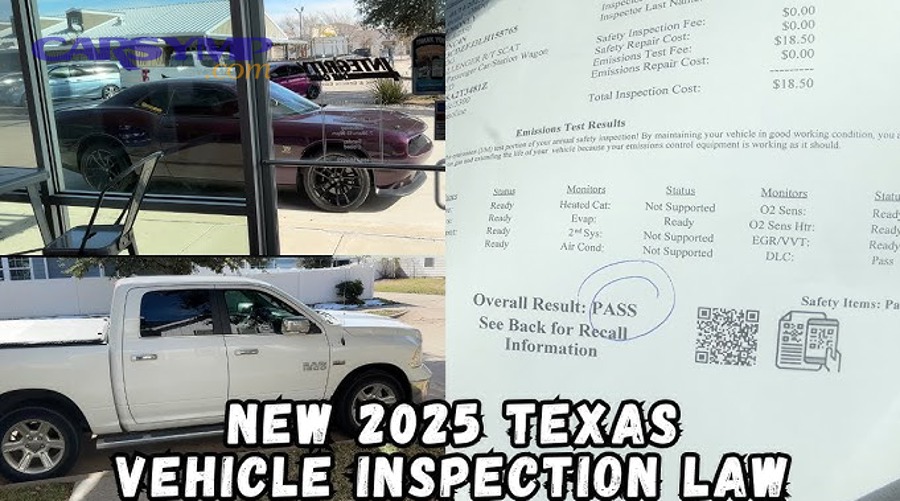
In many state programs, the rule is explicit: a functional warning light and completed readiness are required for a pass. Theo hướng dẫn của New York DMV về readiness for inspection, vào 2024, a vehicle can fail if the check-engine light is on or if readiness monitors are not set (depending on model year and rules).
Check engine light, MIL, emissions DTCs, freeze frame, readiness status, inspection failure
How do readiness monitors cause a “not ready” result, and how do you set them?
Readiness monitors cause a “not ready” result when the computer has not completed its self-tests since the last reset, battery disconnect, or code clear; you set them by driving specific conditions until the system finishes those checks.
Để hiểu rõ hơn, treat readiness like a checklist the computer must complete—some items finish quickly, while others require very specific conditions.
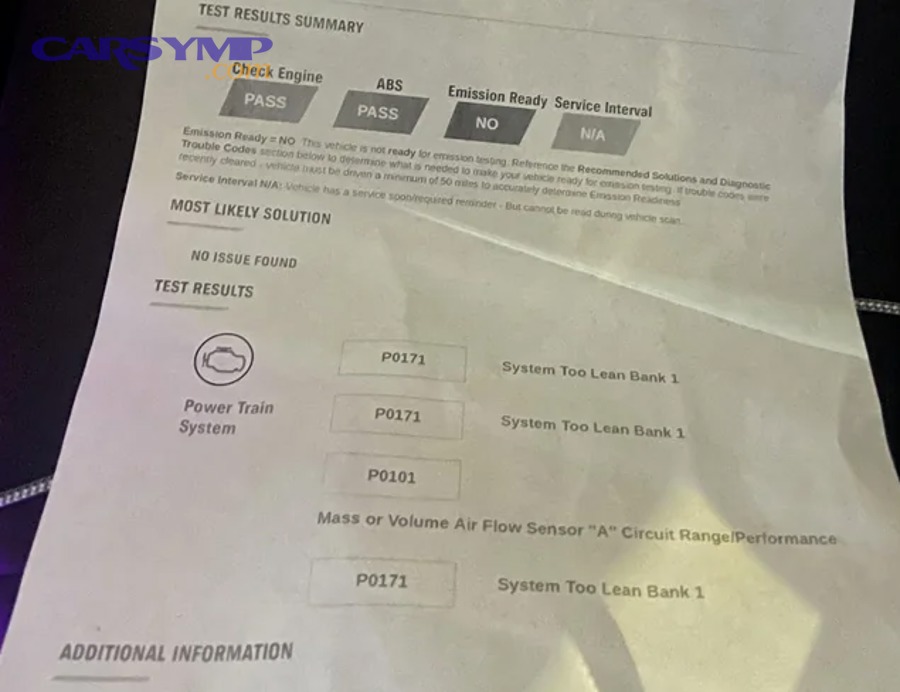
Step 1: Confirm your current readiness and fault status. Use a scan tool to read: (a) MIL commanded on/off, (b) stored and pending codes, (c) monitor status (complete/incomplete), and (d) fuel trims and misfire counters if available.
Step 2: Stop “random driving” and use a structured drive pattern. Many monitors need a cold start, steady cruise, gentle acceleration, deceleration without braking, and a fully warmed engine. If you only take short trips, some monitors can stay incomplete for days.
Step 3: Avoid clearing codes right before the test. Resetting wipes readiness and often triggers “not ready,” which can block a pass even if the repair is correct.
What usually keeps monitors incomplete?
- Battery disconnect or recent battery replacement that reset learned data and readiness.
- Clearing codes after a repair “to see if it’s fixed” before the system has time to verify.
- Short-trip driving that never reaches stable operating temperature long enough.
- An underlying fault that prevents the monitor from running or completing.
What to do if one monitor won’t complete: verify there are no pending codes, check the prerequisites (coolant temp, fuel level window for evap, no misfires), and then drive a mix of city/highway with full warm-ups over multiple days. If it still won’t set, you likely have a prerequisite fault or a known “hard-to-set” monitor behavior that needs targeted diagnosis.
Here’s a practical video that explains OBD readiness, what “not ready” means, and how drive cycles affect monitor completion:
Programs often set clear thresholds for readiness. Theo tài liệu của U.S. Environmental Protection Agency (Office of Transportation and Air Quality), vào 03/2013, a recommended readiness criterion states that if a vehicle has ≤1 monitor not ready, it can pass readiness determination in the described inspection logic.
Readiness monitors, drive cycle, OBD port, code clearing, warm-up cycles, distance since code clear
Which common root causes make emissions numbers spike even without major damage?
There are four common root cause groups—fuel control errors, incomplete combustion (misfire), air leaks/exhaust leaks, and sensor/heater problems—and any of them can spike emissions even when the engine still feels drivable.
Ngoài ra, these causes often overlap, so your diagnosis should look for patterns instead of single symptoms.
Group A: Fuel control running rich or lean
- Rich (too much fuel) raises CO and HC, can overheat after-treatment, and can cause a fuel smell or poor mileage.
- Lean (too much air) can increase NOx and trigger misfire under load, often from intake leaks, low fuel pressure, or unmetered air.
Group B: Misfire and incomplete combustion
- Ignition issues (plugs, coils), injector problems, vacuum leaks, or low compression can create misfire.
- Misfire rapidly increases HC and can damage after-treatment over time.
Group C: Exhaust integrity issues
- Exhaust leaks upstream of sensors can trick readings and destabilize fueling.
- Leaks can also affect tailpipe test readings directly, especially if sampling is inconsistent.
Group D: Sensor/heater and system-enabling faults
- Oxygen sensor heater faults delay closed-loop operation, raising cold-start emissions.
- Thermostat stuck open can keep the engine cool, preventing monitors from completing.
If you’re dealing with converter-related efficiency trouble codes, avoid replacing parts until you’ve confirmed fueling stability, misfire status, sensor switching behavior, and exhaust integrity—because those upstream issues can mimic a “bad converter” on scans.
Data-backed perspective: Theo nghiên cứu của Tecnológico de Monterrey (Escuela de Ingeniería y Ciencias), vào 07/2020, a small fraction of vehicles can dominate fleet emissions, and the study notes that highly polluting vehicles can disproportionately affect average emissions outcomes in real-world measurements.
Fuel trims, rich/lean, misfire, exhaust leak, oxygen sensor heater, thermostat, high emitters
How do you fix high HC, CO, or NOx failures step by step?
You fix high HC/CO/NOx by following a three-step method: verify which pollutant is high, match it to the most likely root causes, and confirm the fix with live data before retesting.
Hãy cùng khám phá a practical workflow that saves money by preventing “parts roulette.”
Step 1: Identify the dominant pollutant and what it implies
- High HC: misfire, unburned fuel, ignition weakness, vacuum leak, injector leak, or low compression.
- High CO: rich running, restricted air intake, incorrect fuel pressure, leaking injectors, or incorrect sensor feedback.
- High NOx: lean combustion, high combustion temperature, EGR flow issues (where equipped), cooling system problems, or timing/load issues.
Step 2: Use quick tests that isolate root cause
- Scan fuel trims: large positive trims suggest lean/unmetered air; large negative trims suggest rich/excess fuel.
- Check misfire counters: a repeating misfire pattern often points to a cylinder-specific issue.
- Look for intake leaks: smoke test or spray test (with caution) around intake boots and gaskets.
- Verify coolant temperature: an engine that never warms up runs richer longer and may fail self-tests.
- Inspect the fuel cap and evap lines: leaks can trigger faults and delay readiness completion.
Step 3: Repair, then validate with “proof” data
- After ignition/fuel repairs, confirm stable idle, no active misfires, and reasonable trims.
- After air leak repairs, trims should move closer to zero and stabilize across idle and cruise.
- After exhaust repairs, confirm sensor readings are plausible and do not show false lean.
Only after validation should you consider replacing major after-treatment components. If you do replace emissions hardware, plan for a readiness-reset period and verification drive pattern afterward rather than rushing to inspection the next morning.
Program design supports this structured approach. Theo tài liệu của U.S. Environmental Protection Agency (Office of Transportation and Air Quality), vào 03/2013, the guidance emphasizes using readiness and related criteria (like distance and warm-ups since codes were cleared) to increase confidence that faults are truly repaired rather than simply erased.
HC CO NOx, fuel trims, smoke test, coolant temperature, misfire counters, evap leaks
How to avoid repeat failures after repairs, resets, or recent battery work?
You avoid repeat failures by preserving diagnostic data before resets, completing verification drives after repairs, and confirming both “no faults” and “ready” status—because a repair can be correct yet still fail if readiness is incomplete.
Quan trọng hơn, you need a “two-pass” mindset: first fix the fault, then prove the system can self-certify.
Rule 1: Never erase evidence before diagnosis. Freeze-frame data tells you when the fault happened (load, temperature, speed). If you clear codes first, you lose the most efficient roadmap to the root cause.
Rule 2: After battery work, expect a readiness rebuild period. Many vehicles reset monitors and learned values. Plan several warm-ups and mixed driving before inspection.
Rule 3: Verify with “three greens” before you retest.
- Green 1: MIL is commanded off.
- Green 2: No stored or pending emissions-related codes.
- Green 3: Monitors meet your jurisdiction’s readiness allowance.
Rule 4: Don’t chase one monitor in isolation. If a monitor refuses to complete, check prerequisites: correct fuel level window for evap, stable coolant temp, no misfire, and no sensor heater faults.
Many drivers repeat-fail because they repair a symptom but ignore the conditions needed for the computer to confirm the repair. That’s why some programs recommend a longer “normal operation” window after clearing codes. Theo tài liệu của U.S. Environmental Protection Agency (Office of Transportation and Air Quality), vào 03/2013, the document notes that some vehicles may need additional time to set readiness after a repair and recommends instructing operators to drive for weeks after codes are cleared in certain contexts.
Battery disconnect, retest planning, freeze frame, pending codes, readiness allowance, verification drive
What are the costs, risks, and timing implications if you keep driving after failing?
It depends: you can often drive normally in the short term after failing, but the risks include registration deadlines, escalating damage from untreated faults, worsening fuel economy, and a higher chance of an expensive repair if the root cause is ignored.
Tuy nhiên, the “can I keep driving?” question should be answered based on the failure category, not just the inspection result.
If the failure is readiness-only: The car may run fine, but you’re on a clock. You need time to complete monitors, and multiple short trips may not be enough. Cost is mostly time and planning, not parts—unless a hidden prerequisite fault is preventing completion.
If the failure is an active malfunction indicator: Costs can escalate. Persistent misfire can damage after-treatment; rich running can contaminate sensors and raise operating temperatures. Ignoring it increases the chance of turning a moderate repair into a major one.
If the failure is tailpipe emissions: You may have a fuel control or combustion problem that wastes fuel and stresses components. Even if drivability is acceptable, long-term operation can make the next test harder, not easier.
Timing strategy that minimizes wasted retests
- Fix active faults first (MIL off).
- Then complete verification drives until readiness is acceptable.
- Retest only when scan data confirms you’re ready.
Real-world programs focus on keeping high emitters from continuing to pollute, which is why compliance deadlines exist. Theo nghiên cứu của Tecnológico de Monterrey (Escuela de Ingeniería y Ciencias), vào 07/2020, the study estimated a large potential reduction in mass emissions under an inspection-and-maintenance scenario, underscoring why delaying repairs can matter at the fleet level.
To connect this to common driver searches and related repair planning, you may see guides labeled “catalytic converter replacement,” “P0420/P0430 code diagnosis,” “Converter vs O2 sensor vs exhaust leak diagnosis,” and “Can you drive with a bad catalytic converter” across emissions content clusters—use them only after you’ve confirmed your own failure type and prerequisites with scan data.
Registration deadline, high emitter risk, misfire damage, fuel economy, readiness-only failure, retest strategy
Contextual Border
From here, we move beyond the pass/fail mechanics and into micro-level decisions—how to interpret the paperwork, protect your budget, and prevent repeat problems across seasons and driving habits.
Beyond the test: smart planning, paperwork, and long-term prevention
Yes—you can make emissions test implications and fixes easier long-term by improving how you read results, schedule diagnostics, and maintain the systems that most often cause repeat failures.
Đặc biệt, these “micro” tactics reduce wasted retests and help you avoid overpaying for repairs you didn’t need.
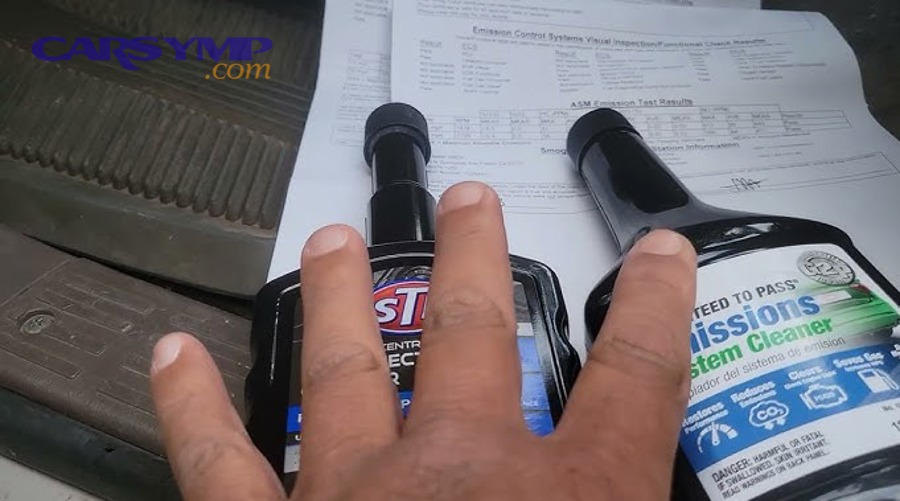
How to read your report and talk to a shop without getting upsold
Use your report as a diagnostic input: match the failure reason to evidence (codes, readiness, pollutant pattern) and request confirmation tests before authorizing expensive parts.
Ví dụ, ask for: scan printout showing readiness and fault status, fuel trim data at idle and cruise, and a clear explanation of how the proposed repair changes those readings.
When a shop explains the chain of cause-and-effect, you’re less likely to pay for guesses. Theo tài liệu của U.S. Environmental Protection Agency (Office of Transportation and Air Quality), vào 03/2013, using readiness and additional criteria is described as a way to increase confidence about whether a fault is actually repaired rather than only erased.
How exemptions, waivers, and retest windows usually work
Most programs (where available) require documented repair attempts and receipts, and some limit waivers to certain conditions; the key is to avoid missing deadlines while you’re still completing readiness or troubleshooting.
Bên cạnh đó, you should plan your re-inspection date around monitor completion rather than hope it will “be ready by then.” Theo hướng dẫn của New York DMV về inspection readiness, vào 2024, monitor readiness status is a pass/fail factor and the rules vary by model year and program design.
How fuel quality, short trips, and driving patterns influence monitors
Short trips, extended idling, and never reaching stable operating temperature can keep self-tests incomplete and can worsen fuel control stability, which increases failure risk even after a correct repair.
Hơn nữa, building in a few longer mixed routes each week (when safe and practical) can help the system complete monitors naturally and expose intermittent faults before inspection day.
The evidence for “time since clear” matters because some monitors need normal operation to set. Theo tài liệu của U.S. Environmental Protection Agency (Office of Transportation and Air Quality), vào 03/2013, the guidance discusses using distance traveled and warm-ups since codes were cleared as part of readiness determination logic in some scenarios.
How to build a maintenance routine that protects emissions hardware
Protect emissions performance by keeping combustion stable: address misfires early, fix vacuum/exhaust leaks promptly, ensure the engine reaches proper temperature, and keep sensors and wiring in good condition.
Tóm lại, the cheapest emissions fix is preventing the failure: consistent maintenance reduces the likelihood of becoming a high emitter and makes inspection day a formality instead of a repair emergency.
At the public-health scale, lower emissions translate into measurable benefits. Theo nghiên cứu của Johns Hopkins Bloomberg School of Public Health (Department of Environmental Health Sciences), vào 10/2012, ozone reduction scenarios were associated with large estimated reductions in adverse health outcomes, reinforcing why emissions controls matter beyond registration paperwork.
Inspection report reading, repair documentation, readiness planning, short-trip effects, preventive maintenance, emissions compliance