


Warranty coverage for catalytic converters depends on who issued the warranty, how the converter failed, and whether the part is considered an emissions-critical component under your vehicle’s coverage rules.
Beyond the basics, most drivers want to know what’s actually covered (parts, labor, diagnosis), what actions can void coverage, and what paperwork a shop or dealer will require before approving a claim.
Many owners also need a clear path for borderline cases—intermittent check-engine lights, contamination from engine issues, and disputes about “wear-and-tear” versus true defects.
Tiếp theo, this guide maps the key warranty types, claim steps, and practical “móc xích” checks so you can move from symptoms to documentation to approval without guesswork.
Is a catalytic converter usually covered under warranty?
Yes—warranty coverage for catalytic converters is often available under emissions or powertrain terms, but approval depends on defect proof, eligibility, and exclusions (misuse, contamination, theft, or prior modifications). To begin, treat it as an eligibility problem first, then a diagnosis problem.

Which warranties may include the converter?
Most converter claims fall into one of these buckets: manufacturer emissions coverage, manufacturer powertrain coverage (less common for converters), a separate federal/state emissions warranty category, extended service contracts, or a standalone aftermarket part warranty. Cụ thể, your first job is to identify which “issuer” owns the promise—because claim rules follow the issuer, not the shop.
However, eligibility is not just about time and mileage; it’s also about whether the converter is a covered component and whether the failure mode looks like a manufacturing defect rather than a downstream casualty.
What “counts” as a warranty-eligible failure?
In practice, warranty approval is strongest when you can show an internal substrate defect, premature breakdown under normal operation, or a confirmed catalyst efficiency failure with supporting tests. Để minh họa, a clean service history and documented diagnostic steps connect your complaint to a covered defect instead of a secondary problem.
Why coverage is commonly denied
Denials usually happen for three reasons: the converter is damaged by another issue (misfire, oil burning, coolant intrusion), the vehicle has non-compliant modifications (tuning, missing sensors, altered exhaust), or the claim cannot prove the converter is the root cause. Bên cạnh đó, “no code, no failure found” is a common dead-end unless you capture freeze-frame data and replicate the condition.
What types of warranties apply to catalytic converters?
There are five main types of warranty coverage for catalytic converters: manufacturer emissions warranty, manufacturer bumper-to-bumper, powertrain, extended service contract, and aftermarket parts warranty—each with different coverage limits and proof requirements. Sau đây, match your situation to the correct category before spending on parts.

Manufacturer emissions warranty
This is the most relevant category for converters because it targets emissions-control components. Cụ thể hơn, the converter may be treated as a high-value emissions component with special time/mileage limits depending on your market and model-year rules. In many cases, this coverage is separate from the general “bumper-to-bumper” timeline.
To keep the flow practical, think of emissions coverage as “rules-driven”: the dealer must document diagnostic justification, and the manufacturer can require evidence that upstream conditions did not cause the failure.
Bumper-to-bumper and powertrain warranties
Bumper-to-bumper coverage can apply early in the vehicle’s life, but converters are often managed under emissions terms instead. Meanwhile, powertrain coverage typically focuses on engine and transmission internals; converters may be excluded or only covered indirectly if the manufacturer lists them explicitly. Ngược lại, some extended powertrain plans do include exhaust aftertreatment, but the contract language is decisive.
Extended service contracts
Extended coverage varies widely: some plans cover the converter only if the plan includes “emissions” or “exhaust aftertreatment.” Đặc biệt, many plans require pre-authorization before diagnosis and repair—so paying a shop first can risk reimbursement refusal.
Aftermarket parts warranties
If a converter was replaced previously, warranty coverage may come from the aftermarket brand or the installer. In that scenario, the issuer may cover the part but not diagnostic time, gaskets, sensors, or labor unless the warranty states otherwise. Hơn nữa, the issuer may require proof the vehicle is in a proper state of tune, because an engine running rich can quickly destroy a new converter.
How this ties to your repair path
As a “móc xích” rule: identify warranty type → confirm eligibility dates/miles → collect required documents → run a structured diagnostic path → submit claim with test results. That sequence prevents the most common failure: diagnosing after the part is already replaced, which often eliminates the evidence the issuer wants.
What does converter warranty coverage typically include or exclude?
Converter warranty coverage usually includes the converter assembly when a defect is proven, but often excludes consequential damage, contamination from engine faults, and non-covered add-ons like sensors, clamps, or custom exhaust work. Tiếp theo, separate “covered part” from “covered repair” to avoid surprises.

Common inclusions
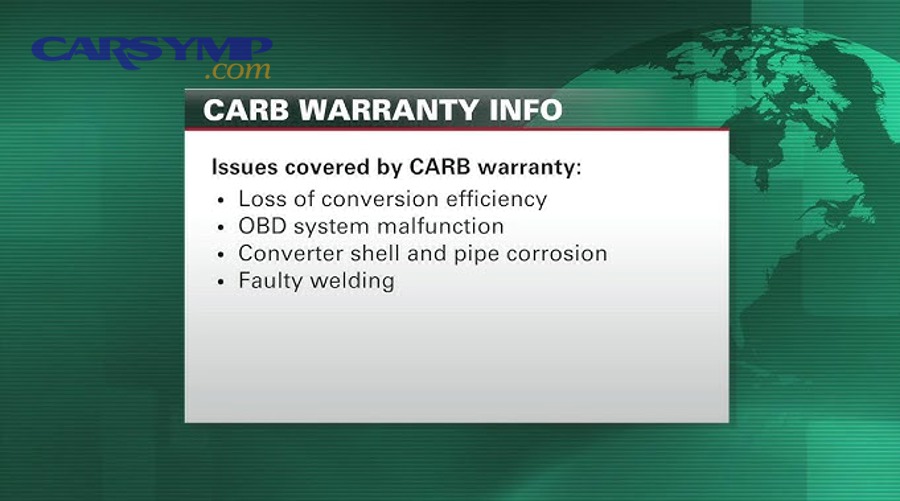
When approved, coverage often pays for the converter part and standard labor to remove and install it at an authorized facility. Cụ thể, some manufacturer coverage also includes necessary gaskets/hardware per service procedures, but you should not assume every line item is covered until it appears on the authorization.
Common exclusions
Three exclusions appear again and again: damage from upstream engine issues, non-compliant modifications, and environmental/physical damage. For example, a converter that melted because of prolonged misfire may be treated as a victim, not a defective component. In addition, impact damage from road debris can be classified as external damage rather than a product defect.
Diagnostic fees, towing, and rental coverage
Diagnosis is the gray zone. Some issuers pay diagnostic time only if the failure is confirmed and covered; others exclude diagnosis altogether. Tuy nhiên, dealers may still need paid diagnostic time to document results for warranty submission. If you want to reduce risk, ask the service writer how diagnostic charges are handled if the claim is denied.
Where “catalytic converter replacement” changes the rules
Once a shop performs catalytic converter replacement outside the authorization process, many issuers treat the claim as closed because they can’t inspect the failed component in place. Hơn nữa, without pre-authorization, an extended contract can refuse payment even if the converter would have been covered.
How do you prove the converter is the failed part and not a symptom?
You prove converter failure by combining fault codes, live data, and root-cause checks—then showing the converter remains the most likely failure after excluding misfires, leaks, sensor faults, and fuel-control issues. Để bắt đầu, build a diagnosis story that an adjuster can follow.

Start with codes and freeze-frame context
Codes alone are not proof; they are clues. Cụ thể, capture freeze-frame data (RPM, load, coolant temp, fuel trims) at the moment the fault set. This “snapshot” helps show whether the engine was running rich, misfiring, or operating normally—an important step for warranty credibility.
Use fuel trim and misfire logic to protect your claim
High positive fuel trims can suggest a leak or low fuel delivery; high negative trims can suggest rich conditions. Bên cạnh đó, any active misfire history undermines a converter claim because misfires can overheat and damage the catalyst. If misfires exist, solve them first—otherwise a warranty reviewer may classify converter damage as secondary.
Rule out exhaust leaks and sensor problems
Leaks ahead of the converter and upstream sensor faults can mimic catalyst inefficiency. Tuy nhiên, a proper smoke test or leak inspection can quickly eliminate this. If you skip this step and replace the converter, the issuer can argue the converter was not the real cause.
Where “P0420/P0430 code diagnosis” fits in your warranty narrative
A clean P0420/P0430 code diagnosis pathway strengthens your claim when it shows catalyst efficiency failure persists after verifying there are no upstream faults, no relevant leaks, and sensor signals are plausible. Hãy cùng khám phá: when you present this sequence in writing, you convert vague complaints into a defendable warranty request.
How do you file a catalytic converter warranty claim step-by-step?
The best claim path is a four-step method: verify eligibility, document symptoms and diagnostics, request pre-authorization, then complete repair with required proof and parts traceability. Sau đây, follow the same sequence warranty administrators use to approve claims.

Step 1: Confirm eligibility using the right documents
Use the warranty booklet, service contract terms, and vehicle identification info to confirm time and mileage limits. Cụ thể, some coverages start at “in-service date,” not purchase date. Keep a photo of the odometer and your registration/ownership record if the vehicle recently changed hands.
Step 2: Create a “symptom-to-test” record
Write down what you notice (loss of power, rattling, sulfur smell, recurring check-engine light), the conditions (cold start, highway speeds), and any codes. Để minh họa, attach a scan tool printout or screenshot showing codes and freeze-frame data. This record becomes the bridge between your complaint and the diagnostic steps the issuer expects.
Step 3: Pre-authorization and inspection requirements
Many extended plans require pre-authorization before any teardown or replacement. Tuy nhiên, even manufacturer coverage can require specific tests or confirmation steps. Ask what evidence they need: photos, scan logs, backpressure readings, temperature tests, or the old part retained for inspection.
Step 4: Repair, part traceability, and final paperwork
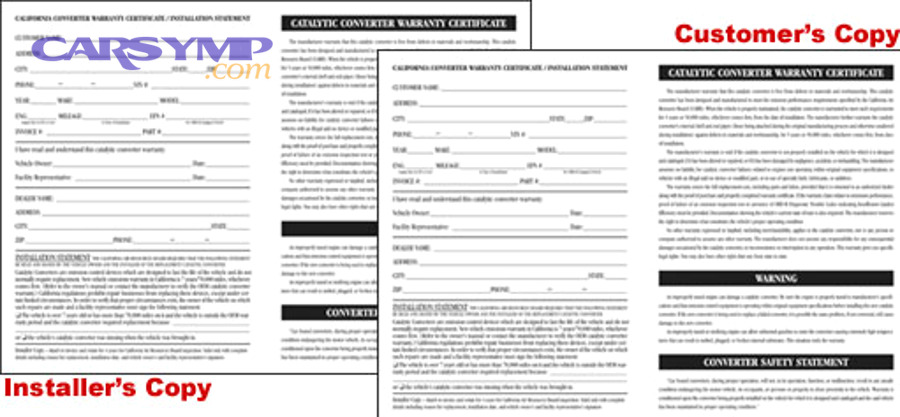
After approval, make sure the invoice lists part numbers, labor operations, and any required sublet or diagnostic line items. Hơn nữa, keep the old part if allowed until the issuer confirms the claim is closed, because disputes can require post-repair inspection.
Video: what a warranty-focused diagnostic visit looks like
This quick video can help you understand what shops typically document during emissions-related diagnostics before authorizing a major repair.
What voids catalytic converter warranty coverage?
Converter warranty coverage is most commonly voided by three factors: emissions non-compliance modifications, proof of upstream engine-caused damage, and missing maintenance records—each weakening the “defect” argument. Tiếp theo, treat exclusions like a checklist you must clear.
Modifications and non-compliant parts
Common risk triggers include aftermarket tuning that alters fuel strategy, missing or relocated sensors, deleted emissions equipment, and non-approved exhaust changes. Cụ thể, if the issuer believes the vehicle no longer meets emissions configuration, they can deny coverage even if a converter appears physically failed.
Upstream failures that “kill” the converter
Misfires, rich fueling, oil burning, and coolant ingestion can overheat or poison the catalyst. Ngược lại, a genuine converter defect usually shows premature internal breakdown without a clear upstream cause. If you suspect an upstream issue, fix it first so the converter claim doesn’t look like a secondary casualty.
Neglect, repeated driving with warning signs, and poor documentation
If you ignore a flashing check-engine light (often indicating severe misfire) and continue driving, the issuer may argue avoidable damage. Bên cạnh đó, missing maintenance proof can become a denial lever even when the true cause is uncertain.
How “Catalytic converter failure symptoms” can mislead a claim
Many Catalytic converter failure symptoms—like sluggish acceleration or a rotten-egg smell—can also come from fuel-control problems or ignition issues. Vì vậy, the “móc xích” here is: symptoms → confirm with data → rule out upstream causes → then claim. That order protects you from replacing a converter that wasn’t the real failure.
How do theft and physical damage affect warranty coverage?
Theft and impact damage are usually not covered by manufacturer or aftermarket warranties because they are not defects; they are external events, typically handled by insurance. Sau đây, separate “warranty” from “insurance” so you don’t waste time pursuing the wrong payer.
Theft: warranty vs comprehensive insurance
When a converter is stolen, the loss is almost always an insurance claim under comprehensive coverage (subject to deductible). Cụ thể, a warranty issuer promises to correct defects in covered components, not replace parts removed by criminals. If you’re unsure, read the “What is not covered” section—this is where theft is usually listed.
Impact damage and corrosion
Physical damage from road debris or severe corrosion is often treated as environmental/road hazard, not a manufacturing defect. Tuy nhiên, if there is a documented recall or known defect for a specific model, the analysis can change—but you still need documented proof the damage aligns with that defect.
Where “Why catalytic converters get stolen and prevention” fits your next step
If theft risk is high in your area, treat Why catalytic converters get stolen and prevention as your prevention roadmap rather than a warranty strategy. Hơn nữa, adding shields, engraving, secure parking habits, and alarm upgrades can reduce repeat losses—something a warranty can’t solve.
FAQ: Warranty coverage for catalytic converters
These answers address the most common claim blockers—timing, eligibility, diagnostic proof, and what to do when coverage is partial or denied. Tiếp theo, use them as a quick decision filter before booking service.

Can I claim warranty if the check-engine light comes and goes?
Yes, but intermittent faults are harder to prove. Cụ thể, capture a scan report when the light is on and save freeze-frame data. If the light turns off, the stored code may remain as “pending” or “history,” which can still support a diagnostic record.
Will warranty cover diagnostics if the converter is not the problem?
Often no—many issuers only cover diagnostic time when a covered failure is confirmed. Tuy nhiên, some manufacturer programs include certain diagnostic operations if they lead to a covered repair. Ask the provider in advance how diagnosis is handled in denied-claim scenarios.
Do I need dealer service history to keep coverage?
Not always, but you generally need proof of required maintenance. Bên cạnh đó, if the issuer suspects neglect or misfueling, independent shop receipts can still help. Keep oil change records, misfire repairs, and any fuel-system service documentation.
What if the converter was replaced before—does the new one have its own coverage?
Yes, but the issuer changes. Cụ thể, the replacement converter may have an aftermarket part warranty, and the labor may be covered by the installer’s workmanship warranty if offered. In that case, your claim should start with the invoice and warranty card from that prior repair.
What if my claim is denied—what’s the best next move?
First, request the denial reason in writing and ask what evidence would change the decision. Hơn nữa, you can seek a second diagnostic opinion focused on the specific denial point (misfire history, leak proof, sensor verification). If insurance is relevant (theft/impact), pivot to insurance rather than arguing a warranty mismatch.
Contextual Border
Supplement: Edge cases that change converter warranty outcomes
These less-common scenarios can flip an approval into a denial—or vice versa—because they change the “root cause” logic, documentation needs, or compliance status. Đặc biệt, they also determine whether you should diagnose deeper before any replacement decision.
Pre-existing conditions and “secondary damage” disputes
If the vehicle had unresolved misfires, oil consumption, or coolant leaks, the issuer may classify converter failure as secondary. Cụ thể, your best defense is a timeline: repairs performed, test results improving fuel trims/misfires, and then the converter efficiency still failing afterward. That sequence can restore the “defect” argument.
Non-OEM calibrations and emissions compliance checks
Even if an aftermarket tune feels minor, it can be treated as emissions non-compliance. Tuy nhiên, some regions allow certain approved calibrations; the key is whether documentation proves compliance. If you’re unsure, return the vehicle to stock configuration before making a warranty claim so the record supports eligibility.
Borderline sensor behavior that mimics catalyst failure
Lazy O2 sensors, wiring issues, and ground faults can create catalyst-efficiency patterns without a failed converter. Bên cạnh đó, warranty reviewers often request sensor plausibility checks because replacing a converter without verifying sensors looks like incomplete diagnosis.
State or region rules that change coverage expectations
Emissions programs vary by region, and some areas apply stricter compliance requirements for replacement parts and documentation. Hơn nữa, if your vehicle was registered or sold across regions, the in-service date, coverage category, and documentation requirements may not match what you assume—so always confirm with the exact warranty booklet for your VIN and model-year rules.
Warranty coverage for catalytic converters; emissions warranty; powertrain warranty; extended service contract; aftermarket converter warranty; diagnostic proof; catalyst efficiency; OBD-II data; fuel trim; misfire history; exhaust leaks; eligibility and exclusions; theft versus insurance; claim documentation; service records.