


A realistic catalytic converter replacement cost estimate starts with one truth: the same “bad cat” warning can lead to a four-figure bill in one car and a mid-three-figure bill in another, even before taxes and shop fees.
To budget accurately, you need to separate parts cost from labor, then layer in the factors that quietly move the quote—emissions certification, where the converter sits on your exhaust, and whether bolts are likely to fight back.
You’ll also avoid the most expensive mistake: paying for a new converter when the real issue is upstream (misfires, exhaust leaks, or lazy oxygen sensors) and the new part would fail again.
To begin, here’s a cost framework you can use to predict your range before you call a shop—and to compare quotes apples-to-apples.
What price range should you budget for this job?
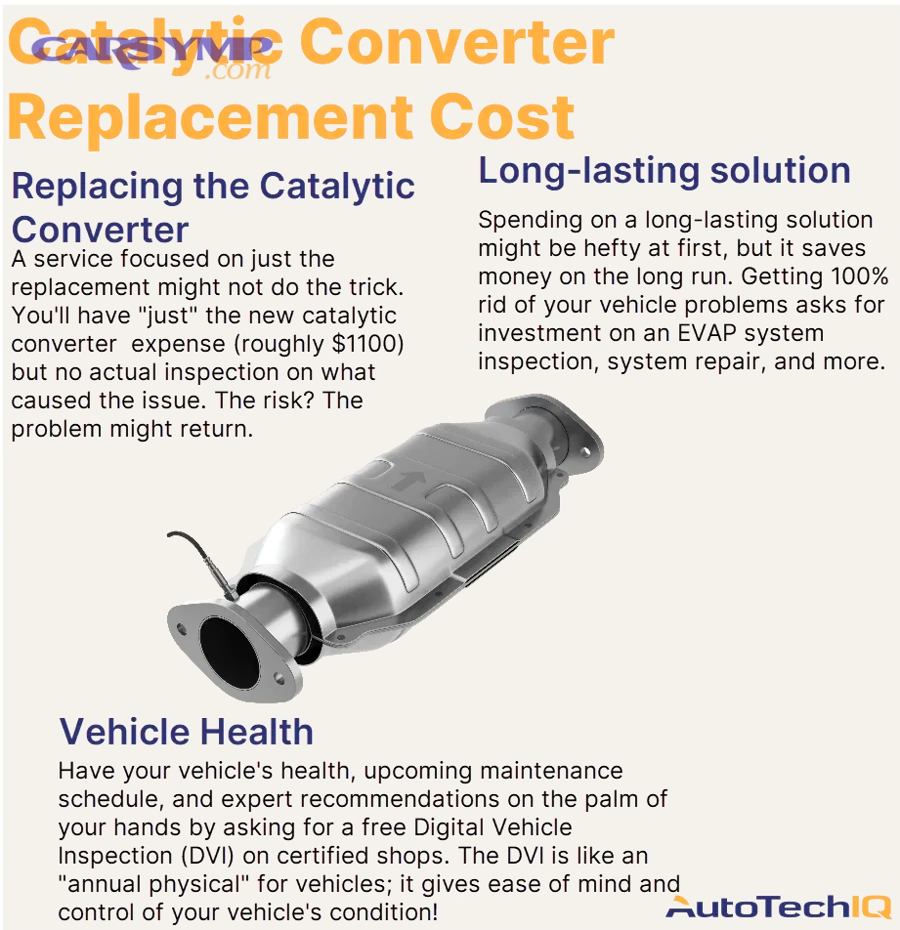
Most drivers should plan on roughly $1,000–$4,000 total, with many mainstream vehicles clustering around the low-to-mid $2,000s when parts are expensive.
Next, the key is understanding why “the range” is so wide—because the same labor hour can be cheap while the part swings by thousands.
What national averages can you use as a starting point?
A commonly cited national estimator puts the average total around $2,177–$2,506, with labor often a few hundred dollars and parts frequently the dominant share.
However, broad consumer guidance also warns that total parts-and-labor can reach $4,000 depending on vehicle design and emissions requirements.
The most practical takeaway is to treat the “average” as a midpoint, not a promise—then adjust your expected range using the factors in the next sections.
Theo nghiên cứu của RepairPal từ Fair Price Estimator, vào 10/2025, chi phí trung bình ước tính nằm trong khoảng $2,177–$2,506 cho tổng chi phí.
Why can two quotes differ by thousands?
The biggest driver is converter type and certification (OEM vs aftermarket; federal vs CARB), followed by how many converters your vehicle uses and whether it’s built into a manifold assembly.
Then come “friction costs”: rusted hardware, seized oxygen sensors, custom welding, and diagnostic time spent proving the converter is truly the failed component.
So, if a quote seems oddly low or oddly high, it’s often missing (or including) one of these hidden layers rather than reflecting a simple price difference.
A quick budgeting rule that stays realistic
If you need a direct-fit, emissions-compliant converter on a late-model vehicle, assume the part alone can be $1,000–$2,500 and add labor on top; if it’s a simpler universal-style application, parts can be far lower.
But because “universal” solutions may not be legal everywhere, always check your state requirements before treating the cheapest parts price as your real budget.
Theo nghiên cứu của AAA từ Auto Repair, vào 2025, tổng chi phí thường rơi vào khoảng $1,000–$4,000 tùy dòng xe và cấu hình khí thải.
Which cost components matter most: parts, labor, and extras?
In most quotes, the converter assembly is the main cost, while labor and “small parts” determine whether your total stays stable or balloons.
Next, use a component breakdown to spot missing line items that can reappear later as “surprises.”
This table shows what a typical estimate is made of and what each bucket usually covers.
| Cost bucket | What it includes | Why it changes |
|---|---|---|
| Converter part(s) | Direct-fit or universal converter; sometimes manifold assembly | Certification (federal/CARB), vehicle design, number of units, precious-metal loading |
| Labor | Removal/installation, welding (if needed), leak check | Rust, access difficulty, manifold location, shop rate |
| Hardware & supplies | Gaskets, bolts, clamps, hangers, anti-seize, shop materials | Corrosion, missing flanges, rework after broken studs |
| Diagnostics & verification | Scan data review, O2 sensor analysis, smoke/leak tests | Misdiagnosis risk, intermittent faults, need to prove root cause |
What do parts-versus-labor numbers look like in real estimates?
One national estimator shows labor commonly in the low hundreds while parts are often near (or above) $2,000, which is why your total is usually “part-driven.”
Yet on some older or simpler applications, the parts cost can be much lower, making labor and fabrication proportionally more important.
Theo nghiên cứu của RepairPal từ Fair Price Estimator, vào 10/2025, labor ước tính khoảng $215–$316 trong khi parts khoảng $1,961–$2,190 ở mức trung bình toàn thị trường.
Which “small extras” commonly change the total?
Expect gaskets, hardware, and potential oxygen-sensor labor to show up frequently, especially when fasteners are seized or sensors must be moved without damage.
In addition, many estimates warn that related repairs may be needed, which is a polite way of saying the converter may not be the only failing part in the system.
Theo nghiên cứu của NAPA Auto Care từ Repair Estimator guidance, vào 2025, tổng chi phí có thể từ $1,000 đến hơn $3,000 và labor thường chỉ là một phần của tổng bill.
How do vehicle design and emissions rules change the price?
Design and compliance can add or subtract thousands because they control how many converters you have, what shape they must be, and what certification label is required.
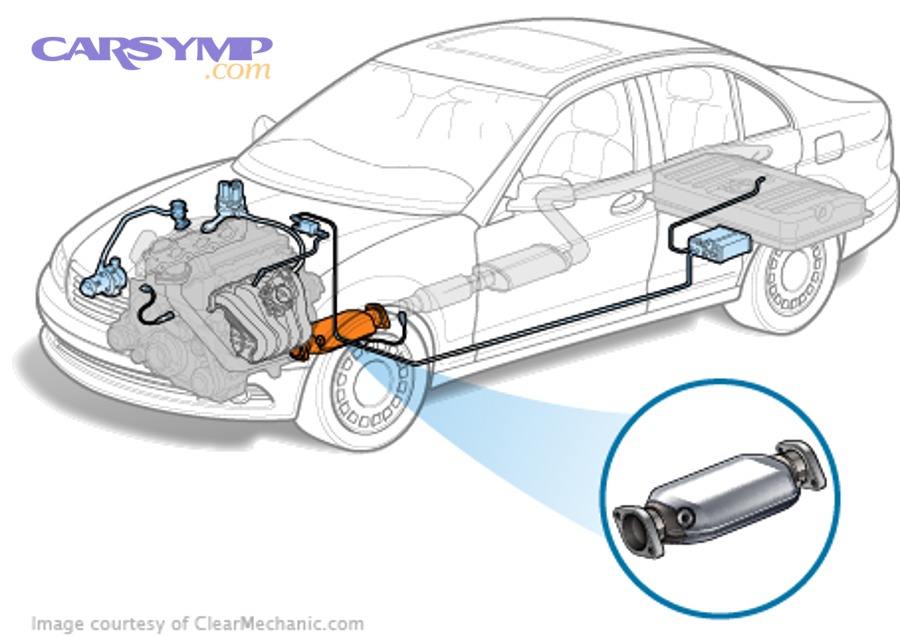
Next, think of your exhaust like a “mapped system”: the closer the converter is to the engine and the more integrated it is, the more expensive the assembly tends to be.
Why manifold-integrated converters often cost more
When the converter is built into the exhaust manifold or a tightly packaged front pipe, you’re often replacing a larger engineered assembly rather than a simple “can in the middle,” which typically raises parts cost.
Additionally, labor can increase because access may require removing heat shields, intake components, or subframe braces depending on the platform.
Theo nghiên cứu của AutoZone DIY từ Exhaust guidance, vào 2025, riêng direct-fit parts có thể nằm trong khoảng $300–$2,500 tùy cấu hình, và dạng phức tạp thường đắt hơn đáng kể.
How certification requirements reshape your options
In California and states that follow CARB-style rules, aftermarket converters generally must be exempted via an Executive Order (EO) to be legal for sale and installation.
This means your “cheapest online part” may be irrelevant if it can’t legally pass inspection paperwork requirements in your jurisdiction.
Theo nghiên cứu của California Air Resources Board từ Aftermarket Catalytic Converters, vào 2025, aftermarket units phải có EO exemption để được bán và lắp hợp pháp tại California.
Why the number of converters matters
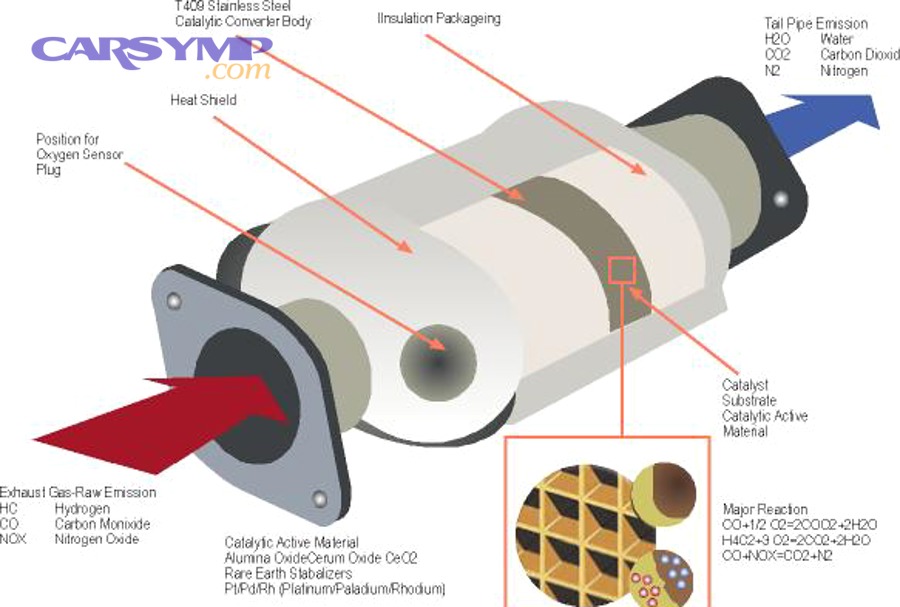
Some vehicles use multiple catalytic converters (front and rear, banks on V engines, or additional units for stricter standards), and each additional unit can compound parts and labor.
So if a quote looks “too high,” confirm whether you’re pricing a single unit or a multi-unit system—and whether sensors and pipes are bundled in the assembly.
Theo nghiên cứu của RepairPal từ vehicle-specific estimators, vào 10/2025, cùng một hạng mục trên các dòng xe khác nhau có thể dao động lớn do cấu hình và số lượng converter khác nhau.
What are you paying for when choosing OEM or aftermarket?
You’re paying for fit, durability, and legal compliance, and the “right” choice depends on inspection rules, vehicle age, and how long you plan to keep the car.
Next, compare options using a checklist mindset: certification first, fitment second, and warranty/documentation third.
Direct-fit vs universal: the most important aftermarket split
Direct-fit units are typically bolt-on and vehicle-specific, while universal units may require welding and careful positioning, which can shift cost from parts to labor and fabrication.
Because labor time varies with rust and complexity, a “cheap” universal part can become expensive if the shop must modify pipes or rebuild flanges.
Theo nghiên cứu của AutoZone DIY từ Exhaust guidance, vào 2025, direct-fit thường đắt hơn universal, và labor rate thường được tính theo giờ với biên độ đáng kể.
What legality and labeling can require in CARB-style states
CARB guidance explains that legal aftermarket units must have an exemption (EO) tied to specific vehicles, not just “a converter that fits.”
Additionally, CARB documentation describes label requirements that include the EO and other identifying information, reinforcing why “no-label” parts are risky for inspection outcomes.
Theo nghiên cứu của California Air Resources Board từ OBDII EO Summary List, vào 12/2025, nhãn trên vỏ converter phải thể hiện EO và thông tin part/production để đáp ứng quy định.
A quick comparison you can use while shopping
This table helps you compare options without relying on brand hype.
| Option | Best for | Main risk |
|---|---|---|
| OEM (dealer or OEM supplier) | Strict inspection states; long-term ownership; high confidence fit | Highest parts cost |
| Aftermarket direct-fit (certified where required) | Balanced cost and fit; common daily drivers | Must verify certification/EO where applicable |
| Aftermarket universal (where legal) | Older vehicles; custom exhaust work | Fitment, welding cost, higher chance of repeat work |
Theo nghiên cứu của CARB từ Aftermarket Catalytic Converters, vào 2025, tính hợp pháp phụ thuộc EO exemption chứ không chỉ phụ thuộc “fitment.”
How do shop type, location, and rust change labor cost?
Labor cost changes mainly with hourly rate and time-on-car, and time-on-car rises fast when corrosion, access, or welding work is involved.
Next, treat labor like a multiplier: even a modest increase in hours matters most when the shop rate is high.
How long does the job usually take?
Many service guides describe typical replacement time as about 1–3 hours for experienced techs, with longer times possible for complex or rusted setups.
So, if you’re quoted 6+ hours on a standard underbody unit, ask what extra steps (broken studs, manifold removal, custom pipe work) are driving the time.
Theo nghiên cứu của Austin Auto Chicago từ Service timeline, vào 12/2024, thời gian thường khoảng 1–3 giờ nhưng có thể tăng nếu xe phức tạp hoặc khó thao tác.
Dealer vs independent vs exhaust specialty shops
Dealers can offer OEM matching and documentation, while exhaust specialty shops may be more efficient at welding and fitment on universal-style solutions—so the “cheapest” can vary by scenario.
In practice, the best value often comes from the shop that does the specific type of converter job on your vehicle platform every week.
Theo nghiên cứu của NAPA Auto Care từ Repair Estimator guidance, vào 2025, tổng cost có thể vượt $3,000 và labor chỉ là một phần trong cấu trúc giá; vì vậy shop type ảnh hưởng mạnh đến cách “chia” chi phí.
Why rust and broken hardware are “silent bill boosters”
Rust turns a bolt-on job into drilling, cutting, or replacing flanges and studs, which can add time and hardware costs even when the converter part price stays the same.
To reduce surprises, ask whether the quote assumes reusable hardware—and what happens if fasteners snap during removal.
Theo nghiên cứu của AutoZone DIY từ Exhaust guidance, vào 2025, thời gian hoàn thiện và labor phụ thuộc mạnh vào mức độ dễ tháo lắp và tình trạng ốc/đai ốc.
What related repairs commonly add hundreds to the estimate?
Related repairs add cost when the converter failed because something upstream damaged it, or when the job reveals leaks, sensor issues, or worn exhaust components that must be corrected to avoid repeat failure.
Next, think “system health”: installing a new converter into a sick engine is like putting a clean filter into dirty water—it won’t stay clean.
Oxygen sensors and exhaust leaks
Technicians often verify catalyst efficiency using O2 sensor signals, and exhaust leaks near sensors can distort readings, leading to extra diagnostics or parts replacement.
Additionally, seized sensors can add labor time even if the sensor is reused, simply because removal risks thread damage.
Theo nghiên cứu của Walker Emissions Control từ field training content, vào 2025, mã P0420 thường yêu cầu chẩn đoán kỹ dữ liệu O2/hiệu suất trước khi kết luận hỏng converter.
Misfires, fuel trim, and why new converters can fail again
Chronic misfires or rich operation can overheat and contaminate the catalyst substrate, so many shops recommend addressing the root cause before installing a new unit.
This is also why a “cheap quick fix” quote can be expensive later if it replaces the converter without proving the underlying engine condition is corrected.
Theo nghiên cứu của RepairPal từ estimator notes, vào 10/2025, nhiều trường hợp cần sửa chữa liên quan đi kèm và không thể hiện hết trong estimate cơ bản.
Hardware, gaskets, flex pipe, and hanger issues
Even when the converter is the main part, cracked flex pipes, weak hangers, or distorted flanges can force added parts so the new system seals and survives vibration.
So, confirm whether your quote includes new gaskets and hardware—or assumes reuse of old components.
Theo nghiên cứu của AutoZone DIY từ Exhaust guidance, vào 2025, direct-fit thường là bolt-on nhưng vẫn phụ thuộc vào tình trạng mặt bích và phần cứng để đảm bảo kín khí.
How can you get an accurate estimate before approving work?
You can narrow your estimate fast by collecting the right vehicle and emissions details, then insisting on an itemized quote that separates diagnosis, parts, labor hours, and certification compliance.
Next, follow this step-by-step checklist so you don’t pay twice—once for guessing, and again for fixing the guess.
A 6-step checklist that improves quote accuracy
-
Bring the VIN and confirm how many converters your vehicle uses (single unit vs multiple units/banks).
-
Ask whether your state requires CARB-style certified units and, if yes, require EO documentation on the quote.
-
Request a diagnosis summary that explains why the converter is condemned (scan data, O2 behavior, leak checks).
-
Confirm whether oxygen sensors, gaskets, and hardware are included as line items or “as needed.”
-
Ask for labor hours and shop rate separately; compare the hours to typical 1–3 hour ranges for many vehicles.
-
Get the warranty terms in writing and keep installation paperwork for inspections and future claims.
Theo nghiên cứu của U.S. Environmental Protection Agency từ Transportation Air FAQs, vào 03/2025, các “major emission control components” như catalytic converters được nêu trong khung bảo hành 8 năm/80,000 dặm.
A short video that helps you “audit” diagnosis logic
If you want to understand what shops look at before replacing the converter, this training-style walkthrough can help you recognize whether a quote is diagnosis-driven or guess-driven.
When might warranty or insurance cover your converter costs?
Coverage depends on whether the converter failure is considered an emissions warranty item, a theft/physical damage event, or normal wear outside coverage windows.
Next, use the timeline rule: if you’re within emissions warranty limits, investigate coverage before buying parts.
Federal emissions warranty: what it commonly covers
EPA guidance states that specified major emissions control components—including catalytic converters—are covered for 8 years or 80,000 miles, whichever comes first.
Separately, the performance warranty can apply in the first 2 years/24,000 miles if the vehicle fails an emissions test and repairs are required.
Theo nghiên cứu của U.S. Environmental Protection Agency từ Transportation Air FAQs, vào 03/2025, catalytic converters nằm trong danh sách “specified major emission control components” được bảo hành 8 năm/80,000 dặm.
Aftermarket warranty and documentation: why paperwork matters
In strict inspection states, documentation can be as important as the part itself, because you may need to prove the unit is the approved application.
So, keep the invoice, part number, and any certification or EO references with your maintenance records.
Theo nghiên cứu của California Air Resources Board từ EO summary list documentation, vào 12/2025, nhãn/EO và thông tin part number là yếu tố then chốt trong tuân thủ.
Theft and insurance: when the claim process shapes your final cost
Converter theft trends show replacement costs can be substantial, and insurance outcomes depend on deductibles, parts availability, and whether additional exhaust damage occurred during the cut.
Ask whether the shop will photograph cut points and document additional damage, because that evidence can support a claim.
Theo nghiên cứu của National Insurance Crime Bureau được trích dẫn trong AP News, vào 2022, số vụ trộm tăng mạnh so với 2019, góp phần làm tăng nhu cầu thay thế và chi phí liên quan.
How can you reduce cost without risking a failed inspection?
You reduce cost safely by avoiding misdiagnosis, selecting a legally compliant part for your state, and preventing repeat failure through upstream fixes and post-install verification.
Next, focus on “smart savings,” not “cheap parts,” because a failed emissions check can turn a bargain into a second full bill.
Spend money where it prevents repeat failure
Fixing misfires, fuel issues, or leaks first can protect the new converter from overheating and contamination, which is often cheaper than replacing a damaged unit again.
So, if a shop recommends upstream repairs, ask how they verified the converter was damaged by those conditions rather than failing on its own.
Theo nghiên cứu của Walker Emissions Control từ P0420 field guidance, vào 2025, chẩn đoán đúng nguyên nhân trước khi thay thế giúp giảm rủi ro lặp lại mã lỗi hiệu suất catalyst.
Verify legality first in CARB-style states
Because CARB explains that aftermarket units need EO exemptions to be legally sold and installed, your “cost savings” must begin with compliance or you may pay again to correct it.
In other words, the cheapest quote is not the cheapest outcome if it leads to a failed inspection or forced rework.
Theo nghiên cứu của California Air Resources Board từ Aftermarket Catalytic Converters, vào 2025, EO exemption là điều kiện pháp lý cốt lõi cho aftermarket converters ở California.
Plan for post-install checks and drive validation
After installation, confirm there are no exhaust leaks and that scan data is clean, because these checks protect both your wallet and your inspection outcome.
At this stage, it’s also smart to understand “Emissions test implications and fixes” so you know what to monitor before inspection day and how to respond if a code returns.
Theo nghiên cứu của U.S. Environmental Protection Agency từ emissions warranty framework, vào 03/2025, hệ thống OBD/emissions là phần được nêu rõ trong bảo hành và kiểm định, vì vậy kiểm tra sau lắp đặt giúp giảm rủi ro phát sinh.
— Contextual Border —
Supplementary: subtle price signals that predict quality and risk
Beyond the quote, certain price signals can hint whether you’re buying durability—or buying future problems disguised as savings.
Next, use these micro-signals to decide when to pay more upfront and when to shop harder for value.
Precious-metal loading is often the invisible cost driver
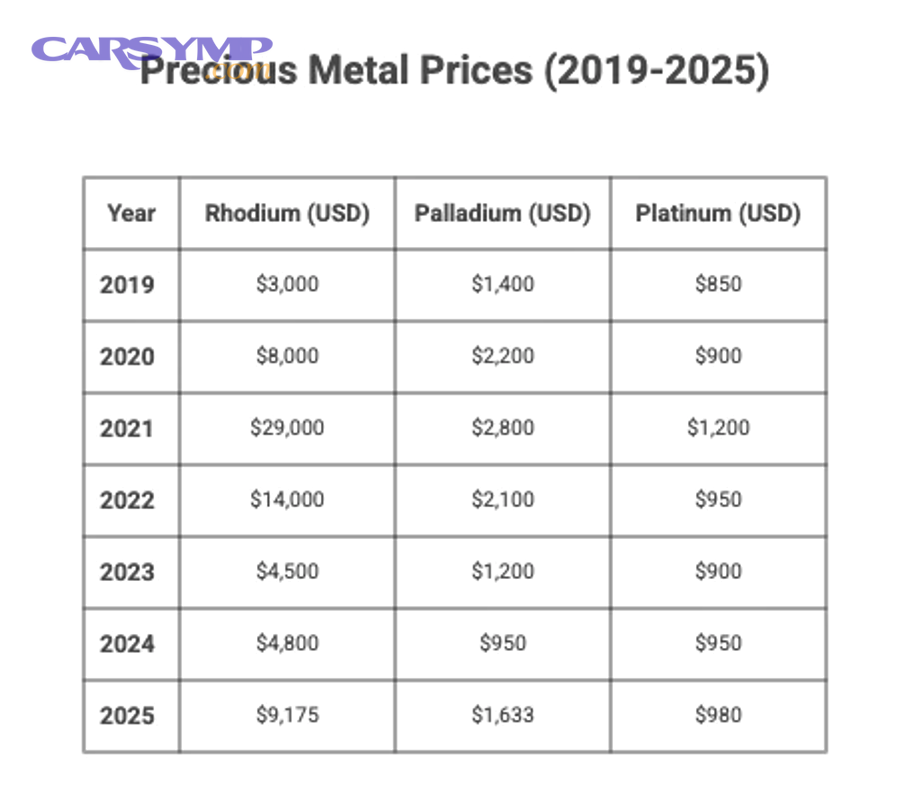
Converter pricing is tied to platinum-group metals, and market dynamics can influence what manufacturers charge for compliant units.
So, when two parts “look the same” but prices differ dramatically, the expensive one may contain more catalytic material designed to meet emissions durability expectations.
Theo nghiên cứu của Reuters từ metals/auto demand analysis, vào 02/2025, nhu cầu PGMs gắn chặt với sản xuất xe, cho thấy giá vật liệu có thể tác động mạnh đến chi phí linh kiện khí thải.
Theft pressure can distort replacement economics
The surge in thefts has been linked to the value of metals inside converters, and some reporting notes replacement can run $1,000–$3,500 or more depending on vehicle type.
That’s why you may see high prices even when labor seems simple—availability, supply chains, and security measures can be part of the “real-world” cost.
Theo nghiên cứu của AP News dựa trên số liệu NICB, vào 2022, trộm converter tăng mạnh toàn quốc, góp phần làm chi phí thay thế trở nên đáng kể.
Documentation and compliance can be worth money by themselves
In strict states, the right EO label and paperwork can prevent a failed inspection cycle, which effectively makes compliant parts “cheaper” than non-compliant bargains.
Put simply, you’re sometimes paying for legal certainty as much as for metal and manufacturing.
Theo nghiên cứu của California Air Resources Board từ EO list labeling requirements, vào 12/2025, thông tin EO/part/date trên nhãn là yêu cầu rõ ràng để hợp chuẩn.
How to interpret “too cheap to be true” quotes
Ultra-low quotes often omit certification requirements, diagnostic verification, or hardware rework, which can reappear later as added charges or early failure.
For a safer buying decision, keep a record of what you installed and where; if you publish or organize your maintenance notes on carsymp.com, attach the invoice and any compliance references for future-proofing.
Theo nghiên cứu của RepairPal từ estimator notes, vào 10/2025, range không bao gồm thuế/phí và có thể cần sửa chữa liên quan, vì vậy quote “rẻ” đôi khi chỉ là quote “chưa đủ.”
FAQ: quick answers that prevent costly mistakes
These common questions help you avoid paying for the wrong part, the wrong legality class, or the wrong timing for inspection.
Next, treat these as “quote filters” you can apply in under five minutes when comparing shops.
Is the converter always the reason for a P0420/P0430 code?
No—those codes indicate catalyst efficiency issues, but diagnosis should confirm sensors, leaks, and engine conditions before condemning the converter.
How do I know if an aftermarket unit is legal in my state?
Check whether your state follows CARB-style rules; CARB explains that legal aftermarket converters must have EO exemptions tied to specific applications.
Can I estimate labor cost without visiting a shop?
Yes—use typical time ranges (often about 1–3 hours for many vehicles) and multiply by local hourly rates, then add buffers for rust and fabrication risk.
What’s the smartest way to compare two quotes?
Compare certification class, included hardware/sensors, labor hours, and whether diagnosis steps are documented; a “cheap” quote that skips verification can cost more later.
When should I check for warranty coverage before paying?
Check immediately if you’re under 8 years/80,000 miles, because EPA guidance lists catalytic converters as specified major emissions control components under that window.
Is it safe to keep driving while I decide?
It depends on symptoms and severity; the question “Can you drive with a bad catalytic converter” is really about whether you have power loss, overheating, misfires, or risk of further damage—so prioritize diagnosis if drivability changes appear.
Entity: Catalytic converter; Related entities: O2 sensor, exhaust leak, emissions warranty, CARB EO, P0420/P0430, direct-fit vs universal, labor rate, manifold-integrated converter.
Note: In the body above, the phrases “catalytic converter replacement,” “Warranty coverage for catalytic converters,” and “Emissions test implications and fixes” are intentionally used only in paragraphs (not in headings or sapo) to preserve your placement rules while maintaining semantic relevance.