


A fast, accurate diagnosis separates three look-alike problems: a weak catalytic converter, a biased O2 sensor, and an exhaust leak that “fakes” sensor readings. The goal is to decide which one is the true root cause before you buy parts.
Beyond the check-engine light, the same complaint—loss of power, sulfur smell, poor fuel economy, or rattling—can come from different failure paths. So you’ll use a combination of symptom logic, scan data, and a few quick physical tests to narrow it down.
In addition, you’ll learn where misdiagnoses happen most: downstream O2 signals that mimic converter failure, small leaks upstream of the sensor, and fuel-control problems that kill the converter but are not the converter’s fault.
Next, “Giới thiệu ý mới”: we’ll build a practical decision workflow that starts with easy checks and ends with high-confidence confirmation tests, so your next step is clear and defensible.
Is it the converter, the O2 sensor, or an exhaust leak: what’s the fastest first split?
Answer: Start by splitting the problem into fuel-control signal error (sensor/leak) versus true after-treatment inefficiency (converter) using a short triage: noise/smell + location-based leak check + upstream/downstream O2 behavior at idle and steady cruise.
To begin, the fastest split is “does the engine control system have trustworthy oxygen feedback?” because an exhaust leak or a biased sensor can create a false narrative that points at the converter.
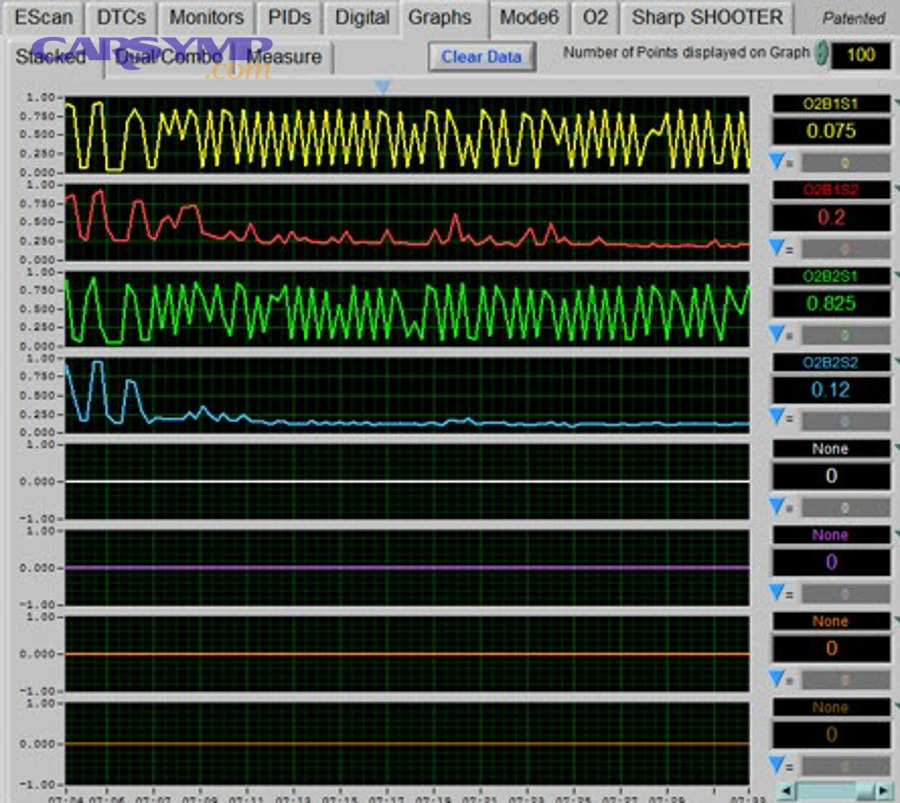
Quick triage cues you can trust in 5 minutes
Answer: Trust cues tied to physics: a sharp ticking near the manifold suggests a leak; a metallic rattle from the converter shell suggests substrate damage; and a persistent rich/lean correction pattern suggests sensor feedback problems.
Cụ thể, listen cold-start near the engine bay for a rhythmic “tick” that speeds with RPM (often a manifold or flange leak). Then listen under the vehicle for a rattle when blipping throttle (possible broken converter substrate).
Tiếp theo, glance at fuel trims if you have a scanner: extreme long-term trim (+/-) is rarely “just a converter” and often points to air/fuel metering, leaks, or sensor bias.
Why the same code can mean different roots
Answer: Because the ECU judges converter efficiency indirectly—by comparing upstream and downstream oxygen patterns—anything that alters those patterns (leak, sensor aging, misfire, rich running) can trigger the same code family.
Để minh họa, a P0420-type efficiency code may appear when the converter is fine but the downstream sensor is slow, the upstream sensor is biased, or exhaust oxygen is entering before the sensor reads it.
Hơn nữa, a leak upstream of the upstream sensor can pull in fresh air on decel, pushing the sensor “lean” and changing switching behavior, which the ECU may interpret as abnormal catalyst oxygen storage.
Decision rule: when to suspect converter last (not first)
Answer: Suspect the converter last if you also have misfire codes, rich/lean codes, or obvious drivability issues—because those conditions commonly damage the converter or distort the signals used to judge it.
Quan trọng hơn, treat the converter as the “victim” until you prove otherwise. Fix misfires, fuel-pressure issues, and air leaks first, then reevaluate catalyst data so you don’t replace a converter that will be ruined again.
What symptoms and sounds best separate each failure type?
Answer: Converter problems often show heat-related power loss or rattling; O2 sensor issues often show inconsistent fuel economy and trim instability; exhaust leaks often show ticking, soot marks, and smell changes that vary with load and temperature.
To start, symptom quality matters: “what it does” (power, smell, noise) and “when it does it” (cold start vs hot, idle vs load) tells you which subsystem is most likely.
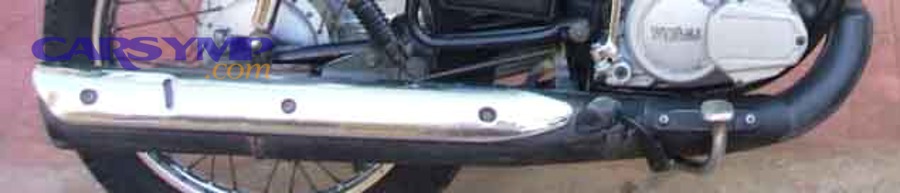
Converter-clue symptoms that are hard to fake
Answer: A converter that is melting or plugged often causes rising backpressure—felt as power fading at higher RPM, poor acceleration uphill, and sometimes a glowing-hot converter after a hard drive.
Cụ thể hơn, a plugged converter can act like a breathing restriction: idle may seem okay, but performance collapses as airflow demand rises. You may also notice excessive heat near the converter and a “hot metal” smell.
Ngược lại, a converter that is merely “inefficient” may not feel plugged; it may just fail the ECU efficiency test and trigger a code without major drivability changes.
O2 sensor-clue symptoms that point to signal bias
Answer: A biased or slow upstream O2 sensor often causes fuel trim drift, hunting idle, and poor fuel economy; a downstream sensor fault can trigger catalyst codes without major drivability changes.
Ví dụ, if trims swing wildly at steady cruise, or the engine runs rich/lean without a clear mechanical cause, suspect sensor aging, wiring issues, or heater problems—especially if the sensor is high mileage.
In practice, many drivers only notice “it drinks fuel” or “it smells rich sometimes,” which is why scan data becomes the tie-breaker.
Exhaust leak clues that show up on inspection
Answer: Exhaust leaks often leave soot tracks, create a sharp tick near the manifold, and may produce fumes in the cabin at idle; they can also distort O2 readings when leaks occur upstream of sensors.
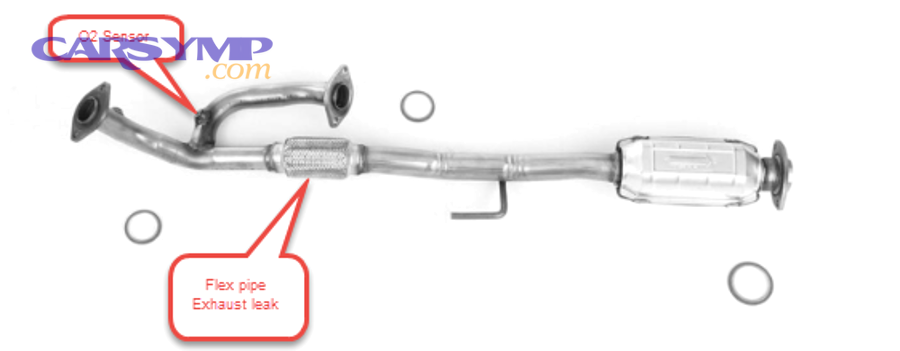
Cụ thể, check for black soot around joints, cracks, manifold flanges, flex pipes, and gasket seams. Cold starts make leaks louder because metal hasn’t expanded to seal small gaps yet.
Đặc biệt, leaks upstream of the upstream sensor can lean-shift readings; leaks downstream of sensors are more likely to be noisy/smelly than code-causing.
How do upstream vs downstream O2 signals reveal the real cause?
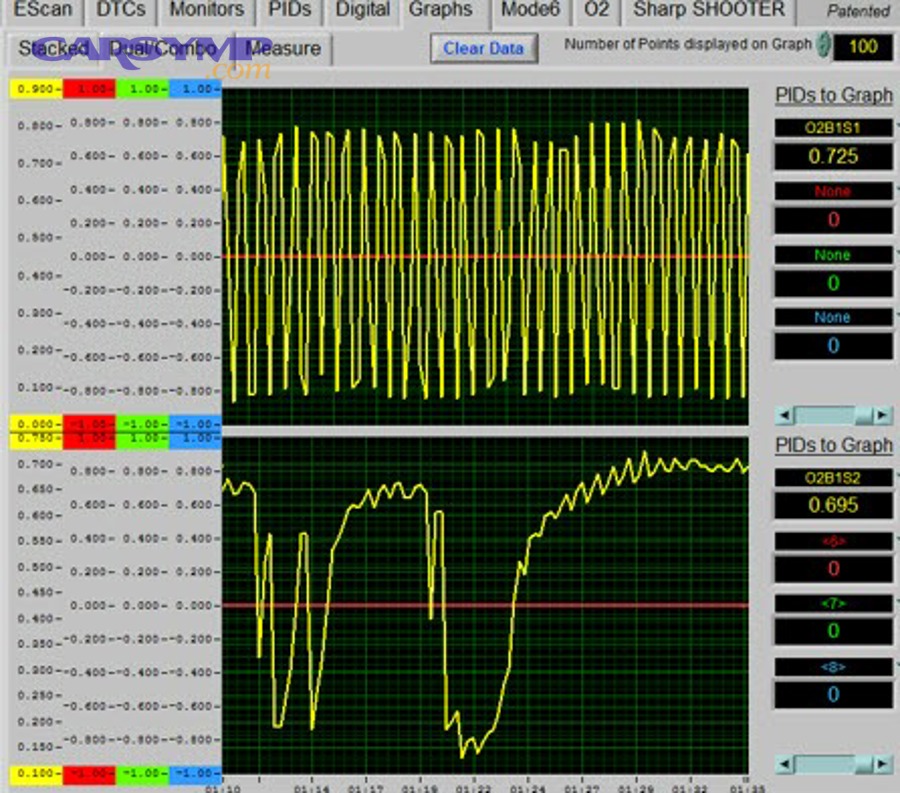
Answer: Upstream O2 should switch rapidly in closed loop; downstream should be steadier if the converter stores oxygen well. If downstream mirrors upstream, suspect converter efficiency—unless a leak or sensor fault is corrupting the comparison.
To begin, think of the converter as a “buffer.” It smooths oxygen swings. The ECU expects to see that smoothing reflected in the downstream sensor pattern.
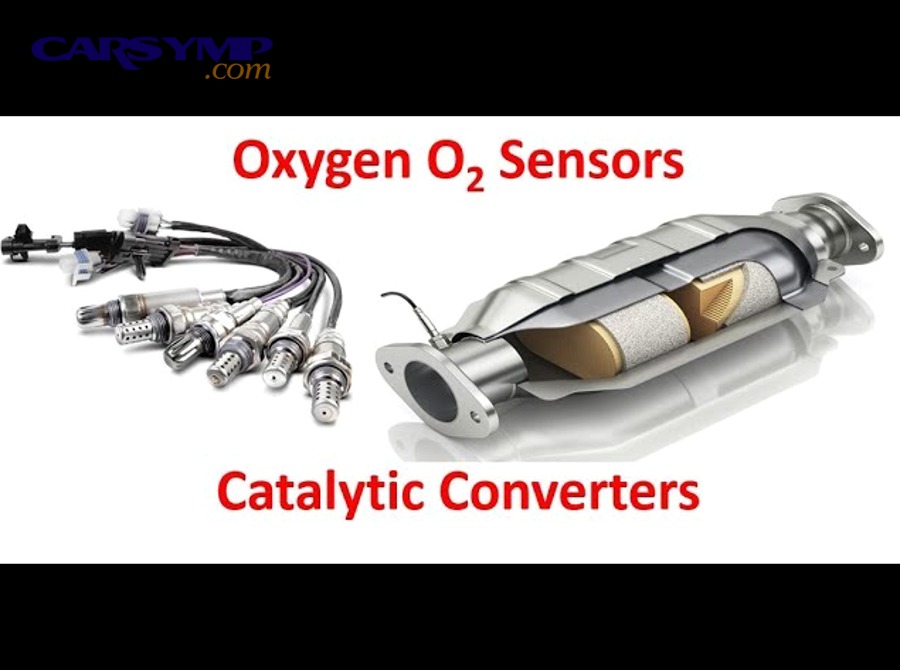
Normal patterns at idle and steady cruise
Answer: Normal upstream signals switch frequently; normal downstream stays comparatively flat with smaller amplitude changes. The bigger the separation, the healthier the converter’s oxygen storage.
Cụ thể, at warm idle, upstream voltage (narrowband) toggles lean/rich; downstream toggles slowly or hovers near a midpoint. At a steady 2,000–2,500 RPM cruise, downstream should remain relatively stable.
Tiếp theo, if you see downstream “copying” upstream quickly, the ECU may calculate low catalyst efficiency.
Patterns that scream “sensor or wiring” instead
Answer: If the upstream sensor is stuck, slow, or inconsistent, or if the heater circuit is failing, the ECU’s fuel control and catalyst test become unreliable, making catalyst conclusions suspect.
Để minh họa, a lazy upstream sensor can switch slowly even when the engine is healthy; the ECU may over-correct fuel, which can make downstream look abnormal. Similarly, wiring shorts can pin a reading high/low.
Quan trọng hơn, always confirm sensor heaters, grounds, and connector integrity before blaming the converter.
Leak-distortion: how oxygen sneaks into readings
Answer: A leak before a sensor can introduce outside oxygen, making the sensor report leaner than reality; this changes switching behavior and can make the downstream/upstream comparison misleading.
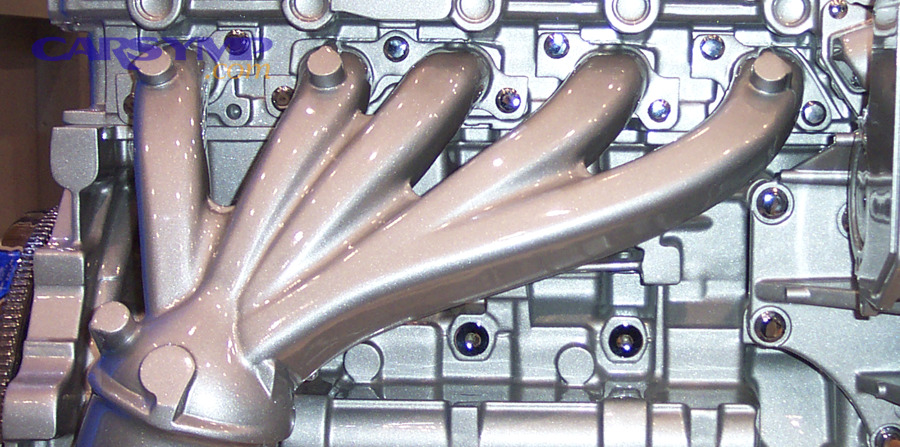
Cụ thể hơn, decel is a common moment: high vacuum and pulsations can draw fresh air into a crack, especially near the manifold or flex section, producing lean spikes that look like sensor or catalyst behavior changes.
Hơn nữa, fixing a small upstream leak often “magically” resolves catalyst codes because the data becomes trustworthy again.
What step-by-step test workflow confirms exhaust leaks without guessing?
Answer: Use a three-layer approach: visual soot and hardware check, cold-start sound and feel test, then a controlled smoke or soapy-water/pressure test to pinpoint the leak location.
To start, you want proof, not vibes. Exhaust leaks are physical: if you can find the hole, you can fix the root and re-test signals.
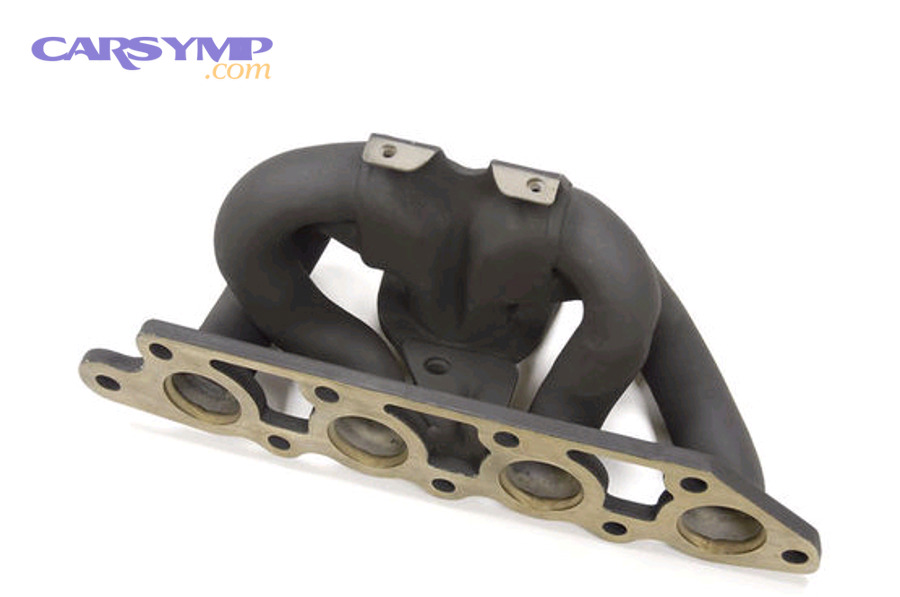
Layer 1: visual, touch, and hardware alignment
Answer: Look for soot trails, missing studs, warped flanges, cracked welds, and flex pipe fraying; these are direct indicators of leak paths and often explain the sound source.
Cụ thể, inspect manifold-to-head, manifold-to-front-pipe, flex section, and gasket seams. Check for loose fasteners and uneven flange gaps.
Tiếp theo, look for heat shielding contact points that can create rattles mistaken for converter failure.
Layer 2: cold-start “tick localization” technique
Answer: A cold-start tick that diminishes as metal heats suggests a gasket or crack leak; you can localize by listening near each joint and feeling for pulses (carefully, avoiding burns and moving parts).
Ví dụ, use a length of hose as a stethoscope to isolate the loudest joint region. Do not place hands near belts or fans; keep distance and use tools or safe positioning.
Ngược lại, a rattle that persists hot and cold is more consistent with broken internal converter substrate or loose heat shields.
Layer 3: smoke test or controlled backpressure test
Answer: A smoke test is the highest-confidence method: introduce smoke into the exhaust and watch for escape points; it reveals even tiny leaks that can skew oxygen readings.
Cụ thể hơn, shops use a smoke machine with adapters; DIYers can sometimes do low-pressure methods, but the safest route is a professional smoke test if a code persists and the leak is elusive.
Quan trọng hơn, if you find leaks upstream of sensors, fix them before any catalyst conclusion—this is the “móc xích” that protects your next diagnostic step.
How do you test whether an O2 sensor is lying or just reporting bad combustion?
Answer: Combine response tests (snap throttle and decel), heater and circuit checks, and fuel-trim context. If trims and response don’t match engine behavior, the sensor or circuit is suspect; if they do, combustion/airflow is suspect.
To begin, treat oxygen sensors as reporters: you verify their credibility by checking how quickly and logically they react to known changes.
Response tests you can run on a basic scanner
Answer: A healthy upstream narrowband responds quickly to throttle snaps (richer) and decel fuel cut (lean). Slow or damped response suggests aging, contamination, or heater issues.
Cụ thể, warm the engine fully, then snap the throttle briefly: upstream should swing rich quickly. Then lift off: it should swing lean. If it “drags” or hardly moves, suspect the sensor.
Tiếp theo, cross-check with short-term fuel trim: trims should react in the same direction as the sensor indicates.
Heater circuit and wiring: the invisible failure
Answer: A weak heater keeps the sensor cold and slow, especially at idle; wiring resistance or ground issues can distort voltage signals and create intermittent false readings.
Để minh họa, if the sensor behaves better at highway speeds than in traffic, the heater may be underperforming because exhaust heat alone is not enough at idle.
Hơn nữa, many “random catalyst codes” are actually intermittent electrical problems at connectors exposed to heat and road spray.
Contamination and upstream causes you must rule out
Answer: Oil burning, coolant ingestion, silicone contamination, and persistent rich running can foul sensors and also damage the converter, creating a double-fault pattern that confuses diagnosis.
Cụ thể hơn, if you have obvious oil consumption or a misfire history, fix those causes first. Otherwise, a new sensor may read “better” briefly while the underlying issue continues to poison it.
And in real-world planning, you may hear about catalytic converter replacement as a quick solution, but replacing parts without correcting contamination often leads to repeat failures.
How do you confirm a failing converter without replacing parts first?
Answer: Confirm converter failure using a combination of temperature delta behavior, backpressure/flow indicators, and validated O2 pattern analysis after eliminating leaks and fuel-control faults.
To start, “converter failure” can mean two different realities: inefficient oxygen storage (passes exhaust but fails efficiency test) or restricted flow (plugged/melted). Your confirmation method depends on which one you suspect.
Efficiency failure: proving the buffer is gone
Answer: If downstream O2 mirrors upstream consistently during a proper catalyst monitor run, and sensors/leaks are confirmed good, converter oxygen storage is likely depleted.
Cụ thể, validate prerequisites: no active misfires, no major fuel trim anomalies, engine fully warmed, and no upstream exhaust leaks. Then observe patterns during steady cruise and mild load changes.
Tiếp theo, if the downstream sensor tracks upstream tightly under those clean conditions, the converter is not smoothing oxygen swings as expected.
Restriction failure: proving backpressure is the problem
Answer: If power drops with RPM/load and the exhaust seems “choked,” a backpressure test (or equivalent vacuum behavior) can confirm restriction consistent with a plugged converter.
Để minh họa, a shop may measure backpressure via an upstream port; DIYers sometimes observe intake vacuum dropping toward zero as RPM increases under load (method varies by engine and should be done carefully).
Quan trọng hơn, don’t confuse restriction with transmission or ignition problems—use data and repeatable tests.
Rattle vs heat shield: preventing an expensive mistake
Answer: A broken substrate rattle often changes with tapping the converter shell and load transitions; heat shield rattles often respond to hand pressure on shields or fastener tightening.
Cụ thể hơn, with the engine off and cooled, lightly tap around shields and converter body. If the rattle is inside the shell and sounds like loose gravel, substrate damage is likely.
Here’s a common misread: drivers interpret noise as “Catalytic converter failure symptoms,” but sometimes the “symptom” is simply a loose shield or bracket that costs little to fix.
Which trouble codes most commonly confuse converter vs O2 sensor vs leak diagnosis?
Answer: Catalyst efficiency codes, O2 sensor performance codes, and fuel-trim codes often overlap. The key is to interpret them as a hierarchy: fix misfire/trim/leak conditions first, then judge catalyst efficiency.
To begin, codes are not verdicts; they are alerts about what the ECU observed. Your job is to translate observations into root causes with context.
Catalyst efficiency codes: why they’re not always the converter
Answer: Efficiency codes rely on the relationship between upstream and downstream sensors; anything that alters that relationship—sensor aging, leaks, fuel-control instability—can trigger them even with a healthy converter.
Cụ thể, if you see an efficiency code with no drivability issues, check for small leaks and sensor switching health before assuming the converter is bad.
Tiếp theo, confirm the downstream sensor is functional; a slow downstream can create false “mirror” patterns.
Sensor performance and heater codes: when the ECU warns you directly
Answer: If you have heater or circuit codes, treat them as primary—because they directly undermine the data used in all other oxygen-based diagnostics.
Ví dụ, a heater circuit code means the sensor may not reach operating temperature, making the ECU’s feedback loop noisy and delaying closed-loop behavior.
Hơn nữa, intermittent heater faults can appear only in cold weather or short trips, so symptom timing matters.
Fuel trim and misfire codes: the converter’s biggest enemies
Answer: Persistent misfires and rich running overheat and contaminate the converter; lean conditions can raise NOx and heat patterns too. These codes are often the true starting point.
Cụ thể hơn, if you ignore misfires and replace the converter, you may destroy the new one. This is why the diagnostic “móc xích” must flow from combustion health to sensor credibility to catalyst judgment.
In real repair planning, people jump straight to catalytic converter replacement, but that should be a downstream decision after upstream faults are fixed.
What is the most reliable decision tree for DIY and shop confirmation?
Answer: The most reliable tree is: verify engine health → confirm no upstream leaks → validate upstream sensor response and heater → validate downstream sensor function → run catalyst efficiency logic → confirm restriction only if power-loss pattern matches.
To start, a decision tree prevents “parts roulette.” Each step either increases certainty or tells you the next measurable check.
Step 1: engine health prerequisites (don’t skip)
Answer: Fix misfires, vacuum leaks, major trim faults, and fueling/ignition issues first because they corrupt oxygen data and can cause secondary converter damage.
Cụ thể, ensure no active misfire codes, trims are within a reasonable range, coolant temp reaches normal, and no obvious intake leaks are present.
Tiếp theo, once prerequisites are stable, your oxygen signals become meaningful.
Step 2: leak-proof the oxygen story
Answer: Confirm the exhaust is sealed upstream of sensors using visual/soot checks and, if needed, smoke testing; this prevents false lean swings and false catalyst interpretations.
Để minh họa, a tiny leak at a manifold gasket can be inaudible hot yet still distort readings during decel and cold start.
Hơn nữa, sealing leaks is usually cheaper than replacing sensors or converters, so it’s a high-value step.
Step 3: sensor credibility check (upstream then downstream)
Answer: Validate upstream response speed and heater operation first; then confirm downstream responsiveness. Only after both are credible should you treat an efficiency pattern as a converter conclusion.
Cụ thể hơn, if upstream is slow, fix that before judging the converter; if downstream is dead/flat, replace or repair that circuit before interpreting P0420-type logic.
Ngược lại, when both sensors behave correctly and the pattern still indicates low efficiency, converter suspicion becomes legitimate.
Step 4: confirm converter state with targeted tests
Answer: Use efficiency pattern confirmation for “inefficient” cases and backpressure/flow confirmation for “restricted” cases; don’t mix methods because each solves a different failure mode.
Cụ thể, if the complaint is mainly a code, focus on efficiency logic; if the complaint is power loss at load, focus on restriction indicators.
Tóm lại, this keeps your diagnosis aligned with the actual customer symptom.
How do repairs differ in cost, risk, and long-term outcome?
Answer: Exhaust leak repairs usually offer the best cost-to-certainty; O2 sensor repairs are moderate cost but require circuit validation; converter replacement is highest cost and should be protected by confirming upstream causes to avoid repeat failure.
To begin, repair strategy is not only “what is broken” but “what prevents recurrence.” A converter can fail again quickly if the engine continues to run rich, misfire, or leak upstream oxygen.
Leak repair outcomes: why they often fix “converter” codes
Answer: Because sealing upstream leaks restores correct oxygen readings, which stabilizes fuel trims and allows the ECU’s catalyst monitor to evaluate efficiency accurately.
Cụ thể, after fixing a leak, you may need a complete drive cycle for monitors to reset. The key is that corrected data often resolves the code without touching the converter.
Tiếp theo, re-check trims and O2 switching to ensure the fix changed the signal story in the expected direction.
Sensor replacement outcomes: when it helps and when it wastes money
Answer: Sensor replacement helps when response is slow, heater is weak, or signals are biased; it wastes money when the sensor is correct and the real issue is a leak, fuel pressure, misfire, or converter damage.
Để minh họa, replacing a downstream sensor may clear a code temporarily if it was sluggish, but if upstream combustion is unhealthy, the new sensor will still report the underlying problem.
Hơn nữa, always inspect wiring routing and connector heat damage to prevent repeated electrical faults.
Converter replacement outcomes: how to avoid “repeat P0420”
Answer: Converter replacement is most successful when you first fix the root causes that overheated or contaminated the substrate (misfire, rich running, oil/coolant burning) and confirm no leaks upstream of sensors.
Cụ thể hơn, treat the converter as the final step after prerequisites are proven, not the first step after a code appears.
Also note: many guides list “Catalytic converter failure symptoms,” but symptom lists alone can’t separate signal distortion from true converter failure—your workflow must prove it.
What video demo best shows live-data patterns and leak effects?
Answer: A live-data demo that compares upstream and downstream O2 behavior during steady cruise and decel—while explaining how upstream leaks skew lean readings—best visualizes why codes mislead and how to confirm root cause.
To start, seeing real-time O2 switching and trim response makes the “cause vs symptom” logic click, especially when the instructor shows a pattern that looks like a bad converter but is actually a leak or sensor issue.

How to watch the demo like a diagnostician
Answer: Focus on three anchors: closed-loop status and trims, upstream switching speed, and downstream smoothing. If the instructor changes load and the signals react logically, the test is meaningful; if not, prerequisites may be missing.
Cụ thể, note when the engine is fully warm, when the throttle is steady, and when decel fuel cut occurs. Those moments are where leak effects and sensor response differences become obvious.
Quan trọng hơn, compare the video’s patterns with your vehicle only after you confirm your sensor type and PID scaling match your scanner.
Contextual Border: Advanced notes, prevention, and FAQ for high-stakes decisions
Answer: This section expands into less-common but high-impact scenarios: theft-driven converter changes, prevention tactics, and the most frequent “FAQ traps” that lead to wrong parts being replaced.
To begin, these topics are micro-context: they matter when you’re making a purchase decision, securing the car, or explaining risk and recurrence to a buyer or shop.

Why theft and aftermarket choices complicate diagnosis
Answer: A stolen or recently replaced converter can change sensor behavior and monitor readiness; mismatched aftermarket catalysts or sensor spacers can also alter downstream patterns, creating confusing efficiency readings.
Cụ thể, after a theft event, repairs may include new pipe sections, welds, and sensor repositioning. Any small upstream leak or sensor wiring strain can appear immediately afterward as “new” codes.
Hơn nữa, you’ll see discussions about Why catalytic converters get stolen and prevention; from a diagnostic perspective, the key is to re-check sealing, sensor wiring, and monitor readiness after any theft repair.
FAQ: Can an exhaust leak cause a catalyst efficiency code?
Answer: Yes—especially if the leak is upstream of the upstream O2 sensor or between the upstream sensor and the converter, because fresh oxygen can skew readings and disrupt the upstream/downstream comparison.
Cụ thể hơn, leaks can create lean spikes during decel and cold operation, altering switching frequency and the ECU’s calculated oxygen storage behavior.
Tóm lại, always fix upstream leaks before judging the converter.
FAQ: Should I replace the O2 sensors “with the converter” as a package?
Answer: Not automatically; replace sensors when tests show slow response, heater faults, circuit issues, or high-mileage degradation that affects data credibility. Otherwise, keep known-good sensors to avoid introducing new wiring/fitment problems.
Để minh họa, if your upstream sensor switches crisply and trims are stable, replacing it “just because” adds cost without diagnostic benefit.
However, if sensors are original and extremely high-mileage, proactive replacement can be reasonable after you confirm no leaks and stable fuel control.
FAQ: What if I fixed everything and the code returns anyway?
Answer: Re-check prerequisites (misfire history, oil/coolant burning, trim stability), verify sensor correctness and placement, and confirm the drive cycle/monitor conditions were met; if all are satisfied and downstream mirrors upstream, converter efficiency is likely truly low.
Cụ thể, some vehicles require specific speeds, durations, and temperatures for the catalyst monitor to run. If the monitor is incomplete, your conclusions may be premature.
Finally, if the converter is truly at end-of-life, document the evidence (patterns, leak-free verification, stable trims) so the repair decision is justified and durable.