


Why catalytic converters get stolen and prevention comes down to one simple reality: thieves want the precious metals inside, and the part sits in an easy-to-reach spot under many vehicles.
Beyond the “why,” drivers usually need two practical answers: which cars are most likely to be targeted and what daily habits reduce risk without turning your life into a security routine.
Just as important, people want to know what to do the moment a theft happens—how to stay safe, document the incident, and avoid repeat targeting while repairs are in progress.
Giới thiệu ý mới: below is a step-by-step, layered approach that explains the motivation, the method, and the most effective prevention moves you can apply today.
Why do catalytic converters get stolen, and what makes them valuable?
Catalytic converters get stolen because they contain high-value precious metals and can be removed quickly from accessible exhaust layouts, especially on higher-clearance vehicles. Tiếp theo, understanding the metal-driven resale chain explains why prevention must be layered, not single-step.
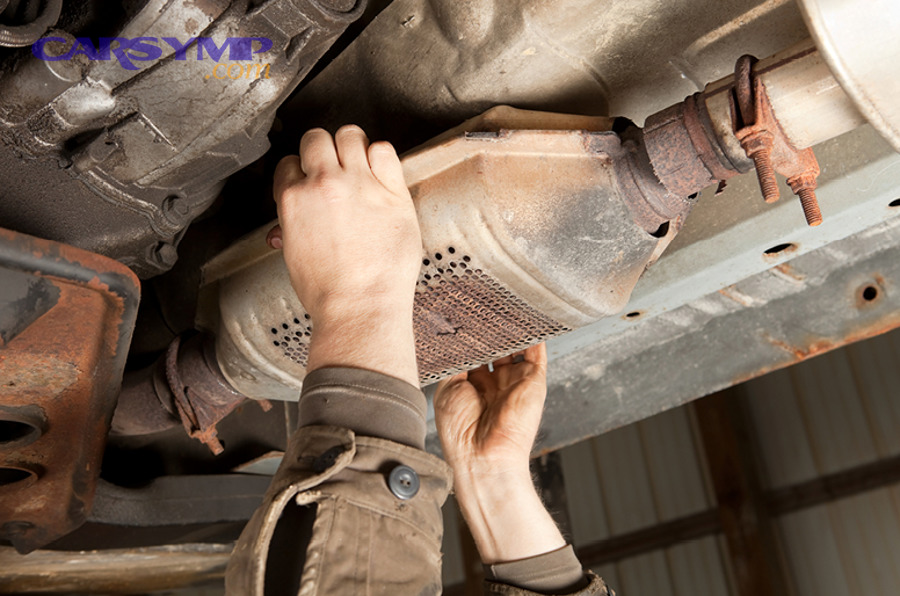
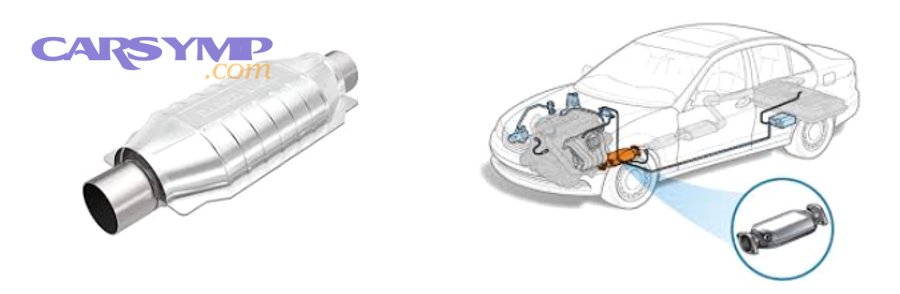
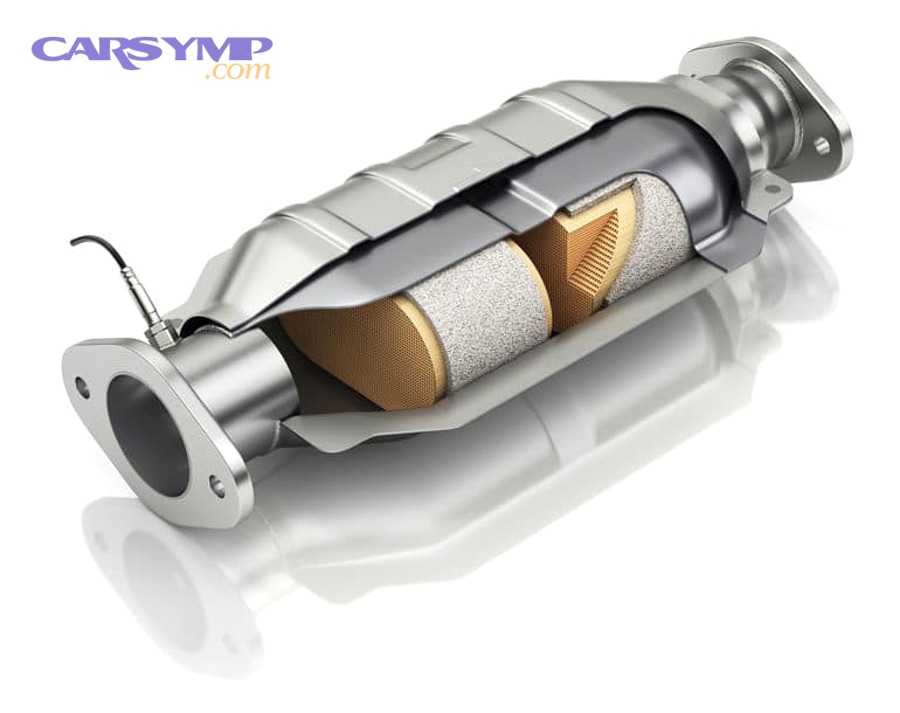
A catalytic converter is an emissions-control device in the exhaust system that uses a coated substrate—often a ceramic “honeycomb”—to help convert harmful gases into less harmful compounds. The “magic” isn’t the metal shell; it’s the catalytic coating that relies on platinum, palladium, and rhodium. Those metals are valuable in legitimate industrial supply chains, which is exactly why they attract criminal demand when stolen units can be funneled into scrap channels.
Cụ thể, thieves are not buying your converter for its shape—they’re chasing the extractable metals that can be sold into a gray market. That market fluctuates with commodities pricing, but the key driver is steady: catalytic metals are costly and globally traded. Even when theft rates dip, the opportunity can remain attractive if scrap buyers pay enough and the risk of detection is low.
Vehicle design matters as much as metal value. Many converters are positioned along the exhaust run under the vehicle, which makes them reachable with battery-powered cutting tools. Hybrids and certain models can be especially attractive because thieves believe they yield better payout or easier access—sometimes both.
The theft impact is bigger than the missing part. Thieves often cut pipe sections and may damage oxygen sensor wiring, heat shields, or mounting points. That turns a “part theft” into an exhaust repair event that can sideline the car.
Theo nghiên cứu của National Insurance Crime Bureau từ Intelligence & Analytics (insurance-claims analysis), vào 05/2023, catalytic converter theft claims rose from 16,660 (2020) to 64,701 (2022), and the metals inside were cited as the core incentive.
How do thieves remove a catalytic converter so fast?
Thieves remove catalytic converters fast by exploiting underbody access, quick cut points on exhaust piping, and battery-powered cutting tools that can slice through pipe in seconds. Sau đây, you’ll see the common “speed recipe” so you can break it with smarter deterrents.
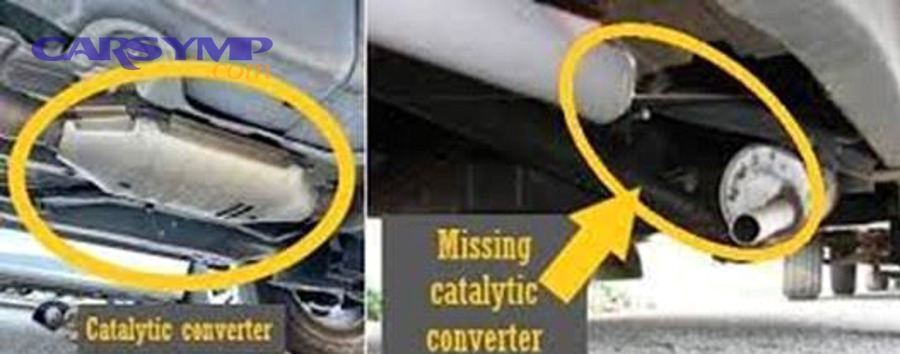
Most thefts are “time attacks.” The thief wants to be under the vehicle for as little time as possible, avoid loud metal-on-metal noise, and leave before anyone reacts. That’s why the method often targets the easiest-to-cut pipe segments before and after the converter body, rather than trying to unbolt factory fasteners.
To start, the thief typically chooses a vehicle with ground clearance that allows a quick slide under the rocker area. SUVs, trucks, vans, and some crossovers provide enough space without even needing a jack. In parking lots, a thief can blend into the environment—especially at night or in low-visibility corners—because passersby may assume it’s maintenance or roadside assistance.
Cụ thể hơn, many converters are installed in the mid-pipe section, not tucked high behind engine components. If the converter can be reached from the side of the vehicle, the thief can avoid crawling all the way to the center. If two cut points are easy to access, removal can be extremely fast.
Tool choice is usually a compact, battery-powered reciprocating saw, sometimes paired with a simple socket wrench for hangers or heat shields. The saw’s portability is critical: no cords, no generator noise, minimal setup. That speed is why “visibility” and “time cost” are your two biggest defensive levers.
Theo nghiên cứu của Kelley Blue Book (editorial explainer citing theft patterns), vào 06/2025, some catalytic converter thefts can be completed in under three minutes, which is why deterrence must add time and attention risk.
Which vehicles are most targeted, and why are some easier than others?
Vehicles are most targeted when they combine easy underbody access, higher expected resale value of the converter, and predictable parking routines. Bên cạnh đó, your specific risk depends on clearance, converter placement, and how visible the vehicle is in daily parking spots.
Think of theft risk as a triangle: access, payout, and repeatability. Access means the thief can reach the converter quickly without raising the car. Payout means the thief expects the unit to fetch a higher price from a buyer. Repeatability means the thief knows where and when similar vehicles sit unattended.
Cụ thể, high-clearance vehicles are often easier targets because the thief can slide under and cut quickly. Work vans and fleet vehicles can also be targets because they’re parked overnight in predictable locations, and the thief may assume the vehicle won’t be checked until morning. In some regions, certain hybrids have been popular targets because thieves believe those units yield higher value.
However, “targeted” doesn’t mean “guaranteed.” Low-clearance sedans still get hit if thieves have time, privacy, or a jack. The real story is opportunity: the more time you unintentionally give a thief, the more your vehicle fits the pattern.
Also, some models have multiple converters or layouts that allow a thief to cut and leave without dealing with complex bracing. Conversely, vehicles with tighter underbody packaging, reinforced exhaust routing, or factory shields can be more frustrating to steal from—frustration is exactly what you want to create.
Theo nghiên cứu của National Insurance Crime Bureau từ Intelligence & Analytics, vào 05/2023, insurance-claims data highlighted concentrated theft in large states and emphasized that quick access under vehicles is a key enabling factor.
What are the warning signs your catalytic converter was stolen?
Common warning signs include an extremely loud exhaust roar at startup, a noticeable exhaust leak sound under the cabin, and visible pipe cuts or missing components when you look underneath. Tiếp theo, the safest response is to confirm from a distance and avoid driving until you assess the damage.
The number-one clue is sound. If you start the car and it suddenly sounds like a race car—loud, harsh, capturing attention immediately—treat it as a potential exhaust cut. Thieves often remove the converter by cutting pipe, which creates a large opening in the exhaust path. The engine can still run, but the noise is dramatic.
Cụ thể, you may also smell stronger exhaust fumes around the vehicle, especially if the cut is forward of the cabin area. If the oxygen sensor wiring was damaged, you may get a check-engine light. If the theft occurred recently, you might see fresh metal cuts, dangling exhaust sections, or hanging heat shields.
Do not crawl under the car in a dangerous location (dark street, traffic shoulder, unfamiliar parking lot). If you suspect theft, move to a safer area first or use a phone flashlight from the side to look for obvious missing parts. If the car is parked at home, you can do a careful visual inspection with proper safety.
Driving with a missing converter can be risky: exhaust heat and gases may vent under the car, wiring may be exposed, and some vehicles can trigger limp modes or run poorly if sensors are compromised. It may also be illegal in some jurisdictions to operate with missing emissions components, even if “it still drives.”
Theo nghiên cứu của AAA (consumer guidance), vào 11/2024, catalytic converter theft often leads to sudden loud exhaust and costly follow-on damage, so owners should prioritize safety and documentation before attempting to drive.
What should you do immediately after a theft to protect yourself and your claim?
Immediately after a theft, prioritize personal safety, document the damage, file a police report, and contact your insurer or fleet administrator with photos and incident details. Sau đây, a simple “evidence checklist” prevents delays and helps avoid repeat theft.
First, confirm the situation without placing yourself at risk. If you’re in a public lot, avoid confronting anyone and avoid crawling under the vehicle where you can’t see surroundings. If you hear loud exhaust on startup, shut the vehicle off and step back.
To start your documentation, take wide shots (the parking spot, vehicle position, surrounding cameras/lights), then close-ups (cut pipes, dangling exhaust, damaged sensor wiring). Also take a photo of your VIN plate (usually at the windshield) and your license plate—this ties the incident to the correct vehicle instantly.
Next, write down key facts while fresh: date/time discovered, exact location, any nearby security cameras, and any suspicious activity you noticed. If you have neighbors or a business nearby, ask if they can preserve video footage before it’s overwritten.
Then file a police report. Even if recovery is unlikely, the report number is often required for insurance and for certain repair workflows. It also contributes to local data that can increase patrol attention in hot spots.
Finally, plan your next 24 hours: arrange towing if necessary, decide where the vehicle will be stored securely, and add temporary deterrence if the car must sit outside (better lighting, camera visibility, physical barriers). The “second hit” risk is real—thieves sometimes return if the vehicle is left in the same spot awaiting repairs.
Theo nghiên cứu của National Insurance Crime Bureau từ Office of Strategy, Policy, and Government Affairs, vào 05/2023, VIN etching and secure parking were recommended as consumer steps alongside law enforcement and legislative actions.
How can you prevent catalytic converter theft with a layered strategy?
You can prevent catalytic converter theft most effectively by combining secure parking, visibility improvements, and time-adding physical deterrents so thieves choose an easier target. Tiếp theo, use the “time + noise + traceability” framework to build a plan that fits your lifestyle.
HOW-TO framework: the best method is a layered plan with three elements—(1) reduce opportunity, (2) increase time required, (3) increase identification risk—and the result is fewer “easy wins” for thieves.
Step 1: Reduce opportunity by changing where and how your vehicle sits. Park in well-lit, high-traffic areas. When possible, park in a garage or behind a gate. If you’re in a driveway, aim for motion lights and camera coverage. Nếu phù hợp, park close to walls or other vehicles so a thief has less room to slide under.
Step 2: Increase time required with a physical barrier: a shield, cage, cable system, or reinforcement that forces extra cutting or awkward angles. Time is the enemy of thieves. Even adding 2–5 minutes can push them to move on.
Step 3: Increase identification risk by adding traceability and attention triggers: etching, bright marking paint where recommended, alarms that respond to tilt/vibration, and clear camera visibility. A thief is more likely to abort when they feel exposed and traceable.
To make this practical, choose one action from each layer and implement in the same week. For example: “garage or lights” (opportunity), “shield/cage” (time), and “etch + camera sign” (risk). Don’t wait to do everything perfectly—progress beats perfection.
Theo nghiên cứu của AAA (auto guidance), vào 11/2024, prevention advice emphasized secure parking and adding anti-theft devices because thieves prefer quick, low-risk access under vehicles.
Which physical deterrents work best: shields, cages, cables, or welding?
Physical deterrents work best when they add cutting time and reduce clean access—shields and cages are typically more effective than a single tactic alone, while welding can help but may not stop determined thieves. Bên cạnh đó, the “best” choice depends on your vehicle layout and theft patterns in your area.
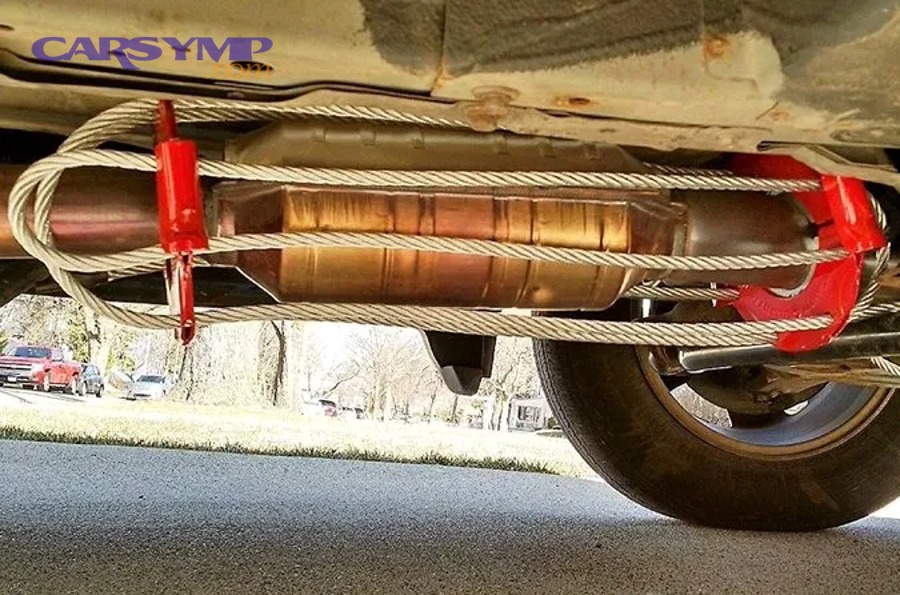
COMPARISON framework: shields are strong for coverage, cages/cable systems are strong for adding messy cutting steps, and welding is best as reinforcement—but no single option is perfect in every scenario.
Shields / plates (often metal) cover the converter area so a thief can’t easily cut at the usual points or grab the converter body. They work well when properly installed and when fasteners are tamper-resistant. However, shields must be matched to the vehicle’s heat and clearance constraints; poor installation can rattle or interfere.
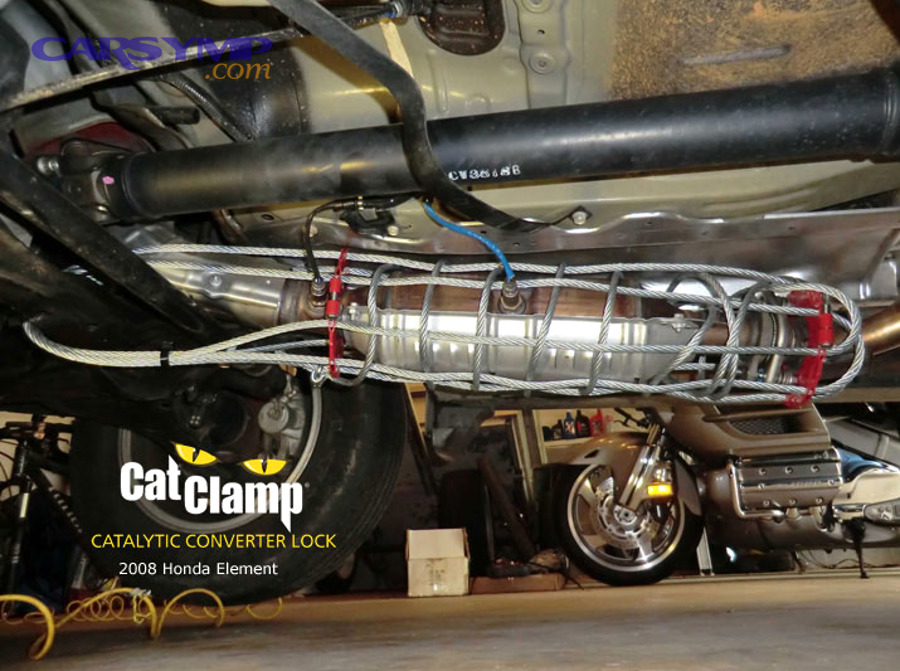
Cages / cable systems wrap the converter and nearby piping with hardened cable or mesh. The goal isn’t “unbreakable”—it’s “annoying.” A thief may still cut, but it takes longer, makes more noise, and looks suspicious. When thieves see a complex barrier, many move on.
Welding reinforcement can make removal harder by reducing easy unbolt points and strengthening certain joints. But thieves usually cut the pipe anyway. Welding is best used as a complement to a shield or cage, not as your only defense.
Marking/etching support is not a barrier, but it changes the economics by adding traceability. When combined with physical barriers, it can push a thief’s risk higher than their expected reward.
Before you choose, look under your car (safely) or ask a shop to show you the converter location. If the converter is very exposed and the car is a frequent target type, prioritize a barrier that meaningfully blocks tool access.
This table contains common deterrent types, what they help with, and practical tradeoffs so you can choose quickly.
| Deterrent type | What it improves | Best for | Main tradeoff |
|---|---|---|---|
| Shield/plate | Blocks direct access; adds tool difficulty | Converters with predictable cut points | Must fit correctly; heat/clearance considerations |
| Cage/cable system | Adds cutting time; increases noise/visibility | High-clearance vehicles; fleets | Not “theft-proof”; relies on deterrence |
| Reinforcement welding | Reduces easy removal routes | Vehicles with exposed joints | Thieves may cut elsewhere anyway |
| Etching/marking | Raises traceability; discourages resale | Areas with active scrap enforcement | Works best with other deterrents |
Theo nghiên cứu của National Insurance Crime Bureau từ Office of Strategy, Policy, and Government Affairs, vào 05/2023, owners were advised to consider anti-theft devices that make removal “extremely difficult and time-consuming,” and to etch VINs for traceability.
How can lighting, alarms, and parking habits reduce theft risk?
Lighting, alarms, and smarter parking reduce theft risk by increasing visibility, triggering attention, and removing the privacy thieves need to work under a vehicle. Tiếp theo, you can tune these tactics to your daily routine so they’re sustainable.
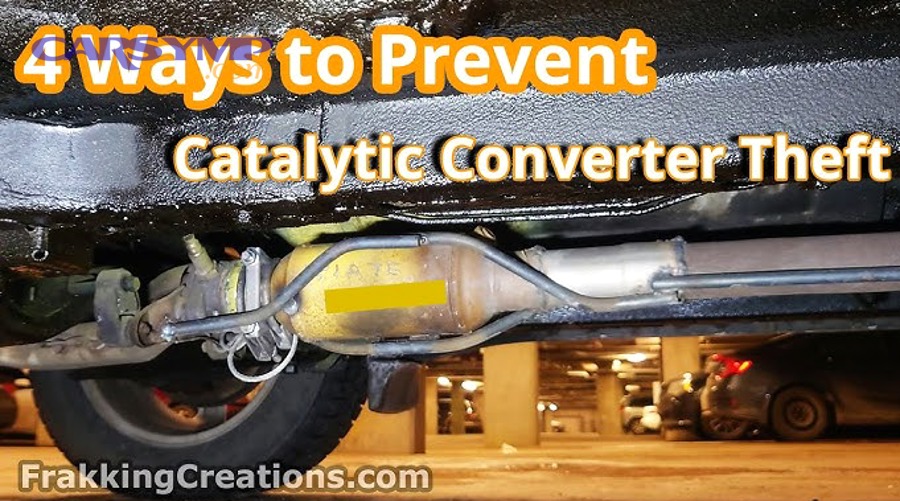
Thieves prefer quiet, dark, and predictable environments. If you change any one of those variables, you reduce your odds. If you change all three, you become a frustrating target.
Lighting: Motion-activated lights are practical because they create a sudden “spotlight moment” without you doing anything. That sudden illumination increases the chance the thief is seen by neighbors, cameras, or passersby. Place lights so they cover the sides of the vehicle and the undercarriage area, not just the driveway entrance.
Alarms: Some systems react to tilt (jack events), shock/vibration, or proximity. The goal is not a perfect sensor—it’s an interrupt. If an alarm screams when a thief touches the car or lifts it, it forces them to decide: continue and risk attention, or leave. In many cases, leaving is the rational choice.
Parking habits: When possible, park in high-traffic areas, close to building entrances, or within camera view. If you have two cars, park the lower-clearance vehicle behind the higher-clearance one to make access harder. In a driveway, consider parking close to a wall or hedges on one side to limit crawl space.
Community patterns: In theft hot spots, neighbors can coordinate. A simple “watch” message thread and shared camera placement can reduce opportunity across the block. Thieves don’t like neighborhoods that feel awake.
Theo nghiên cứu của AAA (consumer prevention tips), vào 11/2024, advice highlighted parking in well-lit areas and considering alarms or anti-theft devices because criminals prefer easy, unnoticed access under cars.
How do laws, scrap rules, and community reporting affect prevention?
Laws and scrap rules affect prevention by limiting who can sell converters, increasing documentation requirements, and raising risk for illegal buyers—making theft less profitable over time. Hơn nữa, community reporting improves enforcement focus in recurring hot spots.
The theft economy depends on a buyer. When states tighten scrap-metal rules—requiring ID, vehicle documentation, or seller verification—the “easy cash-out” becomes harder. That doesn’t eliminate theft, but it can reduce volume and shift patterns.
Cụ thể, reporting matters because enforcement resources follow patterns. When multiple incidents occur in a neighborhood, police may increase patrols or coordinate with scrap yards. If you file reports and include details like time window, location, and any camera evidence, you make it easier to connect cases.
On a personal level, community-driven prevention can be surprisingly effective: shared camera coverage across parking lots, apartment complexes, and workplaces creates “overlapping visibility.” Thieves rely on blind spots; communities can shrink them.
Also, some local departments run VIN-etching events or partner with auto shops for marking programs. These programs aim to reduce the resale value of stolen converters and help identify recovered parts. Even if you don’t attend an event, the idea is useful: traceability adds friction.
Theo nghiên cứu của National Insurance Crime Bureau từ Office of Strategy, Policy, and Government Affairs, vào 05/2023, NICB tracked 163 legislative bills across 37 states in 2022 with 31 enacted, reflecting policy efforts to reduce catalytic converter theft through seller/buyer requirements and penalties.
Contextual Border: From here, we move from “why theft happens and how to prevent it” into what to do after the incident—repair choices, compliance, and the steps that keep your vehicle reliable and less likely to be targeted again.
After a theft: how do you get back on the road without repeat targeting?
After a theft, you get back on the road best by repairing exhaust integrity, confirming sensor function, documenting everything for records, and adding deterrence immediately so thieves don’t return. Tiếp theo, the most costly surprises come from rushed decisions—so use a simple checklist.
How should you plan the repair path and stay compliant?
The safest approach is to repair the exhaust system to factory-like integrity and confirm emissions-related sensors are functioning, especially if wiring or mounting points were cut. Cụ thể, ask the shop to document what was damaged besides the missing unit—pipes, flanges, O2 sensor wiring, heat shields—because those items influence both drivability and legality.
In many places, emissions compliance rules vary by state, county, and model year. That’s why you should treat the replacement decision as both a mechanical and a regulatory choice. This is where the topic “Replacement options: OEM vs aftermarket legality” matters: what is acceptable can depend on local emissions programs and vehicle certification needs, so you want the shop to confirm compliance before installing parts.
Even if you don’t face formal testing, a non-compliant installation can cause persistent check-engine lights, poor fuel economy, or failed inspections later. Ngược lại, a compliant installation protects resale value and reduces recurring headaches.
Theo nghiên cứu của National Insurance Crime Bureau từ Office of Strategy, Policy, and Government Affairs, vào 05/2023, victims face more than parts costs because they must schedule repairs and manage transportation disruption, reinforcing the value of doing the job correctly the first time.
How do you budget and document costs realistically?
Budgeting is easier when you separate “parts” from “secondary damage,” because theft often breaks more than one component. Cụ thể hơn, the phrase “Catalytic converter replacement cost estimate” belongs in your planning: you’re not just paying for a metal canister; you’re paying for labor, pipe restoration, sensors (if damaged), and sometimes towing and storage.
Ask the shop for a line-item estimate and request photos of damage before repair. Keep all receipts, the police report number, and your insurer communications in one folder. This protects you if questions arise later about what was replaced, what was repaired, and why costs changed.
If you are paying out of pocket, ask about repair sequencing: can the vehicle be made safe to move first, then completed when parts arrive? If it’s a fleet vehicle, consider a standard documentation template so repeated incidents are easier to process.
Also, use this moment to add deterrence immediately, even if repairs aren’t complete. A vehicle sitting with fresh exhaust work can still be targeted, especially if thieves believe new parts are installed.
Theo nghiên cứu của AAA (consumer guidance), vào 11/2024, replacement after theft can be costly and time-consuming, which is why a clear estimate and prevention steps are recommended right away.
What should you expect from post-repair drivability and system checks?
After repairs, you want normal startup noise, stable idle, and no persistent exhaust smell around the cabin. To begin, confirm the shop checked for exhaust leaks and validated oxygen sensor signals, because small leaks can trigger codes and poor performance.
Also, modern vehicles may require a short driving period to confirm system status. That’s where “Break-in and readiness monitors after replacement” becomes relevant: some cars need specific drive cycles before onboard monitors show “ready,” which can matter for inspections or for verifying the repair is complete.
If a check-engine light returns, don’t ignore it. It can signal an exhaust leak, a sensor issue, or compatibility problems with installed components. Addressing it early prevents long-term damage and avoids being stuck in a repeating cycle of warning lights.
Theo nghiên cứu của Kelley Blue Book (editorial explainer), vào 06/2025, theft often includes pipe cutting and related damage, meaning post-repair verification is essential rather than assuming “part installed = problem solved.”
How do you reduce repeat theft after the repair?
Repeat theft risk drops when you change the “opportunity profile” immediately: better parking, more visibility, and a physical deterrent installed as soon as possible. Tiếp theo, add traceability so the resale chain becomes riskier for thieves and buyers.
Consider marking/etching programs and visible deterrents. If you install a barrier, place your vehicle in visible areas for a few weeks—thieves often revisit the same lots and streets where they had success. Your goal is to break that habit loop.
If you must park outdoors, move the vehicle position occasionally and avoid isolated corners. If you have a garage, use it during the highest-risk hours (late night to early morning). If you’re in an apartment complex, ask management about lighting upgrades and camera placement—shared prevention benefits everyone.
Finally, this is the time to think about “catalytic converter replacement” as a broader resilience plan: the choice of parts, documentation, and deterrence all work together to make the next theft less likely and less damaging if it happens.
Theo nghiên cứu của National Insurance Crime Bureau từ Office of Strategy, Policy, and Government Affairs, vào 05/2023, consumer steps like secure parking, anti-theft devices, and VIN etching were emphasized as practical prevention actions.
Frequently asked questions about catalytic converter theft
These FAQs answer quick, high-impact questions so you can act fast and choose prevention steps that match your situation. Sau đây, each answer is designed to be practical, not generic.
Can you drive if your catalytic converter was stolen?
Sometimes the car will drive, but it’s often unsafe and can be illegal depending on local rules; the exhaust may vent under the car and sensor wiring may be damaged. Tiếp theo, treat it as a tow situation unless a qualified inspection confirms it’s safe.
Do “paint and etch” methods actually work?
They work best as deterrence and traceability, not as a physical barrier. Cụ thể, etching can help identify recovered parts and can discourage some buyers—especially when combined with enforcement and other deterrents.
What’s the single most effective prevention step?
If you can only do one thing, add a time-adding physical barrier or park in a secured garage—both reduce the “quick win” factor thieves rely on. Tuy nhiên, combining at least two layers (parking + barrier) is dramatically more protective in practice.
Why are thefts concentrated in certain areas?
Theft clusters form where there’s a mix of target-rich parking (lots, streets, fleets) and a resale pathway through scrap channels, plus limited enforcement capacity. Bên cạnh đó, patterns can shift quickly, so stay alert even if rates drop temporarily.
How fast can a theft really happen?
In the right conditions—high clearance, easy cut points, low visibility—it can happen in minutes. Tiếp theo, that speed is exactly why “add time and attention risk” is the most reliable prevention principle.
What video shows practical prevention steps?
This video demonstrates common theft risks and simple prevention ideas you can apply immediately. To begin, watch it, then choose one parking change and one physical deterrent action this week.