


The ABS warning light, traction control light, and brake warning light do not mean the same thing: each points to a different safety layer—anti-lock braking, traction/stability intervention, or base brake/parking-brake/hydraulic priority—so the “right” response depends on which one is on and how it behaves.
Next, when more than one light appears at once, the problem is often shared inputs—especially wheel-speed sensors—or a condition that makes the brake control module distrust what it’s seeing, so you can narrow causes quickly by matching light combinations to likely triggers.
Then, you can run a “check first” triage that starts with simple, no-tool checks (parking brake, brake fluid level, tire condition) and moves to code reading, because guessing at brake electronics is expensive and usually unnecessary.
Introduce a new idea: the goal isn’t just to clear a light—it’s to understand what your car can and can’t do right now, and what the fastest, safest next step is before you drive another mile.
What do the ABS, traction control, and brake warning lights mean—are they telling you the same thing?
ABS wins at warning you about anti-lock function, the traction control light is best for indicating grip-control intervention or a traction/stability fault, and the brake warning light is optimal for signaling a priority brake/parking-brake/hydraulic condition that can be urgent.
To better understand why that distinction matters, treat these as three “layers” of braking safety: the base hydraulic brakes (must work), the anti-lock layer (prevents wheel lock in hard braking), and the traction/stability layer (reduces wheel spin and helps prevent skids).
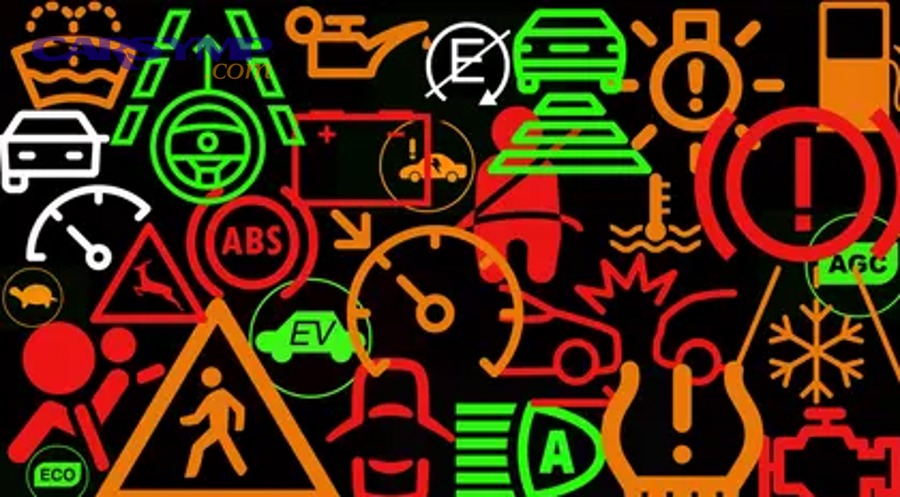
What is the ABS warning light, and what does it disable when it’s on?
The ABS warning light is an amber indicator for the anti-lock braking system—a control layer that modulates brake pressure to prevent wheel lock—so when it stays on, your car typically loses anti-lock modulation even though normal braking usually remains available.
Specifically, ABS works by monitoring wheel speed and rapidly adjusting brake pressure during hard braking. When ABS is disabled by a fault, the car can still stop, but in a panic stop on slick pavement the wheels may lock sooner, which can lengthen stopping distance and reduce steering control while braking. That’s why the ABS light is best read as: “Base brakes likely work, but emergency braking performance may be reduced.”
In practice, you can feel ABS working as a rapid pedal pulsation during a hard stop. If the ABS light is on and you never feel that pulsation in a safe, controlled test (empty road, low speed), that’s consistent with ABS being offline. However, don’t use aggressive braking tests in traffic—your first job is staying safe.

What is the traction control light, and when is it normal to flash vs stay solid?
The traction control light is an indicator for traction/stability intervention, and it often flashes normally when the system is actively reducing wheel spin, but a solid light more often signals traction is turned off or there’s a stored fault.
For example, when you accelerate on wet paint lines, gravel, light snow, or uneven pavement, the traction system may momentarily apply brakes to a spinning wheel and/or reduce engine torque. Many cars show this as a flashing “car with squiggles” icon. That flash is basically your car saying: “I’m working right now.”
On the other hand, a traction light that stays on continuously can mean you pressed a “TCS/ESP OFF” button, the system has been disabled due to a fault, or the car’s control module is seeing inconsistent wheel-speed data. That’s why traction control is often discussed alongside dashboard warning lights diagnosis—its behavior (flash vs solid) is as important as the icon itself.
If you’re also seeing “TRAC OFF,” “VSC,” “ESC,” or stability-related messages, the traction system may be part of a broader stability control stack that uses additional sensors (steering angle, yaw rate) beyond basic wheel speed.

What is the brake warning light, and why is it usually the highest-priority of the three?
The brake warning light is a priority indicator for parking brake engagement or a potentially unsafe brake condition, so it’s usually highest priority because it can point to low brake fluid, hydraulic issues, or other conditions that can directly reduce stopping power.
More specifically, many vehicles use a red “BRAKE” text light or a red circle-with-exclamation icon. Sometimes it simply means the parking brake is engaged (including electronic parking brakes). But if the parking brake is fully released and the red brake light stays on, treat it as urgent until proven otherwise.
Here’s why: the base braking system is the foundation. ABS and traction control are “helpers,” but the brake warning light can indicate problems that affect the core system—like low fluid from pad wear or a leak, a pressure imbalance, or an issue with brake assist in some designs. If your pedal feels spongy, goes too low, or braking effort suddenly increases, the correct response is to stop driving safely and get professional help.

Which light is most urgent, and is it safe to drive with ABS/traction/brake lights on?
No, it’s not generally safe to continue driving with a red brake warning light on, while it can be yes, sometimes safe for a short trip with only an ABS or traction light—because (1) the brake light can signal reduced stopping ability, (2) red warnings are designed for immediate attention, and (3) braking changes can escalate without notice.
More importantly, “safe to drive” isn’t a single rule—it’s a risk decision based on what you feel, what the light color is, and whether you’re in conditions that demand maximum braking and stability (rain, snow, high speed, heavy traffic).

Is it safe to drive with only the ABS light on?
Yes, it can be safe to drive cautiously with only the ABS light on if (1) your brake pedal feels normal, (2) stopping power feels consistent, and (3) you avoid conditions where anti-lock performance is most critical (slick roads, emergency stops).
However, on the other hand, your car may behave differently in a panic stop: without ABS modulation, wheels can lock and the car may skid. That means you should increase following distance, reduce speed, and plan for longer stopping margins. A good mental model is: “I still have brakes, but I’ve lost the anti-lock safety net.”
If the ABS light appears with other stability-related lights, move up to the “multiple lights” logic in the next section because shared sensors can disable more than one function at the same time.
Is it safe to drive with the traction control light on?
Yes, it can be safe in many cases because (1) the light may be flashing during normal intervention, (2) the system may simply be switched off temporarily, and (3) base braking usually remains available—but you should drive more conservatively, especially in wet/icy conditions.
Meanwhile, if the traction light is solid and you notice the car is easier to spin or the wheels spin more freely, traction control may be disabled. That doesn’t automatically make the car undrivable, but it reduces stability margins where traction is limited. If you commute on snow, steep hills, or heavy rain, treat a solid traction/stability light as “fix soon,” not “ignore.”
Is it safe to drive with the brake warning light on?
No, you should assume it’s unsafe to keep driving with a red brake warning light on because (1) it may indicate low fluid from a leak, (2) it can reflect a hydraulic/pressure fault, and (3) braking performance can deteriorate quickly and unpredictably.
Then, make the fastest safe checks: confirm the parking brake is fully released; check fluid level in the brake reservoir (if accessible) and look for obvious leaks near wheels; and pay attention to pedal feel. If anything feels abnormal—or the light stays on—stop driving and arrange service or towing. If the light comes on while driving with a warning chime and you feel pedal changes, prioritize pulling over safely.
Why do ABS and traction lights come on together, and what are the most common causes?
There are 4 main causes of ABS and traction lights appearing together—(1) wheel speed sensor/input faults, (2) brake-fluid/pressure or switch-related conditions, (3) ABS module or hydraulic control issues, and (4) rolling-radius/tire discrepancies—based on whether the control module trusts the wheel data it needs to manage braking and traction.
Specifically, ABS and traction control often share the same wheel-speed sensors and the same control module logic. So when one of those inputs becomes unreliable, the car may disable both systems as a safety fallback rather than operate incorrectly.

Are wheel speed sensors the #1 cause when ABS and traction lights appear together?
Yes, wheel speed sensor issues are one of the most common causes because (1) both systems rely on wheel-speed data, (2) sensors and wiring are exposed to road debris and corrosion, and (3) a single sensor glitch can make the module disable multiple features to prevent incorrect braking or torque reduction.
For example, a damaged sensor wire near a strut, a corroded connector, a cracked tone ring, or a wheel bearing with a failing encoder ring can produce intermittent or incorrect speed signals. The control module may interpret that as “wheel slip,” “implausible speed,” or “signal missing,” and it will illuminate ABS and traction/stability lights together.
A practical clue is timing: if the lights appear after you start moving (often around 10–20 mph) or after a turn, the module may be detecting a bad signal only when it begins comparing wheel speeds dynamically.
According to the Fuller Automotive repair guide, a faulty wheel speed sensor is a common reason ABS and traction control lights illuminate together in modern vehicles.
Can low brake fluid or worn brake pads trigger ABS/traction/brake lights?
Yes, low brake fluid or brake wear can trigger warning lights because (1) low fluid can set a brake warning, (2) the module may interpret pressure issues as a stability/brake-control fault, and (3) some cars tie brake switch/pressure plausibility into traction and ABS diagnostics.
More specifically, worn pads can lower fluid level in the reservoir (the caliper pistons sit further out), which may flip the fluid level sensor—especially on inclines or during cornering. That’s why a brake light that appears intermittently in turns can sometimes be a fluid-level symptom rather than an immediate leak. Still, don’t assume: if fluid is low, you must identify why, and you must avoid topping off blindly without checking pad thickness and leak signs.
On some designs, a brake pedal switch or brake pressure sensor plausibility problem can also cascade into stability warnings. That’s because traction/stability logic needs to know when you’re braking versus accelerating to decide how to intervene.
Can an ABS module or hydraulic control unit fault turn on multiple lights at once?
Yes, an ABS module or hydraulic control fault can illuminate multiple lights because (1) it centrally controls ABS and traction/stability functions, (2) internal valve/pump faults trigger system shutdown, and (3) the car may disable dependent systems to prevent incorrect brake pressure modulation.
In addition, module faults often show patterns: lights that come and go with temperature, warnings that appear after hitting bumps, or a sudden cluster of ABS/traction/stability indicators without a clear mechanical symptom. When that happens, code reading becomes essential, because guessing between a sensor and a module can waste money fast.
According to a study by University of Michigan from the Transportation Research Institute (UMTRI), in 2006, vehicles equipped with electronic stability control showed a 30.5% reduction in the odds of a single-vehicle crash for passenger cars (and higher reductions for some vehicle types).
What should you check first at home before paying for diagnostics?
There are 6 main “check first” steps you can do at home—(1) parking brake status, (2) brake fluid level and obvious leaks, (3) tire condition and size match, (4) restart and observe light behavior, (5) pattern tracking (speed/turn/brake), and (6) code reading—based on fastest-to-verify items that commonly cause these lights.
Below, the strategy is to confirm the basics first, then move to data. That keeps the process logical and prevents you from replacing parts because a light “seems like” a sensor.
Is the parking brake fully released, and does the brake fluid level pass the quick check?
Yes, you should start with the parking brake and fluid check because (1) it’s the fastest to verify, (2) it can explain a red brake warning immediately, and (3) it helps you decide whether driving is risky right now.
To begin, fully release the parking brake (or confirm the electronic parking brake shows “released”). Then check the brake reservoir level if you can safely access it and the owner’s manual supports it. If the fluid is below the “MIN” line, don’t just top off and forget it—low fluid can be caused by pad wear or a leak, and leaks can become dangerous quickly.
- If the brake warning light is on and fluid is low: assume urgency until inspected.
- If fluid level is normal and the parking brake is released: move to pattern tracking and codes.
Do the lights come on only after driving, turning, or braking—what pattern matters?
The pattern matters because it narrows causes fast: wheel-speed sensor issues often appear after the car starts moving, wiring faults can appear over bumps or during turns, and brake-fluid warnings can appear during cornering when fluid sloshes away from the level sensor.
Specifically, write down answers to these questions for a more accurate diagnosis:
- Do the lights appear at startup, or only after 10–20 mph?
- Do they appear after a turn, after braking, or after hitting rough pavement?
- Do they clear after a restart, then return?
- Is the traction light flashing only when accelerating on slick ground, or is it solid?
This small log makes a huge difference when you (or a technician) later reads codes and tries to match them to real-world behavior.
Should you read codes with a scanner, and do you need an ABS-capable scan tool?
Yes, you should read codes, and yes, you often need an ABS-capable scanner because (1) generic OBD2 readers may not access ABS/traction modules, (2) the correct code points you to the right corner of the car or the right circuit, and (3) it prevents parts-swapping.
Then, treat code reading as the bridge between symptoms and the real fault. This is where Using an OBD2 scanner for warning lights becomes practical: you’re not scanning “to clear lights,” you’re scanning to find the exact system complaining and why.
At this point, it also helps to keep warning lights in context. For example, if your dash shows an engine-related light, drivers often ask about Check engine vs service engine soon meaning—those are powertrain/emissions messages and don’t automatically relate to ABS/traction/brake lights. A car can have both at the same time, but you should diagnose them through their specific modules and codes rather than assuming one caused the other.
Here is a quick comparison table that summarizes what each light usually means and what to do first. Use it as a decision map, not a substitute for codes and inspection.
| Light | Typical Color | What It Usually Means | What Still Works | Best First Action |
|---|---|---|---|---|
| ABS warning light | Amber | ABS fault; anti-lock modulation may be disabled | Base braking usually works | Drive cautiously; plan code scan (ABS module) |
| Traction control light | Amber (flash/solid) | Flashing = normal intervention; solid = off or fault | Base brakes; sometimes reduced stability assist | Observe flash vs solid; scan stability/ABS codes |
| Brake warning light | Red | Parking brake on, low fluid, hydraulic/pressure issue | May be compromised—treat as urgent | Stop safely; confirm parking brake; check fluid/leaks |
How can you tell the difference between a normal “traction light flashing” event and a real fault?
A flashing traction light wins as a normal “system is working” signal, a solid traction light is best read as “off or fault,” and a traction light paired with ABS/brake warnings is optimal evidence of a shared input problem—so the difference comes from behavior, timing, and companion lights.
To illustrate, traction/stability systems are designed to be visible when they intervene, because that feedback teaches you about road grip. A fault indicator is different: it tends to stay on and it often arrives with stored codes.
Does a flashing traction light always mean something is wrong?
No, a flashing traction light often means the system is actively helping because (1) it flashes during wheel slip events, (2) it can appear briefly on uneven surfaces or aggressive acceleration, and (3) it typically stops once traction returns and the car regains stability.
However, if the light flashes constantly during normal gentle acceleration on dry pavement, that can suggest a sensor issue (the car thinks a wheel is slipping when it isn’t), tire-size mismatch, or a drivetrain problem causing unexpected wheel speed differences. That’s one of the clearest times to move from observation to codes.
What symptoms pair with a real fault (no ABS pulsation, weird pedal feel, speedometer issues)?
There are 5 common symptom groups that often pair with a real fault: (1) solid lights that don’t clear, (2) ABS pedal pulsation missing in safe tests, (3) braking feel changes, (4) speed/traction behavior anomalies, and (5) intermittent warnings tied to bumps or turns.
More specifically, watch for these patterns:
- Solid traction + ABS light after you start moving: often wheel-speed sensor data issue.
- Red brake light plus a soft pedal: possible hydraulic issue—stop driving.
- Speedometer or cruise anomalies (on some cars): a speed signal issue can overlap with ABS data.
- Clicking/thunking only when flashing traction light: can be normal brake intervention; clicking with solid warnings suggests diagnosis needed.
Contextual Border: Now that you can interpret each light, rank urgency, and run the first-check checklist, the next section covers edge cases and deeper system interactions that can also trigger these warnings—especially on specific vehicle designs and conditions.
What rare or vehicle-specific issues can trigger ABS/traction/brake lights, and how do you rule them out?
There are 4 rare or vehicle-specific trigger categories—(1) low system voltage, (2) tire size/tread mismatch, (3) stability sensor stack faults, and (4) corrosion/tone ring damage—based on whether the vehicle’s control modules can trust their electrical supply and sensor plausibility.
In addition, these issues can mimic “bad ABS” even when the core parts are fine, so ruling them out prevents unnecessary modules and sensors from being replaced.

Can low battery voltage or charging problems cause multiple brake-related warning lights?
Yes, low voltage can cause multiple warnings because (1) modules require stable voltage to interpret sensors correctly, (2) undervoltage can trigger plausibility faults, and (3) transient voltage drops during starts or idling can create intermittent warnings that disappear and return.
Then, look for supporting signs: slow cranking, dim lights, battery/charging warnings, or lights that appear right after a jump start. If voltage instability is present, fix the charging system first—otherwise you may chase “ghost” ABS/traction codes.
Can mismatched tire sizes, uneven tread, or a full-size spare vs donut trigger traction/ABS warnings?
Yes, mismatched rolling radius can trigger warnings because (1) the car expects all four wheels to have similar speed relationships, (2) mismatches look like slip events or sensor errors, and (3) stability logic can disable itself when wheel-speed differences don’t make sense.
For example, one new tire paired with three worn tires can create enough diameter difference to confuse some systems. A temporary spare can do the same. If the lights began immediately after a tire change, rotation, or spare installation, confirm tire size, tread depth, and inflation across all corners.
Can steering angle, yaw rate, or brake pedal switch faults masquerade as “traction/ABS” problems?
Yes, stability sensor stack faults can masquerade as traction/ABS issues because (1) modern stability control uses steering angle and yaw data to decide interventions, (2) sensor calibration errors can trigger plausibility codes, and (3) the car may disable traction/stability when it can’t trust direction-of-travel inputs.
More specifically, after alignment work, battery disconnection, or steering component service, some cars require a steering angle sensor recalibration. A failing brake pedal switch can also confuse intervention logic. If you see stability-related messages (ESC/ESP/VSC) with traction light behavior changes, read stability/ABS module codes to identify which sensor is implausible.
Can corrosion, water intrusion, or damaged tone rings create intermittent lights that disappear and return?
Yes, corrosion and tone-ring/encoder issues are classic causes of intermittent lights because (1) moisture changes electrical resistance, (2) rust or debris can distort sensor signals, and (3) a cracked ring can read “fine” until it rotates to the damaged segment.
Then, use the pattern: intermittent warnings after rain, car washes, or temperature swings often point toward connector corrosion or water intrusion. Intermittent warnings tied to a specific speed or a specific turning direction can point toward a wheel bearing encoder ring or wiring that flexes.
Finally, remember that not every critical light is brake-related. If you ever see an overheating indicator, apply a calm Coolant temp warning and overheating response: reduce load, pull over safely when needed, shut down if instructed by the manual, and prevent engine damage before returning to brake diagnostics.