


Communication codes are structured signals—words, gestures, symbols, and standardized “code sets”—that people use to package meaning so others can recognize, interpret, and respond correctly. When you can decode communication codes, you reduce misunderstandings, make your intent clearer, and communicate effectively across contexts (classrooms, workplaces, and even technical systems like vehicle networks).
Many readers want a simple map of the main types of communication codes—especially how verbal and nonverbal cues work together—because real conversations rarely rely on words alone. That same “code” mindset also appears in standardized environments (public safety radio, healthcare, aviation), where codes aim to speed up and clarify critical messages.
You may also be comparing verbal vs. nonverbal communication codes to decide what to prioritize: what builds trust, what prevents confusion, and what holds up under stress. In addition, culture and context can flip the meaning of the same signal, so decoding requires more than memorizing a list of gestures.
Introduce a new idea: once you understand human communication codes, you’ll see why other domains also use “codes”—including radio 10-codes and automotive U-codes that represent network communication faults—because the goal is the same: transmit meaning reliably under constraints.
What Are Communication Codes, and Why Do They Matter?
Communication codes are systems of signs and rules (verbal, nonverbal, symbolic, or standardized) that let a sender encode meaning and a receiver decode it in a predictable way. Next, because meaning often fails at the “decode” step, mastering communication codes matters most when stakes are high: safety, trust, time pressure, or cross-cultural collaboration.
Why “code” is the right word in everyday communication
A code isn’t just a secret language. It’s any shared pattern that helps people interpret signals:
- Rule-based: there’s an expected way to use it (tone changes meaning, pauses signal turns, eye contact signals engagement).
- Context-sensitive: the same signal can mean different things in different settings (a thumbs-up at work vs. in a culture where it’s rude).
- Efficiency-driven: people compress meaning (inside jokes, jargon, emojis, workplace shorthand).
What goes wrong when codes don’t match
Miscommunication typically happens when:
- The sender and receiver don’t share the same codebook (different norms, slang, or assumptions).
- A signal is overloaded (one gesture can mean “OK,” “hurry up,” or “I’m listening” depending on context).
- Stress reduces decoding accuracy (people default to shortcuts and assumptions).
According to a study by Augsburg University from the Department of Communication Studies, in 2007, David Lapakko documented how the “93% nonverbal” rule spread widely despite being an overgeneralization from limited conditions—highlighting why decoding must be context-based, not slogan-based. (cornerstone.lib.mnsu.edu)
What Are the Main Types of Communication Codes?
There are 4 main types of communication codes—verbal, nonverbal, symbolic/digital, and standardized operational codes—based on the channel and the rule-set that governs interpretation. Then, once you can classify the code type, you can choose the right decoding strategy.
What are verbal communication codes?
Verbal communication codes are spoken or written language patterns (words, grammar, phrasing, and structure) that carry explicit meaning plus implied intent. More specifically, verbal codes work best when you need precision, documentation, or step-by-step clarity.
Key verbal code elements to decode:
- Word choice (literal meaning + connotation)
- Framing (“We need to talk” vs. “Can we align on next steps?”)
- Structure (headline first, details later vs. story first, point later)
- Politeness strategy (direct request vs. softened request)
Practical decoding tip: if a message feels vague, ask, “What action is being requested, and by when?” That question forces the verbal code to become explicit.
What are nonverbal communication codes?
Nonverbal communication codes are meaning carried through behavior and delivery—facial expression, posture, gesture, eye contact, timing, silence, distance, and vocal cues. In addition, nonverbal codes often signal emotion, confidence, hierarchy, or urgency faster than words.
Common nonverbal code categories:
- Kinesics: body movement (gestures, posture)
- Oculesics: eye behavior (attention, discomfort, dominance)
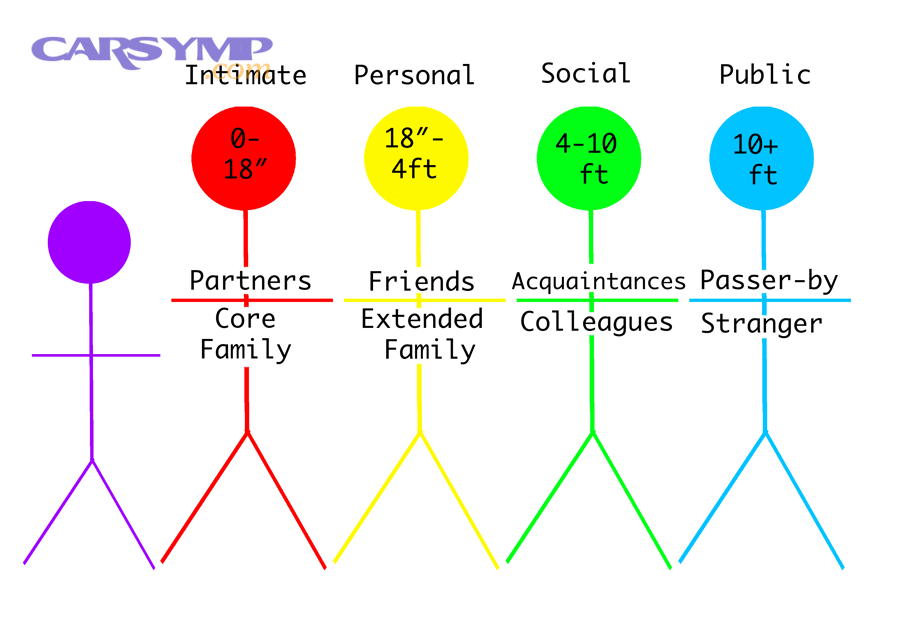
- Proxemics: space and distance (personal vs. social zones)
- Paralanguage: tone, pace, volume, pauses
- Haptics: touch (culture- and context-sensitive)
Decoding rule: don’t assign a single “dictionary meaning” to one gesture. Look for clusters (face + voice + context + baseline behavior).
What are symbolic and digital communication codes?
Symbolic/digital codes are icons, emojis, formatting, and platform signals that compress meaning quickly. Besides, these codes matter because people increasingly communicate in short bursts where punctuation and formatting carry intent.
Examples to decode:
- Emoji tone (🙂 vs. 😐 vs. 👍)
- Punctuation (“Sure.” vs “Sure!”)
- Formatting (ALL CAPS, bold, bullet points)
- Response timing (immediate vs. delayed)
Decoding tip: interpret digital codes relative to the relationship. A manager’s “K” can mean efficiency, not annoyance—unless other cues suggest otherwise.
What are standardized operational codes?
Standardized operational codes are predefined code sets used in high-stakes, time-sensitive communication (e.g., public safety radio, logistics, aviation, hospitals). More importantly, the goal is speed and consistency—so decoding relies on knowing the standard for that environment.
You’ll see this later with radio 10-codes—and in technical systems, where “codes” can be machine-generated (like diagnostic trouble codes).
What’s the Difference Between Verbal and Nonverbal Communication Codes?
Verbal codes win in explicit clarity and recordability, while nonverbal codes win in emotional signaling, relationship management, and speed of interpretation. However, real communication quality depends on whether the two code types agree or conflict.

How do you compare clarity and ambiguity?
Verbal codes can be clearer when:
- You define terms
- You specify actions
- You confirm understanding
Nonverbal codes can be clearer when:
- the situation is emotional,
- the message is relational (“I support you”),
- or the verbal content is constrained (no time to explain).
If words say “I’m fine” but tone is strained and shoulders are tense, the nonverbal code signals unresolved emotion—so the combined message is not “fine.”
How do you compare trust and emotional meaning?
Nonverbal codes often drive trust because people treat them as harder to fake consistently. Still, it’s dangerous to treat body language as a lie detector—many cues reflect stress, culture, neurodiversity, or discomfort rather than deception.
A better decoding approach:
- Notice mismatch (“words vs. tone”)
- Ask a clarifying question (“Do you mean X, or are you concerned about Y?”)
- Offer a low-pressure option (“We can pause and revisit tomorrow.”)
How do you compare accountability and documentation?
Verbal codes win when you need:
- legal clarity,
- project alignment,
- measurable commitments,
- or teachable instructions.
Nonverbal codes win when you need:
- rapport,
- de-escalation,
- leadership presence,
- or empathy.
Practical rule: in professional settings, use nonverbal codes to support the relationship and use verbal codes to lock in the decision.
How Do Context and Culture Change the Meaning of Communication Codes?
Yes—context and culture can completely change communication codes because the same signal is interpreted through different norms, values, and expectations. Next, decoding improves when you treat meaning as a function of signal + setting + relationship + culture.
What are high-context vs. low-context cues?
High-context communication relies more on implicit meaning and surrounding context, while low-context communication relies more on direct, explicit wording. (edis.ifas.ufl.edu)
Practical decoding differences:
- In higher-context settings, “We’ll see” may mean “No,” delivered politely.
- In lower-context settings, indirectness can feel evasive; directness is seen as respectful clarity.
According to a study by University of Florida from IFAS Extension publications, in 2022 (as referenced in their intercultural communication guidance), communicators are advised to adapt between high- and low-context styles to reduce cross-cultural misunderstandings—reinforcing that decoding must factor in cultural context, not just the words. (edis.ifas.ufl.edu)
What are common cross-cultural nonverbal misunderstandings?
Nonverbal codes that frequently vary:
- Eye contact (confidence vs. disrespect)
- Personal space (warmth vs. invasion)
- Touch (friendliness vs. boundary crossing)
- Silence (respect/thoughtfulness vs. disengagement)
- Gestures (positive in one place, offensive in another)
Use a decoding “safety check”:
- Assume multiple possible meanings.
- Compare to the person’s baseline behavior.
- Check the setting (formal, informal, hierarchical).
- Ask a neutral clarifier .
How do you adapt your codes in multicultural settings?
A reliable adaptation method has 3 factors and one outcome: observe → verify → adjust, resulting in fewer misreads and better rapport.
- Observe: watch how others take turns, disagree, and show respect.
- Verify: paraphrase intent (“So the priority is X, correct?”).
- Adjust: match formality, directness, and pacing without mimicking stereotypes.
This approach keeps the hook chain intact: better decoding leads to better encoding, which improves the next interaction.
How Can Students Learn to Decode and Use Communication Codes Better?
Students can learn communication codes faster using 3 steps: build a personal codebook, practice decoding with feedback, and test understanding in low-stakes conversations, resulting in clearer communication and fewer avoidable conflicts. Then, once the method becomes routine, you’ll decode faster under pressure.
How do you build a “codebook” and observe patterns?
Start a simple “codebook” with three columns:
- Signal (what you observed)
- Context (where/when/with whom)
- Likely meaning(s) (2–3 possibilities)
Example entries:
- “Short replies + delayed responses” → during finals week → could mean stress, overload, or disengagement.
- “Nods + no questions” → meeting with authority figure → could mean agreement or polite listening.
The goal is not to “profile” people. The goal is to prevent single-cue overconfidence.
What practice drills improve decoding accuracy?
Try drills that train pattern recognition:
- Silent video drill: watch a short clip with no sound; write the emotion shift every 10 seconds; then replay with sound to compare.
- Tone swap drill: read the same sentence in three tones (neutral, annoyed, supportive) to feel how paralanguage changes meaning.
- Context flip drill: take a gesture (e.g., thumbs-up) and list how meaning changes across settings (classroom, workplace, international travel).
How do you verify meaning with feedback loops?
Verification is the professional decoder’s “checksum.” Use:
- Reflective paraphrase: “So you’re saying the deadline moved to Friday, and quality is the priority—right?”
- Choice question: “Do you want a quick update, or a detailed plan?”
- Meta question: “How do you prefer I communicate concerns—directly or with background first?”
These feedback loops reduce decoding errors without making the conversation awkward.
What Are 10-Codes, and When Should You Use Plain Language Instead?
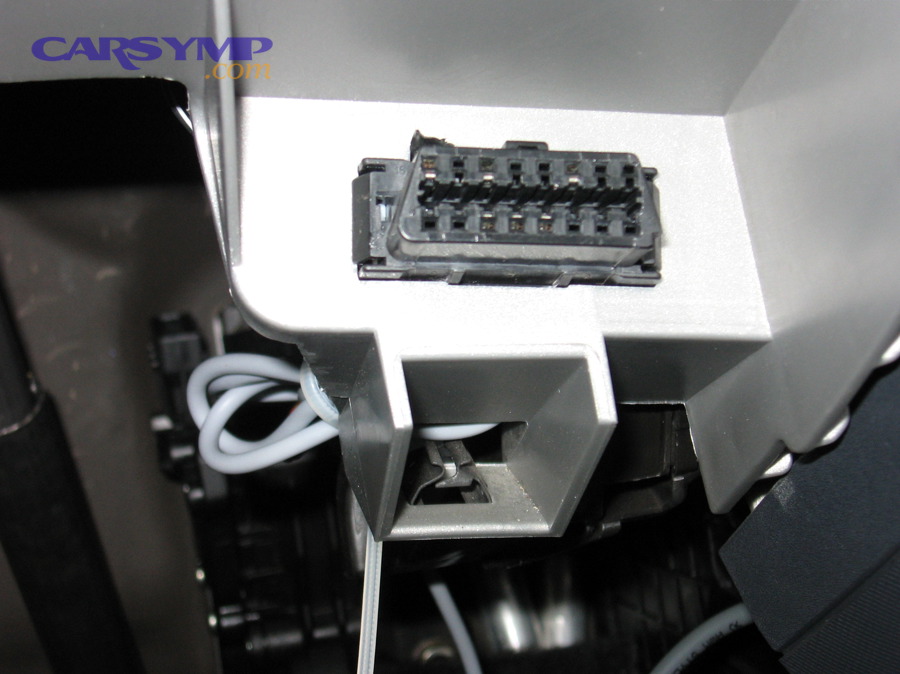
10-codes are standardized radio shorthand used mainly in public safety to communicate quickly, but plain language is often preferred for cross-agency clarity and safety. However, the best approach depends on interoperability, training, and incident complexity.
What are common 10-codes and what do they mean?
There are many variations by jurisdiction, but common examples include “10-4” (acknowledged) and codes for requests, status, and emergencies. Next, because meanings can differ between agencies, treat any 10-code list as local unless your organization standardizes it.
To make this concrete, here’s a sample table (examples only) showing what radio codes often aim to do—compress frequent messages into short signals:
| Purpose | Example code (varies) | Typical meaning |
|---|---|---|
| Acknowledgment | 10-4 | Message received / OK |
| Location check | 10-20 | What’s your location? |
| Status update | 10-8 | In service / available |
| Urgent situation | 10-13 | Officer needs help (varies) |
Because 10-code meanings can differ across regions, confirm your agency’s official list before operational use. (nij.ojp.gov)
Why do agencies move away from 10-codes?
Agencies move away from 10-codes mainly because:
- Codes are not always standardized, causing cross-jurisdiction confusion.
- Plain language improves interoperability during mutual-aid incidents.
- Training load and cognitive burden can be reduced for new officers.
National Institute of Justice describes how non-standard 10-codes can hinder communication across jurisdictions and outlines why many agencies transition toward plain language. (nij.ojp.gov)
What best practices keep radio communication clear?
Whether you use 10-codes or plain language, clarity comes from discipline:
- Lead with who you are calling and where you are
- Use short transmissions with one request per message
- Confirm with a read-back for critical details
- Avoid ambiguous terms (replace “over there” with a location marker)
What Are Advanced Communication Codes in Modern Systems?
Advanced communication codes are machine-readable or protocol-based codes used to diagnose and coordinate complex systems (networks, vehicles, software, and infrastructure). Next, if human codes are about shared social meaning, technical codes are about shared protocol meaning—both require correct decoding to avoid costly errors.
What are U-codes in OBD-II, and how do they relate to vehicle networks?
In OBD-II, U-codes are diagnostic trouble codes that indicate network communication issues between modules (for example, when control units can’t exchange messages correctly). (en.wikipedia.org)
A useful decoding shortcut:
- P-codes: powertrain
- C-codes: chassis
- B-codes: body
- U-codes: network communication (en.wikipedia.org)
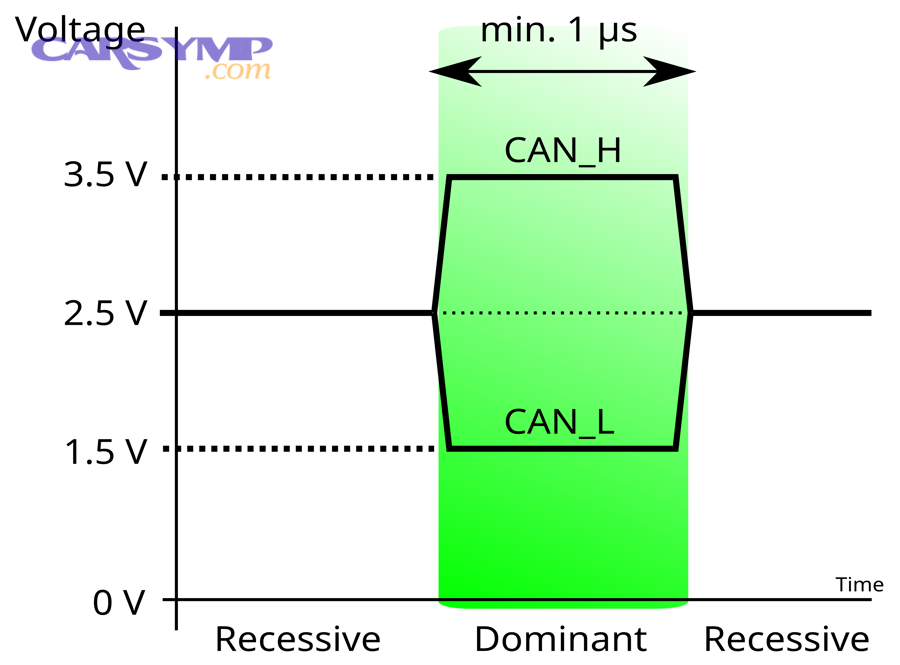
To illustrate how “communication codes” become literal in a vehicle, here’s a diagram commonly used to explain signal behavior on CAN networks:
What is ECU diagnosis for communication faults?
ECU diagnosis is the structured process of testing whether an engine control unit (and related modules) can power up, communicate, and interpret sensor/actuator data correctly—especially when network faults or U-codes appear. Then, a good diagnostic flow separates communication failure (network/protocol) from component failure (sensor/actuator) and power/ground failure (electrical fundamentals).
A practical ECU communication fault checklist:
- Confirm battery voltage and stable power supply
- Check ECU power/ground integrity under load
- Verify network integrity (CAN wiring, termination, shorts to power/ground)
- Attempt module “ping” with a scan tool
- Compare which modules respond vs. which don’t (is the issue isolated or systemic?)
What are no-start ECU-related causes?
No-start ECU-related causes are failures where the ECU cannot authorize ignition/fuel or cannot coordinate the start sequence due to power, sensor validity, immobilizer authorization, or network communication. More specifically, common categories include:
- Power/ground faults to the ECU (ECU never boots)
- Immobilizer lockout (authorization fails even though engine hardware is fine)
- Network faults that prevent critical modules from sharing start permission
- Corrupted programming or mismatch after module replacement
- Sensor plausibility failures that block starting logic (varies by vehicle)
A decoding mindset helps here: the “no-start” symptom is the visible output, while the ECU’s stored codes (including U-codes) are the machine’s attempt to communicate why.
What is ECU programming and immobilizer pairing?
ECU programming and immobilizer pairing is the process of configuring a replacement or updated ECU so it matches the vehicle’s security system and can exchange authorized messages with the immobilizer/key system. In addition, pairing typically requires OEM-level procedures, correct credentials, and stable voltage—because an interruption can brick modules or create new communication faults.
A safe high-level checklist:
- Use a stable power supply/maintainer during programming
- Confirm correct ECU part number and calibration
- Follow the OEM sequence for immobilizer/key learn procedures
- Verify post-program communication and clear/retest codes
This is the technical mirror of human communication codes: if the “shared protocol” is not aligned, modules cannot interpret each other’s messages—so the system fails to act.