


A rear main seal leak usually shows up as engine oil collecting at the back of the engine—often where the engine meets the transmission—because the seal sits around the crankshaft’s rear exit point and can’t hold oil once it hardens, wears, or sees excessive crankcase pressure.
If you’re chasing rear main seal leak signs, the fastest path is to understand what the seal does and what “normal seepage” looks like versus a leak that’s actively dripping, smoking, or lowering the oil level between checks.
Next, you’ll want to confirm the leak’s true origin—because oil loves to “track” downward and backward, making valve cover, oil pan, or oil filter housing leaks look like a rear main seal.
Introduce a new idea: Below, you’ll get a practical, step-by-step way to spot the signs, verify the source, and decide what to do next—without guessing or replacing parts blindly.
What is a rear main seal, and why does it leak?
A rear main seal is a crankshaft oil seal at the back of the engine that keeps pressurized/splashing engine oil inside the crankcase where the crankshaft exits toward the transmission; it leaks when the sealing lip loses tension or the sealing surface and crankcase conditions stop supporting a tight seal.
To connect the symptom you see (oil at the transmission area) to the actual failure, you need a clear mental map of the seal’s location and what makes it fail in real-world driving.
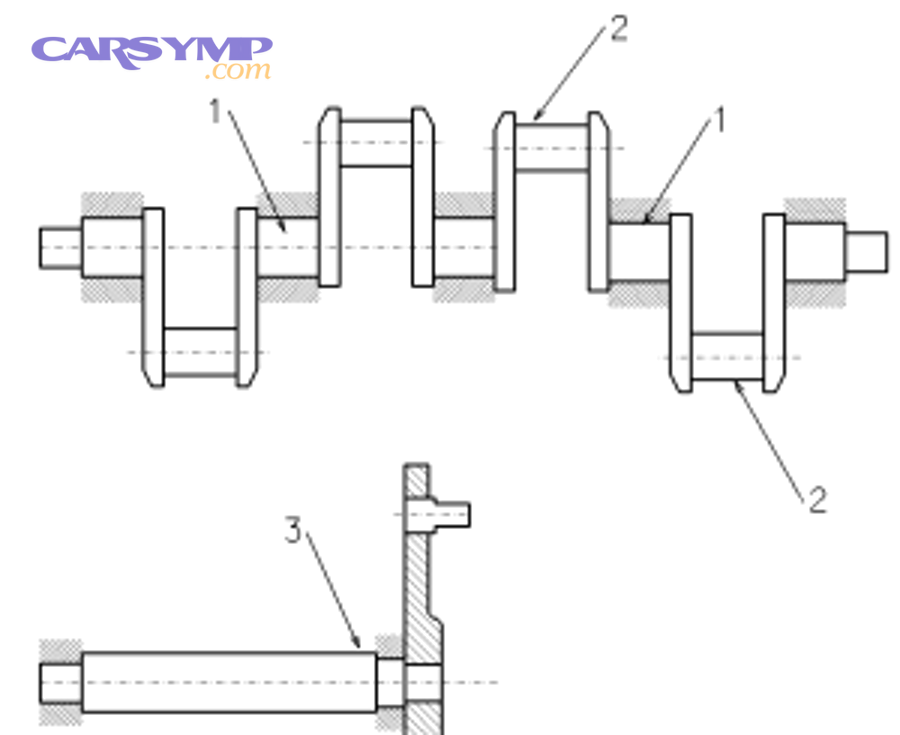
Where is the rear main seal located?
The rear main seal sits at the very back of the engine, surrounding the crankshaft where it passes through the engine block or rear cover and meets the flexplate/flywheel and transmission bellhousing.
More specifically, it’s “hidden” because you can’t see it without accessing the area behind the flexplate/flywheel—so oil escaping from it often appears from the lowest point of the bellhousing or rear cover seam rather than from the seal itself.
Practical location cues:
- Rear-wheel-drive layouts: leak tends to show near the transmission bellhousing bottom, sometimes on the inspection cover edge.
- Front-wheel-drive transaxles: leak still occurs at the engine-to-transmission mating area, but access/visual angles differ.
What causes rear main seal failure?
Rear main seals fail for a few common, repeatable reasons:
- Age/heat hardening: Rubber loses elasticity, the lip can’t maintain contact pressure.
- Crankshaft surface wear or damage: Grooves at the sealing surface give oil a path.
- Installation issues: Nicked seal lip, wrong depth, misalignment, or contaminated lip.
- Excess crankcase pressure (PCV issues): Pressure pushes oil outward and can overwhelm sealing capacity.
- Oil contamination/sludge: Debris can abrade the sealing edge or interfere with the lip.
Even if the seal is old, it often starts as a seep—then turns into a drip when conditions worsen (heat cycles, pressure, or surface wear).
Can a rear main seal “weep” without being a major leak?
Yes—rear main seals can “weep,” meaning you get a light film or dampness without steady dripping, because minor seepage can occur before the seal lip fully loses its ability to seal.
However, the key is trend: a weep that stays stable over months is different from one that rapidly becomes drops on the driveway, burning-oil smell, or frequent oil top-offs. When it’s progressing, treat it as a developing leak—especially if oil level drops.
What are the most common rear main seal leak signs?
The most common rear main seal leak signs cluster around where the oil appears (bellhousing area), what it touches (flexplate/flywheel/starter), and what it causes (smell/smoke and oil loss).
Because oil can migrate, the goal isn’t to latch onto one clue—it’s to stack multiple signs that point to the rear of the engine.
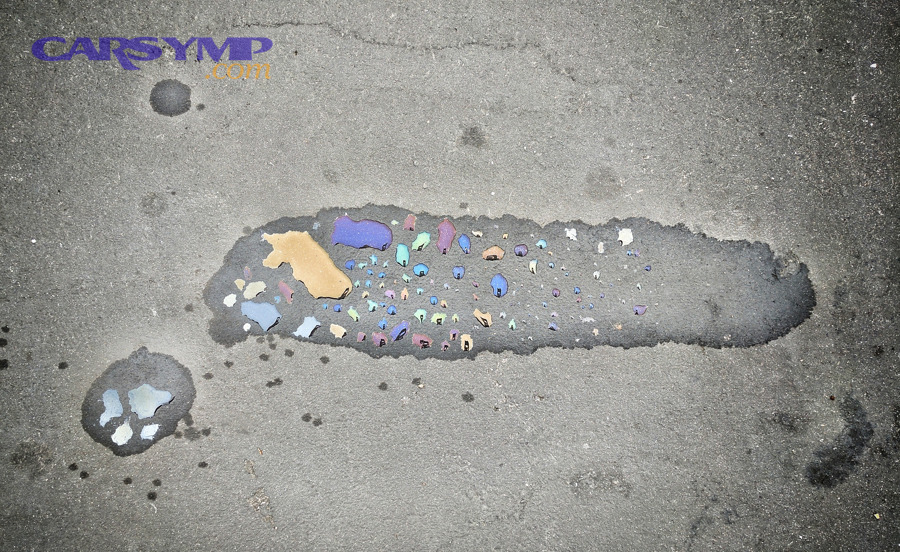
Does oil drip from the transmission bellhousing area?
A strong rear main seal clue is engine oil dripping from the lowest point of the transmission bellhousing or the seam where the engine meets the transmission, because that’s the “collection point” behind the engine.
Look for:
- Fresh wet oil at the bellhousing bottom edge
- Oil dripping off an inspection cover lip (if equipped)
- A damp line at the engine-to-transmission mating seam
If the leak is heavy, you may see oil sling patterns inside (discussed next) rather than only external drips.
Do you see oil on the flexplate/flywheel or starter?
Yes—oil on the flexplate/flywheel area is a classic sign because the rotating assembly can sling leaked oil outward, and oil can contaminate parts near the rear of the engine.
Where to check (as accessible):
- Starter motor area (some engines allow partial view)
- Bellhousing inspection opening (if present)
- Lower dust/inspection cover area
If you find oil misting or spray patterns, it’s more consistent with a rear leak behind the flywheel than a leak higher up that simply drips down.
Is there a burning-oil smell or smoke near the back of the engine?
A rear main seal leak can create a burning-oil smell or light smoke when oil hits hot surfaces (exhaust components, heat shields, or areas warmed by drivetrain heat) after it escapes the rear sealing area.
What makes this clue meaningful:
- The smell is strongest after driving (heat soak)
- You notice odor near the firewall/back of engine bay
- You see faint smoke after parking
Still, this symptom isn’t exclusive to rear main seals—valve cover and turbo oil feed/return leaks can also burn—so treat it as supporting evidence, not proof.
Can low oil level or oil warning lights be a clue?
Yes—oil level dropping between checks can support a rear main seal diagnosis, especially if you also see rear-area wetness or drips.
A practical rule:
- If you’re adding oil frequently and you also have oil at the bellhousing area, a rear main seal leak moves from “possible” to “probable.”
Important nuance: low oil level alone doesn’t identify the leak location. Pair it with visual evidence.
Where should you look first to confirm the leak is really the rear main seal?
To confirm a rear main seal leak, start by ruling out higher, more common sources that drip down and backward, then look for oil “tracking” patterns and, if needed, use UV dye to trace the oil’s true origin. (machinerylubrication.com)
Because replacing a rear main seal is labor-heavy on many vehicles, confirmation is worth the effort.
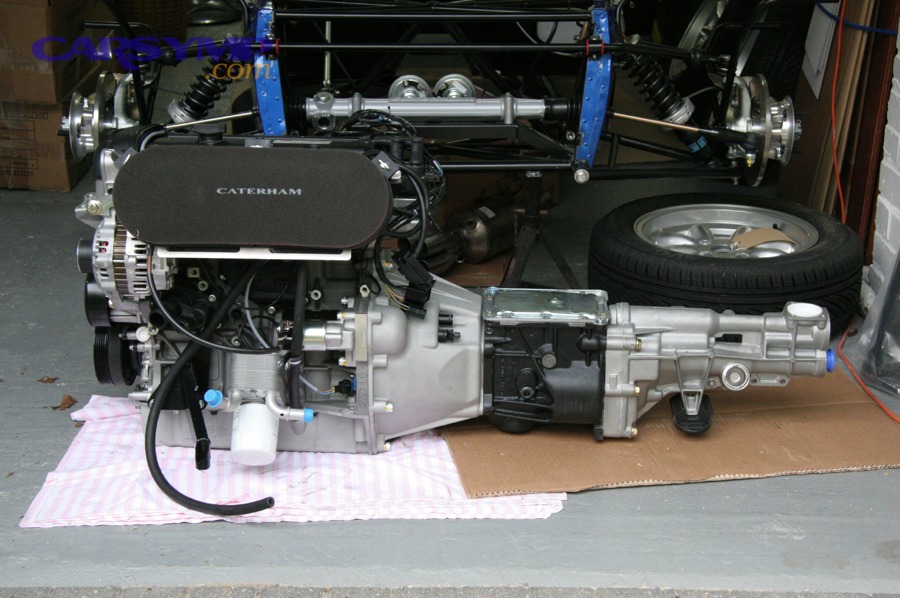
How do you rule out valve cover, oil pan, and oil filter housing leaks?
You rule them out by checking upstream first, because gravity and airflow move oil down and back.
A fast diagnostic sequence:
- Valve cover gasket area: Look for wetness at the top edges of the engine, especially near the rear corners. Oil from here can run down the block and mimic a rear seal leak.
- Oil filter housing / oil cooler area (if equipped): These often leak and can coat the back of the engine.
- Oil pan gasket and pan rail: Look for wetness along the pan seam—oil from the pan can travel to the rear and drip near the transmission.
- Rear cover / block plugs / sensor seals: Some engines have rear cover gaskets or plugs that leak like a rear main.
If you find heavy oil above the bellhousing line, don’t call it a rear main seal yet—follow the wetness upward until it stops.
What does “oil tracking” look like on the block and bellhousing?
Oil tracking is the “trail” oil leaves as it moves with gravity, airflow, and engine vibration.
Rear main seal–leaning patterns often include:
- A relatively dry upper block but wet lower bellhousing seam
- Oil concentrated around the crank exit area (seen best after cleaning)
- Drips that originate at the lowest bellhousing point, not from the oil pan rail
By contrast, a valve cover leak often leaves a wet path that starts high and streaks downward, sometimes with dirt stuck to the oily path.
When should you use UV dye to trace an engine oil leak?
Use UV dye when:
- The engine is generally oily and you can’t find the “start point”
- Multiple leaks might be present
- You need higher confidence before a major repair decision
A UV dye process (conceptually):
- Add compatible UV dye to engine oil
- Drive briefly to circulate
- Inspect with a UV light to spot the brightest/earliest leak source (machinerylubrication.com)
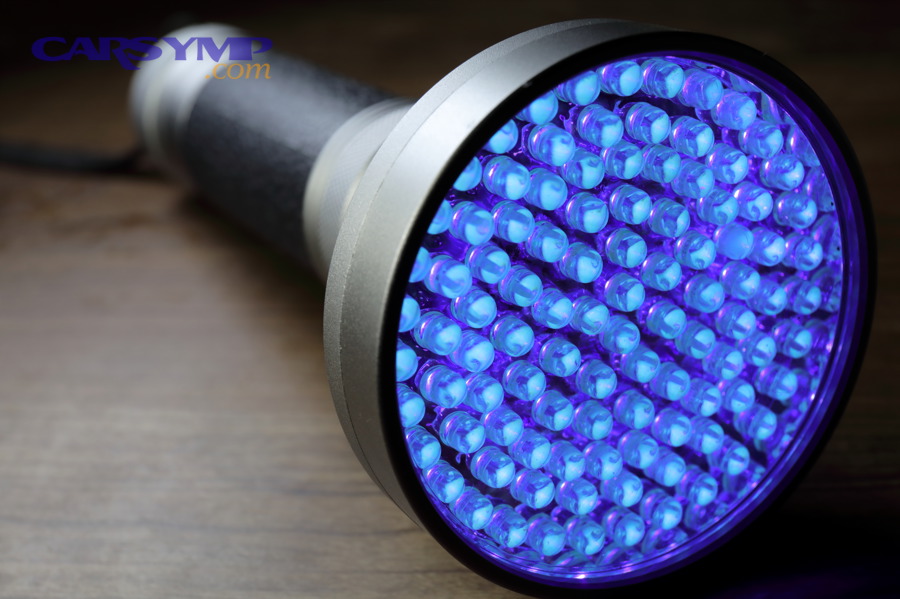
UV dye is especially useful for rear main seal leak signs because it can show whether the oil begins inside the bellhousing area versus running down from above.
What quick checks can you do at home before visiting a shop?
You can do four quick checks—clean-and-recheck, short-drive verification, crankcase ventilation checks, and risk assessment—to narrow the diagnosis and decide whether you can keep driving or need immediate attention.
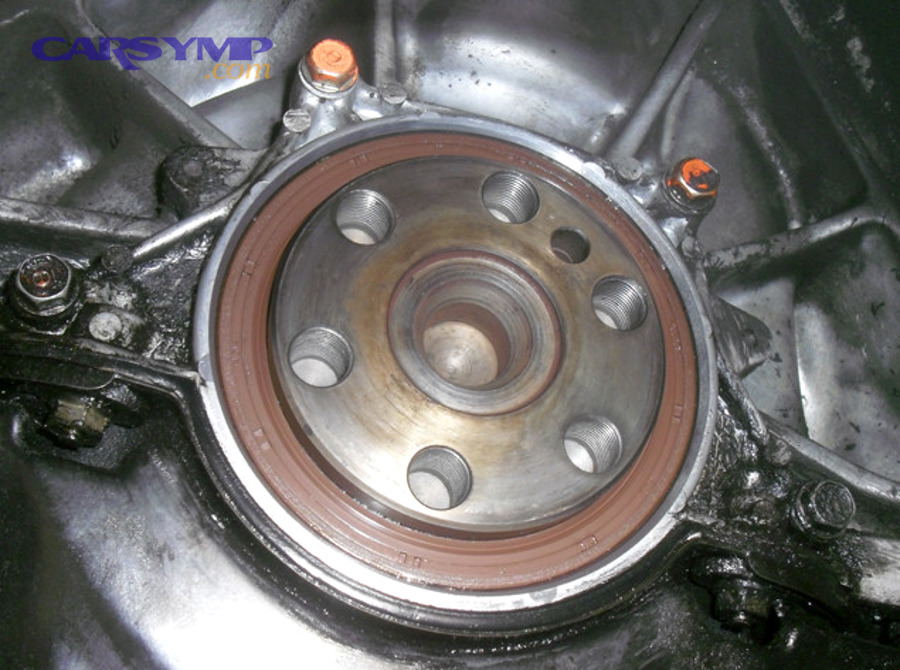
To make these checks meaningful, focus on creating a “fresh baseline” rather than inspecting an old, dirty leak pattern.
Can you clean the area and re-check after a short drive?
Yes—cleaning and re-checking is one of the best DIY confirmation steps because it resets the visual evidence.
A practical method:
- Degrease the suspected area (rear of oil pan, bellhousing seam, lower block)
- Rinse/wipe thoroughly and let it dry
- Drive 10–20 minutes (or a short commute)
- Reinspect with a bright light
What you’re looking for:
- Fresh wetness appearing at the bellhousing seam
- A drip forming at the lowest point
- Oil appearing inside inspection openings (if accessible)
This approach often reveals whether you have an active leak right now or just old residue.
What should you check in PCV and crankcase ventilation?
Check PCV/crankcase ventilation because excessive crankcase pressure can push oil past seals and worsen rear main seal leaks.
DIY-friendly checks:
- Inspect PCV valve or PCV system hoses for clogging/collapse
- Look for milky sludge in hoses (short-trip condensation + buildup)
- Confirm the system isn’t obviously blocked or disconnected
Why it matters: controlled crankcase pressure reduces the “push” against seals. According to a study by University of Windsor from the Department of Mechanical, Automotive & Materials Engineering, in 2014, crankcase pressure control is treated as important for preventing oil leakages, and the work discusses managing crankcase pressure (and the PCV system’s role) as part of keeping leakage risk down. (collectionscanada.gc.ca)
Is it safe to keep topping off oil as a temporary measure?
Sometimes—but only if you’re doing it deliberately and the leak risk is low.
Topping off can be a short-term workaround when:
- The leak is minor (no active dripping after every drive)
- Oil level stays within the safe range between checks
- You’re monitoring frequently and not seeing new warning lights
However, topping off is not a repair. It’s a delay tactic—and it can mask worsening leak severity until you suddenly drop below safe oil level.
This is where engine oil leak repair decisions become economic and risk-based: if the leak is stable and you’re tracking it, you can plan repair timing; if it’s escalating, you’re gambling with engine lubrication.
When does an oil leak become an emergency?
An oil leak becomes an emergency when it can rapidly lower oil level, create a fire risk, or cause loss of control hazards.
Treat it as urgent if:
- Oil is dripping steadily while idling or immediately after shutdown
- You smell strong burning oil with visible smoke
- You see oil pressure warnings or oil level dropping quickly
- Oil is pooling where it could reach hot exhaust components
- Oil is dripping onto tires/brakes or creating slick spots
If any of those are true, don’t treat it as “just a rear main seal seep”—it’s a safety and engine-survival issue.
How does a rear main seal leak compare to other common oil leaks?
A rear main seal leak often looks like other leaks, but it has distinct differences in origin point, drip location, and what parts get contaminated—especially when compared to oil pan gaskets, valve covers, cam seals, and even transmission fluid leaks.
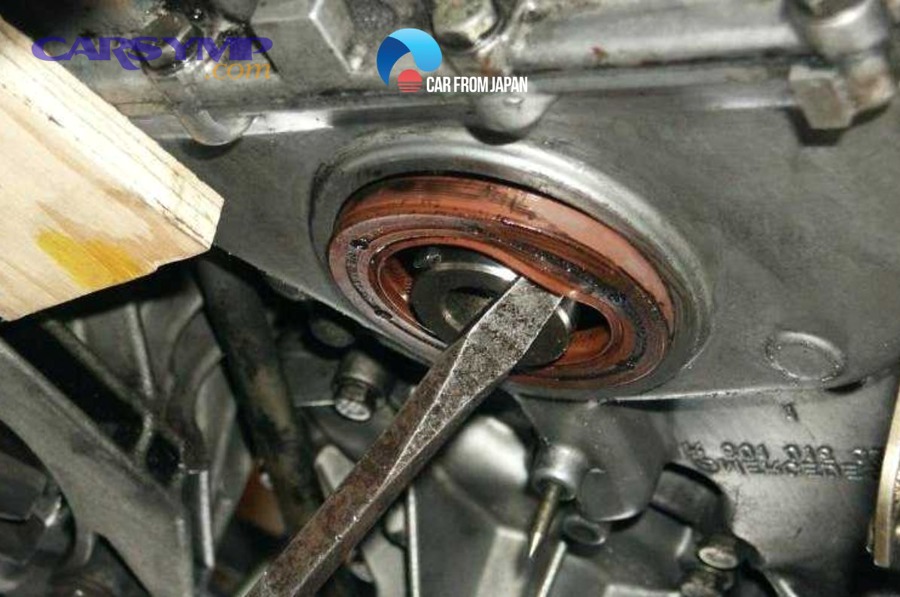
To make this comparison practical, here’s what each leak tends to do.
This table summarizes the most useful “where it shows up” and “what it hits” differences so you can separate rear main seal leak signs from common look-alikes.
| Leak source | Where it often starts | Where it often ends up dripping | Common giveaway |
|---|---|---|---|
| Rear main seal | Behind flywheel/flexplate at crank exit | Bottom of bellhousing / engine-to-trans seam | Oil inside bellhousing; rear seam wetness |
| Oil pan gasket | Pan rail seam | Pan edges, rear pan corner, sometimes near trans | Wet pan seam across a long stretch |
| Valve cover gasket | Top of engine | Down block, sometimes onto exhaust | Wetness starts high; streaking down |
| Cam seal (rear) | Rear of cam(s) / head | Rear of engine, can mimic RMS | Oil higher than crank centerline |
| Transmission leak | Transmission seals/case | Similar drip points | Fluid color/feel differs; level changes |
Rear main seal vs oil pan gasket: what’s different?
Rear main seal vs oil pan gasket often comes down to where the wetness begins:
- Oil pan gasket: wetness along the pan seam, often spread across multiple bolts/edges.
- Rear main seal: wetness concentrated at the engine-to-trans seam/bellhousing bottom, sometimes with less wetness along the rest of the pan.
A common trap: the rear corner of the oil pan can leak and drip near the bellhousing. That’s why cleaning and re-checking matters.
Rear main seal vs valve cover gasket: what’s different?
Valve cover leaks usually start high and create a dirty, oily “wash line” down the engine.
Rear main seal leaks often leave:
- A drier upper block
- Concentrated wetness at the back bottom
- Oil collecting at the bellhousing area
If the back of the engine is soaked above the bellhousing, suspect valve cover (or upper engine leaks) before blaming the rear main seal.
Rear main seal vs cam seal: what’s different?
Rear cam seals can mimic rear main seal leaks because they’re also at the back of the engine.
Key difference:
- Rear cam seal leaks often show oil higher up—around the rear of the cylinder head(s) or rear cover region—before it travels down.
- Rear main seal leaks are more “centerline-low,” appearing near crank level and bellhousing.
If your engine has a rear cover plate or cam plug, treat it as a direct competitor diagnosis to the rear main seal until proven otherwise.
Rear main seal vs transmission fluid leak: how to tell?
A rear main seal leak is engine oil, while a transmission leak is ATF (for automatics) or gear oil (for manuals/differentials).
Practical differentiators:
- Color and smell: Engine oil is typically brown/black; ATF is often red/pink (though it can darken). Gear oil often smells sulfur-like.
- Where it shows: Transmission input seal leaks can also appear at bellhousing, so you may need UV dye or fluid-level checks.
- Fluid level trend: Engine oil level dropping points toward engine leak; transmission level/behavior changes point toward ATF leak.
If you can, confirm by checking both fluid levels—because bellhousing-area leaks can come from either side of the mating surface.
What should you do next if you suspect a rear main seal leak?
If you suspect a rear main seal leak, the best next step is to confirm the source, assess driving risk, then choose between monitored short-term operation and scheduling repair—because rear main seal replacement is often labor-intensive but ignoring a worsening leak can lead to engine damage.
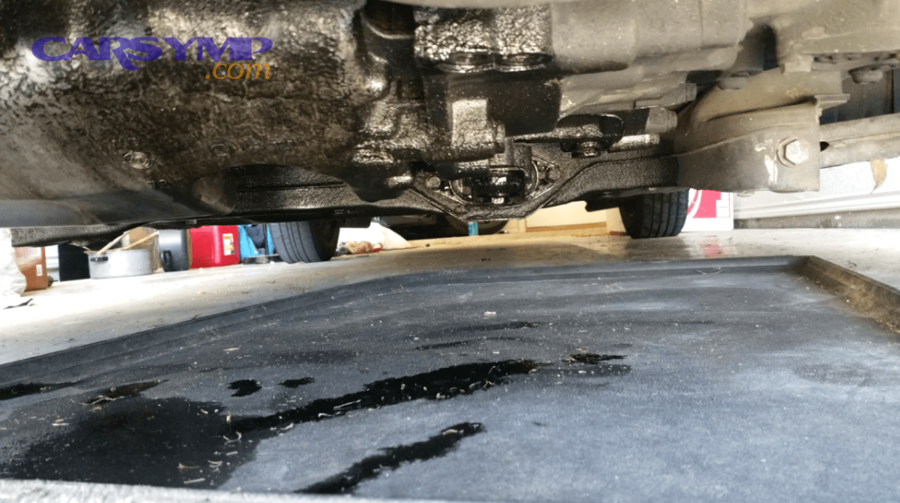
To keep the decision grounded, combine leak severity (drip rate) with oil level trend and driving conditions.
Should you stop driving or can you drive with an oil leak?
“Can you drive with an oil leak” depends on severity, not just the location of the leak.
You can sometimes keep driving short-term if:
- The leak is a light seep (no steady drip)
- Oil level remains stable with careful monitoring
- There’s no smoke, burning smell, or warning lights
You should stop driving (or drive only to a shop) if:
- The leak is actively dripping
- Oil level drops quickly
- You see smoke or smell strong burning oil
- You get oil pressure warnings
This is the line between inconvenience and engine risk. A rear main seal leak that becomes heavy is not “just messy”—it’s a lubrication liability.
What does rear main seal replacement involve?
Rear main seal replacement typically involves accessing the seal behind the flywheel/flexplate, which often means separating the engine and transmission.
Common steps (varies by vehicle layout):
- Support engine and transmission safely
- Remove transmission (or transaxle)
- Remove flexplate/flywheel
- Remove and replace rear main seal (and sometimes a seal housing/gasket)
- Reassemble with correct torque specs and alignment
Because of the labor, shops often recommend addressing related “while you’re in there” items (like a worn clutch on manuals or certain rear cover seals) if they show wear.
How much does it usually cost?
Cost varies widely by vehicle, drivetrain layout, and whether additional parts are replaced during the job.
A realistic cost structure:
- Parts: often modest (the seal itself is usually inexpensive)
- Labor: the primary cost driver (transmission removal/reinstall time)
If you’re pricing it, ask for:
- Labor hours estimate
- Whether the shop replaces the seal alone or also the rear cover gasket/housing seal (if applicable)
- Any add-ons recommended based on inspection (clutch, torque converter seal, etc.)
How can you prevent future oil leaks after repair?
Preventing future oil leaks is partly about the seal—and partly about the conditions around it.
Post-repair habits that reduce repeat leaks:
- Fix crankcase ventilation issues (PCV) so pressure doesn’t build
- Use the correct oil viscosity and change it on schedule to reduce sludge
- Address other active leaks so oil doesn’t contaminate rubber components
- Confirm the sealing surface is clean and not grooved (important during installation)
In other words, preventing future oil leaks isn’t only “install a new seal”—it’s making sure the engine environment supports that seal long-term.
What are the best practices for engine oil leak repair and long-term prevention?
The best practices for engine oil leak repair start with accurate leak tracing, then pair the correct fix with prevention steps—especially crankcase pressure management and “do it once” workmanship—so you don’t chase repeat leaks after the rear main seal job.
This section expands beyond rear main seal leak signs into micro-level decisions that make repairs last.
Which seal conditioners or additives are worth considering (and when not to)?
Seal conditioners can sometimes reduce minor seepage by softening aged seals, but they’re not a substitute for repairing a damaged seal lip, worn crank surface, or a leak caused by pressure or misinstallation.
Consider them only when:
- The leak is a minor seep (not a drip)
- You’re using them as a short-term measure while planning a proper fix
- You understand they won’t fix mechanical damage
Avoid them when:
- The leak is heavy, smoking, or rapidly lowering oil level
- The engine has known mechanical sealing surface issues
- You’re using them to postpone a needed repair indefinitely
Treat additives as “management,” not repair—especially for rear main seals, where access cost is the real issue.
What maintenance habits reduce seal wear over time?
Habits that reduce seal wear are simple but consistent:
- Regular oil changes to prevent sludge and abrasive contamination
- Using the correct oil spec/viscosity for your engine
- Keeping PCV/crankcase ventilation functioning to avoid pressure buildup
- Fixing small leaks early before oil saturates mounts, bushings, or wiring
If you build a routine around leak spotting (quick look under the car + oil level check), you’ll catch problems while they’re still cheap.
What mistakes cause repeat leaks after a rear main seal job?
Repeat leaks usually come from process failures, not bad luck:
- Seal installed crooked or at the wrong depth
- Seal lip damaged during installation
- Sealing surface not inspected for grooves or corrosion
- Rear cover gasket/housing seal ignored when it’s the actual leak
- Crankcase pressure problem (PCV) left unresolved
If the underlying cause is pressure, a brand-new seal can still leak—because you didn’t change the conditions that overwhelmed the old one.
When is it smarter to fix multiple leaks at once?
It’s smarter to bundle leaks when:
- Access overlaps (transmission removal exposes rear main seal and related rear cover areas)
- You’re already paying heavy labor and additional parts are low-cost
- You want one clean baseline after repair to verify the fix
Common “bundle” logic:
- If the transmission is out and a clutch is near end-of-life, replacing it can prevent paying labor twice.
- If multiple rear-area seals show wetness, solving them together reduces the chance of misdiagnosing a “still leaking” condition afterward.
This is the strategy that turns engine oil leak repair from whack-a-mole into a one-time reset.