


Your car relies on several “essential fluids” to lubricate moving parts, move heat away, transfer force, and protect components from corrosion—so when one fluid is low, dirty, or wrong, the system it supports can fail fast. This guide explains what each core car fluid does, where it lives, and what happens when it’s neglected.
Next, you’ll learn which fluids matter most for your vehicle and driving habits, so you can prioritize checks and avoid spending money on the wrong maintenance while missing the critical one.
Then, you’ll get a practical, safety-first walkthrough for checking fluids the right way—because knowing How to check fluid levels correctly prevents bad readings, spills, and accidental damage.
Introduce a new idea: once you understand each fluid’s job and how to verify its condition, you can decide when to top off, when to schedule a proper fluid service, and when a leak or contamination means “stop driving and fix it.”
What are the essential car fluids and what do they do?
Essential car fluids are the working liquids that keep your engine, brakes, transmission, steering, cooling, and visibility systems operating—by lubricating, cooling, cleaning, sealing, and transferring hydraulic force so components don’t overheat, grind, or corrode.
To begin, it helps to treat fluids as “system parts”: each one has a specific job, a specific location, and specific failure symptoms when it’s overdue.
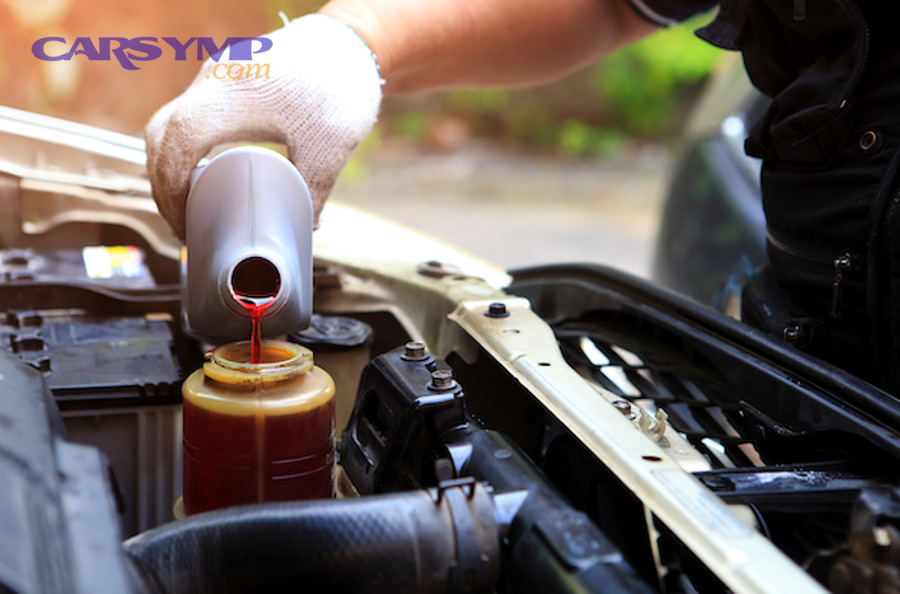
Below is a quick map of the most common essential fluids, what they do, and why they matter. The table is designed to help you connect function → location → consequence at a glance.
| Fluid | What it does (core function) | Where you usually check it | What happens if low/old |
|---|---|---|---|
| Engine oil | Lubricates, cools, cleans, seals | Dipstick + oil fill cap | Accelerated wear, overheating, sludge, engine damage |
| Engine coolant/antifreeze | Moves heat, prevents freeze/boil, resists corrosion | Coolant reservoir (cold engine) | Overheating, corrosion, heater failure |
| Brake fluid | Transfers braking force (hydraulic) | Brake master cylinder reservoir | Soft pedal, reduced braking, corrosion |
| Transmission fluid | Lubricates + hydraulically controls shifting (AT) | Dipstick (some) or fill plug | Harsh shifting, slipping, transmission damage |
| Power steering fluid (or ATF in some cars) | Assists steering via hydraulics | PS reservoir (if equipped) | Whining, heavy steering, pump damage |
| Differential/transfer case fluid (AWD/4WD) | Lubricates gears, bearings | Fill plug (service check) | Gear whine, overheating, gear damage |
| Windshield washer fluid | Cleans windshield for visibility | Washer reservoir | Poor visibility in dirt/salt/bugs |
| A/C refrigerant | Moves heat out of cabin (HVAC cycle) | Service ports (technician) | Weak cooling, compressor stress |
Which “essential fluids” matter most?
There are 6–8 essential car fluids that matter most in everyday driving: engine oil, coolant, brake fluid, transmission fluid, power steering fluid (if applicable), differential/transfer case fluid (if applicable), windshield washer fluid, and A/C refrigerant—based on how directly they affect safety, reliability, and heat control.
Next, the fastest way to prioritize is to group them by the risk they manage: safety-critical, heat-critical, and longevity/comfort.
Safety-critical (check first):
- Brake fluid (braking force and pedal feel)
- Tires are not fluids, but braking depends on them—so keep your “safety checks” mindset consistent
Heat-critical (prevents sudden breakdown):
- Engine coolant (overheating prevention)
- Engine oil (reduces friction heat + carries contaminants)
Longevity + drivability (expensive when ignored):
- Transmission fluid
- Differential/transfer case fluid (AWD/4WD)
- Power steering fluid (if hydraulic steering)
- A/C refrigerant (comfort; also protects compressor)
What do engine oil and coolant do differently?
Engine oil mainly lubricates and cleans moving engine parts while helping manage friction heat, while coolant mainly moves heat out of the engine through the radiator and prevents freezing/boiling.
More specifically, oil protects surfaces inside the engine (bearings, cams, rings), while coolant protects the engine’s temperature range and cooling passages (water jackets, radiator, heater core).
How they work together (simple mental model):
- Oil prevents metal-on-metal contact and carries microscopic debris to the filter
- Coolant prevents thermal runaway by transporting heat to the radiator
- If coolant fails, the engine overheats even if oil is perfect
- If oil fails, the engine can wear out even if coolant keeps temperatures stable
What does brake fluid do in the braking system?
Brake fluid is a hydraulic fluid that transfers the force from your foot at the brake pedal to the calipers/wheel cylinders at the wheels, so the pads/shoes clamp and slow the car.
Besides that, brake fluid has a hard job: it must resist boiling under high heat and protect internal brake components from corrosion.
Why brake fluid ages even if you don’t drive much:
- Most brake fluids are hygroscopic (they absorb moisture from the air over time)
- Water lowers boiling point and increases internal corrosion risk
- “Looks fine” is not the same as “performs fine,” especially after years
What does transmission fluid do for shifting and longevity?
Transmission fluid lubricates gears and bearings and (in automatic transmissions) acts as a hydraulic fluid that controls clutch packs and shift timing, so the transmission can change gears smoothly and survive heat.
To illustrate, the same fluid must both reduce friction and enable controlled friction—because clutches need the right friction characteristics to engage without shudder or slip.
Key roles (automatic vs. manual):
- Automatic transmission fluid (ATF): hydraulic control + friction management + cooling
- Manual transmission fluid/gear oil: lubrication + heat management (less hydraulic control)
How do you know which fluids your car needs?
You can know which fluids your car needs by combining your owner’s manual, your drivetrain type (FWD/RWD/AWD/4WD), and your steering/transmission design, because not every vehicle uses every fluid (and some fluids are combined or “lifetime-filled”).
Then, once you identify the systems, you can match each to the correct specification—because the “right fluid” is often more important than the fluid’s brand name.
How can you use the owner’s manual to confirm fluid types?
You can use the owner’s manual to confirm fluid types by checking 3 places: Cap labels, Fluid specifications section, and Maintenance schedule, which together tell you what fluid to use and when it should be serviced.
Specifically, the manual typically lists:
- Viscosity/grade (e.g., 0W-20 engine oil)
- Specification standards (e.g., Dexron/Mercon-type ATF, DOT 3/4 brake fluid)
- Service intervals (mileage/time)
- Special procedures (sealed transmissions, bleeding brakes, coolant vacuum fill)
Fast “manual shortcut”:
- Search the PDF/manual index for: “fluids,” “capacities,” “specifications,” “maintenance,” “ATF,” “coolant,” “brake fluid.”
Which fluids depend on drivetrain (FWD vs RWD vs AWD/4WD)?
Fluids depend on drivetrain because AWD/4WD systems add components that need lubrication—so they add differential fluid (front/rear) and often transfer case fluid.
Meanwhile, many FWD cars have a single transaxle (transmission + differential combined), so differential lubrication may be part of the transmission fluid system.
Typical differences:
- FWD: engine oil, coolant, brake fluid, transmission fluid, washer fluid (+ power steering if hydraulic)
- RWD: adds rear differential fluid (separate from transmission)
- AWD/4WD: often adds front differential fluid + transfer case fluid (or specialized AWD coupling fluids)
Are there “lifetime fluids,” and should you trust them?
Yes—some manufacturers label certain fluids “lifetime,” but you should treat “lifetime” as “lifetime under ideal conditions,” because heat, towing, stop-and-go driving, and contamination still degrade fluids.
More importantly, “lifetime” rarely means “never needs inspection,” so you still want periodic checks for leaks, level loss, and discoloration.
Practical rule (without guessing):
- Follow your manual for the official interval
- If you tow, drive in mountains, idle a lot, or do short trips, plan earlier checks and discuss shorter intervals with a reputable shop
How do you check fluid levels correctly?
You check fluid levels correctly by following a system-specific routine (engine off vs on, cold vs hot, level ground, clean dipstick, correct fill point), and by looking for condition clues (color, smell, debris, foam) that show whether a simple top-off is safe.
To better understand why technique matters, remember that many “bad readings” happen because the car isn’t level, the engine is too hot, or the fluid hasn’t settled.
How do you check engine oil safely and accurately?
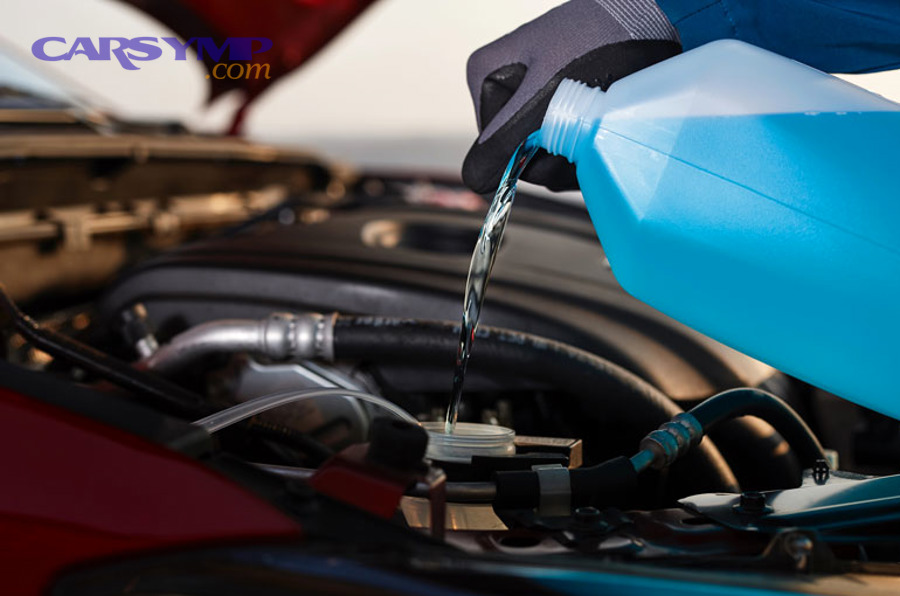
You check engine oil safely and accurately by parking on level ground, turning the engine off, waiting a few minutes for oil to drain back, wiping the dipstick, reinserting fully, and reading the level between MIN/MAX before adding small amounts.
Next, confirm you’re using the correct oil grade before you top off, because the wrong viscosity can affect protection and fuel economy.
Step-by-step (quick but correct):
- Park level, engine off, wait 3–10 minutes
- Pull dipstick, wipe, reinsert, pull again
- Read level; note color and smell
- Add oil in small increments (e.g., 0.25–0.5 qt), recheck
- Secure cap, check for leaks afterward
Condition clues:
- Normal: amber to brown, smooth texture
- Concerning: gritty feel, fuel smell, milky color (possible coolant contamination), heavy sludge
How do you check coolant without risking burns?
You check coolant safely by checking the reservoir level only when the engine is cold, confirming it sits between MIN/MAX, and never opening a hot radiator cap because pressurized coolant can spray and burn you.
Then, if it’s low, you top off using the correct coolant type mixed to the correct ratio—because mixing incompatible coolants can cause deposits or corrosion.
Cold-engine checklist:
- Inspect reservoir level and hoses for wetness/crusty residue
- Look for dried coolant streaks near clamps and radiator seams
- If repeatedly low, assume a leak until proven otherwise
How do you check brake fluid and what should it look like?
You check brake fluid by locating the master cylinder reservoir (usually on the driver side firewall), confirming the level is between MIN/MAX, and observing the fluid’s clarity and color without letting dirt enter the reservoir.
However, brake fluid “dark” does not automatically mean “bad,” and “clear” does not automatically mean “good,” so the more reliable signal is level stability plus brake feel plus service history.
What to look for:
- Level drop: may indicate pad wear or a leak (leaks are urgent)
- Cloudiness/particles: possible contamination
- Soft pedal / longer stopping distance: stop driving and inspect immediately
How do you check automatic transmission fluid (if your car allows it)?
You check automatic transmission fluid (if applicable) by following your specific vehicle procedure—often with the engine warm and running, in park, after cycling through gears—then reading the dipstick’s “hot” range (or having a shop check through a fill plug on sealed units).
More importantly, you should avoid guessing on sealed transmissions, because overfilling can cause foaming and shifting issues.
Condition clues (ATF):
- Normal: translucent red/pink (varies by type)
- Concerning: burnt smell, very dark brown/black, visible debris
This is where Transmission fluid service options explained matters: some transmissions require a drain-and-fill, others allow a pan drop + filter, and some need a manufacturer-specific exchange procedure.
How do you check power steering, differential, and washer fluids?
You check power steering fluid by reading the reservoir markings (cold/hot), differential/transfer case fluid by inspecting fill plug level during a service check, and washer fluid by topping the reservoir until full.
Besides that, treat steering and drivetrain fluids as “leak detectors”: if they drop, something is escaping.
Simple checks:
- Power steering: whining + low level often go together
- Differentials/transfer case: leaks often show as wetness near seals
- Washer fluid: keep it filled in winter; use season-appropriate blend
When should you top off vs replace fluids?
You should top off fluids when the fluid is only slightly low and the condition looks normal, but you should replace fluids when the fluid is degraded, contaminated, repeatedly low (leak), or at/over its time/mileage interval—because topping off can’t restore additives or remove moisture and debris.
In addition, understanding the difference prevents the most common maintenance mistake: “adding fluid forever” instead of fixing the underlying problem.
When is topping off safe, and when is it a red flag?
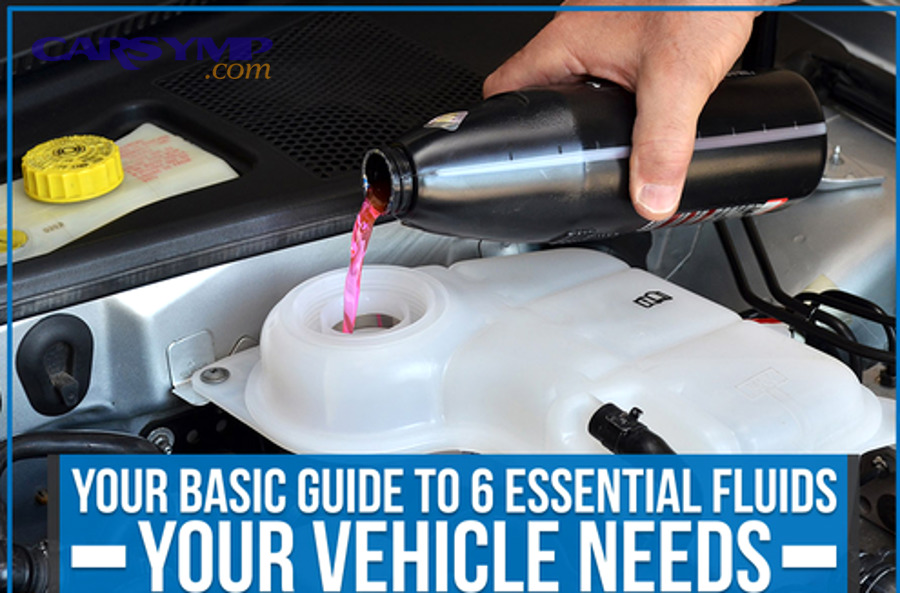
Topping off is safe when the level is slightly low and stable over time, but it’s a red flag when you need to add the same fluid repeatedly—because repeated loss usually means a leak, consumption, or internal contamination.
Specifically, these patterns matter:
- Engine oil: small consumption can be normal; rapid loss is not
- Coolant: repeat top-offs almost always indicate a leak
- Brake fluid: drop can reflect pad wear, but sudden drops indicate leaks (urgent)
What are signs fluid service is overdue?
Signs fluid service is overdue include changed color/clarity, burnt odor, sludge or particles, inconsistent levels, new noises, and performance changes—and the strongest signal is when symptoms appear together rather than alone.
More importantly, Signs fluid service is overdue often show up as “small annoyances” before they become failures.
Common overdue signals by system:
- Engine oil: noisy valvetrain, dirty oil quickly after change, sludge under cap
- Coolant: frequent overheating, heater weak, rusty residue, sweet smell
- Brake fluid: soft pedal, longer stopping distance, uneven braking feel
- Transmission fluid: harsh shifts, slipping, shudder, delayed engagement
- Power steering: whining, heavy steering, foamy fluid
What happens if you use the wrong fluid or mix incompatible fluids?
Using the wrong fluid or mixing incompatible fluids can cause seal damage, corrosion, deposits, foaming, incorrect friction behavior, and overheating—because each fluid is engineered with specific viscosity and additive chemistry for that system.
Meanwhile, “close enough” is rarely close enough for modern transmissions and cooling systems.
High-risk examples:
- Wrong ATF type → shift quality issues, clutch wear
- Mixing coolants without compatibility → deposits, reduced corrosion protection
- Wrong brake fluid type → seal compatibility issues and reduced safety margin
What does a proper fluid service include?
A proper fluid service includes checking the correct specification, inspecting for leaks, measuring level and condition, replacing fluid via the correct procedure (bleed, drain/fill, exchange, vacuum fill), and verifying operation afterward—so the system leaves with correct quantity and no trapped air.
Especially for brake and cooling systems, procedure matters as much as the fluid itself.
What “good service” looks like (system examples):
- Brake fluid service: flush/bleed until clean fluid exits each wheel and pedal feel is firm
- Coolant service: drain + refill with correct mix, purge air pockets, pressure test if needed
- Transmission fluid service: correct method (drain/fill vs pan/filter vs exchange) based on manufacturer guidance
According to a study by University of Žilina from Department of Road and Urban Transport, in 2025, researchers found that brake fluid sampled at the caliper could have a boiling point up to 20°C lower than reservoir fluid, and 28% of vehicles in their sample were unsatisfactory at at least one sampling point.
What are the most common mistakes when dealing with car fluids?
The most common car fluid mistakes are (1) using the wrong specification, (2) checking levels under the wrong conditions, and (3) ignoring repeat top-offs that signal leaks—because these errors create false confidence while damage accumulates.
Thus, the safest approach is to standardize your habits: verify spec, check correctly, and treat abnormal loss as a diagnosis problem—not a refill problem.
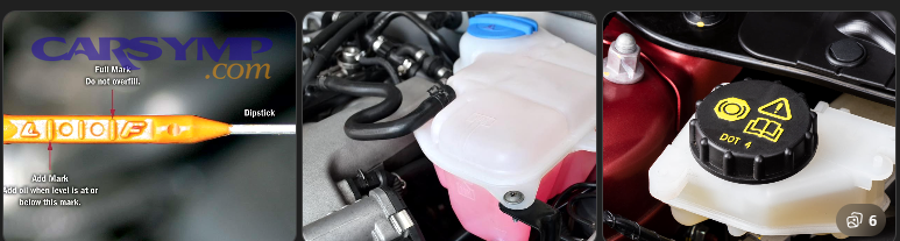
Mistake 1: Checking fluids at the wrong time (hot/cold/engine on/off)
This mistake happens because different fluids have different measurement states—oil needs drain-back time, coolant must be cold, and some ATF readings require the engine running—so one “universal method” doesn’t exist.
For example, opening a hot cooling system isn’t just inaccurate—it’s dangerous.
Fix: build a simple routine
- Oil: engine off, wait a few minutes
- Coolant: cold engine only
- Brake: any time, but keep dirt out
- ATF: follow your manual exactly (varies widely)
Mistake 2: Topping off without diagnosing the cause
This mistake is costly because fluids don’t “disappear” for no reason: they leak, burn, or mix—so topping off repeatedly can hide a failing hose, seal, radiator, or internal gasket.
More importantly, repeated low coolant or brake fluid should move you from “maintenance” to “inspection now.”
Mistake 3: Mixing fluids, brands, or “universal” products without confirmation
This mistake matters because the label “universal” often has caveats, and mixing can dilute additive packages or create compatibility issues in transmissions and cooling systems.
However, if you’re stranded and must add fluid, you still prioritize safety: add the safest acceptable option (per manual) and schedule a correct service afterward.
Mistake 4: Skipping intervals because the fluid “looks fine”
This mistake is common with brake fluid and coolant because they can degrade chemically without dramatic color changes, especially through moisture absorption and additive depletion.
In short, appearance is only one signal—service history and symptoms complete the picture.
According to a study by Czech University of Life Sciences Prague from Department of Chemistry, Food and Natural Resources, in 2020, researchers found that one tractor oil’s change interval could be extended to 900 operating hours under current conditions, while another oil’s interval was recommended to be shortened to 300 hours due to rapid degradation indicators.
Contextual border: Now that you understand the essential fluids, how to check them, and when service is overdue, the next section goes beyond the basics into fluid specifications and compatibility—useful when you’re choosing products or maintaining newer vehicles.
How do fluid specs and standards (DOT, Dexron, etc.) affect what you should use?
Fluid specs and standards affect what you should use because they define the fluid’s viscosity, boiling resistance, friction behavior, and compatibility with seals and metals—so the correct spec protects the system in ways “any fluid” cannot.
Next, a quick decoding of common labels will help you choose correctly without turning your maintenance into guesswork.
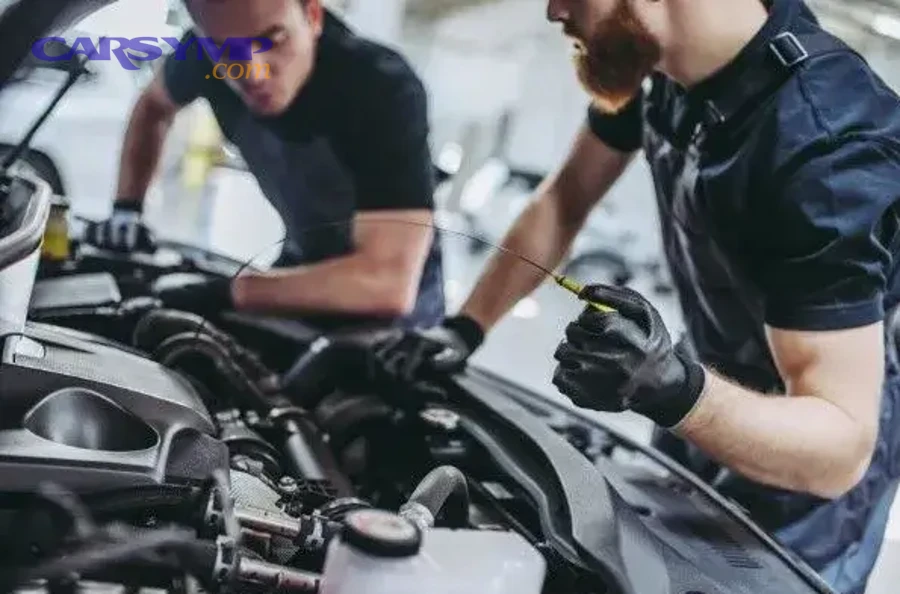
What does DOT mean for brake fluid, and how do DOT 3/4/5 differ?
DOT ratings describe performance requirements (not “quality levels”), especially boiling points and chemistry type, so DOT 3/4 (glycol-based) behave differently from DOT 5 (silicone-based).
However, many cars specify DOT 3 or DOT 4; DOT 5 is not a “better DOT 4,” and mixing silicone DOT 5 with glycol fluids is generally not acceptable.
Practical takeaway:
- Use the DOT type specified by your vehicle
- When in doubt, confirm in the manual or cap label—then service it correctly (bleeding matters)
What do Dexron/Mercon/ATF specs actually control?
ATF specifications control friction characteristics and hydraulic performance, so the transmission can shift smoothly without slipping, shuddering, or overheating.
More specifically, the wrong ATF can change how clutch packs engage, which is why “compatible” claims should be verified against your exact transmission requirement.
How do coolant types (IAT/OAT/HOAT) change compatibility?
Coolant types differ mainly in corrosion inhibitor chemistry, so mixing incompatible coolants can reduce protection or create deposits—even if freeze protection seems fine.
Thus, the safest choice is to match your manufacturer’s coolant type and perform a proper service if you need to change chemistry families.
Is “universal fluid” marketing reliable?
Universal fluid marketing can be reliable only when it explicitly lists your required specification and the manufacturer’s approvals; otherwise, it’s a risk—because standards and approvals are the real compatibility signal, not the word “universal.”
In addition, if your vehicle is newer or has a sealed transmission, it’s wise to prioritize OEM-approved fluids over broad-claim products.