


A clogged heater core usually shows up as weak, inconsistent, or no cabin heat even when the engine is fully warm, because restricted coolant flow prevents the heater core from transferring enough heat into the HVAC air stream. The fastest confirmation is a heater-hose temperature check: the inlet hose is hot, while the outlet hose is noticeably cooler when the heater is commanded on.
Next, you’ll want to understand what “clogged” actually means inside the cooling system—how deposits, sludge, or gel-like precipitation reduce flow through the heater core passages and why the symptoms often worsen gradually rather than failing all at once.
Then, you’ll need a simple way to separate heater-core blockage from other no-heat causes, such as low coolant, air trapped after service, a blend door problem, or classic Thermostat stuck open symptoms that keep the entire engine from warming up properly.
Introduce a new idea: once you can recognize the symptom pattern, confirm it with a safe hose-temperature test, and rule out look-alike faults, you’ll have a clear diagnosis—and you’ll know what to do next without guessing.
What does “clogged heater core” mean in a car’s heating system?
A clogged heater core is a coolant-to-air heat exchanger with restricted internal flow (usually from deposits or gel-like contamination) that prevents hot engine coolant from circulating through the core fast enough to deliver steady cabin heat.
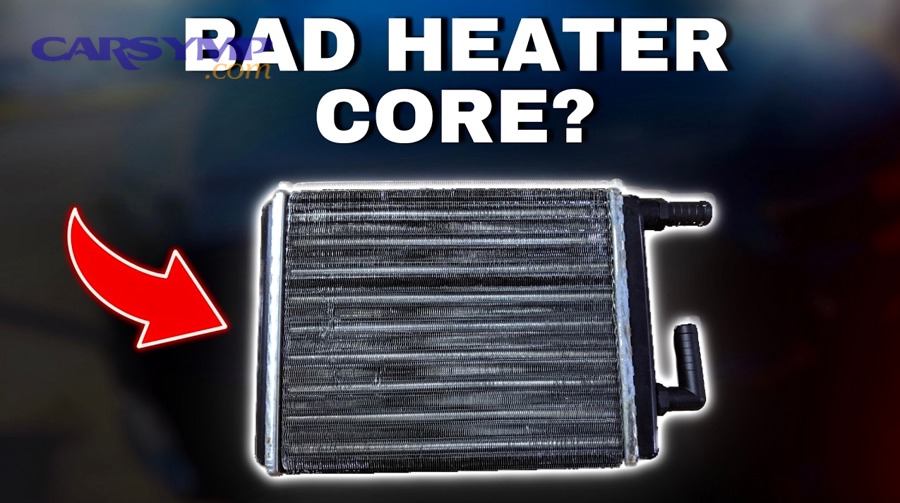
To better understand why this matters, start by picturing the heater core as a small radiator behind the dash: airflow passes across it, and heat moves from coolant to air.
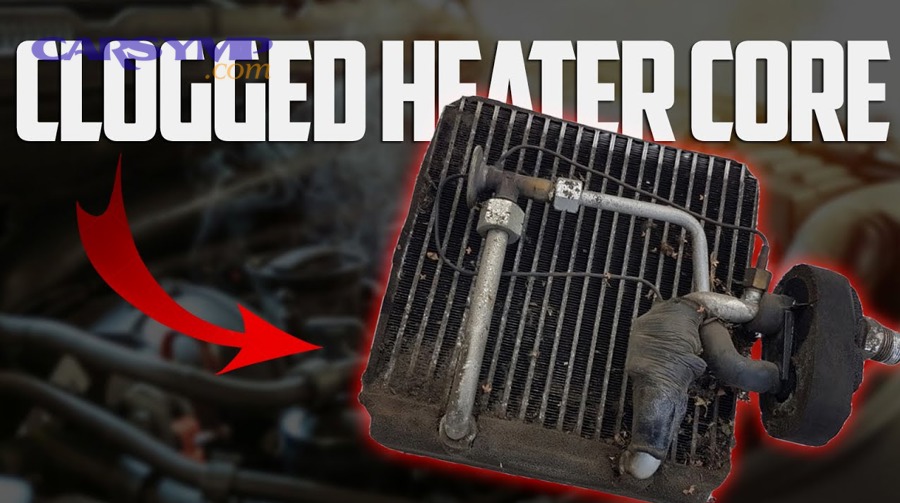
The heater core sits on a branch of the cooling system. When you turn the heat on, the HVAC system directs air across the heater core, and the engine’s hot coolant provides the energy that warms that air. If coolant flow through the core is restricted, the HVAC may still blow air, but the air won’t be warm enough—especially at idle, in very cold weather, or when the engine load is low.
A “clog” is rarely a single solid plug like a cork. In real cars, “clogged” usually means narrowed passages. Modern heater cores use thin tubes and fine internal structure to maximize heat exchange. That design is efficient—but it also makes the core sensitive to contamination. Even a partial restriction can create big comfort problems because cabin heating needs stable flow to maintain vent temperature.
What causes a heater-core blockage (sludge, corrosion, stop-leak, mixed coolants)?
There are 6 common causes of heater-core blockage: (1) degraded coolant inhibitors, (2) mixed/incompatible coolants, (3) corrosion products, (4) hard-water mineral scale, (5) stop-leak residues, and (6) oil/transmission-fluid contamination—all of which can create deposits that narrow heater-core passages.
Next, let’s explore what each cause looks like in practice and why it changes symptom timing.
- Incompatible coolant mixing: Additive packages can destabilize and form sludge/gel. This is one of the most common “mystery clog” stories after a top-off with the wrong coolant type.
- Silicate gel / “dropout” behavior in some coolant chemistries: Silicate-containing systems can form gel-like precipitates under certain conditions, which can block narrow passages (including heater cores).
- Corrosion and rust debris: Old coolant that’s lost its protective chemistry can allow corrosion, creating reddish-brown deposits that travel and settle in small passages.
- Hard-water scale: Topping off repeatedly with tap water can add minerals that precipitate under heat.
- Stop-leak products: Some sealants can create clumps or films in tight heat exchangers.
- Cross-contamination (oil/coolant or transmission-cooler failure): Emulsions and sludge can form and circulate.
According to a study by Universiti Malaysia Sarawak from the Faculty of Resource Science & Technology, in 2025, researchers found silicate dropout behavior in ethylene-glycol coolant systems and noted that gel formation can reduce cooling-system efficiency and contribute to blockages, with dropout observed under specific concentration/temperature conditions.
Can a heater core be “partially clogged,” and what does that feel like?
Yes, a heater core can be partially clogged, and it typically feels like heat that’s weak, delayed, RPM-dependent, or inconsistent rather than completely absent.
Then, because partial restrictions still allow some flow, the symptoms often show up as “the heater not working… but sometimes it works.” That inconsistency is a hallmark of restricted flow rather than an all-or-nothing electrical failure.
- Slow warm-up at the vents even after the engine is up to temperature
- Warm air when cruising but cooler air at idle
- Heat that improves when revving slightly (increased pump speed increases flow)
- Uneven heat left vs right in some HVAC layouts
- Intermittent temperature swings as debris shifts and flow changes
What are the most common clogged heater core symptoms you can notice while driving?
There are 7 main clogged heater core symptoms drivers notice: (1) weak/no heat, (2) heat that’s better while driving than at idle, (3) heat that changes with RPM, (4) poor defrost performance, (5) temperature that fluctuates, (6) left-right temperature imbalance, and (7) evidence of cooling-system contamination—all based on the criterion of how vent temperature behaves under normal use.
Moreover, these symptoms matter because they guide you toward a quick confirmation test instead of replacing parts blindly.
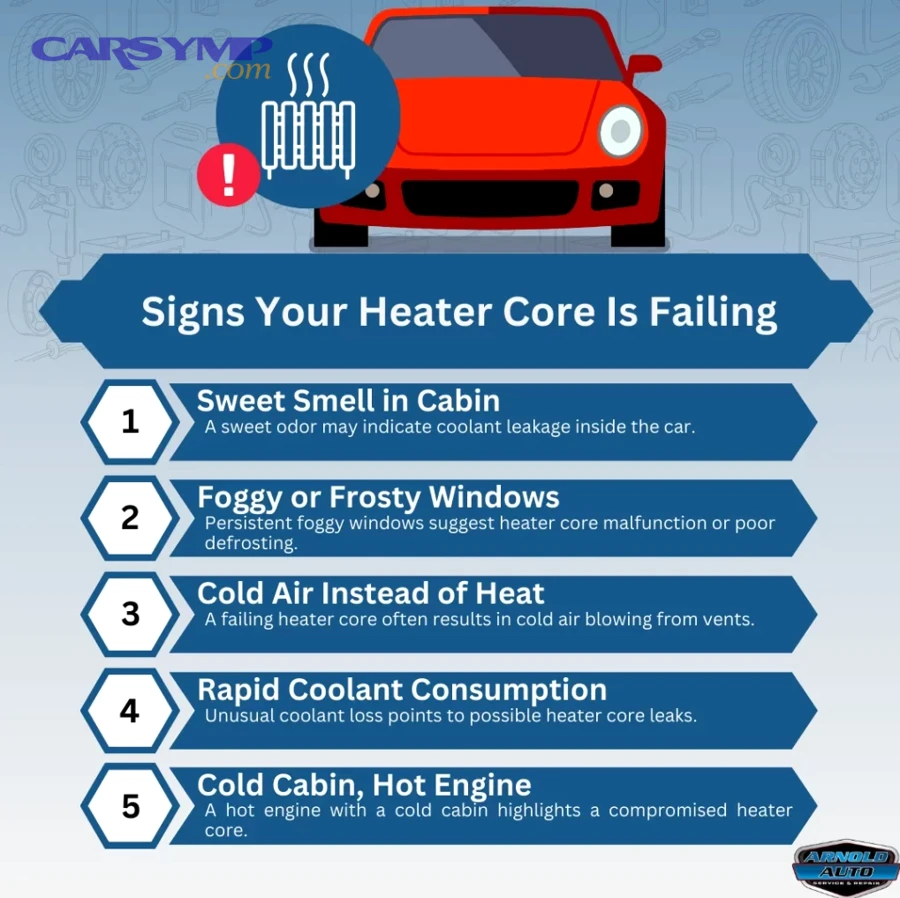
A key point: many heater issues feel the same at first (“no hot air”), but clogged-core symptoms have a pattern. The pattern is about flow sensitivity—idle versus cruise, low pump speed versus high pump speed, and steady heat demand versus changing demand.
Is weak or no heat from the vents the #1 symptom of a clogged heater core?
Yes—weak or no heat is the #1 clogged heater core symptom because restricted coolant flow limits heat transfer, the heater core cannot stay hot under airflow, and vent temperature drops most under high fan speed.
However, weak heat alone doesn’t prove a clog; it simply puts heater-core restriction high on the suspect list.
- Fan speed makes it worse: Higher fan speed blows more air across the core; if the core can’t stay hot, vent temps drop.
- Temperature knob is maxed but output is lukewarm: The HVAC is requesting heat, but the energy supply (hot coolant flow) is insufficient.
- It worsens gradually over weeks/months: Many clogs build slowly.
Why does heat get warmer while driving but cooler at idle with a clogged heater core?
Heat gets warmer while driving but cooler at idle because engine RPM and coolant circulation increase in motion, which can push enough coolant through a restricted heater core to raise its temperature—while at idle, reduced pump flow can’t overcome the restriction.
Specifically, a clogged heater core behaves like a “flow bottleneck”: it might pass a little coolant, but not enough at low pressure/low pump speed.
- Stoplight = temperature drop at the vents
- Back on the highway = warmer air
- A small throttle blip = short-term heat boost (more pump output)
Can a clogged heater core cause poor defrost performance or slow windshield clearing?
Yes, a clogged heater core can cause poor defrost performance because defrost needs sustained warm, dry airflow, restricted coolant flow reduces vent temperature, and cooler air holds less moisture-removal capacity, slowing the clearing of fog or frost.
In addition, poor defrost is a safety issue, not just a comfort issue.
- Windshield clears slowly even with defrost on max heat
- Defrost seems to work only while driving
- Cabin feels damp and cold because heat output is weak
Can you get different temperatures on driver vs passenger side with a clogged core?
Yes, you can get different temperatures side-to-side because partial restriction can create uneven heater-core temperature, some HVAC boxes draw air unevenly across the core, and dual-zone systems may amplify small differences into noticeable left-right mismatches.
Especially in dual-zone vehicles, drivers often report “driver side warm, passenger side cold.”
How do “hot vs cold heater hoses” confirm heater-core blockage fast?
Hot-vs-cold heater hoses confirm heater-core blockage because a restricted heater core creates a temperature drop across the core, so the inlet hose stays hot while the outlet hose runs noticeably cooler, especially with the heater on and the engine at operating temperature.
Next, we’ll turn this into a safe, quick diagnostic you can do in minutes.
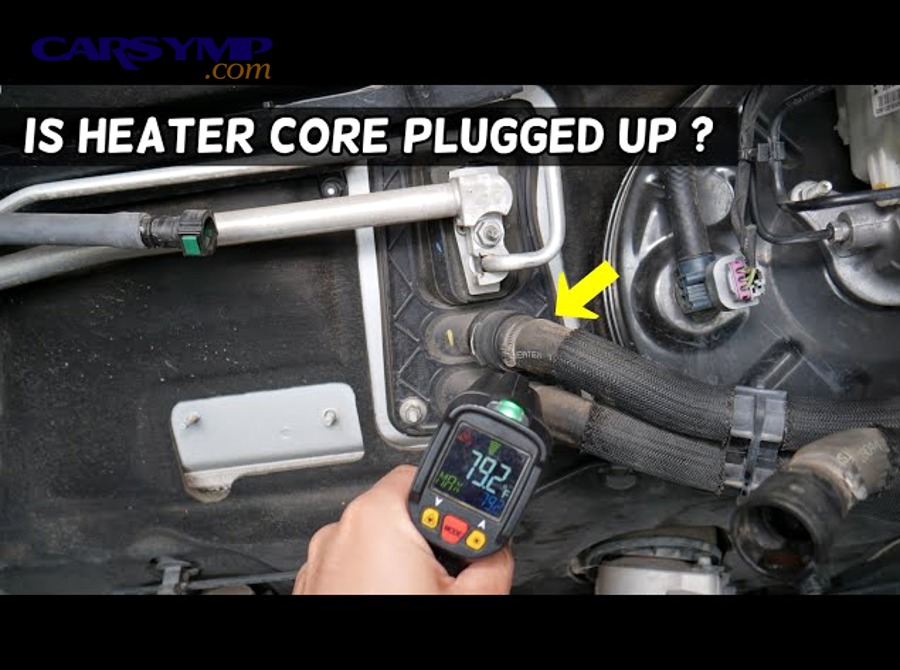
Should both heater hoses be hot when the engine is warm and the heater is on?
Yes—both heater hoses should be hot when the engine is fully warm and the heater is calling for heat because coolant should circulate through the heater core, the core should pass flow freely, and only a small temperature drop is normal across the core.
However, “hot” doesn’t always mean “identical.” A small difference is normal because the heater core is doing work—transferring heat to cabin air.
- Normal: Inlet hot, outlet slightly less hot
- Suspicious: Inlet hot, outlet notably warm/cool
- Strong restriction clue: Inlet hot, outlet cool/cold
What does “one heater hose hot, the other cool/cold” indicate?
“One hose hot, the other cool/cold” indicates a restriction in heater-core flow because hot coolant reaches the core inlet, but limited circulation prevents heat from carrying through the core to the outlet side.
Then, the bigger the temperature difference, the more likely the restriction is severe or the flow is extremely low.
What temperature difference suggests restriction (by touch vs IR thermometer)?
A heater-core restriction is suggested when the outlet hose is clearly cooler than the inlet under steady conditions, and an IR thermometer helps you quantify that difference more consistently than touch alone.
Meanwhile, “touch testing” can still work if done carefully because you’re looking for a large difference, not a minor one.

According to a study by Universiti Malaysia Sarawak from the Faculty of Resource Science & Technology, in 2025, researchers documented silicate gel formation in coolant chemistry that can contribute to blockages in cooling passages; this supports why temperature-drop diagnostics matter when flow is reduced through narrow heat exchangers like heater cores.
How do you avoid burns and false readings during the heater-hose test?
To avoid burns and false readings, keep the system closed, test only after the engine stabilizes at operating temperature, and measure both hoses under the same heater settings—because inconsistent conditions are the #1 way people misread hose tests.
- Safety: Keep hands away from belts/fans, do not open the radiator cap hot, and wear gloves.
- Accuracy: Set HVAC to max heat, medium fan, wait for stable temperature, and compare hoses at the firewall.
Is it definitely a clogged heater core—or could it be another “no heat” problem?
A clogged heater core is the best fit when hose temperatures show a large inlet-to-outlet drop, while other no-heat problems tend to show both hoses cool, both hoses hot with cold vents, or engine temperature behavior that points elsewhere.
However, the safest diagnosis comes from comparing symptoms across the most common look-alikes.

How are clogged heater core symptoms different from low coolant or air in the cooling system?
Clogged heater core symptoms differ from low coolant/air because a clog usually produces a stable inlet-hot/outlet-cool pattern, while low coolant or trapped air often produces intermittent heat, gurgling sounds, fluctuating vent temps, and sometimes engine temperature instability.
How are clogged heater core symptoms different from a thermostat stuck open?
A clogged heater core is different from a thermostat stuck open because a stuck-open thermostat typically causes the entire engine to run too cool, producing slow warm-up and lukewarm heat overall, while a clogged heater core can occur even when the engine reaches normal temperature.
Thermostat stuck open symptoms often include a low temperature gauge, long warm-up time, and consistently weak heat across driving conditions.
How do you separate a heater-core clog from a blend door/actuator issue?
A heater-core clog differs from a blend door issue because a clog limits heat supply (coolant heat in the core), while a blend door issue limits heat delivery (air routing across the core)—so you can see it in hose temperatures.
More importantly, a blend door fault often produces hot heater hoses but cold vents.
Can a failing water pump mimic a heater-core clog?
Yes, a failing water pump can mimic a heater-core clog because both reduce coolant circulation, both can cause heat that changes with RPM, and both can create temperature instability under load—but a pump problem is more likely to also affect overall engine cooling.
What quick checks can you do before going to a mechanic—and what results mean “stop driving”?
You can do 5 quick checks—coolant level, hose temperatures, vent temperature behavior, visible leaks, and engine temperature stability—to identify a clogged heater core pattern and know when the problem is urgent.
Then, if any “stop driving” signs appear, you protect the engine first and diagnose later.
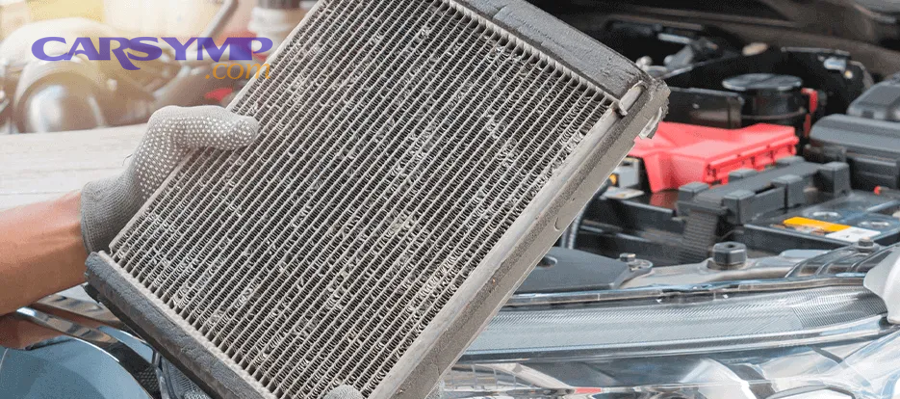
Which DIY checks take under 10 minutes (coolant level, hose temps, vent temp, leaks)?
There are 4 under-10-minute DIY checks for clogged heater-core suspicion—coolant level, heater-hose temperature delta, vent temperature pattern, and visible leak check—based on the criterion of maximum information with minimum tools.
Does a clogged heater core usually cause engine overheating?
No, a clogged heater core does not usually cause engine overheating by itself because the radiator is still the primary heat exchanger, the heater core is a smaller parallel branch, and many engines can regulate temperature without relying on cabin heat.
However, overheating becomes possible when the clog is a symptom of system-wide contamination, a failing pump, a bad cap, or low coolant.
According to a study by Universiti Malaysia Sarawak from the Faculty of Resource Science & Technology, in 2025, silicate gel formation in coolant systems was shown to create precipitates under certain conditions; gel and deposits can restrict passages and reduce system efficiency, which helps explain why a heater core may lose performance before more dramatic overheating occurs.
When should you stop driving and get immediate service?
Yes—you should stop driving and get immediate service if the engine overheats, coolant level drops rapidly, or steam/sweet smell/fogging indicates a serious cooling-system problem, because these conditions risk engine damage and unsafe driving visibility.
- Temperature gauge spikes toward hot or warning light comes on
- Steam from the engine bay
- Coolant pouring or dripping steadily
- Persistent sweet smell with heavy windshield fogging
- Cabin carpet soaked (possible heater-core leak) plus rising engine temperature
What should you do after confirming a clogged heater core (flush vs replace vs prevent it)?
A clogged heater core is best addressed by choosing the right fix for your restriction severity: flushing/backflushing for mild-to-moderate deposits, replacement for severe or recurring blockage, and coolant-system cleanup/prevention to keep the new or restored core from clogging again.
Next, we’ll cover Quick temporary fixes and what not to do so you don’t turn a comfort issue into a major cooling-system repair.
Should you flush/backflush a clogged heater core or replace it?
Flushing wins for mild-to-moderate restriction, replacing is best for severe restriction or repeat clogs, and a full-system clean is optimal for contamination-driven clogs—because each option wins under a different criterion: cost, reliability, and root-cause control.
| Situation you observe | Best-first move | Why it fits |
|---|---|---|
| Heat is weak but improves a lot with RPM; outlet hose is warm, not cold | Backflush | Likely partial restriction; flow can sometimes be restored |
| Outlet hose stays cold; heat barely changes with RPM | Consider replacement (or professional flush + inspection) | Restriction may be severe or packed with debris |
| Heat improved after a flush but returned quickly | System contamination diagnosis + deeper cleanup | The core is re-clogging due to upstream sludge |
| Coolant is visibly rusty/muddy or there’s stop-leak history | Full cooling-system service before/with core work | Prevents immediate re-clogging |
Can chemical flushes fix a blockage—or can they make things worse?
Yes, chemical flushes can fix some blockages, but they can also make things worse because chemicals may loosen debris that migrates, they can expose weakened seals or thin metal, and improper neutralization can accelerate corrosion.
Meanwhile, many viral “miracle” methods skip the most important step: restoring correct coolant chemistry afterward.
Quick temporary fixes and what not to do (this matters if you’re trying to get through a cold week before a proper repair):
- What can be reasonable short-term (with caution): Gentle backflush with clean water at low pressure; refill with the correct coolant mix after proper bleeding (or professional service).
- What not to do: Do not over-pressurize the heater core with shop air or high-pressure water; do not pour random acids/cleaners without compatibility knowledge; do not keep adding stop-leak to “fix” heat; do not mix coolants because it’s “close enough.”
According to a study by Universiti Malaysia Sarawak from the Faculty of Resource Science & Technology, in 2025, silicate precipitation behavior was documented under certain concentration/temperature conditions; this supports why chemical and concentration changes can contribute to gel formation and blockage risk if coolant chemistry is mishandled.
What maintenance prevents heater-core blockage (coolant type, change interval, contamination control)?
There are 5 main maintenance actions that prevent heater-core blockage: (1) use the OEM-specified coolant type, (2) avoid mixing coolant chemistries, (3) maintain correct concentration, (4) change coolant on schedule, and (5) keep the system clean and sealed—based on the criterion of preventing deposits before they start.
- Use the correct coolant spec (not just the same color).
- Use distilled water if mixing concentrate.
- Avoid repeatedly topping off with water (concentration swings can destabilize additives).
- Fix small leaks early to avoid running low and introducing air.
- Address contamination sources (oil cooler/trans cooler failures, neglected coolant).
Why does a heater core clog come back after a flush (rare relapse patterns)?
A heater core clog comes back after a flush when the cooling system still contains upstream contamination, deposits continue shedding from the radiator/engine passages, or coolant chemistry remains unstable, so the “cleaned” heater core gets re-fed with the same clog-forming material.
Thus, relapse is usually a root-cause problem, not “bad luck.”
- Rusty system: You flush the core, but corrosion debris keeps circulating.
- Stop-leak residue: The core clears temporarily, then residue re-accumulates.
- Incompatible coolant history: Additives continue reacting; sludge returns.
- Air pocket behavior: Poor bleeding after service traps air; heat becomes inconsistent; people misinterpret it as a “re-clog.”
Evidence (summary)
- A 2025 paper from Universiti Malaysia Sarawak (Faculty of Resource Science & Technology) documented silicate dropout behavior and noted that gel-like precipitation can reduce efficiency and contribute to blockages in cooling passages such as cabin heater circuits.
- Automotive troubleshooting guidance notes that a hot inlet heater hose paired with a cold outlet hose indicates restriction through the heater core under heat demand.