


If your car suddenly develops a loud exhaust, persistent rattling, or an exhaust smell that wasn’t there before, you can usually identify muffler failure by combining three simple signals: how the noise changed, where it seems to come from, and what you can see underneath. This guide helps you recognize the most reliable muffler failure symptoms and connect them to likely causes—without guessing blindly.
Next, you’ll learn why these symptoms happen in the first place (rust-through, broken seams, loose baffles, failing hangers), so you can tell the difference between “normal old-car loud” and “something is actively failing.” That clarity matters because some problems are annoying but not urgent, while others can create a safety risk.
Then, we’ll move from symptoms to decisions: what you can check safely at home, what details to tell a technician, and how to think about repair vs replacement when the system is corroded or damaged. That decision becomes easier when you can describe the symptom precisely.
Introduce a new idea: the fastest way to avoid misdiagnosis is to treat “muffler” as part of the whole exhaust system—so we’ll also compare muffler failure symptoms to catalytic converter, manifold, and heat-shield issues to keep your next step accurate.
What are muffler failure symptoms and why do they happen?
Muffler failure symptoms are changes in exhaust noise, vibration, smell, and visible condition that occur when the exhaust silencer’s shell, seams, hangers, or internal baffles degrade from heat cycles, corrosion, or impact damage. Specifically, the muffler stops containing and tuning sound, and it may leak or rattle.
The problem is that many drivers treat every exhaust issue as “the muffler,” so the symptoms feel confusing at first; however, once you connect each symptom to a failure mode (hole vs loose baffle vs sagging hanger), the diagnosis becomes far more consistent.
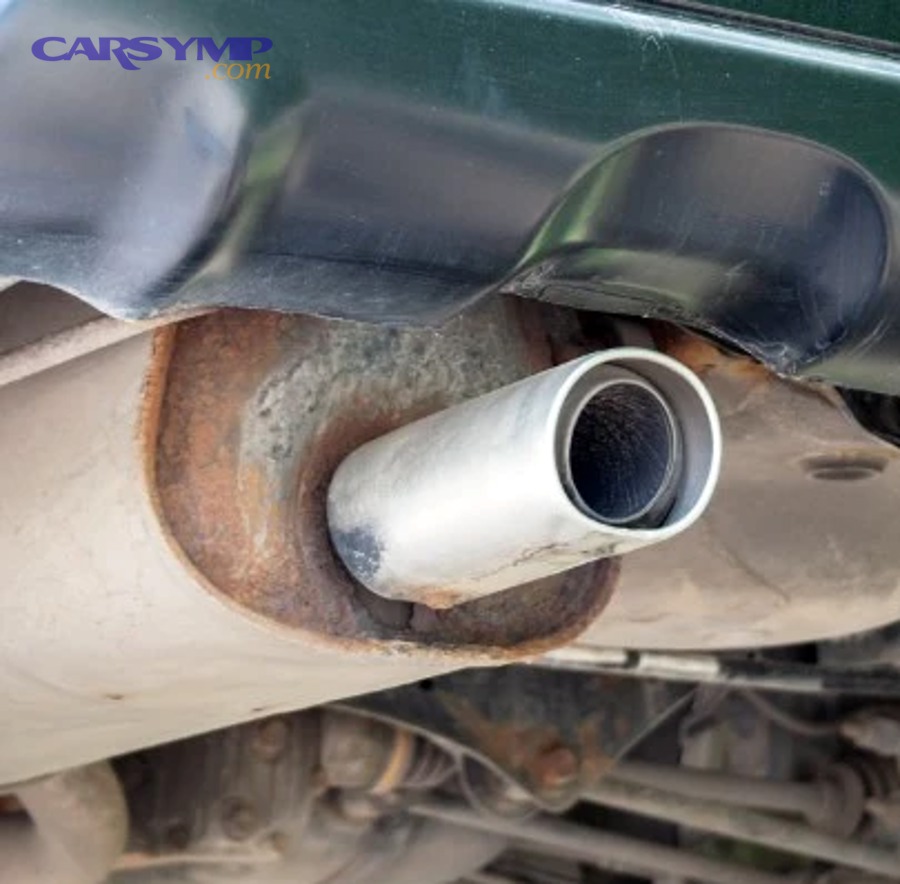
What does a “bad muffler” mean vs a general exhaust leak?
A “bad muffler” usually means the muffler canister itself has failed—through rust holes, cracked seams, broken internal baffles, or detached joints—while a general exhaust leak can occur anywhere from the engine-side manifold to the mid-pipe to the rear connections.
More importantly, the location changes the symptom pattern:
- A muffler leak often produces a deeper roar/rumble that seems to come from the rear half of the vehicle.
- An upstream leak (near the engine) often produces a sharper ticking or “puffing” sound that’s more noticeable near the front and may change with engine load.
That distinction matters because the same “it’s louder” complaint can lead to different repairs, different costs, and different urgency.
What causes mufflers to fail—rust, road salt, impact, or internal baffle damage?
There are 4 main causes of muffler failure: corrosion, heat-cycle fatigue, impact damage, and internal baffle breakdown, based on what part fails first.
- Corrosion (external + internal): Road moisture, salt, and trapped debris corrode the shell and seams. Chloride-containing de-icing salts accelerate external corrosion on exhaust components in cold climates. (saimm.org.za)
- Heat-cycle fatigue: Exhaust parts expand and contract repeatedly. Over time, welds and seams can weaken and crack.
- Impact damage: A curb strike or road debris can dent the muffler, crack a seam, or bend a pipe so a joint no longer seals.
- Internal baffle breakdown: The muffler’s internal chambers can loosen, break, or detach, creating a rattle even if the outside looks intact.
According to a study by the Southern African Institute of Mining and Metallurgy (Journal publication), in 2003, chloride-containing de-icing salts were described as a major factor that can greatly increase corrosion in exhaust systems in colder countries. (saimm.org.za)
Is a loud exhaust a sign of muffler failure?
Yes—a loud exhaust is a classic muffler failure symptom because (1) holes and seam cracks let sound escape before it’s dampened, (2) detached internal baffles stop canceling sound frequencies, and (3) loose joints change backpressure and resonance, making the entire system sound harsher.
So the key is not just “is it loud,” but how it became loud, because the pattern points to the cause.

What warning noises point specifically to muffler failure (roar, rumble, drone)?
There are 3 common muffler-related noise types—roar/rumble, rattle-clunk, and drone—based on what’s failing.
- Roar or low rumble (especially under acceleration):
This often suggests a hole, split seam, or failed joint that’s letting high-energy exhaust pulses escape. It typically sounds “bigger” and lower than an engine-bay leak. - Deep metallic rattle or clunk (often at idle or when blipping the throttle):
This points toward internal baffle damage or a muffler that’s contacting the underbody due to hanger failure. - Drone (steady booming at certain speeds/RPM):
Drone can happen with leaks, but it also happens when muffler internals no longer control specific frequencies, turning the cabin into a resonant chamber.
A useful mental shortcut: roar = escape, rattle = loose, drone = resonance.
How can you tell where the noise is coming from (rear muffler vs mid-pipe vs engine bay)?
You can usually localize exhaust noise using three safe cues: position, tone, and temperature timing.
- Position: Stand beside the car (not behind the tailpipe) and listen from front to rear. Rear failures often sound loudest near the back quarter.
- Tone: Muffler leaks are typically lower and boomier; engine-side leaks are often sharper and tick-like.
- Timing: If it’s loudest on cold start and then quiets slightly as metal expands, that can indicate a leak at a joint or upstream area. Muffler holes often stay loud regardless of temperature.
If you want a quick demonstration of how noise changes with different exhaust failures, one helpful approach is watching side-by-side examples:
Does rattling or vibration mean the muffler is failing?
Yes—rattling or vibration often indicates muffler trouble because (1) broken baffles can shake inside the canister, (2) failing hangers let the exhaust strike the chassis, and (3) cracked welds create movement at joints that should be rigid.
That said, a rattle is also the #1 reason people replace the muffler when the real culprit is a heat shield, so there’s value in comparing the sound character before you spend money.
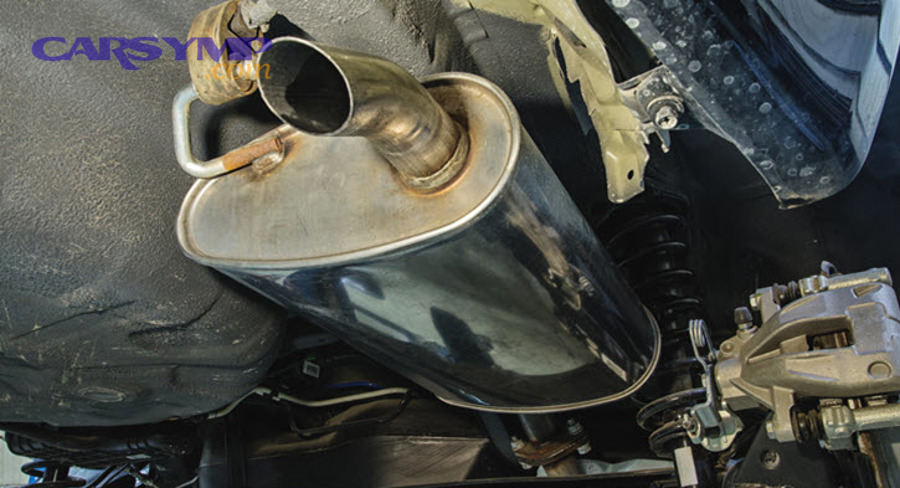
What does an internal baffle rattle sound like compared to a loose heat shield?
An internal baffle rattle tends to sound deeper and more “inside-the-can”, while a heat shield rattle is often tinny, buzzy, and sheet-metal-like.
Use these practical cues:
- Internal baffle rattle:
- Often heard at idle and when you tap the throttle lightly
- Sounds like a metal piece bouncing inside a container
- Can persist even when the vehicle is stationary
- Heat shield rattle:
- Often appears at a specific RPM range (like 1,800–2,500 RPM)
- Sounds like a rapid buzz
- May change dramatically when you shift load (e.g., in gear vs neutral)
If the rattle is very RPM-specific, suspect a shield or bracket first.
Which mounting/hanger failures cause exhaust vibration and clunking?
Hanger and mount issues usually create vibration because the exhaust system loses its designed “floating” support. Common failures include:
- Torn rubber hanger: lets the muffler sag and tap the underbody over bumps
- Broken bracket weld: makes the system pivot, causing clunks during acceleration/deceleration transitions
- Misaligned pipe after impact: creates a constant contact point that buzzes at certain speeds
A quick self-check is to look for a tailpipe that sits lower than usual or appears off-center in the bumper cutout—both can indicate a sagging system.
Can a failing muffler cause exhaust smell or fumes in the cabin?
Yes—a failing muffler (or any exhaust leak) can lead to exhaust smell or fumes because (1) leaking exhaust can collect under the vehicle and be drawn into the HVAC intake, (2) the cabin isn’t perfectly sealed, and (3) idling or slow traffic reduces airflow that normally carries exhaust away.
Because this symptom can shift from “annoying” to “dangerous,” it deserves a careful, direct response.
What does exhaust smell inside the car usually indicate (leak location and airflow)?
Exhaust smell inside the cabin often indicates a leak that’s close enough to the body openings for fumes to enter—especially around the floor area, trunk seals, or HVAC intake.
Practical patterns help:
- Smell strongest at idle: exhaust is pooling under/around the car, then drifting inside.
- Smell stronger with heater/defrost on: airflow may be drawing in contaminated air near the intake area.
- Smell stronger with windows open: turbulent airflow can pull exhaust forward and into the cabin under certain conditions.
The CDC explicitly warns that a small leak in a vehicle exhaust system can lead to a buildup of carbon monoxide (CO) inside the car. (cdc.gov)
When should you stop driving and get the car checked immediately?
You should stop driving and get the vehicle checked immediately if any of the following are true:
- You smell exhaust inside the cabin consistently, especially with HVAC on.
- You experience symptoms like headache, dizziness, nausea, or unusual fatigue while driving.
- The exhaust becomes suddenly much louder and you also notice smell or visible fumes.
According to a study by University of Auckland researchers from a population health and environmental monitoring context, in 2018, an in-vehicle monitoring experiment reported an isolated peak event reaching 170 ppm of carbon monoxide under certain real-world conditions. (mdpi.com)
What visual signs confirm a muffler is failing?
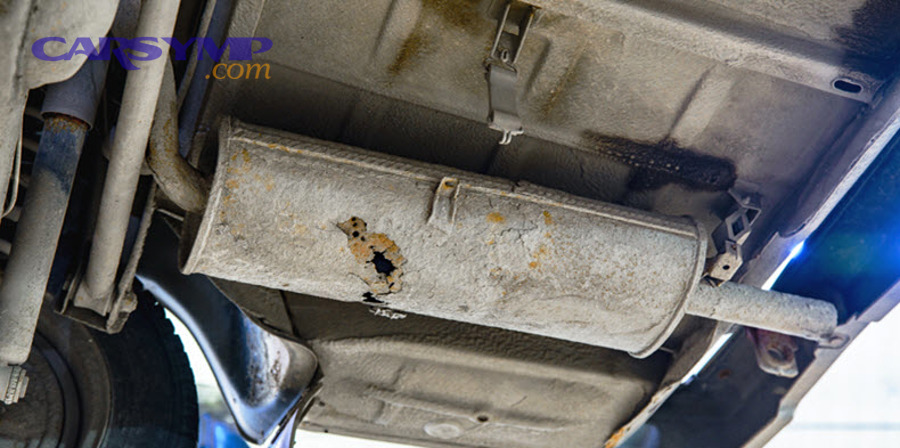
There are 5 visual signs that commonly confirm muffler failure: rust perforation, cracked seams, soot trails, hanging/sagging hardware, and damaged joints/clamps, based on whether the muffler is leaking, separating, or collapsing internally.
To keep the check safe, do it with the car parked, engine off, and exhaust cooled—burns happen quickly around exhaust components.
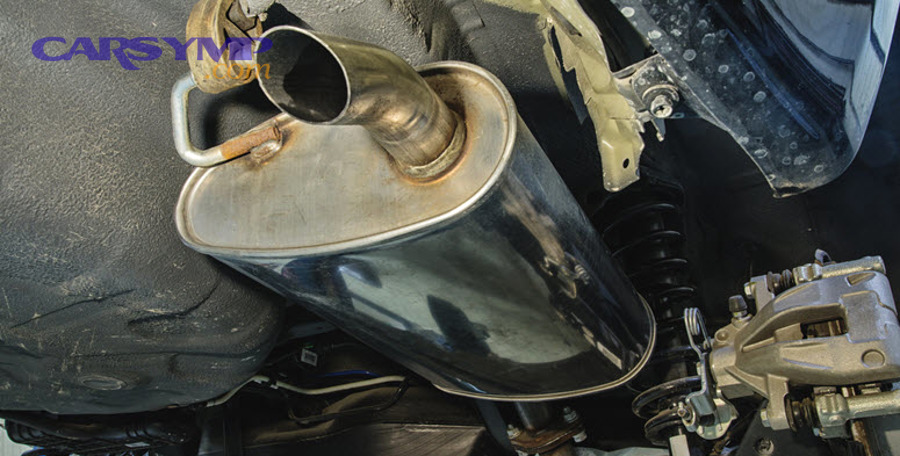
Are small water drips from the tailpipe normal—or a muffler problem?
Yes, small water drips from the tailpipe can be normal because (1) combustion produces water vapor, (2) that vapor condenses in the exhaust as it cools, and (3) it often exits as water droplets during warm-up—especially in cold weather.
However, water dripping from the muffler body or seams can be a problem if it’s paired with rust, soot, or visible perforation. Here’s the practical distinction:
- Normal: clear water at the tailpipe during warm-up, then it reduces.
- Suspicious: water dripping from the muffler canister or mid-joint, plus rust flakes or black residue near the drip point.
What does black soot around joints or the muffler body mean?
Black soot near a joint or seam usually means exhaust gas is escaping there, because the soot particles deposit around the leak path—especially after repeated heat cycles.
What to look for:
- A dark ring around a clamp connection
- A streak along a seam
- Soot plus rust bubbles (often a sign the metal is thinning)
This is where Rusted muffler inspection and leak checks become practical: soot tells you where to focus, and rust tells you why that spot failed.
Can muffler failure affect fuel economy or engine performance?
Yes, sometimes—muffler failure can affect fuel economy or performance because (1) leaks can change exhaust scavenging and how the engine breathes, (2) altered flow can shift how the car sounds and feels under load, and (3) drivers often compensate by changing throttle input, which increases fuel use.
Still, the biggest performance swings are more often caused by upstream exhaust leaks or engine issues, so this section helps you avoid attributing every drivability symptom to the muffler.

Which performance symptoms are more likely exhaust leaks upstream—not muffler failure?
Performance symptoms are more likely upstream-related when you see combinations like:
- Ticking near the engine bay plus acceleration-dependent sound changes
- Check engine light (depending on the leak location and sensor readings)
- Stronger exhaust odor in the cabin (front leaks are more likely to enter through HVAC intake regions)
- Noticeable loss of power or rough running that doesn’t match a simple “louder only” scenario
In other words, muffler failure is often noise-first, while upstream problems can be performance-first.
Can a bad muffler cause backfiring or popping noises?
Yes—a bad muffler can contribute to popping noises because (1) leaks allow oxygen to enter the exhaust stream, (2) that oxygen can ignite unburned fuel in the exhaust, and (3) damaged internals can amplify the sound of normal decel crackle into something that seems like backfiring.
To interpret what you hear:
- Light popping on deceleration: can be leak-related, especially with modified exhausts.
- Loud bang + drivability issues: more likely an engine fueling/ignition problem than a muffler-only issue.
And if you’re considering modifications, Aftermarket muffler sound level legality becomes relevant—some “popping” and high-volume setups can cross local noise limits even when mechanically “fine.”
According to a study by researchers published on ScienceDirect, in 2024, redesigned mufflers reduced sound pressure level and improved transmission loss compared to a default muffler, showing how strongly muffler design affects perceived noise. (sciencedirect.com)
What should you do if you suspect muffler failure?
If you suspect muffler failure, the best approach is a simple 4-step process—listen for pattern changes, localize the noise, check for obvious rust/leaks safely, and then decide between repair or muffler replacement based on severity and system age.
To keep your next step efficient, you want to convert “it sounds weird” into a clean symptom description a shop can act on.
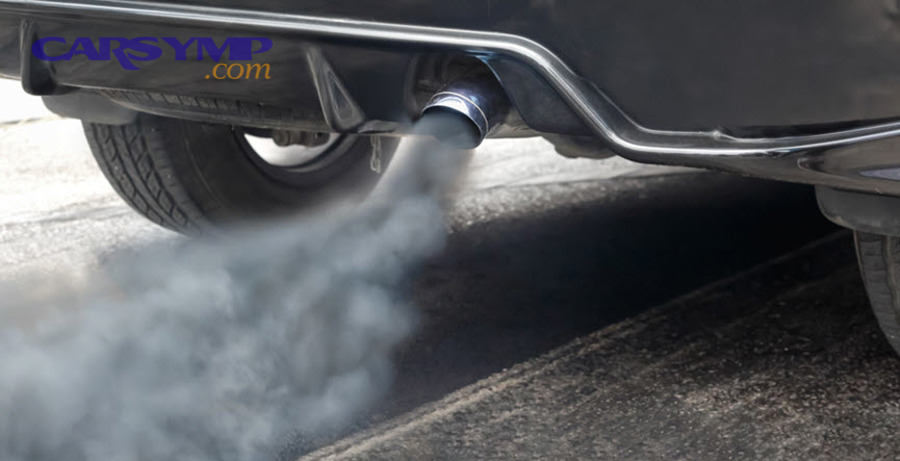
How can you do a quick, safe driveway check without tools?
You can do a driveway check safely by focusing on look, listen, and smell—without crawling under a hot car.
- Cold start listen (30–60 seconds): note whether the sound is roar, tick, or rattle.
- Walk-around localization: listen near the rear and midsection, then near the engine bay (from a safe distance).
- Visual scan from the side: look for sagging exhaust, rust flakes, soot streaks, or a muffler that looks “swollen” or separated at seams.
- Smell check (cab + outside): if smell is in the cabin, treat it as urgent.
Avoid “hand-over-tailpipe” tests and avoid running the car in enclosed spaces. The CDC advises against running a vehicle in an attached garage and notes that even small exhaust leaks can lead to CO buildup inside cars. (cdc.gov)
Is it better to repair or replace a muffler—and what factors decide?
Muffler repair wins when the issue is localized and structurally stable, while muffler replacement is best when rust has compromised the shell or internal components are failing, and a full exhaust system evaluation is needed when multiple sections are corroded.
Here’s a practical comparison:
- Repair (often best) when:
- A clamp/joint is leaking but the muffler body is solid
- A hanger is broken but the muffler itself is intact
- A small weld repair is feasible and the surrounding metal is not paper-thin
- Replace (often best) when:
- There are holes, seam splits, or widespread rust scaling
- The muffler rattles internally (baffle failure)
- The muffler has multiple leak points or looks structurally weakened
- Consider the whole system when:
- Mid-pipe, resonator, or rear sections show similar corrosion
- The car is older and one new part would bolt onto heavily rusted neighbors
A good shop can also advise you on noise compliance if you’re tempted by aftermarket options; that’s where Aftermarket muffler sound level legality becomes a real-world factor, not just a forum debate.
What is the difference between muffler failure symptoms and catalytic converter or exhaust manifold problems?
Muffler failure symptoms usually center on rear-biased loudness, rumble, and canister rattles, while catalytic converter and manifold problems more often involve engine-side ticking, power changes, odors, or distinct rattles tied to a damaged substrate, so the “best” diagnosis depends on where the sound originates and what secondary symptoms appear.
To avoid replacing the wrong part, compare the symptoms by component and by “signature noise.”

How do muffler symptoms compare to a catalytic converter issue (rattle, power loss, sulfur smell)?
Muffler failure wins for noise-only complaints, while a catalytic converter issue is more likely when performance and odor join the picture.
- Muffler failure tends to show:
- Deep rumble/roar from the rear
- Internal baffle rattle without major power loss
- Visible rust holes or seam leaks
- Catalytic converter issues tend to show:
- Rattle from the converter area (often mid/front)
- Potential power loss or sluggishness (especially if restricted)
- Occasionally unusual odors (depending on conditions)
If your primary symptoms are loss of power + a new rattle, don’t assume “muffler” first.
How do muffler symptoms compare to an exhaust manifold leak (ticking, cold-start loudness, engine-bay smell)?
An exhaust manifold leak typically sounds like a sharp tick near the engine bay, often loudest on cold start, while a muffler leak is usually a lower roar that remains obvious after warm-up.
- Manifold leak cues:
- Tick-tick-tick with acceleration
- Engine-bay smell more noticeable
- Sometimes soot near the manifold area (not always visible)
- Muffler leak cues:
- Rear-biased rumble
- Soot and rust near the muffler seam/joint
- Less “ticking,” more “booming”
If you smell exhaust inside the cabin, treat it seriously regardless of component. The CDC notes that small exhaust leaks can lead to CO buildup inside cars. (cdc.gov)
How do muffler symptoms compare to a heat shield rattle (tinny buzz, vibration at certain RPMs)?
A heat shield rattle is often a tinny buzz that appears at specific RPM bands, while muffler baffle failure is more of a deeper rattle/clunk that can happen at idle or during gentle throttle blips.
Use this checklist:
- Heat shield: RPM-specific buzz, changes with load, sometimes disappears if you slightly change engine speed.
- Muffler baffle: deeper rattle, can occur at idle, may worsen over time.
When you hear a “bzzz” at one narrow RPM range, check shields before committing to major exhaust work.
Can “exhaust drone” happen without a leak—and what’s the opposite of a leak symptom?
Yes—exhaust drone can happen without a leak because (1) resonance depends on frequency and cabin volume, (2) muffler internals can lose tuning effectiveness even when sealed, and (3) certain speeds create standing waves that amplify sound.
The “opposite” of a leak symptom is a steady, repeatable booming at one speed with no soot, no smell, and no visible holes—that points to resonance more than escaping gas.
According to a study by University of Auckland researchers published in Atmosphere, in 2018, ventilation settings and traffic conditions influenced in-cabin pollutant concentrations, which is a reminder that odor and fumes are not only about “noise”—airflow patterns matter too. (mdpi.com)