


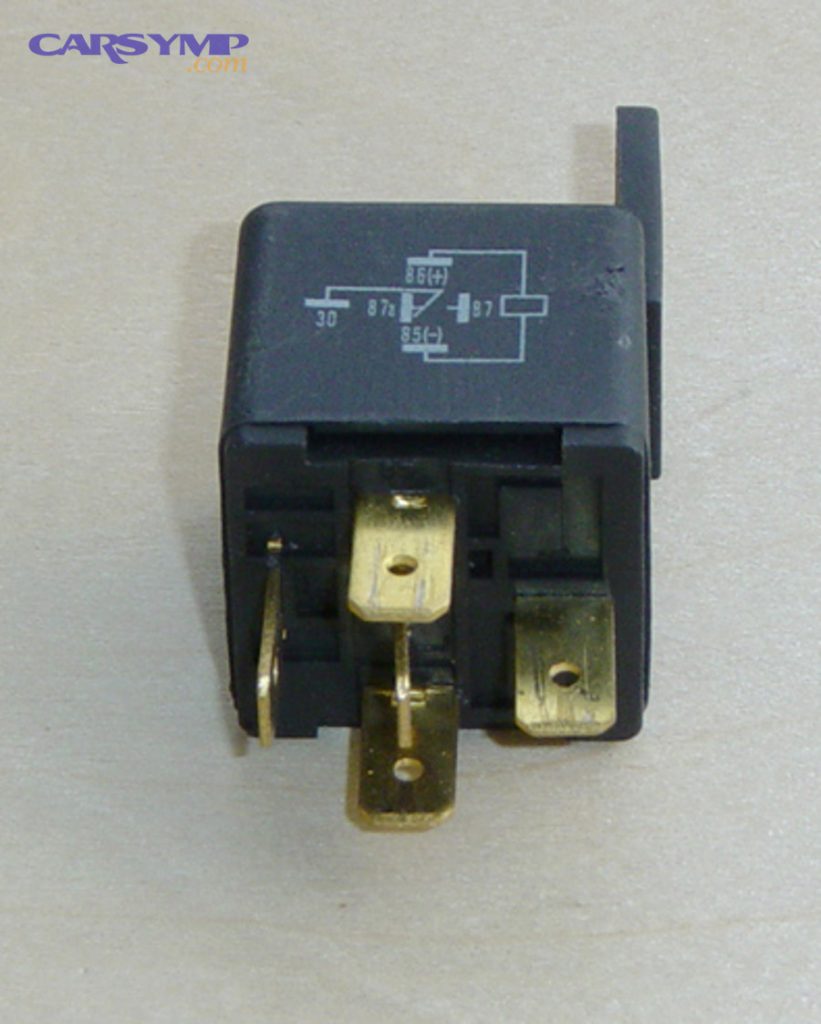
To test a fuel pump relay and the fuel pump circuit basics, you verify three things in order: the relay’s power feed, the relay’s control (command) side, and the relay’s output to the pump—using a multimeter or a simple test light to confirm what is (and isn’t) actually getting voltage.
Next, you’ll learn how to recognize the most common patterns that cause confusion during no-start diagnosis—especially when the engine cranks but won’t fire—so you don’t replace a relay when the real issue is power supply, wiring, or a pump that can’t run under load.
Then, you’ll see how relay terminals work (coil side vs contact side), what “good” looks like on a meter, and how to bench-test a relay safely so you can separate a failed relay from a healthy relay that’s simply not being commanded by the vehicle.
Introduce a new idea: once the basics are clear, you can use a safe bypass test to confirm the pump and downstream wiring—and then understand the edge cases where a relay tests “good” but the vehicle still won’t start.
What does a fuel pump relay do in the fuel pump circuit?
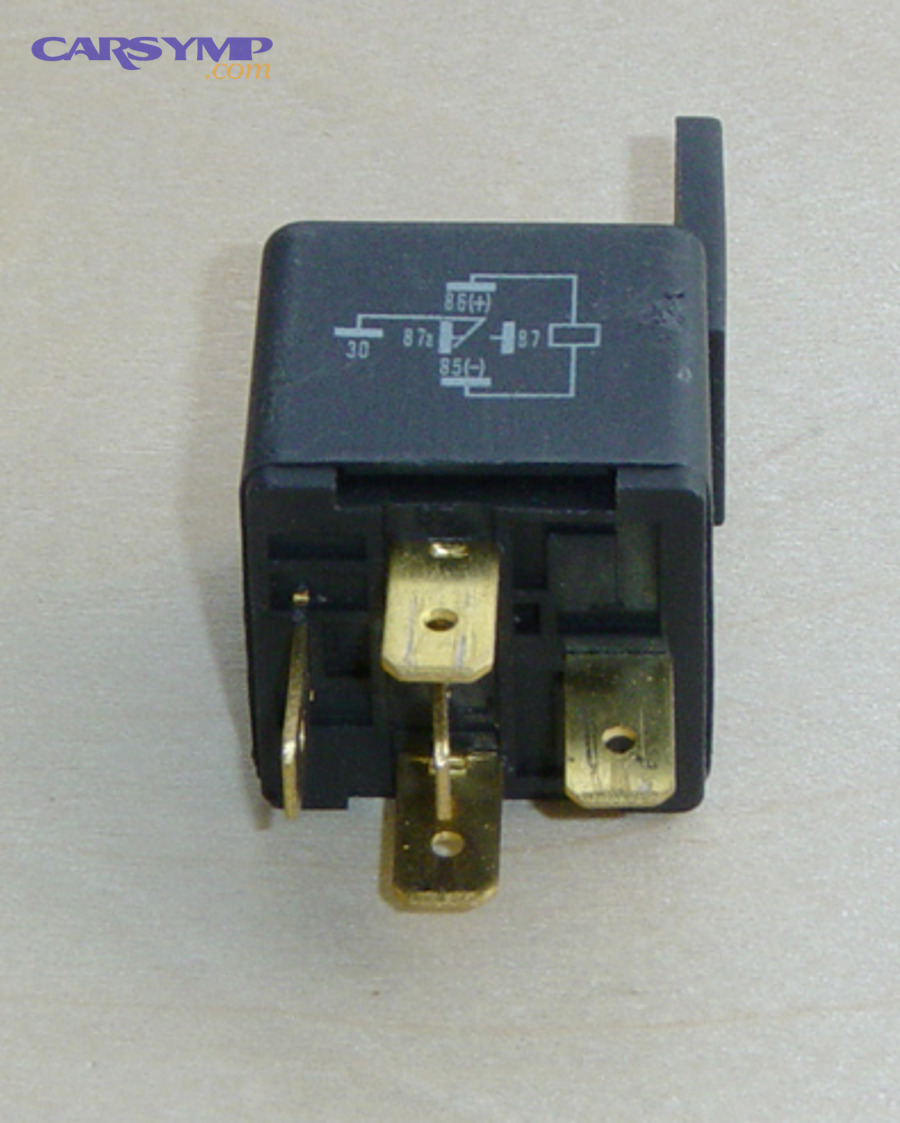
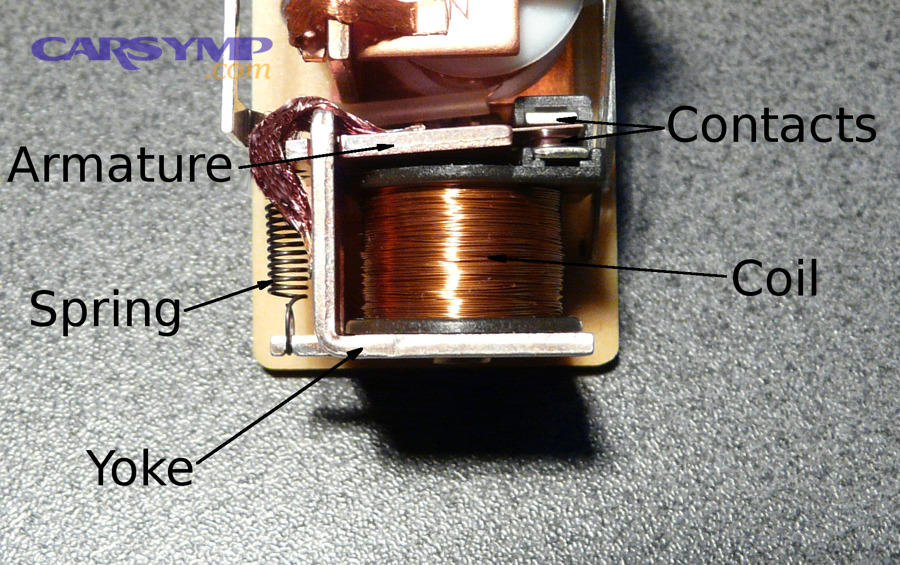
A fuel pump relay is an electrically controlled switch that uses a small control current (the coil side) to connect a higher-current power feed to the fuel pump (the contact/load side), so the pump only receives power when the vehicle commands it.
To better understand why relay testing is so effective, it helps to picture the fuel pump circuit as two linked paths: a low-current “decision” path and a higher-current “work” path.
In plain terms: the engine computer (or ignition switch logic) decides when the pump should run, energizes the relay coil, and the relay then passes battery power through its contacts to the fuel pump. Snap-on describes this split as the winding/primary circuit and the contacts/secondary circuit, which is a helpful way to keep your tests organized. (snapon.com)
Why the relay exists at all:
- Safety: the vehicle can shut the pump off during a crash event or if the engine stalls (system dependent).
- Reduced load on switches/ECU: the ECU can control a coil instead of switching full pump current directly.
- Cleaner diagnostics: you can test the power feed, command signal, and output separately.
How this connects to real symptoms: if the relay doesn’t close, the pump may not run, fuel pressure may not build, and the engine may crank with no start. That’s why fuel pump relay basics are central to troubleshooting a “cranks but won’t start” scenario alongside other fundamentals like starter operation and spark.
Which relay terminals/pins matter most for basic testing (coil vs contacts)?
For basic testing, the terminals that matter most are the two coil terminals (control side) and the two contact terminals (power in and power out), because they tell you whether the relay is being commanded and whether it can pass power to the pump.
Specifically, the reason beginners get stuck is that pin numbers differ by relay type, but the roles stay consistent: two pins energize the coil and two pins carry the load. That role-based thinking is the fastest way to stop guessing.
A practical way to label them without memorizing:
- Coil/control side: one side gets power or ground, the other side gets the opposite to complete the coil circuit.
- Contacts/load side: one terminal is the incoming battery feed (often fused), the other is the outgoing power to the pump.
Common numbering you’ll see (but don’t rely on blindly): many automotive relays follow a pattern where a constant supply is labeled 30, the output is 87, and the coil terminals are 85/86. Snap-on’s relay terminal assignment table is a good example of this convention. (snapon.com)
Hook chain into testing: once you know which terminals are “command” and which are “power delivery,” your next step becomes obvious—choose the right tool and verify each side in order.
What is “prime,” and why can a car have no prime but still have a good pump?
Prime is the brief period when the vehicle commands the fuel pump to run (often for a second or two) to build fuel pressure before starting, and a car can have no prime with a good pump because the relay may never be commanded or the command is being inhibited.
Next, treat “no prime sound” as a clue—not a verdict—because plenty of healthy pumps are quiet, and plenty of electrical issues can prevent a prime command even when the pump itself is fine.
Common reasons prime may not happen even if the pump is good:
- Control-side issue: ECU/PCM not grounding or powering the relay coil (bad input signal, fault logic, security/immobilizer, wiring fault).
- Power-side issue: blown fuse or missing feed voltage at the relay supply terminal.
- Ground issue: pump ground or relay coil ground is open or corroded, so the circuit can’t complete under load.
How this links to no-start diagnosis: if your starter cranks the engine normally but the engine doesn’t catch, you’re typically missing fuel delivery, spark, or compression—so relay testing is part of confirming fuel delivery without guessing. “Crank but no start” is not a relay diagnosis by itself; it’s a reason to test the circuit.
Do you need a multimeter to test a fuel pump relay, or is a test light enough?
No, you don’t strictly need a multimeter to test a fuel pump relay because a test light can confirm many power-and-ground checks, but a multimeter is usually better for confirming voltage levels, continuity, and resistance readings that pinpoint where the circuit fails.
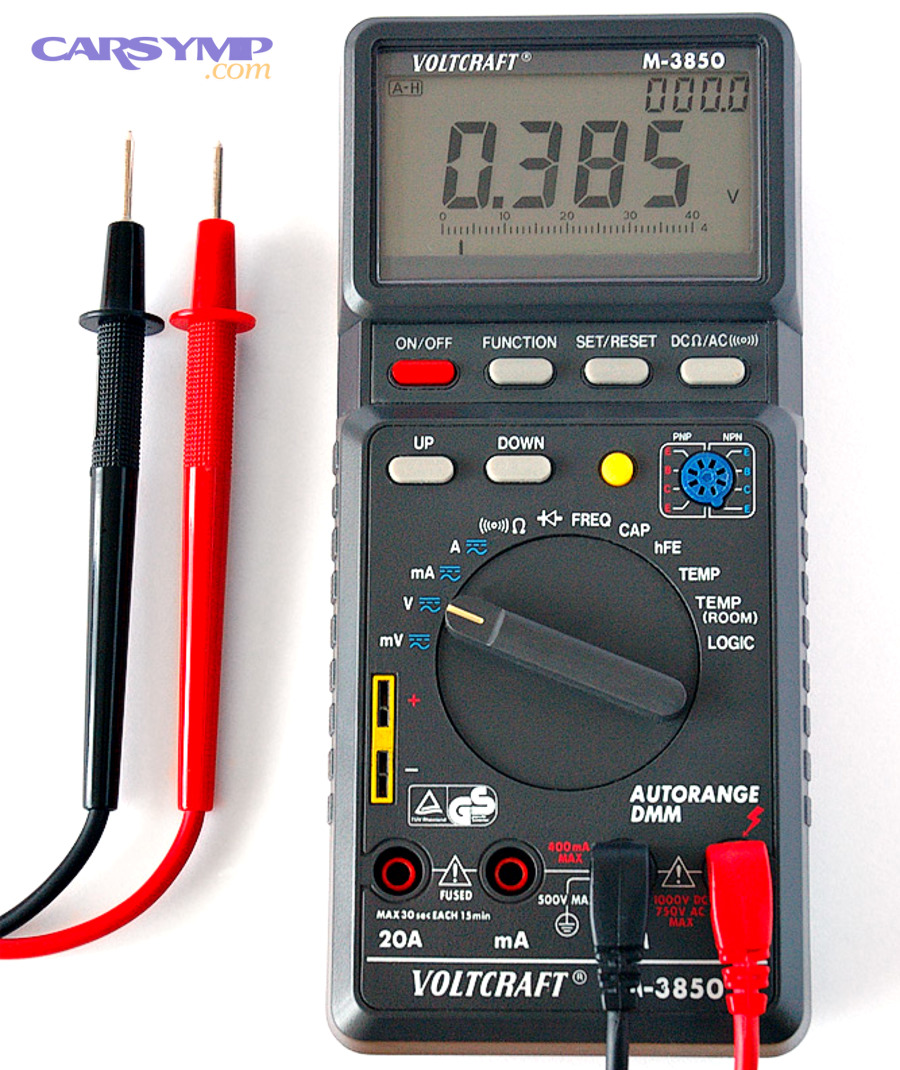
However, the best tool depends on what you’re trying to prove: a test light is fast and shows whether the circuit can supply some current, while a multimeter is precise and helps you measure voltage, resistance, and continuity without guesswork.
Three practical reasons beginners benefit from using both:
- Speed: a test light can quickly confirm “power present” and “ground present” on the relay socket.
- Precision: a multimeter tells you whether you have 12.6V, 10.8V, or 0.3V—differences that matter under load.
- Pinpointing faults: a multimeter can check coil resistance and continuity across contacts during a bench test.
Important safety note: both tools can cause damage if you probe the wrong terminal or short power to ground—so identify terminals first and use back-probing or proper adapters where possible.
When is a test light better than a multimeter for finding weak power or bad grounds?
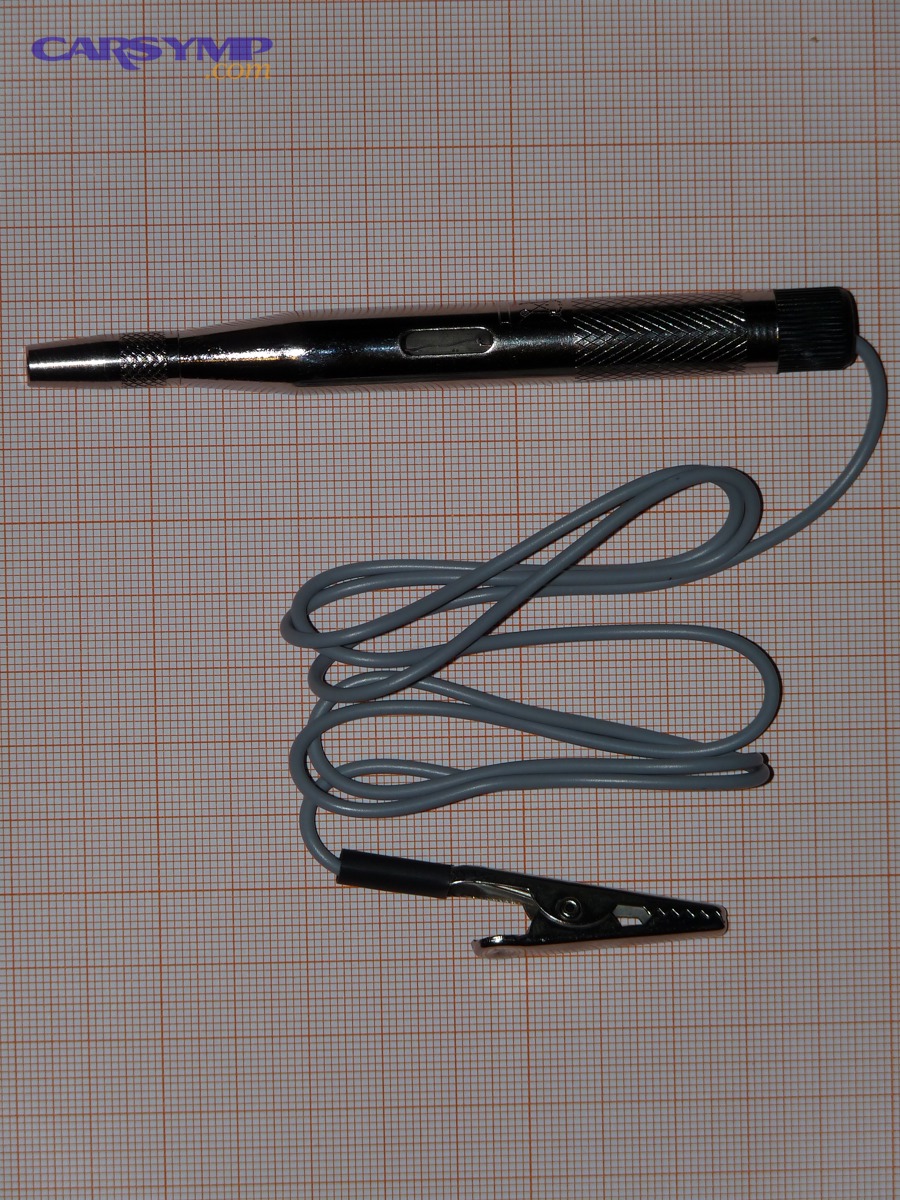
A test light is better when you suspect weak power or a weak ground because the bulb draws current and can reveal a connection that shows voltage on a high-impedance meter but can’t actually carry load.
Specifically, a multimeter can sometimes display “phantom” or “stray” voltage on open or lightly coupled circuits, which can mislead you into thinking a wire is powered when it isn’t truly connected to a solid source. NEMA’s technical guidance on phantom voltages explains how high-impedance meters can show misleading readings on open conductors and recommends using a low-impedance approach for certain situations. (nema.org)
What “weak” looks like in practice:
- Weak power feed: the meter shows near battery voltage, but the test light is dim or doesn’t light—suggesting high resistance upstream.
- Weak ground: the test light won’t light when clipped to battery positive and probing a supposed ground point—suggesting the ground isn’t completing the circuit.
Hook chain to the next step: once you understand why “voltage present” isn’t always “power available,” the next move is choosing the correct meter setting and verifying the circuit in a repeatable sequence.
Which meter settings should beginners use for relay and circuit checks?
Beginners should use DC volts for in-vehicle power checks, continuity mode for quick “is this connected” checks (power off), and resistance (ohms) for coil resistance and contact checks during bench testing.
Then, keep one rule front and center: never measure resistance on a powered circuit, because the meter injects its own small test current and a live circuit can damage the meter or give nonsense readings.
Use these settings for these jobs:
- DC Volts (V⎓): check battery voltage, relay feed voltage, output voltage to the pump, and command-side voltage presence.
- Continuity (beep): confirm a wire path is intact (power off), confirm a relay contact closes (bench test), or confirm ground continuity (with caution and correct method).
- Resistance (Ω): measure relay coil resistance (bench test) and compare to a known-good relay of the same type when possible.
Pro tip that prevents wasted time: always compare your readings to a known reference—battery voltage at the battery terminals, and if possible, a known-good relay or an adjacent identical relay in the fuse box.
Is the fuel pump relay actually the problem, or is it the fuse, wiring, ground, or pump?
The fuel pump relay is only the problem if the relay is receiving proper feed and command but fails to deliver power to the pump, because missing fuses, bad wiring, poor grounds, and a failing pump can produce the same no-start symptoms.
More importantly, a good diagnostic flow prevents “parts roulette,” especially in no-start diagnosis where the starter may crank normally and spark may be present, yet fuel pressure never builds due to an electrical supply fault.
Below is a quick triage table that shows what each check proves, so you can choose the next test logically rather than randomly.
| Check | What you do | What it proves | What it does NOT prove |
|---|---|---|---|
| Fuel pump fuse power | Test light or meter on both sides of fuse | Power feed path exists to fuse | Relay command or pump condition |
| Relay click | Listen/feel relay during key-on or crank | Relay coil may be energizing | Contacts can carry current |
| Relay output voltage | Measure voltage on relay output terminal when commanded | Relay is passing voltage to pump circuit | Pump can run under load |
| Bypass (jump) load side | Temporarily feed pump circuit from relay supply (safe method) | Pump and downstream wiring can run | ECU/command side is healthy |
What symptoms point to a bad relay versus a bad fuel pump?
A relay failure is more likely when symptoms are intermittent and change with heat, tapping, or swapping relays, while a failing pump is more likely when the pump draws abnormal current, becomes noisy over time, or cannot build pressure even when directly powered.
However, treat symptoms as probability—not certainty—because wiring faults can imitate both. A clean approach is: symptoms guide your first test, but measurements decide your conclusion.
Patterns that often suggest a relay or relay-socket issue:
- Intermittent no-start with normal cranking: the starter spins the engine, but the engine doesn’t catch, and the problem may “come and go.”
- Starts after swapping an identical relay: a quick swap test (with an identical part number/function) changes the outcome.
- Relay clicks but pump doesn’t run: indicates control side may be working while contacts or socket terminals fail under load.
Patterns that often suggest a pump or pump-circuit load issue:
- Pump runs when cold, fails hot: heat-soak can increase internal resistance or worsen worn commutators (pump design dependent).
- Direct power still doesn’t produce pressure: bypass test runs the pump circuit but the engine still won’t start.
- Voltage present but weak under load: pump sees voltage on a meter, but a test light is dim, suggesting a voltage drop in wiring/ground.
Why relay contacts matter under load: relay contact surfaces degrade over time; contact resistance can rise near failure, reducing current flow even if the relay “clicks.” According to a study by Poznan University of Technology from the Institute of Electric Power Engineering, in 2019, researchers observed significant changes in relay electric contact resistance during switching events, and contact behavior is a critical factor in relay performance. (mdpi.com)
What quick checks can you do before touching the relay (fuse, connectors, listen test)?
Before touching the relay, you can check the fuel pump fuse for power, inspect visible connectors for corrosion or looseness, and listen for prime to quickly decide whether you should focus first on power supply, control command, or the pump load.
Next, do these checks in a consistent order so your observations remain reliable and repeatable.
Quick check sequence (beginner-friendly):
- Battery health baseline: confirm the battery is strong enough to crank and still supply stable voltage; a weak battery can cause false conclusions.
- Fuse test (don’t just look): use a test light or meter to verify power on both sides of the fuel pump fuse during key-on/crank.
- Connector glance: look for green corrosion, heat discoloration, or loose pins at the fuse box and pump connector (if accessible).
- Prime listen test: key-on and listen near the tank; note results but don’t rely on sound alone.
Hook chain to hands-on relay testing: once those easy checks are done, you’re ready to test the relay in the fuse box without guessing which part of the circuit is failing.
How do you test a fuel pump relay in the fuse box step-by-step?
You test a fuel pump relay in the fuse box by checking three points in sequence—battery feed at the relay supply terminal, command action on the coil side during prime/crank, and voltage output to the pump—so you can prove exactly where the circuit stops working.
Then, follow a “prove it” mindset: you’re not trying to confirm the relay is bad; you’re trying to confirm what the circuit is doing at each stage.
Step-by-step (in-vehicle):
- Identify the correct relay: use the fuse box legend or service information. If there are identical relays, note their positions for a swap test later.
- Remove the relay and identify socket terminals: use the diagram on the relay body, fuse-box cover, or service data to map which socket cavities correspond to coil and contacts.
- Check the supply feed first: confirm battery voltage is present where the relay should receive constant power (often fused).
- Check the command side during prime/crank: confirm the coil receives power and/or ground when the vehicle commands the pump.
- Check the output to the pump: confirm voltage leaves the relay toward the pump circuit when commanded.
- Interpret results: decide whether you have a feed issue, a command issue, a relay/contact issue, or a downstream load/wiring issue.
Optional but powerful: if you can read scan data or codes, a fault related to relay control can guide you to test the coil/control circuit first. Snap-on notes that actuator tests can command the ECM to ground the relay winding, making it easier to observe control-side behavior. (snapon.com)
Is there battery power at the relay’s feed terminal when the key is on?
Yes, there should be battery power at the relay’s feed terminal on most systems because the relay needs a constant or ignition-fed supply to deliver power to the fuel pump when commanded, and missing feed voltage is one of the most common causes of a “dead” pump circuit.
Specifically, if there’s no feed power, the relay cannot deliver power no matter how perfectly the ECU commands it, so you must move upstream before blaming the relay.
How to test (simple):
- Test light method: clip to a known good ground; probe the relay socket supply terminal; the light should illuminate strongly if power is present.
- Multimeter method: set to DC volts; black lead to ground; red lead to the supply terminal; compare to battery voltage.
If you get “no power” here, the likely causes are:
- Blown fuel pump fuse or upstream fuse link
- Corroded fuse box terminals
- Broken power feed wire
Why this matters in no-start diagnosis: a vehicle can crank strongly (starter working) while the pump feed is dead; the engine will still not start due to lack of fuel delivery even though spark may be healthy.
Does the relay receive a command signal during prime or cranking?
Yes, the relay should receive a command signal during prime or cranking, and you confirm that by testing the coil/control side for the presence of voltage and ground (depending on whether the system is power-switched or ground-switched).
Then, use the same “two sides of the coil” logic every time: for the coil to energize, it needs a complete path—one side must be power and the other must be ground, even if that ground is provided by the ECU.
Two common control strategies (what changes is what you probe):
- Ground-switched control (common): the coil has ignition-fed power on one terminal, and the ECU provides ground on the other during prime/crank. Snap-on describes an ECM-provided ground circuit completing the winding circuit in this style. (snapon.com)
- Power-switched control: the ECU or ignition logic provides power to the coil while the other side is grounded.
Beginner-friendly command test tips:
- Use a helper: have someone turn the key while you probe during the short prime window.
- Crank test: if prime is too quick, test during cranking (some systems only command the pump when cranking/engine speed is detected).
- Don’t ignore grounds: a corroded ground can make a command “disappear” under load.
Does the relay output send power to the pump when commanded?
Yes, the relay output should send near-battery voltage to the pump circuit when commanded, and if it doesn’t—despite good feed power and a good command—the relay contacts or relay socket connection is a top suspect.
However, a voltage reading alone can be misleading if the circuit has high resistance, so confirm with a test light when possible.
How to test output correctly:
- Multimeter: measure DC volts at the relay output terminal (socket) during prime/crank; compare to battery voltage.
- Test light: confirm the output terminal lights the test lamp strongly during command; dim light suggests voltage drop or weak contact.
Interpretation you can trust:
- Good feed + good command + weak/no output: relay contacts or socket terminals are likely failing.
- Good feed + no command: control side problem (inputs, ECU logic, wiring, security system, etc.).
- Good output + still no start: move downstream—pump connector, pump ground, or mechanical fuel pressure issues.
How do you bench-test a fuel pump relay with a multimeter?
You bench-test a fuel pump relay with a multimeter by checking coil resistance, verifying the relay “clicks” when the coil is energized, and confirming continuity changes across the contact terminals when energized, which proves whether the relay can actually switch the load side.
To illustrate why this matters, remember that a relay can click yet still have burned or high-resistance contacts—so bench testing adds certainty after in-vehicle checks.
Bench-test setup (safe and simple):
- Remove the relay and identify coil terminals and contact terminals from the diagram on the relay case.
- With no power applied, measure coil resistance and check whether contacts are normally open (NO) or normally closed (NC), if applicable.
- Apply the correct coil voltage briefly (often 12V on automotive relays) using fused jumper leads, and confirm the contact state changes.
Safety essentials: use fused jumpers, avoid shorting terminals, and energize only briefly—especially if you’re not 100% sure of the pinout.
Should the relay coil show a specific resistance range, and what does “open” or “short” mean?
Yes, the relay coil should show a stable, non-zero resistance value, and “open” (OL/infinite) usually means the coil winding is broken while “short” (near-zero) suggests an internal fault that can blow fuses or overload the control circuit.
Specifically, coil resistance isn’t about chasing a universal number; it’s about detecting an obvious failure mode and comparing to a known-good relay of the same part type when you can.
How to measure coil resistance correctly:
- Set the multimeter to resistance (Ω).
- Touch probes to the two coil terminals.
- Interpretation: a stable reading indicates a continuous coil; OL/infinite indicates an open coil; a near-zero reading indicates a shorted coil.
Why this matters: a coil that’s open will never energize, so the relay will never close. A coil that’s shorted may cause unusual behavior or protective shutdown in control circuits.
Does the relay switch continuity between the correct terminals when energized?
Yes, the relay should switch continuity between the correct contact terminals when energized, because that continuity change is the direct proof that the relay’s internal switch is working and capable of connecting power to the fuel pump circuit.
Next, treat this as a two-step proof: prove the “before” state (not energized), then prove the “after” state (energized).
Bench continuity test (common NO relay):
- Not energized: measure continuity across the power-in and power-out terminals; a normally open relay should show no continuity.
- Energized: apply coil voltage briefly; measure continuity again; it should switch to continuity (beep/low resistance).
Why contact condition matters in the real world: relay contacts can degrade and develop higher resistance even before complete failure, reducing current flow to a load like a fuel pump. According to a study by Poznan University of Technology from the Institute of Electric Power Engineering, in 2019, researchers reported that relay electric contact resistance changes significantly with switching behavior, reinforcing why “click” is not the same as “healthy contacts.” (mdpi.com)
Is it safe to bypass/jump the fuel pump relay for testing?
Yes, it can be safe to bypass/jump the fuel pump relay for testing if you jump only the correct load-side terminals with fused protection and for a short duration, because it’s a controlled way to prove the pump and downstream wiring can run—but it is risky if you jump the wrong terminals or create sparks near fuel vapors.
More importantly, a bypass test is a diagnostic tool, not a repair: it tells you what works when you supply power directly, and it tells you what still fails even when the relay is removed from the equation.
Three reasons a careful bypass test is useful:
- Confirms the pump can run: if the pump runs when powered directly, the pump motor and at least some wiring are functional.
- Confirms the downstream circuit: if the pump does not run, the fault is likely downstream (pump, connector, ground, wiring).
- Separates command vs load issues: if bypass works but normal operation doesn’t, you focus on command-side or relay activation.
Which “jump” test confirms the pump and wiring without proving the command side?
The jump test that confirms the pump and wiring without proving the command side is the load-side jump from the relay’s power feed terminal to the relay’s output-to-pump terminal, because it bypasses the coil/ECU control and directly powers the pump circuit.
Then, interpret it correctly: this test proves the pump circuit can run when fed, but it does not prove the ECU is commanding the relay or that the control side wiring is intact.
What to do (conceptually):
- Identify the relay socket’s power feed terminal (incoming battery power) and the output terminal (to fuel pump).
- Use a fused jumper wire to connect feed to output briefly.
- Listen for pump operation and/or verify voltage at the pump connector.
How this fits into no-start diagnosis: if your starter cranks and you have spark, a successful bypass that runs the pump can quickly move you toward “command side” as the missing piece, rather than replacing the pump unnecessarily.
What mistakes cause blown fuses or wiring damage during a relay bypass test?
The mistakes that cause blown fuses or wiring damage during a relay bypass test are jumping the wrong terminals, bypassing without fuse protection, running the pump too long without monitoring, and creating accidental shorts with probes or jumper wires.
Specifically, the biggest beginner mistake is treating relay cavities as interchangeable—when one cavity may be a ground-controlled terminal that should never be fed battery power directly.
Common mistakes to avoid:
- Wrong terminal selection: jumping into the coil/control cavities instead of the load cavities.
- No fused jumper: an unfused jumper can turn a mistake into melted wiring.
- Long-duration bypass: the goal is diagnosis; extended running can mask issues and increase risk.
- Sparking near fuel vapors: keep all testing away from open fuel sources; work in a ventilated area.
Best practice: if you’re unsure which terminals are load side, stop and use the diagram on the relay or service data—because guessing is how wires get damaged.
Why can a fuel pump relay test “good” but the car still won’t start?
A fuel pump relay can test “good” yet the car still won’t start because the relay may not be getting a proper command, the system may use a module-based control instead of a simple relay, the circuit may suffer voltage drop under load, or security/cutoff logic may be preventing pump operation.
Moreover, this is where many no-start diagnosis cases go off-track: the starter cranks, spark is present, you swap a relay, and the vehicle still won’t fire—because the real issue is not the relay’s ability to switch, but the system’s ability to command and supply the pump under real conditions.
Is the ECU/PCM actually commanding the relay ?
Yes, the ECU/PCM must command the relay for normal operation, and low-side control means you test for ECU-provided ground on the coil side while high-side control means you test for ECU-provided power on the coil side.
Then, tie this directly to your earlier results: if your bench test proves the relay works and your feed power is present, the missing piece is often the control signal during prime/crank.
How low-side vs high-side changes your probing plan:
- Low-side (ECU grounds the coil): expect one coil terminal to have ignition power; the ECU grounds the other terminal briefly during prime and while cranking/running. Snap-on’s technical focus describes an actuator test that commands the ECM to ground the relay winding, which aligns with this control style. (snapon.com)
- High-side (ECU supplies coil power): expect one coil terminal to be grounded; the ECU supplies power to energize the coil.
What can block the command even if the relay is fine:
- No crank signal recognized (vehicle logic dependent)
- Fault conditions that disable the pump command
- Wiring fault between ECU and relay coil terminal
Could a fuel pump driver module or integrated power module replace the traditional relay in your vehicle?
Yes, some vehicles replace or supplement a traditional relay with a fuel pump driver module or an integrated power module that controls pump speed and power delivery, so a “good relay” doesn’t guarantee the pump is receiving the right power under real operating conditions.
Next, look for system clues rather than assuming every vehicle is “relay only.”
Clues you may be dealing with module-based control:
- The service information references a “fuel pump control module,” “driver module,” or “powertrain control module output stage.”
- The pump is PWM-controlled (variable duty cycle) instead of simple on/off power.
- You see a dedicated module near the tank or along the chassis harness.
Diagnostic implication: you may need to measure control signals and voltage drop under load at the module and pump, not just at the relay socket.
Can voltage drop under load cause a “good” relay to fail in real operation?
Yes, voltage drop under load can make a “good” relay appear to fail in real operation because corroded terminals, weak grounds, or high-resistance connections can reduce the voltage and current reaching the pump even when the relay is switching correctly.
Specifically, voltage drop is the hidden enemy of fuel pump circuits because pumps are current-hungry loads—small resistances in connectors or grounds become big problems.
What to do when your meter shows voltage but the pump won’t run:
- Use a test light as a load: if it’s dim at the pump feed, you likely have high resistance upstream.
- Measure drop across segments: check battery positive to relay supply, relay output to pump connector, and pump ground to battery negative while attempting to run the pump.
- Inspect hot spots: heat discoloration in fuse box terminals often indicates resistance and overheating.
Why this is credible electrically: contact resistance and connection quality directly affect current delivery in relay-based switching systems, which is why contact resistance behavior is a serious reliability concern in relay research. (mdpi.com)
Could the immobilizer/inertia switch/crash cutoff be blocking fuel pump operation even with a good relay?
Yes, immobilizer logic or crash/inertia cutoff systems can block fuel pump operation even with a good relay because the vehicle may intentionally inhibit the command signal or power path as a safety or anti-theft function.
In addition, this is the scenario where many people misdiagnose the fuel system: the starter cranks, you may even see spark, but the vehicle’s logic prevents fuel delivery.
When to suspect a command-inhibit condition:
- Security light behavior indicates an active immobilizer condition.
- The relay never receives a control command during prime/crank, yet feed power is present and wiring continuity appears intact.
- Cutoff switch logic or crash event history is present (vehicle-specific systems).
Practical next step: verify whether the ECU is commanding the relay during crank, and if not, consult vehicle-specific service information for security and cutoff logic—because the electrical circuit may be healthy but intentionally disabled.