


If your car is overheating at idle, the fastest way to stop guessing is to follow a checklist that starts with what’s most common and easiest to verify—coolant level, leaks, fan operation, thermostat behavior, radiator condition, and coolant flow—so you can pinpoint the cause before it becomes engine damage.
Next, the “idle vs driving” pattern matters because it often acts like a built-in clue: when the engine runs hot in traffic but cools at speed, airflow and fan control move to the top of the suspect list, while true coolant-loss or flow failures tend to show up in more conditions.
Then, you also need safe-to-drive decisions and quick confirmation tests. A good diagnosis is not only “what’s wrong,” but also “what should I do right now,” what’s safe to check, and what to stop doing immediately.
Introduce a new idea: below is a structured, step-by-step guide that keeps one hook chain throughout—symptom → cause category → confirmation test → repair priority—so every section pushes you closer to a clear answer.
What does “overheating at idle” mean, and how is it different from overheating while driving?
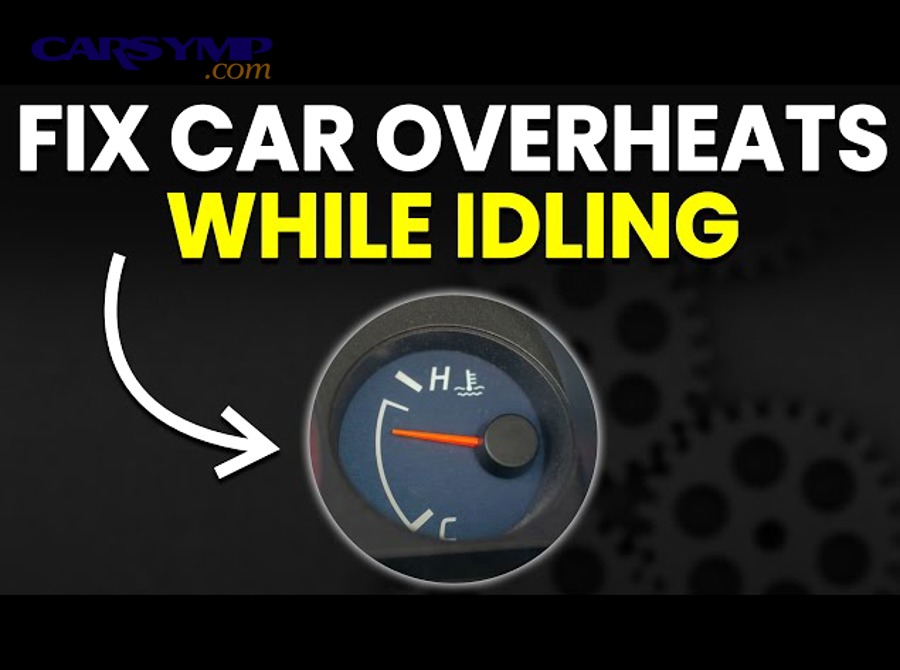
“Overheating at idle” is a cooling-system failure mode where engine temperature rises while the car sits still or crawls, because heat production stays high but heat rejection (airflow and sometimes coolant circulation) cannot keep up.
Next, that distinction matters because idle removes “free” airflow from road speed and exposes weaknesses in fan control, airflow paths, and heat-soak behavior.
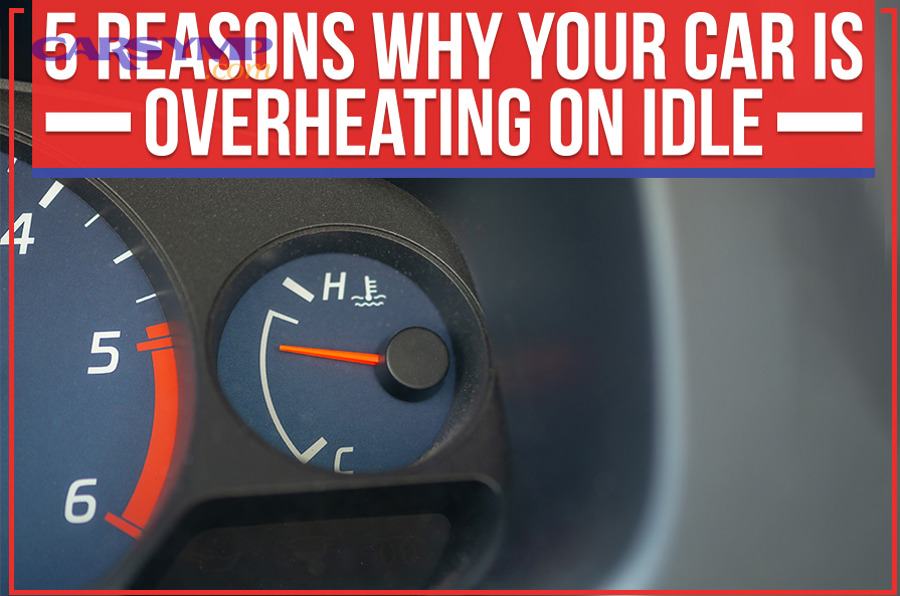
At idle, your engine is still burning fuel and generating heat in the combustion chambers, cylinder head, exhaust ports, and turbo (if equipped). The cooling system has one job: move that heat into coolant, push hot coolant through the radiator, and dump heat into air moving through the radiator fins. When you’re driving, the car creates strong airflow through the front grille. When you stop, the car loses that airflow and depends heavily on the radiator fan(s), shrouds, and unobstructed fins.
This is why many drivers report the classic pattern:
- Temperature climbs at stoplights or in a drive-thru.
- Temperature drops once the car moves again.
- The issue gets worse with A/C on, high ambient heat, or after a highway run (heat soak).
That pattern is not just annoying—it’s diagnostic.
What are the most common signs that an engine is truly overheating (not just a misleading gauge)?
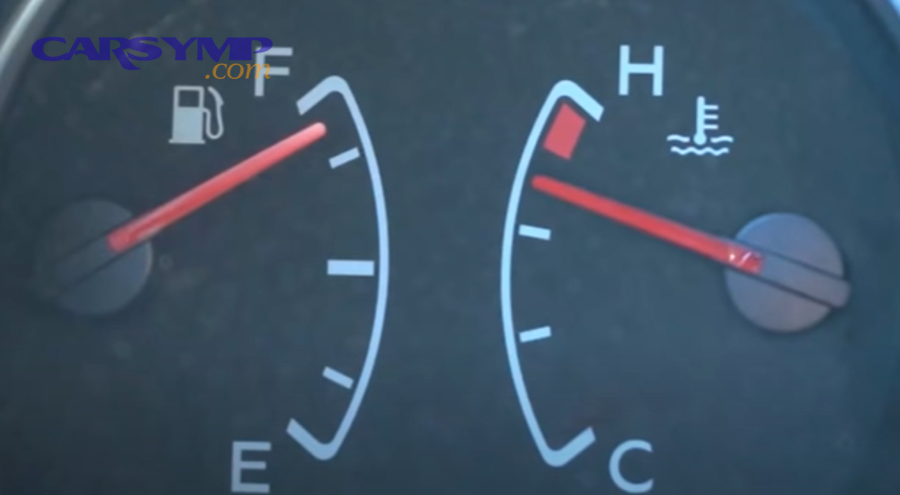
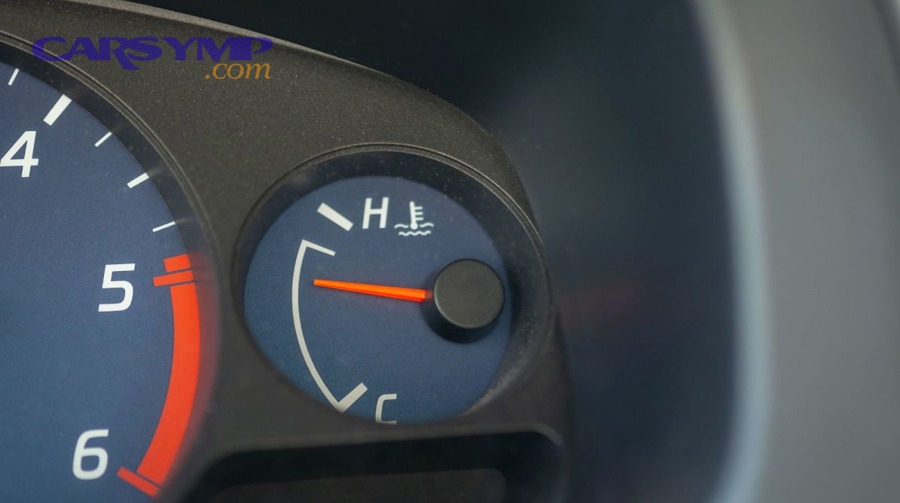
True overheating shows up as sustained high temperature with supporting symptoms—warning light, steam, boiling coolant smell, or rising temperature that doesn’t stabilize—while a misleading gauge often shows erratic behavior without real heat symptoms.
To better understand what you’re seeing, match the temperature reading with real-world indicators that are hard to fake.
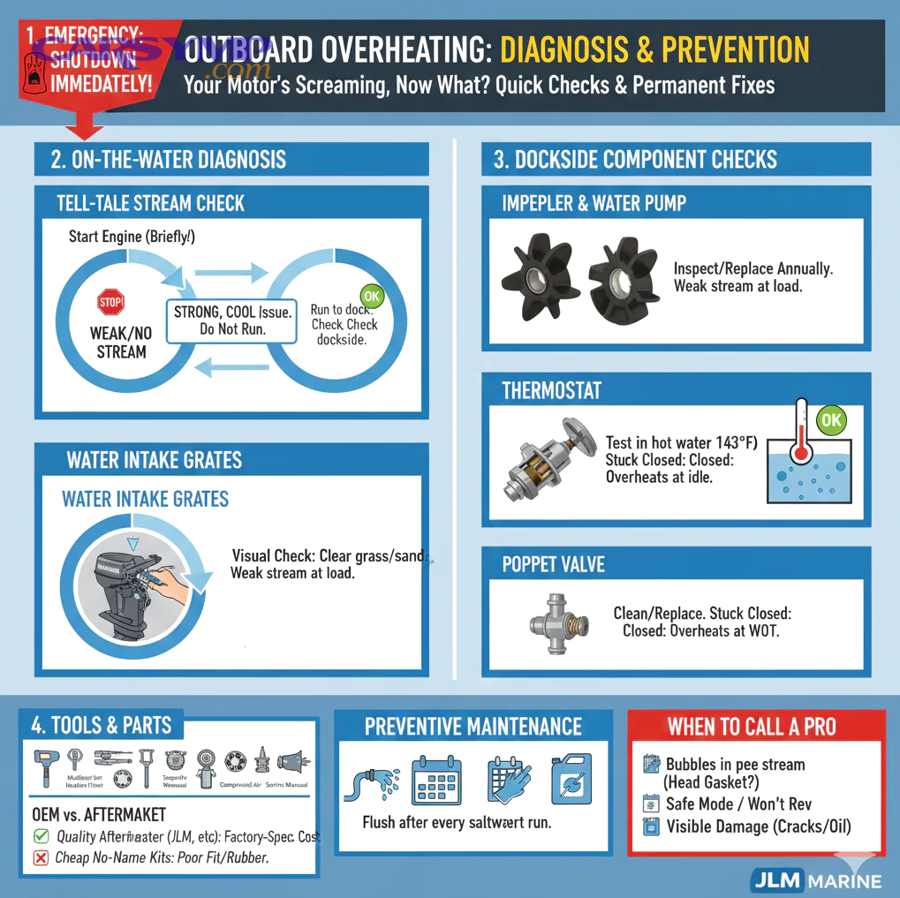
Common signs of real overheating:
- Temperature warning light (especially if it stays on, not just flickers).
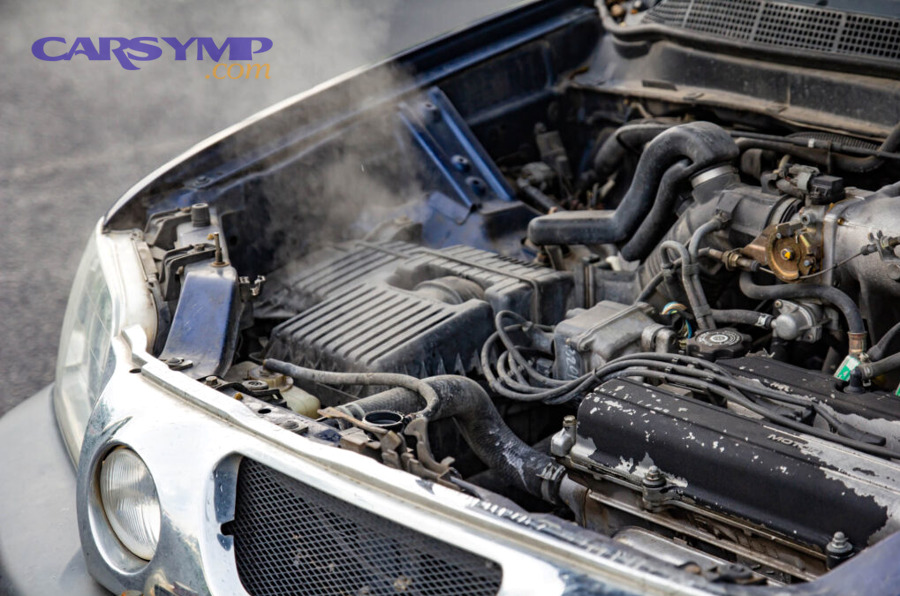
- Steam from the front of the vehicle or around the reservoir area.
- Sweet smell (coolant odor) or a hot-metal smell.
- Coolant boiling into or out of the reservoir.
- Heater goes cold even while the engine is hot (often indicates low coolant or trapped air).
- Loss of power / rough running (sometimes happens when temperatures get extreme).
Signs the gauge/sensor may be misleading:
- The gauge spikes up and down rapidly.
- The gauge pegs hot but there’s no steam, no coolant smell, and the heater remains strong.
- Temperature changes don’t correlate with engine load or time.
Even if you suspect the gauge, treat any “hot” warning as real until you confirm otherwise—because the cost of being wrong is high.
Does “overheats at idle but cools when driving” point to airflow problems first?
Yes—this pattern usually points to airflow and fan-control problems first, because driving creates ram-air cooling that idle cannot; however, low coolant, pressure loss, and radiator restrictions can still create similar symptoms in borderline cases.
However, that airflow-first rule becomes much more reliable once you verify coolant level and visible leaks.
In practical terms, “cool at speed, hot at idle” most commonly means one or more of the following:
- Radiator fan not turning on, turning on too late, or spinning too slowly.
- Fan shroud missing/broken, so airflow bypasses the radiator instead of pulling through it.
- Radiator and A/C condenser fins clogged externally with debris.
- Under-hood hot air recirculating at low speed (heat soak making idle cooling harder).
Meanwhile, if the engine also overheats at highway speed, you lean harder toward coolant loss, thermostat issues, internal radiator restriction, or coolant-flow problems.
Can you safely continue driving if your car overheats at idle?
No—you generally should not keep driving with overheating at idle, because it can quickly escalate into coolant boiling, pressure loss, and engine damage, especially when you’re stopped and temperature continues climbing without relief.
More importantly, the safe move is to treat this like a decision tree: stabilize temperature first, then diagnose.
Here’s the real-world risk: overheating can warp cylinder heads, damage head gaskets, and stress plastics and rubber seals. The damage threshold depends on engine design and duration, but the pattern is consistent—the longer it stays hot, the more expensive it gets.
Use this Safe-to-drive guidance when overheating at idle decision logic:
- Stop immediately if you see steam, the warning light stays on, or the gauge continues rising rapidly.
- Stop soon if temperature climbs steadily at idle and doesn’t fall when you turn off A/C or increase airflow.
- Proceed only to a safe spot (very short distance) if the temperature is slightly elevated but stable and you can reduce heat load.
Should you shut the engine off immediately when the temp rises at idle?
Yes—if the temperature continues climbing or you see warning signs, you should shut the engine off because it stops heat input from combustion and prevents further temperature runaway; you also reduce the chance of boiling coolant and pressure loss.
Then, once you’re safely parked, the next step is to cool down the system without creating new hazards.
Safe shutdown approach:
- Turn off A/C (A/C adds heat load to the radiator through the condenser).
- Turn the cabin heat to max for 30–60 seconds if you can tolerate it (it can pull some heat away).
- Pull over and shut off the engine if the needle keeps moving upward.
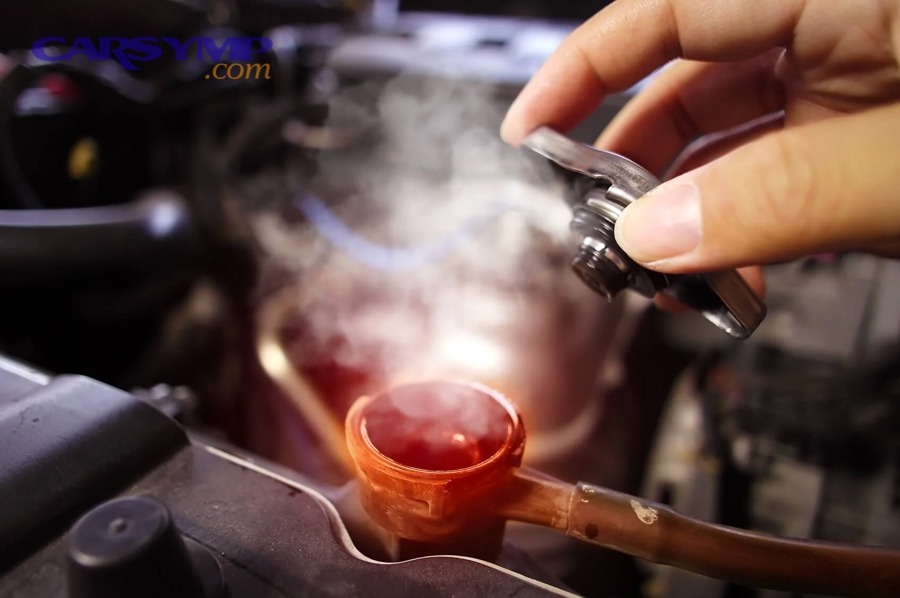
- Do not open the radiator cap while hot—pressurized coolant can erupt.
After shutdown, pop the hood if safe, and let heat vent. Your goal is to prevent a boil-over and protect the engine long enough to diagnose the root cause.
Can running the heater help reduce temperature in an emergency?
Yes—running the heater can reduce engine temperature because the heater core acts like a small radiator that releases heat into the cabin air; it’s most helpful when coolant level is adequate and circulation still exists.
Specifically, it buys you time to reach a safe stopping point or keep the temperature from spiking while you assess the situation.
When it helps most:
- Temperature is rising slowly at idle.
- The heater still blows hot air (a sign coolant is circulating through the heater core).
- You need a short “buffer” to get out of traffic.
When it helps least (or not at all):
- The heater suddenly blows cold (often low coolant, trapped air, or flow failure).
- You see steam or the warning light stays on.
- The engine is already severely overheated.
According to a study by Ohio State University from the Department of Mechanical and Aerospace Engineering, in 2012, advanced thermal management research emphasizes that controlling coolant flow and heat rejection capacity (including fan and coolant-pump behavior) is critical to maintaining stable engine temperatures under varying conditions. (etd.ohiolink.edu)
What is the step-by-step overheating-at-idle causes checklist (from easiest to hardest)?
There are 6 main cause groups behind overheating at idle—coolant quantity/quality, leaks/pressure loss, fan/airflow failure, thermostat restriction, radiator heat-transfer limitation, and weak coolant flow—so a checklist that tests them in order can quickly isolate the problem.
Below, the key is to start with checks that require the least time and the fewest tools, because early wins prevent unnecessary parts replacement.
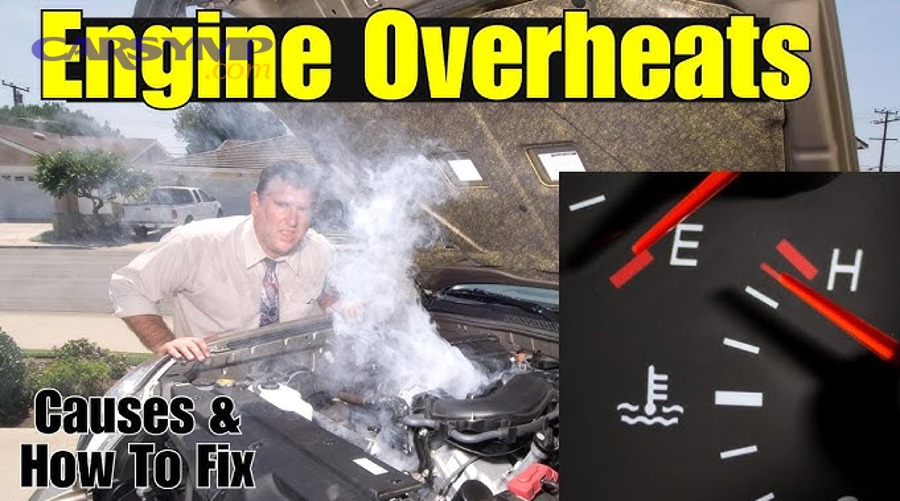
Checklist order (easiest → hardest):
- Coolant level and coolant condition
- Visible leaks and pressure loss symptoms
- Fan operation and idle airflow
- Thermostat opening behavior
- Radiator external and internal restriction
- Coolant flow strength (water pump / belt / hoses)
Is the coolant level low or the coolant condition poor?
Yes—low coolant or degraded coolant is one of the most common reasons engines overheat at idle, because the system loses heat-carrying capacity and can form steam pockets that reduce heat transfer; it also often reveals an underlying leak.
To begin, check coolant only when the engine is cool, because a hot system is pressurized.
How to check coolant level correctly:
- Use the expansion/overflow tank markings (MIN/MAX) on modern systems.
- If your car has a radiator cap, check the radiator only when fully cool.
- Compare the level to the “cold” reference line if the tank has one.
What “poor coolant condition” looks like:
- Rusty or muddy color (can indicate corrosion or contamination).
- Oily film (can suggest oil contamination—rare but serious).
- Sludge or particles (can indicate mixed coolant types, sealant residue, or breakdown).
Why this causes overheating at idle:
- Low coolant reduces the amount of heat that can be transported to the radiator.
- It encourages air pockets and localized hot spots—especially in the cylinder head.
- Those hot spots show up faster during heat soak at stoplights.
If coolant is low, top off only as a temporary step—then find out where it went.
Are there visible leaks or pressure loss in the cooling system?
Yes—coolant leaks or pressure loss can cause overheating at idle because the system cannot maintain the boiling point margin and may introduce air, which reduces effective cooling; leaks often worsen as parts heat up and seals expand.
Next, treat leak-checking like a map: follow the wetness, dried residue, and smell to the source.
Most common leak points :
- Front of engine: water pump weep hole, pump gasket
- Top area: radiator end tanks, upper hose, thermostat housing
- Side areas: heater hoses, quick-connect fittings
- Reservoir area: cracked tank, loose cap, overflow hose
- Radiator core: pinholes or seam leaks
Pressure-loss clues even if you don’t see a drip:
- Coolant smell after shutdown
- Reservoir level drops over days
- White crusty residue around hose ends
- Intermittent overheating after long drives (heat soak makes it worse)
At idle, pressure loss is especially punishing because the engine sits in its own heat, and coolant that should stay liquid can begin to boil, forming vapor pockets that block flow.
Is the radiator/condenser fan working correctly at idle?
Yes—when a car overheats at idle, the radiator fan system is one of the first suspects, because the fan replaces the airflow you normally get from driving; if the fan doesn’t pull enough air, radiator heat rejection collapses at a stop.
Then, you should confirm not just “fan spins,” but “fan spins at the right time and speed.”
What “correct fan operation” typically looks like:
- The fan turns on when coolant reaches a threshold.
- The fan may cycle on/off or ramp speed (some cars use variable speed).
- With A/C on, many vehicles command the fan on to cool the condenser.
Common failures that still fool people:
- Fan runs but weak airflow (worn motor, resistor/module, low-speed circuit failure).
- Fan turns on too late (sensor issues, software control issues, wiring resistance).
- Fan shroud missing → fan pulls air from the sides instead of through the radiator.
- Dual fans: one works, one doesn’t—idle cooling becomes marginal.
According to a study by University of Victoria from the Department of Mechanical Engineering, in 2013, CFD and validation work on automotive cooling fans showed that fan/engine-bay interaction materially affects airflow and radiator-side performance, with reported model-to-test deviations within ±7.9% during validation. (islandscholar.ca)
Is the thermostat stuck closed or slow to open?
Yes—a stuck or slow thermostat can cause overheating at idle because it restricts hot coolant from reaching the radiator, creating a temperature rise that worsens during stop-and-go conditions and heat soak.
However, thermostat symptoms overlap with other faults, so you want to use pattern checks rather than guessing.
Thermostat behaviors that point to trouble:
- Temperature rises past normal and doesn’t stabilize.
- Upper radiator hose stays relatively cool longer than expected as the engine warms.
- Cabin heat may fluctuate if coolant circulation becomes inconsistent.
Why idle can highlight thermostat issues:
- When airflow is limited, the system has less margin.
- If the thermostat opens late, the radiator never gets a chance to reject heat efficiently.
This is where Thermostat and coolant flow checks matter: a thermostat is not just “open/closed,” it’s also “opening at the right temperature” and “moving smoothly.”
Is the radiator partially clogged or externally blocked?
Yes—radiator blockage (external or internal) can cause overheating at idle because it reduces heat-transfer capacity; driving airflow can mask mild radiator weakness, but idle heat soak exposes it when the fan can’t compensate enough.
Specifically, you should separate external airflow blockage from internal coolant restriction.
External blockage indicators:
- Fins packed with bugs, dirt, leaves, or road grime.
- Bent fins that reduce airflow channeling.
- Debris trapped between the A/C condenser and radiator.
Internal restriction indicators:
- Uneven radiator temperature across the core (hot spots and cold spots).
- Persistent overheating even with a working fan.
- Coolant that looks neglected or contaminated.
A partially restricted radiator often shows up as “fine when moving, hot when stopped,” because the system is right on the edge and loses its margin at idle.
Is coolant flow weak due to a failing water pump or slipping belt?
Yes—weak coolant flow from a worn water pump, slipping belt, or flow restriction can cause overheating at idle because the radiator receives less hot coolant to shed heat; low RPM can expose marginal pump performance or hose collapse.
Moreover, flow problems often create secondary symptoms that help confirm them.
Signs that point to weak flow:
- Overheating becomes worse after recent coolant service (possible air pocket + weak circulation).
- Heater output is inconsistent at idle.
- You see coolant seepage near the water pump (weep hole).
- Belt glazing, cracking, or tension problems.
Why idle can be the tipping point:
- Some systems rely on pump speed for circulation; at idle, pump speed is lowest.
- If the lower radiator hose is weak, it can collapse under suction at certain conditions, limiting flow.
Is the cooling system failing to hold pressure because of the radiator cap?
Yes—a weak radiator cap can cause overheating at idle because it reduces system pressure, lowers the boiling point margin, and promotes vapor formation that interrupts heat transfer; it can mimic bigger problems even when the rest of the system is intact.
In addition, it’s one of the cheapest fixes, so it belongs in the checklist before expensive parts.
A pressure cap is not just a lid—it’s a calibrated pressure valve. If it cannot hold pressure, coolant can boil earlier, especially during heat soak at idle.
What quick tests can confirm the top causes without special tools?
You can confirm the most likely causes with 3 quick tests—A/C fan trigger, hose temperature comparison, and heater output check—which together reveal whether the problem is airflow, thermostat behavior, or circulation/coolant level.
Next, the rule is simple: do only what’s safe with a hot engine, and avoid opening pressurized components.
These tests are designed for the “driveway reality” where you don’t have scan tools or pressure testers, but you still want answers.
Does turning the A/C on reliably trigger the fan at idle?
Yes—on many vehicles, turning the A/C on triggers the radiator fan because the condenser needs airflow to control pressure; if the fan does not engage, the fan circuit, relay, module, or wiring becomes a prime suspect.
However, not all vehicles behave identically, so treat this as a strong clue, not the only proof.
How to use this test:
- Start the engine and let it warm to near normal temperature.
- Turn A/C on MAX (or any A/C setting that engages the compressor).
- Observe: Does the fan start? Does it sound strong?
Interpretation:
- Fan does not start: suspect fuse, relay, fan control module, wiring, or fan motor.
- Fan starts but weak: suspect motor wear, low-speed circuit failure, or resistor/module issues.
- Fan starts normally but overheating persists: move toward radiator restriction, thermostat, coolant level, or circulation tests.
Do the upper and lower radiator hoses show normal temperature differences?
Upper hose hotter and lower hose cooler is the normal pattern (radiator is shedding heat), while an upper hose that stays cool too long can point toward thermostat restriction; both hoses very hot can suggest poor radiator heat rejection or airflow issues.
Meanwhile, the safest way to check is with caution and minimal contact—hoses can burn skin.
Practical approach (engine warm, parked safely):
- Carefully hover your hand near the hoses to sense heat difference (do not grab).
- If you have an IR thermometer, compare temperatures across the radiator and hoses.
What patterns can mean:
- Upper hose hot, lower hose noticeably cooler: radiator is removing heat (generally good).
- Upper hose stays cool as gauge climbs: thermostat may not be opening, or coolant is low/air-locked.
- Both hoses hot and overheating at idle: fan/airflow failure or radiator heat-transfer limitation.
This is one of the cleanest ways to link symptoms to system sections without disassembly.
Do you get strong cabin heat when the engine is overheating?
Yes—strong cabin heat usually means coolant is circulating through the heater core, while weak or suddenly cold cabin heat during an overheating event often indicates low coolant, trapped air, or circulation failure.
More specifically, this test helps separate “hot engine but coolant not moving” from “coolant moving but radiator not rejecting heat.”
Interpretation:
- Strong heat + overheating at idle: suspect fan/airflow or radiator efficiency.
- Weak heat + overheating: suspect low coolant, air pocket, thermostat not opening, or water pump/flow issue.
- Heat fluctuates with RPM changes: can hint at circulation problems that improve when the pump spins faster.
According to a study by Chalmers University of Technology from the Division of Vehicle Engineering and Autonomous Systems, in 2012, research on air elimination in automotive cooling systems emphasized that trapped gas behavior during filling and startup can materially affect coolant flow stability and system performance. (publications.lib.chalmers.se)
How do you prioritize repairs based on what the checklist reveals?
You prioritize repairs by matching your symptom pattern to the highest-probability cause category—fan/airflow for idle-only overheating, and coolant loss/flow restriction for overheating across conditions—so you fix the real root cause instead of swapping parts.
Then, once you know which bucket you’re in, you can choose the safest, most cost-effective repair order.
A useful way to think about repair priority is risk + likelihood + verification:
- Risk: what can damage the engine fastest?
- Likelihood: what most often causes overheating at idle?
- Verification: what can you confirm without disassembly?
A practical repair order for idle overheating:
- Fix coolant level/leaks first (because low coolant can sabotage every other test).
- Restore fan operation and airflow path (because idle depends on it).
- Replace thermostat if evidence points to restriction.
- Address radiator restriction/efficiency.
- Investigate water pump/flow and rare causes.
Which causes are most likely when the car only overheats in traffic or at stoplights?
The most likely causes are fan not engaging, weak fan speed (low-speed circuit), airflow bypass due to a missing shroud, or blocked condenser/radiator fins, because idle removes ram-air cooling and makes the system dependent on forced airflow.
Moreover, A/C use in traffic amplifies the problem because the condenser adds heat to the air stream entering the radiator.
High-probability list (idle/traffic-focused):
- Fan fuse/relay/module failure
- Fan motor weak or intermittent
- Dual-fan system running only one fan
- Shroud missing or damaged
- Condenser/radiator fins clogged externally
- Under-hood hot air recirculation at low speed
If your checklist shows the fan is not behaving correctly at idle, treat it as a priority repair—because the rest of the cooling system may be fine.
Which causes are most likely when it overheats at idle and also on the highway?
Fan/airflow becomes less dominant and coolant-loss, thermostat restriction, radiator internal clog, water pump weakness, or head-gasket-related gas intrusion become more likely, because highway airflow should normally increase cooling capacity rather than reduce it.
On the other hand, a severely clogged radiator can overheat at both idle and speed because the radiator cannot transfer heat effectively even with strong airflow.
High-probability list (overheats in multiple conditions):
- Low coolant from leaks
- Thermostat stuck/slow
- Radiator internal restriction
- Water pump flow issues
- Cooling system not holding pressure (cap or leak)
- Rare: combustion gas in coolant
According to a study by California Polytechnic State University (Cal Poly) from the Mechanical Engineering Department, in 2014, a cooling system design report for Formula SAE referenced a fan turn-on strategy tied to coolant temperature thresholds (e.g., around 180°F in that design context), highlighting how fan control is central to low-speed and idle cooling behavior. (digitalcommons.calpoly.edu)
Before moving into edge cases, here’s the contextual border: if you’ve confirmed coolant level, checked for obvious leaks, verified fan behavior at idle, assessed thermostat and radiator patterns, and you still have overheating at idle, the next step is to rule out less common issues that mimic the same symptom.
What uncommon or “rare” issues can mimic overheating at idle, and how do you rule them out?
There are 4 uncommon issues that can mimic overheating at idle—sensor/gauge error, head gasket gas intrusion, trapped air after service, and hidden flow restrictions like collapsing hoses—so ruling them out prevents misdiagnosis when the standard checklist doesn’t solve it.
Next, treat these as “confirm-before-you-repair” items, because they can send you in the wrong direction if you assume a common cause.
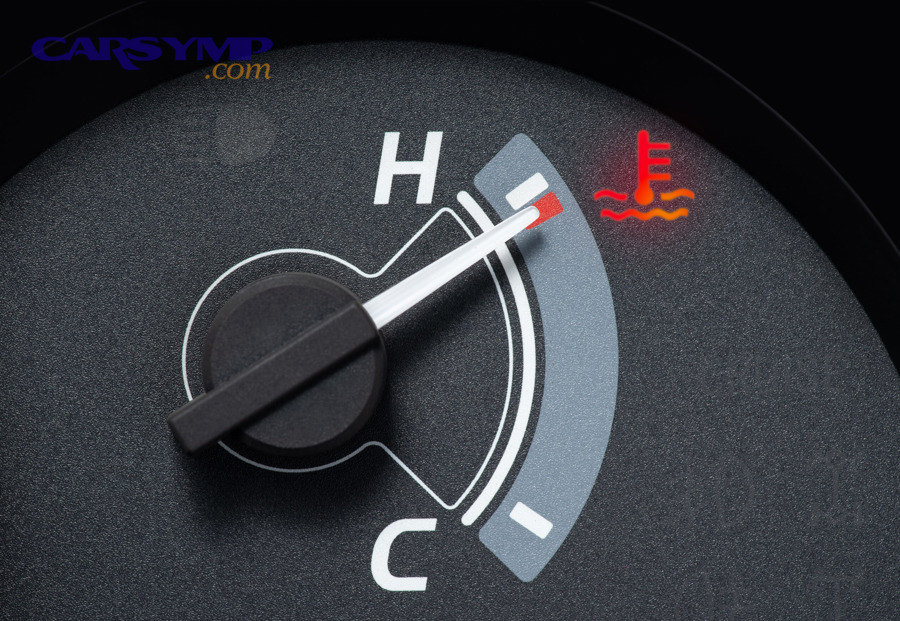
Could it be a temperature sensor or gauge error rather than real overheating?
Yes—it can be sensor or gauge error if the temperature reading behaves erratically or contradicts physical symptoms, but you should assume real overheating until you verify actual temperature via scan data, IR readings, or consistent signs like boiling coolant.
However, the key comparison is not “gauge vs intuition,” but “gauge vs independent measurement.”
How to rule it out:
- Check if the radiator fan ever gets commanded on (many cars do this based on sensor input).
- Compare dashboard gauge behavior to real indicators: steam, smell, reservoir boil-over, heater output.
- If available, read live coolant temperature via an OBD scanner and compare trends.
A sensor error often shows spikes and drops, while real overheating tends to climb and stay high unless cooling capacity changes.
Is a head gasket leak causing overheating mainly at idle or after heat soak?
Yes—a head gasket leak can cause overheating mainly at idle or after heat soak because combustion gases can enter the cooling system, creating bubbles that reduce heat transfer and push coolant out; it may start subtle and worsen over time.
More importantly, you should look for a pattern of unexplained coolant loss and “bubbling” behavior rather than relying on one symptom.
Clues that raise suspicion:
- Coolant level drops without visible external leaks.
- Reservoir bubbles continuously after warm-up.
- Sweet exhaust smell or white smoke (not always present).
- Oil contamination can occur, but some failures show no milkiness early.
Ways to rule it in/out:
- Cooling system chemical test for combustion gases (block test).
- Pressure test with observation for pressure rise at startup.
- Professional diagnosis if other causes are eliminated.
This is “rare” compared to fans and coolant leaks, but it’s serious enough to include when the basics don’t add up.
Can trapped air pockets after coolant service cause overheating at idle?
Yes—air pockets after coolant service can cause overheating at idle because trapped gas disrupts coolant circulation and heat transfer, creating localized hot spots and unstable temperature control until the system is properly bled.
Then, the giveaway is often inconsistent heater performance and temperature spikes that change with RPM.
Common scenarios:
- Recent coolant flush, thermostat replacement, radiator replacement, or hose work
- Overheating began immediately after service
- Gurgling sounds behind the dashboard (heater core area)
How to rule it out:
- Follow the correct bleeding procedure for your vehicle (some require vacuum fill or specific bleed screws).
- Recheck coolant level after multiple heat cycles.
- Watch for stable heater output and stable temperature behavior.
According to a study by Chalmers University of Technology from the Division of Vehicle Engineering and Autonomous Systems, in 2012, research on air elimination documented that trapped gas during filling and early operation changes system behavior and needs mitigation strategies for stability. (publications.lib.chalmers.se)
Could a collapsing hose or internal restriction reduce flow at certain conditions?
Yes—collapsing hoses or internal restrictions can reduce coolant flow and cause overheating at idle or during specific RPM/temperature conditions, because suction can flatten a weak lower hose and block circulation when demand changes.
Besides, this problem can be intermittent, which makes it easy to miss if you only inspect when cold.
What to look for:
- Soft, spongy lower radiator hose (especially without an internal spring where one is expected)
- Hose appears “sucked in” when revving or when hot
- Debris or delamination inside hoses (older hoses can shed internally)
How to rule it out:
- Inspect hose condition hot and cold (carefully).
- Replace aged hoses proactively if they’re soft or swollen.
- Check for kinks, pinched routing, or aftermarket hose fit issues.
Evidence (if any)
According to a study by University of Victoria from the Department of Mechanical Engineering, in 2013, validated CFD work on automotive cooling fan interaction reported radiator-side performance alignment to test data within a maximum deviation of ±7.9%, underscoring that fan/engine-bay airflow strongly influences low-speed and idle cooling effectiveness. (islandscholar.ca)