


Overheating at highway speed is usually a capacity problem—the engine is making more heat than the cooling system can reject under sustained load—so the fastest fix is to follow a priority checklist that confirms coolant level, pressure, airflow, and circulation in the right order.
Because overheating at speed behaves differently than overheating in traffic, this guide explains the highway-only patterns (hills, towing, steady 60–75 mph) that point to specific failures, so you stop guessing and start testing the most likely cause first.
You’ll also get a symptom-to-cause map that turns what you observe (heater goes cold, coolant pushes into the bottle, temperature spikes on long grades) into a short list of likely culprits—especially pressure loss, radiator restriction, and hose collapse.
Introduce a new idea: once you understand the pattern, the rest of the article walks you through a step-by-step diagnostic flow that keeps terminology consistent and helps you decide what’s safe to check at home versus what needs a shop test.
What does “overheating at highway speed” mean, and how is it different from overheating at idle?
“Overheating at highway speed” is a temperature rise that happens mainly during steady cruising or load (high RPM, hills, towing), not while idling, because the cooling system fails under sustained heat production rather than low-airflow conditions.
To better understand this pattern, start by separating what the gauge is doing from why the cooling system can’t keep up.
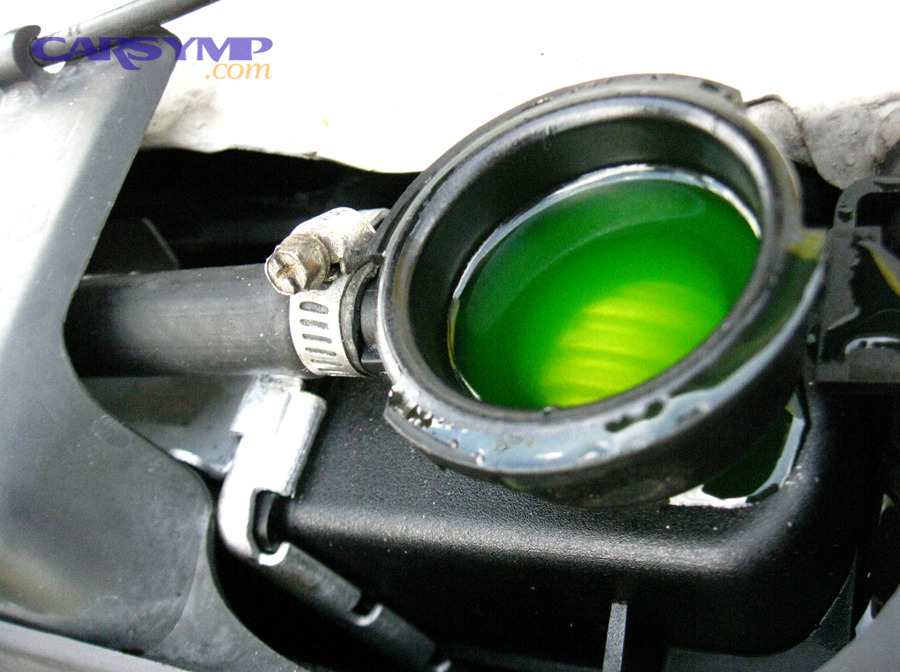
At idle, the engine makes comparatively less heat, and electric fans play a big role in pulling air through the radiator. On the highway, airflow is usually abundant, so a highway-only overheat often points to restricted heat transfer or restricted coolant flow, or a loss of system pressure that lowers the coolant’s boiling margin.
Think of it as a simple equation:
- Heat in (engine load) rises at speed, especially on grades, hot days, or towing.
- Heat out (radiator capacity + coolant circulation) must match it.
- If heat out falls behind—even slightly—the temperature climbs steadily until it crosses the warning threshold.
What are the most common temperature patterns that confirm it’s highway-speed overheating (not a faulty gauge)?
The most reliable confirmation is a repeatable pattern: the temperature stays normal around town and at idle, then rises predictably at highway speeds or long climbs.
Specifically, look for these patterns:
- Pattern A: “Steady climb at speed”
Temperature slowly increases after 5–20 minutes at 60–75 mph. This often correlates with radiator restriction, pressure loss, or circulation limits that only show under continuous load. - Pattern B: “Only on hills / towing”
The gauge rises on grades or while towing, then drops on descents. This commonly points to a capacity shortfall: partial radiator clogging, weak cap, marginal pump/thermostat performance, or added heat load (like transmission heat). - Pattern C: “Spike, then recover when you slow down”
A sharp climb followed by recovery at lower speed can happen when coolant flashes to steam in hot spots due to low pressure or air pockets, then re-stabilizes once load drops. - Pattern D: “Dash gauge looks scary, scanner looks normal”
If you can read the engine coolant temperature (ECT) via a scan tool and it stays stable while the dash gauge swings, suspect a gauge/sensor behavior issue rather than true overheating.
A useful rule: true overheating tends to be progressive and repeatable under the same conditions. Electrical gauge issues tend to be erratic and less tied to load/time.
Is it safe to keep driving when the car overheats at highway speed?
No—continuing to drive with overheating at highway speed is not safe because it risks (1) boiling coolant and sudden loss of cooling, (2) cylinder-head warping from sustained high temperature, and (3) head-gasket damage from pressure spikes and hot spots.
Next, use a “protect the engine” sequence that matches the reality of overheating on highway conditions.
If the temperature starts climbing:
- Reduce load immediately: ease off throttle, avoid passing, turn off A/C.
- Add heat rejection: set cabin heat to max and fan high (uncomfortable, but effective as an emergency radiator).
- Exit safely: get off the highway before the gauge hits the red zone.
- Do not open the cap hot: wait until fully cool to avoid scalding.
Stop driving and shut down if you see steam, smell hot coolant, get a “engine over temp” warning, or the gauge enters the red zone. Highway overheating can turn into a rapid coolant loss event because higher RPM and system pressure can push coolant out quickly once boiling starts.
What is the step-by-step causes checklist for overheating at highway speed?
There are 7 main checks for overheating on highway: coolant level/air, system pressure, airflow path, radiator restriction, circulation (thermostat/pump), hose integrity, and fan/control issues—because highway overheating almost always comes from reduced capacity in one of these categories.
Below, follow the checklist in order so you eliminate the easiest, highest-probability causes before you chase deeper failures.
Is the coolant level correct and free of air pockets under highway conditions?
Yes—coolant level must be correct and the system must be properly de-aerated, because low coolant and trapped air reduce heat transfer, create hot spots, and can trigger overheating at speed when engine load rises.
More specifically, check for these signs of low coolant/air:
- Low reservoir after cool-down (not just hot expansion level)
- Heater output changes (goes cool when temperature rises)
- Gurgling behind the dash (heater core air)
- Temperature “surge” behavior (spike then drop)
A practical method:
- Let the engine cool fully.
- Verify reservoir level at the “COLD” mark.
- Inspect for dried coolant residue around hose junctions, radiator end tanks, and the water pump weep hole.
- If your vehicle has a bleed screw or specific bleed procedure, follow it—air pockets are stubborn and can mimic bigger failures.
This is where many “overheating on highway” complaints begin: an engine that’s almost full can idle all day, but sustained highway load pushes it over the edge.
Is the cooling system holding pressure (radiator cap and leaks)?
Yes—system pressure must be maintained because pressure increases the coolant’s boiling point, and pressure loss can cause boiling at temperatures that would otherwise be safe.
Besides preventing boil-over, proper pressure supports stable circulation and reduces localized flashing in hot spots. A weak cap can “look fine” visually but vent early under sustained RPM/load.
Key checks:
- Cap seal condition: cracked rubber, damaged seat.
- Correct cap rating: wrong pressure rating can reduce boiling margin.
- Pressure test: the system should hold pressure without dropping quickly.
- Overflow behavior: repeated pushing coolant into the bottle after highway driving can indicate pressure loss or combustion gas intrusion.
A helpful numeric anchor: many references note that a pressurized cooling system increases boiling point; for example, Summit Racing explains that pressure raises boiling point and gives a rule-of-thumb increase per PSI. (help.summitracing.com)

Is airflow through the radiator/condenser stack restricted at speed?
Yes—even at highway speeds, restricted airflow can cause overheating if the radiator/condenser stack is blocked, the fins are bent, or the vehicle’s ducting forces air to bypass the core instead of passing through it efficiently.
This is the heart of Clogged radiator and restricted airflow diagnosis: you’re not only asking “is there air?”—you’re asking “is air going through the core effectively?”
Common restrictions that matter more than people think:
- Bug/debris matting between the A/C condenser and radiator
- Bent fins that reduce effective surface area
- Aftermarket grille screens that look harmless but reduce mass airflow
- Missing air dams/undertrays that disrupt the designed pressure differential
- Foam seals or shrouds missing so air spills around the core instead of through it
A quick driveway check:
- With the engine cool, use a flashlight to look through the grille.
- Inspect the condenser face (front) first—if it’s packed with debris, the radiator behind it is often worse.
- Gently clean with low-pressure water from the engine side outward (avoid bending fins).
Is the radiator internally restricted or partially clogged?
Yes—partial internal restriction is one of the most common “fine at idle, overheats on highway” causes because the radiator cannot pass enough coolant or transfer enough heat under sustained load.
Internal restriction happens from:
- Corrosion and scale
- Mixing incompatible coolants
- Stop-leak residue
- Long-neglected coolant
Two strong indicators:
- Uneven temperature distribution across the radiator
Coolant should shed heat relatively evenly. Cold “stripes” or large cold zones can indicate plugged tubes. - Highway-only rise with normal fans and full coolant
That pattern strongly suggests the radiator is no longer achieving its designed heat rejection.
If you have an infrared thermometer, scan the radiator face after a highway run (carefully, engine running and fans may cycle). You’re looking for abnormally cool sections compared to surrounding areas—signs that coolant isn’t flowing through those tubes.
Is coolant circulation adequate at higher RPM (thermostat + water pump)?
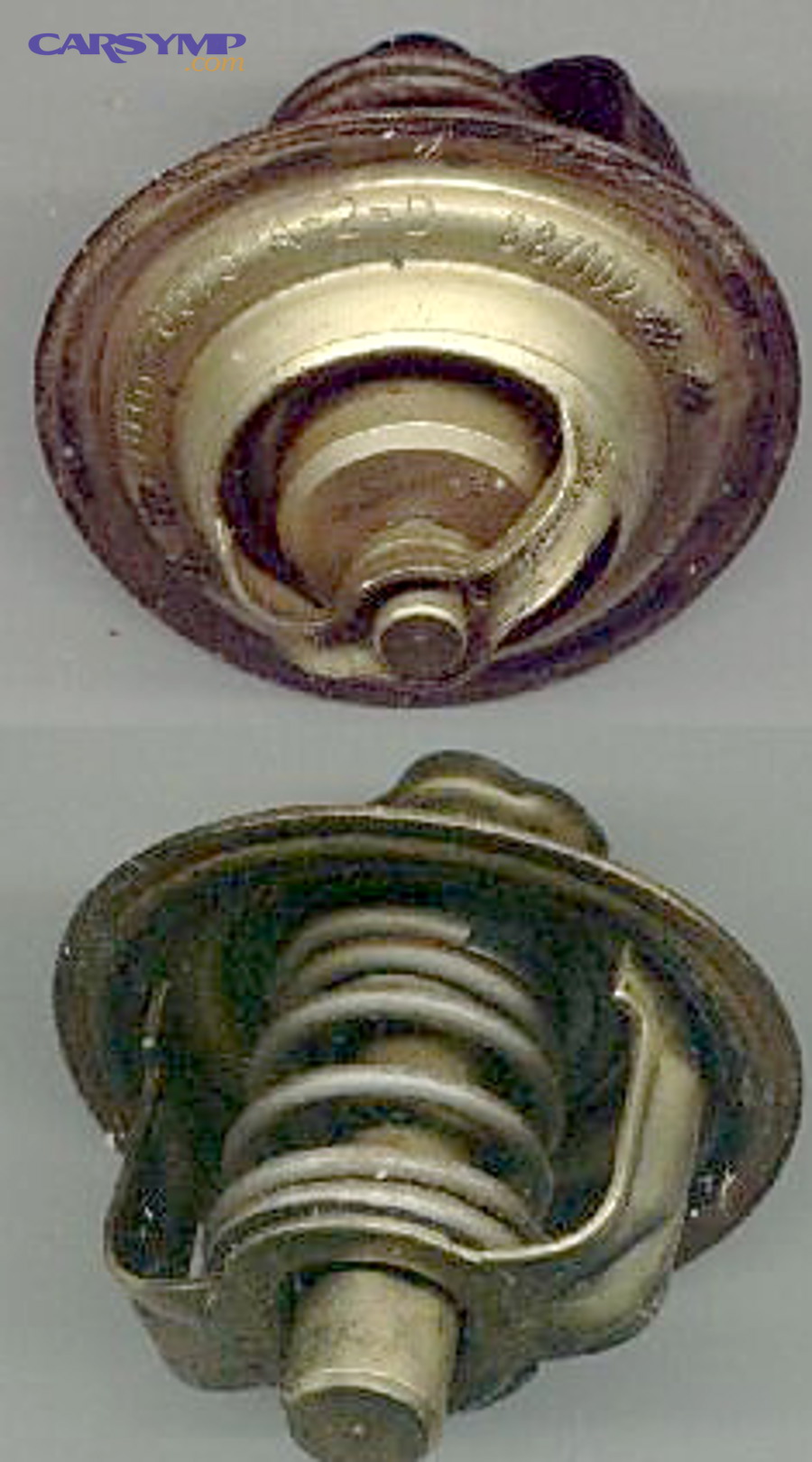
Yes—circulation must scale with load, and weak circulation often shows up as Water pump and thermostat highway behavior problems: the thermostat may not open fully, or the pump may not deliver stable flow under sustained RPM.
Start with the thermostat:
- A thermostat can fail partially closed, opening “enough” for idle but not enough for highway heat load.
- Some thermostats stick intermittently, especially if deposits are present.
- If the thermostat housing contains the temperature sensor, a fault there can also mislead the ECU’s fan strategy.
Then the water pump:
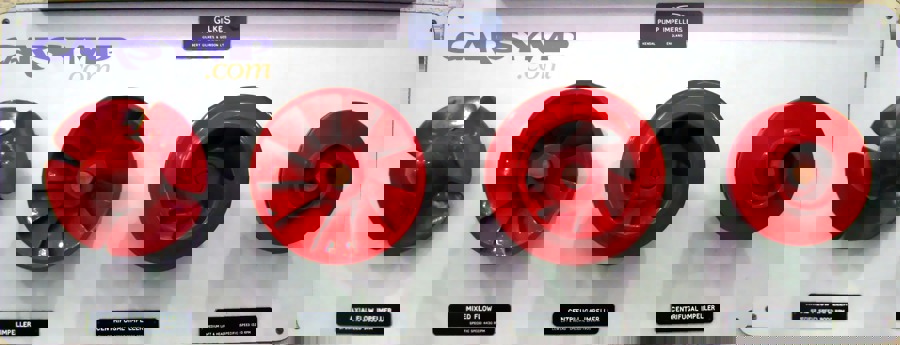
- Pumps can suffer from impeller erosion, loose impellers, or cavitation-aeration issues in marginal systems.
- Belt-driven pumps can slip if the belt tensioner is weak.
- Electric water pumps can reduce output due to control faults, overheating electronics, or degraded pump internals.
Practical clues that point to circulation issues:
- Heater output drops when temperature rises (flow disruption).
- Upper hose is hot but lower hose stays cool longer than expected (may indicate thermostat restriction or radiator flow issues—interpret carefully with other signs).
- Temperature rises quickly with load and does not stabilize.
Are radiator hoses collapsing or restricting flow at highway RPM?
Yes—hoses can collapse or kink under higher RPM, especially the lower radiator hose, because pump suction increases with RPM and can pull a soft hose inward, cutting flow and causing overheating at speed.
This failure can be sneaky because:
- At idle, suction is low, so the hose looks normal.
- On the highway, suction rises and the hose can partially collapse, reducing flow right when you need it most.
The classic scenario is a lower hose missing its internal anti-collapse spring or using a soft aftermarket hose. Hot Rod describes how molded lower radiator hoses can collapse with increased rpm due to negative pressure at the inlet side.
A quick test:
- After a safe, controlled drive that reproduces the issue, shut down and let it cool enough to touch hoses safely.
- Inspect the lower hose for soft spots, flattened sections, or evidence of suction collapse.
- If the hose has no internal spring (when your design expects one), that’s a strong lead.
Is the radiator fan system contributing even at speed (or failing intermittently)?
Yes—while fans matter most at low speeds, fan control can still contribute to highway overheating in real life because highway overheating often includes transitions: exiting ramps, slowing for traffic, or climbing while airflow changes.
Intermittent fan faults can create a pattern like:
- Temp rises on the highway (system is marginal)
- You slow down and need fan assistance
- Fan doesn’t engage properly
- Temp spikes sharply and looks “highway related”
Check:
- Fan operation with A/C on (many vehicles command the fan)
- Relays and fan control module behavior
- Two-speed systems (low works, high fails)
- Wiring/connectors for heat-related intermittent faults
If the vehicle only overheats when you slow down after a highway pull, fan operation rises in priority—even if the initial trigger was a marginal radiator or pressure issue.
Which causes are most likely based on symptoms (quick diagnosis map)?
There are 4 high-probability symptom groups that predict the most likely causes: load-only rise, speed-only rise, heater behavior changes, and overflow/bubbles—because each symptom points to a specific failure mode in pressure, airflow, restriction, or combustion gas intrusion.
Next, use this map to shorten the time between “it overheats” and “I know what to test.”
Before the map, here’s context: the same temperature rise can be caused by very different failures. The goal is to match what you observe with the most logical capacity bottleneck.
A quick reference table below summarizes common symptom patterns and what they usually indicate.
| Symptom pattern you observe | Most likely category | Why it fits highway overheating |
|---|---|---|
| Overheats on long hills/towing, okay on flat | Capacity shortfall (radiator restriction, pressure loss, circulation marginal) | Load increases heat-in faster than heat-out |
| Overheats at steady highway, okay in town | Radiator internal restriction / pressure loss / hose collapse | Sustained heat rejection or flow can’t keep up |
| Heater goes cool as temp rises | Low coolant/air pocket or circulation interruption | Heater core is a “flow indicator” |
| Coolant pushed into overflow after highway run | Pressure loss or combustion gas intrusion | Boiling margin reduced or gases increase pressure |
If it overheats only on hills or towing, what does that point to?
If overheating happens mainly on hills or towing, it usually points to a system that’s marginal under load—most often radiator restriction, weak system pressure (cap/leak), or circulation limits—because hills and towing increase combustion heat and transmission heat while demanding sustained heat rejection.
Start with the big three under load:
- Radiator efficiency: partial clogging reduces the radiator’s effective capacity, which shows up first on long grades.
- Pressure integrity: if pressure is not maintained, coolant can begin to boil in hot spots under load.
- Circulation: thermostat not fully opening or pump limitations can reduce flow right when engine heat rises.
If your vehicle is automatic and towing, consider the transmission cooler’s heat load. Heat from transmission fluid can be rejected through the same radiator stack, raising cooling demand further.
If it overheats at speed but cools down at idle, what does that suggest?
If it overheats at speed but cools at idle, it most often suggests a circulation or restriction problem (radiator internal clogging, hose collapse, pressure loss, or thermostat/pump behavior) rather than a pure fan issue—because fans are most critical at idle and low speed, not at highway airflow.
However, interpret it carefully:
- “Cools at idle” might happen because you’re no longer producing as much heat, not because the system is healthier.
- If it cools quickly after you slow down, that can reflect reduced engine load more than improved cooling.
This is also a good moment to double-check that you’re truly seeing “cooling at idle” and not just “cooling at lower load,” which feels similar on the gauge.
If the heater blows cold when it starts overheating, what does that indicate?
If the heater blows cold when overheating begins, it usually indicates low coolant/air pockets or interrupted circulation—because the heater core loses hot coolant flow first when the system is low, aerated, or flow is restricted.
Use the heater as a diagnostic instrument:
- Heater goes cold + gurgling → air trapped or low coolant
- Heater goes cold + overflow pushes coolant → pressure/boiling issues or gas intrusion
- Heater stays hot but engine overheats → more consistent with radiator heat rejection limits than total circulation loss
This is why topping off coolant “fixes it for a day” in many cases: the underlying leak or pressure issue remains, but the heater symptom temporarily disappears.
If coolant pushes into the overflow or you see bubbles after a highway run, is that a head gasket sign?
Yes—persistent bubbles or repeated overflow after highway load can be a head gasket sign, but it can also be caused by a weak cap or boiling from pressure loss, so you should confirm it with a proper test rather than guessing.
Here’s how to separate them:
- Weak cap / pressure loss boiling: coolant smell, overflow after hard driving, but bubbles may not be continuous once cooled.
- Combustion gas intrusion: repeated pressurization, consistent bubbling, unexplained coolant loss, and overheating that worsens under load.
If you suspect combustion gases, a shop “block test” (combustion gas test) and cooling-system pressure test are the fastest ways to confirm.
What tests confirm the root cause before you replace parts?
The best confirmation method is a 3-part test set—(1) pressure and cap integrity, (2) heat-transfer/flow checks across the radiator, and (3) circulation verification under load—because these tests prove whether the bottleneck is pressure, restriction, or flow before you spend money.
To better understand what each test tells you, match the test to the failure mode you’re trying to confirm.
What basic DIY checks can you do safely in the driveway after a highway overheat?
You can do several safe DIY checks, as long as you work only on a fully cooled system and avoid opening a hot pressurized cap.
Start with this DIY sequence:
- Cold coolant level check
Verify reservoir level at the cold mark, and look for evidence of repeated loss. - Visual leak inspection
Look for dried crust at hose ends, radiator seams, thermostat housing, and around the water pump weep hole. - Airflow/fin inspection
Confirm the condenser/radiator face is not packed with bugs or debris; check for bent fins. - Hose integrity check
Squeeze hoses (cold) for soft spots; inspect the lower hose carefully for signs of collapse or missing spring in designs that use one. - Fan function quick check
With A/C on (if safe and applicable), verify fan engagement. If the fan doesn’t run when expected, you’ve found a high-value lead. - Road-test observation checklist (controlled)
Reproduce the symptom safely: note whether it rises only on grades, whether the heater changes, and whether it pushes coolant out.
A key safety note: never remove the radiator cap when hot. Use the reservoir level and cool-down inspection instead.
What shop tests provide the clearest answers (pressure, cap, block test, radiator flow)?
A shop can confirm the cause with high signal-to-noise tests that DIY methods can only approximate:
- Cooling system pressure test
Proves whether the system holds pressure and can reveal slow leaks that only open under pressure. - Radiator cap pressure test
Confirms the cap opens at the correct pressure and seals properly. A cap that vents early reduces boiling margin during highway load. - Combustion gas (block) test
Detects exhaust gases in the cooling system—highly informative when overheating is load-related and accompanied by overflow/bubbles. - Radiator temperature mapping / flow testing
Confirms internal restriction by showing uneven heat distribution or insufficient flow through the core.
If your symptoms strongly match a restriction or pressure problem, these tests prevent “parts darts” (random replacement) and keep the fix aligned with the true bottleneck.
Evidence: According to a study by Drexel University from the Department of Mechanical Engineering and Mechanics, in 2007, a Formula SAE cooling-system project emphasized measuring airflow, coolant flow, and pressure drop to correctly size and verify radiator and fan performance under load—highlighting why flow/pressure validation matters before concluding a component is “fine.” (researchdiscovery.drexel.edu)
How can you prevent highway-speed overheating after the fix?
You can prevent recurring highway-speed overheating by (1) keeping coolant chemistry and pressure control healthy, (2) protecting radiator airflow and internal cleanliness, and (3) validating repairs with a repeatable load test—because highway conditions expose marginal systems quickly.
In addition, prevention is the antonym of diagnosis: once you’ve solved the cause, the goal shifts to keeping capacity stable over time.
What maintenance prevents radiator restriction and pressure loss over time?
Focus on maintenance that protects heat transfer and boiling margin:
- Use the correct coolant type for your vehicle and avoid mixing incompatible chemistries.
- Follow coolant service intervals to reduce corrosion, scale, and deposit formation.
- Replace a questionable radiator cap proactively if it fails testing or shows seal damage; the cap is a small part with an outsized impact on boiling margin. Pressure/boiling relationships are widely documented in cooling-system references. (help.summitracing.com)
- Keep the condenser/radiator face clean, especially after bug season or off-road driving.
- Protect ducting and seals: missing undertrays and foam seals can reduce effective airflow through the core.
If your vehicle tows regularly, consider additional maintenance:
- Transmission fluid service (reduces added heat load)
- Ensuring the cooling stack (condenser/radiator/trans cooler) stays clean and unobstructed
What post-repair checks confirm the overheating is truly gone at highway speed?
Yes—your repair is truly confirmed only if the temperature remains stable under the same conditions that previously caused overheating (same route, similar ambient temperature, similar load), because highway overheating is pattern-driven and must be validated the same way it appeared.
Use a simple validation method:
- Repeat the same highway segment that reliably triggered the issue.
- Monitor ECT (scan tool if available) and watch for steady-state stability.
- Check that the heater stays consistently hot and that the reservoir level remains stable after cool-down.
- Inspect for any fresh coolant residue after the test drive.
If the vehicle passes two or three repeat runs without climbing past its normal operating range, you’ve likely restored the system’s true capacity.
Do towing, high ambient heat, or mountain driving change the checklist priorities?
Yes—those conditions raise heat input and reduce margin, so the checklist priorities shift toward capacity and pressure integrity first, because even small restrictions or weak pressure control will surface faster.
In practice:
- Towing and mountains put more emphasis on radiator efficiency and circulation capacity.
- High ambient temperatures reduce the radiator’s temperature delta (less heat rejection potential), making airflow and internal cleanliness even more critical.
- If you’re near the limit, even a mildly restricted radiator or slightly weak cap can become the tipping point.
If the system is healthy but still marginal for your usage, you may need an application-appropriate upgrade (e.g., restored ducting, correct fan strategy, improved cooler stacking)—but only after confirming stock components are working correctly.
What rare modern-vehicle issues can cause highway overheating (and mimic cooling failure)?
Rare modern causes usually involve control or airflow management that changes under load:
- Active grille shutter faults reducing airflow when they should open
- Electric water pump control faults that reduce flow under sustained operation
- Thermostat housing sensor issues causing incorrect coolant-flow strategy
- Cooling fan strategy software issues (wrong command under specific thresholds)
- Coolant aeration/cavitation in certain designs if pressure control is marginal
If you’ve confirmed coolant level, pressure integrity, radiator condition, and hoses—and the vehicle still overheats only under specific load conditions—these rare issues move higher on the list, and a scan-tool-based diagnosis becomes more valuable.
Evidence (additional safety anchor): Many cooling-system references explain that pressurization increases coolant boiling point, which is why pressure loss (cap/leak) can trigger boil-over during highway load even when coolant temperature isn’t extreme. (help.summitracing.com)