


Bad O2 sensor symptoms usually show up as a simple pattern: your engine computer loses accurate exhaust feedback, so the car may run less efficiently, feel less smooth, and illuminate the check engine light. If you can recognize the most common signs early, you can avoid wasted fuel and prevent small issues from turning into expensive emissions problems.
Next, it helps to understand what the oxygen sensor is actually “telling” the engine computer and why an oxygen sensor failure often looks like other problems (vacuum leaks, misfires, or exhaust leaks). That context prevents guesswork and keeps you from replacing parts you don’t need.
Then, you’ll want a practical way to separate “likely O2 sensor” symptoms from “something else is causing the O2 sensor to complain.” A quick symptom checklist plus a few fast checks (scan codes, wiring, exhaust leaks) usually gets you to the right answer.
Introduce a new idea: once you can identify the signs and confirm the cause, you can decide how urgent the repair is and what happens after fixing it—so you clear codes properly and get emissions readiness back without surprises.
What is an O2 (oxygen) sensor and what does it do in your car?
An O2 (oxygen) sensor is an exhaust-mounted sensor that helps the engine computer adjust fuel delivery by measuring oxygen content (or oxygen-related signals) so the engine can run efficiently while keeping emissions low.
To better understand why bad O2 sensor symptoms show up the way they do, it helps to see how the sensor fits into the engine’s “feedback loop.”
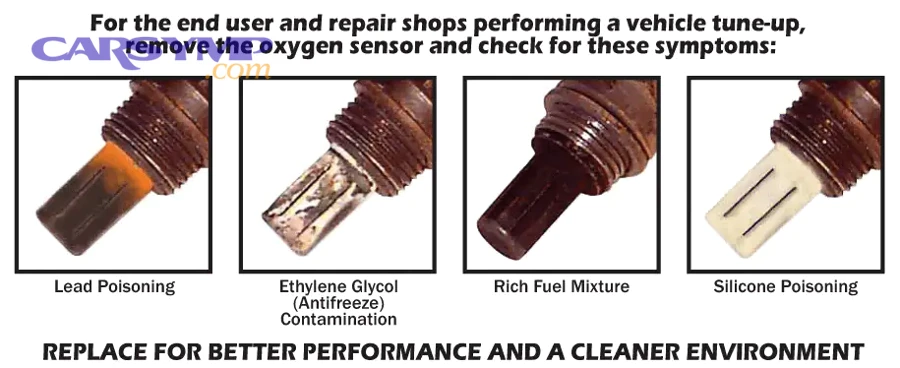
Where the O2 sensor sits in the “fuel control loop”
Your engine doesn’t guess the air-fuel ratio forever. It constantly measures, adjusts, and re-measures. The O2 sensor is the measurement step.
- Air enters the engine through the intake (filtered air, measured by a MAF/MAP system).
- Fuel injectors add fuel based on what the computer thinks the engine needs.
- Combustion happens, producing exhaust gases.
- The O2 sensor reads the exhaust and reports whether the mixture looks rich or lean (or provides a signal the ECU interprets as such).
- The ECU trims fuel (adds or subtracts fuel) to bring the mixture back toward its target.
When that feedback is wrong, delayed, or missing, the ECU may overcorrect, undercorrect, or fall back on safer default settings. That is the start of many classic bad O2 sensor symptoms: poor MPG, rough idle, hesitation, and an emissions-related check engine light.
Upstream vs downstream sensors (simple version)
Most modern vehicles have at least one sensor before the catalytic converter and often another after it.
- Upstream (Sensor 1): influences fuel trims and drivability. Problems here are more likely to affect how the car feels.
- Downstream (Sensor 2): mainly monitors catalytic converter efficiency. Problems here may not change drivability much, but you may still see a check engine light and failed emissions readiness.
That split matters because some oxygen sensor failure situations “feel” dramatic, while others feel normal but still cost you at inspection time.
Do bad O2 sensors always trigger a Check Engine Light?
No—bad O2 sensor symptoms do not always trigger a check engine light immediately, because the fault can be intermittent, slow to cross the ECU’s threshold, or masked by driving conditions; many drivers first notice MPG loss, roughness, or smell changes before the light stays on.
Next, because the check engine light is often the first signal people look for, it’s useful to understand what the ECU is actually detecting—and what it might be misreading.
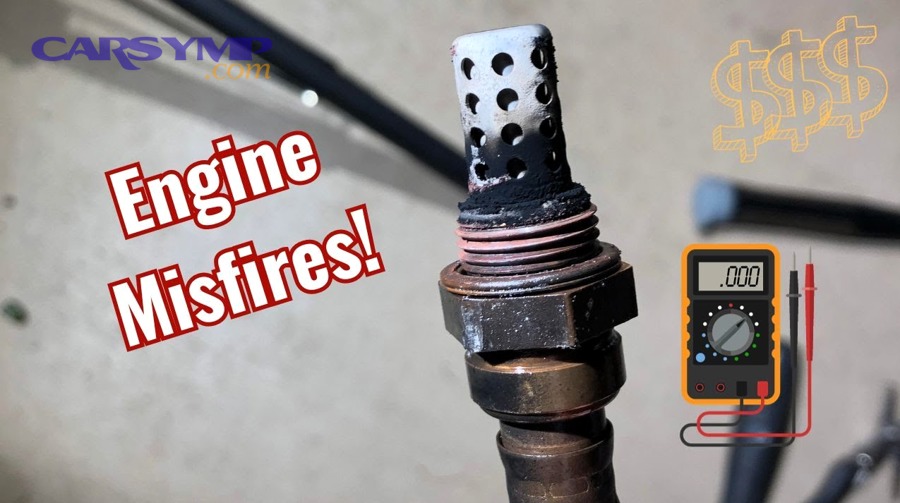
Which check engine codes most often point to an O2 sensor problem?
There are several common OBD-II code groups that often relate to O2 sensors, based on circuit behavior, heater performance, and sensor response characteristics.
There are 4 main types of O2-sensor-related codes: circuit codes, heater codes, response/performance codes, and mixture/catalyst-adjacent codes—grouped by what the ECU thinks is failing.
- Sensor circuit codes (signal problem)
- Often indicate the ECU sees an impossible value, a stuck value, or an open/short in wiring.
- Typical pattern: “circuit malfunction,” “high voltage,” “low voltage,” or “no activity detected.”
- Heater circuit codes (warm-up problem)
- Many O2 sensors include an internal heater so they reach operating temperature quickly.
- A heater failure can cause slow warm-up and cold-start drivability issues, plus delayed closed-loop operation.
- Slow response / performance codes (lazy sensor behavior)
- The sensor may still work, but it reacts too slowly to changes.
- This can create subtle symptoms: intermittent MPG drop, occasional hesitation, borderline emissions readiness failures.
- Fuel mixture / catalyst-adjacent codes (often misattributed)
- Some codes suggest rich/lean conditions or catalyst efficiency problems.
- These can be caused by an O2 sensor, but they can also be caused by vacuum leaks, misfires, exhaust leaks, fuel pressure issues, or a failing catalytic converter.
Practical takeaway: a code can point you toward the O2 sensor, but it should never be the only reason you replace it. Pair codes with symptoms and basic checks.
Can a check engine light be caused by something else that looks like a bad O2 sensor?
Yes—many problems can mimic bad O2 sensor symptoms because they change the oxygen content of exhaust or confuse the ECU’s fuel calculations.
Then, if you want to avoid the “replace the sensor, light comes back” loop, focus on the most common look-alikes first.
Common O2 look-alikes include:
- Exhaust leak upstream of the sensor: extra oxygen gets sucked in, so the sensor “reports” lean even if the engine isn’t lean.
- Vacuum leak: adds unmetered air → lean condition → rough idle and lean codes.
- MAF sensor contamination: wrong airflow estimation → wrong fueling → O2 sensor reports correction needs.
- Misfires (ignition or fuel-related): unburned oxygen and fuel distort exhaust readings, creating confusing O2-related codes.
- Fuel pressure/injector issues: can push rich/lean conditions that the O2 sensor simply detects.
If the car has multiple codes (misfire codes plus O2 codes, for example), the O2 sensor may be a “messenger,” not the root cause.
What are the most common bad O2 sensor symptoms you can feel or notice?
Bad O2 sensor symptoms most commonly include a check engine light, worse fuel economy, rough idle or occasional stalling, sluggish acceleration or hesitation, and sometimes unusual exhaust smell or a failed emissions test—because the ECU can’t control the mixture as precisely.
To better understand which symptom matters most, it helps to match each sign to what’s happening in fuel control.
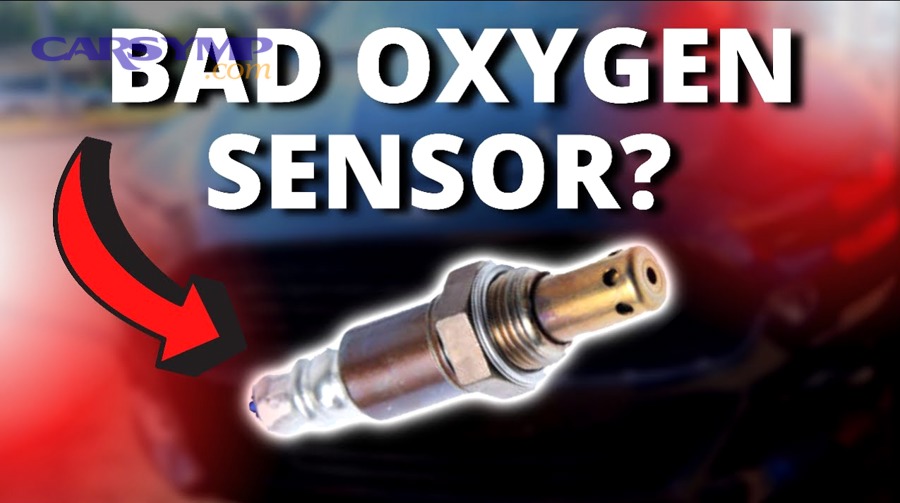
Is poor gas mileage a strong sign of a failing O2 sensor?
Yes—poor gas mileage is a strong sign of failing O2 sensor behavior because (1) the ECU may enrich the mixture for safety, (2) fuel trims can drift as the sensor becomes slow or inaccurate, and (3) the system may stay in open loop longer, especially after cold starts.
Next, because MPG changes can be subtle, use a “before vs after” mindset rather than a one-tank guess.
What “MPG loss from oxygen sensor failure” often looks like:
- Gradual decline over weeks or months: classic “lazy sensor” pattern.
- Sudden drop after the light comes on: a heater or signal fault can push the ECU into conservative fueling.
- Highway MPG hit more noticeable than city (sometimes): sustained conditions can reveal small fueling errors.
Also, remember that winter fuel blends, tire pressure, and short trips can reduce MPG too. The key difference is that O2-related MPG loss often arrives with at least one other sign: slight roughness, hesitation, or a stored code.
Can a bad O2 sensor cause rough idle, stalling, or misfires?
Yes—a bad O2 sensor can contribute to rough idle, stalling, or misfire-like shaking because (1) incorrect feedback leads to unstable fuel trims at idle, (2) the ECU can swing rich/lean while “hunting” for the target mixture, and (3) delayed sensor response can destabilize closed-loop control when load changes quickly.
Then, because true misfires also distort O2 readings, you need to distinguish “misfire caused by fueling control” from “misfire causing O2 confusion.”
How it typically feels:
- Rough idle at stoplights: the engine may feel uneven, especially after warming up.
- Occasional stumble on takeoff: the ECU transitions from idle fueling to light-load fueling and can overshoot.
- Stalling that’s worse after a warm restart: some sensor/heater issues show up as inconsistent feedback after heat soak.
If you have a flashing check engine light or persistent misfire codes, treat that as urgent—because misfires can overheat the catalytic converter quickly.
What exhaust clues (smell, smoke, emissions failure) suggest an O2 sensor issue?
Several exhaust clues can suggest an O2 sensor problem, including a fuel-rich odor, sootier exhaust than normal, and an emissions-test failure—because incorrect feedback can push the mixture rich or prevent the catalyst from operating in its ideal range.
More specifically, these clues become more meaningful when they appear together with poor MPG and a check engine light.

Key exhaust-related signs to watch:
- Fuel smell from the tailpipe (rich-running hint): excess fuel can pass through partially burned.
- Sulfur / “rotten egg” smell: often tied to catalytic converter chemistry when it’s stressed; an O2-driven rich condition can contribute.
- Black smoke (less common on modern cars, but possible): indicates a rich condition or fueling error.
- Failed emissions test: O2 sensor problems can prevent readiness monitors from setting or push tailpipe emissions out of spec.
If you fail emissions, don’t assume it’s always the O2 sensor. But if the failure is paired with a related code and MPG drop, the sensor becomes a prime suspect.
Evidence: According to a study by the University of Technology Sydney from the School of Civil and Environmental Engineering, in 2020, simulating a faulty oxygen sensor signal increased THC emissions by about 4.2× and CO emissions by about 5.1×, while fuel consumption rose by roughly 8.9%–10.8% versus baseline under their test conditions.
What’s the difference between “running rich” and “running lean” symptoms?
Running rich tends to show up as fuel smell, worse MPG, and sometimes sooty exhaust, while running lean is more associated with hesitation, surging, and higher combustion temperatures; an O2 sensor problem can trigger either pattern depending on how the signal fails and how the ECU compensates.
However, because many non-sensor faults also create rich/lean symptoms, you should treat this section as a “symptom direction guide,” not a final diagnosis.
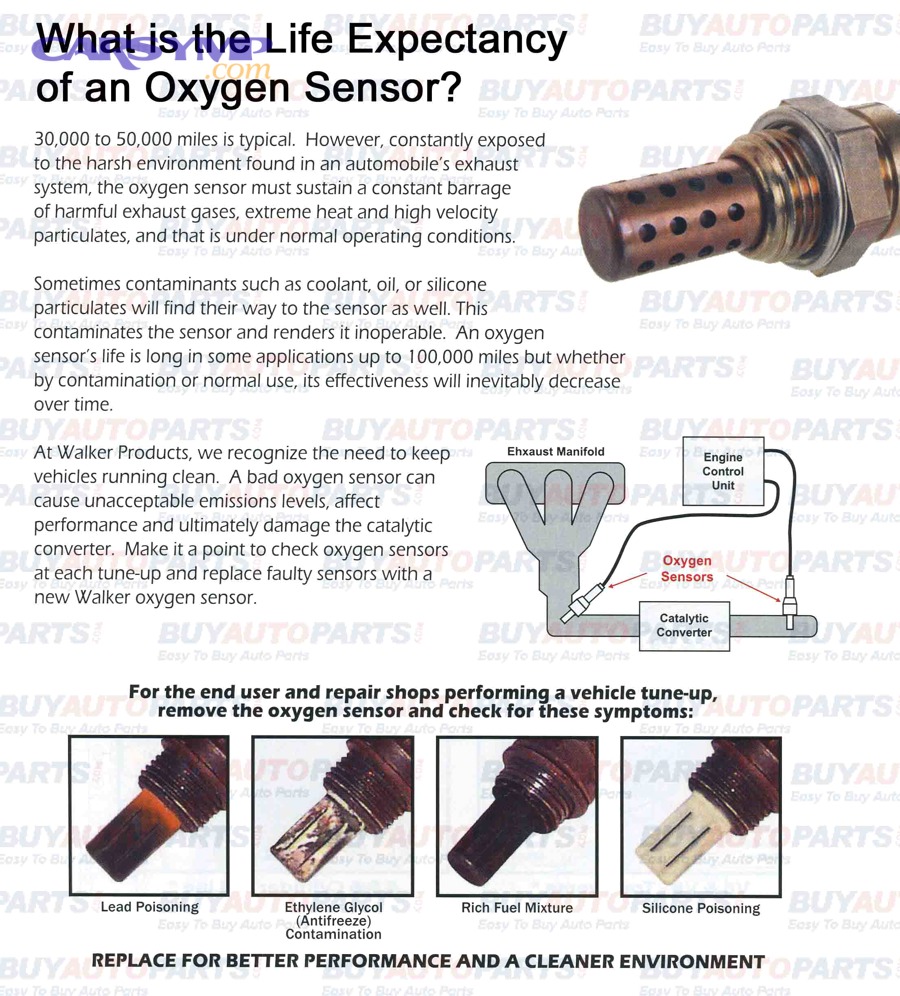
Which symptoms most often indicate a rich condition from a faulty O2 sensor?
A rich condition often presents with (1) noticeably worse fuel economy, (2) a fuel-heavy exhaust smell or dark deposits, and (3) sluggish response or rough idle—because excess fuel reduces combustion efficiency and overloads emissions control.
Next, because rich running is the faster path to catalytic converter damage, it’s the direction you should take most seriously.
Common “rich” clues that pair well with O2 sensor faults:
- MPG drops without a change in driving style
- Exhaust smells fuel-like, especially after idling
- Rough idle that improves slightly with revs
- Soot on the tailpipe (more noticeable on older vehicles)
- Spark plug deposits (if you’re already diagnosing and happen to inspect them)
Why O2 sensor failure can cause rich running:
- If the sensor signal is inaccurate or slow, the ECU may keep adding fuel to “correct” a problem that isn’t real.
- If the ECU loses reliable feedback, it may run conservatively rich to protect the engine under load.
Which symptoms most often indicate a lean condition that can be misread as an O2 issue?
A lean condition often presents with (1) hesitation or stumble on acceleration, (2) surging at steady speeds, and (3) higher engine temperatures or pinging/knock risk—because insufficient fuel can make combustion hotter and less stable.
Then, because lean conditions are frequently caused by air leaks or airflow measurement errors, you should check those before blaming the sensor.
Lean-like clues that commonly get misattributed to O2 sensors:
- Hesitation when you tip into the throttle
- Surging at cruising speed
- Rough idle that improves when you add load (like turning on A/C can sometimes change the symptom)
- Lean codes plus vacuum-leak symptoms (high idle, hissing, brittle hoses)
- Exhaust leaks ahead of the sensor (false lean readings)
If your car feels lean and you hear an exhaust tick near the manifold, fix the leak first. An upstream leak can make a healthy O2 sensor look “wrong.”
How can you confirm it’s the O2 sensor (not another problem) without guessing?
You can confirm an O2 sensor problem by combining (1) symptom pattern, (2) code context, and (3) a few quick checks—especially wiring and exhaust leaks—then validating with basic scan-tool live data before committing to parts.
To better understand, start with the fastest checks that eliminate common false alarms.
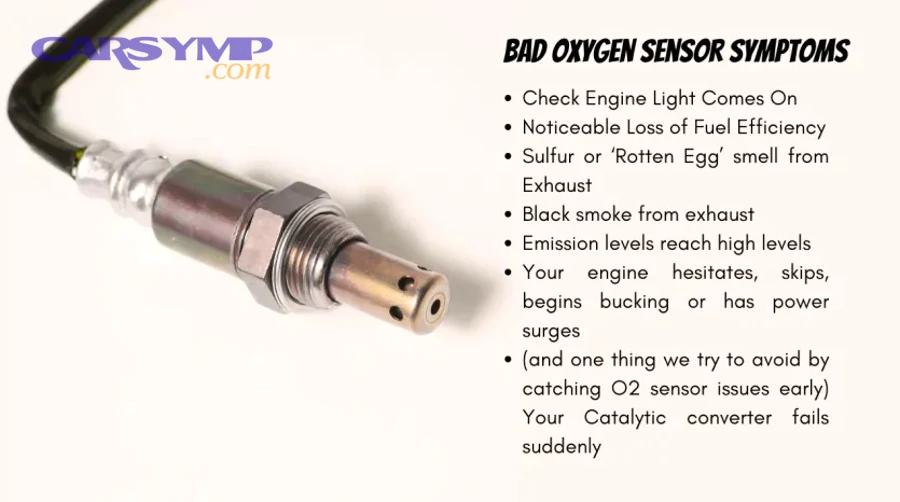
What quick checks can you do in 10 minutes at home?
There are 5 quick checks you can do in about 10 minutes: scan for codes, inspect the sensor harness, look for upstream exhaust leaks, check for obvious vacuum leaks, and review recent maintenance events that could have disturbed connectors.
Next, do them in order so you don’t waste time chasing rare causes first.
- Scan codes and note freeze-frame basics
- Write down codes and whether they return immediately after clearing.
- Notice if the fault sets cold, warm, idle, or cruise.
- Inspect O2 sensor wiring and connector
- Look for melted insulation near the exhaust.
- Check for loose connectors, corrosion, or torn locking tabs.
- Check for exhaust leaks before the sensor
- Listen for ticking near the manifold on cold start.
- Look for black soot marks at flanges or cracks.
- Check for obvious vacuum leaks
- Look for split hoses, loose clamps, cracked intake boots.
- Think about recent work
- Recent exhaust work, engine work, or sensor replacement increases the chance of a pinched wire or loose connector.
If you find a wiring or exhaust leak issue, fix that first. A healthy sensor can’t report correctly if the exhaust stream is contaminated by outside air.
What scan tool clues support a “bad O2 sensor” diagnosis?
Scan tool clues that support a bad O2 sensor include abnormal sensor activity (stuck high/low, no activity), consistently slow response, and fuel trims that swing or peg while other systems look normal—especially when the engine is warm and in closed loop.
More specifically, you’re looking for the sensor’s behavior to make sense alongside fuel trims, not just in isolation.
Helpful live-data patterns (general, not vehicle-specific):
- Stuck signal: the value barely changes even when RPM changes.
- Very slow reaction: the ECU changes fueling but sensor feedback lags far behind.
- Heater-related issue: the car stays open loop longer; the sensor looks “dead” until it warms.
- Fuel trims extreme: short-term or long-term trims consistently very high or very low, suggesting the ECU is compensating hard.
A practical “sanity test” concept:
- If you rev lightly and the sensor never responds, that’s suspicious.
- If the sensor responds but trims are extreme, the sensor may be reacting to a real mixture problem (like a vacuum leak), not causing it.
When the pattern supports oxygen sensor failure, oxygen sensor replacement becomes the most direct fix—especially on higher-mileage vehicles where sensors can slow down over time.
Is it safe to drive with a bad O2 sensor and how urgent is it?
Yes, you can often drive briefly with a bad O2 sensor, but it’s urgent to fix because (1) fuel economy can drop quickly, (2) emissions can rise and readiness can fail, and (3) prolonged rich running can damage the catalytic converter—turning a sensor repair into a much bigger bill.
More importantly, urgency depends on how the car runs and what the check engine light is doing.
Can a bad O2 sensor damage the catalytic converter?
Yes—a bad O2 sensor can contribute to catalytic converter damage because (1) rich mixtures overheat the catalyst, (2) unburned fuel can ignite inside the converter, and (3) prolonged incorrect fueling forces the converter to work outside its designed oxygen-storage window.
Next, since converters are expensive, this is the “why” behind not ignoring an oxygen sensor failure for months.
What increases risk the most:
- Persistent rich condition
- Misfires (especially with a flashing check engine light)
- Fuel smell + loss of power + high exhaust heat
- Repeated short trips where the converter never stabilizes
If your car starts to smell strongly of fuel or loses power significantly, stop treating it like a minor inconvenience.
When should you stop driving and get it checked immediately?
Yes—you should stop driving and get it checked immediately if you have (1) a flashing check engine light, (2) severe misfires/violent shaking or stalling in traffic, or (3) strong fuel smell or overheating symptoms, because these conditions can quickly damage emissions hardware and create safety risks.
Then, once you’re in a safer situation, you can decide whether a tow or short, gentle drive to a shop makes sense.
“Stop driving now” triggers:
- Flashing CEL
- Hard stalling at intersections
- Severe loss of power
- Smoke from exhaust that is heavy or persistent
- Fuel smell strong enough to notice outside the car
If symptoms are mild (steady CEL, slightly rough idle, MPG drop), you can typically schedule diagnosis soon—but avoid long highway trips and heavy loads until it’s resolved.
O2 sensor replacement labor time (what to expect): In many vehicles, labor can be relatively quick when the sensor is accessible, but rusted threads, tight packaging, or heat shields can increase time. Shops often quote labor based on access and whether it’s an upstream or downstream sensor.
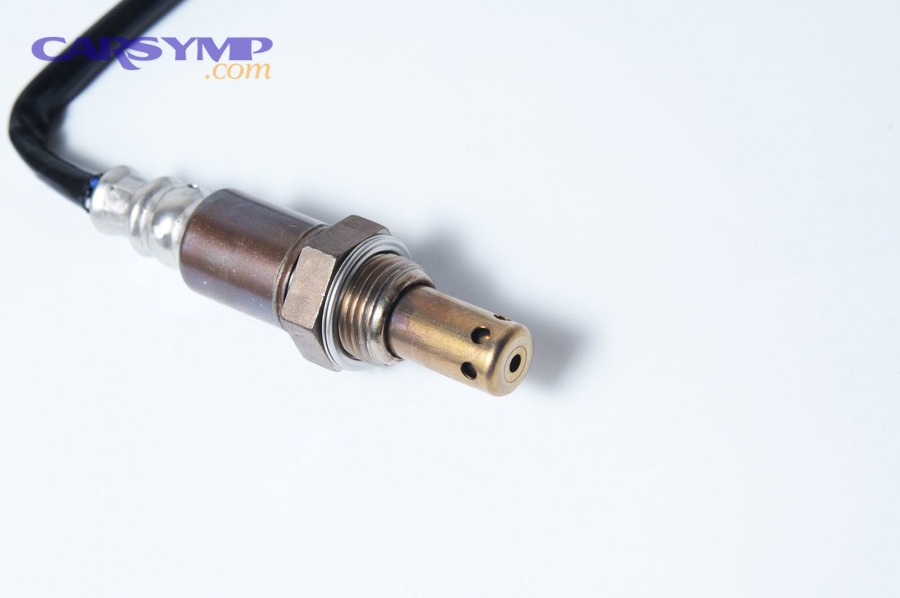
oxygen sensor replacement is usually straightforward: remove the old sensor, install the new one (often with appropriate anti-seize if specified by the manufacturer), and confirm no exhaust leaks or wiring issues remain. The key is not to replace it blindly—confirm it with the symptom-and-scan pattern first.
What changes with upstream vs downstream O2 sensors (and wideband vs narrowband)?
Upstream sensors typically affect drivability and fuel trims, downstream sensors mainly monitor catalytic converter performance, and wideband sensors provide a more precise signal than narrowband sensors—so symptoms, codes, and “how the car feels” can differ even when the root problem is still oxygen sensor failure.
Next, this micro-level understanding helps you target the right sensor and set expectations after repair.
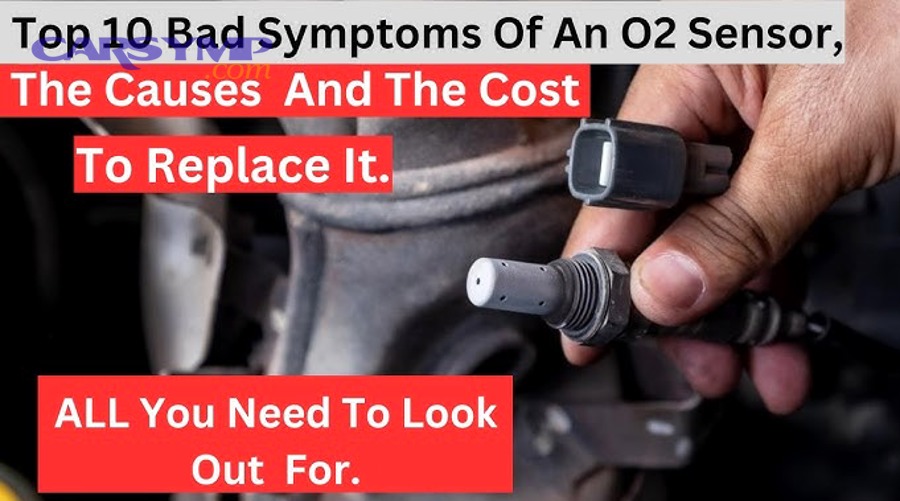
How do upstream (Sensor 1) vs downstream (Sensor 2) symptoms differ?
Upstream sensors (Sensor 1) drive fuel corrections and are more likely to cause rough idle, hesitation, and MPG loss, while downstream sensors (Sensor 2) mostly affect catalyst monitoring and are more likely to cause a persistent check engine light with minimal drivability change.
However, because the ECU uses both sensors in different strategies across vehicles, you should still verify with codes and data.
Typical real-world differences:
- Upstream failure pattern
- Noticeable MPG drop
- Idle quality changes
- Hesitation during transitions (idle → light throttle)
- Fuel trims that look unstable or extreme
- Downstream failure pattern
- “Car feels fine, but light won’t go away”
- Catalyst efficiency-related codes are more common
- Emissions readiness and inspection issues are more common
If you replaced a downstream sensor but symptoms remain, consider whether the upstream sensor—or a mixture problem—was the real driver.
Does a “lazy” O2 sensor cause intermittent symptoms and random MPG drops?
A “lazy” O2 sensor can cause intermittent symptoms because its response slows, so the ECU overcorrects late, especially during steady cruising and small throttle changes; that delay can translate into occasional hesitation and unpredictable MPG drops without an immediate hard failure code.
Then, because this is subtle, many drivers call it “bad gas” or “the car feels off sometimes” before they ever scan for codes.
Signs that fit the “lazy sensor” profile:
- The car is mostly drivable but feels inconsistent.
- The check engine light may appear, disappear, and return.
- Fuel economy worsens gradually rather than suddenly.
- The issue is more obvious when the engine is fully warm.
This is also where replacing the sensor can feel like a “reset” for how smoothly the engine runs—because closed-loop control becomes stable again.
How can an O2 sensor affect emissions readiness and inspection results?
An O2 sensor can affect emissions readiness because the ECU needs stable sensor feedback to run self-tests (monitors) and confirm the catalyst and fuel control systems are working; when the sensor signal is faulty, monitors may not complete, leading to inspection failure even if the car seems to run fine.
More importantly, what happens after you fix it determines whether you pass inspection right away.
After oxygen sensor replacement, many drivers run into the same question: After replacement: clearing codes and readiness—what now?
- Clear codes correctly
- A scan tool can clear codes; disconnecting the battery may also clear them but can reset other learned values.
- Expect monitors to reset
- Clearing codes often resets readiness monitors to “not ready.”
- Drive to set readiness
- Normal mixed driving (city + steady cruise) often completes monitors over time, but some cars need specific drive cycle patterns.
If you repair the sensor and clear codes the day before inspection, you might fail for “not ready” even though the repair is correct. Plan for some driving time after repair.
Which problems are commonly mistaken for a bad O2 sensor (and the fastest way to separate them)?
Vacuum leaks, exhaust leaks, misfires, and MAF issues are commonly mistaken for a bad O2 sensor; the fastest way to separate them is to check for air/exhaust leaks and misfire codes first, then verify O2 activity and fuel trims with a scan tool before replacing parts.
In addition, using a “cause → effect” mindset keeps you from blaming the sensor for what it’s merely reporting.
Quick separation checklist:
- Hear an exhaust tick / see soot marks near manifold? Fix exhaust leak first.
- High idle + hissing + lean codes? Look for vacuum leak first.
- Misfire codes present? Diagnose misfire first; misfires distort O2 readings.
- MAF-related code or dirty intake tract? Clean/diagnose MAF path first (when appropriate).
- O2 code alone + sensor wiring damage? Sensor is more likely the root cause.
Evidence: According to a study by the University of Technology Sydney from the School of Civil and Environmental Engineering, in 2020, simulated faulty oxygen sensor signals increased fuel consumption by about 8.9%–10.8% compared with baseline in their tested vehicle conditions, while also sharply increasing pollutant emissions.
Evidence (if any)
According to a study by the University of Technology Sydney from the School of Civil and Environmental Engineering, in 2020, simulated faulty oxygen sensor signals increased THC emissions by about 4.2× and CO emissions by about 5.1×, and fuel consumption increased by roughly 8.9%–10.8% compared with baseline under their reported test conditions.