


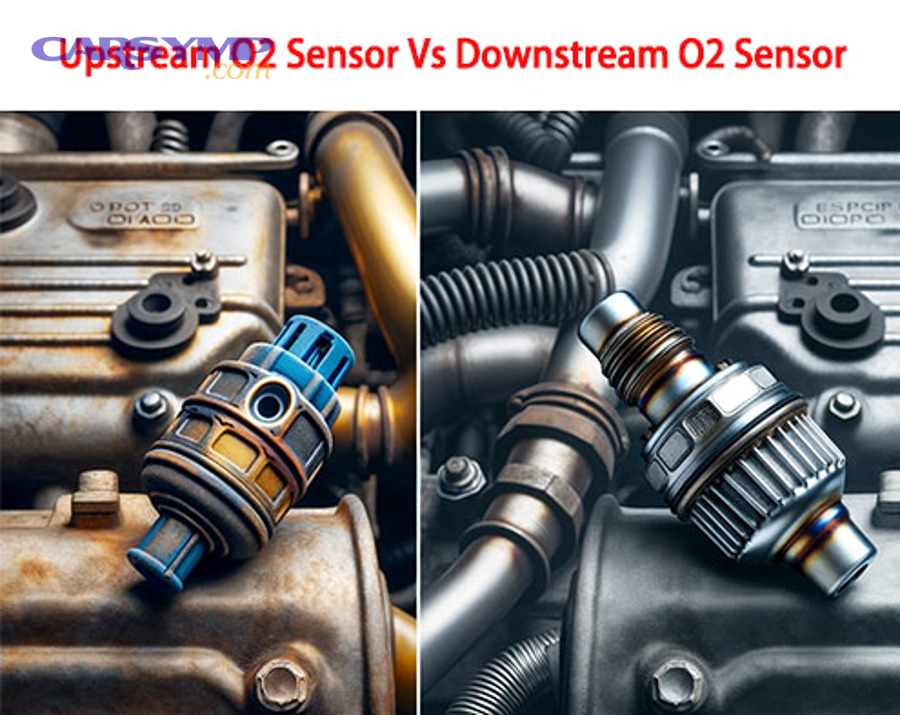
Upstream vs downstream O2 sensor differences come down to where each sensor sits and what job it performs: the upstream (pre-cat) sensor mainly helps the ECU control fuel mixture, while the downstream (post-cat) sensor mainly checks how well the catalytic converter is cleaning emissions.
Next, the easiest way to avoid confusion is to translate naming into plain language: Sensor 1 usually means upstream (before the cat) and Sensor 2 usually means downstream (after the cat), with Bank 1/Bank 2 describing which side of a V-engine the sensor belongs to.
Then, understanding how each sensor “talks” is just as important as knowing where it is: upstream sensors typically show faster, more active changes, while downstream sensors usually look steadier when the catalytic converter is healthy—especially when you compare them using scan tool live data and Using live data to confirm O2 sensor health.
Introduce a new idea: once you understand the differences, you can make smarter repair calls—like which sensor to replace first, when the problem is actually an exhaust leak or catalyst issue, and what to expect from an O2 sensor replacement cost estimate and O2 sensor replacement labor time during oxygen sensor replacement.
What is the difference between an upstream and downstream O2 sensor?
Upstream vs downstream O2 sensor differences are mainly about role and location: the upstream (pre-cat) oxygen sensor guides fuel control for the engine, while the downstream (post-cat) oxygen sensor verifies catalytic converter efficiency and emissions performance.
To better understand those roles, it helps to anchor the meaning of “upstream” and “downstream” to the catalytic converter and the exhaust flow.
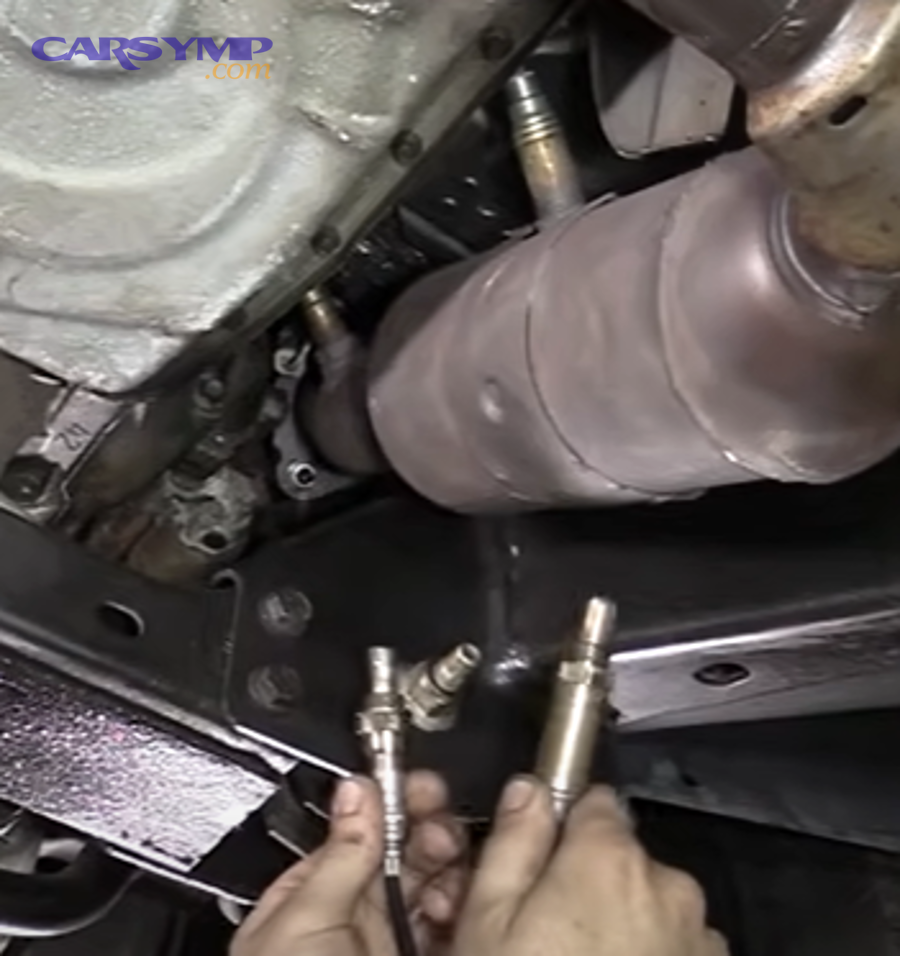
Upstream (pre-cat) sensor — what it does
- Feeds the ECU real-time exhaust oxygen information so the ECU can keep combustion near the target mixture (often stoichiometric in gasoline engines).
- Has a direct influence on fuel trims, drivability, and fuel economy when it fails or becomes slow.
- Typically matters most during closed-loop operation, after warm-up.
Downstream (post-cat) sensor — what it does
- Checks the “after” picture: whether the catalytic converter is storing oxygen and smoothing out exhaust fluctuations.
- Primarily supports catalyst monitor logic (think efficiency-related diagnostics), not day-to-day mixture control (with some exceptions on specific strategies).
A practical way to remember this: upstream helps the engine run right; downstream helps confirm the emissions system is working right.
Is an upstream O2 sensor the same as a pre-cat oxygen sensor?
Yes—an upstream O2 sensor is typically the same as a pre-cat oxygen sensor because (1) it sits before the catalytic converter, (2) it is the sensor most commonly used for fuel control feedback, and (3) it needs fast response to keep the ECU’s mixture adjustments accurate.
However, engine layouts can add nuance. Some vehicles have more than one catalytic converter (close-coupled plus underfloor), and “pre-cat” still means “before the catalyst being monitored/controlled,” not necessarily “before every catalyst in the entire system.” For DIY work, the safest habit is to identify the first catalytic converter in the exhaust path from the engine and treat the sensor ahead of it as upstream.
Is a downstream O2 sensor the same as a post-cat oxygen sensor?
Yes—a downstream O2 sensor is typically the same as a post-cat oxygen sensor because (1) it sits after the catalytic converter, (2) it is designed to evaluate catalyst effectiveness, and (3) it tends to show a more stable signal when the catalytic converter is doing its job.
More specifically, the downstream sensor is often called the “monitor” sensor because its data is heavily used by OBD readiness monitors that determine whether the catalyst system is behaving normally during specific test conditions.
How do upstream and downstream O2 sensors compare in what they control?
Upstream wins in controlling fuel mixture accuracy, downstream is best for catalyst monitoring, and neither is “optional” for emissions compliance because each sensor supports a different layer of engine + emissions strategy.
- Fuel trims and drivability: Upstream is the key player. A lazy or biased upstream sensor can push the ECU into over-fueling or under-fueling corrections, which can show up as hesitation, rough idle, or poor MPG.
- Catalyst efficiency diagnostics: Downstream is the key player. The ECU compares patterns between upstream and downstream to infer if the catalyst is storing oxygen and smoothing out exhaust composition.
- Check engine light behavior: Upstream issues commonly trigger fuel trim or sensor performance codes; downstream issues commonly trigger catalyst-monitoring related codes (though the catalyst itself can be the root cause).
Where are upstream and downstream O2 sensors located on the exhaust system?
Upstream vs downstream O2 sensor location is straightforward: upstream sensors mount in the exhaust before the catalytic converter, and downstream sensors mount after the catalytic converter, usually screwed into an exhaust bung along the pipe.
Next, the only reason it feels confusing is because manufacturers label sensors with “banks” and “sensor numbers,” so translating the naming is the fastest route to certainty.
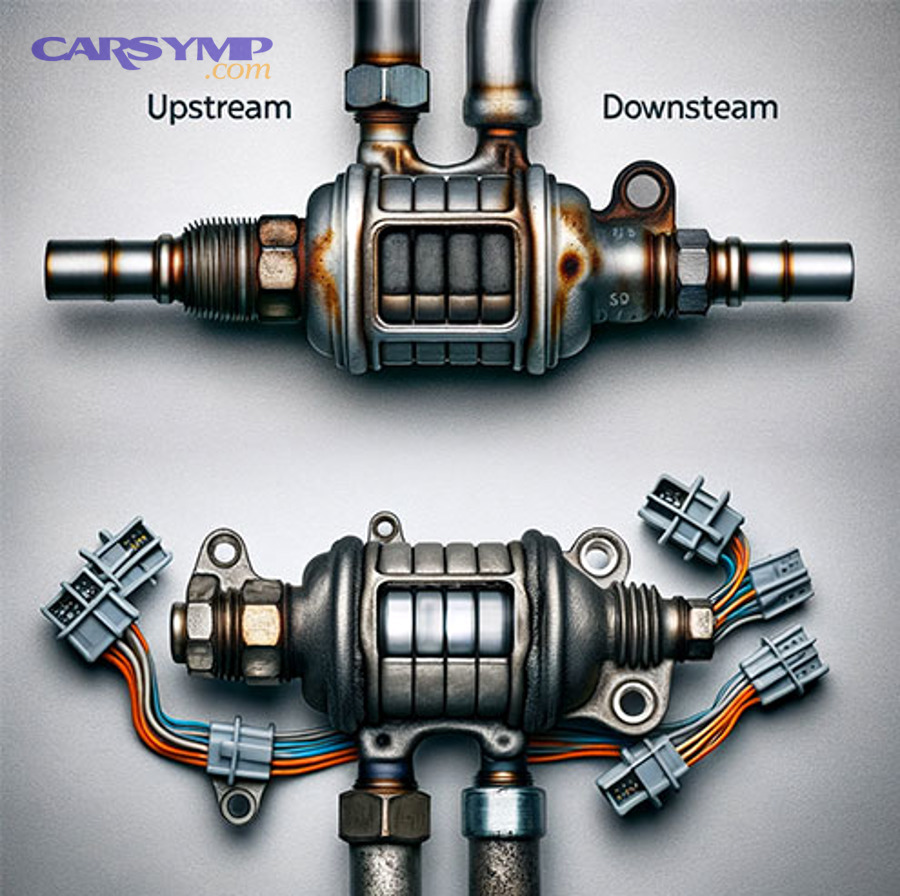
What do Bank 1 / Bank 2 and Sensor 1 / Sensor 2 mean?
Bank 1/Bank 2 describe engine sides, and Sensor 1/Sensor 2 describe position relative to the catalytic converter—that’s the simplest definition that prevents the most mistakes.
- Bank 1 = the cylinder bank that contains cylinder #1 (V6/V8/V10 engines).
- Bank 2 = the opposite cylinder bank.
- Sensor 1 (S1) = upstream / pre-cat sensor (before the catalytic converter).
- Sensor 2 (S2) = downstream / post-cat sensor (after the catalytic converter).
To illustrate how that naming maps in common layouts, this quick table shows what people usually mean when they say “upstream” and “downstream” on a V-engine:
| Common label | Typical OBD label | Typical placement |
|---|---|---|
| Upstream (Bank 1) | Bank 1 Sensor 1 | Before Bank 1 catalytic converter |
| Downstream (Bank 1) | Bank 1 Sensor 2 | After Bank 1 catalytic converter |
| Upstream (Bank 2) | Bank 2 Sensor 1 | Before Bank 2 catalytic converter |
| Downstream (Bank 2) | Bank 2 Sensor 2 | After Bank 2 catalytic converter |
On inline engines (I4/I5/I6), you often have only Bank 1—so you may see “Bank 1 Sensor 1” and “Bank 1 Sensor 2,” with no Bank 2 at all.
How can you tell upstream vs downstream without a scan tool?
You can identify upstream vs downstream without a scan tool by tracking the exhaust flow and confirming three physical cues: (1) where the catalytic converter is, (2) whether the sensor is before or after it, and (3) whether the harness routing matches that position.
- Find the catalytic converter(s). The converter is the larger “can” in the exhaust, often with heat shields.
- Trace from the engine outward. The first sensor you encounter before the converter is typically upstream.
- Look for the sensor after the converter. That’s typically downstream.
- Confirm with harness routing and connector location. Upstream sensors are often closer to the engine bay; downstream harnesses may run farther along the underside.
- Use the service manual diagram if available. This prevents misidentifying close-coupled catalysts or multiple converters.
If your goal is oxygen sensor replacement, this physical identification step prevents the most expensive DIY error: buying the right sensor… for the wrong position.
How does the layout differ on inline engines vs V engines?
Inline engines are simplest for sensor naming, V engines add banks, and multi-catalyst systems add extra sensors—that’s the comparison that matters.
- Inline engine (single bank): Typically 1 upstream + 1 downstream (though some setups add more).
- V engine (two banks): Commonly 2 upstream + 2 downstream (one pair per bank).
- Multi-catalyst layouts: Some vehicles may add additional downstream sensors for additional catalysts or for emissions strategies.
The core concept does not change: upstream = before the catalyst being evaluated; downstream = after it.
How do upstream and downstream O2 sensor signals differ?
Upstream O2 sensors typically show faster, more frequent changes, while downstream O2 sensors usually look steadier when the catalytic converter is healthy—because the catalyst smooths out oxygen fluctuations.
Next, the fastest way to make this real (instead of theoretical) is by using a scan tool and Using live data to confirm O2 sensor health to compare both sensors under the same conditions.
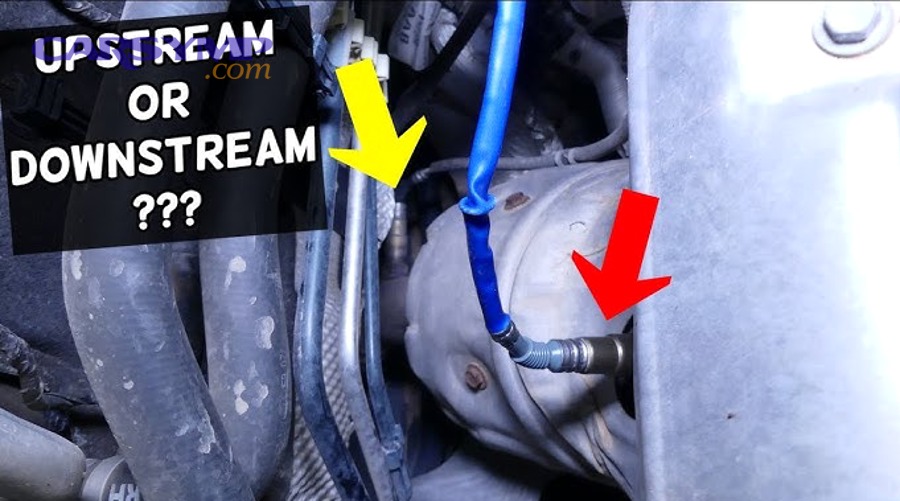
Do upstream O2 sensors switch faster than downstream sensors?
Yes—upstream O2 sensors typically switch faster than downstream sensors because (1) the upstream sensor directly reflects rapid combustion changes, (2) the ECU uses it for quick closed-loop corrections, and (3) the catalytic converter dampens fluctuations before exhaust reaches the downstream sensor.
However, “switching” depends on sensor type:
- Many older upstream sensors are narrowband and “switch” around stoichiometric.
- Many newer vehicles use wideband (AFR) sensors upstream, which report mixture more continuously (often displayed as lambda/AFR rather than a simple voltage flip).
This is where Using live data to confirm O2 sensor health becomes practical: you aren’t guessing based on a symptom—you’re comparing how the signals behave under the same engine load, RPM, and temperature.
What does it mean if the downstream sensor mirrors the upstream sensor?
Downstream “mirroring” means the post-cat signal is behaving too much like the pre-cat signal, which often suggests (1) reduced catalyst oxygen storage, (2) an exhaust leak affecting readings, or (3) a sensor/heater issue that makes the downstream sensor respond abnormally.
Then, interpret mirroring carefully:
- If the catalyst is healthy, the downstream sensor usually shows a more stable pattern because the catalyst stores and releases oxygen, smoothing the changes.
- If the catalyst is degraded, the downstream pattern may start resembling upstream because the converter is no longer buffering oxygen effectively.
This is one reason catalyst-related codes can be tricky: the ECU may be telling you “the post-cat behavior isn’t what I expected,” not “replace the downstream sensor immediately.”
To keep DIY diagnosis grounded:
- Compare upstream and downstream patterns after full warm-up.
- Check for exhaust leaks before the downstream sensor.
- Confirm there are no misfire or fuel trim issues that could overload the catalyst.
Are upstream and downstream O2 sensors interchangeable?
No—upstream and downstream O2 sensors are usually not interchangeable because (1) they may be different sensor technologies (wideband vs narrowband), (2) they can have different connectors or harness lengths, and (3) the ECU expects different response characteristics for each position.
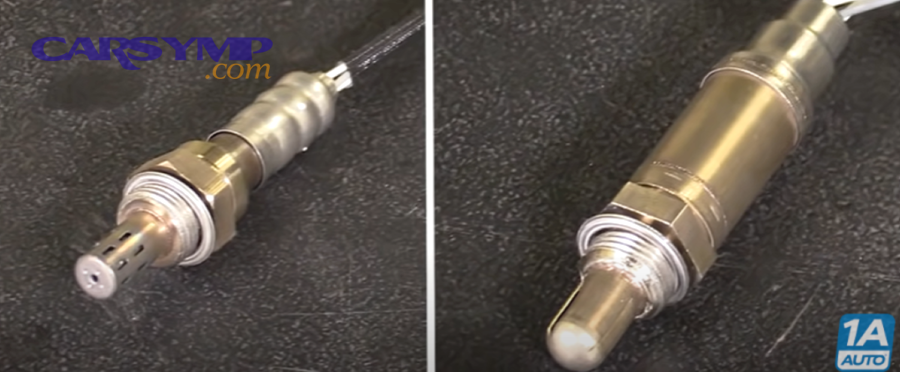
Next, this matters because swapping sensors “just to see” can create new codes, drivability issues, or wasted time—especially when the real problem is wiring or exhaust leaks.
Can you use a downstream O2 sensor in an upstream position?
No, you generally should not use a downstream oxygen sensor in an upstream position because (1) upstream control may require a specific wideband/AFR sensor, (2) the ECU needs fast and accurate feedback for fuel trims, and (3) connectors and calibration often differ even if the threads look identical.
Practically, this is how DIY swaps go wrong:
- The sensor threads in fine, but the connector doesn’t match.
- The connector matches, but the ECU reads an unexpected signal type.
- The car runs, but fuel trims drift and the check engine light returns.
If you’re planning oxygen sensor replacement, match by exact part number (OEM catalog or verified equivalent), not by “it looks the same.”
Can you swap Bank 1 Sensor 2 with Bank 2 Sensor 2?
Yes—sometimes you can swap Bank 1 Sensor 2 with Bank 2 Sensor 2 because (1) some vehicles use identical sensors for both banks, (2) the ECU logic may treat them similarly, and (3) identical part numbers often share the same calibration.
However, “sometimes” is doing the heavy lifting. Before swapping, verify:
- Same part number for both banks (not “close,” not “universal”).
- Same connector keying (manufacturers frequently prevent wrong installs).
- Same harness length (routing differs between banks; stretching is a failure waiting to happen).
When you can confirm identical part numbers, a bank-to-bank swap can be a quick diagnostic tactic—but it still doesn’t replace proper live data checks.
What’s the difference between wideband (AFR) and narrowband O2 sensors for upstream vs downstream?
Upstream wins for wideband/AFR usage on many modern engines, downstream is commonly narrowband for monitoring, and mixing them is usually a mistake because each sensor type reports mixture differently and the ECU expects a specific signal.
- Narrowband O2 sensor (common older upstream; common downstream): Best at indicating “rich vs lean around stoich,” often through a switching voltage signal.
- Wideband/AFR sensor (common modern upstream): Measures mixture over a broader range and often reports lambda/AFR more precisely.
This difference changes everything about compatibility:
- Even if the sensor threads are identical, a wideband sensor is not a drop-in replacement for a narrowband circuit.
- The ECU’s closed-loop strategy relies on the right sensor type in the right position.
O2 sensor replacement labor time also changes with sensor position:
- Upstream sensors are often more accessible from the engine bay on some cars, but can be heat-soaked and tight.
- Downstream sensors may require lifting the vehicle and working under it, which increases time and tool needs.
For a basic O2 sensor replacement cost estimate, think in buckets:
- Part cost: varies widely by sensor type (wideband typically costs more than narrowband) and by OEM vs aftermarket.
- Labor cost: depends on access, rust, and whether the sensor is on a manifold, close-coupled catalyst, or underbody pipe.
Which sensor should you replace when you have a check engine light?
There are three common “first picks” for which sensor to replace—upstream, downstream, or neither—based on what the code is telling you: upstream is most likely when fuel control is implicated, downstream is more likely when catalyst monitoring is implicated, and neither is correct when leaks/misfires are the real root cause.
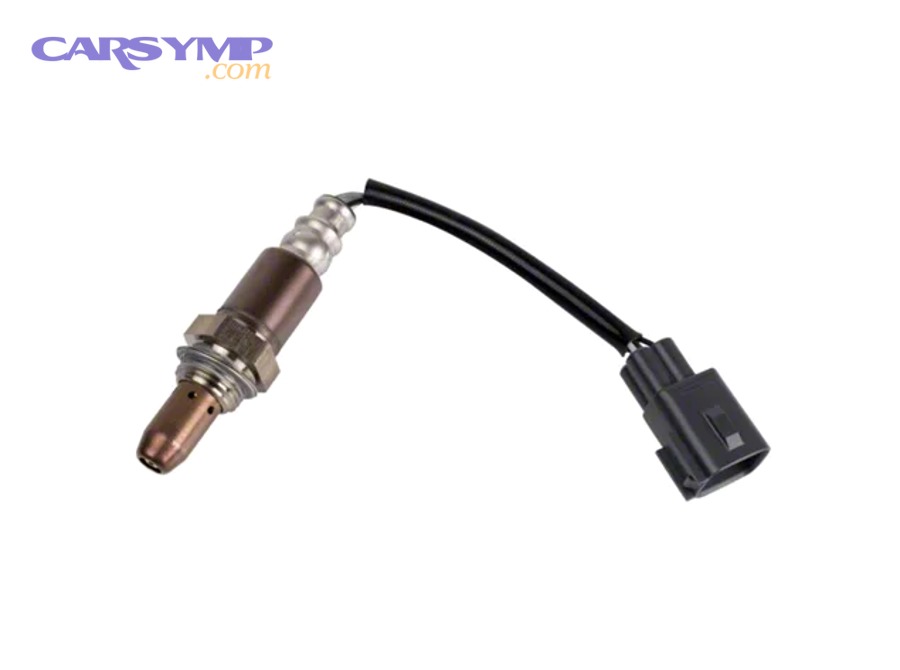
Next, that decision becomes much more reliable when you pair codes with live data instead of guessing from the check engine light alone.
Do upstream O2 sensor problems cause drivability and fuel economy issues more often?
Yes—upstream O2 sensor problems more often cause drivability and fuel economy issues because (1) the upstream sensor directly influences fuel trims, (2) slow response can make mixture corrections lag, and (3) biased readings can push the ECU to over-correct.
Common “upstream-leaning” clues for DIY diagnosis:
- Noticeable MPG drop without obvious leaks
- Hesitation or rough idle once warmed up
- Fuel trim-related codes or sensor response codes (varies by make/model)
This is where Using live data to confirm O2 sensor health pays off: if the upstream sensor is slow, stuck, or inconsistent versus expected behavior under steady conditions, replacement becomes a targeted decision rather than a gamble.
Do downstream O2 sensor problems usually relate to catalyst efficiency codes?
Yes—downstream O2 sensor problems often relate to catalyst efficiency codes because (1) the downstream sensor is central to catalyst monitoring logic, (2) heater failures can prevent accurate post-cat readings, and (3) wiring or contamination can mislead the ECU about catalyst performance.
But “catalyst efficiency code” does not automatically mean “bad downstream sensor.” It can also mean:
- The catalytic converter is actually degraded
- The engine has been running rich/misfiring and damaged the catalyst
- An exhaust leak is skewing post-cat readings
In other words, a downstream sensor can be the messenger—not always the culprit.
What quick checks help confirm an O2 sensor is the issue (not a leak or the catalytic converter)?
There are six quick checks that help confirm an O2 sensor is the issue: visual wiring inspection, exhaust leak check, heater circuit sanity check, warm-up verification, upstream/downstream pattern comparison, and fuel trim context—each one reduces the chance of replacing parts that aren’t broken.
- Check wiring and connectors first. Look for melted insulation near the exhaust, loose connectors, damaged pins, or harness rubbing.
- Check for exhaust leaks. Leaks before or near the sensor can pull in oxygen and create false “lean” signals.
- Confirm warm-up and closed-loop operation. A sensor can look “dead” when the engine is cold and still be fine once warmed.
- Compare upstream vs downstream behavior. A healthy catalyst often makes downstream look steadier than upstream.
- Look at heater-related codes/behavior. Heater failures can keep sensors too cold to operate properly.
- Use fuel trims as context. Fuel trims that are extreme can point to vacuum leaks, fuel delivery issues, or misfires rather than a sensor.
According to a study by University of Alaska Anchorage from the College of Engineering, in 2015, oxygen sensors and catalytic converters generally will not function properly until a vehicle reaches a standard operating temperature of about 70–100°C, and until then the ECU can remain in open loop with richer operation that increases emissions.
What are the less obvious factors that change upstream vs downstream O2 sensor readings?
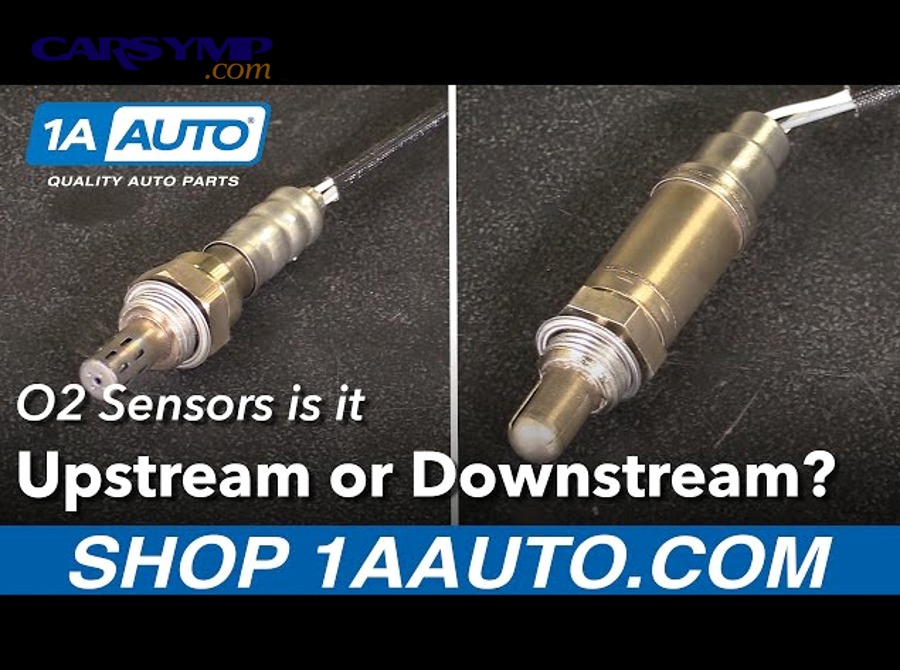
The less obvious factors that change upstream vs downstream O2 sensor readings include exhaust leaks, catalyst oxygen storage behavior, heater performance, modified exhaust components, and multi-catalyst layouts, all of which can make a good sensor look bad—or a bad catalyst look like a sensor issue.
Next, treating these factors as “filters” between the engine and the sensor helps you interpret data correctly instead of reacting to one confusing reading.
Can an exhaust leak make an upstream or downstream O2 sensor look bad?
Yes—an exhaust leak can make an upstream or downstream O2 sensor look bad because (1) fresh outside air can enter the exhaust stream and falsely increase measured oxygen, (2) leaks can disrupt normal sensor temperature and flow, and (3) turbulence can exaggerate switching patterns.
Then, focus on leak location:
- Leak before upstream sensor: can alter mixture control feedback and fuel trims.
- Leak between upstream and downstream (near the catalyst): can distort comparisons used for catalyst monitoring.
- Leak near downstream sensor: can trick the ECU into thinking the catalyst isn’t smoothing oxygen fluctuations.
DIY tip: leaks often appear at flanges, flex pipes, cracked manifolds, or gasket joints—places that also throw off O2 readings without the sensor being the true problem.
Do high-flow catalytic converters or “spacers” change downstream O2 sensor behavior?
Yes—high-flow catalytic converters or spacers can change downstream O2 sensor behavior because (1) catalyst oxygen storage dynamics differ from stock systems, (2) exhaust flow and temperature profiles can shift, and (3) the downstream sensor may see patterns that don’t match the ECU’s expected “healthy catalyst” signature.
However, the key semantic contrast is stock vs modified:
- A stock catalyst is designed to meet OEM emissions targets with predictable oxygen storage behavior.
- A modified setup may reduce restriction but also change the buffering effect that keeps downstream steadier.
Important note for repair-focused content: this section explains why readings change, not how to bypass emissions systems or defeat monitors.
Why do some cars have multiple downstream sensors (or multiple catalytic converters)?
Cars can have multiple downstream sensors or catalytic converters because there are several common emissions architectures, including close-coupled catalysts near the engine, underfloor catalysts farther downstream, and separate catalyst paths for each bank on V engines.
Then, here are the main types (grouped by layout criterion: number and placement of catalysts):
- Single catalyst, single downstream sensor: common on simpler systems.
- Dual-bank catalysts (V engine): one downstream sensor per bank.
- Close-coupled + underfloor catalysts: may add sensors to monitor different catalyst stages.
- Multiple converters for emissions packaging: space and heat management can drive design.
This is why DIY identification should always start with the physical converter locations—because “post-cat” may mean post the first converter or post the converter the ECU is actually monitoring for that sensor.
Are upstream/downstream O2 sensor differences the same on diesel engines?
No—upstream/downstream oxygen sensor differences are not always the same on diesel engines because (1) diesel aftertreatment can include components like DPF and SCR that change what “monitoring” means, (2) oxygen measurement can be integrated into broader emissions strategies, and (3) sensor roles can shift depending on engine control design.
In addition, diesel systems may use different sensor sets (including NOx sensors that incorporate oxygen measurement elements), and scan tool data may be presented differently than on gasoline engines.
Evidence (sources used)
- University of Alaska Anchorage, College of Engineering capstone paper (May 2015) discussing oxygen sensor/catalyst operating temperature (70–100°C) and open-loop vs closed-loop behavior. coeng.uaa.alaska.edu