


A transmission fluid leak is one of the most urgent mechanical issues a driver can face, and recognizing it early is the single most effective way to prevent catastrophic — and expensive — transmission failure. The seven warning signs covered in this guide span every category of detection: visual puddles, distinctive smells, audible noises, physical shifting sensations, and dashboard alerts. Taken together, they give any car owner a complete diagnostic toolkit without needing to visit a shop first.
Knowing what a leak looks like is only half the picture. Where the fluid originates matters just as much, because the repair cost and urgency differ dramatically depending on whether the source is a worn pan gasket, a cracked cooler line, a failing axle seal, or a damaged torque converter. Each component leaves a different trail, and understanding those patterns turns a confusing puddle on the driveway into a specific, actionable diagnosis.
One of the most common mistakes drivers make is misidentifying transmission fluid as engine oil, coolant, or brake fluid — and therefore seeking the wrong repair. Transmission fluid has a distinct color, texture, smell, and leak location that set it apart from every other fluid in your vehicle. Learning those differences prevents wasted time, wasted money, and dangerous driving conditions caused by an untreated problem.
Finally, spotting a leak is only useful if you know what to do next. Whether you can safely continue driving, how to check your fluid level at home, and when to hand the problem to a professional are all decisions that hinge on the severity of what you find. Next, this guide walks through all of it — from first detection to final action — so you never have to guess.
What Is a Transmission Fluid Leak?
A transmission fluid leak is a condition in which automatic transmission fluid (ATF) or manual gearbox oil escapes from the sealed transmission system through a compromised component such as a gasket, seal, line, or housing. It is not the same as low fluid caused by normal degradation, and it is not the same as residual surface grime from a previous repair.
To better understand why leaks are so serious, it helps to understand what transmission fluid actually does inside your vehicle.
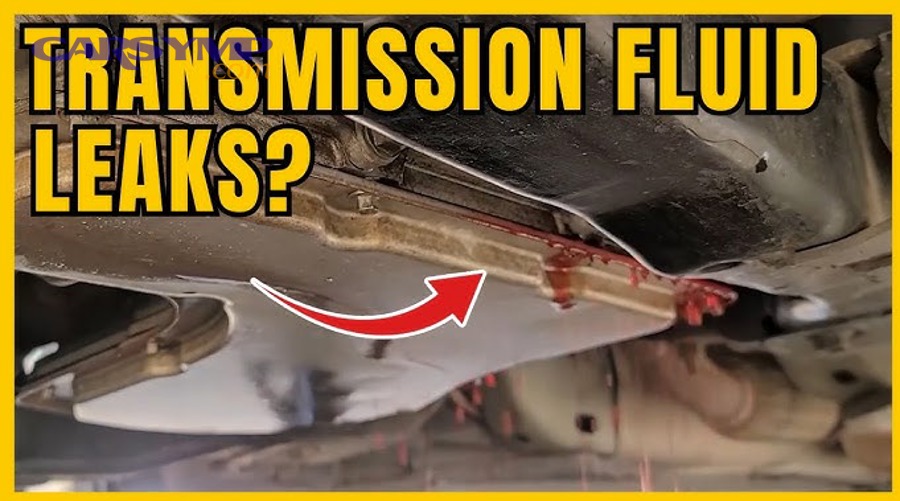
How Does Transmission Fluid Work in Your Car?
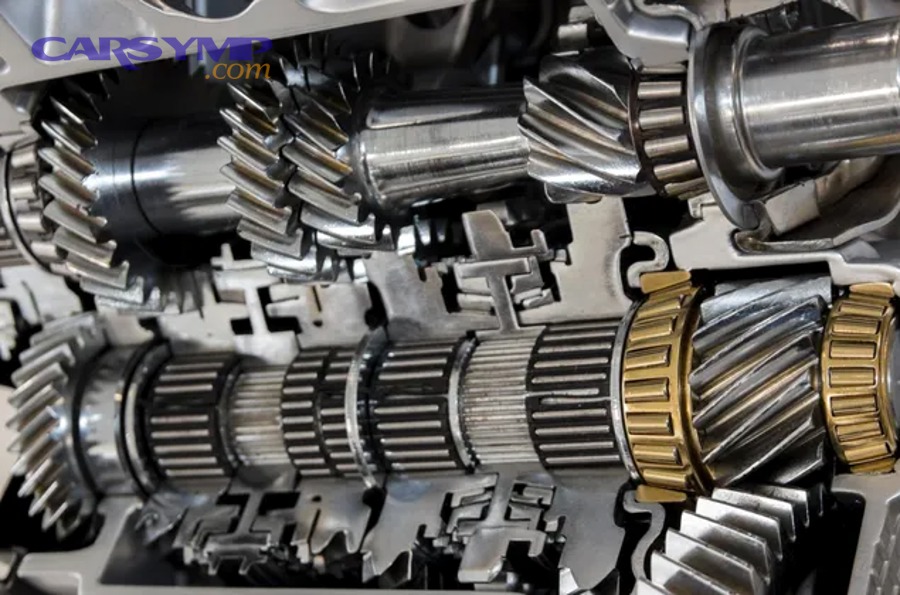
Transmission fluid serves four distinct functions that keep the transmission operating smoothly under all driving conditions. First, it lubricates every moving gear, bearing, and shaft inside the transmission, reducing metal-on-metal friction that would otherwise cause rapid wear. Second, it acts as a coolant, absorbing and dissipating the enormous heat generated by the transmission during operation — particularly during towing, stop-and-go traffic, or aggressive acceleration. Third, it provides hydraulic pressure in automatic transmissions, physically powering the gear shifts that happen thousands of times over a vehicle’s lifetime. Fourth, it carries a detergent function, suspending microscopic metal particles and contaminants and carrying them to the filter before they can cause damage.
When fluid escapes through a transmission fluid leak, all four of these functions degrade simultaneously. The system does not lose just one capability — it loses all of them in proportion to how much fluid is gone.
Is a Transmission Fluid Leak the Same as Low Transmission Fluid?
No — a transmission fluid leak and low transmission fluid are related but not identical. Low fluid is a symptom that frequently confirms the presence of a leak, but fluid can also run low due to degradation, improper fill levels, or a service error. The critical distinction is that a leak represents an active, ongoing loss from a compromised component, while low fluid is a measured state at a single point in time.
The practical implication matters: topping off the fluid without finding and fixing the leak is a temporary measure, not a repair. If the underlying breach — whether it’s a cracked seal, a loose drain plug, or a deteriorated pan gasket — is not addressed, the fluid level will continue to drop regardless of how many times the reservoir is refilled. Always treat confirmed low ATF as an indicator to inspect for an active transmission fluid leak rather than simply adding more fluid and moving on.
How Do You Know If Your Car Is Leaking Transmission Fluid?
There are 7 primary warning signs that your car is leaking transmission fluid, spanning visual, olfactory, auditory, and mechanical categories: a colored puddle under the vehicle, a distinctive sweet or burning smell, rough or delayed gear shifts, unusual noises during gear changes, visible fluid residue on transmission components, a low reading on the dipstick, and an illuminated warning light on the dashboard.
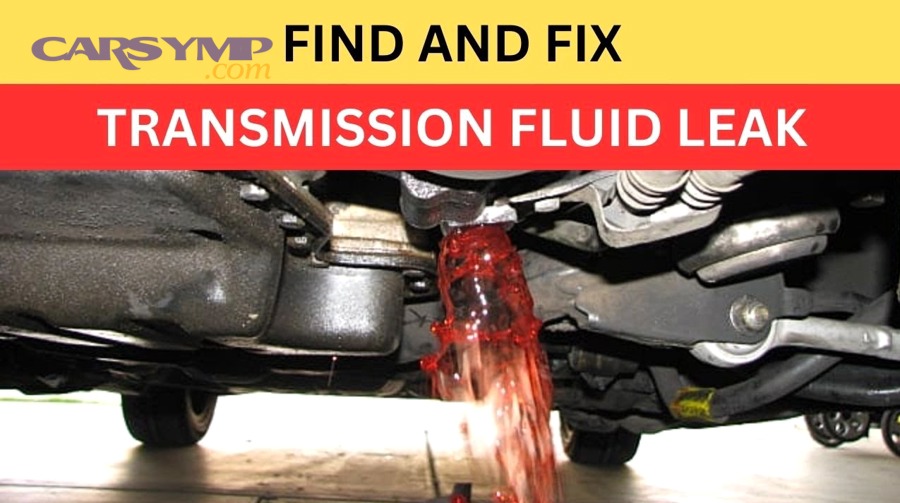
Specifically, these signs do not always appear all at once. A slow leak from a slightly loose drain plug may only present as a small drip and a marginally low dipstick reading for months before any shifting symptom develops. A sudden seal failure, on the other hand, can produce all seven signs within a single drive. Understanding each indicator independently allows you to catch a problem at any stage.
What Does a Transmission Fluid Leak Look Like Under Your Car?
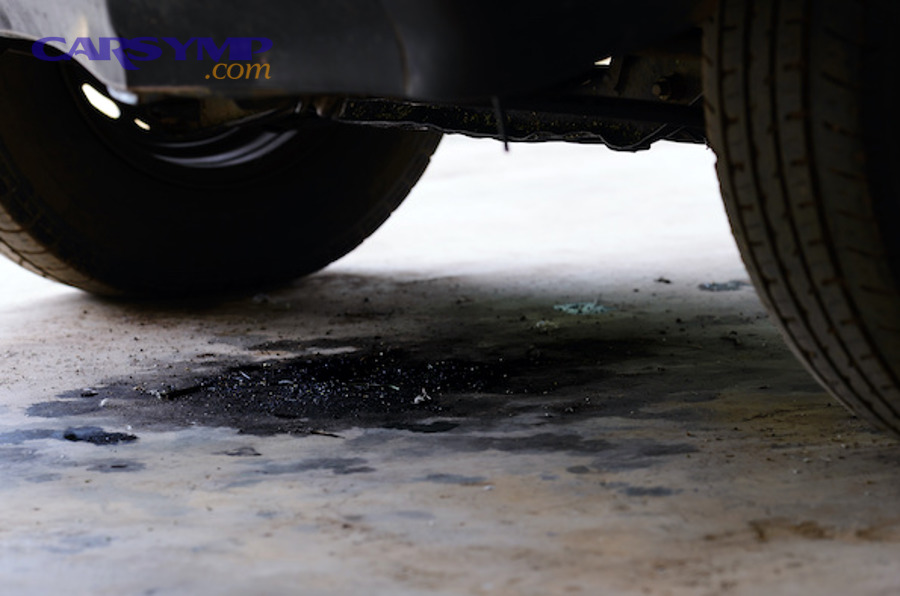
The most unmistakable sign of a transmission fluid leak is a colored fluid puddle or stain on the surface where your car has been parked. The color of the fluid provides critical diagnostic information about both the fluid type and its condition. The table below summarizes the four color states most drivers encounter when inspecting fluid beneath their vehicle.
| Fluid Color | Condition | What It Indicates |
|---|---|---|
| Bright red / pink | Fresh, new ATF | Active leak from automatic transmission — recent or ongoing |
| Dark red / reddish-brown | Aged ATF | Leak from automatic transmission — fluid has been in service for some time |
| Black or very dark brown | Severely degraded ATF | Leak combined with overdue fluid service; possible internal contamination |
| Clear to amber / honey-colored | Manual gearbox oil | Leak from manual transmission — often mistaken for engine oil |
Notice that the color range shifts significantly based on how long the fluid has been in the system — fresh ATF is distinctly red, making it one of the easier automotive fluids to identify on sight.
Location on the ground is equally important. In rear-wheel-drive (RWD) vehicles, transmission fluid typically pools toward the center of the vehicle, roughly beneath where the transmission housing sits. In front-wheel-drive (FWD) vehicles, the puddle often appears toward the front or slightly to one side, where the transaxle is located. A useful home technique: slide a sheet of clean cardboard beneath the car overnight and examine where the drips land in the morning. This pinpoints the puddle location precisely and lets you map it to specific components without getting under the vehicle immediately.
Transmission fluid is also notably thinner in viscosity than engine oil, which helps distinguish it at a glance. If you touch a sample between your fingers, ATF feels slick and light — not heavy and tar-like the way old engine oil does.
What Does Leaking Transmission Fluid Smell Like?
Leaking transmission fluid produces two distinct smells depending on where the fluid ends up after it exits the system. Fresh ATF that drips onto a cool surface or the driveway carries a slightly sweet, faintly tart odor — not unlike a mild syrup or a petroleum-based solvent. This sweet smell is characteristic of the ester-based additive packages used in most modern automatic transmission fluids and is one of the most reliable sensory identifiers for this fluid type.
When the leaking fluid contacts hot components — the exhaust pipe, the catalytic converter housing, or the transmission case itself — the smell changes dramatically to a sharp, acrid burning chemical odor. This burning transmission fluid smell signals that the leak is significant enough to reach high-temperature surfaces, and it demands immediate attention. Continued driving in this condition risks not only further transmission damage but also a potential fire hazard if ATF saturates an extremely hot exhaust component.
Distinguishing this from a burning engine oil smell requires attention to intensity and character: burning engine oil tends to smell heavier and more pungent, while burning ATF often has a thinner, more chemical-like quality. If you notice either smell, inspecting for an active transmission fluid leak should be your first step.
What Sounds Does a Transmission Fluid Leak Cause?
A transmission fluid leak causes three categories of abnormal sounds, each corresponding to a specific failure mechanism triggered by fluid loss. Understanding which sound you are hearing helps confirm that the noise is transmission-related rather than caused by an unrelated mechanical issue.
- Whining or humming during gear changes — This sound results from reduced hydraulic pressure inside the transmission. As ATF levels drop, the pump that generates shifting pressure must work harder and begins to cavitate, producing a characteristic whine. This is often the earliest audible sign of a developing leak.
- Grinding when shifting gears — Grinding indicates that internal components — gears, synchronizers in manual transmissions, or clutch packs in automatics — are operating without adequate lubrication. Metal contacts metal, and the resulting friction produces a coarse grinding or growling sensation that is both heard and felt.
- Clunking between gear changes — A clunk when the transmission transitions between gears suggests that the fluid level has dropped low enough to disrupt smooth hydraulic engagement. The gear change that should be seamless instead happens with a jolt or bang, especially noticeable when accelerating from a stop or decelerating to a halt.
All three sounds intensify as the leak worsens. If you hear any of these noises alongside other signs — a puddle, a smell, or sluggish shifts — treat the combination as confirmation of an active transmission fluid leak requiring prompt inspection.
Can a Transmission Fluid Leak Trigger a Warning Light?
Yes — a transmission fluid leak can absolutely trigger a warning light, because modern vehicles use pressure sensors and temperature sensors embedded in the transmission to monitor fluid conditions in real time. When fluid volume drops below a safe threshold, or when operating temperature rises abnormally due to reduced cooling capacity from lost ATF, the vehicle’s ECU registers an out-of-range reading and activates a warning.
The most common lights triggered by a transmission fluid leak include:
- Check Engine Light (CEL) — Often activated by transmission-specific OBD-II fault codes such as P0700 (Transmission Control System Malfunction) or P0711–P0714 (Transmission Fluid Temperature Sensor circuit codes)
- Transmission Temperature Warning Light — A dedicated icon on some vehicles indicating the transmission is running too hot, frequently caused by low ATF reducing the system’s cooling capacity
- Transmission Warning Message — On vehicles with driver information displays, a text message such as “Transmission Overheating” or “Service Transmission” may appear
Do not dismiss these alerts as minor nuisances. Plugging a standard OBD-II scan tool — available for under $30 at most auto parts retailers — into your vehicle’s diagnostic port retrieves the specific fault code and points directly toward the transmission system as the source. A warning light combined with any of the other six signs discussed in this section constitutes a strong multi-point confirmation of an active transmission fluid leak.
Where Does Transmission Fluid Leak From?
A transmission fluid leak originates from 5 main component areas: the transmission pan gasket, the front and rear shaft seals, the transmission cooler lines and hoses, the torque converter seal, and the drain plug. Each location produces a distinct leak pattern, a distinct location of fluid residue, and a distinct level of repair complexity.
More specifically, understanding the source is what separates a $150 gasket replacement from a $2,000 seal repair or a full torque converter service. Leak at pan vs axle seal vs cooler line diagnosis requires attention to exactly where fluid accumulates — both on the transmission housing itself and on the ground beneath it.
Which Transmission Components Most Commonly Cause Leaks?
The five most common sources of a transmission fluid leak, ranked by frequency of occurrence, are as follows:
1. Transmission Pan Gasket / RTV Sealer
The pan gasket sits between the transmission pan — the metal reservoir at the bottom of the transmission that holds a portion of the ATF — and the transmission case. Over time, heat cycling causes the gasket material to compress, harden, and crack. Some manufacturers use RTV (Room Temperature Vulcanizing) silicone sealant instead of a traditional gasket; this material also degrades over years of service. A pan gasket leak typically appears as a thin, even seepage along the bottom edge of the transmission case, directly below the pan seam. This is the most common and most accessible transmission leak to repair.
2. Front and Rear Shaft Seals
Rubber lip seals around the input shaft (front) and output shaft or axle shafts (rear) prevent fluid from escaping along the rotating shafts that connect the transmission to the rest of the drivetrain. These seals wear gradually from friction and heat. A front seal leak produces drips toward the engine-side of the transmission; a rear or axle seal leak — part of the axle seal component in the leak at pan vs axle seal vs cooler line diagnosis — produces drips toward the driveshaft or near the wheel hubs on FWD vehicles.
3. Transmission Cooler Lines and Hoses
Metal or rubber lines carry ATF from the transmission to a cooler (usually built into or adjacent to the radiator) and back. These lines are exposed to road vibration, heat, and occasional impact damage. Cracks, loose fittings, or corroded metal lines allow fluid to drip along the path from the transmission toward the front of the vehicle. Cooler line leaks are part of the cooler line component in pan vs axle seal vs cooler line diagnosis and often appear as streaks or drips running along the undercarriage rather than a single pooling point.
4. Torque Converter Seal
The torque converter is the fluid coupling between the engine and the transmission in automatic vehicles. Its front seal, where it mates with the transmission bellhousing, can wear or crack — causing fluid to leak internally (mixing with other fluids inside the housing) or externally (producing a drip at the front face of the transmission). Torque converter leaks are among the more labor-intensive to repair because accessing the converter typically requires partial or full transmission removal.
5. Drain Plug
Many transmissions include a drain plug for fluid changes. A plug that is not fully torqued, has stripped threads, or uses a damaged crush washer will leak steadily from directly below the center of the transmission. This is the simplest source to diagnose and often the simplest to fix — yet it is frequently overlooked because it is assumed the drain plug was properly reinstalled after the last service.
How Can You Tell Where a Transmission Fluid Leak Is Coming From?
You can locate the source of a transmission fluid leak using a systematic four-step inspection process that starts with ground observation and escalates to hands-on component inspection and, if needed, UV dye testing.
Step 1: Read the ground stain location.
The position of the puddle on the ground relative to your vehicle gives an immediate directional clue. Fluid pooling under the front of the vehicle points toward cooler lines or the front shaft seal. Fluid pooling under the center points toward the pan gasket, torque converter, or drain plug. Fluid appearing near the rear axle or wheel area on an RWD vehicle indicates a rear output seal or axle seal issue.
Step 2: Inspect the transmission housing exterior.
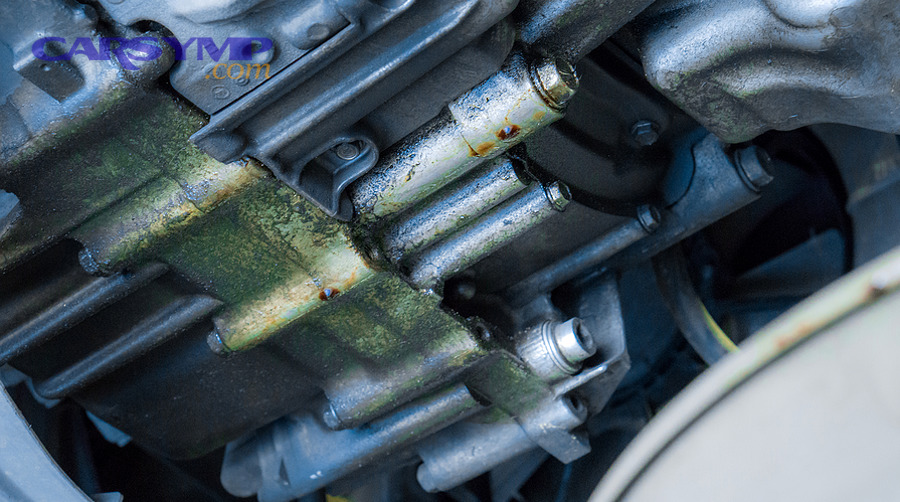
With the vehicle safely elevated or viewed from underneath using a flashlight, look for wet or dried fluid residue trails on the outside of the transmission case. Fluid traces “run” downward from their source due to gravity, so following the streak upward leads back to the origin point.
Step 3: Use the cardboard test overnight.
If the leak is slow and difficult to pinpoint, place clean cardboard under the full length of the vehicle before parking it for the night. Examine the stain pattern in the morning — its position and shape help identify both the location and the volume rate of the leak.
Step 4: Apply a UV fluorescent dye kit.
For leaks that are too small to produce a visible puddle or trail, an automotive UV dye kit is the most reliable solution. A small amount of fluorescent dye is added to the transmission fluid; after a short drive, a UV light is shone under the vehicle. The dye glows brightly at the exact source of the leak, even if the fluid volume is too low to produce any visible drip or residue under normal lighting. This method is widely used by professional technicians for difficult-to-diagnose leaks.
How Is Transmission Fluid Different From Other Car Fluids?
Transmission fluid is distinguishable from other automotive fluids by its color (red to brown), its thin, slick texture, its sweet or chemical smell, and its location beneath the center or front of the vehicle — characteristics that together separate it clearly from engine oil, coolant, brake fluid, and power steering fluid.

However, these distinctions become less obvious when fluid is aged, mixed, or when multiple leaks coexist. To better understand how to separate them, the following sub-sections compare transmission fluid directly against the fluids it is most commonly confused with.
Transmission Fluid vs. Engine Oil: What’s the Difference in a Leak?
Transmission fluid and engine oil are the two most frequently confused automotive fluids because both are petroleum-based, both pool beneath the vehicle, and both darken with age. The differences, however, are consistent and reliable once you know what to look for.
- Color: Fresh ATF is distinctly red or pink. Engine oil ranges from amber (new) to dark brown or black (used). Even aged, dark transmission fluid retains a slightly reddish-brown hue, while engine oil turns purely dark brown or black.
- Texture and viscosity: ATF is thin and flows freely — almost like water with a slight slick quality. Engine oil is noticeably heavier and more viscous, coating your fingers in a thicker film.
- Smell: ATF carries a sweet or faintly chemical odor. Engine oil smells oily, slightly acrid, and heavier — particularly when burned.
- Puddle location: Engine oil puddles form toward the front of the vehicle, beneath the engine. Transmission fluid puddles form further back, beneath the transmission, which sits behind the engine on most layouts.
When in doubt, blot a small sample onto white paper. The color contrast between reddish-brown ATF and dark brown-black engine oil becomes immediately apparent against a white background.
How Do You Tell Apart Transmission Fluid, Coolant, and Brake Fluid Leaks?
Distinguishing between transmission fluid, engine coolant, and brake fluid requires attention to four identification factors: color, texture, smell, and location. The table below provides a direct comparison of all four fluids across these criteria, helping any car owner quickly narrow down which system is leaking.
| Fluid | Color | Texture | Smell | Typical Leak Location |
|---|---|---|---|---|
| Transmission fluid (ATF) | Red → dark brown | Thin, slick | Sweet / faintly chemical | Center to front of vehicle, beneath transmission |
| Engine coolant | Green, orange, pink, or yellow | Watery, slightly syrupy | Sweet antifreeze / slightly fruity | Near front grille, below radiator, or at hose connections |
| Brake fluid | Clear to pale yellow | Slick, slightly thick | Faintly chemical / mild fishy | Near wheels, brake lines, or firewall (master cylinder) |
| Engine oil | Amber → dark brown/black | Heavy, viscous | Oily, acrid when burned | Beneath engine, front-center of vehicle |
The most dangerous misidentification is brake fluid being dismissed as transmission fluid or vice versa. Brake fluid near a wheel or the firewall area indicates a potentially life-threatening brake system failure and requires immediate attention regardless of any transmission concerns. If you spot a clear-to-yellowish fluid near any of those locations, treat it as a brake emergency first.
What Should You Do If You Spot a Transmission Fluid Leak?
If you spot a transmission fluid leak, the correct response involves three sequential actions: check the current fluid level using the dipstick (if equipped), assess the severity of the leak based on what you observe, and decide whether to drive cautiously to a repair shop, arrange a tow, or perform a targeted DIY repair.
Below, the two most immediate questions drivers face after spotting a leak are addressed directly — and in order of priority.
Can You Drive a Car With a Transmission Fluid Leak?
Yes, in some cases you can drive a car with a transmission fluid leak — but only if the leak is minor, the fluid level remains within the safe range, and no shifting symptoms are present. The decision hinges entirely on severity:
- Minor seep (no active drip, fluid level normal): You can typically drive cautiously to a nearby shop for inspection. Monitor the fluid level daily and check for changes in shifting behavior.
- Active drip (visible drops forming when parked, fluid level slightly low): Drive only the minimum distance necessary to reach a repair facility. Do not make extended highway trips. Top off fluid if the level is measurably low before driving.
- Major leak (puddle forming quickly, fluid level significantly low, shifting symptoms present): Do not drive. Overheating and slipping due to low ATF is a real and immediate risk — continuing to drive with critically low fluid can destroy the transmission within a single journey. Arrange a tow.
The cost comparison makes urgency clear: a gasket or seal repair typically costs between $150 and $500 depending on component and labor. A transmission rebuild or replacement, which becomes necessary after the internal damage caused by driving on low ATF, costs between $1,500 and $4,000 or more. The decision to stop driving at the first sign of a serious leak is almost always the financially correct one.
How Do You Check Transmission Fluid Level to Confirm a Leak?
You can check your transmission fluid level at home using the following process, though the exact method varies significantly depending on your vehicle type.
For vehicles equipped with a transmission dipstick (most older and mid-range vehicles):
- Warm the engine to normal operating temperature by driving for 5–10 minutes. Transmission fluid expands with heat, and an accurate reading requires the fluid to be at operating temperature.
- Park on a level surface and leave the engine running (for most automatics — check your owner’s manual, as a small number of vehicles specify engine off).
- Locate the transmission dipstick. It is typically on the passenger side of the engine bay, further back than the engine oil dipstick, and often has a red or pink handle.
- Pull the dipstick out, wipe it clean with a lint-free cloth, reinsert it fully, then pull it out again for the reading.
- Check the fluid level against the “MIN” and “MAX” markers. Also examine the color and smell of the fluid on the dipstick: bright red is healthy, dark brown or black with a burned smell indicates the fluid needs changing, and a frothy or milky appearance suggests water contamination.
For vehicles without a dipstick (most newer vehicles, 2010s onward):
Many modern transmissions are sealed units designed to be “filled for life” or to require fluid checks only by a technician using specialized tools. In these cases, checking the fluid level requires raising the vehicle on a lift and removing a fill/inspection plug — a procedure best performed by a qualified mechanic. If your vehicle falls into this category and you suspect a transmission fluid leak, schedule a professional inspection rather than attempting a home check.
For manual transmissions:
Manual gearboxes universally require the vehicle to be raised to access the fill plug on the side of the gearbox. The fluid level is correct when it reaches the bottom edge of the fill hole opening. This too is most accurately checked by a technician with access to a lift.
What Happens If a Transmission Fluid Leak Goes Untreated?
An untreated transmission fluid leak leads to a predictable and accelerating failure sequence: reduced lubrication causes friction buildup, friction generates excessive heat, heat degrades remaining fluid and internal components, and the eventual result is either gear slipping, overheating and slipping due to low ATF, or complete transmission failure requiring a rebuild or full replacement.
In addition to the mechanical consequences, the financial escalation of ignoring a leak is significant enough to treat any confirmed leak as urgent — regardless of how minor it appears at first.
How Does a Transmission Fluid Leak Lead to Transmission Failure?
The failure pathway of an untreated transmission fluid leak progresses through five distinct stages, each worse than the last:
- Reduced lubrication — As ATF drains away, metal components inside the transmission begin experiencing increased friction on every gear change and every rotation of internal shafts.
- Heat accumulation — Friction generates heat, and without sufficient fluid to dissipate it, internal temperatures rise beyond design limits. Overheating and slipping due to low ATF are the first performance symptoms that signal this stage is underway.
- Fluid degradation — The remaining fluid, now under greater thermal stress, breaks down chemically faster than normal. Its ability to lubricate, cool, and maintain hydraulic pressure degrades rapidly.
- Component wear and damage — Bearings, clutch packs, gear sets, and valve body components begin wearing prematurely. Metal particles released by this wear contaminate the remaining fluid, accelerating the damage further.
- Hydraulic failure and transmission seizure — With insufficient fluid volume and degraded fluid quality, the hydraulic system can no longer generate the pressure required to execute gear changes. The transmission may enter limp-home mode, refuse to shift, or seize entirely.
According to industry repair data published by the Automatic Transmission Rebuilders Association (ATRA), the majority of premature transmission failures brought to rebuild shops show evidence of previous fluid loss or contamination — confirming that leaks, not internal component defects, are the leading preventable cause of transmission replacement.
Do CVT Transmissions Leak Differently Than Traditional Automatic Transmissions?
Yes — CVT (Continuously Variable Transmission) systems behave differently from traditional step-gear automatics when a fluid leak develops, and the consequences of even a small leak are disproportionately severe in CVT-equipped vehicles.
Unlike a conventional automatic, which shifts between discrete gear ratios using clutch packs and hydraulic bands, a CVT uses a steel belt or chain running between two variable-diameter pulleys to provide seamless, stepless acceleration. This belt-and-pulley system operates under extremely precise hydraulic pressure conditions and relies on a specific CVT fluid formulation — not standard ATF — to maintain the correct clamping force on the belt.
When a CVT develops a transmission fluid leak, the performance symptoms feel different from a standard automatic: instead of hard or delayed gear shifts, drivers experience continuous hesitation, a sensation of the engine “floating” or not engaging firmly during acceleration, and an unusually high engine RPM relative to vehicle speed. These symptoms can be subtle at first, making CVT leaks easier to miss than conventional automatic leaks.
Critically, CVT fluid is not interchangeable with standard ATF. If fluid is topped off using the wrong type, or if mixing occurs through cross-contamination from a repair error, the resulting damage to the belt and pulley system can be catastrophic and is typically not covered under warranty. Always confirm the correct fluid specification from the owner’s manual or manufacturer documentation before adding any fluid to a CVT system.
Can a Transmission Fluid Leak Occur With No Visible Puddle?
Yes — a transmission fluid leak can occur entirely internally, with no external puddle forming, no visible residue on the undercarriage, and no ground stain on the driveway. This type of leak is one of the most difficult diagnostic challenges in transmission repair.
An internal bypass leak occurs when a seal, o-ring, or check ball inside the valve body or hydraulic circuit fails, allowing fluid to move between circuits that are designed to remain separate. Fluid does not escape the transmission housing — it simply flows to the wrong place inside it. The result is that hydraulic pressure in the correct circuits drops, causing shifting problems and slipping, even though the overall fluid level in the pan may remain normal or only slightly low.
Diagnosing an internal bypass requires a hydraulic pressure test performed with a professional pressure gauge set attached to the transmission’s test ports, or a fluid analysis identifying abnormal contamination patterns. This is not a home-repair diagnosis — it requires a transmission specialist or a shop equipped with the appropriate tooling. If your vehicle is displaying slipping, overheating, or delayed engagement with no visible external leak, an internal bypass should be discussed with a technician.
How Can You Prevent Transmission Fluid Leaks Long-Term?
You can prevent most transmission fluid leaks through consistent, scheduled maintenance focused on three core practices: regular fluid changes, periodic visual inspections, and operating the vehicle within its designed load and thermal limits.
Follow the manufacturer’s fluid change interval. For most passenger vehicles, this means replacing ATF every 30,000 to 50,000 miles under normal driving conditions. For vehicles regularly used for towing, hauling, or frequent stop-and-go traffic — all of which generate significantly more heat — the interval should be shortened to approximately 15,000 miles. Fresh fluid maintains its viscosity, chemical stability, and additive package far better than degraded fluid, meaning seals and gaskets are exposed to less chemical stress and remain pliable longer.
Inspect for early seepage at every oil change. While your vehicle is elevated for a routine oil change, take 60 seconds to visually inspect the transmission pan edge, the cooler line connections, and the area around the shaft seals. Catching the earliest signs of seepage — a slight wet film, a faint oil sheen, a small discolored patch — allows a targeted repair before the seep becomes an active drip.
Use only the OEM-specified fluid type. Using the incorrect ATF formulation — or mixing two incompatible fluid types — accelerates seal degradation and can void transmission warranty coverage. Every vehicle manufacturer specifies an exact fluid standard (such as Dexron VI, Mercon V, Honda ATF-DW1, or Toyota WS) that is chemically matched to the seals and internal components in that specific transmission. Using an incompatible or “universal” fluid introduces chemical incompatibilities that cause rubber seals to swell, shrink, or crack prematurely — the direct cause of future leaks.
Avoid sustained overloading. Towing beyond the vehicle’s rated capacity, or repeatedly accelerating hard from a stop with a heavy load, pushes transmission temperatures well above the designed operating range. Sustained high temperatures are the primary cause of seal hardening and gasket compression — both leading contributors to long-term transmission fluid leaks. If you regularly tow or haul, consider installing an auxiliary transmission cooler to keep operating temperatures within safe limits regardless of load.
In short, a transmission fluid leak is almost always preventable — and when it does occur, it is always detectable early if you know the seven warning signs covered throughout this guide. The investment in recognition and prompt action pays back many times over in avoided repair costs, extended transmission life, and driving confidence.