


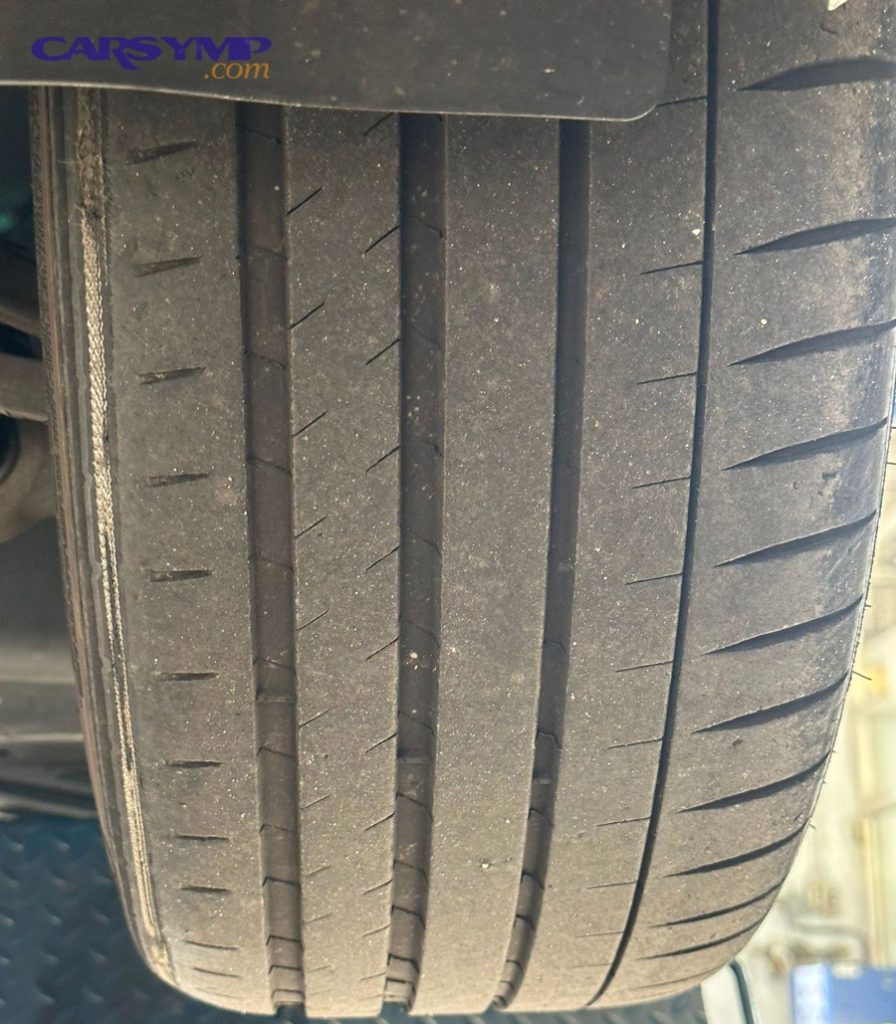
Inner edge tire wear usually means the tire is losing rubber on the inside shoulder because camber, toe, or both have moved the contact patch away from its ideal position. In practical terms, the tire no longer rolls flat and evenly, so one section of the tread does more work than it should. That is why this wear pattern often appears before a driver notices any dramatic handling change.
The next issue is understanding how alignment angles create that pattern. Negative camber loads the inner shoulder more heavily, while incorrect toe, especially toe-out, scrubs the tread across the road surface. Together, they create one of the most common Uneven tire wear patterns and causes seen during alignment checks.
Drivers also need to know how to tell camber wear apart from toe wear, because the visual clues are different. Camber usually creates a more concentrated shoulder wear pattern, while toe often adds feathering, rapid tread loss, and a rough texture that points to tread scrubbing rather than simple load concentration.
Introduce a new idea: the most useful diagnosis does not stop at the alignment rack. A complete explanation also includes tire inspection, suspension condition, the uneven tire wear fix that actually lasts, and the Cost to fix uneven tire wear causes before the tires become unsafe or need early replacement.
What Is Inner Edge Tire Wear and Does It Usually Mean an Alignment Problem?
Inner edge tire wear is a tread pattern where the inside shoulder wears faster than the rest of the tire, and yes, it usually points to an alignment problem because camber, toe, or worn suspension parts change how the tire meets the road.
To better understand the issue, it helps to look at what the pattern means on the tread itself and why alignment is the first system most technicians inspect when the inside edge disappears faster than the center or outside shoulder.
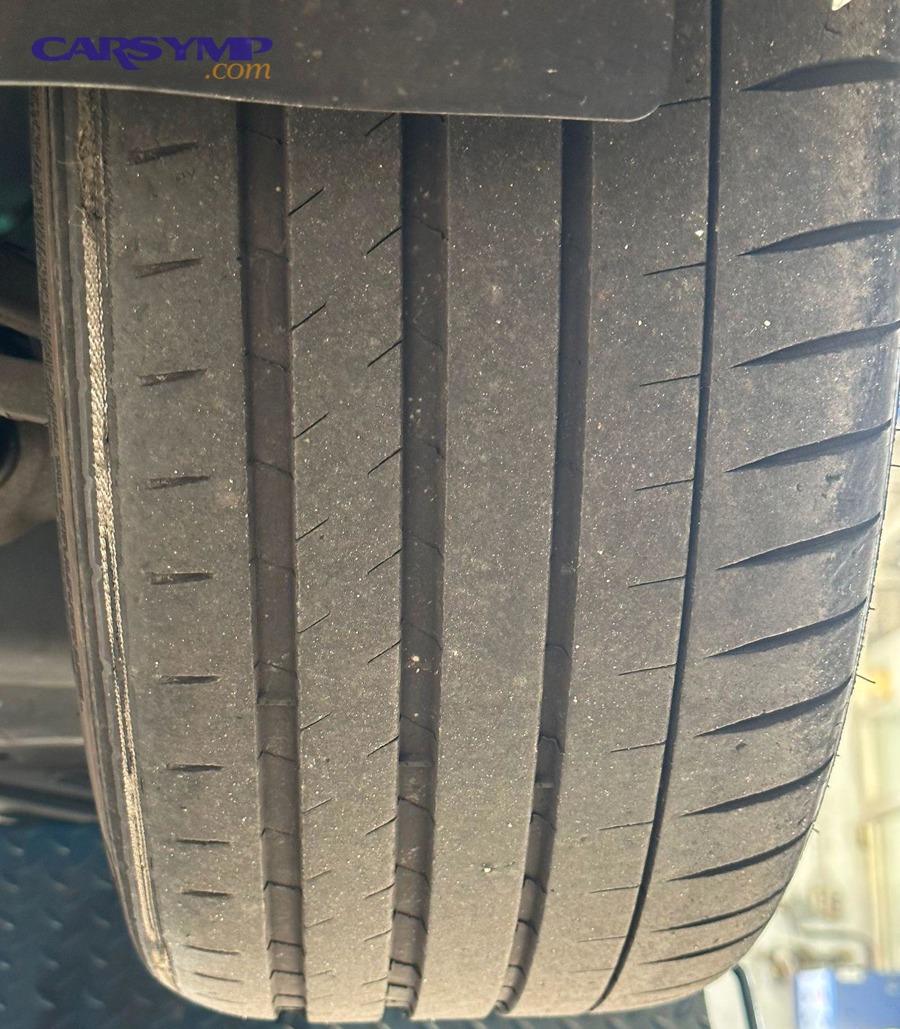
What does “inner edge tire wear” mean on a tread pattern?
Inner edge tire wear means the inside shoulder of the tread has lost more rubber than the center and outer shoulder. This is not the same as normal wear from mileage. Normal wear spreads more evenly across the tread width, while inner edge wear concentrates on the shoulder closest to the suspension side of the vehicle.
That distinction matters because a tire is designed to share load across its whole contact patch. When alignment angles move out of specification, the tire stops using that full footprint consistently. Instead, one edge begins to carry more load or scrub harder across the road, which creates faster shoulder wear.
Many drivers miss this problem at first because the inside shoulder is harder to see. From a quick walk-around, the tire may look acceptable, while the inner edge is already close to the wear bars. That is why routine tire inspection should include turning the wheel outward on the front axle or using a flashlight to inspect the inner shoulder more closely.
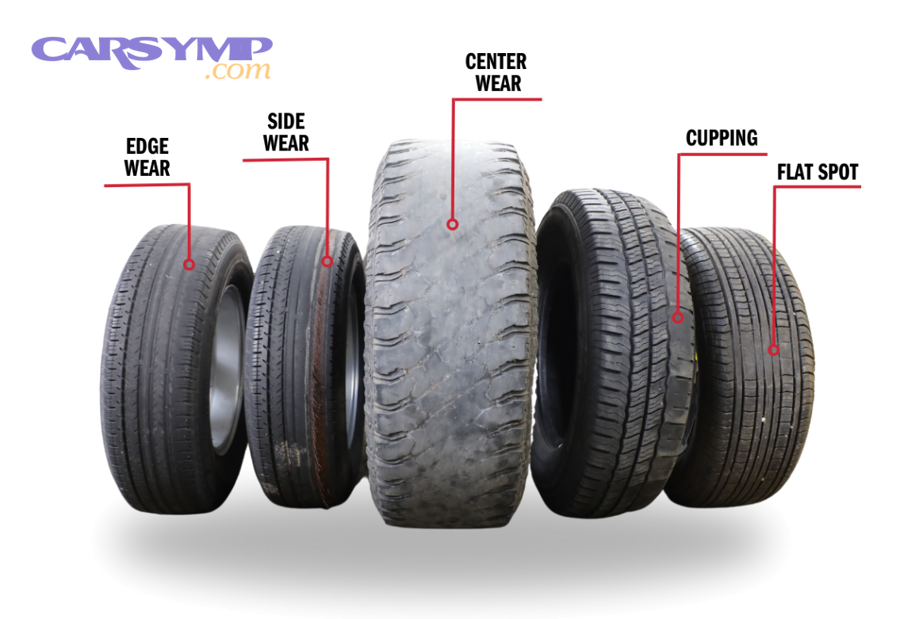
This pattern also differs from other forms of uneven wear. Center wear usually points to inflation issues, outer shoulder wear may suggest another alignment or cornering load pattern, and irregular scalloping can indicate other problems such as Cupping from worn shocks/struts. Inner edge wear, by contrast, most often directs attention to geometry and component condition.
Does inner edge tire wear always mean camber or toe is out of spec?
No, inner edge tire wear does not always mean camber or toe alone is out of spec, because worn bushings, weak springs, bent parts, ride-height changes, and poor damping can also shift tire load or prevent alignment settings from staying stable.
However, camber and toe remain the primary suspects because they directly control how the tire sits and tracks on the road. If a suspension bushing has excessive play, for example, the alignment reading may look acceptable in the shop, but the wheel can move under load on the road and create the same wear pattern. In that case, the alignment is not the only issue; the component holding the alignment is also failing.
Ride height also matters. A sagging spring changes suspension geometry, often adding negative camber or altering toe as the control arms move through a different operating range. Lowered vehicles can produce the same effect when suspension modifications change static alignment without correction.
Shock and strut condition plays a supporting role. Weak dampers do not normally create classic inner shoulder wear by themselves, but they can contribute to unstable tire contact, especially when the suspension bounces excessively. When that produces a chopped or scalloped pattern, the diagnosis moves toward cupping from worn shocks/struts rather than a pure alignment problem.
The key point is simple: inner edge wear usually starts the diagnosis with camber and toe, but a lasting fix also checks the parts that influence or hold those settings.
How Do Camber and Toe Cause Inner Edge Tire Wear?
Camber and toe cause inner edge tire wear through two main mechanisms: camber tilts the tire and overloads the inner shoulder, while toe misalignment drags the tread sideways and scrubs rubber away much faster than normal rolling.
Let’s explore those two angles separately, because understanding their different effects makes it easier to spot the true cause and avoid replacing tires before correcting the root problem.
What is camber, and how does negative camber wear the inner edge of a tire?
Camber is the inward or outward tilt of the wheel when viewed from the front of the vehicle. Negative camber means the top of the wheel leans inward, and excessive negative camber concentrates vehicle load on the inner shoulder of the tire.
That concentration changes how the tread meets the road. Instead of distributing weight across the full width, the tire spends more time riding on the inner section. Over thousands of miles, the inside shoulder loses tread depth faster than the center and outer shoulder.
A small amount of negative camber can be normal in many vehicles because it supports cornering stability. The problem begins when the angle becomes excessive for normal street driving or when one side differs enough to create noticeable asymmetry. At that point, the inner shoulder becomes the primary load path rather than just part of the contact patch.
Camber wear often looks smoother and more localized than toe wear. The inner shoulder may appear polished down while the rest of the tread remains less affected. If the wear progresses slowly, drivers may not feel an obvious symptom until the shoulder becomes thin enough to create noise, reduced wet traction, or visible structural risk.
Excessive negative camber often comes from worn control arm bushings, bent suspension parts, sagging springs, collision damage, or ride-height modifications. That is why a proper diagnosis does not stop after reading the alignment numbers. A technician also needs to explain why the wheel reached that position in the first place.
What is toe, and why can toe-out destroy the inner edge faster than camber alone?
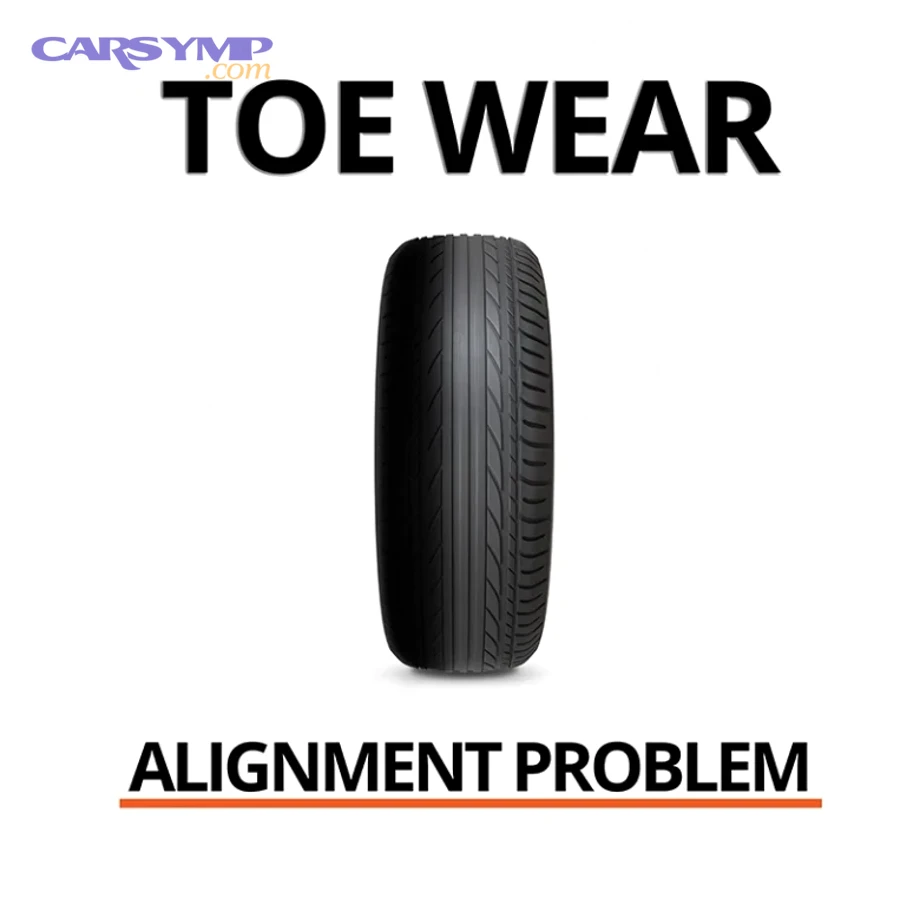
Toe describes whether the fronts of the tires point slightly inward or outward when viewed from above. Toe-out means the fronts point away from each other, and when it becomes excessive, it scrubs the tread across the road surface and can destroy the inner edge faster than camber alone.
Specifically, toe creates a dragging effect. A tire is meant to roll straight with minimal lateral slip. When toe is out of specification, the tread no longer tracks cleanly. Instead, each revolution rubs the rubber sideways against the pavement. That repeated scrub removes tread quickly, generates heat, and often creates a rough or feathered feel across the tread blocks.
This is why toe is often considered the faster tire killer. Camber mainly shifts load. Toe actively scuffs rubber away. If a car has both excessive negative camber and toe-out, the inner shoulder not only carries more load but also scrubs more aggressively. That combination is one of the most destructive forms of uneven tire wear.
Drivers may notice side effects sooner with toe-related wear. The steering may feel nervous, the steering wheel may sit off-center, or the vehicle may seem unstable on straight roads. Yet even without obvious handling complaints, toe can still consume tread surprisingly quickly.
When technicians talk about uneven tire wear patterns and causes, toe is central because it explains why some tires wear out in a short interval even after they looked acceptable only a few months earlier. That is also why any uneven tire wear fix must verify toe settings carefully, not just camber.
How Can You Tell Whether Camber, Toe, or Both Are Causing the Wear?
You can tell whether camber, toe, or both are causing the wear by comparing the tread pattern, the texture of the damaged area, the speed of tread loss, and the vehicle’s driving symptoms, then confirming those clues with alignment measurements.
More specifically, visual diagnosis gives useful direction, but the strongest conclusion comes when the tread clues and the alignment readings support the same explanation.
How is camber wear different from toe wear on the inner edge?
Camber wear usually appears as concentrated shoulder wear, while toe wear often adds feathering, roughness, and faster tread loss. When both are present, the inner edge usually wears faster and more aggressively than it would from either angle alone.
Camber-related wear tends to look more like one side of the tire is doing too much of the work. The pattern may be smooth and consistent along the inner shoulder. The rest of the tread may still show decent depth, which can fool drivers into thinking the tire is still serviceable. In reality, once the shoulder becomes thin enough, the tire’s wet braking and hydroplaning resistance drop.
Toe-related wear often creates a tactile clue. If you run your hand gently across the tread blocks, one direction may feel smooth while the opposite direction feels sharp or sawtoothed. That feathering suggests the tire has been scrubbing laterally instead of rolling cleanly. Toe can also affect the entire tread band, but when combined with negative camber, the worst damage often concentrates on the inner edge.
The table below shows the most useful field clues for quick diagnosis before an alignment check confirms the cause.
| Wear clue | More likely camber | More likely toe | Most likely both |
|---|---|---|---|
| Smooth inner shoulder wear | Yes | Sometimes | Yes |
| Feathered tread texture | Rarely | Yes | Yes |
| Very rapid tread loss | Sometimes | Yes | Yes |
| Load concentrated on one shoulder | Yes | Sometimes | Yes |
| Steering off-center | Sometimes | Yes | Yes |
| Severe inner-edge damage with rough texture | Sometimes | Sometimes | Yes |
This table helps separate appearance from mechanism. Camber mainly changes load placement, while toe mainly changes how the tread scrubs. When both mechanisms act together, the tire usually shows the most severe pattern.
What symptoms on the car can help identify camber or toe problems?
Camber or toe problems often show up through steering pull, an off-center steering wheel, unstable straight-line tracking, unusual tire noise, and fast tread loss, although some vehicles show very mild symptoms until the tires are already badly worn.
That makes symptom reading helpful but not definitive. A vehicle can feel almost normal and still be wearing the inside shoulders aggressively. Even so, certain clues are worth noting because they help connect the wear pattern to the underlying geometry.
A steering wheel that no longer sits straight on a level road commonly points toward toe-related issues. Nervous straight-line behavior, a need for constant small corrections, or a darting feel on grooved pavement can also accompany toe problems. Camber imbalance between the left and right sides may contribute to pulling, especially if the road is reasonably flat and the tires are otherwise healthy.
Noise is another clue. As the inner shoulder thins or develops irregular texture, the tire can begin to hum or growl at speed. Drivers often suspect wheel bearings first, but worn shoulders can create very similar sounds. That is why tire rotation, tactile inspection, and alignment review matter before replacing parts unnecessarily.
A final clue is speed of wear. If the tire has lost a meaningful amount of inner shoulder tread in a short period, toe is often involved. If the wear developed more gradually and looks smoother, camber may be the stronger influence. Still, the best answer comes from combining visual clues, symptoms, and hard alignment numbers.
What Should Car Owners Check First When Diagnosing Inner Edge Tire Wear?
Car owners should start diagnosis in two stages: inspect the tires closely for wear shape and severity, then check alignment-related suspension and steering parts that could create or fail to hold proper camber and toe settings.
Below that first step, the goal is to separate surface symptoms from root causes. Replacing tires before identifying the cause only resets the problem and often leads to the same wear returning on the new set.

What should you inspect on the tires before getting an alignment?
Before getting an alignment, inspect tread depth across the tire width, compare inner and outer shoulders, look for feathering, check both tires on the same axle, and identify whether the pattern affects one wheel, one axle, or all four tires.
Start by measuring tread depth at three points across the tread: inner shoulder, center, and outer shoulder. This comparison tells you whether the tire suffers from shoulder-specific wear or a broader inflation-related issue. If the inner shoulder is significantly lower than the center and outer shoulder, the alignment diagnosis gains strength.
Next, use your hand to feel for texture. Feathering or a sawtooth pattern suggests scrubbing, which often points to toe. A smoother shoulder loss suggests load concentration, which often points to camber. Also inspect for scalloping or cupping. If the tread rises and falls in a chopped pattern around the tire, cupping from worn shocks/struts may be contributing to the problem or creating a different issue that needs separate attention.
It is also important to compare the left and right tires. If both front tires show similar inner shoulder wear, the problem may be systemic, such as toe or ride-height-related geometry. If only one tire is affected, the cause may include a damaged component, a side-specific alignment problem, or a corner-specific suspension issue.
Finally, check the age and overall condition of the tire. A very old tire with hardened rubber may mask some tactile clues, while a newer tire can show alignment-related damage more distinctly. This inspection helps determine whether the tire still has enough life left for correction to make financial sense.
What suspension or steering parts should be checked with the alignment?
The main parts to check with the alignment are tie rods, ball joints, control arm bushings, springs, shocks or struts, wheel bearings, and any bent suspension members, because each of these can change alignment or prevent it from remaining stable on the road.
Tie rods matter because they directly influence toe. If they are loose, damaged, or worn, toe can shift while driving even if the vehicle was adjusted on the rack. Ball joints and control arm bushings affect both wheel position and stability. Excessive play allows the wheel to move under braking, cornering, or bumps, which means tire wear may continue even after a nominal alignment.
Springs should be checked for sagging because ride height changes suspension angles. A lower-than-designed ride height can create more negative camber and may alter toe curves as the suspension compresses. Shock and strut condition should also be assessed because weak damping allows the tire to bounce and lose stable road contact. That does not always create classic inner shoulder wear, but it can add irregular wear and degrade tire life at the same time.
Wheel bearings and structural parts matter as well. Bearing play changes wheel stability, while a bent knuckle, control arm, or rear suspension member can make an alignment difficult or impossible to set correctly. In those cases, alignment numbers are symptoms, not the entire problem.
For car owners, this is where the cost conversation begins. The cost to fix uneven tire wear causes can range from a basic alignment charge to a more substantial repair bill if worn parts must be replaced first. Even so, that repair is usually cheaper than repeatedly replacing tires without correcting the reason they are wearing out.
Can Inner Edge Tire Wear Be Fixed, or Do the Tires Need to Be Replaced?
Yes, inner edge tire wear can be fixed in the sense that the cause can be corrected, but the worn tread cannot be restored, so the final decision depends on remaining tread depth, structural safety, and how severe the shoulder damage has become.
In other words, the uneven tire wear fix stops future abnormal wear; it does not rebuild lost rubber. That is why diagnosis and timing matter so much. Catch the problem early, and alignment plus component repair may save the tires. Catch it late, and tire replacement becomes part of the repair.

Can an alignment stop inner edge tire wear once camber or toe is corrected?
Yes, an alignment can stop inner edge tire wear once camber or toe is corrected because it restores proper wheel geometry, reduces tread scrubbing, and spreads load more evenly across the contact patch, but it cannot repair tread that has already been removed.
That distinction is critical for decision-making. If the inner shoulder wear is still moderate and the tire has enough safe tread depth across the rest of the surface, correcting alignment may allow the tire to continue service for a reasonable period. The tire will still show evidence of past damage, but it may no longer be losing rubber at an abnormal rate.
The most important caution is that alignment only works after loose or worn parts are repaired. If a bushing, tie rod, or spring continues to let the wheel move, the settings will not hold and the wear will return. Good alignment work depends on solid mechanical foundations.
Drivers should also understand timing. The earlier the correction happens, the more tread life remains to preserve. Once steel belts are close to exposure on the shoulder, continuing to drive simply because the center tread looks acceptable creates a safety risk that outweighs the benefit of squeezing out a few more miles.
When should you replace the tires instead of only correcting the alignment?
You should replace the tires instead of only correcting the alignment when the inner shoulder is near the wear bars, cords are visible, the tread depth difference is large, road noise or vibration is severe, or wet-weather traction has been meaningfully compromised.
This decision is both a safety issue and a cost issue. A tire with severe shoulder loss may still appear usable from the outside, yet the damaged area can no longer deliver predictable grip or water evacuation. If the vehicle must be driven in rain, highway conditions, or heavy traffic, that reduced margin matters.
A practical way to decide is to look at serviceability, not just legality. Even if one section technically remains above minimum tread in some areas, a shoulder that is almost gone changes how the tire responds under braking and cornering. That can create uneven grip across the axle and reduce driver confidence.
The table below summarizes when correction alone may be enough and when replacement should be included.
| Tire condition | Alignment/repair only | Alignment/repair + replacement |
|---|---|---|
| Mild inner shoulder wear, plenty of safe tread remaining | Usually yes | Not always necessary |
| Moderate wear, no cords, acceptable overall tire age | Sometimes | Depends on remaining life |
| Severe shoulder wear near wear bars | No | Usually yes |
| Cords visible or structural risk present | No | Yes |
| Strong noise/vibration from worn shoulder | Rarely | Usually yes |
This table shows that tire replacement is not always automatic, but severe shoulder wear changes the calculation quickly. The safest and most economical approach is to correct the cause early enough that the tire can still be saved.
What Other Less Common Factors Can Make Inner Edge Tire Wear Worse?
Several less common factors can make inner edge tire wear worse: lowered suspension, axle-specific geometry differences, aggressive performance alignments, and hidden inside-shoulder damage that progresses unnoticed until the tire is already unsafe.
Besides the main diagnosis, these factors expand the picture and explain why some drivers experience repeat inner-edge wear even after a routine alignment or why the pattern appears without obvious day-to-day symptoms.

Can a lowered car or modified suspension increase inner edge tire wear?
Yes, a lowered car or modified suspension can increase inner edge tire wear because changing ride height alters static suspension geometry, often increasing negative camber and changing toe relationships unless the system is corrected for the new position.
Lowering moves control arms and links into a different operating range. That shift can create more negative camber at rest and may also affect toe curves as the suspension compresses over bumps. On a street-driven vehicle, those changes often produce attractive stance and sharper turn-in at the expense of tire life.
Modified suspension setups therefore require more than a simple visual check. They need alignment values chosen for actual use. A car that spends most of its time on public roads generally needs a different compromise than one intended for track events. Without that balance, inner shoulder wear becomes a predictable cost of the setup.
Is inner edge wear different on the front tires vs. the rear tires?
Yes, inner edge wear can differ between front and rear tires because the front axle adds steering inputs and tie-rod-controlled toe effects, while the rear axle can hide inner shoulder wear more easily and may wear from static geometry without producing strong steering symptoms.
Front tires often reveal the problem through steering feel. Toe-related issues can show up as nervous tracking, wheel-center changes, or feathering you can feel by hand. Rear tires, on the other hand, may wear quietly. Many drivers discover rear inner shoulder damage only during rotation or service because the vehicle still feels reasonably stable.
That difference matters in diagnosis. A car can have serious rear inner shoulder wear without the obvious warning signs that front axle problems often produce. For that reason, full-vehicle inspection matters more than focusing only on the steering axle.
Can performance alignment settings cause inner edge wear even when the car feels normal?
Yes, performance alignment settings can cause inner edge wear even when the car feels normal because aggressive negative camber is often chosen to improve cornering behavior, and that trade-off can shorten tire life during ordinary street driving.
This is one of the more misunderstood causes. Drivers may assume that a car driving straight and feeling planted cannot be wearing tires abnormally. In reality, a deliberately aggressive setup may remain stable, responsive, and enjoyable while still concentrating wear on the inner shoulders over time.
That does not automatically make the setup wrong. It simply means the alignment goal should match the vehicle’s real use. A weekend track car may reasonably accept faster shoulder wear. A daily-driven commuter usually should not.
Why is inner edge wear sometimes missed until the tire is already unsafe?
Inner edge wear is sometimes missed until the tire is already unsafe because the damaged shoulder faces inward, the outer tread may still look acceptable, and drivers often check tires only from standing height without turning the wheels or measuring tread depth.
This hidden progression is exactly why inner shoulder wear deserves so much attention. A tire can appear healthy in casual inspection but already be close to failure on the inside edge. By the time noise, vibration, or handling concerns become obvious, the shoulder may be too worn to save.
In short, the best prevention is regular inspection paired with early alignment correction. When drivers understand how camber and toe create the pattern, they can respond before the damage becomes expensive. That is the real value of learning uneven tire wear patterns and causes: it turns a vague symptom into a practical maintenance decision that protects both safety and tire budget.