


Center tire wear is usually a sign of overinflation, not underinflation, because too much air pressure crowns the tread and concentrates road contact in the middle. That direct diagnosis matters because it helps everyday drivers avoid a wrong repair path, reduce wasted tire life, and choose the right uneven tire wear fix before the problem spreads across the full tread surface. Next, the article explains how to separate true center wear from similar-looking wear patterns that may confuse the diagnosis.
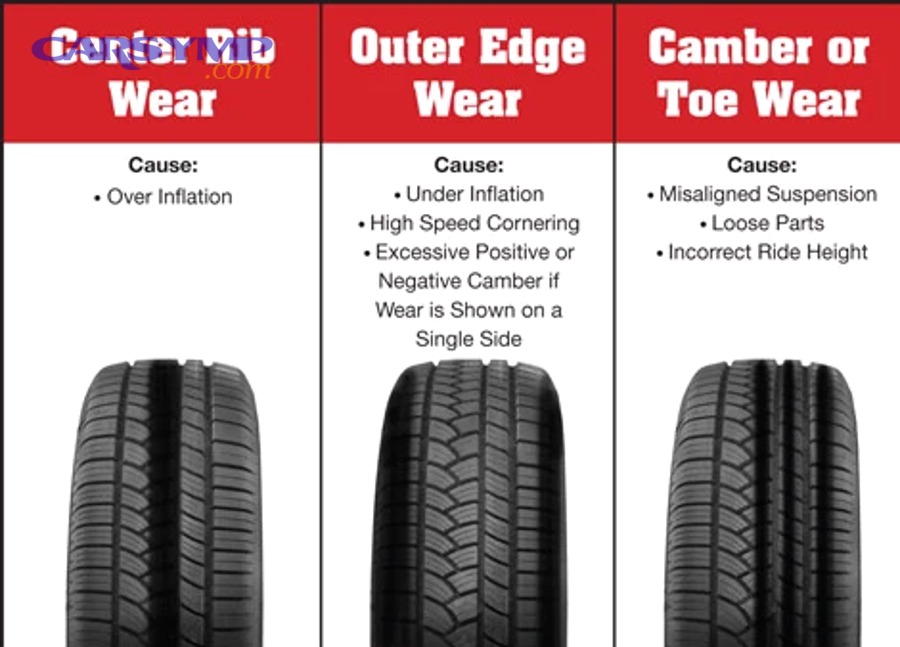
Center tire wear also needs to be understood visually, not just verbally, because many drivers describe any abnormal tread loss as “middle wear” even when the shoulders or one side of the tire are actually wearing faster. Specifically, recognizing the visible difference between center wear, shoulder wear, and irregular wear gives you a more accurate starting point before you adjust pressure or book service.
Diagnosis becomes more reliable when you inspect the tire step by step instead of reacting to a single clue. To better understand that process, this article also shows what to check first, how to group wear patterns by cause, and how to avoid mixing up pressure problems with alignment or mechanical issues.
Fixing the pressure is only part of the solution because the worn rubber does not regenerate once it is gone. Introduce a new idea: the final sections explain how to correct the cause, decide whether the tire is still safe to use, and expand into related topics such as Preventing future uneven wear with maintenance and Alignment vs balance vs suspension diagnosis.
What Does Center Tire Wear Mean?
Center tire wear is a tread pattern in which the middle section of the tire wears faster than the shoulders because the tire’s contact patch is concentrated in the center. To better understand that wear pattern, it helps to look at what the tread is doing under load and how air pressure changes road contact.
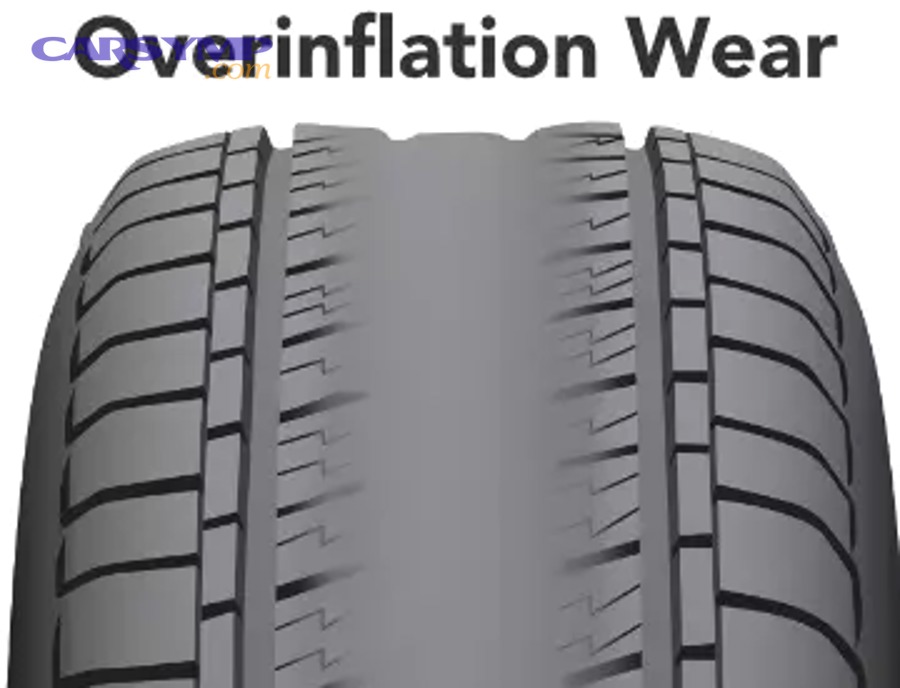
Is center tire wear usually a sign of overinflation?
Yes, center tire wear is usually a sign of overinflation because excessive air pressure rounds the tread, reduces shoulder contact, and puts more of the tire’s working load on the middle ribs. However, drivers should confirm the pattern before acting because some irregular wear conditions can look similar from a quick glance.
The core idea behind this diagnosis is simple. A tire is designed to sit on the road with a broad, stable contact patch. When inflation climbs above the recommended cold pressure, the center of the tread carries more of the load than the outer edges. Over time, the middle section scuffs away faster. That is why a tire with true center wear often looks more worn in a narrow band across the middle than on both shoulders.
This matters for everyday driving because the effect builds gradually. A driver may not notice the problem during daily trips, especially if the car still feels normal on smooth roads. Yet the tire keeps sacrificing usable tread depth in the center. Once that section becomes too shallow, wet traction drops, braking performance can become less predictable, and the tire may need replacement earlier than expected.
A practical way to confirm the pattern is to compare three zones across the tread:
- Inner shoulder
- Center ribs
- Outer shoulder
If the center is consistently shallower than both shoulders across the full circumference, overinflation becomes the leading explanation. If one shoulder is worse than the other, or the wear appears chopped, feathered, or patchy, the cause may lie elsewhere.
What is center tire wear on a tread pattern?
Center tire wear is a specific tread condition in which the central ribs or blocks lose depth faster than the edges, creating a visible wear bias across the middle of the tire. More specifically, it is not just “uneven wear” in general; it is a pressure-related wear signature.
That distinction matters because many tire issues create abnormal wear, but not all abnormal wear points to the same mechanical story. Center tire wear usually appears smooth and even across the middle section, while the shoulders still retain more depth. It does not usually create the sawtooth feel of feathering or the scooped texture of cupping.
To visualize it, imagine the tread divided into lanes from left to right. With true center wear, the middle lane wears faster than the outer lanes. On a highway-driven car, the effect may look subtle at first. Later, the middle channel area becomes obviously shallower, and tread-depth measurements confirm what the eye suspects.
That pattern comes from the relationship between inflation and the contact patch. Proper pressure helps the tread sit flatter, which spreads the load across the width of the tire. Excess pressure narrows that working area. As a result, the center does more of the work, and the shoulders do less.
For drivers, the main use of this definition is diagnostic clarity. Once you know what the pattern actually looks like, you are less likely to confuse it with shoulder wear from low pressure or one-sided wear from bad alignment. That clarity saves time, supports a more accurate uneven tire wear fix, and prevents unnecessary parts replacement.
How Is Center Tire Wear Different From Underinflation Wear?
Center wear and underinflation wear are different because center wear usually damages the middle of the tread, while underinflation typically wears both shoulders faster than the center. Let’s explore that contrast closely so the “overinflation vs underinflation” part of the title becomes easy to apply in real life.
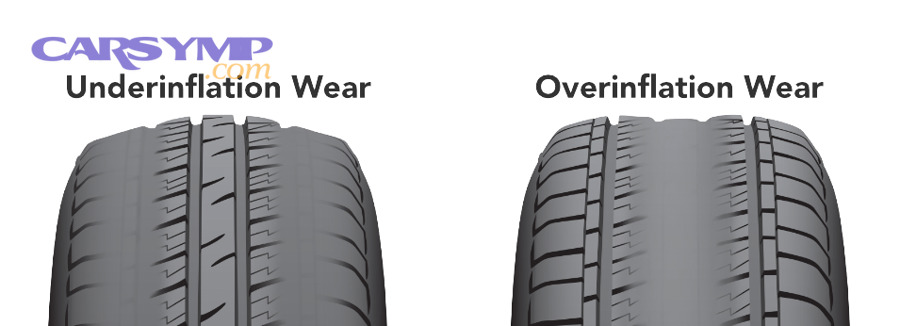
What is the difference between center wear from overinflation and edge wear from underinflation?
Center wear from overinflation wins in diagnostic clarity for the middle ribs, while edge wear from underinflation is best identified by shoulder loss on both sides, and irregular one-sided wear is optimal for spotting non-pressure causes. Specifically, this comparison helps you separate pressure mistakes from more complex tire problems.
An overinflated tire bulges slightly at the center of the tread. That altered shape changes how the tire meets the road, and the center ribs absorb more friction. The shoulders remain comparatively less worn because they are not sharing the load equally. This is why overinflation tends to create a “crowned” wear result.
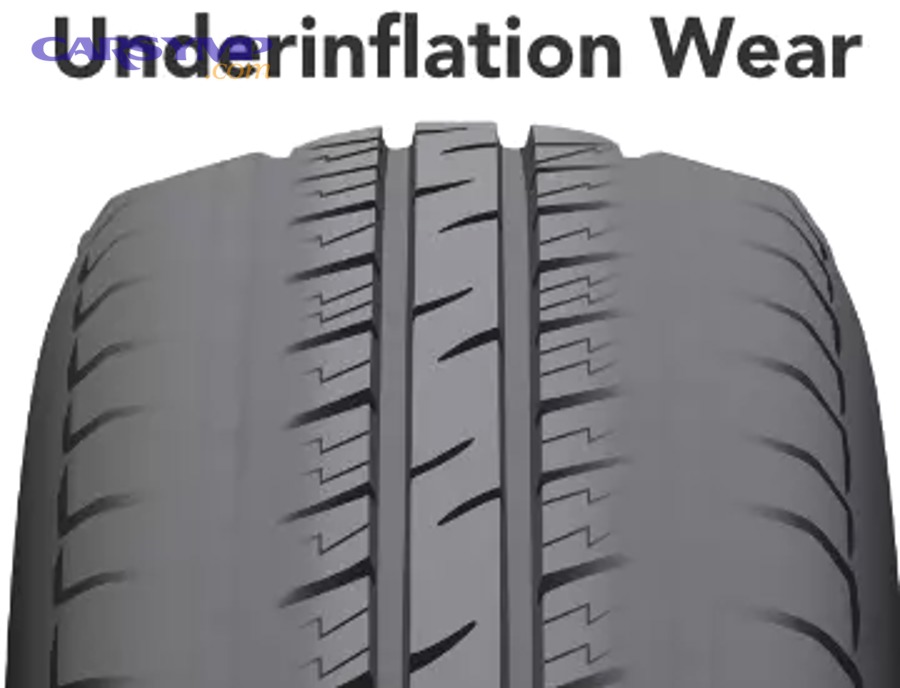
An underinflated tire does the opposite. Lower pressure allows the tread to flatten and flex more, especially toward the shoulders. Both outer edges do more work than the center, so the tire develops wear on the left and right shoulders while the middle often remains deeper for longer. In many cases, underinflation also generates extra heat because the sidewalls flex more than intended.
To make that contrast clearer, think of the tread pattern like this:
- Overinflation: center wears faster
- Underinflation: both shoulders wear faster
- Alignment issue: one side may wear faster than the other
- Balance or suspension issue: tread may cup or scallop in patches
This is why drivers should not rely on a vague description such as “the tire looks worn weirdly.” The shape and location of the wear tell the real story. When the problem is true center wear, the middle section becomes the primary clue. When the shoulders go first, low pressure moves to the front of the diagnosis.
Can underinflation cause center tire wear?
No, underinflation does not usually cause center tire wear because low pressure increases shoulder loading, raises sidewall flex, and shifts more tread work toward the edges rather than the middle. However, the visual pattern can seem confusing if the tire has multiple problems at once.
That confusion usually happens in one of three situations. First, a tire may have a long history of changing pressures. A driver may have run it underinflated for weeks, then overinflated it after service, which creates a mixed visual record. Second, a tire may already have irregular wear from rotation neglect or suspension weakness. Third, the center may only appear more worn because the shoulders are damaged in a different texture or pattern.
For everyday diagnosis, the best approach is to avoid rare exceptions until the basic pattern is clear. If both shoulders are lower than the center, underinflation remains the likely cause. If the center is lower than both shoulders in a continuous band, overinflation remains the stronger explanation. If the wear looks random, chopped, or biased to one side, the tire may be signaling a non-pressure issue.
This distinction matters because many drivers react to a worn tire by simply adding more air. That response can make a shoulder-wear problem worse if the tire was already near the correct setting, and it can also push a center-wear pattern further into premature replacement territory. A careful read of the tread is more valuable than a guess.
How Can You Diagnose the Cause of Center Tire Wear Step by Step?
You can diagnose center tire wear in four steps: inspect the tread pattern, measure cold PSI, compare it with the vehicle specification, and review whether the wear matches a pressure-related pattern. Then, that diagnosis becomes more dependable when you organize what you see before you make any correction.
What should you check first when you see center tread wear?
The first thing you should check is whether the center is truly more worn than both shoulders across the full tread, followed by the cold tire pressure and the manufacturer’s recommended PSI. To better understand the issue, start with visual confirmation before touching the air hose.
A reliable diagnosis sequence looks like this:
- Park on a level surface and inspect all four tires.
Do not judge the problem from one glance at one tire. Compare front to rear and left to right. - Look across the tread width.
Check whether the center ribs are visibly lower than both shoulders. Use a tread-depth gauge if available. - Measure cold tire pressure.
“Cold” means the car has not been driven long enough to heat the tires significantly. A hot tire can show a higher reading than its true baseline. - Compare with the vehicle placard.
Use the PSI listed on the door jamb or owner’s manual, not the maximum PSI molded on the tire sidewall. The sidewall number is not the normal operating target for most vehicles. - Review recent inflation history.
Ask whether the tires were recently topped off, inflated during a temperature swing, or filled by a shop that may have used a generic number. - Check for consistency around the circumference.
True pressure wear tends to be continuous and fairly uniform. Isolated patches suggest a different issue.
This step-by-step method prevents a common mistake: treating the tire sidewall’s maximum pressure as the correct daily pressure. Many drivers see that larger number and assume it represents the right target. In reality, the car manufacturer’s placard usually provides the appropriate cold PSI for the vehicle’s weight distribution, suspension tuning, and tire size.
Which tire wear patterns should be grouped together during diagnosis?
There are four main types of tire wear patterns to group during diagnosis: pressure-related wear, alignment-related wear, suspension-related wear, and balance-related wear, based on the physical cause behind the tread damage. More specifically, grouping the patterns prevents misdiagnosis and supports faster action.
Pressure-related wear includes center wear from overinflation and dual-shoulder wear from underinflation. These patterns usually appear as smooth, broad areas of tread loss that follow the tire’s shape under incorrect pressure.
Alignment-related wear often includes one-sided shoulder wear or feathering across the tread blocks. Toe and camber errors change how the tire scrubs across the road, so the wear tends to develop directionally rather than symmetrically.
Suspension-related wear can include cupping or scalloping when shocks, struts, bushings, or joints fail to control tire motion properly. The tread does not wear evenly because the wheel bounces or loses stable contact.
Balance-related wear may create patchy wear or vibration-linked tread irregularities, especially when a rotating assembly is out of balance for a long time. The texture often differs from the smooth band associated with inflation errors.
This grouping helps with Alignment vs balance vs suspension diagnosis because it gives the driver a clean framework:
- If the wear is symmetrical across the center or both shoulders, think pressure first.
- If the wear is directional or one-sided, think alignment.
- If the wear is choppy or intermittent, think balance or suspension.
That framework does not replace a shop inspection when the signs are mixed, but it gives drivers a smart way to begin the process. Instead of chasing every possible cause, they can sort patterns by the way the tread failed.
Could Something Other Than Overinflation Be Causing the Wear?
Yes, something other than overinflation can contribute to unusual center-area wear because alignment faults, worn suspension parts, poor rotation habits, and mixed pressure history can alter the tread pattern. However, the wear texture and location usually reveal whether overinflation is still the leading cause.
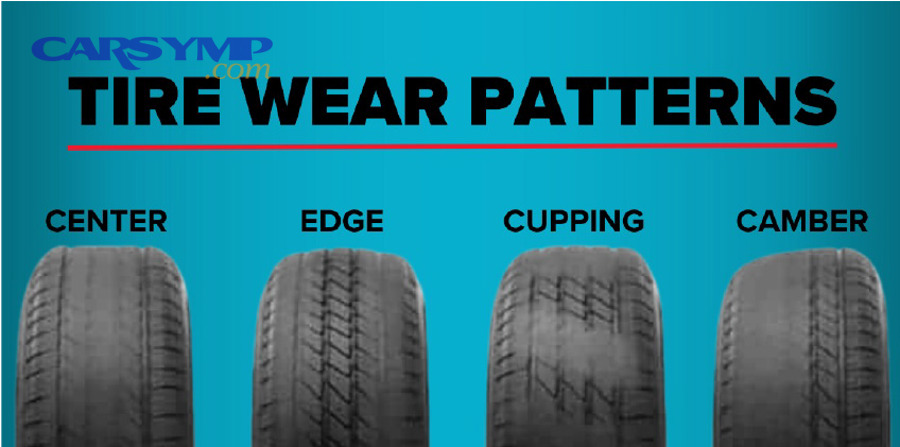
How does center wear compare with alignment wear, cupping, and patchy wear?
Center wear wins in pressure diagnosis, alignment wear is best for identifying steering-angle problems, and cupping or patchy wear is optimal for spotting suspension or balance issues. However, the comparison only works when you look at the shape, texture, and distribution of the wear together.
True center wear is usually smooth and centered. It forms a consistent band across the middle of the tread and tends to reflect a pressure condition that affected the tire over time. The key clue is uniformity.
Alignment wear often looks different. One shoulder may be visibly lower than the other, or the tread blocks may feel feathered when you run your hand across them. This pattern suggests the tire is being dragged at an incorrect angle rather than being loaded incorrectly through pressure alone.
Cupping, sometimes called scalloping, produces a series of high and low spots around the tire circumference. It often comes with vibration or road noise and commonly points to weak shocks, worn struts, or imbalance. The surface does not look like a smooth center strip; instead, it looks segmented or dipped.
Patchy wear can appear when several issues overlap. A neglected rotation schedule, intermittent underinflation, aggressive braking, poor balancing, or worn components can combine into a pattern that does not fit a single clean category.
This is where an accurate uneven tire wear fix depends on the right diagnosis. If a tire has smooth center wear, lowering pressure to the correct specification makes sense. If the tread is feathered or scalloped, pressure alone will not solve the root problem. That is why the visual texture matters just as much as the worn location.
Is uneven center wear on one tire a sign of another issue?
Yes, uneven center wear on just one tire can be a sign of another issue because isolated wear often points to rotation neglect, a local suspension problem, a past inflation mismatch, or a wheel-specific mechanical condition. In addition, one-tire wear deserves more caution than a vehicle-wide pattern.
When overinflation causes the problem across a full set, several tires often show a similar tendency, especially if the same inflation routine was used on all four. When only one tire shows center-biased wear, the explanation may be more specific. A tire may have been replaced separately, inflated differently, or mounted on a corner with a suspension issue that changed how the contact patch behaved under load.
It is also possible that the tire spent time in a different position on the vehicle before rotation. A front tire on a front-heavy vehicle experiences steering forces, braking load, and weight transfer that differ from a rear tire. If rotation intervals were inconsistent, the wear story may be tied to that history rather than current pressure alone.
Drivers should also check whether the tire size, brand, or construction matches the others. A mismatched tire can react differently to the same pressure, especially when sidewall stiffness differs. Even when the wear looks “centered,” the broader context may reveal why that one tire aged differently.
That is why one-tire abnormalities should push the diagnosis beyond inflation alone. Pressure still matters, but the next step may include inspecting shocks, bushings, alignment angles, and tire rotation records to keep the issue from returning.
How Do You Fix Center Tire Wear and Prevent It From Returning?
The main method is to correct the pressure to the vehicle specification, inspect the tire’s remaining tread life, rotate if appropriate, and address any contributing maintenance gaps to prevent repeated center wear. More importantly, fixing the cause early protects the remaining tread even though the lost rubber cannot be restored.
What should you do if overinflation caused the center wear?
If overinflation caused the center wear, you should reset cold PSI to the vehicle specification, confirm the reading with a reliable gauge, inspect tread depth across the tire, and decide whether the tire is still safe to keep in service. Specifically, the fix combines correction and judgment.
Start by lowering the pressure to the recommended cold PSI shown on the vehicle placard. Then recheck the reading after the tires have fully cooled again to make sure the number is stable. If you use a portable inflator or public air station, verify its accuracy with a separate gauge because not all equipment reads precisely.
Next, measure tread depth in three locations:
- Inner shoulder
- Center
- Outer shoulder
If the center is worn but still above minimum safe tread thresholds and the rest of the tire remains structurally sound, the tire may continue in service for a period, though it will never regain the missing rubber. If the center is already near replacement depth, especially on a drive axle or in wet-weather service, replacement may be the safer choice.
After pressure correction, check your maintenance routine. Preventing future uneven wear with maintenance means establishing habits that keep pressure from drifting upward or being set incorrectly:
- Check cold tire pressure monthly
- Recheck during major seasonal temperature changes
- Rotate tires at recommended intervals
- Use the vehicle placard, not the tire sidewall maximum
- Record readings if the vehicle has shown repeat wear issues
This is also the point where a driver should consider whether the car needs a broader inspection. If the center wear is mixed with feathering, vibration, or one-sided loss, the right solution may include Alignment vs balance vs suspension diagnosis instead of pressure correction alone.
Can correcting tire pressure reverse center tread wear?
No, correcting tire pressure cannot reverse center tread wear because rubber that has already worn away does not grow back, and the tire keeps the tread depth loss permanently. However, correcting the pressure can stop the pattern from worsening so quickly and preserve the tread that remains.
That is an important distinction. Pressure correction is preventive from this point forward, not restorative. Once the center is worn down, the best outcome is to slow or stop additional damage while you evaluate whether the tire still has enough safe, usable life.
A practical decision framework looks like this:
- Keep using the tire if tread depth remains safely above replacement levels, wear is not severe, and no other damage is present.
- Monitor closely if the center is clearly lower than the shoulders but still legal and traction demands are modest.
- Replace the tire if the center is near the wear bars, wet traction has dropped noticeably, or the wear pattern compromises safety.
Pressure correction also protects the replacement tires you may buy next. Many drivers replace worn tires without changing the inflation habit that caused the problem in the first place. The result is a new set that begins aging in the same way. Correcting the routine is what turns the repair into a real long-term uneven tire wear fix.
According to the National Highway Traffic Safety Administration, correct tire inflation supports safer handling, longer tire life, and more stable vehicle performance by helping the tire maintain the intended contact with the road.
What Other Tire Pressure Factors Can Affect How Center Wear Appears?
Other tire pressure factors that can affect how center wear appears include vehicle load, temperature change, TPMS limitations, service inflation habits, and heat-cycle timing because each one changes how pressure is measured or how the contact patch behaves. Below, these secondary factors expand the diagnosis after the main cause has already been identified.
How does vehicle load change the way overinflation or underinflation wear appears?
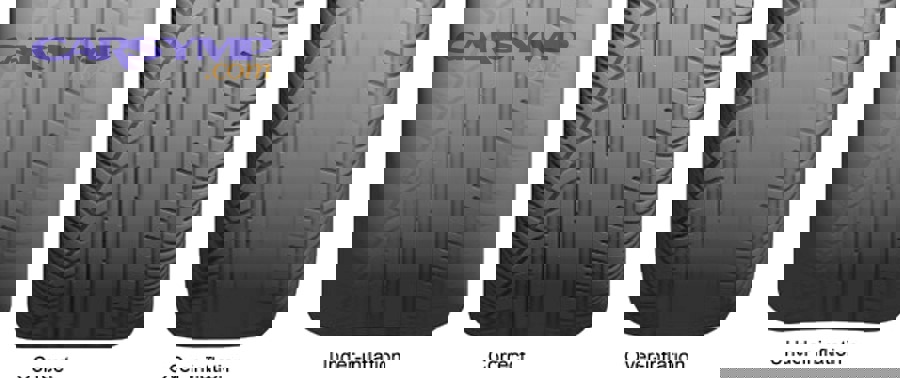
Vehicle load changes the way pressure-related wear appears because added weight alters the contact patch, shifts force across the tread, and can accelerate wear in whichever area is already overloaded. Specifically, load does not rewrite the basic rule, but it can intensify the pattern.
A lightly loaded vehicle with too much pressure may show classic center wear because the crown effect dominates. A heavily loaded vehicle may flatten the tire more, which can sometimes mask or delay how obvious the center bias looks. Under low pressure, added load worsens shoulder stress because the sidewalls flex more and the outer tread zones carry even more of the burden.
This matters for drivers who alternate between commuting empty and hauling passengers, tools, or cargo. If inflation is set generically rather than matched to the manufacturer’s guidance, the wear pattern may develop faster under heavier use. That is one reason commercial-style usage can expose tire pressure mistakes sooner than casual driving.
The practical lesson is simple: diagnose tread wear in the context of how the vehicle is actually used. A tire that lives under extra load may show pressure mistakes more aggressively than a lightly used family car.
Can TPMS readings be misleading when diagnosing tread wear?
Yes, TPMS readings can be misleading when diagnosing tread wear because the system may alert late, may not display precise cold PSI in all vehicles, and does not explain how the tire has been inflated over months of use. In addition, TPMS is a warning tool, not a complete wear-analysis tool.
Many drivers assume that no warning light means the pressure must be correct. That assumption is risky. Some systems only illuminate when pressure falls significantly below a threshold, which means the tires can still be improperly inflated without triggering a warning. A tire can also spend long periods mildly overinflated without any dashboard alert at all.
That limitation matters because center wear usually develops over time from consistent overpressure, not from one dramatic event. A driver might follow the dashboard and still miss the long-term habit that caused the middle ribs to wear out early.
The better approach is to treat TPMS as one input, not the whole diagnosis. Use a manual gauge, measure cold PSI, compare it to the placard, and inspect the tread itself. The tire’s wear pattern often tells a more complete story than the instrument cluster.
Could recent tire service or incorrect shop inflation create center wear later?
Yes, recent tire service or incorrect shop inflation can create center wear later because a tire that leaves the shop overinflated may run that way for weeks or months if the driver assumes the setting is correct. Moreover, service-related inflation errors are easy to overlook because they often feel “professional.”
This happens when a technician uses a generic PSI number instead of the vehicle-specific placard, inflates all vehicles to one standard figure, or fills the tires while they are warm without accounting for temperature change. A driver may then continue topping off to that same number, reinforcing the error.
The result is delayed recognition. The car may drive normally enough that the overinflation goes unnoticed. By the time the center wear becomes visible, the driver may not connect it to the earlier service visit. That delayed cause-and-effect relationship makes inflation history an important part of diagnosis.
A smart habit is to check tire pressure yourself after any service involving tires, rotations, or seasonal maintenance. That single step can prevent a long period of incorrect inflation from becoming a shortened tire lifespan.
Does heat cycling affect how tread wear should be interpreted?
Yes, heat cycling affects how tread wear should be interpreted because temperature raises operating pressure during driving, changes measured PSI temporarily, and can distort conclusions if the tire is checked hot instead of cold. Thus, wear diagnosis should always begin with cold readings and a stable visual inspection.
When you drive, friction and flex generate heat in the tire. As temperature rises, air pressure rises too. If you measure PSI immediately after a trip and compare it casually to the placard number, you may think the tire is overinflated even when it is operating normally for a hot condition. That is why pressure settings should be judged cold.
Heat also explains why repeated driving on incorrect pressure speeds up tread damage. Overinflated tires run with a reduced contact patch at the center, while underinflated tires flex excessively at the sidewalls and shoulders. Both states create wear, but the interpretation becomes clearer when measurements are taken under consistent, cold conditions.
In short, temperature should not distract from the main diagnosis, but it should shape how you measure and confirm it. A calm cold-pressure check, combined with a close tread inspection, remains the best way to understand whether center wear truly points to overinflation and what to do next.