


Emissions tests usually fail for a small set of repeatable reasons: the vehicle is emitting too much pollution, the onboard diagnostics (OBD-II) system detects a fault, or the test can’t be completed because readiness monitors aren’t set. The fastest path to a pass is to understand which “lane” you’re in—tailpipe numbers, OBD trouble codes, or readiness—and fix the root cause instead of guessing.
Next, you’ll learn the most common failure triggers, from simple maintenance items (like an EVAP leak from a loose gas cap) to high-impact faults (like oxygen sensor data issues or catalytic converter efficiency problems). Knowing which category your problem fits helps you avoid wasting money on parts that won’t change your results.
Then, you’ll get a practical, step-by-step way to diagnose the failure quickly using scan data and a few basic checks, so your repair plan matches what the test actually measures. This approach is the difference between “cleared codes and hoped” and “fixed and verified.”
Introduce a new idea: once you know why tests fail and how to confirm the cause, you can prepare correctly for the retest—especially if your failure is due to monitors not being ready—so you don’t lose time and money repeating the same mistake.
What does it mean when your car fails an emissions test?
Failing an emissions test means your car either exceeded the allowed pollution limits, triggered an OBD-II emissions-related fault, or couldn’t complete the inspection because the system wasn’t ready to self-test. Specifically, the “meaning” depends on the test type used in your area—tailpipe/smoke measurement, OBD plug-in testing, or a combination.
To better understand what you’re dealing with, start by reading the failure report carefully and matching it to one of these outcomes:
- Tailpipe numbers too high (common in older programs or certain test types): the engine is producing excess hydrocarbons (HC), carbon monoxide (CO), or nitrogen oxides (NOx), often due to misfire, rich/lean fueling, or catalyst performance.
- OBD emissions failure (very common on 1996+ vehicles): the check engine light is on or stored emissions-related codes (DTCs) exist, indicating the car knows it’s out of spec.
- Not Ready / Incomplete: the car’s readiness monitors haven’t completed after codes were cleared or the battery was disconnected, so the testing station can’t verify emissions self-checks.
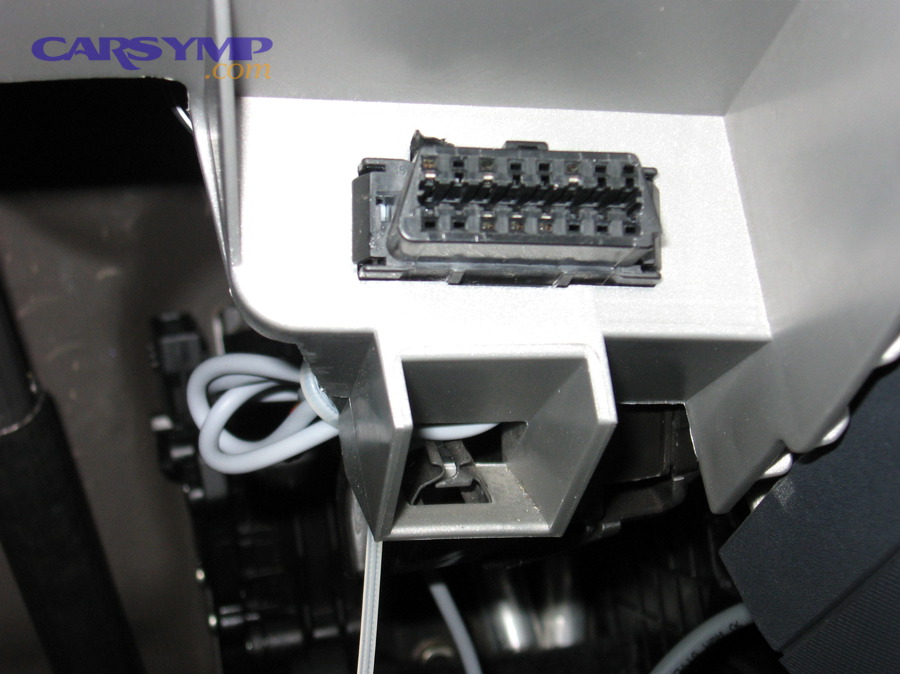
Is an OBD emissions failure the same as a tailpipe failure?
No—an OBD emissions failure is not the same as a tailpipe failure, because OBD testing fails you based on diagnostic status (codes, monitor results, MIL/check-engine state), while tailpipe testing fails you based on measured exhaust gases. That difference matters because it changes how you should diagnose the problem.
However, the two failures can overlap. For example, a misfire or rich mixture can cause both high HC/CO (tailpipe failure) and OBD codes (misfire codes, fuel-trim codes, catalyst-efficiency codes). On the other hand, you can sometimes have an OBD failure with normal tailpipe numbers—like an EVAP system leak or a catalyst monitor that hasn’t run yet.
Use this rule of thumb:
- If the test report lists DTCs, readiness monitors, or MIL status → treat it as an OBD diagnostic problem first.
- If the test report lists pollutant readings (HC/CO/NOx or opacity) → treat it as a combustion/catalyst performance problem first.
Which pollutants or monitors are usually behind a failure?
Most emissions failures trace back to three “measurement targets,” depending on your test program:
- Combustion quality (misfire, rich or lean fueling): drives HC and CO upward when incomplete combustion occurs, and can drive NOx upward when combustion temperatures rise.
- Catalyst efficiency: the catalytic converter is designed to reduce harmful exhaust gases; when it’s failing, you’ll often see catalyst monitor issues (like P0420/P0430), elevated tailpipe pollutants, or both.
- EVAP integrity and readiness: EVAP leaks don’t always change tailpipe numbers much, but they are heavily monitored by OBD and commonly cause failures through EVAP codes or monitor status.
What are the most common reasons emissions tests fail?
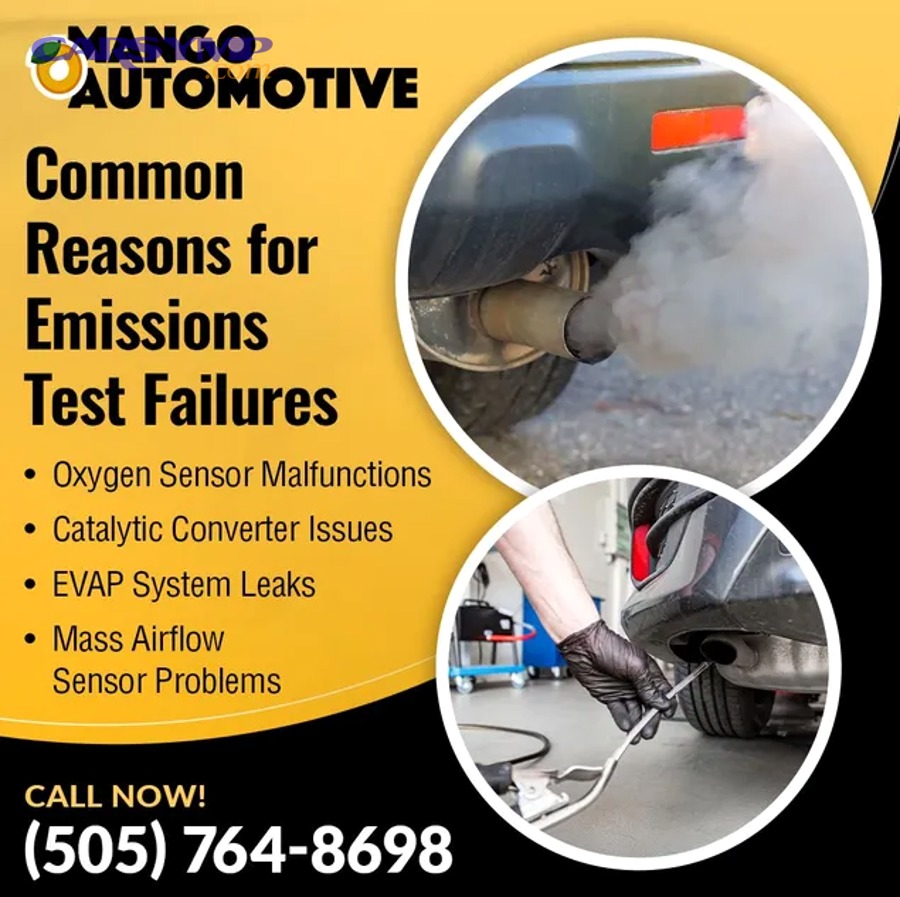
There are 4 main groups of common reasons emissions tests fail: (1) simple maintenance and air/fuel basics, (2) sensor and control faults, (3) exhaust/catalyst problems, and (4) readiness/communication issues—and most real-world failures fall into one of these groups. (autozone.com)
Next, instead of listing random “top 10” items, it helps to classify the causes by what they do to emissions or test readiness—because each group has its own fastest verification steps.
Which simple maintenance issues trigger failures?
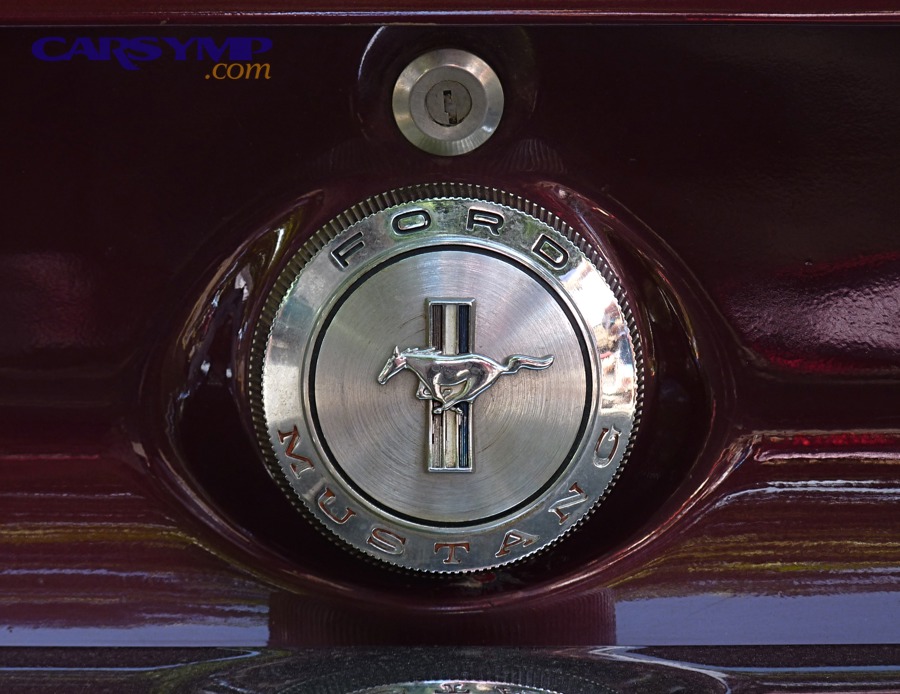
Simple maintenance issues can absolutely trigger failures, especially when they cause poor combustion or an EVAP leak. The most common “simple” items include:
- Loose, damaged, or incorrect gas cap: a poor seal can trigger EVAP leak codes, which often fails OBD testing even if the engine runs fine.
- Dirty air filter or airflow restriction: can push fueling out of normal range and increase emissions.
- Old spark plugs or ignition wear: increases misfire risk and incomplete combustion, raising HC and stressing the catalytic converter.
- Skipped oil changes or wrong oil: can contribute to crankcase vapors and contamination over time (more relevant to long-term emissions health than immediate readiness).
A practical way to use this list is to ask: “Can I verify this in 10 minutes?” Gas cap condition, air filter restriction, and visible ignition neglect are fast checks—so they belong at the front of your plan.
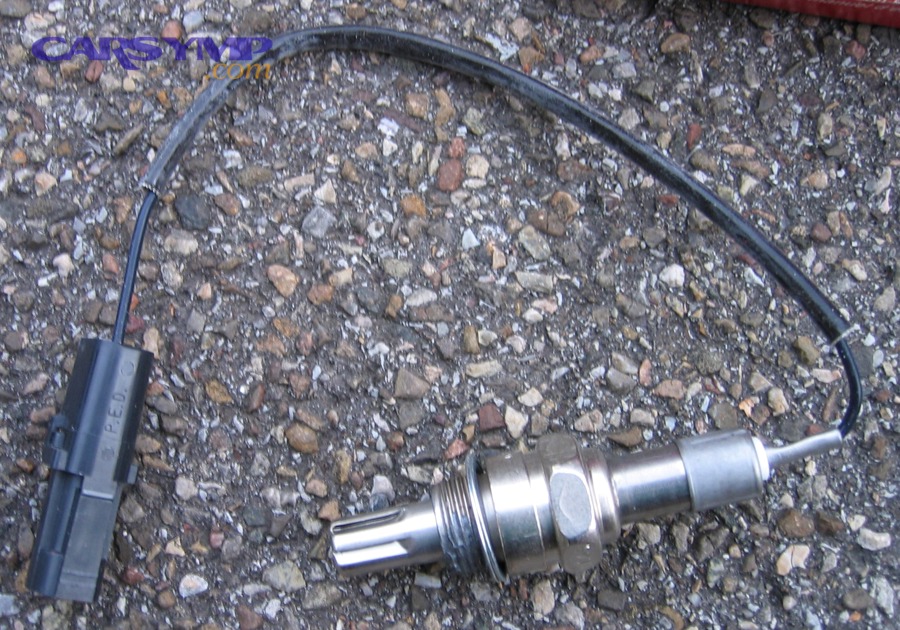
Which sensor and fuel-system faults are frequent culprits?
Sensor and fuel-system faults are frequent because they directly control the air-fuel mixture—one of the biggest determinants of emissions. Common causes include:
- Faulty oxygen (O2) sensor: incorrect feedback can cause the engine to run too rich or too lean, increasing pollutants and possibly triggering catalyst-related codes.
- Mass airflow (MAF) sensor contamination: skews load calculation and fueling.
- Fuel injector problems (leaking, clogged, or imbalanced): creates cylinder-to-cylinder fueling differences, misfire, or rich conditions.
- Vacuum leaks: often create lean conditions and unstable idle; can set lean codes and raise NOx under load.
A key “don’t guess” tip: treat the code + fuel trims + symptoms as a package. If fuel trims are strongly positive, you’re often dealing with unmetered air or weak fuel delivery; if strongly negative, you may have excessive fuel or a skewed sensor input.
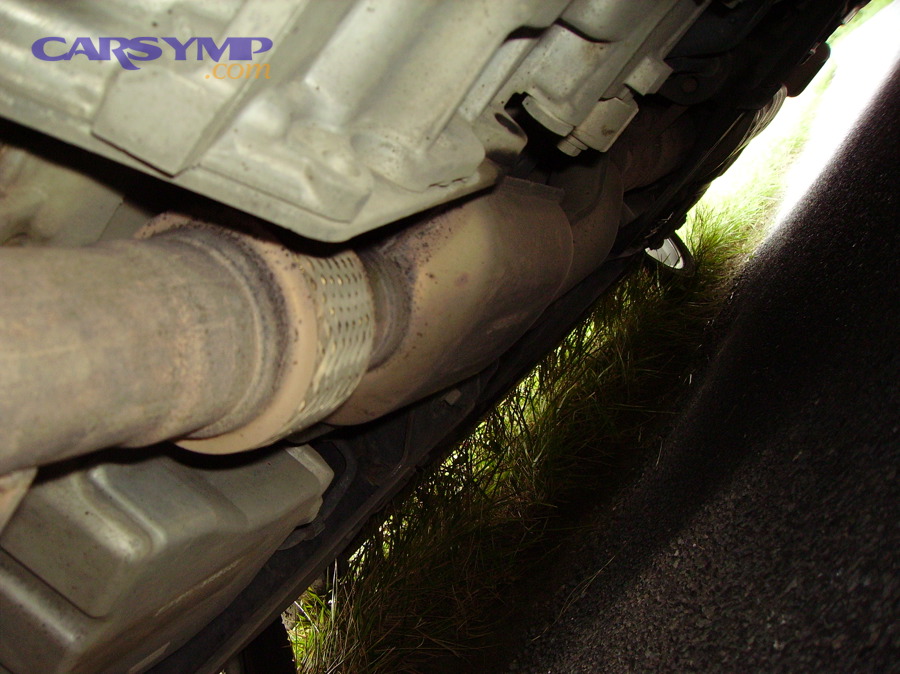
Which exhaust and catalyst problems cause repeat failures?
Exhaust and catalyst problems are repeat offenders because they can turn a minor fueling issue into a guaranteed failure. The common ones are:
- Catalytic converter efficiency loss: often shows up as P0420/P0430 (or high tailpipe emissions). Converter failure can be caused by age, overheating, contamination, or repeated misfires.
- Exhaust leaks ahead of the O2 sensor: can pull in outside air and make the ECU misread oxygen content, corrupting fueling control and catalyst monitoring.
- Secondary air injection (if equipped) faults: affects cold-start emissions and may trigger readiness or code failures.
Cost matters here too: catalysts contain precious metals (including palladium), and even the raw material economics can affect replacement cost.
Which readiness/communication issues cause “Not Ready” or rejection?
Readiness/communication issues cause failures when the car hasn’t completed its self-tests or can’t communicate properly during the inspection. The most common triggers are:
- Codes cleared recently (scan tool “clear codes” or battery disconnected): resets monitors to “Not Ready.”
- Incomplete drive cycle: the car hasn’t seen the right mix of cold start, steady cruise, decel, idle, and warm-up time to run each monitor.
- Underlying fault prevents monitor completion: a monitor may never set to “Ready” until the underlying component problem is fixed. (bar.ca.gov)
- Aftermarket tune or modifications: some tunes can interfere with monitor logic or reporting (varies widely by vehicle and tune).
If your report says “Not Ready”, it is not a vague failure—it’s a specific state you can measure and fix with a plan instead of replacing parts.
How can you diagnose an emissions test failure fast without guessing?
You can diagnose an emissions test failure fast by using 3 steps: read OBD data (codes + readiness + freeze frame), confirm the failure category (EVAP vs fuel/air vs catalyst), then verify with one targeted test. This method reduces “parts darts,” and it works whether you’re doing DIY diagnosis or showing up to a shop with better information.
More specifically, you’re trying to answer three questions in order:
- What did the car detect? (DTCs, pending codes, freeze frame)
- What is the car ready to prove? (readiness monitors)
- What single test confirms the most likely root cause? (smoke test, fuel-trim verification, exhaust leak check, etc.)
How do you read codes, freeze-frame data, and readiness monitors?
Start with a scan tool that can show pending codes, permanent codes (if available), freeze frame data, and readiness monitor status—not just generic code descriptions.
Do it in this order:
- Check MIL status (check engine light): if it’s on, many programs fail automatically.
- Pull codes:
- Stored codes: the primary reason for an OBD failure.
- Pending codes: early warnings; often relevant before the MIL turns on.
- Permanent codes (if shown): may remain until conditions prove the fix (depends on system and rules).
- Review freeze frame for the first stored code:
- Engine load, RPM, coolant temp, fuel trims, speed.
- Freeze frame tells you when the problem was detected, which can indicate EVAP (often after soak), catalyst (often at steady cruise), or misfire (often load-dependent).
- Check readiness monitors:
- If key monitors are “Not Ready,” the vehicle may fail regardless of whether codes are present. State rules vary, but some programs are strict about readiness. (bar.ca.gov)
If you need a quick visual guide to scan tools and basic OBD reading, this walkthrough can help:
How do you prioritize fixes based on codes and symptoms?
Prioritization is where most people waste money—because they fix the most obvious part instead of the most likely cause. Use this priority stack:
- Misfire and fuel control first (P0300–P030X, rich/lean codes, injector or ignition issues)
Why: misfires and rich fueling can destroy a catalytic converter and keep monitors from setting. - Air leaks and sensor plausibility next (MAF/MAP faults, intake leaks, exhaust leaks before sensors)
Why: a “bad sensor” code can be caused by a leak or wiring issue. - EVAP last only if drivability is fine (small leak codes, purge/vent)
Why: EVAP failures are common and often don’t affect drivability, but they still fail OBD tests.
Then match the fix to verification:
- Fuel trims abnormal? confirm leaks, MAF contamination, fuel pressure, injector balance.
- Catalyst efficiency codes? confirm misfire/fueling are not the upstream cause, then evaluate catalyst performance.
- EVAP codes? smoke test is often the fastest confirmation.
If you want a symptom-first approach that bridges “what you feel” to “what the scan tool shows,” you can also cross-check common patterns on carsymp.com once you have the code family identified (use it to generate hypotheses, not to replace testing).
When should you stop DIY and get a smoke test or professional diagnosis?
You should stop DIY and get a smoke test or professional diagnosis when (1) EVAP leak codes persist after basic checks, (2) readiness monitors won’t set after a correct drive cycle, or (3) fuel trims and misfire data suggest a deeper mechanical or fuel issue.
Specifically, consider professional testing if:
- You have EVAP small leak codes and can’t find an obvious cracked hose or loose cap.
- Your vehicle remains Not Ready after a week of correct mixed driving and no codes.
- You see repeated misfire on one cylinder, which may point to compression, injector, or coil issues.
- You suspect an exhaust leak near the manifold or in front of the upstream O2 sensor (hard to spot without tools).
A good shop can perform a smoke test (EVAP/intake), verify fuel pressure and injector behavior, and confirm catalyst performance—often saving you from replacing the wrong part.
What should you do before a retest to avoid failing again?
To avoid failing again, follow an emissions test failure fix routine with 4 steps: repair the verified root cause, confirm no active/pending emissions DTCs, complete readiness monitors, and do a pre-test check the day before. This sequence prevents the most common “I fixed it but still failed” outcome: a car that’s repaired but not ready.
Then, treat the retest like a controlled experiment: change what matters (the verified cause), validate what the test reads (codes + readiness), and only then pay for the retest.
What is the safest emissions test failure fix checklist?
Use this checklist to reduce repeat failures:
- Fix the root cause you confirmed (not the code description alone).
- Clear codes only after repair, and document what you changed.
- Restart and warm up fully, then re-scan:
- No stored or pending emissions-related codes.
- Fuel trims in a reasonable range at idle and steady cruise.
- Verify readiness monitor status:
- Identify which monitors are incomplete.
- Plan a drive cycle that targets those monitors.
- Do a “day-before” verification scan:
- A surprise pending code can fail you tomorrow.
- Avoid last-minute battery disconnects (they can reset readiness).
If you’re working with a shop, ask them to show you the “before and after” scan screenshots—codes and readiness—so you can see whether the vehicle is actually ready for the station.
When a tune-up helps pass emissions (and when it won’t)
A tune-up helps pass emissions when the failure is tied to combustion quality—misfires, weak ignition, restricted airflow, or degraded basic maintenance—because improved combustion lowers HC/CO and reduces stress on the catalyst.
However, a tune-up won’t fix:
- A failing catalytic converter whose substrate is damaged.
- An EVAP leak that’s purely a vapor containment problem.
- A readiness monitor problem caused by an underlying sensor fault that prevents the monitor from running.
A useful reality check comes from real-world tune-up research: According to a study by Utah State University from the Department of Applied Sciences, Technology, and Education (Industrial and Technical Education), in 1972, the study reported that 93% of new 1971 model cars tested were not meeting EPA-established standards, highlighting how strongly maintenance and tuning influence measured emissions outcomes. (digitalcommons.usu.edu)
The practical takeaway isn’t “all cars need a tune-up”—it’s: if your scan data or symptoms suggest weak combustion (misfire counts, rough idle, poor mileage, rich smell), a tune-up is often the highest-value first step.
Readiness monitors not set troubleshooting
Readiness monitors not set troubleshooting works best when you treat “Not Ready” as a measurable checklist—not as a mystery—because monitors need time, temperature, and the right driving conditions to complete.
Here’s the troubleshooting ladder:
- Confirm why monitors reset
- Codes cleared? Battery disconnected? Recent ECU reset? That alone can explain the state.
- Confirm prerequisites
- No active DTCs (some monitors won’t run if a related fault is present). (bar.ca.gov)
- Proper coolant temperature behavior (a stuck-open thermostat can prevent warm-up conditions; some programs highlight thermostat/coolant temp as a readiness blocker). (cleanairforce.com)
- Drive correctly for the monitors you need
- Many vehicles need a cold start, steady highway cruise, and deceleration events to run catalyst and EVAP checks.
- If you only drive short trips, you may never hit the conditions needed.
- Re-scan after each “monitor attempt”
- Track which monitor is stuck (EVAP is often the slowest to complete).
- If a specific monitor refuses to set
- Stop assuming it’s “normal”—it can indicate an enabling component is faulty, or the car needs a targeted repair.
For some programs, readiness is becoming stricter over time. For example, California BAR states that effective October 1, 2025, regulations require all readiness monitors to be set for a vehicle to pass a Smog Check inspection. (bar.ca.gov)
How to avoid scams and wasted retests
Avoiding wasted retests is mostly about process control:
- Don’t pay for repeated “code clears.” Clearing codes without fixing the cause can remove the evidence you need and reset readiness.
- Ask for the diagnostic printout: codes, freeze frame, readiness, and test results. If a shop won’t provide it, that’s a red flag.
- Separate diagnosis from parts sales when possible:
- A shop can diagnose, and you can decide whether to buy parts there.
- Watch for “miracle fixes.”
- Any claim that a bottle/additive will reliably fix a catalyst-efficiency code without confirming root causes should be treated cautiously.
- Test early if your registration deadline is near:
- Some programs recommend testing early so you have time for proper repairs rather than rushed choices. (cleanairforce.com)
The goal isn’t to distrust every mechanic—it’s to make sure the plan is evidence-based: code + data → test → fix → verify → retest.
How do emissions test rules vary by state and by test type?
Emissions test rules vary by state and by test type because states choose different combinations of OBD plug-in checks, tailpipe measurements, visual inspections, and readiness thresholds. That variation changes what “pass” means and what “not ready” is allowed to look like.
In addition, agencies may update readiness policies, allowable monitor exceptions, and what constitutes a fail—so you should always treat official program pages as the final word.
What are common OBD readiness rules (example: California updates)?
Many states base pass/fail on:
- MIL status (check engine light on/off)
- Stored/pending emissions-related codes
- Readiness monitor completion thresholds
California is a helpful example because its rules are clearly documented and periodically updated. California BAR notes that effective October 1, 2025, Smog Check regulations require all readiness monitors to be set (with limited exceptions depending on vehicle specifics and program rules). (bar.ca.gov)
BAR also emphasizes that readiness monitors often must be rerun after repairs like battery disconnection or emissions component replacement, and that some monitors may never complete until enabling component issues are fixed. (bar.ca.gov)
What if your car is exempt or needs a referee/waiver?
Some locations have exemptions (vehicle age, diesel rules, certain counties, or registration class), while others offer referee processes or special handling when a vehicle cannot complete monitors under normal conditions.
If you’re stuck in a “can’t get ready” loop, look for:
- Official guidance on readiness exceptions (some agencies maintain lists or criteria).
- Referee or escalation options for special cases.
- Agency guidance for vehicles that consistently show readiness issues.
For trucks and some specialized programs, agencies like CARB also publish readiness criteria and recommended steps when a vehicle receives a “Not Ready” result. (ww2.arb.ca.gov)
Where should you look for official local requirements?
Use your state or program authority first—because the rule that matters is the one the testing station must follow. In practice, the best sources are:
- Your state’s environmental agency or inspection program pages (often includes readiness rules, retest policies, and acceptable monitor status).
- Your state’s repair authority pages (for example, BAR resources in California).
- Program-specific FAQs .
Once you align your fix plan to your local test type and readiness rules, you stop treating emissions failures as random—and start treating them as predictable outcomes you can verify and control.