


To know how much refrigerant to add, you should follow the vehicle’s specified refrigerant capacity (usually in ounces/grams) and charge by weight, not guesswork.
Because many systems are already partially charged (or leaking), the real task is identifying whether you need a top-off or a complete evacuate-and-weigh-in, then matching the correct amount to the exact vehicle and system configuration.
Another key intent is avoiding damage: too little refrigerant reduces cooling and oil return, while too much can raise head pressure and stress the compressor, hoses, and condenser.
Giới thiệu ý mới: Next, you’ll learn where the correct refrigerant capacity number comes from and how to add refrigerant with a process that prevents both undercharge and overfill.
What does “how much refrigerant to add” actually mean in a car AC system?
It means adding refrigerant until the system contains the specified total charge (the target amount by weight), not until a gauge “looks good.”
To connect this to real-world work, you first decide whether you’re restoring a known-empty system or correcting a system that’s still partially charged.
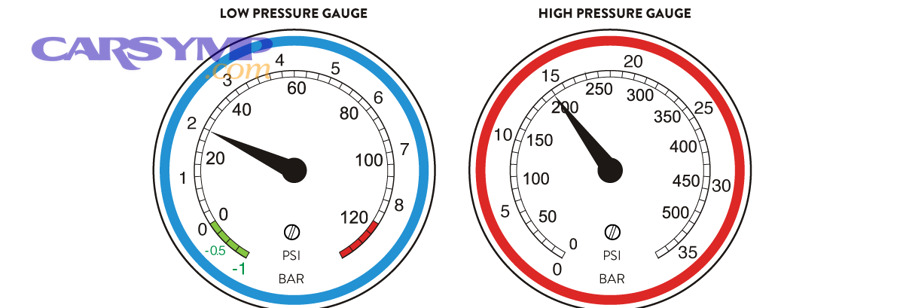
Why “total charge” matters more than “adding a little”
Total charge is the system’s designed refrigerant mass that keeps pressures, temperatures, and oil circulation in the safe operating window.
So, when people ask how much to add, the correct answer is usually: add refrigerant until you reach the factory-specified charge—or, if you’re topping off, add only enough to return the system to that target after confirming what’s missing.
Top-off vs full charge: the two situations that change the answer
If the system is cooling but weak, you might be undercharged and only need a small correction—yet you still need a reliable way to avoid overshooting.
If the system has been opened (repairs, component replacement) or is very low/empty, the correct approach is to evacuate and recharge to the exact weight, because the starting amount is unknown.
Why overfill is not the “safer” side
Overcharging can elevate discharge pressure, reduce condenser efficiency, and in severe cases cause compressor strain, noise, or cycling issues.
That’s why the “capacity vs overfill” relationship is the key lexical contrast: the target is the capacity, and the risk is overfill.
Where do you find the correct refrigerant capacity for your exact vehicle?
You find it on the under-hood label or in the manufacturer’s service information, because refrigerant capacity is vehicle- and system-specific.
Next, you verify the refrigerant type and any notes about dual-zone systems, rear AC, or model-year changes that alter the charge amount.
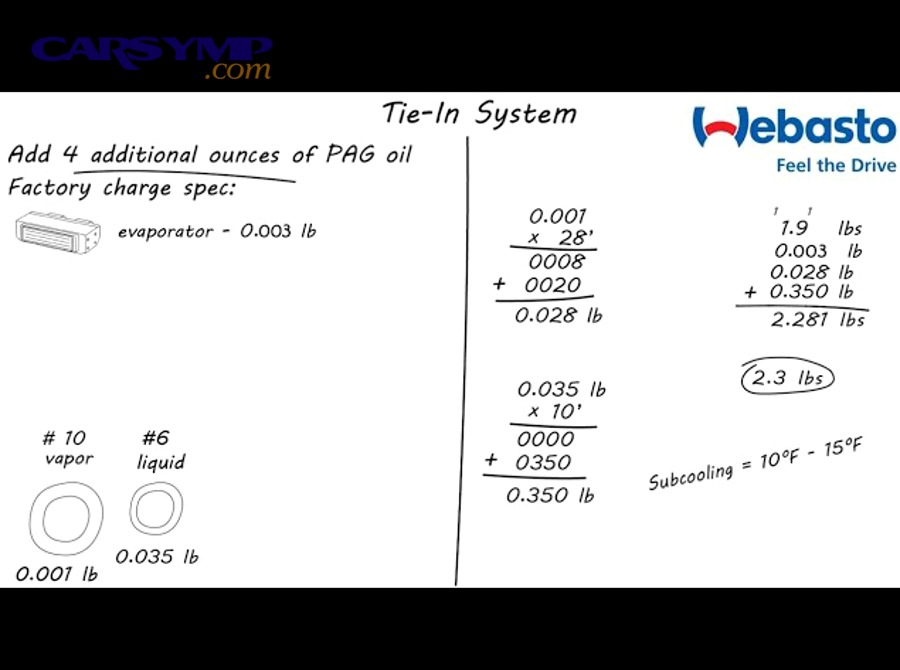
Under-hood label: the fastest, most reliable starting point
Most vehicles have a label listing refrigerant type (for example, R-134a or R-1234yf) and the required charge amount in grams or ounces.
To keep your process consistent, treat that number as the final target weight for a full recharge.
Service data and repair notes: when the label isn’t enough
If the label is missing or unreadable, use OEM service information, professional databases, or a trusted repair manual that lists the exact charge for your VIN’s configuration.
Also check whether the vehicle has rear AC lines and an additional evaporator—those systems often require a higher charge.
Why “close enough” is not close enough
Modern condensers, variable displacement compressors, and compact heat exchangers can be sensitive to charge accuracy.
So even if two vehicles look similar, you should not assume they share the same refrigerant amount.
Can you charge by pressure alone, or must you charge by weight?
You should charge by weight whenever possible, because pressure varies with temperature and cannot reliably tell you the exact refrigerant mass.
To bridge the gap, pressure readings are still useful for diagnostics and safety checks, but they are not a precise measuring cup.
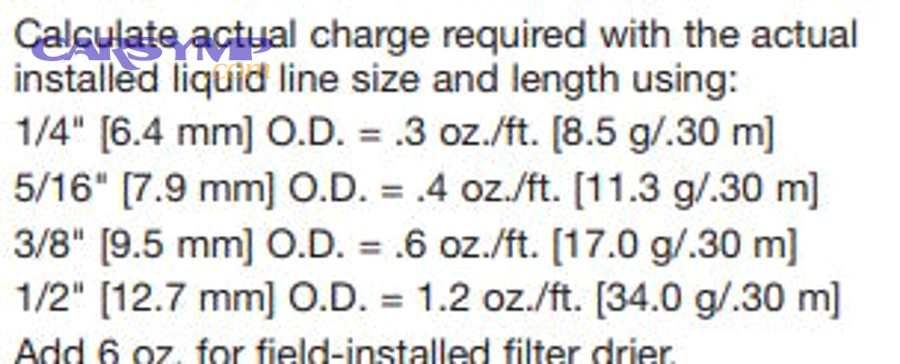
Why pressure changes with ambient temperature
Static pressure rises on a hot day and falls on a cool day even if the refrigerant amount is unchanged, because refrigerant saturation pressure tracks temperature.
So a “good” pressure at one ambient condition can be misleading at another.
What pressure can still tell you (and what it can’t)
Pressure can indicate obvious problems like severe undercharge, airflow issues, or restrictions when interpreted with vent temperature and condenser airflow.
However, pressure alone cannot confirm that you hit the exact factory charge—especially with variable displacement compressors that modulate pressure differently than older systems.
The practical rule: weigh for charging, use gauges for monitoring
If you’re adding refrigerant with a scale, you can add the exact number of grams/ounces required, then use gauges to confirm the system behaves normally.
This pairing gives you accuracy and a safety net.
How do you add the correct amount step-by-step without overfilling?
The safest method is a measured approach: confirm the target charge, verify the system’s state, then add refrigerant by weight in controlled steps until you reach the specified total.
To make this workable for DIYers, you’ll use a scale, stable setup, and clear stopping points that prevent “just a bit more” mistakes.

Step 1: Confirm refrigerant type and target charge
Match the system’s refrigerant type (from the label/service data) and write down the target refrigerant capacity in grams or ounces.
Then, make sure you’re not mixing refrigerants or using an incorrect quick-can product that’s incompatible.
Step 2: Decide if it’s a top-off or a full recharge
If the system is empty, has been opened, or you can’t verify what’s inside, a full evacuate-and-recharge is the correct path.
If it’s still cooling but weak, you may be topping off—yet you should still measure by weight and stop early if readings suggest a different fault.
Step 3: Add refrigerant by weight in controlled increments
Place the refrigerant container on a scale, tare it, and track exactly how much leaves the container.
To keep the process stable, add small increments (for example, 50–100 g at a time) and re-check vent temperature, compressor operation, and gauge behavior between increments.
Step 4: Stop at the target, then validate performance
Once the added amount equals the missing amount (or the system reaches the label-specified total in a full recharge), stop adding.
Then validate: steady vent temperature drop, stable cycling behavior, and no abnormal high-side pressure spikes under normal condenser airflow.
Where the phrases you’ll see online fit in
You’ll often encounter terms like AC recharge in tutorials, and some guides describe How to recharge AC safely as if one gauge reading solves everything.
In reality, the reliable method is measurement plus verification, and the Legal and safety rules for refrigerant handling matter because improper venting, incorrect equipment, and wrong refrigerant choice can be dangerous and unlawful depending on your jurisdiction.
What symptoms tell you you’re undercharged vs overcharged?
Undercharge and overcharge have different patterns: undercharge usually lowers cooling capacity and can starve oil return, while overcharge often drives higher pressures and poor heat rejection.
Next, use symptoms as a decision aid—but remember symptoms guide diagnosis; they don’t replace charging by weight.
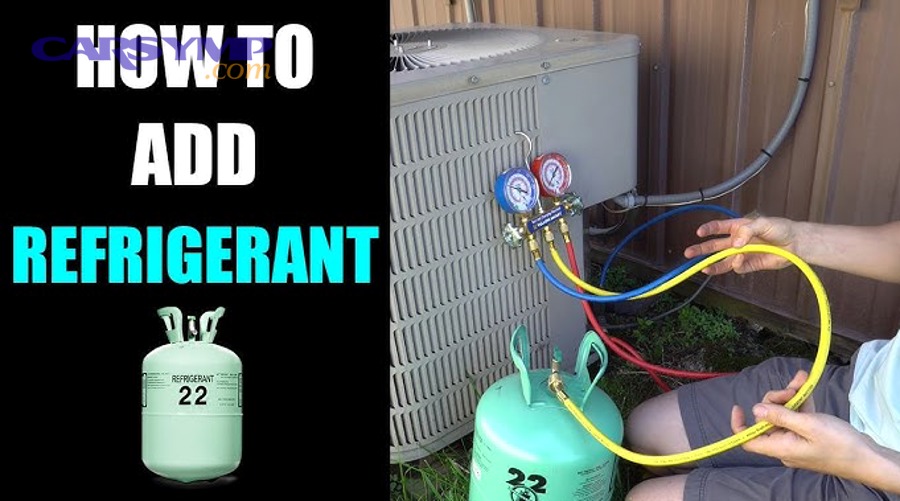
Common undercharge signs
- Weak cooling that worsens at idle or in traffic.
- Rapid cycling as pressure switches respond to low suction conditions.
- Bubbles visible in a sight glass (only if your system has one).
- Evaporator not fully utilized, leading to inconsistent vent temps.
Common overcharge signs
- Higher-than-normal high-side pressure, especially on warm days.
- Poor cooling despite “enough” refrigerant, because the condenser can’t reject heat efficiently.
- Compressor noise or strain in severe cases.
- Hot liquid line and elevated condenser outlet temperatures.
This table helps you distinguish likely undercharge vs overcharge patterns using symptoms, gauge tendencies, and typical causes.
| Condition | Typical cooling behavior | Common gauge tendency | Most likely cause |
|---|---|---|---|
| Undercharged | Weak, inconsistent, worse at idle | Lower suction, may cycle fast | Leak, small loss over time |
| Correctly charged | Strong, stable vent temps | Normal range for ambient conditions | System healthy, airflow adequate |
| Overcharged | May cool poorly, especially under load | High-side elevated, may trigger protection | Too much added, mis-measurement |
| Airflow problem (not charge) | Weak at idle, better at speed | High-side can climb | Fan issue, debris, bent fins |
How do leaks and repairs change how much refrigerant you should add?
Leaks and repairs change the answer because you’re no longer just “adding”—you’re restoring a system whose starting charge is uncertain, and the correct method becomes evacuating and charging to the specified total.
To make your next step clear, treat any repeated loss as a leak until proven otherwise.
If it leaks, topping off is only temporary
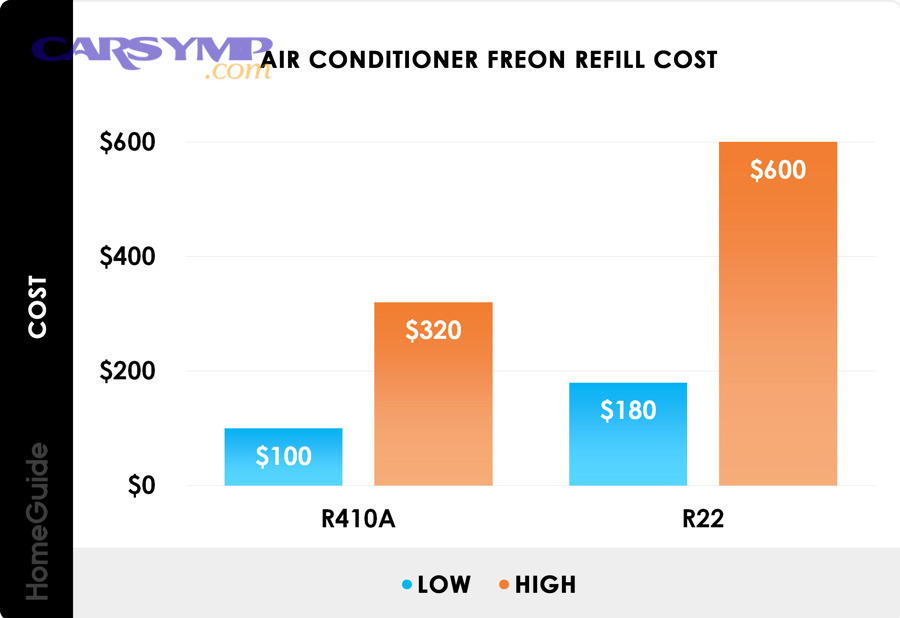
Adding refrigerant without addressing the leak may bring cooling back briefly, but the refrigerant will escape again, and repeated low-charge operation can harm lubrication and performance.
So the correct “how much to add” becomes a two-part answer: fix the leak, then charge to the label-specified amount.
After opening the system, a full recharge is the baseline
If you replaced a condenser, compressor, evaporator, hose, or O-rings, the system was opened to atmosphere.
That usually means you should evacuate moisture and air, then recharge by weight to the factory total—because the previous charge is no longer reliable.
Oil balance: the hidden variable you should not ignore
Some repairs require adjusting compressor oil amounts, and incorrect oil charge can affect heat transfer and compressor durability.
While refrigerant quantity is the main topic, be aware that “perfect refrigerant weight” can still perform poorly if oil quantity is wrong.
What tools and measurements make refrigerant charging accurate?
The most accurate setup uses a scale, a manifold gauge set (or appropriate charging equipment), and temperature measurements so you can quantify what you add and verify the result.
Next, you’ll see which tools matter most and which “shortcuts” create the biggest errors.
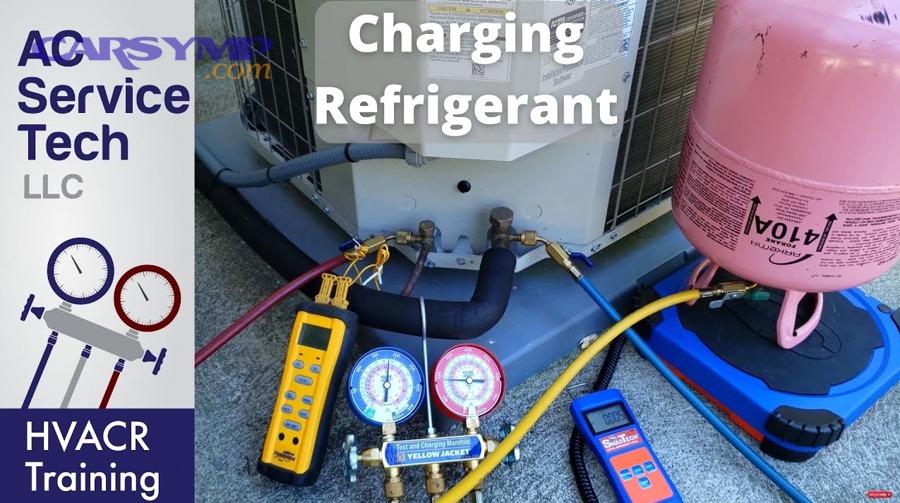
Digital scale: the core tool for “how much”
A scale turns charging into a measurable process: you know exactly how many grams/ounces you added, so you can stop precisely at the target.
This is the single most important upgrade if you’re trying to avoid overfill.
Gauges: necessary for monitoring, not for measuring charge
Manifold gauges help you observe low-side and high-side behavior, spot abnormal pressure patterns, and confirm that the system is responding as expected.
But because pressure depends on temperature, gauges alone are not a precise “quantity” indicator.
Temperature tools: vent, ambient, and line temperatures
A simple thermometer at the center vent and awareness of ambient temperature help you judge whether the system is exchanging heat properly.
Line temperature checks can also hint at restrictions or condenser performance problems that charging alone won’t fix.
Vacuum pump and proper service equipment (when doing a full charge)
If the system is empty or opened, a vacuum pump (and ideally a recovery machine in compliant workflows) is what allows you to remove air and moisture before charging.
This step prevents corrosion, freeze-ups, and unstable performance that can mimic “wrong charge.”
Contextual Border: Up to this point, you’ve learned the universal rule—use the specified refrigerant capacity and charge by weight—plus the diagnostic checks that keep you from overfilling. Next, we’ll cross into advanced edge cases where the “right amount” depends on refrigerant type, retrofits, and temperature-based validation.
Advanced edge cases that change the “right amount” in practice
Edge cases matter because refrigerant type, system modifications, and ambient conditions can shift how you validate a correct charge even when the target weight remains the factory number.
Next, use these scenarios to avoid misinterpreting pressures and blaming refrigerant quantity for problems caused by compatibility or configuration.
R-134a vs R-1234yf: don’t translate amounts between refrigerants
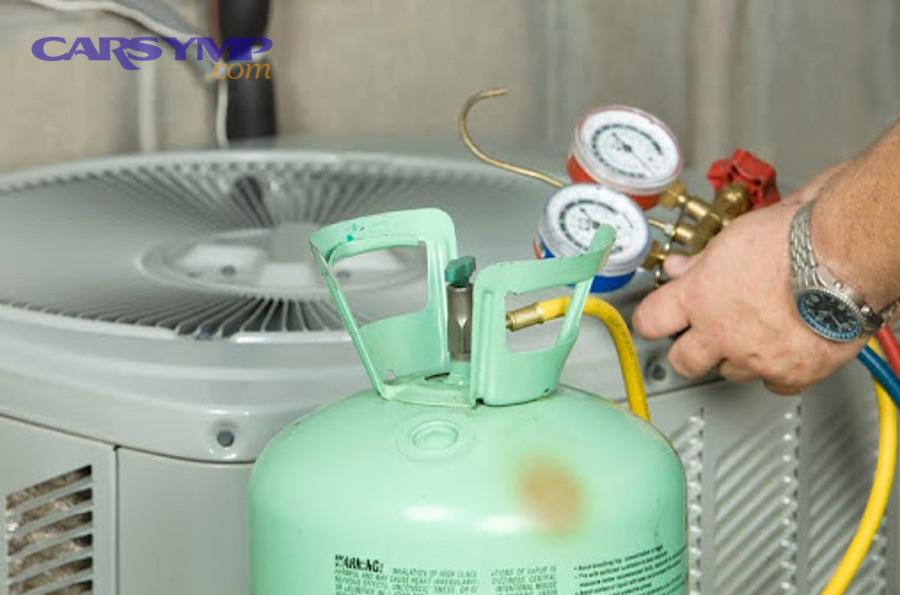
Different refrigerants have different pressure-temperature relationships and are specified by the manufacturer for the system’s components and oil.
So the correct approach is to follow the label for that refrigerant and never assume the “same ounces” rule applies across types.
Retrofits and component swaps: capacity can change
If a vehicle has been retrofitted or modified (aftermarket condensers, different hose lengths, or non-OEM components), the original label may not match reality.
In these cases, the best practice is professional service data for the modified system, careful performance verification, and avoiding aggressive overcharging “until it’s cold.”
Temperature-based validation: when “normal pressure” looks unusual
On very hot days, high-side pressure can be elevated even with correct charge if condenser airflow is limited.
So interpret pressure with ambient temperature, fan operation, and condenser cleanliness to avoid adding refrigerant unnecessarily.
When you should stop and seek professional diagnosis
If pressures are abnormal, cooling is poor, and adding a small measured amount does not improve performance, the issue may be airflow, restriction, compressor control, or contamination—not “not enough refrigerant.”
Stopping early can prevent a simple diagnostic problem from turning into an overcharge or component failure.
Frequently asked questions
These quick answers help you apply the same rules—refrigerant capacity, charging by weight, and verification—when your situation doesn’t match the typical “empty system” example.
Next, use the FAQs to choose between a measured top-off and a full evacuate-and-recharge approach.
Is it okay to add refrigerant “a little at a time” until the air feels cold?
It’s risky, because “feels cold” varies with ambient conditions and humidity, and you can accidentally overfill; a scale-based approach is safer and repeatable.
What if I can’t find the refrigerant capacity label?
Use OEM service data or a professional database for your exact vehicle configuration; guessing based on similar models is how overfill mistakes happen.
If my low-side pressure is low, does that always mean I need more refrigerant?
No—low-side pressure can also be caused by restrictions, expansion device issues, or compressor control problems, so measure charge by weight and diagnose before adding more.
Do sealing additives change how much refrigerant to add?
They can complicate service and equipment compatibility; the correct “how much” remains the factory charge by weight, but additives can create other risks and should be approached cautiously.
What’s the single safest rule to remember?
Use the manufacturer’s specified refrigerant capacity and add refrigerant by weight, then validate performance—because that prevents both undercharge and the “capacity vs overfill” failure mode.