


Proper refrigerant type by model means matching your exact vehicle to the refrigerant it was engineered to use, then verifying it on the car before you add or recover anything—because the “right gas” is a design spec, not a guess.
To make that match fast, this guide shows the most reliable confirmation path for R134a vs R1234yf using the underhood label, service fittings, and factory charge information—so you can avoid cross-contamination and costly A/C damage.
Next, you’ll learn how “model-year rules” can help as a shortcut, why they sometimes fail, and how to handle missing labels or uncertain system history without gambling.
Giới thiệu ý mới: below is a step-by-step framework that starts with the simplest proof on the vehicle, then layers in deeper checks only when needed.
How do you identify the correct refrigerant for your exact model?
The correct refrigerant is the one listed on your vehicle’s factory A/C label (or verified service documentation) and confirmed by the system’s dedicated service fittings—so you should validate both before doing any work. To begin, treat the car as the source of truth, not the internet or a parts counter memory.
After that, follow a “two-proof” rule: label proof + hardware proof. If either proof is missing or inconsistent, stop and move to the uncertainty workflow instead of charging.
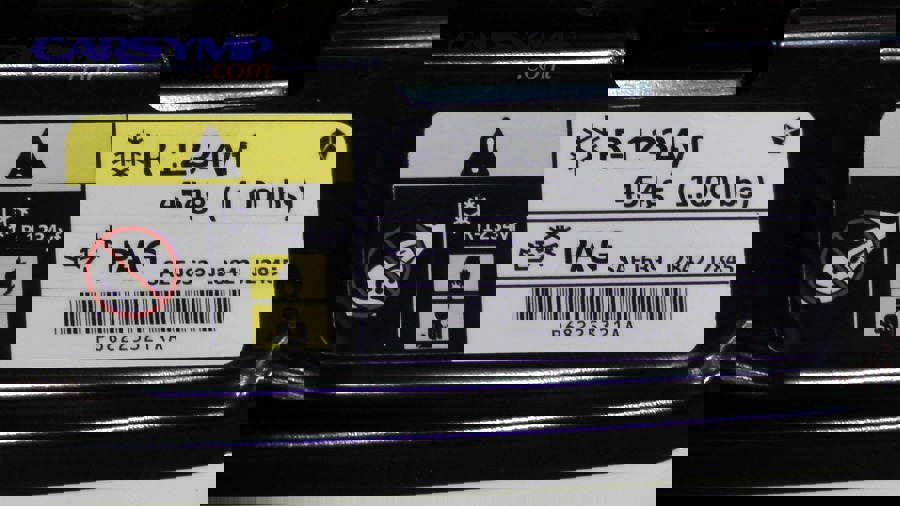
Proof 1 — Underhood refrigerant label: Look for a sticker that states the refrigerant (for example, R-134a or R-1234yf) and the charge amount in grams/ounces. It may also list the lubricant type (often PAG variants) and safety/service notes.
Proof 2 — Service port/fitting compatibility: Modern vehicles use different fittings intended to reduce the chance of connecting the wrong equipment to the system. If the label says one refrigerant but the fittings clearly match another, assume something is off and do not proceed until verified.
Decision point: When label + fittings agree, you have enough confidence to proceed to charge-weight and procedure checks. When they disagree, you need confirmation testing and professional-grade recovery equipment.
According to guidance by the U.S. Environmental Protection Agency from its MVAC (motor vehicle air conditioning) program, in June 2025, the agency emphasizes using proper fittings/markings consistent with SAE J639 for certain refrigerants—reinforcing that labels and service connections are not optional details.
Where is the refrigerant label, and what does it actually tell you?
The refrigerant label is usually under the hood and it tells you the refrigerant type and factory charge amount—two details you must match exactly to prevent poor cooling or component damage. Next, you’ll use that label to anchor every other step, including charge weight, oil handling, and service equipment choice.
After you open the hood, scan the radiator support, underside of the hood, near the condenser, around the compressor area, or along the firewall. Some vehicles place the label on a plastic shroud or near the hood latch area.
How to read it (quick decode):
- Refrigerant type: The exact refrigerant designation (example: R-1234yf or R-134a).
- Charge quantity: Usually in grams and/or ounces; this is the target amount for a correct charge, not a “pressure number.”
- Oil type: Often PAG, sometimes a specific viscosity/grade; treat this as system-specific, not interchangeable.
- Warnings/service notes: Safety classification considerations and required service practices may be referenced.
What it does not guarantee: A label does not prove the system currently contains that refrigerant if the vehicle has been improperly serviced in the past. That’s why the fittings and recovery process matter.
To make the “label check” easier, here’s a video example showing what to look for and where labels often hide.
According to educational material cited by MACS (Mobile Air Climate Systems Association) from its technical safety guidance, in March 2016, technicians are instructed to “look for this label under the hood to determine the refrigerant in the system,” highlighting that label-first verification is the correct starting point.
Can you use model year as a shortcut, and when does it fail?
Yes—model year can be a helpful shortcut, but it fails often enough that you must still verify on the vehicle, because transitions vary by manufacturer, platform, and market. Next, you’ll learn how to use year-based assumptions safely: only as a hypothesis you confirm, never as a final answer.
After the early-to-mid 2010s, many new vehicles shifted toward lower-GWP refrigerants, but adoption timing differs across brands and regions. Even within one brand, a new generation of a model may change refrigerant while an older generation continues in production for certain markets.
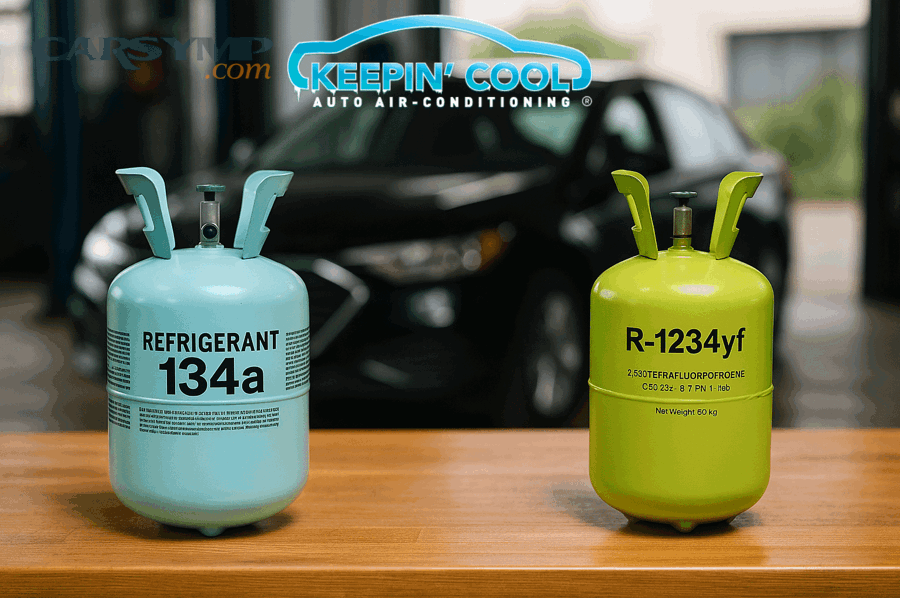
Use model year safely like this:
- Start with the label—if present, the shortcut is unnecessary.
- If the label is missing, use model year to choose which confirmation tools to prepare (fittings, recovery machine type), not which refrigerant to add.
- Confirm with fittings and recovery practices before any charging action.
Common failure cases:
- Early production changes: Mid-year updates where identical-looking trims have different A/C specs.
- Market differences: The same model year can differ by country due to regulation and supply chain.
- Engine/package differences: Hybrid/EV thermal systems may differ even when body style matches.
- Prior service history: Incorrect servicing can leave the wrong refrigerant in a system, regardless of model year.
According to reference information published by the Australian Government Department of Climate Change, Energy, the Environment and Water from its ozone/synthetic greenhouse gas management guidance, in December 2024, the continued use of established GWP baselines (such as AR4 values) is noted for consistency—underscoring that refrigerant transitions are influenced by policy and can vary by jurisdiction.
What’s the practical difference in R134a vs R1234yf for vehicle owners?
R134a is widely used and non-flammable under typical classifications, while R1234yf is a newer, low-GWP refrigerant with mild flammability classification (A2L) in many references—so the systems, fittings, and service procedures are not interchangeable. Next, you’ll compare them in owner-focused terms: compatibility, cost, safety handling, and why “close enough” is risky.
After you know which one your model uses, the key is to respect system design: each refrigerant has its own pressure/temperature behavior, oil compatibility expectations, service connector standards, and recovery/recycle equipment requirements.
This table summarizes what owners typically need to understand when comparing the two refrigerants and planning service decisions.
| Category | R-134a (HFC-134a) | R-1234yf (HFO-1234yf) |
|---|---|---|
| Primary reason it’s used | Proven performance; long-running MVAC standard | Lower environmental impact (low GWP) in many markets |
| Typical safety classification emphasis | Commonly treated as non-flammable in standard handling contexts | Often referenced as A2L (mildly flammable); requires additional precautions |
| Service fittings | Dedicated fittings designed for R-134a equipment | Different dedicated fittings to prevent misconnection/cross-contamination |
| Owner experience | Typically lower service cost and broader DIY product availability | Often higher service cost; more specialized equipment and practices |
| Interchangeability | Not interchangeable—do not substitute or mix | |
Key owner takeaway: The “best” refrigerant is the one your model is designed for; choosing the wrong one is not an upgrade, it’s a contamination event.
According to the U.S. EPA from its Technology Transitions GWP reference table (40 CFR 84.64 reference), in January 2023, common refrigerants are listed with GWP values used for regulatory implementation—supporting why low-GWP alternatives such as R-1234yf are favored in newer applications.
What happens if you use the wrong refrigerant?
Using the wrong refrigerant is not “just a little less cold”—it can cause improper pressures, reduced cooling, seal/oil compatibility problems, and expensive contamination cleanup. Next, you’ll see why the system’s design tolerances and service equipment standards make cross-use risky even when the car seems to cool briefly.
After a wrong refrigerant is introduced, the damage often comes from a chain reaction: the wrong thermodynamic behavior leads to abnormal compressor load, poor heat rejection at the condenser, and unstable expansion control, while the service shop may be forced to recover and dispose of contaminated refrigerant rather than recycle it.
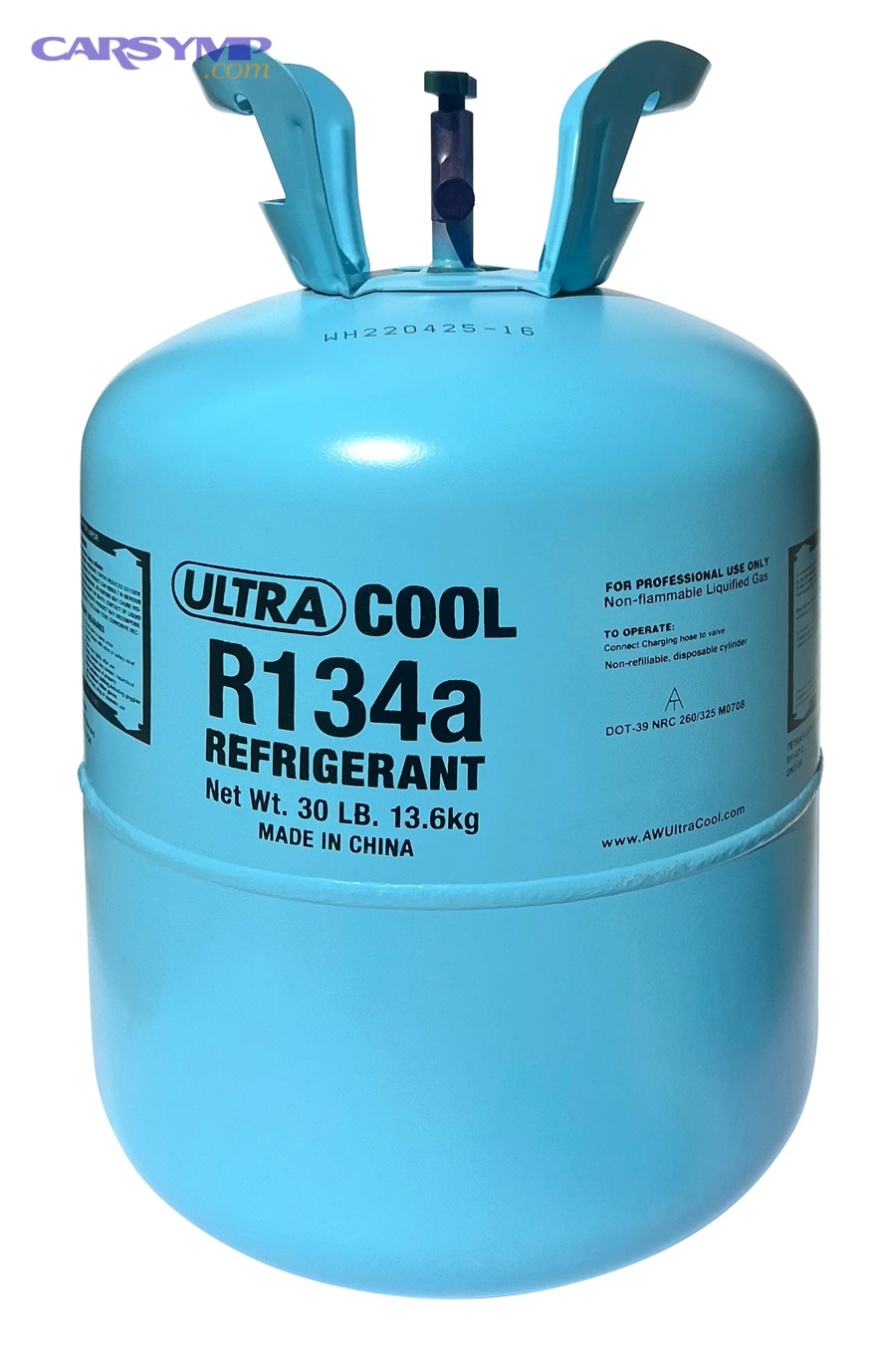
Common consequences owners actually experience:
- Weak or inconsistent cooling: Especially at idle or in hot weather, because pressures and heat transfer behavior don’t match system tuning.
- Compressor noise or failure risk: Wrong operating conditions can increase mechanical stress and heat.
- Service refusal or higher bills: Many shops will not service a system until contaminated refrigerant is recovered and the system is cleaned/verified.
- Safety and compliance issues: Mildly flammable refrigerants require appropriate handling; misidentification can create unsafe practices.
Why “topping off” is especially risky: If you don’t know what’s in the system, adding anything can create an unknown mixture, which makes performance unpredictable and recovery equipment vulnerable.
According to the ASE Section 609 refrigerant recovery and recycling review material from its technician training booklet, in 2019, separate SAE equipment standards are referenced for R-134a and R-1234yf recovery/recycling—highlighting that contamination and equipment mismatch are taken seriously in proper service practice.
How can you confirm refrigerant type using service ports and connectors?
You can confirm refrigerant type by checking whether your service couplers and port sizes match the refrigerant-specific design—because R134a and R1234yf systems use different connectors intended to prevent accidental cross-connection. Next, you’ll use this as a second verification layer when labels are unclear.
After locating the A/C service ports (low side and high side), inspect the cap markings and compare how your service coupler fits. Do not force a connection; “almost fits” is a warning sign, not a workaround.
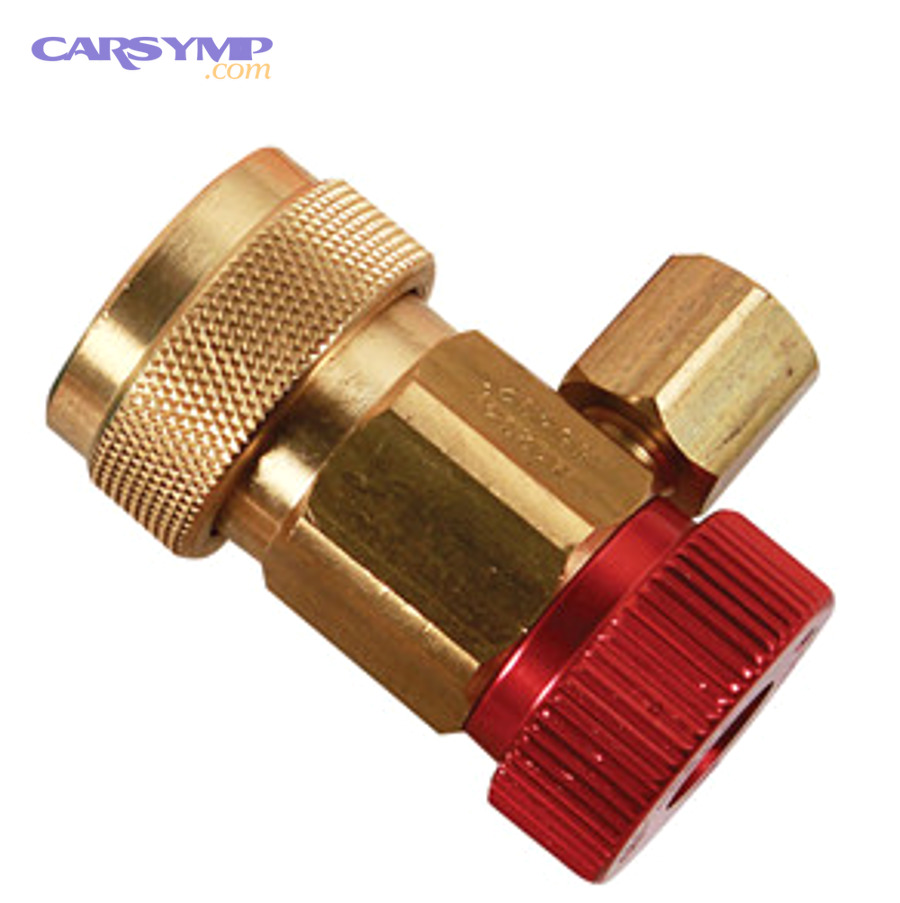
What to look for (owner-friendly):
- Port cap markings: Some caps indicate the refrigerant type; treat this as supportive evidence, not the only proof.
- Coupler compatibility: Correct tools connect smoothly and lock properly; mismatched tools feel wrong and may not seal.
- Do not use adapters as “proof”: Adapters can defeat the safety intent of unique fittings and can increase the risk of contamination if used incorrectly.
Best practice: Use fittings as a “confirm or question” mechanism. If fittings contradict the label, assume prior service history or labeling issues and switch to the uncertainty workflow.
According to information provided by the U.S. EPA from its MVAC guidance on unique fittings and markings, in June 2025, compliance with SAE J639 marking requirements is referenced for certain refrigerants—supporting the idea that ports/markings are part of a deliberate prevention strategy, not cosmetic differences.
What should you do if the label is missing or you suspect mixed refrigerant?
If the label is missing or you suspect mixed refrigerant, you should not add refrigerant; instead, you should have the system professionally identified and recovered using proper equipment to avoid contamination and unsafe handling. Next, you’ll see a safe decision tree that prevents “guess-and-charge” mistakes.
After you decide the system’s contents are uncertain, treat the vehicle like a diagnostic case, not a refill job. The goal becomes identifying what’s in the system and whether a leak or hardware issue is present, before any charging attempt.
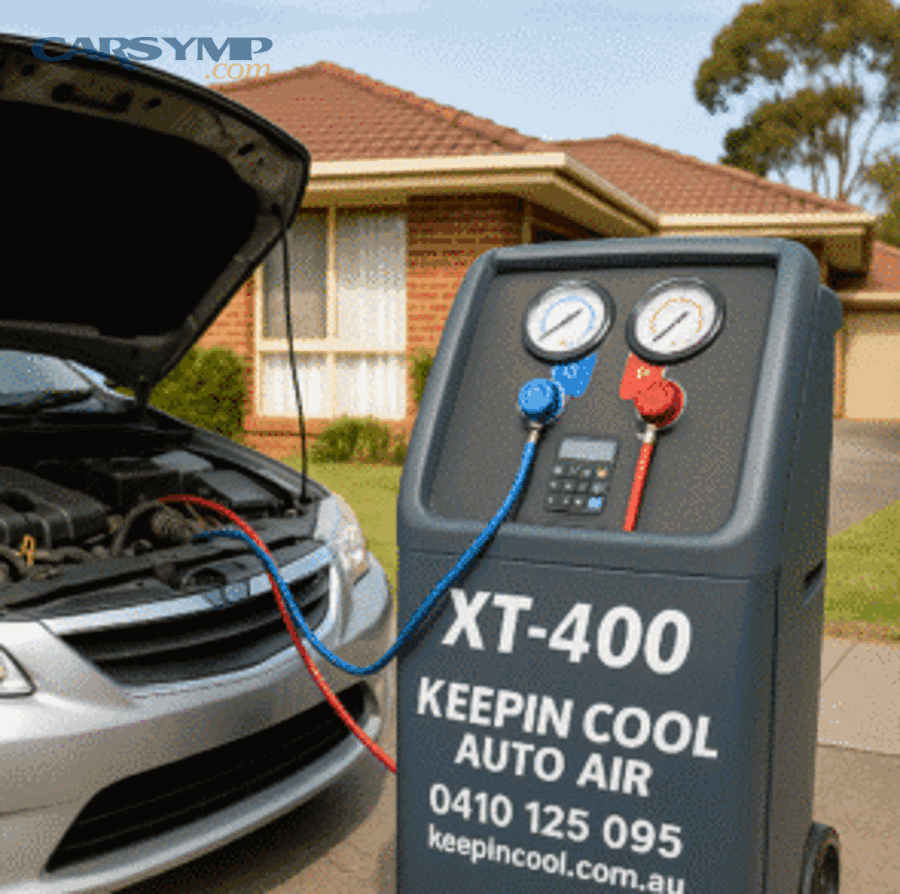
Safe decision tree (practical):
- Stop DIY charging immediately if you cannot prove refrigerant type.
- Look for secondary documentation (service records, dealer printouts) but still confirm at the vehicle.
- Use professional identification (refrigerant identifier and recovery machine designed for the correct type).
- Recover, evacuate, and recharge correctly only after identification and leak assessment.
Why professional identification matters: Shops can determine whether the refrigerant is contaminated and can recover it safely without damaging recovery equipment or creating an unknown mixture.
In real-world service, this is where terms like AC recharge show up—but the safe version of that task begins with identification and recovery, not with a can and a single low-side gauge.
According to the ASE from its Section 609 program materials, in 2019, dedicated recovery/recycling requirements are referenced for different refrigerants—supporting why unknown or mixed refrigerant situations should be handled with proper identification and equipment rather than casual “top-off” approaches.
Once refrigerant type is confirmed, what else must match before recharging?
After refrigerant type is confirmed, you still must match factory charge weight, correct oil specification, and correct service procedure—because the right refrigerant with the wrong amount or wrong oil can still produce poor performance and damage. Next, you’ll connect “proper type” to “proper outcome” by focusing on charge accuracy and system condition.
After all, the A/C system is a metered refrigeration circuit; charge quantity is a calibrated variable. That’s why professional service prioritizes weight-based charging rather than pressure-only guessing.
Checklist that protects the system:
- Charge quantity by weight: Use the label’s grams/ounces target and charge with a scale when possible.
- Oil type and amount: Follow OEM spec; do not assume one PAG is interchangeable with another across platforms.
- Leak reality check: Low refrigerant usually indicates a leak; topping off without fixing the leak is temporary and can worsen contamination risk.
- Condenser airflow/heat rejection: Dirty fins, blocked airflow, or fan issues can mimic low refrigerant symptoms.
At this point, owners often search How to recharge AC safely. The safest interpretation is: confirm refrigerant type, confirm leak status, charge by weight, and avoid introducing sealants or unknown additives that can complicate future service.
According to the IPCC from its Working Group I reference tables commonly used in climate accounting, in November 2007, HFC-134a is listed with a high 100-year GWP (AR4 value), reinforcing why minimizing leaks and doing accurate, controlled service is an important part of responsible A/C maintenance.
How do you verify results after charging without relying on guesswork?
You verify results by checking vent temperature behavior, system stability, and real operating conditions—because a correct refrigerant type and charge should produce consistent cooling, not just a brief cold blast. Next, you’ll learn how to validate outcomes the way a careful tech would: with repeatable checks and context.
After any service, your confirmation should answer three questions: does it cool consistently, does it behave normally at idle and driving speeds, and do pressures/temperatures make sense for ambient conditions?
Owner-level validation steps:
- Cabin airflow first: Confirm the blower is strong and the cabin filter isn’t clogged; weak airflow can mimic weak cooling.
- Stable vent temperature: With recirculation on and doors closed, the vent temp should trend cooler and stabilize rather than oscillate wildly.
- Idle vs driving check: If it’s cold while driving but warm at stops, airflow across the condenser (fans, blockage) may be the real issue.
For anyone documenting performance, a Post-recharge vent temp test is the practical way to confirm improvement: measure vent temperature over a consistent time window under similar ambient conditions, then compare to baseline.
According to a standards-focused overview by SAE International from its motor vehicle refrigerant system design and safety standards (J639), in November 2020, the framework emphasizes system-level safety and correct identification practices—supporting the idea that “verification after service” is part of responsible A/C work, not an optional extra.
When should you choose a DIY kit versus a professional shop, and why does refrigerant type matter?
Your choice depends on certainty and tooling: if you cannot prove refrigerant type and charge specs with confidence, a professional shop is the safer option, especially for R1234yf systems. Next, you’ll see how to decide based on risk, not convenience.
After confirming refrigerant type, evaluate your equipment honestly. Many consumer tools are simplified and may not support weight-based charging, recovery, or contamination-safe procedures—so they’re best reserved for low-risk scenarios with clear documentation and no evidence of leakage.
Use this decision filter:
- Choose a shop if the label is missing, the system is empty, cooling is inconsistent, you suspect leaks, or you suspect prior incorrect service.
- Be cautious with DIY if you only have a single low-side gauge, cannot charge by weight, or are tempted to “top off until green.”
- Prioritize professional service for uncertain R1234yf cases due to specialized handling expectations and the higher consequences of mistakes.
In many searches, people look for an AC recharge kit vs shop service comparison. The most useful comparison is actually about risk control: a shop can identify refrigerant, recover safely, evacuate properly, charge by weight, and document results—while a kit is limited in identification and contamination control.
According to the ASE from its refrigerant recovery and recycling review, in 2019, distinct equipment standards are referenced for R-134a and R-1234yf service—supporting why professional tools and certification matter when refrigerant type and compliance requirements increase complexity.
Contextual Border: Up to this point, the focus has been on confirming the proper refrigerant type by model and executing safe, accurate service decisions. Next, we’ll broaden slightly into edge cases—situations where the “model-based answer” changes because the vehicle’s thermal architecture, market rules, or retrofit history changes the context.
Edge cases that change refrigerant choice and service strategy
Edge cases matter because they can override assumptions: hybrids/EVs, cross-market imports, and retrofit histories can change service procedures even when the exterior model looks familiar. Next, you’ll see four high-impact scenarios and how to approach them without breaking the two-proof rule.
How do hybrids and EV thermal systems complicate refrigerant selection?
Hybrids and EVs can add high-voltage compressors and integrated thermal loops, so “refrigerant type” is only one part of safe service—because tooling, oil compatibility, and safety procedures may be stricter. Next, treat these vehicles as documentation-first: verify labels, service literature, and equipment requirements before connecting tools.
Beyond refrigerant designation, pay attention to compressor type, any high-voltage warnings, and whether the platform uses specialized lubricants or procedures that standard DIY methods don’t address safely.
What if the vehicle is an import or sold in multiple markets?
Cross-market vehicles can differ in refrigerant adoption timing and labeling conventions, so you must rely on vehicle-specific proofs rather than “what that model usually uses.” Next, prioritize the underhood label and fittings, then confirm with service documentation tied to the VIN when available.
In these cases, model-year shortcuts fail more often, and mixing assumptions across markets is a common way owners accidentally buy the wrong service product.
Can a retrofit change the refrigerant type your model uses?
A retrofit can change the refrigerant type in some contexts, but it should be treated as a documented engineering change—not a casual swap—because fittings, labels, oil, and service procedures must be updated together. Next, if you see evidence of retrofit (non-OEM fittings, replaced components, unusual labels), stop and verify professionally.
For owners, the practical point is simple: if it’s been altered, you need paperwork and identification, not assumptions.
How do regulations and standards influence what you’ll see under the hood?
Regulations and standards influence labeling, fittings, and adoption timelines, which is why the same model name can look different across years and markets. Next, use standards-driven indicators (labeling and dedicated fittings) as the most stable verification anchors.
According to the U.S. EPA from its MVAC guidance on unique fittings and markings, in June 2025, compliance references tied to SAE labeling standards reinforce that the underhood label is a compliance tool as much as a convenience—so missing or inconsistent labels should be treated as a service risk, not a minor inconvenience.