


A punctured tire doesn’t automatically mean “buy a new tire”—but it also doesn’t automatically mean “just plug it.” This guide helps you decide plug kit vs patch vs replace using the same safety-first logic tire manufacturers and major auto organizations emphasize: location, size, and tire condition determine the correct fix. (ustires.org)
Next, you’ll learn the repairability gate—the simple rules that decide whether a tire can be repaired at all, and why shoulder/sidewall injuries typically move you straight to replacement. (ustires.org)
Then, we’ll compare temporary vs permanent outcomes so you know what you’re trading: speed, cost, and convenience versus durability and risk management—especially for highway driving and heavy loads. (aaa.com)
Introduce a new idea: you’ll also get a practical checklist (so you don’t miss a rim/valve leak or hidden “run-flat” damage) and micro-level edge cases—including How to use a tire inflator and sealant safely without creating bigger problems for repairs later. (crashstats.nhtsa.dot.gov)
What does “plug kit,” “patch,” and “replace” mean for a punctured tire?
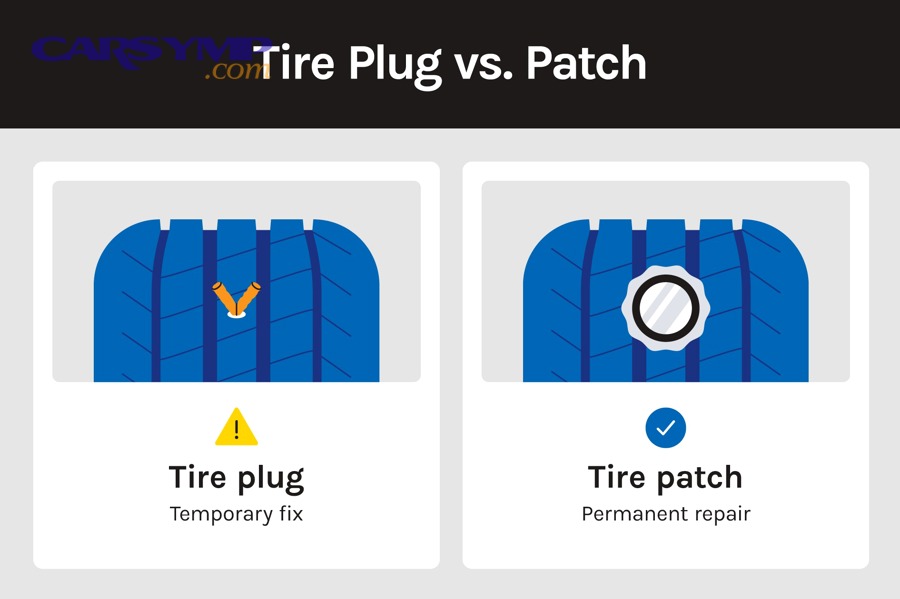
A plug kit, an internal patch, and replacement are three tire-puncture responses: a plug seals from the outside fast, a patch seals from the inside more durably, and replacement removes the risk when damage or wear makes repair unsafe. (aaa.com)
To better understand the safest decision later, you first need the “what it is” and “what it’s for” difference—because many drivers try to fix flat tire symptoms (air loss) without fixing the root cause .
What is a tire plug kit repair and why is it considered temporary for many punctures?
A tire plug kit repair is an external seal that fills the puncture channel from the outside, and it’s considered temporary for many situations because it may not address inner-liner damage, it depends heavily on hole shape/angle, and it’s less predictable at sustained speed and heat.
Specifically, the plug’s biggest strength is also its weakness: it’s fast and convenient, but it’s often done without removing the tire, so you can’t inspect the inside for secondary damage caused by driving low (inner-liner abrasion, heat, separation). That internal inspection is a recurring theme in professional procedures. (gov.goodyear.com)
In practical terms, a plug kit makes sense when:
- You need a roadside get-moving fix to reach a safer location or a shop.
- The puncture is a small, round hole in the center tread (not shoulder/sidewall).
- You can re-check pressure soon and you’re not treating it as “done forever.”
It becomes risky when:
- The puncture is near the shoulder or into the sidewall (flex + heat). (coopertire.com)
- The hole is a cut/tear or was made at a steep angle (larger internal injury path). (gov.goodyear.com)
- The tire was driven underinflated long enough to heat-damage the casing.
What is an internal patch repair and what problem does it solve better than a plug?
An internal patch repair is an inside-the-tire repair that seals the inner liner around the injury, and it solves the “hidden leak path and liner damage” problem better than a plug because it restores an airtight liner seal where the tire actually holds pressure. (aaa.com)
However, the real advantage is not just the patch itself—it’s the process. When a technician dismounts the tire, they can:
- Inspect the inner liner for scuffing (a sign the tire was run low).
- Check whether the injury track is clean and limited to the tread area.
- Confirm the puncture size is within common repair guidance (often cited as about 1/4 inch / 6 mm maximum in the tread area). (ustires.org)
That inspection step reduces the chance you “seal the hole” but miss structural risk—one of the main reasons many shops prefer internal repair methods over an external plug alone.
What does “replace the tire” mean in practice (single tire vs pairs vs full set)?
Replacing the tire means removing the injured tire from service and installing a tire that restores safe tread depth, structure, and handling balance; in practice, that can mean one tire, two on the same axle, or occasionally all four, depending on tread-depth differences and vehicle setup.
Next, think of replacement as the “certainty option.” It’s the only option that:
- Eliminates concern about whether the injury is outside the safe repair zone. (ustires.org)
- Resets the “unknown history” risk if the tire was driven flat or underinflated long enough to damage internal components. (kutcresources.ku.edu)
- Makes sense economically when the tire is already near end-of-life (repair cost buys little remaining tread).
When people ask “replace one or two?” they’re usually trying to protect traction symmetry—especially on the drive axle. If the remaining tires have much deeper tread than the new tire (or vice versa), mismatched traction can change handling and braking feel, particularly in rain.
Is your puncture repairable at all?
Yes—many punctures are repairable if (1) the injury is limited to the tread area, (2) the puncture is small enough to meet common repair limits, and (3) the tire hasn’t been run underinflated long enough to heat-damage the casing; otherwise, the safest answer is no. (ustires.org)
More importantly, this is the decision gate that prevents wasted effort: if the puncture fails the repairability test, comparing plug vs patch is irrelevant—you should replace.
Is a puncture in the tread area usually repairable?
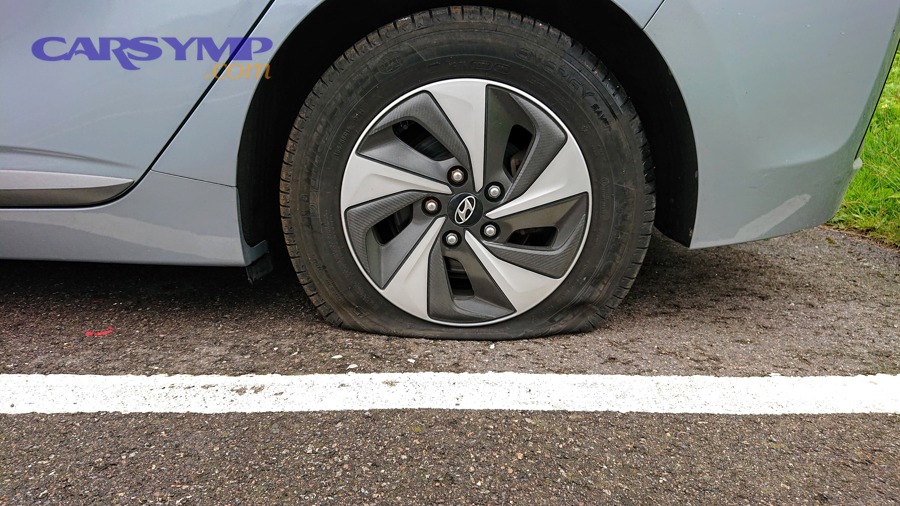
Yes, a puncture in the tread area is usually repairable because the tread zone flexes less than the sidewall, repair guidelines typically allow tread-only repairs, and the structure around the crown is designed to handle loads without the extreme sidewall bending that stresses repairs. (ustires.org)
Then, narrow “tread area” into a practical meaning: most guidance focuses on the center tread and warns against repairs that extend into the shoulder/belt edge area. (gov.goodyear.com)
A quick tread-area reality check:
- Best-case repairable: nail/screw in the center of the tread, small round hole.
- Borderline: closer to the shoulder grooves—still tread, but higher stress and some shops will decline. (coopertire.com)
- Not repairable: anything in the sidewall/true shoulder area.
Is a puncture in the sidewall or shoulder repairable?
No, a puncture in the sidewall or shoulder is generally not repairable because that area flexes constantly, heat builds faster under load, and the injury can compromise sidewall cords where a repair cannot restore original strength. (ustires.org)
However, the reason this matters is simple: the sidewall is the tire’s “hinge.” Every rotation bends it. Even if a seal holds for a while, you’re asking a repaired, injured flex zone to do the hardest job on the tire thousands of times per mile.
A few red-flag location cues:
- The puncture is on the sidewall (clear no-go).
- The puncture is on or very near the shoulder/belt edge area (common no-go). (gov.goodyear.com)
- The puncture comes with a visible bulge, bubble, or torn rubber—these suggest structural compromise.
Does the size/type of damage decide “repair vs replace”?
Yes—size and damage type decide repair vs replace because small round punctures behave predictably, long cuts/tears create unstable injury paths, and larger holes can exceed commonly recommended repair limits (often around 6 mm / 1/4 inch in the tread). (ustires.org)
In addition, “type of puncture” matters as much as diameter:
- Nail/screw puncture: usually a straight channel—repairable if location is correct.
- Sharp edge / pothole cut: can slice belts/cords—replacement is common.
- Multiple injuries: even if each hole is small, repairs can overlap or weaken the area, and many procedures warn against overlapping repairs. (gov.goodyear.com)
When you’re not sure, the safest move is to treat uncertain damage as “needs internal inspection”—because the inside view often reveals whether the injury is clean or whether the tire was driven low and scuffed.
Which option should you choose: plug kit vs patch vs replace?
A plug kit wins for speed and roadside convenience, an internal patch (or patch-plug repair) is best for a durable long-term seal, and replacement is optimal when the puncture is outside the safe repair zone or the tire’s condition makes repair a poor risk. (aaa.com)
Next, use a decision-tree mindset: choose the safest method that matches the injury and your real-world constraints (time, tools, driving conditions).

When is a plug kit the right choice (and when is it the wrong choice)?
A plug kit is the right choice when you need a quick mobility fix, the puncture is a small tread-only hole, and you plan to verify pressure soon; it’s the wrong choice when the injury is near the shoulder/sidewall, the hole is irregular, or the tire may have internal damage from being driven underinflated. (coopertire.com)
Specifically, treat a plug kit like an “emergency bridge,” not a forever repair:
- Right choice: you’re on the road, you need to get somewhere safe, and the puncture is clearly in the tread.
- Wrong choice: you’re about to do long high-speed driving, you tow, or you can’t confirm the puncture’s limits.
If you choose to plug temporarily, do it responsibly:
- Inflate to the vehicle placard pressure and re-check after a short drive.
- Watch for a slow leak over the next 24–48 hours.
- Plan for a professional internal inspection so you know whether the casing is healthy. (gov.goodyear.com)
When is a patch (or patch-plug repair) the best long-term fix?
A patch (often combined with a stem that fills the channel) is the best long-term fix when the puncture is tread-only, small, and the tire passes internal inspection, because the repair seals the inner liner reliably and addresses the injury path more completely than an external plug alone. (gov.goodyear.com)
More specifically, “best long-term” usually means:
- Pressure stability you don’t have to babysit weekly.
- Lower chance of comeback leaks in the same spot.
- Reduced risk that you unknowingly drove on a damaged casing.
Many professional procedures emphasize internal inspection and repair limits (tread-only, no sidewall repairs, no shoulder/belt edge repairs, and no overlapping repairs). (gov.goodyear.com)
When is replacement the smartest option even if the leak seems “small”?
Replacement is the smartest option even if the leak seems small when the puncture is in a non-repairable zone, the tire is near end-of-life, or the tire was driven underinflated long enough to create heat/liner damage that a repair cannot reverse. (coopertire.com)
Besides location and size, watch for these “replace anyway” signals:
- The tire has very low remaining tread—repairing buys little usable life.
- You see sidewall cracking/dry rot or repeated prior repairs.
- You drove any meaningful distance while the tire was very low—internal abrasion can be severe even when the outside looks fine. (kutcresources.ku.edu)
When people regret not replacing, it’s usually because the tire later fails from a structural issue that was never visible from the outside.
How do safety and longevity compare between temporary and permanent fixes?
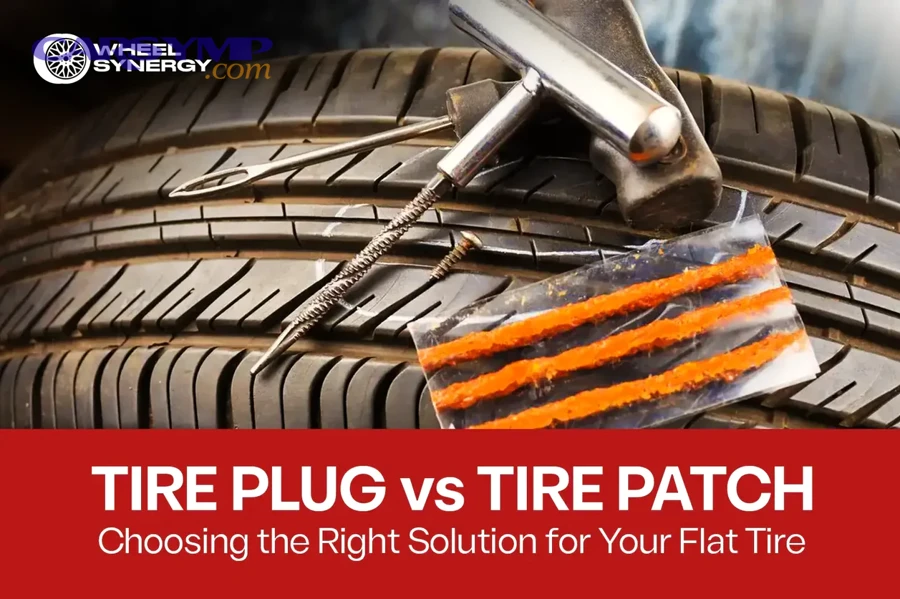
A patch-style internal repair wins on longevity and predictability, a plug is best for short-term mobility, and replacement is optimal for eliminating hidden structural risk when the tire fails repairability rules or has been compromised by underinflation or damage severity. (aaa.com)
Then, anchor your decision to real driving: heat, speed, and load expose weak repairs fast.
Does a plug last as long as a patch?
No, a plug typically does not last as long as a patch because it relies on compression in the injury channel, it may not seal the inner liner as reliably, and it often skips the internal inspection that catches hidden damage—so lifespan becomes more variable. (aaa.com)
However, “how long” isn’t the only question—“how predictable” matters more. A repair that might last months but might also start leaking on the highway is a different risk profile than a repair that’s designed to be stable.
What shortens plug lifespan most:
- Larger or angled punctures (bigger internal path). (gov.goodyear.com)
- Tread area that flexes more (near shoulder). (coopertire.com)
- Heat stress from underinflation or high-speed driving. (kutcresources.ku.edu)
What are the most common failure modes for plugs vs patches?
There are two common failure modes—(1) slow leak return and (2) hidden structural deterioration—and they show up differently for plugs versus patches because plugs depend on channel grip while patches depend on liner sealing after internal preparation and inspection. (gov.goodyear.com)
Specifically, typical plug failure patterns include:
- A slow leak that returns as the plug relaxes or the hole changes shape.
- Leakage caused by debris or moisture in the channel.
- Continued air loss that masks a larger injury track.
Typical patch or patch-plug failure patterns include:
- Leak at the patch edge if internal prep was poor.
- A later “unrelated” failure if the tire had prior heat/liner damage that should have disqualified repair (this is why internal inspection matters). (gov.goodyear.com)
A useful driver habit: after any repair, monitor pressure at least weekly for the first month—pressure behavior tells you whether the seal is stable.
How do speed, load, and long highway drives change the decision?
Speed, load, and long highway driving shift the decision toward patch-style repair or replacement because heat buildup and continuous flexing amplify small weaknesses, while a stable internal seal and verified casing integrity reduce the risk of sudden loss of pressure. (crashstats.nhtsa.dot.gov)
More importantly, underinflation is one of the biggest multipliers of heat and stress. A University of Kansas Transportation Center publication (Kansas RTAP, reprinted January 2013) explains that underinflation forces excessive sidewall flexing that builds internal heat and can result in premature tire failure, and it cites NHTSA findings that many vehicles are driven with significantly underinflated tires. (kutcresources.ku.edu)
That’s why the safest approach for highway use is:
- Restore pressure immediately (spare, inflator, or tow).
- Avoid driving far on a soft tire.
- Prefer a repair method that includes internal inspection—or replace if there’s doubt.
What should Drivers & DIYers check before committing to repair or replacement?
There are six main checks Drivers & DIYers should do before committing—leak source, puncture location, injury size/type, signs of run-low damage, remaining tread/age, and driving needs—because each one can flip the safest choice from “repair” to “replace.” (ustires.org)
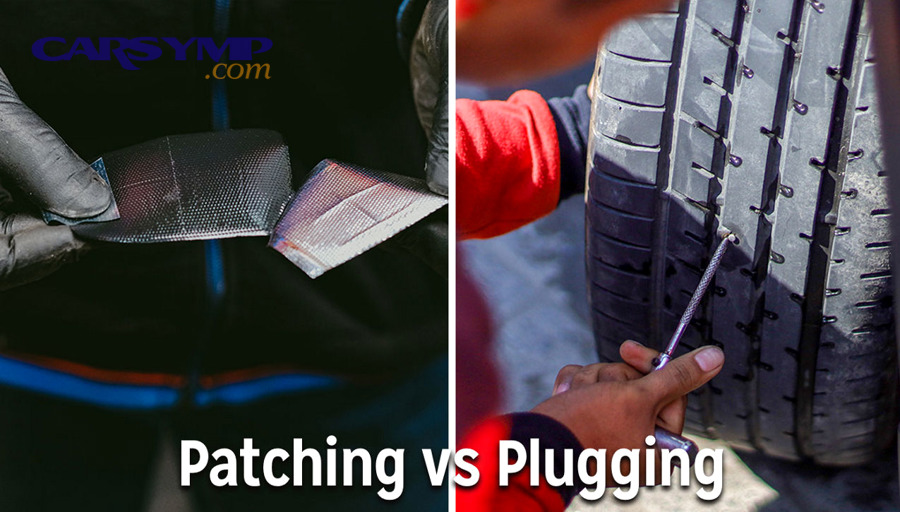
Next, use this checklist to avoid the two most common mistakes: repairing a tire that shouldn’t be repaired, or replacing a tire when the real problem was a valve or bead leak.
Can you confirm the leak source (and not confuse it with a rim/valve leak)?
Yes, you can confirm the leak source by locating the air-loss point (puncture vs valve vs bead) because the right fix depends on the source, and a “puncture repair” will not fix a leaking valve core or bead seal.
Specifically, a quick confirmation routine looks like this:
- Inflate the tire and listen near the tread and valve stem.
- Use soapy water to look for bubbles at:
- The puncture site
- The valve core and valve stem base
- The bead area where tire meets rim
If bubbles appear at the valve core, tightening/replacing the core may solve the leak. If bubbles appear at the bead, corrosion or seating issues may be involved—often a shop fix.
Is the tire already too worn or too old to justify repair?
Yes, a tire can be too worn or too old to justify repair because limited remaining tread reduces the benefit of repair, aging rubber can crack and weaken, and the safest money-per-mile choice may become replacement even if the puncture is repairable. (kutcresources.ku.edu)
Then, use simple decision logic:
- If you’re near the wear indicators or you see cracking/dry rot, replacement becomes the smarter long-term move.
- If the tire has plenty of tread and is in good condition, repair is more cost-effective.
Even when a patch is “possible,” the question is “possible and worth it.”
Should you drive on it to the shop or stop immediately?
No, you should not keep driving on a rapidly deflating tire because driving underinflated creates heat and internal abrasion, can damage the casing quickly, and may turn a repairable puncture into a mandatory replacement. (kutcresources.ku.edu)
However, you can often drive a very short distance at low speed only if pressure is stable and you’re not grinding the tire into the road—but that’s a risky judgment call. The safer rule is:
- If the tire is visibly low or TPMS indicates major pressure loss, stop and use a spare, call for help, or inflate briefly only to reach a safer spot. (crashstats.nhtsa.dot.gov)
Evidence: According to an NHTSA report from November 2012 (National Center for Statistics and Analysis), underinflation increases sidewall flexion and heat buildup that can lead to catastrophic tire failure, and TPMS presence was estimated to reduce the likelihood of severely underinflated tires in certain model-year comparisons. (crashstats.nhtsa.dot.gov)
What’s the cost and time tradeoff for each option?
A plug kit wins on upfront cost and speed, a patch-style repair is often best value per mile when the tire is healthy and repairable, and replacement is optimal when repair is unsafe or when remaining tread life is too low to justify repair cost. (acg.aaa.com)
Next, compare the options the way a pragmatic driver does: not just “price today,” but “total hassle and risk over the next months.”
Is a plug kit the cheapest option when you factor in risk and repeat repairs?
No, a plug kit is not always the cheapest option long-term because repeat leaks, missed internal damage, and the chance of needing replacement anyway can erase the savings, especially if you drive at highway speeds frequently. (gov.goodyear.com)
However, it can still be the cheapest situational tool:
- As a one-time emergency fix to get you moving.
- As a way to avoid a tow in a remote location.
- As part of a safety kit you hope never to use.
If you treat a plug as permanent and it fails later, your “cheap fix” can become:
- Another repair attempt
- Unexpected downtime
- Or a more expensive replacement caused by extra damage from driving low.
Is a patch repair more cost-effective than replacement for most tread punctures?
Yes, a patch repair is usually more cost-effective than replacement for most small tread punctures because it preserves remaining tread life, provides a more durable seal than a plug alone, and often restores normal use when the tire passes internal inspection. (aaa.com)
Then, the tipping points that make replacement more cost-effective are straightforward:
- The tire is close to worn out.
- The puncture is in a non-repairable location.
- The tire was driven underinflated and shows internal damage. (kutcresources.ku.edu)
A simple “value” question helps: How many safe miles do I buy with this repair? If the answer is “not many,” replacement wins.
Should you replace one tire, two tires, or all four?
There are three common replacement patterns—one, two (same axle), or all four—based on tread-depth matching, traction balance, and drivetrain sensitivity, because mismatched tires can change handling and, on some vehicles, stress driveline components.
More specifically:
- Replace one tire when the other tires have similar tread depth and condition.
- Replace two tires on the same axle when one axle needs matched traction (common for stability and predictable braking).
- Replace all four when the set is near end-of-life or when consistent traction is critical across all corners.
This is the point where a tire shop’s tread-depth measurement becomes valuable: it turns “guessing” into a rational match/no-match decision.
What edge cases can change the “plug vs patch vs replace” decision?
There are four major edge cases—run-flat/self-sealing tires, patch-plug method choices, multiple punctures, and run-low heat damage—based on how they alter casing integrity, repair reliability, and whether the tire can be safely inspected and restored. (gov.goodyear.com)
Next, use these edge cases as “override rules”: even if a puncture looks simple, these situations can flip the safest answer.
Do run-flat or self-sealing tires change whether you should patch, plug, or replace?
Yes, run-flat or self-sealing tires can change the decision because run-flat use can hide internal damage after driving with low pressure, and self-sealing designs can complicate leak diagnosis and repair acceptance depending on the manufacturer and the tire’s history. (ustires.org)
However, the real difference is “history sensitivity.” If a run-flat tire was driven any distance while deflated, internal damage may exist even if the tire still holds air later—so replacement becomes more common in practice.
Is a patch-plug combination better than a patch alone for certain punctures?
Yes, a patch-plug combination can be better than a patch alone for certain punctures because it seals both the injury channel and the inner liner, which can improve air retention and reduce the chance of channel-related leakage when the puncture path is clean and repairable. (gov.goodyear.com)
Then, remember the key principle: “better” depends on proper procedure (internal inspection, correct injury prep, and staying within repairable areas). A combo repair is not a license to repair shoulder or sidewall injuries. (gov.goodyear.com)
Can you safely repair multiple punctures, and how far apart do they need to be?
It depends: you can sometimes safely repair multiple punctures if they are in the tread area and repairs won’t overlap, but you should replace if injuries are too close, directly opposite, or create a weakened cluster that violates standard repair limits. (gov.goodyear.com)
Specifically, “multiple punctures” becomes a replacement situation when:
- Repairs would overlap or crowd the same belt region. (gov.goodyear.com)
- The punctures are near the shoulder/belt edge. (gov.goodyear.com)
- The tire has signs of internal separation or bulging. (ustires.org)
When in doubt, prioritize internal inspection by a trained technician over a “looks fine” guess.
Does driving on a low tire (heat damage) mean you should replace it even after plugging?
Yes, driving on a low tire can mean you should replace it even after plugging because underinflation increases sidewall flexing and internal heat, which can abrade the inner liner and weaken structural components in ways a plug or patch cannot restore. (kutcresources.ku.edu)
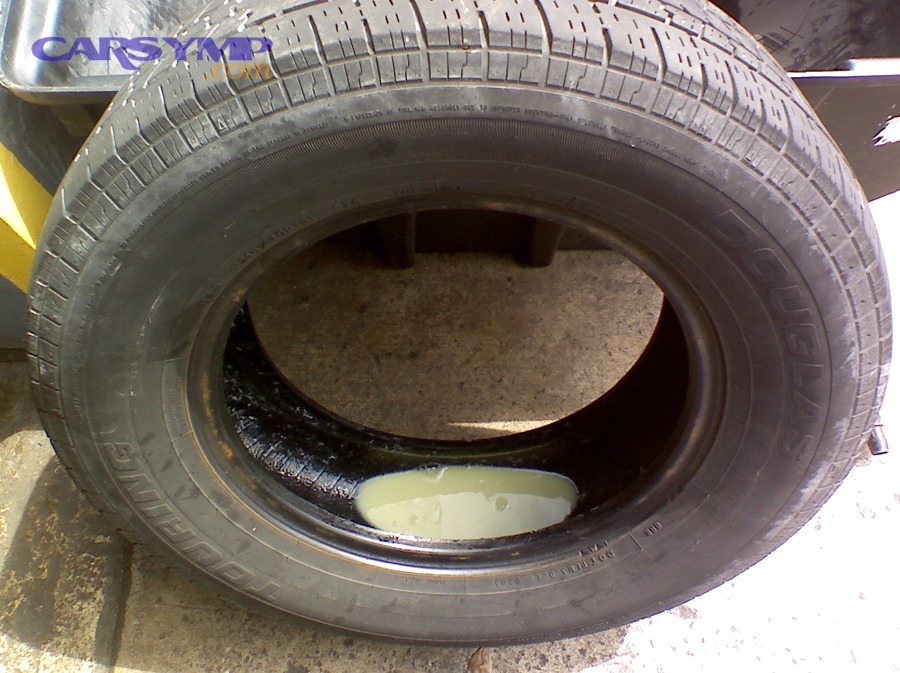
More importantly, this is where emergency products can mislead you: you might add air (or sealant), stop the obvious leak, and still have a compromised casing. That’s why “temporary vs permanent” is not just about sealing—it’s about confirming the tire remains structurally sound.
To address this safely, here’s How to use a tire inflator and sealant safely in a way that reduces downstream problems:
- Use sealant only as an emergency mobility tool, not a permanent repair.
- Don’t exceed the product instructions or overinflate; reinflate to the vehicle’s recommended cold pressure.
- Drive only as far as needed to reach a safe place or shop, and inform the shop that sealant was used.
- Expect the shop may need to clean the tire internally before assessing repairability. (commons.wikimedia.org)
Finally, don’t stop at the repair—use the incident to improve reliability. Preventing future flats and punctures often comes down to habits that reduce both puncture frequency and “unrepairable” outcomes:
- Check tire pressure regularly (so you don’t unknowingly run low and heat-damage the casing). (crashstats.nhtsa.dot.gov)
- Inspect tread for embedded debris before it works deeper. (kutcresources.ku.edu)
- Replace tires that are worn or cracked before a small puncture becomes the last straw.
In short, the safest choice isn’t the most aggressive fix—it’s the one that matches the injury and preserves casing integrity, so your tire remains predictable at real-world speeds and loads.