


If your diesel feels sluggish, throws a warning light, or keeps “trying to clean itself,” you may be dealing with DPF clogging symptoms—and you can often recognize them before the problem becomes a tow. This guide explains the most common DPF blocked signs diesel drivers notice first, what they mean, and why they show up.
Next, you’ll learn how to separate “this is probably the DPF” from look-alike issues (like EGR faults, boost leaks, or sensor errors) so you don’t chase the wrong repair and waste time and money.
Then, you’ll get clear “what to do next” actions—what’s safe to try, what’s risky, and when you should stop driving and get diagnostics—plus a practical DPF cleaning cost estimate framework so you understand the likely path from symptom → solution.
Introduce a new idea: once you understand what “blocked” actually means inside the filter and why symptoms chain together, you can make smarter choices about Preventing future DPF blockages instead of repeating the same failure cycle.
What does “blocked DPF clogging” mean in a diesel particulate filter system?
A blocked (clogged) DPF is an exhaust aftertreatment filter that has accumulated enough soot and/or ash to restrict exhaust flow, raise backpressure, and trigger warning lights or power-reduction strategies. More importantly, “blocked” isn’t a single moment—it’s usually a progression from “loading” → “frequent regeneration” → “failed regeneration” → “limp mode.”
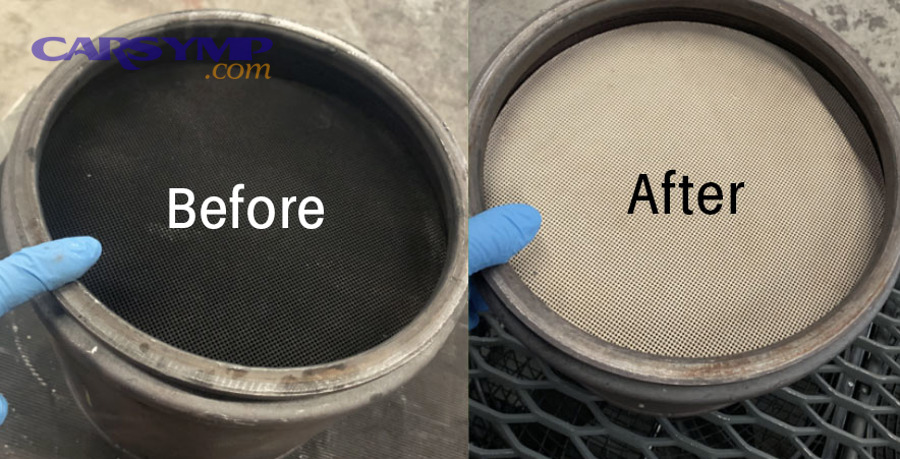
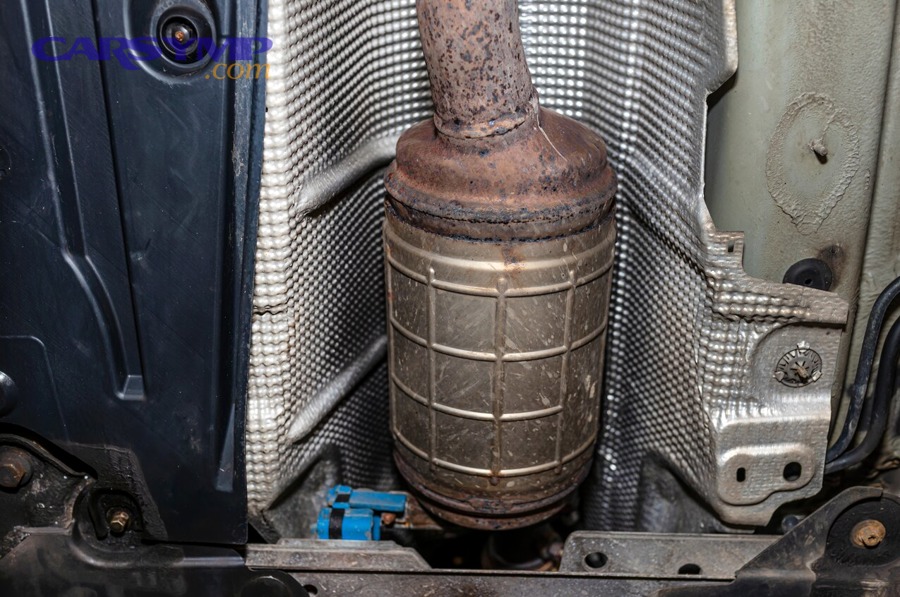
To hook the idea to what you feel behind the wheel, think of the DPF as a fine honeycomb that traps soot particles while still letting exhaust pass. As soot builds up, the engine has to push exhaust through a tighter pathway. That extra resistance shows up as:
- Higher exhaust backpressure (the engine works harder to “breathe out”)
- Reduced performance (the ECU may protect the turbo/engine by limiting torque)
- More frequent regeneration attempts (the system tries to burn soot away)
That’s why the earliest “clogging symptoms” are often subtle and intermittent. You might get one warning light that disappears after a longer drive, then returns sooner the next time. Over time, those repeated short-cycle regens can snowball into the very thing drivers fear: limp mode.
It also helps to understand the two kinds of “stuff” that fill a DPF:
- Soot (carbon from combustion): can often be reduced via regeneration.
- Ash (noncombustible residue from oil additives/contaminants): does not burn off and eventually requires service cleaning or replacement.
In short, “blocked” can mean soot restriction, ash restriction, or a mix—and the symptoms overlap, but the best fix may differ.
According to a study by Purdue University from the School of Electrical and Computer Engineering, in 2008, filter backpressure was noted to increase fuel consumption and reduce available torque, which is why drivability changes show up as restriction rises. (docs.lib.purdue.edu)
What are the most common warning signs of a clogged DPF diesel drivers can recognize?
There are 6 main types of DPF clogging symptoms diesel drivers notice: warning lights/messages, reduced power/limp mode, frequent regeneration behavior, fuel economy drop, smoke/odor changes, and hard starting/rough operation—grouped by what you can observe without special tools. Next, we’ll connect each sign to what’s happening inside the exhaust system so the checklist feels actionable, not vague.
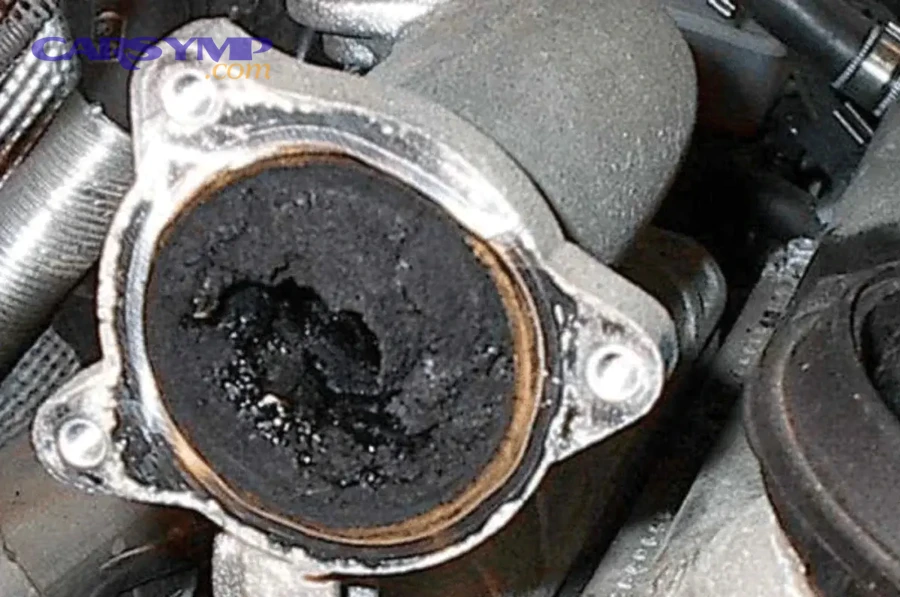
Here’s a quick symptom map to anchor what follows. The table groups common observations and the most likely “DPF story” behind them (it’s not a diagnosis by itself—it’s a way to prioritize).
Table context: This table summarizes common DPF blocked signs by what you notice (left), what they usually indicate (middle), and what to do immediately (right).
| What you notice | What it often means | Smart immediate move |
|---|---|---|
| DPF/regen warning light, “DPF full,” “regeneration required” | Soot load rising; system wants a regen | Avoid short trips; plan a steady drive cycle if safe |
| Power feels capped, throttle “flat,” limp mode | Restriction or repeated regen failures; ECU protecting engine/turbo | Reduce load, avoid towing; get diagnostics soon |
| Frequent regens (fans, high idle, hot smell) | Soot accumulation faster than normal regen clears | Identify cause (driving pattern, soot source, sensor errors) |
| MPG drops suddenly for days | Active regens using extra fuel; backpressure increases pumping losses | Track when/where it happens; scan for codes |
| Black smoke or strong diesel smell | Combustion/emissions imbalance; possible regen attempts or upstream issue | Do not ignore—smoke often means more than the DPF |
| Hard starts/rough running with DPF codes | Severe restriction or related fault chain | Seek shop diagnosis; don’t “clear-and-pray” |
Is the DPF or check engine warning light a reliable sign of DPF clogging?
Yes—a DPF or check engine warning light can be a reliable sign of DPF clogging symptoms, because the ECU monitors soot load/regeneration performance, it triggers alerts before damage, and it often pairs the light with stored fault data you can read. However, the light is a signal, not a verdict, so the best next step is to connect it to driving behavior and scan results.
One reason the light matters is that DPF systems are designed to warn you before restriction becomes severe. Many vehicles display staged messages (for example: “drive to clean filter,” then “service required,” then “limited power”). Those stages reflect the ECU’s confidence that passive/active regen can still recover the filter.
Still, you can see false positives when sensors or supporting systems misbehave—especially DPF differential pressure sensor issues that misreport restriction. That’s why a warning light should trigger a two-step response:
- Confirm the pattern: Is the vehicle doing frequent regens? Did performance drop?
- Confirm with data: Pull codes and basic DPF parameters (soot load %, differential pressure, regen status).
Which drivability symptoms most strongly suggest a blocked DPF (power loss, limp mode, rough running)?
There are 3 high-signal drivability symptoms that strongly suggest blocked DPF clogging symptoms: (1) load-dependent power loss, (2) limp mode with capped RPM/torque, and (3) repeated “can’t complete regen” behavior—based on how restriction affects exhaust flow and ECU protection logic. More specifically, these symptoms tend to worsen when you ask the engine to do more work.
1) Load-dependent power loss
A clogged DPF often feels “fine” at light throttle, but becomes noticeably weak under load (hills, towing, merging). That’s because backpressure rises with exhaust flow demand. The engine struggles to move exhaust out efficiently, and the turbo system can’t operate in its normal window.
2) Limp mode (power reduction)
Limp mode is the vehicle’s “protect itself” state. It may limit boost, RPM, and torque. Drivers describe it as “it won’t go over X mph,” “it won’t rev,” or “it feels like it’s dragging a trailer.” This is one of the clearest DPF blocked signs because it usually appears after the ECU decides regeneration can’t safely restore normal flow.
3) Roughness that follows restriction + regen attempts
Rough operation isn’t always a DPF symptom by itself, but it can appear when the engine is cycling through regen strategies, heat management, or compensations. If roughness aligns with frequent regen behavior and DPF codes, it supports the restriction story.
Can fuel economy drop and frequent regeneration be symptoms of DPF clogging?
Yes—fuel economy drop and frequent regeneration can be classic DPF clogging symptoms, because active regen consumes extra fuel, repeated regens happen when soot builds faster than it burns off, and higher backpressure increases engine pumping work. As a result, many drivers first notice the problem as “my MPG suddenly got worse” before they notice power changes.
Frequent regeneration is easy to miss if you don’t know the tells. Common driver-visible regen clues include:
- Cooling fans running after shutdown
- Higher idle speed than normal
- A hot, sharp exhaust smell
- Slightly different throttle response
- The vehicle requesting a “drive cycle” at steady speed
If that behavior starts happening much more often than it used to, it’s not just an annoyance—it’s a hint the system is losing its balance between soot accumulation and soot removal.
According to a study by MIT from its Department of Mechanical Engineering, in 2021, channel congestion in diesel particulate filters was described as accelerating restriction and reducing performance/lifetime through increased backpressure, reinforcing why frequent regen behavior often precedes bigger drivability symptoms. (dspace.mit.edu)
Does excess exhaust smoke or a stronger diesel smell point to a clogged DPF?
Yes—excess smoke or a stronger diesel smell can point to DPF clogging symptoms, because failed or incomplete regeneration can alter exhaust composition, upstream faults can spike soot loading, and restriction can amplify drivability problems that lead to visible smoke. However, smoke is also a red flag for non-DPF issues, so it should push you toward diagnosis, not guesswork.
A healthy DPF typically reduces soot emissions dramatically, so obvious black smoke from a modern DPF-equipped diesel often means one of two things:
- The engine is producing excess soot (EGR stuck, injector issues, boost leak, etc.), overwhelming the DPF.
- The aftertreatment system is not functioning normally (sensor faults, damaged substrate, failed regen management).
A stronger diesel smell can also happen during regen events because exhaust temperatures rise and chemical reactions shift. That smell alone isn’t proof of blockage—but paired with warning lights, frequent regens, and reduced performance, it becomes one more link in the “blocked DPF” chain.
How can you tell if symptoms are DPF clogging or another diesel emissions problem?
DPF clogging “wins” as the explanation when regen-specific signs dominate, EGR issues are more likely when idle/soot production signs dominate, and turbo/boost leaks are more likely when boost performance signs dominate—so the best approach is to compare symptoms by what system they most directly affect. Next, we’ll apply that comparison so you can avoid treating the DPF like a scapegoat for every diesel problem.
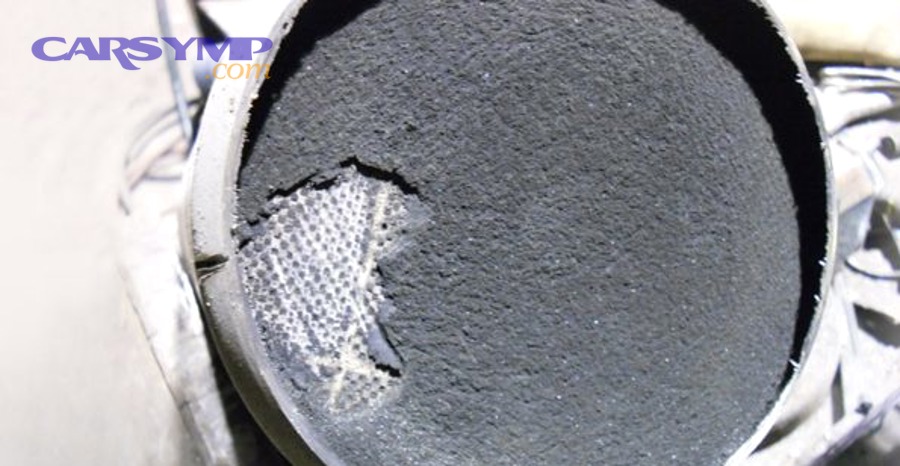
A practical way to avoid misdiagnosis is to sort your observations into three buckets:
- DPF-specific behavior: frequent regen, DPF messages, differential pressure rising, regen failures
- Combustion/soot sources: EGR problems, injector issues, intake restriction, poor fuel quality
- Air/boost delivery: boost leaks, turbo actuator faults, charge air cooler leaks
The DPF often fails downstream of another problem. That means you can see DPF symptoms, but the root cause is upstream soot overload or sensor misinformation. This is where DPF differential pressure sensor issues matter: a faulty sensor can convince the ECU the filter is restricted even when it isn’t—or hide restriction when it is.
Is a clogged DPF different from an EGR problem in symptoms and driving behavior?
A clogged DPF typically dominates in regen-related warnings and load-dependent restriction, while an EGR problem is often best explained by rough idle, soot-heavy combustion behavior, and broader drivability variability—so each “wins” in a different symptom pattern. Meanwhile, both can coexist, which is why pattern recognition matters more than any single sign.
What feels more DPF-like:
- Repeated requests to “drive to regenerate”
- Frequent fans/high idle consistent with regen attempts
- Power limitation that appears after warnings build
- Improvement after a proper regen (temporarily)
What feels more EGR-like:
- Hesitation or surging at steady throttle
- Rough idle that isn’t tied to regen cycles
- Heavier soot production leading to faster DPF loading
- Broader performance inconsistency without clear regen messages
If your vehicle is used for short trips, city driving, or idle-heavy duty cycles, EGR and DPF issues often feed each other: EGR faults increase soot; the DPF fills faster; regen becomes frequent; fuel economy drops; and the ECU becomes more aggressive.
Does a boost leak or turbo issue mimic blocked DPF symptoms?
Yes—a boost leak or turbo issue can mimic blocked DPF clogging symptoms, because both can cause power loss under load, trigger limp mode, and reduce efficiency, but they differ in regen behavior and supporting signs. However, a few “tells” can help you split them quickly.
Boost/turbo clues that point away from DPF-first:
- Audible hissing/whistling under boost
- Underboost codes and poor boost response
- Oil smoke patterns not aligned with regen
- Little to no regen-related messaging despite power loss
DPF-first clues that point away from boost-only:
- Frequent regen signs + DPF-specific messages
- Differential pressure rising with load (if you can read it)
- A history of short trips and repeated “drive to clean filter” prompts
In practice, a boost leak can cause DPF issues by worsening combustion and increasing soot output. So if you fix the DPF but ignore the leak, the symptoms come back—often faster.
Which signs are most specific to DPF restriction versus a faulty sensor?
DPF restriction is most specific when symptoms match measured backpressure trends and regen failures, while a faulty sensor is more likely when readings are inconsistent, the vehicle behavior doesn’t match the warning severity, or pressure/voltage signals don’t correlate. Therefore, “the car’s story” and “the data’s story” should agree.
A differential pressure sensor is designed to measure pressure before and after the DPF. When it fails, it can report impossible values or values that don’t align with actual drivability.
Quick sanity checks drivers can use (without pretending to be a technician):
- If the vehicle drives normally with no regen signs but throws severe “DPF blocked” warnings repeatedly, suspect data integrity issues.
- If power loss, frequent regens, and warnings all intensify together, restriction is more likely real.
- If the warning returns immediately after a completed regen and drivability didn’t change, look for sensor or upstream soot-source problems.
Can OBD data or scan tool readings confirm DPF clogging symptoms?
Yes—OBD data can confirm DPF clogging symptoms, because it reveals stored fault codes, soot load estimates, differential pressure behavior, and regeneration status that connect your observations to measurable restriction. To better understand what matters, focus on “trend signals,” not one isolated number.
Useful scan tool items (names vary by manufacturer) include:
- DPF soot load / calculated soot mass
- DPF differential pressure (often at idle and under load)
- Regeneration status (active/passive, completed, aborted)
- Exhaust gas temperature sensors (inlet/outlet patterns)
- Distance/time since last regen
If you can capture readings at idle and then under a steady higher load (safely), the pattern is often more meaningful than the absolute value. Restriction problems tend to show a differential pressure that increases abnormally with flow demand, reinforcing the “load-dependent” feel you notice while driving.
What should you do when you notice blocked DPF clogging symptoms?
You should respond to blocked DPF clogging symptoms with 3 priorities: protect the engine/turbo (avoid high load), confirm the issue with basic data (codes + regen pattern), and choose the right recovery path (drive-cycle regen vs professional service) based on severity. Next, we’ll turn those priorities into concrete actions so you don’t escalate a manageable restriction into a costly failure.
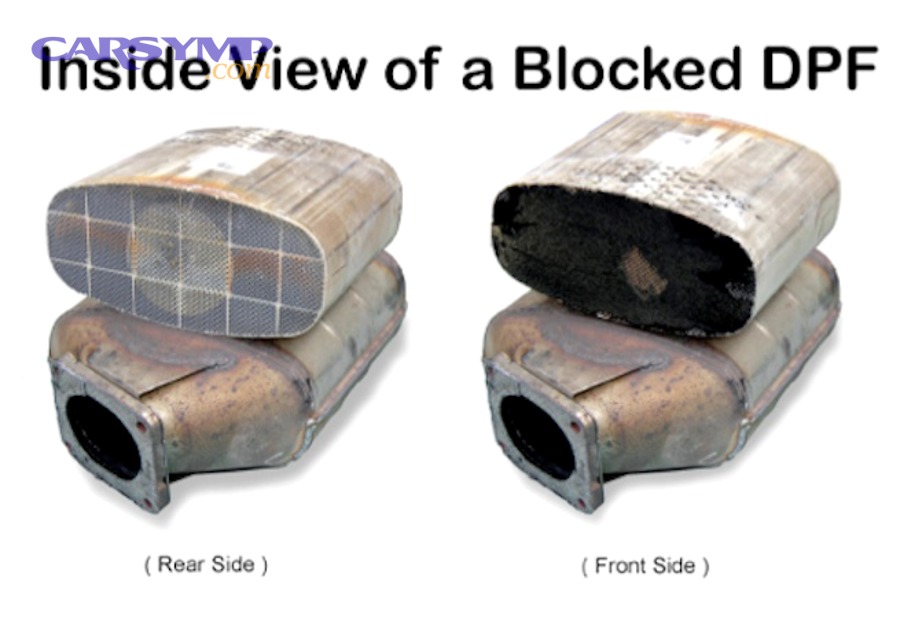
This section is where many drivers either save money—or accidentally multiply the repair bill. The key is to treat the symptom chain as a decision ladder:
- Early-stage warnings (light/message; no limp mode)
- Mid-stage issues (frequent regens, MPG drop, mild power loss)
- Late-stage restriction (limp mode, regen fails, heavy smoke, overheating smell)
Each stage has a different “safe next move.”
Should you keep driving when DPF clogging symptoms appear?
Yes, you can keep driving when DPF clogging symptoms appear if the vehicle is not in severe limp mode, temperatures are stable, and the system is requesting a normal regen drive cycle—because a steady drive can complete regeneration, restore flow, and prevent escalation. But you should stop and seek service if the vehicle enters strong limp mode, overheats, or displays “service now / do not drive” messaging.
Three reasons it can be safe (early stage):
- The vehicle may simply need operating temperature and steady load to complete regen.
- A successful regen can reduce soot load and clear the warning temporarily.
- Continuing gentle, steady driving avoids the repeated start/stop pattern that caused the problem.
Three reasons it can be unsafe (late stage):
- Severe restriction can raise exhaust backpressure and heat stress on turbo/engine components.
- Repeated failed regens can cause excessive heat events or fuel-related side effects.
- Limp mode exists to prevent damage—ignoring it can turn a cleaning into replacement.
A simple rule: avoid heavy throttle, towing, or steep hills if you’re seeing warnings, and aim for controlled conditions if you attempt a drive-cycle regen (only if the vehicle manufacturer guidance supports it).
Is a forced regeneration, cleaning, or repair the right next step?
Drive-cycle regeneration wins for mild soot loading, forced regeneration is best for moderate soot loading with diagnostic confirmation, and DPF cleaning (off-vehicle) is optimal for ash loading or repeated recurrence—so the right next step depends on whether the filter is soot-loaded, ash-loaded, or being overwhelmed by another fault. On the other hand, “repair” is often about fixing the upstream cause so the DPF doesn’t re-clog.
- Drive-cycle regen (driver-initiated conditions): Best when the car requests it, drivability is mostly normal, and the warning is early-stage. A steady run at operating temperature may complete passive/active regen.
- Forced regen (shop-level procedure): Best when the system can’t complete regen on its own and you need controlled conditions and monitoring. It’s also where diagnostics happen: the shop verifies sensor readings, checks codes, and watches temperatures.
- DPF cleaning (professional service): Best when ash accumulation is the limiting factor or when soot returns quickly despite successful regens. A proper service often restores flow far more reliably than repeated “burn attempts.”
- Repair upstream (root-cause fix): Necessary when something is creating excess soot (EGR faults, injector issues, boost leaks, oil consumption). Otherwise, you’ll be back in the same place.
If you’re trying to budget the path, it helps to get a realistic DPF cleaning cost estimate early. Many services report typical cleaning ranges in the hundreds rather than the thousands, depending on vehicle type and method.
What information should diesel drivers note before visiting a shop (lights, conditions, regen frequency)?
There are 7 key details diesel drivers should note before visiting a shop: warning messages, when symptoms occur, regen frequency clues, recent driving pattern, fuel economy change, smoke/odor events, and any prior repairs or sensor replacements—because this context shortens diagnosis and prevents wrong fixes. Besides saving time, this “symptom log” helps the technician confirm whether the issue is restriction, sensors, or an upstream soot source.
- What lights/messages appeared (and whether they flashed)
- Whether limp mode occurred (and what the vehicle wouldn’t do)
- When symptoms occur: cold vs hot, idle vs load, city vs highway
- Signs of frequent regen: fan after shutdown, high idle, hot smell
- Any recent changes: short trips, idling, towing, cold weather usage
- Smoke type and timing (only under acceleration, only during regen, etc.)
- Any recent work: EGR service, injectors, turbo hoses, sensor replacements
If you want an easy way to organize what you’re seeing, some drivers use symptom checklists like carsymp.com to structure their notes (the key is the consistency of what you record, not the website itself).
Can ignoring DPF clogging symptoms cause bigger failures?
Yes—ignoring DPF clogging symptoms can cause bigger failures, because rising backpressure increases mechanical stress, repeated regen attempts waste fuel and can create heat stress, and unresolved soot sources can damage the DPF substrate or trigger expensive component chains. More importantly, ignoring early warnings often shifts the outcome from “service cleaning” to “replacement plus diagnosis.”
While costs vary, many guides put common cleaning services in the $200–$700 range in many markets (method and vehicle dependent), whereas replacement can reach four figures and beyond, especially on larger vehicles.
Why does a diesel particulate filter clog, and how can diesel drivers reduce repeat DPF blockage?
A diesel particulate filter clogs because soot accumulates faster than regeneration can remove it and ash gradually fills filter capacity, and drivers reduce repeat blockage by correcting soot-producing faults, adjusting drive cycles, and using maintenance practices that limit ash buildup. Next, we’ll translate those causes into prevention tactics that actually stick—so Preventing future DPF blockages becomes routine rather than reactive.
Which driving habits most often cause DPF clogging (short trips, idling, stop-and-go)?
There are 3 driving habits most often linked to DPF clogging symptoms: frequent short trips, extended idling, and stop-and-go duty cycles—because they reduce exhaust temperature, interrupt regeneration, and keep the engine in soot-producing conditions. To illustrate, these habits don’t “break” the DPF; they simply deny it the operating window it needs to self-clean.
- Short trips: The engine shuts down before a regen can complete, so soot load keeps rising.
- Extended idling: Low exhaust temperature + soot production fills the filter faster than it clears.
- Stop-and-go traffic: Regens start and abort repeatedly, creating frequent regen behavior.
What is the difference between soot loading and ash loading in DPF restriction?
Soot loading is restriction caused by combustible carbon that regeneration can reduce, while ash loading is restriction caused by noncombustible residue that requires DPF cleaning or replacement—so soot is often reversible in-system, but ash is a capacity limit you eventually service. More specifically, soot problems come and go; ash problems accumulate and stay.
- Soot loading signals: warning clears after a proper regen; symptoms fluctuate with driving pattern; frequent regen is common.
- Ash loading signals: symptoms return quickly after regen; differential pressure remains elevated; useful capacity feels permanently reduced.
Can repeated failed regenerations lead to oil dilution or overheating risks?
Yes—repeated failed regenerations can increase oil dilution risk and heat stress, because active regen strategies often use late/post injections that can contribute to fuel entering the oil and because regeneration events raise exhaust temperatures sharply during repeated attempts. Therefore, frequent regen failure is not just inconvenient—it’s a reason to take the problem seriously.
According to a study by RPTU Kaiserslautern-Landau (engineering thesis), in 2022, post-injection active regeneration was described as contributing to engine oil dilution due to heavy fuel input, supporting why repeated failed regens can carry lubrication risks. (kluedo.ub.rptu.de)
What are early “not-yet-blocked” signs that are the antonym of severe blockage?
Early “not-yet-blocked” signs—essentially the antonym of severe blockage—include occasional regen prompts that resolve with one drive cycle, small MPG dips during regen only, and mild performance softness under load that disappears afterward, because restriction is still intermittent and recoverable. In short, you can often catch the problem while the system can still self-correct.
- DPF light appears orange/advisory and clears after a steady drive
- Regen signs happen occasionally, not constantly
- Power feels slightly dulled only during the warning window
- The interval between warnings shortens over time
Evidence (selected)
- According to a study by Purdue University from the School of Electrical and Computer Engineering, in 2008, DPF backpressure was described as increasing fuel consumption and reducing available torque. (docs.lib.purdue.edu)
- According to a study by MIT from its Department of Mechanical Engineering, in 2021, DPF channel congestion was linked with increased backpressure and reduced lifetime/performance. (dspace.mit.edu)
- According to a study by RPTU Kaiserslautern-Landau (engineering thesis), in 2022, post-injection active regeneration was described as contributing to engine oil dilution. (kluedo.ub.rptu.de)