


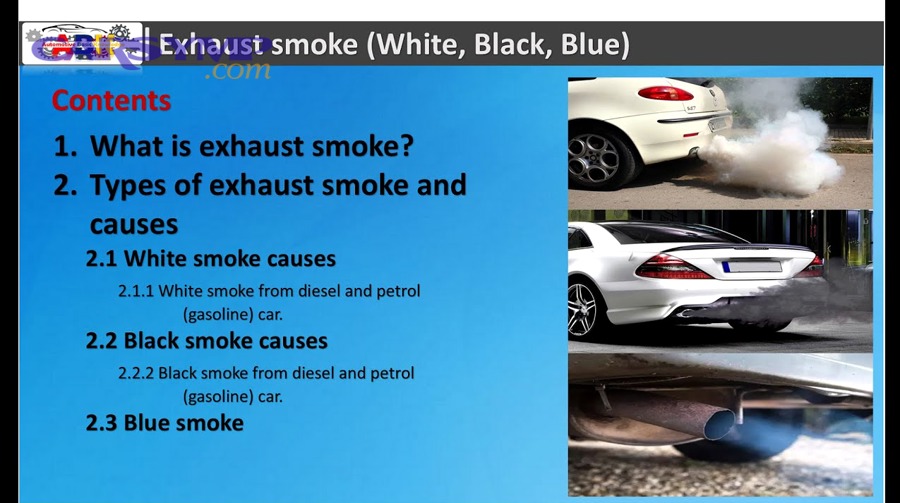
If you’re seeing blue, white, or black smoke from your tailpipe, the color is a fast clue to what the engine is burning: blue usually points to oil, white often means water vapor or coolant, and black typically signals excess fuel/soot. The goal is to match the smoke color to the most likely system—lubrication, cooling, or fueling—so you don’t waste time (or money) guessing.
Next, you’ll learn what makes blue smoke show up during startup, acceleration, or deceleration, and why those patterns often separate piston-ring wear from valve-seal or PCV issues. That “when it happens” detail is often more useful than the color alone.
Then, we’ll break down white smoke—from harmless cold-start condensation to true coolant intrusion—and the quick checks that confirm whether you’re dealing with steam or a coolant-burning event.
Introduce a new idea: once you understand what each smoke color means, the real win is diagnosing the root cause with a simple, structured checklist—before you commit to parts, labor, or a major teardown.
What does the color of exhaust smoke mean in a car engine?
Exhaust smoke color is a diagnostic signal that reflects what is being burned or vaporized in the combustion process (fuel, oil, coolant/water), with the standout feature that blue = oil, white = water/coolant, and black = excess fuel/soot.
To better understand why the color changes, it helps to tie smoke appearance to temperature, smell, when it happens, and how long it lasts—because those details often point directly to the failing component.


Here’s a quick way to interpret smoke color without overthinking it:
- Blue or blue-gray smoke
Usually means engine oil is entering the combustion chamber and burning. The smoke may look bluish in sunlight and often comes with a sharp “burnt oil” smell. - White smoke
Often means water vapor (normal condensation) or coolant/antifreeze being burned. Thick, sweet-smelling, persistent white smoke is the one that deserves urgency. - Black smoke
Usually means the engine is running too rich (too much fuel, not enough air) and producing soot. It’s common with fueling faults, sensor errors, injectors, or restricted air intake.
Before you jump to a conclusion, use this “4-question filter”:
- Is the smoke only on cold start, then disappears? (often condensation)
- Does it worsen under throttle or boost? (often oil control or turbo-related)
- Does it smell sweet, acrid, or like fuel? (coolant vs oil vs rich fuel)
- Is there fluid loss (oil/coolant) or poor MPG? (confirms the system involved)
To make that easier, the table below summarizes the most common cues and what they usually indicate.
| Smoke color | Typical smell | When it appears most | Common direction |
|---|---|---|---|
| Blue/blue-gray | Burnt oil | Startup, decel, hard accel | Oil control issue |
| White (thin) | Mostly none | Cold start, humid mornings | Condensation/steam |
| White (thick) | Sweet | Warm engine, continuous | Coolant intrusion |
| Black | Fuel/sooty | Accel, load | Rich mixture |
According to a report compiled through Northern Arizona University’s ORCA materials, measured carbon monoxide exposure in vehicle-related travel contexts can vary meaningfully by route and traffic conditions, underscoring why exhaust-related problems should be taken seriously when symptoms are persistent.
What causes blue exhaust smoke, and when should you worry?
Blue exhaust smoke is oil-burning smoke caused by engine oil entering the combustion chamber—most often from worn piston rings, valve stem seals/guides, or a crankcase ventilation (PCV) problem—and you should worry when it’s persistent, worsening, or paired with oil loss/misfires.
More specifically, “when it happens” is your shortcut to the cause, because oil gets into the chamber through different paths depending on engine load and vacuum.
What are the most common mechanical causes of blue smoke?
Blue smoke typically comes from one (or more) of these mechanical faults:
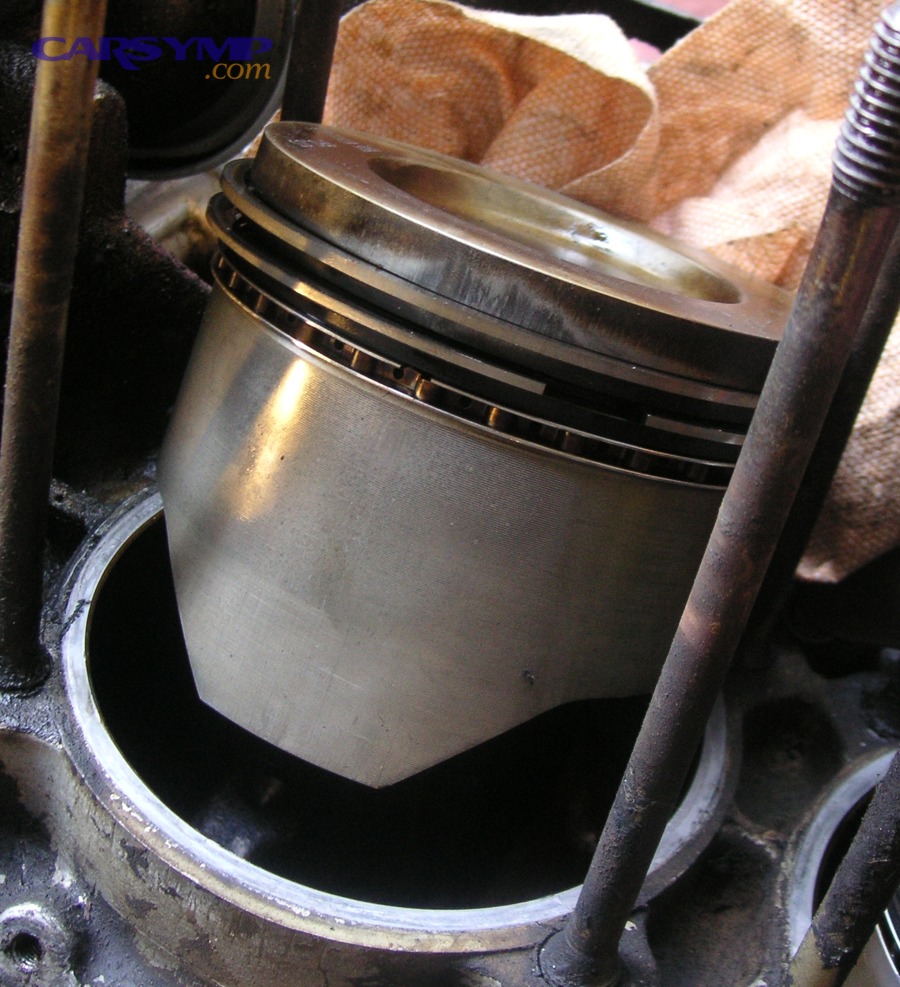
- Worn piston rings / cylinder wear
Rings lose sealing, allowing oil to pass into the chamber—often worse under acceleration and load. - Worn valve stem seals or guides
Oil drips into cylinders during high vacuum (like deceleration or overnight sitting), often showing as a puff on startup or after long idle. - Turbocharger oil seal leakage (turbo engines)
Oil can leak into the intake (compressor side) or exhaust (turbine side), often worsening under boost and creating distinct Turbocharger smoke symptoms like smoke after idling then accelerating. - PCV system faults
A stuck PCV valve or restricted breather can increase crankcase pressure and push oil vapor into the intake, leading to oil-burning.
How does driving condition (startup, acceleration, deceleration) help pinpoint the cause?
Use these patterns like a diagnostic map:
- Blue smoke on cold start that clears quickly
Often points to valve stem seals (oil drips down while parked). - Blue smoke after long idle, then a puff when you rev
Common with valve seals or turbo oil seepage. - Blue smoke under acceleration and load
Often points to rings/cylinder wear or oil control ring issues. - Blue smoke mainly on deceleration
High intake vacuum can pull oil past worn valve guides/seals.
Can PCV issues really cause blue smoke?
Yes—PCV faults can cause blue smoke because a malfunctioning crankcase ventilation system can pull excess oil vapor into the intake or build crankcase pressure that forces oil past seals.
Besides, this is where many people misdiagnose: they assume “rings,” but the fix can be much smaller if the ventilation system is the true trigger.

To connect this to real-world troubleshooting, PCV and valve seal related smoke issues often show up together: a weak valve seal might be “borderline,” but a restricted PCV system raises crankcase pressure and turns a minor seep into visible smoke.
A thesis hosted by Massachusetts Institute of Technology discusses how oil can be present in PCV blowby gases and why operating conditions affect oil transport in ventilation flow paths—helpful context when blue smoke is intermittent and load-dependent.
What causes white exhaust smoke, and how do you tell steam from coolant?
White exhaust smoke is water vapor or coolant vapor leaving the exhaust—steam is usually normal during cold starts, while persistent thick white smoke can indicate coolant entering the combustion chamber from a head gasket leak, cracked head, or intake/coolant passage issue.
Next, the key is separating “normal condensation” from Coolant burning smoke diagnosis, because the fixes and risks are completely different.
When is white smoke normal?
White vapor is often normal when:
- It’s cold outside or humidity is high
- The smoke is thin and disappears as the engine warms
- There’s no coolant loss
- There’s no sweet smell
Modern exhaust systems produce a lot of condensation during warm-up—especially on short trips where the exhaust never fully dries out.
What are the common coolant-related causes of thick white smoke?
If white smoke is thick, lingers, and continues warm, suspect coolant intrusion, most commonly:
- Blown head gasket
- Cracked cylinder head
- Cracked engine block
- EGR cooler leak (some engines)
- Intake manifold gasket leak on engines where coolant passes through the intake

Clues that support coolant intrusion:
- Coolant level drops without external leaks
- Sweet smell at the tailpipe
- Overheating or pressure in cooling system
- Milky oil (not always present)
- Misfire on startup (coolant pooling in a cylinder overnight)
What quick tests confirm coolant intrusion vs condensation?
Use a layered approach:
- Visual + smell check
Steam is typically odorless; coolant smoke often has a sweet chemical odor. - Coolant level monitoring
Mark the level cold and recheck after a few drives. - Cooling system pressure test
Pressure loss with no external leak suggests internal seep. - Block test / combustion gas test
Checks for combustion gases in coolant. - Spark plug inspection
A “steam-cleaned” plug can point to the affected cylinder.
If you want a fast learning aid, this video explains smoke colors and what they typically indicate:
What causes black exhaust smoke, and what does it say about fuel mixture?
Black exhaust smoke is soot from an overly rich air–fuel mixture, meaning the engine is injecting more fuel than it can burn cleanly due to fueling faults, incorrect sensor readings, restricted air, or combustion inefficiency—so it’s a strong sign you’re wasting fuel and contaminating the exhaust stream.

However, black smoke isn’t just “a diesel thing.” Gasoline engines can run rich too, especially when sensors or fuel control systems fail.
What are the most common causes of a rich mixture?
These are the most frequent triggers:
- Dirty/clogged air filter or restricted intake (not enough air)
- Faulty MAF/MAP sensor (wrong airflow/load data)
- Bad oxygen sensor feedback (fuel trims drift rich)
- Leaking injector(s) or high fuel pressure
- Stuck open purge/EVAP issues feeding vapor at the wrong time
- Cold-start enrichment stuck on (coolant temp sensor issues)
- Ignition problems causing incomplete burn (misfire can look like “rich smoke”)
How do you confirm black smoke is fuel-related (not oil)?
Use the “soot test”:
- Black smoke often leaves dry, powdery soot in the tailpipe.
- Oil-burning tends to leave wet, oily residue and a burnt-oil smell.
- Rich running often comes with poor MPG, fuel smell, and possible rough idle.
Why black smoke matters beyond fuel economy
Rich running can:
- Wash oil off cylinder walls, accelerating wear
- Overheat and damage the catalytic converter
- Increase carbon deposits on valves and pistons
- Trigger emissions failures and check engine lights
A government-facing guide from NSW Environment Protection Authority notes that smoke emissions indicate wasted fuel and potential engine damage, and points to common maintenance-related causes such as poor injector maintenance or excessive fuel delivery (especially for diesels).
How can you diagnose exhaust smoke by combining color, smell, and symptoms?
There are 3 main diagnostic layers for exhaust smoke—sensory cues (color/smell), operating pattern (when it occurs), and measurable evidence (fluid loss + scan data)—and combining them is far more accurate than relying on color alone.

To illustrate, the same “white smoke” can mean harmless condensation or a cooling-system breach; the extra clues are what separate them.
What does the smell tell you?
Smell is an underrated differentiator:
- Burnt oil smell → blue/blue-gray smoke likely oil burning
- Sweet smell → coolant/antifreeze burning likely
- Raw fuel smell → rich mixture or misfire
What symptoms pair strongly with each smoke color?
Think in “bundles”:
- Blue smoke bundle
- Oil consumption
- Fouled plugs
- Smoke on startup/decel/boost depending on cause
- White smoke bundle
- Coolant loss
- Overheating or pressure buildup
- Sweet smell and persistent cloud when warm (not just morning steam)
- Black smoke bundle
- Bad MPG
- Fuel smell
- Sooty tailpipe
- Possible rich codes, negative fuel trims, or misfire
What simple checks should you do before any teardown?
Start with “cheap certainty”:
- Check oil and coolant levels (and track changes)
- Look for milky oil or oily coolant (not always present)
- Scan fuel trims and misfire counts (rich problems show up fast here)
- Inspect intake plumbing (air restriction, turbo piping leaks)
- Check PCV function and hoses (cheap but high-impact)
- Tailpipe residue check (dry soot vs oily wet residue)
Is it safe to drive with blue, white, or black exhaust smoke?
No, it’s generally not safe to keep driving with persistent exhaust smoke, because blue smoke can indicate oil loss and catalytic damage, white smoke can signal coolant intrusion and overheating risk, and black smoke can cause fuel-wash, converter damage, and unsafe emissions.

More importantly, the danger isn’t just “the smoke”—it’s the failure mode behind it and how quickly it can escalate.
Here are three practical safety reasons to avoid “just driving it”:
- Engine damage can compound fast
Coolant intrusion can overheat and warp components; oil burning can accelerate wear and foul plugs; rich running can wash cylinders and overheat catalysts. - You can damage expensive emissions hardware
Catalytic converters and oxygen sensors are sensitive to oil ash, raw fuel, and misfires. - Health and visibility risks
Exhaust smoke reduces rear visibility and may indicate harmful gases.
Practical rule of thumb:
- A brief puff (cold start condensation, tiny oil seep) → often “drive to diagnose.”
- Continuous smoke when warm → “diagnose now.”
- Smoke + overheating / misfire / rapid fluid loss → “stop driving and tow.”
What are the most common fixes for each smoke color?
There are 3 main fix paths—oil-control fixes (blue smoke), cooling-system sealing fixes (white smoke), and air–fuel control fixes (black smoke)—and the best repair choice depends on whether the issue is a minor control failure or a worn internal component.

Then, once you match the fix to the root cause, you avoid the classic trap of replacing parts that weren’t actually failing.
What is the most effective “exhaust smoke fix” for blue smoke?
Blue smoke fixes depend on the oil entry path:
- PCV service (often the best first step)
- Replace stuck PCV valve
- Clear clogged breather hoses
- Fix oil separators (where equipped)
- Valve stem seals/guides
- Seal replacement (sometimes possible without full head removal on certain engines)
- Turbo seal leakage
- Inspect turbo shaft play, oil in intercooler piping
- Repair/replace turbo as needed
- Piston rings/cylinder wear
- Compression/leak-down test confirmation
- Engine rebuild/short block in severe cases
If your blue smoke is intermittent and load-dependent, PCV service and intake inspection are often the highest ROI starting point.
What fixes resolve white smoke most reliably?
White smoke fixes are about stopping coolant entry:
- Cooling system pressure test + locate leak path
- Head gasket replacement (after confirming failure)
- Cylinder head inspection (warp/crack checks)
- EGR cooler replacement (if applicable)
- Intake manifold gasket replacement (engine-dependent)
The key is confirmation before teardown: if you replace a head gasket without verifying the source, you can miss a cracked head/block or a cooler leak.
What fixes resolve black smoke most reliably?
Black smoke is typically solved by restoring correct air–fuel control:
- Replace or clean air filter / fix intake restriction
- MAF/MAP diagnosis (data validation beats guessing)
- Fuel pressure and injector leak test
- Fix sensor-driven enrichment (coolant temp sensor, O2 feedback issues)
- Repair ignition faults (misfire can mimic rich smoke)
A strong, structured approach here is: air first → sensor data validation → fuel delivery → ignition.
What rare but serious problems can mimic blue/white/black smoke?
There are 4 rare but high-stakes “look-alikes”—turbo oil leaks that mimic ring wear, transmission fluid ingestion, brake booster vacuum fluid ingestion, and engine control failures that mimic fueling faults—so it’s important to recognize the exceptions when the “usual suspects” don’t match your symptoms.
Besides, these cases are where people spend the most money chasing the wrong repair because the smoke color looks familiar.
Can a turbo leak mimic both blue and white smoke?
Yes. Turbo failures can create confusing smoke:
- Oil into intake → blue smoke, oily intercooler piping
- Oil into exhaust side → blue-gray haze that worsens under boost
- Coolant-cooled turbo issues (less common) can add steam-like symptoms depending on architecture
Can transmission fluid cause white-blue smoke?
In some setups (especially with vacuum modulators on older transmissions), transmission fluid can be pulled into the intake and burned, producing smoke that can look white-blue and smell “chemical.” This is uncommon on modern vehicles, but it’s a real edge case.
Can brake booster issues cause weird smoke?
If a brake booster or vacuum line ingests fluid (rare), it can create smoke and drivability symptoms that don’t fit the normal patterns. The clue is often: smoke changes when braking behavior or vacuum loads change.
Can control-system failures cause sudden black smoke?
Yes—ECU fueling faults, failed sensors, or stuck-open injectors can dump fuel rapidly. If black smoke appears suddenly with strong fuel odor and rough running, don’t treat it like a “tune-up later” problem.