


Most “O2 sensor codes” are really fuel-control and sensor-signal behavior codes, which means you can decode them into a practical answer: what the code is seeing, what usually causes it, and what you should check first before buying parts. This guide breaks down the most common oxygen sensor trouble codes in the P0130–P0161 range, explains what each code family means, and gives a DIY-first triage path that saves time and avoids misdiagnosis.
Next, the most expensive mistakes happen when people treat every P013x/P015x alert like an automatic sensor swap. Instead, you’ll learn how to use bank/sensor labels, a quick visual inspection, freeze-frame data, and a few basic tests to separate “bad sensor” from “bad wiring,” “exhaust leak,” or “engine running lean/rich.”
Then, because a huge portion of these faults revolve around heater circuits and sensor location confusion, this article also covers heater-code logic (why it sets, what to test first) and the bank/sensor naming that tells you exactly which sensor the ECU is complaining about.
Introduce a new idea: once you can interpret the code family and confirm the likely root cause, you can choose the right fix—whether that’s a wiring repair, an exhaust leak fix, or an oxygen sensor replacement—then confirm the repair with “After replacement: clearing codes and readiness” steps so the light stays off for good.
What are O2 (oxygen) sensor trouble codes, and why do they appear on so many vehicles?
O2 (oxygen) sensor trouble codes are OBD-II diagnostic codes that flag abnormal oxygen sensor signals or heater operation because the ECU relies on oxygen feedback to keep air-fuel ratio in range and protect emissions equipment.
To better understand why these codes show up so often, it helps to connect the O2 sensor’s job to how the ECU makes decisions in closed loop.
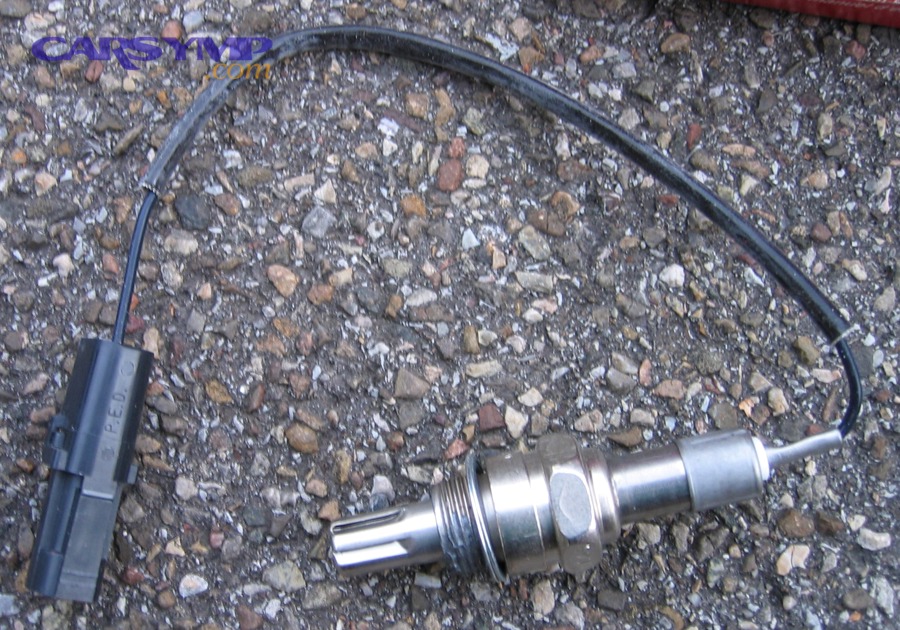
Modern gasoline engines use at least one upstream O2 sensor (Sensor 1) per bank to control fueling. That upstream sensor’s switching or wideband reading tells the ECU whether the mixture is rich or lean relative to target. Many vehicles also use a downstream sensor (Sensor 2) after the catalytic converter to monitor catalyst performance and confirm emissions efficiency. Because these sensors are exposed to heat, vibration, moisture, wiring stress, and exhaust contamination, they’re common points of failure—or common points of detection when something else is wrong.
A key concept: an O2-related code is often a symptom, not a verdict. A code can be triggered by:
- A sensor that’s genuinely aged or contaminated
- A heater circuit that can’t warm the sensor quickly
- Wiring issues (open/short, corrosion, melted harness near exhaust)
- Exhaust leaks that “fake” a lean condition by pulling in outside oxygen
- Fueling/air issues that cause true lean or true rich operation (vacuum leaks, MAF issues, fuel pressure problems)
What does “Bank 1 / Bank 2” and “Sensor 1 / Sensor 2” mean on O2 codes?
Bank/Sensor language is a standardized locator system: Bank 1 is the side of the engine containing cylinder #1, Bank 2 is the opposite side (on V-type engines), Sensor 1 is upstream (before the catalytic converter), and Sensor 2 is downstream (after the catalytic converter).
Next, once you decode the label, you can physically find the sensor without guessing.
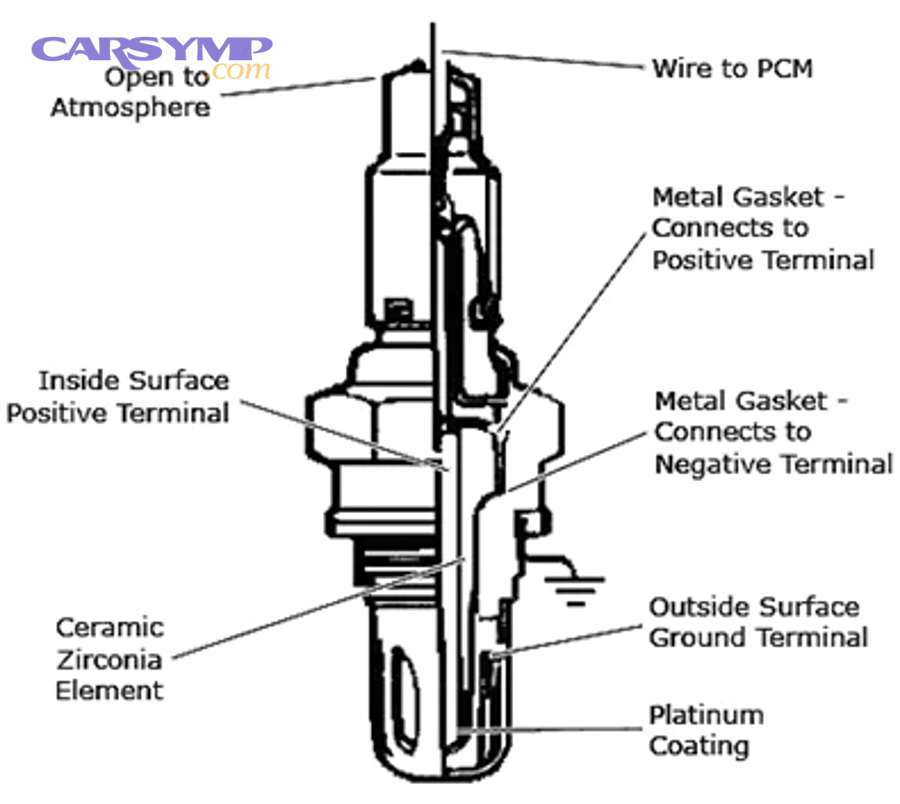
Practical mapping rules DIY owners use:
- Inline engines (I4/I6): usually only Bank 1 exists.
- V engines (V6/V8): Bank 1 is the side with cylinder #1 (look up firing order diagram or service info).
- Sensor 1 (upstream): mounted in the exhaust manifold or just after it, before the catalytic converter.
- Sensor 2 (downstream): installed after the catalytic converter.
This matters because upstream and downstream sensors play different roles. Upstream sensor faults can affect drivability and fuel trims. Downstream sensor faults may not change drivability much but can affect emissions monitoring and inspection readiness.
Do common O2 sensor codes always mean the oxygen sensor is bad?
No—common O2 sensor codes do not always mean the oxygen sensor is bad, because many codes are triggered by signal behavior caused by wiring faults, exhaust leaks, or true mixture problems that the sensor is simply reporting.
However, the reason this question matters is that a wrong first step can waste money and still leave the check engine light on.
Three high-probability “not the sensor” causes to rule out early:
- Wiring damage or connector corrosion: heat and road splash create opens/shorts and high resistance.
- Exhaust leaks upstream of the sensor: fresh air gets pulled into the exhaust stream and fakes lean readings.
- Unmetered air / vacuum leaks: the engine actually runs lean, and the O2 sensor correctly reports it.
When you treat the code as “what the ECU observed” rather than “which part to buy,” you naturally move toward a test-first approach that matches how the diagnostic system is designed.
Which O2 sensor codes are most common (P0130–P0161), and what does each code mean?
There are 4 main types of common O2 sensor codes in the P0130–P0161 family—circuit/signal, rich/lean voltage, slow/no activity, and heater circuit—based on what the ECU is evaluating (signal quality, switching behavior, or heater performance).
Below, you’ll see each group explained in plain English, with “what it usually means” and “what to check first” so you can diagnose faster.
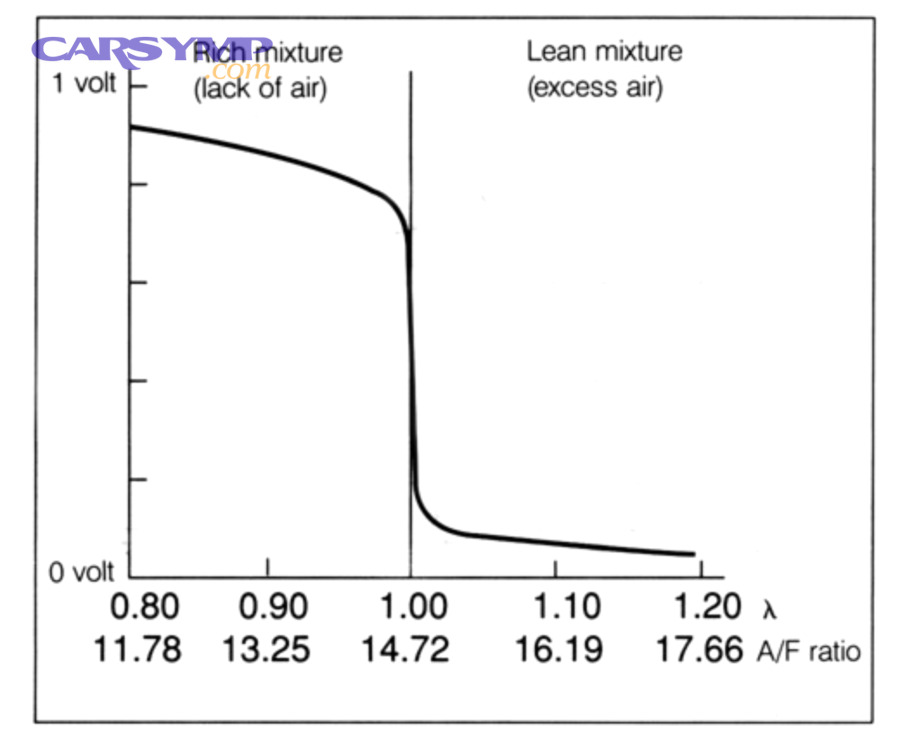
A note on terminology: Many vehicles will throw P013x/P015x codes that look similar but refer to different banks. In general:
- P013x often refers to Bank 1 (depending on code)
- P015x often refers to Bank 2 (depending on code)
What do circuit and signal codes mean (P0130/P0150, P0131/P0151 lean, P0132/P0152 rich)?
Circuit/signal codes mean the ECU sees an electrical issue or an implausible signal level from the sensor circuit, often due to wiring faults, sensor contamination, or a true mixture condition that drives the signal out of expected range.
To illustrate the practical meaning, think of these as “the sensor signal doesn’t look right,” not “the sensor is definitely broken.”
Common examples and what they imply:
- P0130 / P0150 (O2 Sensor Circuit Malfunction): the ECU detects abnormal signal behavior or circuit integrity issues.
- P0131 / P0151 (O2 Sensor Circuit Low Voltage): the ECU sees a low signal that often corresponds to lean exhaust or a wiring short to ground / sensor not switching.
- P0132 / P0152 (O2 Sensor Circuit High Voltage): the ECU sees a high signal that often corresponds to rich exhaust or a wiring short to power / sensor stuck high.
First checks (fast, high-value):
- Inspect sensor harness routing near the manifold and heat shields (melted insulation is common).
- Check for exhaust leaks at the manifold gasket or flex pipe before the upstream sensor.
- Look at fuel trims if you have scan data: a real lean condition typically shows positive trims, real rich shows negative trims.
If you do have live data: a healthy narrowband upstream sensor usually switches rapidly between rich/lean. A sensor that’s stuck low or stuck high may be reacting to engine conditions—or it may be electrically pinned.
What does “slow response” or “no activity” mean (P0133/P0153, P0134/P0154)?
“Slow response” means the ECU sees the sensor switching too slowly to control fuel effectively, while “no activity” means the sensor is not switching at all during conditions where it should be active.
Next, because these codes are behavior-based, you diagnose them by confirming the sensor’s ability to react, not just its presence.
Common causes of slow/no activity:
- Aging or contaminated sensor element (silicone contamination, oil/coolant exposure, fuel additives)
- Exhaust leaks that dilute exhaust and confuse switching
- Engine misfires or fuel delivery issues creating unstable combustion
- Wiring issues that intermittently open the signal circuit
Quick DIY test logic (scan tool optional):
- If the engine is fully warm and in closed loop, an upstream sensor that stays flat is suspicious.
- If trims are extreme (large positive or negative), the sensor may be “telling the truth” about a real problem.
A practical rule: fix air leaks and exhaust leaks first when trims are abnormal; then re-evaluate sensor response. That prevents replacing a good sensor that’s reporting a bad mixture.
What do heater circuit codes mean (P0135/P0141/P0155/P0161)?
Heater circuit codes mean the ECU has detected that the oxygen sensor heater isn’t drawing expected current or isn’t warming the sensor quickly enough, usually due to blown fuses, wiring faults, heater element failure, or poor grounds.
Then, because heaters are most critical at cold start, these codes often set early in a drive cycle.
Why heaters matter:
- A heated O2 sensor reaches operating temperature quickly.
- Faster warmup means faster closed-loop fueling and cleaner emissions.
Most common heater-code root causes:
- Blown heater fuse or shared fuse issue
- Open heater element inside the sensor (common on high-mileage sensors)
- Harness damage (heat + vibration)
- Ground path resistance (corrosion at ground points)
First checks that beat parts-swapping:
- Check the related fuse(s) first.
- Verify heater power and ground at the connector (with a multimeter).
- Inspect the connector for pushed pins, green corrosion, or water intrusion.
This is also where the right tools matter: if you confirm the heater is open and the wiring is good, oxygen sensor replacement becomes a justifiable fix rather than a guess.
How should you interpret “sensor range/performance” codes (e.g., P0136/P0156 when applicable)?
Range/performance codes mean the ECU sees sensor behavior that’s out of expected performance limits—often not fully dead, but not behaving correctly under test conditions—commonly due to aging, contamination, exhaust leaks, or wiring resistance.
Moreover, these codes are where “almost working” sensors cause the most confusion.
Common scenarios:
- Downstream sensor performance issues caused by exhaust leaks or wiring, not necessarily catalyst failure.
- Upstream sensor performance issues caused by slow switching due to age or contamination.
- Wiring resistance that doesn’t fully open the circuit but distorts the signal.
A solid approach is to treat “range/performance” as a prompt to confirm:
1) the engine is running correctly (no major misfires, no unmetered air),
2) the exhaust is sealed before the upstream sensor, and
3) the sensor wiring is intact and not heat-damaged.
What are the first checks you should do before replacing an O2 sensor?
You should do 5 first checks before replacing an O2 sensor—confirm the code and freeze-frame, inspect wiring/connectors, check for exhaust leaks, check for intake/vacuum leaks, and review basic live data—because these steps eliminate the most common non-sensor causes quickly.
Next, each check builds on the previous one, so you don’t miss the simple failures that mimic sensor problems.
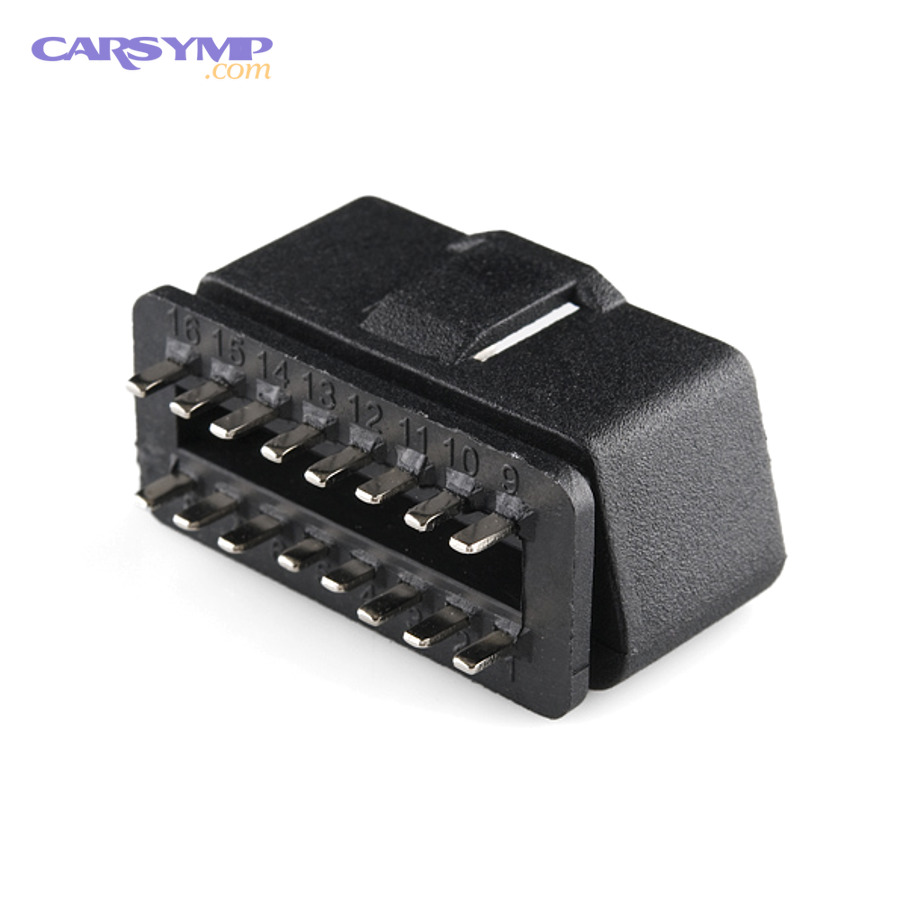
A helpful mindset: O2 codes are usually downstream of something else—air leaks, fuel delivery, exhaust leaks, electrical faults—so your first checks should target those “upstream” causes.
What quick visual checks catch the most common non-sensor causes?
The quickest visual checks catch wiring heat damage, connector corrosion, exhaust leaks, and intake/vacuum leaks—four common causes that can trigger P013x/P015x codes without a failed sensor.
To better understand why this works, remember that the sensor is mounted in one of the harshest environments on the vehicle.
Do this fast walk-around (10 minutes, flashlight):
- Harness near heat: look for melted loom, brittle insulation, or contact with the exhaust.
- Connector condition: check for broken locks, water intrusion, corrosion, pushed pins.
- Exhaust leaks: look for soot trails near the manifold flange, flex joint, or upstream pipe seams.
- Vacuum/intake leaks: listen for hissing, inspect cracked hoses, check intake boot clamps.
If you find a physical problem, repair that first. A repaired wiring fault or sealed exhaust leak can “fix” an O2 code without touching the sensor.
How do you use freeze-frame data to avoid guessing?
Freeze-frame data is a snapshot of engine conditions when the code set, and it helps you avoid guessing by showing whether the fault happened at cold start, under load, at idle, or during cruise—each pointing to different causes.
Then, once you know the conditions, you can choose the most relevant tests instead of testing everything.
Key freeze-frame fields to look at:
- Coolant temperature: cold suggests heater/ warmup issues; hot suggests response/performance issues.
- RPM and load: under load can point to fuel delivery limits; idle can point to vacuum leaks.
- Short-term and long-term fuel trims (if available): tells you if the engine was correcting lean/rich at that moment.
- Vehicle speed: steady cruise vs acceleration vs decel can change O2 behavior.
Example reasoning:
- Heater code sets at cold coolant temps → check fuses/power/ground first.
- Low voltage code at high load + positive trims → suspect fuel delivery or unmetered air, not just the sensor.
What live-data patterns help confirm a real O2 sensor problem?
Live-data patterns confirm a real O2 sensor problem when the sensor signal is stuck, slow, or inconsistent despite a healthy engine condition, because a healthy sensor should respond predictably to mixture changes.
However, you need to reconnect live data to the code’s “complaint” so you test what the ECU is actually monitoring.
Upstream sensor patterns that matter:
- Normal narrowband behavior: rapid switching once warm and in closed loop.
- Stuck lean or stuck rich: can be true mixture or a sensor/wiring fault—use fuel trims to decide.
- Lazy switching: sensor responds but slowly; often triggers “slow response.”
Downstream sensor patterns that matter:
- Relatively stable signal: typical when catalyst is functioning.
- Mirrors upstream switching: can suggest catalyst efficiency issues, but also can occur with exhaust leaks or sensor faults.
If you have graphing capability, it’s easier to see response speed. If you don’t, you can still make progress by correlating trims and sensor voltage trends.
What tests should you do first for heater circuit codes?
For heater circuit codes, you should first test the heater power supply, heater ground, and heater element continuity because heater faults are often electrical (fuse, wiring, open element) rather than “bad sensing.”
Specifically, these tests quickly identify whether oxygen sensor replacement is justified or whether the circuit is the real culprit.
A simple heater-code test flow (DIY-friendly):
- Check the fuse(s) that feed O2 heater circuits (some vehicles share fuses with other heaters).
- Key-on voltage test at the heater power pin (service info helps pin ID).
- Ground integrity check (voltage drop test is best; basic continuity is a start).
- Heater resistance check across heater pins (an open circuit strongly suggests a failed heater).
If you confirm no power at the connector, replacing the sensor won’t fix it—repair the power feed first.
How do you choose the right fix for each code family without wasting money?
The right fix depends on the code family: wiring/connectors win for circuit faults, leak repairs win for false lean/rich readings, and sensor replacement is best when you confirm a failed heater or proven slow response—because each code type points to a different failure mode.
Meanwhile, your goal is the same: restore correct feedback so the ECU stops seeing abnormal behavior.
Below is a decision-oriented summary of what typically works first. This table organizes “code family → most likely fix path” so you can choose an efficient next step.
| Code family (example) | What the ECU is reacting to | Best first fix path (in order) |
|---|---|---|
| Circuit malfunction (P0130/P0150) | signal integrity | wiring/connector inspection → continuity/short tests → sensor if circuit checks out |
| Low/high voltage (P0131/P0132 etc.) | signal pinned lean/rich | check for exhaust leaks/vacuum leaks → check trims/fueling → wiring → sensor |
| Slow/no activity (P0133/P0134 etc.) | response behavior | fix leaks/misfires/fueling first → verify closed loop → sensor if still lazy/dead |
| Heater codes (P0135/P0141/P0155/P0161) | heater current/warm-up | fuses/power/ground → heater resistance → sensor if heater open/failed |
When should you repair wiring/connectors instead of replacing the sensor?
You should repair wiring/connectors instead of replacing the sensor when you find heat damage, corrosion, intermittent opens/shorts, or poor pin fitment because these faults can mimic every major O2 code family and will continue to trigger codes even with a new sensor.
In addition, wiring repairs typically cost far less than repeated part replacements.
High-confidence “repair wiring first” indicators:
- Melted insulation near exhaust components
- Broken connector lock that allows vibration to loosen contact
- Green/white corrosion on terminals
- Evidence the harness was stretched or rubbing a sharp edge
A practical diagnostic trick: gently move the harness while watching live data (if safe and accessible). If the signal drops out or changes abruptly, you likely have a wiring or connector issue.
When is replacing the O2 sensor the correct first move?
Yes—replacing the O2 sensor is the correct first move when the sensor’s heater is proven open, the sensor signal is proven dead or stuck with good wiring, or the sensor is demonstrably slow after you’ve ruled out leaks and fueling issues, because those conditions point directly to sensor failure rather than external causes.
More importantly, confirmed failure transforms “parts swap” into a targeted repair.
Common “replace it” scenarios that are usually justified:
- Heater code + confirmed heater open circuit at the sensor
- No activity code + verified power/ground/reference and intact wiring
- Slow response persists with stable trims and no leaks
- Sensor heavily contaminated (oil/coolant) and the underlying cause has been fixed
When you do oxygen sensor replacement, use the correct connector style (OEM-fit is easiest) and route the harness exactly as factory to prevent repeat failures.
What’s the difference between fixing an upstream (Sensor 1) code and a downstream (Sensor 2) code?
Upstream sensor codes are best approached as fuel-control problems first, while downstream sensor codes are best approached as emissions-monitoring problems—because upstream sensors actively control mixture and downstream sensors verify catalyst performance.
On the other hand, both can be triggered by wiring and exhaust leaks, so your first checks remain similar.
Upstream (Sensor 1) fix priorities:
- Air leaks, vacuum leaks, MAF issues
- Fuel delivery issues (pressure, injector performance)
- Exhaust leaks before the sensor
- Sensor performance after engine health is confirmed
Downstream (Sensor 2) fix priorities:
- Exhaust leaks between catalyst and sensor
- Wiring/connectors and sensor heater integrity
- Catalyst issues only after sensor and leak checks pass
This difference is why a downstream code often doesn’t “feel” like a drivability issue, but still matters for emissions readiness and inspections.
How do you handle repeated O2 codes after replacement?
Repeated O2 codes after replacement usually happen because the root cause wasn’t fixed (leaks, wiring, fueling) or the wrong sensor/fitment was installed, so you should re-check sensor part number, connector integrity, harness routing, and the conditions that triggered the original code.
Especially, repeated P013x/P015x faults often trace back to overlooked intake or exhaust leaks.
Common repeat-failure causes:
- Universal sensor spliced incorrectly (pinout mismatch or poor splice)
- Harness routed too close to the exhaust (melts again)
- Exhaust leak still present upstream
- Engine still running lean/rich (trims still abnormal)
- Code cleared but readiness not completed, leaving pending faults
A good “post-repair confirmation” is to verify trims and sensor behavior across idle, cruise, and light acceleration after the engine reaches full temperature.
What should you do after repairs (clearing codes, readiness monitors, and confirming the fix)?
After repairs, you should document the original freeze-frame, clear codes only after the fix is complete, and confirm readiness monitors and live data behavior because a cleared light doesn’t prove the system passed its self-tests.
Thus, “After replacement: clearing codes and readiness” becomes the step that turns a repair into a verified result.
Should you clear the codes immediately after a repair?
Yes—you should clear the codes after a repair, because clearing resets the fault memory and allows the ECU to re-run monitors; however, you should do it only after you’ve recorded freeze-frame data and verified the physical repair, for three reasons: it preserves diagnostic clues, prevents repeat mistakes, and supports a clean readiness cycle.
Next, once you clear codes properly, you can focus on confirmation rather than chasing old data.
Three practical reasons to record before clearing:
- Freeze-frame tells you when and how the code set.
- Pending codes can show patterns before the MIL comes back.
- Some scanners display useful mode data that disappears after clearing.
If you clear too early, you may erase the one clue that would have saved you from replacing the wrong part.
How do readiness monitors work after O2-related repairs?
Readiness monitors are ECU self-tests that must complete under specific driving conditions, and after O2-related repairs they verify the oxygen sensor, heater operation, fuel control, and catalyst monitoring before the system is considered “ready” for inspection.
Then, because these monitors run under conditions like cold start, steady cruise, and deceleration, your driving pattern affects how quickly readiness returns.
General readiness concepts DIY owners should know:
- Clearing codes often sets monitors to “not ready.”
- Heater monitors typically run early (cold/warm-up).
- O2 sensor and fuel system monitors require closed-loop operation.
- Catalyst monitors may require steady cruise and specific temperatures.
If you’re preparing for inspection, confirm monitor status with your scan tool rather than assuming the light staying off means you’re ready.
What signs prove the problem is solved?
Yes—the problem is solved when the code does not return as pending or confirmed, fuel trims stabilize near normal, upstream sensors respond quickly in closed loop, downstream sensors behave consistently, and readiness monitors complete without new faults because those signs show the ECU’s tests are passing.
To sum up, you want proof from both behavior (live data) and self-tests (readiness).
A practical “proof checklist”:
- No pending codes after multiple drive cycles
- Fuel trims not pegged high/low during cruise
- No new heater-related faults on cold starts
- No exhaust leak noise/soot at repaired joints
- Readiness completed (especially if emissions testing is required)
According to a study by Clemson University (Clemson-ICAR) from an automotive research group, in 2016, post-catalyst lambda sensor response was used as an aging indicator and the measured oxygen storage “depletion time” dropped from about 15.5 seconds (fresh) to about 6.5 seconds (aged OBD-level), showing how sensor-based signals reflect converter performance changes over time.
What other codes and conditions commonly appear with O2 sensor codes, and how should you interpret them together?
O2 sensor codes commonly appear with fuel-trim codes, catalyst efficiency codes, and leak-related symptoms, and the right interpretation is to treat them as a connected story—air/fuel control, exhaust integrity, and emissions monitoring—rather than isolated part failures.
Moreover, understanding these “code clusters” is how you avoid fixing the messenger instead of the message.
How are fuel-trim codes (P0171/P0172) related to O2 sensor codes?
Fuel-trim codes relate to O2 sensor codes because the ECU uses oxygen feedback to adjust trims, so persistent lean (P0171) or rich (P0172) conditions can trigger O2 signal codes and “slow response” behavior when the sensor is repeatedly pushed to extremes.
Specifically, trims tell you whether the engine is correcting a real mixture problem.
Typical relationships:
- P0171 (system too lean) + P0131/P0151: often points to vacuum leaks, unmetered air, low fuel pressure, or exhaust leaks.
- P0172 (system too rich) + P0132/P0152: often points to leaking injectors, high fuel pressure, MAF reporting issues, or restricted intake.
If trims are out of range, fix the underlying lean/rich cause first; otherwise, the new sensor will report the same bad mixture and the light returns.
How are catalyst efficiency codes (P0420/P0430) different from O2 sensor codes?
Catalyst efficiency codes are different because they evaluate how well the catalytic converter stores oxygen and smooths exhaust fluctuations—often using downstream sensor patterns—while O2 sensor codes evaluate sensor circuit integrity, switching behavior, or heater operation.
However, a faulty downstream sensor or exhaust leak can make a good catalyst look bad, so you must validate the sensor and exhaust before condemning the converter.
A safe diagnostic sequence:
- Fix any upstream O2 sensor and fuel-control issues first.
- Confirm no exhaust leaks near the catalyst and downstream sensor.
- Verify downstream sensor heater and signal integrity.
- Only then interpret catalyst efficiency results.
Can exhaust leaks cause “fake” O2 sensor codes, and where do they matter most?
Yes—exhaust leaks can cause “fake” O2 sensor codes for at least three reasons: they pull oxygen into the stream (false lean), they disturb sensor temperature (slow response), and they change exhaust pulses (signal instability), especially when the leak is upstream of Sensor 1.
Next, the key is location: upstream leaks affect fuel control; downstream leaks affect catalyst monitoring.
Where leaks matter most:
- Before upstream sensor (Sensor 1): high impact; can drive trims and trigger P013x/P015x behaviors.
- Between catalyst and downstream sensor (Sensor 2): can distort catalyst monitoring and trigger efficiency-related interpretations.
- Flex joints and manifold gaskets: frequent leak points due to movement and heat cycles.
A quick visual clue is soot staining around joints; a quick sensory clue is ticking noise at cold start.
Are wideband/AFR sensors different from traditional O2 sensors, and does that change the diagnosis?
Wideband/AFR sensors are different because they measure mixture over a wider range and report data differently, but the diagnosis fundamentals stay the same: verify heater power/ground, confirm wiring integrity, and interpret readings in context with trims and engine conditions.
On the other hand, wideband sensors are more sensitive to correct part selection and connector fitment, so using the right sensor matters even more.
Key differences you may notice:
- Scan data may show AFR equivalence or lambda rather than simple voltage switching.
- Heater control can be more critical, so heater codes deserve special attention.
- Aftermarket “universal” sensors are riskier due to calibration and pinout differences.
According to a study by the University of Žilina from a transport/vehicle research team, in 2022, simulating oxygen sensor-related faults during emissions testing showed that oxygen sensor malfunction conditions could push measured emissions out of specification (including CO over limits), highlighting how sensor faults can increase toxic exhaust components without obvious drivability changes.
O2 sensor socket tools and tips
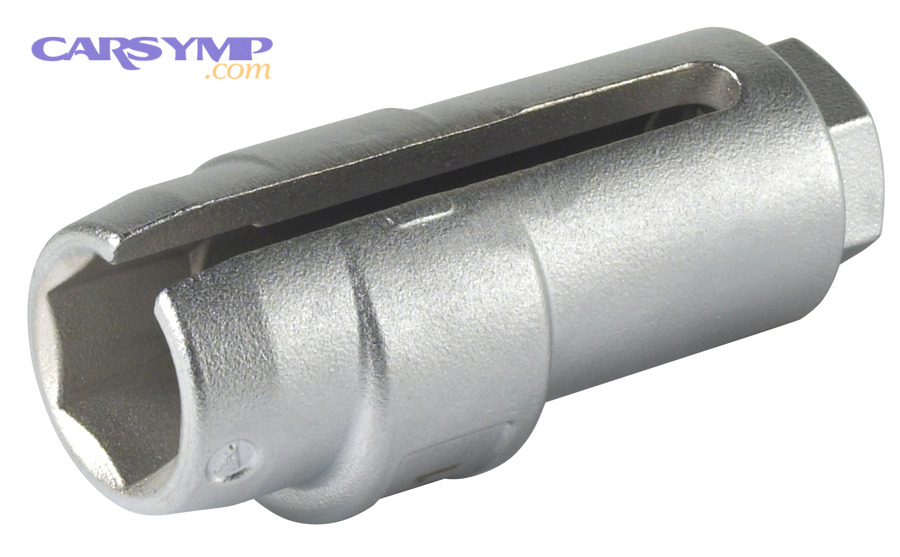
When oxygen sensor replacement is the right move, O2 sensor socket tools and tips can prevent stripped hexes and broken harnesses. Use a slotted O2 sensor socket (to clear the wire), apply penetrating oil on a warm (not glowing-hot) exhaust, and break torque smoothly. If the sensor is seized, short bursts of tightening/loosening can help crack rust bonds. Avoid twisting the harness—disconnect the connector first and free any clips so the wire doesn’t become a torsion spring.
If you’re doing oxygen sensor replacement on older vehicles, plan for heat and corrosion: wear gloves, protect eyes from falling rust, and consider anti-seize only if the sensor manufacturer allows it (many new sensors are pre-coated).
According to a study summarized by the United States Environmental Protection Agency (EPA) from emissions durability work on oxygen sensors, long-life sensor performance is important because deterioration can reduce emissions control effectiveness over time, reinforcing why proper diagnosis and timely repair matter.