


A valve cover gasket leak that drips onto the exhaust usually announces itself with a very specific pattern: oil residue high on the engine, heat-related smoke after a drive, and a smell that’s strongest near the hood or HVAC intake—often before you see puddles on the ground.
Because the leak sits above hot exhaust parts, the symptoms can come and go with temperature: you may notice it most in stop-and-go traffic, right after parking, or when the engine is fully warmed up.
Drivers also worry about safety and severity—whether it’s “just a seep,” whether it can damage wiring or sensors, and whether it can become a fire risk if oil reaches the hottest surfaces.
To move from suspicion to proof, you’ll need a short checklist: identify the symptom cluster, verify the leak’s origin, rule out look-alikes, then decide whether you can drive and what repair path makes the most sense. To introduce a new idea, the sections below walk that path in a diagnostic flow.
What are the most telling valve cover gasket leak onto exhaust symptoms?
They’re usually a combination of odor, intermittent smoke after heat soak, and visible oil “wetness” on the upper engine that tracks down toward the exhaust side.
To start, use this quick “symptom cluster” to decide if the leak is likely landing on the exhaust rather than dripping harmlessly to the ground.

Does the smell show up after driving, then fade at idle?
Yes—when oil reaches hot exhaust components, the odor often peaks right after a drive and during heat soak (the first 5–20 minutes after you park), then fades as surfaces cool.
For example, you may smell it most near the front of the car, near the wheel well, or through the cabin vents when the HVAC is set to “fresh air.” Next, confirm whether the odor coincides with wisps of smoke under the hood.
Is there light smoke from the engine bay, but not from the tailpipe?
Often yes: oil that burns off external hot surfaces tends to create thin, drifting smoke under the hood rather than sustained tailpipe smoke; this is why many drivers notice it when they stop at a light or pull into a garage.
More specifically, this symptom usually worsens after highway driving or climbing hills because exhaust heat increases. After that, look for the “trail” that oil leaves behind.
Do you see wet oil along the valve cover edge or down the exhaust side of the head?
Yes—fresh wetness near the valve cover perimeter, bolt grommets, or the rear corners (where oil can run down the back of the engine) is a classic indicator of a valve cover gasket leak.
To illustrate, oil can collect dirt into a sticky paste, creating a dark, grimy band that starts high and “fans out” lower as it travels. Next, check whether oil level is dropping faster than normal.
Is your engine oil level slowly dropping without a clear puddle?
It can be: when oil burns off on hot exhaust parts, you may lose oil without obvious driveway spots, especially if the leak is modest and the engine undertray catches drips.
According to this pattern, you’ll often see more residue on heat shields than on the ground. Theo nghiên cứu của NHTSA từ Vehicle Research and Test Center, vào 05/2009, nhiệt độ lớn nhất đo trên exhaust manifold trong một bài test chuẩn có thể đạt khoảng 550°C.
Why does oil on the exhaust create odor and visible smoke?
Because exhaust components operate at temperatures high enough to heat, thin, and vaporize oil, producing odorous fumes and smoke even from small drips.
To begin, it helps to understand what’s happening on the surface: oil doesn’t need to “flame” to make smoke—heat alone can volatilize it.

Hot surfaces turn liquid oil into vapor, then smoke
At idle and normal driving, exhaust pipe temperatures can commonly range from a few hundred to around 1,000°F depending on load; manifolds and nearby hot spots can be hotter in certain conditions.
As a result, oil that seeps onto a manifold or heat shield can “cook,” creating visible haze and a strong odor long before it ignites. Next, understand why it’s often worse after you shut the engine off.
Heat soak makes the symptom spike after parking
After shutdown, coolant stops circulating and under-hood airflow drops, so local temperatures around the exhaust can briefly rise—this can intensify fumes and smoke even if the leak rate hasn’t changed.
In other words, the symptom timing (right after parking) is itself diagnostic. Next, consider the health and comfort side: fumes can enter the cabin.
Cabin odor happens when fumes reach the HVAC intake
Many vehicles pull outside air from the cowl area at the base of the windshield; fumes rising from the engine bay can be drawn in, especially when stopped or moving slowly.
Therefore, if you notice odor strongest with “fresh air” selected, it supports an under-hood source. Theo nghiên cứu của NHTSA từ Vehicle Research and Test Center, vào 05/2009, các bài đo nhiệt trên manifold cũng được dùng để đánh giá nguy cơ cháy do fluid tiếp xúc bề mặt nóng trong khoang động cơ.
Where should you look to confirm the leak is truly from the valve cover gasket?
Start high, clean first, then trace gravity: the true source is usually the highest wet point, not the lowest oily area you can see.
To start, use a bright light and inspect the valve cover perimeter—especially the exhaust-side edge, rear corners, and around fasteners.
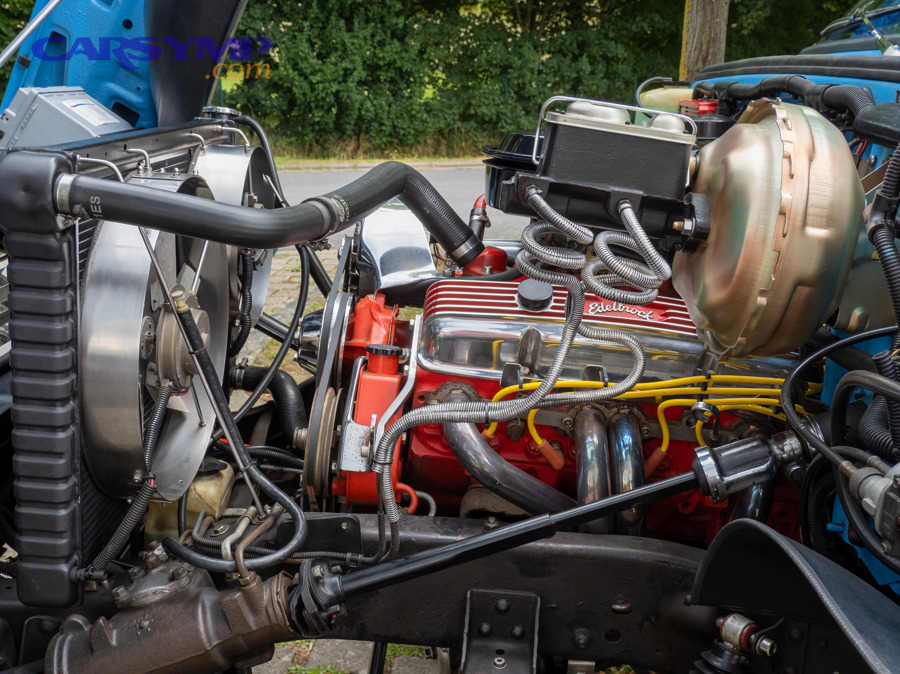
Check the valve cover perimeter seam and corners
The gasket sits between the valve cover and cylinder head; when it hardens or shrinks, oil often seeps at corners, half-moon plugs, or along the exhaust-side seam where heat is higher.
Next, look at bolt grommets (if equipped): they can leak even when the perimeter gasket looks okay.
Inspect bolt grommets, spark plug tube seals, and cap seals
Some designs use rubber grommets under bolts and separate tube seals for spark plug wells; failures can create oil in plug wells (misfires) and external seepage that runs to the exhaust side.
More specifically, oil in plug wells can mimic ignition problems first, then later produce smoke if the outer leak reaches hot parts. Next, rule out a “top-of-engine” spill that isn’t a gasket.
Rule out oil fill and service spills
Oil spilled during topping off can collect on intake runners, covers, or shields and burn off for a short period; if the smell steadily returns after cleaning, the issue is more likely an ongoing leak.
After that, verify whether the leak path aligns with the exhaust manifold location on your engine.
How can you verify the oil is landing on the exhaust and not somewhere else?
You can confirm it by finding fresh oil on heat shields/manifold areas and matching the drip path from the valve cover seam down to those hot zones.
To begin, inspect the exhaust side with a mirror or phone camera—many leaks hide behind covers.
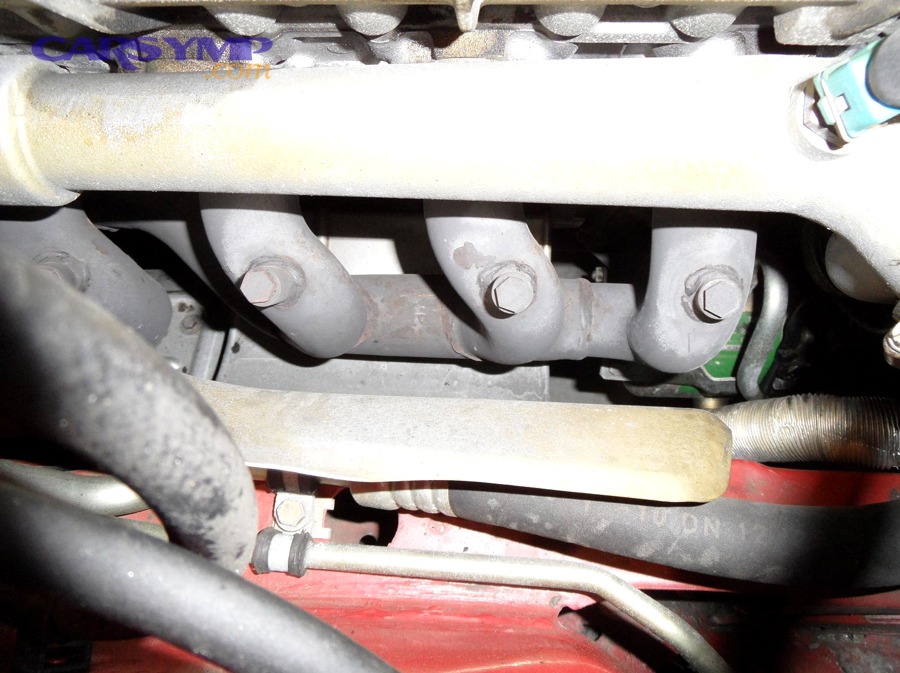
Look for fresh oil on a heat shield edge or manifold flange area
Fresh oil often appears glossy and wet, while older residue looks baked-on and dark; the presence of wetness near the hottest points strongly suggests active dripping onto the exhaust.
Next, check for “spray” patterns: some leaks mist under crankcase pressure rather than drip straight down.
Check for misting caused by crankcase pressure or airflow
If crankcase ventilation is restricted, pressure can push oil vapor out of weak seals; engine fan airflow can then spread it onto nearby hot surfaces, creating a wider burn-off area than a simple drip line.
Therefore, the pattern (localized drip vs broad mist) helps you decide whether you also need to address ventilation. Next, use a low-effort confirmation method: clean and re-check.
Clean, then re-check after a short drive
Degrease the suspected area, drive 10–20 minutes, then re-inspect: the first new wet spot that appears is usually near the source, and it will often reappear at the valve cover seam if the gasket is leaking.
To illustrate, this before/after approach prevents you from replacing the wrong seal based on old grime. Theo nghiên cứu của NHTSA từ Vehicle Research and Test Center, vào 05/2009, nhiệt độ bề mặt nóng trong khoang động cơ là biến số chính khi đánh giá nguy cơ “hot-surface ignition” của chất lỏng rò rỉ.
Can you keep driving if oil is reaching the exhaust manifold?
No, it’s not recommended—because it can worsen quickly, lower oil level, damage nearby components, and in some cases increase fire risk when oil contacts very hot surfaces.
To start, separate “short, necessary drive” from “normal daily driving,” and decide based on severity signs below.
When is it an immediate stop situation?
Stop and shut down if you see sustained smoke, visible dripping onto the manifold, flames, or if oil pressure warning appears—those indicate either a high leak rate or a dangerous contact point.
Next, consider cabin exposure: strong fumes can impair comfort and attention even if there’s no flame.
When is a careful, short drive sometimes acceptable?
If it’s a light seep with occasional odor, no visible drip, and oil level remains stable, a short trip to a repair shop may be reasonable—after verifying oil level and avoiding heavy load or long idling.
However, the risk is that heat and vibration can turn a seep into a drip, so “monitoring” must be frequent. Next, understand why fire risk is discussed even when oil’s flash point is high.
Why can hot-surface contact still be a concern?
Some safety literature and recall documents explicitly warn that oil leaking onto exhaust components can increase engine-compartment fire risk, especially if it contacts sufficiently hot surfaces or accumulates on insulation.
Therefore, even if ignition is uncommon, the consequence is high enough that prompt repair is the safer decision. Theo nghiên cứu của NHTSA từ Vehicle Research and Test Center, vào 05/2009, nhiệt độ manifold trong bài test chuẩn ghi nhận tới 550°C—một mức có thể làm nhiều chất lỏng rò rỉ dễ bắt cháy trên bề mặt nóng.
How do you differentiate a valve cover gasket leak from other similar problems?
Compare location, fluid type, and symptom timing: valve cover leaks start high and burn on hot external surfaces, while other failures show different fluids, different smoke locations, or different performance changes.
To begin, use a “compare-and-rule-out” approach instead of chasing one guess.
Valve cover gasket leak vs head gasket failure
A valve cover gasket leak is external (oil outside the engine), while a head gasket failure more often involves combustion/coolant interactions, overheating, coolant loss, or contamination patterns not limited to the valve cover seam.
In other words, if your main symptom is under-hood odor/smoke after driving and oil wetness high on the engine, the valve cover gasket remains a prime suspect. Next, separate it from an exhaust leak that “smells hot” but isn’t oily.
Valve cover gasket leak vs exhaust leak smell
Exhaust leaks can smell sharp or “gassy” and may tick on cold start, but they do not leave oily wetness; oil-on-exhaust symptoms typically include visible residue and smoke that carries a heavy, oily character.
However, both can intensify under load, so residue inspection is the tie-breaker. Next, rule out other oil sources above or near the exhaust.
Valve cover gasket leak vs oil filter housing, cam seals, or VVT solenoids
Oil filter housings and front cam seals can leak and run downward, sometimes reaching exhaust parts; the key is the highest fresh oil point—if it’s above the cover seam or at the front cover, the valve cover gasket may be innocent.
Therefore, cleaning and re-checking is essential before replacing parts. Theo nghiên cứu của NHTSA từ Vehicle Research and Test Center, vào 05/2009, đánh giá nhiệt môi trường khoang động cơ được dùng để mô phỏng tình huống “fluid leak onto hot components,” hỗ trợ việc phân biệt nguy cơ theo vị trí rò rỉ.
What safe at-home checks help you pinpoint the leak source quickly?
The most effective method is to clean suspected areas, drive briefly, and re-inspect with strong lighting—optionally using UV dye—to identify the first reappearing wet point.
To start, prioritize safety: hot exhaust parts can burn you, and cleaners can ignite if misused near heat.

Step 1: Make the area readable by cleaning
Use an engine-safe degreaser on a cool engine, rinse carefully, and let it dry; removing old grime prevents false trails and makes new seepage obvious.
Next, do a short, controlled drive to reproduce conditions that trigger the symptom.
Step 2: Recreate the symptom with a short drive, then inspect
Drive 10–20 minutes, park safely, and inspect with a flashlight: look first at the valve cover seam and rear corners, then follow any fresh wetness downward toward the exhaust.
To illustrate, the shortest time-to-wetness is often closest to the source. Next, use a dye method if the leak is slow.
Step 3: Use UV dye if the leak is intermittent or minimal
UV dye added to engine oil can reveal even a tiny seep under a UV light, helping you separate a valve cover gasket leak from a higher leak that simply runs over the same area.
However, always verify the path starts at the seam, not at an upper component. Theo nghiên cứu của NHTSA từ Vehicle Research and Test Center, vào 05/2009, các kịch bản thử nghiệm nhiệt khoang động cơ nhấn mạnh vai trò của điều kiện tải/leo dốc trong việc làm tăng nhiệt manifold—vì vậy hãy cố gắng tái tạo điều kiện thực tế khi kiểm tra.
What repairs actually stop a valve cover gasket leak (and what causes repeat leaks)?
Most fixes involve replacing the valve cover gasket and related seals, correcting crankcase ventilation issues, and reinstalling the cover with proper cleaning and torque—mistakes here are the main reason leaks return.
To begin, treat it as a system repair, not just a gasket swap.

Replace the gasket and any separate tube seals or bolt grommets
Many engines use multiple sealing elements (perimeter gasket, spark plug tube seals, bolt grommets); replacing only one piece can leave a secondary leak that still reaches the exhaust side.
Next, inspect the valve cover itself: some plastic covers warp or crack with age and heat.
Check for warped covers, cracked plastic, and damaged sealing surfaces
If the cover is distorted or the sealing lip is damaged, a new gasket may not seal reliably; in these cases, replacing the cover (or resurfacing on applicable designs) can be the durable solution.
However, even a perfect gasket fails if installed onto an oily surface. Next, focus on prep and torque.
Prep and torque are non-negotiable for leak-free results
Clean mating surfaces thoroughly, use RTV only where the manufacturer specifies (often corners/half-moons), and torque bolts in sequence to the correct specification—over-tightening can squeeze the gasket and create new leaks.
To illustrate, “tight feels right” is a common comeback cause. Theo nghiên cứu của NHTSA từ Vehicle Research and Test Center, vào 05/2009, các phân tích về nhiệt bề mặt và tính cháy của chất lỏng trong khoang động cơ cho thấy chỉ cần sai lệch nhỏ về vị trí rò rỉ (gần manifold hơn) có thể làm tăng rủi ro—vì vậy lắp đặt đúng để ngăn rò là cách giảm rủi ro ngay từ gốc.
Fix ventilation issues that push oil past seals
If crankcase ventilation is restricted, pressure can force oil through weak seals; addressing PCV/vent routing can reduce future seepage and prevent new gaskets from being overwhelmed.
Next, once repairs are complete, verify with a clean-and-recheck test drive before considering the job done.
What does repair cost typically look like for this kind of oil leak?
Costs depend on engine layout and access: some valve covers are easy, while others require removing intake components, wiring, or fuel-system parts—so labor can dominate the bill.
To start, use a baseline estimate, then adjust for complexity and additional seals you choose to replace “while you’re in there.”
Baseline cost range for valve cover gasket replacement
RepairPal’s estimator lists an average valve cover gasket replacement cost range (in the U.S.) of roughly $335–$458 for many vehicles, with labor commonly the larger share; your location and vehicle can shift this meaningfully.
Next, consider how your specific “leak onto exhaust” scenario changes the scope: cleaning and inspection often matter more.
Why leaks onto exhaust can add cleaning and diagnosis time
When oil burns on hot surfaces, technicians often spend extra time cleaning residue to verify the leak is truly resolved and to reduce lingering odor; this can add modest labor even after the gasket is replaced.
To introduce a new idea, the table below offers a practical planning view, including a “Repair cost estimate for common oil leaks” mindset—so you can compare likely totals by scenario.
This table contains common cost drivers and planning ranges so you can compare a simple gasket swap vs a higher-access job and avoid under-budgeting.
| Scenario | Typical Work Included | Cost Drivers | Planning Range (USD) |
|---|---|---|---|
| Easy-access inline engine | Gasket + basic cleaning | Low labor, minimal disassembly | $200–$500 |
| V6/V8 with tight access | Gasket + grommets + intake/ancillary removal | Higher labor hours, more seals | $400–$900+ |
| Warped/cracked cover | New cover + gasket set | Parts cost rises, labor similar | $500–$1,200+ |
| Ventilation-related seepage | Gasket + PCV/vent service | Extra parts/diagnosis | $300–$800+ |
Parts vs labor: why quotes vary so much
Some sources note gasket parts may be relatively inexpensive while labor can range widely depending on the vehicle and access, which is why two cars can have very different totals for the same “valve cover gasket” line item.
However, don’t optimize only for price: a rushed job that leaves residue and misses a secondary leak can bring the smell back. Theo nghiên cứu của NHTSA từ Vehicle Research and Test Center, vào 05/2009, dữ liệu nhiệt trên exhaust manifold được dùng để đánh giá rủi ro khi chất lỏng rò rỉ tiếp xúc bề mặt nóng—vì vậy sửa triệt để vị trí rò cũng là một “giá trị an toàn,” không chỉ là chi phí.
How do you stop the smell from lingering after the leak is fixed?
You must remove baked-on oil residue from hot surfaces and shields; otherwise, remaining film can continue to smoke lightly for several heat cycles even after the gasket is replaced.
To begin, treat it as a two-part finish: fix the source, then reset the environment.
Clean the burn-off areas safely
With the engine cool, carefully clean heat shields and nearby metal surfaces using appropriate degreasers; avoid soaking electrical connectors and avoid spraying flammable chemicals onto hot parts.
Next, expect a short “burn-off tail” even after cleaning if residue remains in seams.
Plan for a few heat cycles to fully clear residue
Even after cleaning, tiny amounts of oil trapped in folds or insulation can vaporize over a few drives; the key is that the smell should steadily diminish, not return at the same intensity.
To introduce a new idea, if the odor persists unchanged, re-check for a second leak source above the exhaust.
Use “burning oil smell causes and locations” logic to re-check
If the odor remains strong, map it by location: rear-of-engine odors can point to rear valve cover corners; front-of-engine odors can point to timing cover/cam seal areas; side-specific odors often track to the exhaust-side seam. This “Burning oil smell causes and locations” approach helps prevent repeating the wrong repair.
Theo nghiên cứu của NHTSA từ Vehicle Research and Test Center, vào 05/2009, nhiệt độ manifold thay đổi theo bài test leo dốc và tải, nên việc tái kiểm tra sau những chuyến đi “nặng” giúp xác nhận rò rỉ đã hết trong điều kiện xấu nhất.
How can you prevent valve cover oil leaks from coming back?
Prevention is mostly about controlling heat, pressure, and installation quality: keep crankcase ventilation healthy, avoid overfilling, and address minor seepage before it reaches hot exhaust parts.
To begin, focus on the two root drivers that accelerate seepage: aged rubber and crankcase pressure.
Maintain crankcase ventilation (PCV/vent paths)
Healthy ventilation reduces pressure spikes that push oil past seals; if PCV components clog or hoses collapse, even newer gaskets can start seeping sooner.
Next, reduce “oil finding its way out” by keeping oil level correct and using proper service practices.
Avoid overfilling and messy fill habits
Overfilled oil can increase aeration and carry more oil vapor through ventilation pathways; spills on covers and shields also create temporary burn-off symptoms that confuse diagnosis.
To introduce a new idea, periodic visual checks can catch seepage before it reaches the exhaust.
Do quick seam inspections during routine maintenance
A flashlight inspection of valve cover seams and corners during oil changes can reveal early wetness; fixing it early reduces the chance it migrates down to hot exhaust components.
Theo nghiên cứu của NHTSA từ Vehicle Research and Test Center, vào 05/2009, các đánh giá nhiệt và tính cháy của chất lỏng trong khoang động cơ nhấn mạnh rằng “ngăn rò rỉ” là biện pháp giảm rủi ro hiệu quả nhất khi có bề mặt nóng như manifold.
Contextual Border: The main diagnosis and decision flow above focuses on the valve cover gasket leak itself. Next, the supplementary section covers related systems and look-alike leaks that can create the same under-hood smoke/odor pattern.
Supplementary: what else can mimic these under-hood symptoms?
Several other leaks and faults can create similar odor and smoke behavior, especially when fluid contacts hot exhaust parts; confirming the highest wet point is how you separate them.
Crankcase ventilation problems that push oil outward
Restricted ventilation can raise crankcase pressure, encouraging oil seepage at multiple seals (not only the valve cover) and creating misting that lands on hot surfaces; addressing ventilation can be a necessary companion repair.
In particular, if you see oil film spread widely rather than a single drip line, ventilation should be on your shortlist.
Turbo feed/return or other pressurized oil lines near the exhaust
On some engines, oil feed lines or fittings run close to the exhaust manifold; recall and service documents have warned that oil leaking onto the exhaust manifold can increase engine-compartment fire risk, highlighting how important exact source identification is.
Therefore, if the wettest point is not the valve cover seam, inspect nearby oil lines, fittings, and solenoid housings before committing to a gasket job.
Non-oil sources: coolant, plastic, or electrical insulation heating
Not all under-hood odors are oil: coolant leaks can create a sweet smell, and overheated plastic or wiring can smell sharp or acrid; these may worsen with heat soak as well, so visual residue and fluid identification matter.
As a practical tip, identify the fluid (oil feel/color vs coolant feel/color) and look for staining patterns on shields.
FAQ: quick answers drivers ask most often
Q: Why do I only notice it at stoplights or right after parking? A: Heat soak and reduced airflow can intensify burn-off on hot surfaces, so symptoms peak when you stop moving.
Q: I see smoke under the hood—does that automatically mean internal engine damage? A: Not necessarily; external oil contacting hot exhaust parts can produce under-hood smoke without tailpipe smoke.
Q: How do I describe this issue clearly to a shop? A: Say you suspect a valve cover gasket leak on the exhaust side, note when the odor/smoke appears (after driving, heat soak), and mention any visible wetness you found at the highest point.
Q: Is there a simple video walk-through to understand the inspection points? A: Yes—this visual guide helps you recognize typical leak locations and what “fresh wetness” looks like before repair.
For completeness, if you’re specifically dealing with persistent odor, remember to document where it’s strongest and include the phrase “burning oil smell” in your notes, then pair it with a location map—this speeds up diagnosis and helps confirm whether the leak is truly resolved after repair.
Finally, if you want a structured way to communicate budget expectations, refer back to your own “Smoke from engine bay diagnosis” notes (timing, conditions, visible residue) alongside your preferred “Repair cost estimate for common oil leaks” planning range so the shop can align inspection depth with your decision threshold.