Diagnose Burning Oil Smell in Cars: Causes vs Exhaust Odors
A burning oil smell usually means engine oil is reaching a hot surface—most often the exhaust manifold, turbo housing, catalytic converter, or heat shields—so it “cooks” and produces a sharp, acrid odor. The key is to treat it as a clue about location and urgency, not just an annoying scent.
In many cases, the smell appears only in certain conditions (after a highway run, when idling at a stoplight, or right after shutdown). Those patterns help narrow the source quickly, even before you see a drip.
Because the same cabin odor can also come from other fluids or outside sources, the fastest wins come from combining smell characteristics, heat timing, and a targeted visual check—rather than replacing parts blindly.
Tiếp theo, we’ll break the symptom into practical “where and why” buckets, then turn that into a step-by-step inspection that identifies the most common leak points and the safest next move.
What does a burning oil smell usually mean, and where can it originate?
A burning oil smell most often means oil vapor or residue is being heated past its smoke point on engine or exhaust components, creating an acrid odor that can drift into the cabin through vents and gaps. Next, mapping likely locations makes diagnosis faster.
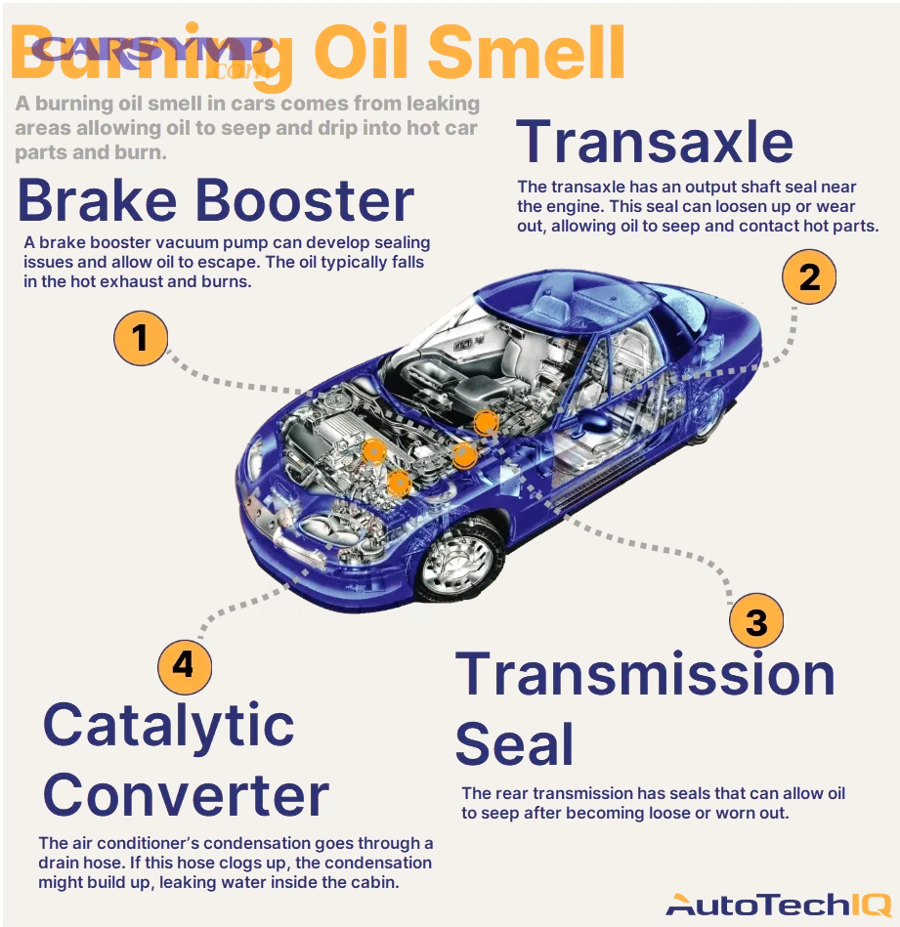
Think of this symptom as a “heat plus oil” event. Oil can reach hot parts in three main ways: a fresh leak that drips downward, oil mist that spreads from crankcase ventilation issues, or old residue that re-heats after prior service. To understand what you’re smelling, start by identifying the oil’s pathway and the surface it’s burning on.
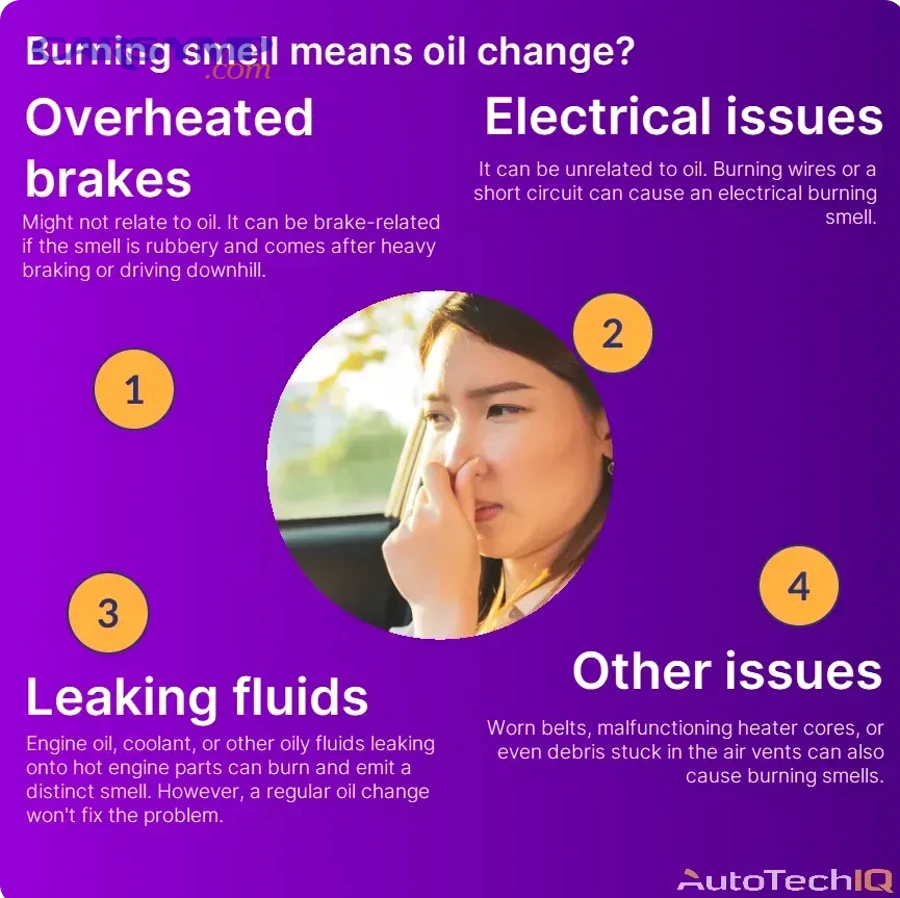
Smell character matters: burning oil is typically sharp, heavy, and lingering, sometimes with a “blue haze” when it’s severe. It’s different from the sweet smell of coolant, the sulfur/rotten-egg smell associated with exhaust/catalyst issues, or the paper-like odor of electrical insulation. For a quick differentiator, the Oil leak vs coolant leak smell comparison often comes down to sweetness (coolant) versus acrid, greasy smoke (oil), plus whether you see oily film versus colored crusty residue.
Common origin zones (by heat and airflow):
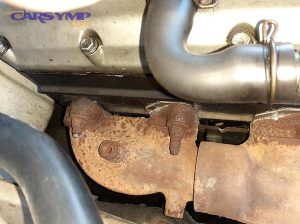
- Top of engine: oil escapes near the valve cover or timing area, then runs onto the exhaust manifold or down the back of the engine.
- Front/side of engine: oil filter housing, oil cooler seals, or pressure switches leak and spread via the serpentine belt airflow.
- Turbo area: oil feed/return line seepage can hit the turbine housing or downpipe.
- Underside: oil pan gasket or drain plug leaks drip onto exhaust sections or splash onto shields while driving.
To keep your diagnosis consistent, treat this as Burning oil smell causes and locations: identify where oil is escaping, where it lands, and which hot surface is close enough to burn it.
How do heat cycles change what you smell?
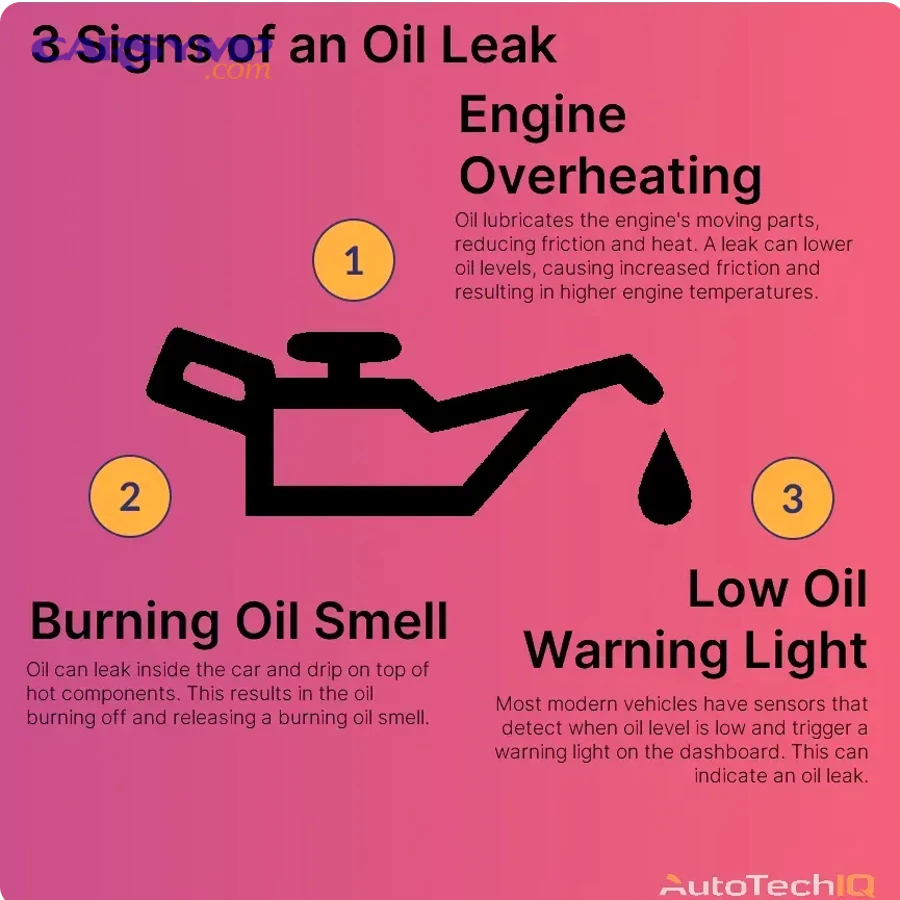
Oil doesn’t always smell right away because it needs a hot surface and time to bake. For example, a small seep can be nearly odorless on a cold start, then become obvious after 10–20 minutes of driving when the exhaust is fully hot. Next, use that timing to choose when to inspect.
If the smell is strongest right after you park, it often indicates oil landing on an exhaust component that continues radiating heat after shutdown. If it’s strongest while moving, airflow may be carrying vapor into the cowl area near the cabin intake.
Why can the cabin smell stronger than the leak looks?
A tiny leak can smell huge because oil vapor disperses easily and gets pulled into the HVAC intake at the base of the windshield. Next, focus less on “how big” it looks and more on whether it’s contacting the exhaust or a shield.
Even a few drops on a manifold heat shield can create a strong odor for miles, especially when the heater fan is on or the vehicle is stopped with heat rising into the cowl.
Is a burning oil smell dangerous, and should you keep driving?
It can be dangerous to keep driving with a burning oil smell because oil can ignite on very hot surfaces, the engine can lose lubrication if the leak worsens, and smoke can reduce visibility or distract you. Next, decide based on severity and warning signs.
Many drivers ask: Can you drive with burning oil smell? The honest answer is “sometimes, briefly—but only if you pass a safety check.” You’re balancing three risks:
- Fire risk: oil on exhaust manifolds, turbo housings, or catalytic converters can smoke heavily and, in worst cases, ignite.
- Engine damage risk: oil loss can drop oil pressure and starve bearings.
- Secondary damage: oil can degrade rubber hoses, wiring insulation, belts, and mounts.
Stop driving immediately if any of these are true: you see active smoke from the hood, oil pressure warning light comes on, you smell burning strongly inside the cabin with the HVAC off, or you notice misfires/rough running. Tiếp theo, if none of those appear, you can do a controlled, short drive to a safe inspection location.
Quick safety triage at the roadside
Start with a 60-second check: pull over, turn off the engine, and look for smoke escaping from the hood gap. Next, check the oil level once the engine sits for a few minutes.
- If the dipstick shows low oil, top up with the correct viscosity (temporary measure) and avoid hard driving.
- If oil is dripping onto the ground rapidly, tow is safer than driving.
Also, avoid opening the radiator cap or touching hot components—burns happen fast around exhaust parts.
When the smell is mild and intermittent
A mild odor that appears only after long drives can come from a slow seep or residue left from prior work. Next, schedule a thorough inspection soon, because slow leaks often grow when seals harden or crankcase pressure increases.
Intermittent smells can also show up when the wind direction or fan settings pull vapors into the cabin—so repeat your checks under the same conditions that trigger the odor.
How can you find the source quickly with a simple inspection?
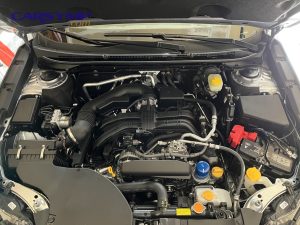
You can find the source quickly by checking three zones—top of engine, back of engine, and underneath—while the engine is warm (not scorching), using a bright light to trace wet oil to its highest point. Next, confirm whether oil is contacting the exhaust.
This is where process beats guessing. Use a consistent routine so you don’t miss the “tell.” If you’re unsure where to begin, treat the checklist as How to inspect for oil dripping on exhaust: your goal is to identify oil above the exhaust, oil on shields, and fresh trails that point upward to the leak origin.
Step-by-step inspection routine (10–15 minutes)
To start, park on level ground, set the brake, and let the engine cool for 10–20 minutes so surfaces are warm but safer. Next, follow these steps in order:
- Open the hood and sniff at zones: near the front, then near the firewall, then near the wheel wells. Strongest zone often matches leak location.
- Look down the back of the engine: use a flashlight and mirror. Oil at the rear often drips onto exhaust components and smells intense at stops.
- Check the valve cover perimeter: look for wetness at corners and along the gasket rail; also inspect spark plug wells if accessible.
- Inspect oil filter area: look for fresh oil around the filter, housing, and any cooler lines.
- Scan heat shields and manifold area: look for shiny wet spots, dark baked stains, or smoke wisps.
- Check underneath: look for drips on the splash shield, oil pan rim, and any oil on the exhaust pipe or catalytic converter.
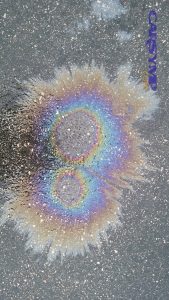
Tip: If everything looks dirty, wipe a suspect area with a white paper towel. Fresh engine oil will show a slippery amber/brown smear; old baked oil can look tarry and crusted.
What patterns confirm “oil on hot exhaust”?
Oil on a hot surface often leaves dark, baked-on streaks and can produce faint smoke that rises upward (especially right after parking). Next, verify by checking the underside of the hood and nearby hoses for oily film.
If you see wet oil above a heat shield and a dry, baked stain below it, gravity and heat are telling you the direction of travel. That “trail logic” is one of the fastest ways to locate the true source.
Why does the smell get worse at stoplights, hills, or after shutdown?
The smell often worsens at stoplights, hills, or after shutdown because heat builds with less airflow, oil residue bakes harder, and vapors rise into the cowl area where the cabin air intake sits. Next, use condition-based clues to narrow causes.
Drivers frequently report: “I only smell it when I’m stopped,” or “It hits me right after I park.” That pattern usually points to heat soak and vapor pathways rather than a huge leak. When the car is moving, airflow can dilute vapors or blow them away from the cabin intake; when stopped, vapors rise and linger.
Heat soak and vapor rise
After shutdown, exhaust parts remain extremely hot for several minutes, and oil that landed on them can continue smoking. Next, check for fresh oil trails near the highest hot point (often manifold or turbo area).
This is why a quick post-drive inspection can reveal wisps of smoke you’ll never see cold. If you do this, keep hands away from hot parts and never spray flammables near the exhaust.
Load-related smells on hills and acceleration
Under load, engine temperatures and crankcase pressure can increase, making small leaks more active and pushing oil mist through weak seals. Next, consider whether the odor appears during hard acceleration versus steady cruising.
On turbocharged engines, boost can influence crankcase ventilation dynamics, and oil mist can migrate toward intake tubing, then vent out and burn on hot components nearby.
Which leak points most commonly create a burning oil smell?
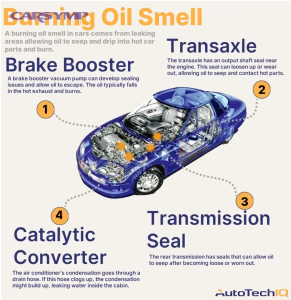
The most common leak points are those positioned above or near exhaust heat: valve cover gaskets, cam/shaft seals, oil filter housing seals, oil cooler lines, turbo feed/return connections, and oil pan edges where oil can splash onto hot sections. Next, match symptoms to location.

To keep your troubleshooting organized, focus on leaks that have a “direct line” to the exhaust. The phrase Valve cover gasket leak onto exhaust symptoms is a classic example because a small seep from the top of the engine can drip onto a manifold and smell dramatic, especially at idle.
Dưới đây is a practical mapping guide. This table helps you connect what you see and smell to likely sources and the typical urgency.
This table lists common oil leak sources, where the oil travels, typical smell timing, and what to check first.
| Likely leak source | Where oil travels | When smell is strongest | Quick visual clue | Urgency |
|---|---|---|---|---|
| Valve cover gasket/corners | Down onto manifold/heat shield | Stoplights, after shutdown | Wet perimeter; baked stain below | Medium to high |
| Oil filter/housing or cooler seals | Down front/side; belt airflow spreads | After highway driving | Fresh oil near filter area | Medium |
| Cam/crank seal seep | Runs behind covers; may reach exhaust | Varies; often after long drives | Oil behind pulley/cover edges | Medium |
| Turbo oil feed/return connections | Onto turbine housing/downpipe | Load, hills, hot shutdown | Wet fittings near turbo | High |
| Oil pan gasket/drain plug | Drips to undertray; can hit exhaust | After longer drives | Drips on splash shield | Low to medium |
How to distinguish “top leak” vs “bottom leak” quickly
Top leaks usually leave oil higher up on the engine and create stronger smells because they can reach the manifold or shield directly. Next, if the underside is wet but the top is dry, suspect oil pan, drain plug, or a leak carried by airflow.
A simple rule: find the highest wet point. Oil always travels down, but airflow can smear it rearward—so focus on the earliest wetness, not the dirtiest spot.
What if you see no leak but smell persists?
If you smell burning oil but see no wet spots, oil may be seeping and burning off as fast as it appears, or residue may be reheating. Next, clean suspect areas and recheck after a drive to reveal fresh trails.
Degreasing the outside of the engine (safely, with engine off and cool) can make the next inspection far more accurate because new oil stands out immediately.
Why can a burning oil smell appear right after an oil change?
A burning oil smell after an oil change usually happens because spilled oil landed on the exhaust or heat shield, the oil filter or drain plug is slightly leaking, or the wrong seal/washer was reused. Next, verify the simplest causes first.

This situation is common enough that it’s worth treating as Burning smell after oil change diagnosis. Most of the time, it’s not “mysterious”—it’s a small mistake or residue that needs cleanup and confirmation.
Spill-and-bake: the most common scenario
Oil spilled while filling or removing the filter can drip onto a hot shield and smell for several trips until it burns off. Next, inspect the areas below the oil fill cap, around the filter, and on the exhaust shielding for fresh residue.
If the smell fades over 1–3 drives and you see no new wet oil, it was likely spill residue. Still, confirm oil level and watch for drips.
Filter seal, double-gasket, and drain plug checks
A loose filter, a stuck old gasket (double-gasket), or a drain plug washer that didn’t seal can cause ongoing leaks. Next, look for fresh oil around the filter base and plug area, and check for drips after parking.
If you find oil actively forming, stop driving long distances and correct the seal issue immediately—oil loss can accelerate quickly at highway speeds.
What does smoke from the engine bay mean, and what should you check first?
Smoke from the engine bay often indicates oil or another fluid is contacting a hot surface, and the highest priority is confirming whether it’s oil on the exhaust, an electrical issue, or a coolant/steam event. Next, use smell plus color to triage.

When you see smoke, don’t guess—triage. The phrase Smoke from engine bay diagnosis should always begin with safety: pull over, shut off, and observe from a safe distance. If smoke is heavy or you see flames, call emergency services.
Smoke color and smell cues
Blue-gray smoke with a greasy odor often points to oil burning, while white steam with a sweet smell suggests coolant. Next, look for the highest “source point” where smoke originates rather than the area where it exits the hood.
Electrical smoke often smells sharp and plasticky and may be accompanied by flickering lights or abnormal electrical behavior. If you suspect electrical burning, do not keep driving—wiring damage can escalate rapidly.
Immediate checks that prevent bigger damage
Check oil level, look for active dripping near the manifold/turbo area, and inspect for oil on belts that could fling it onto hot parts. Next, if you see oil pooled near the exhaust, towing is the safer choice.
Also confirm the engine isn’t overheating; overheating can intensify odors and cause unrelated failures that complicate your diagnosis.
How do you fix the root cause and prevent the smell from returning?
You fix the root cause by stopping oil from escaping, cleaning burned residue from hot surfaces, and addressing any pressure or ventilation issue that’s pushing oil outward. Next, choose repairs based on leak location and severity.

At this stage, you’re moving from detection to action. A proper oil leak repair is not only replacing a gasket—it’s also ensuring mating surfaces are clean, bolts are torqued evenly, and the engine isn’t building abnormal crankcase pressure that will cause repeat failures.
Repair strategy by leak type
For gasket leaks (valve cover, oil filter housing), the best results come from careful surface prep and correct torque patterns. Next, replace any hardened grommets or sealing washers that are part of the assembly, not just the “main” gasket.
- Valve cover area: clean oil from the manifold/heat shield after repair so old residue doesn’t keep smoking.
- Filter/housing area: confirm the correct filter and gasket seating; check for cracks in plastic housings where applicable.
- Turbo area: inspect feed/return lines and banjo bolt washers; small seepage can create major odor and smoke.
Address ventilation and pressure contributors
Sometimes the leak is encouraged by excess crankcase pressure, so sealing alone isn’t enough. Next, evaluate PCV system problems that cause oil odor, such as stuck valves, clogged passages, or torn diaphragms that increase oil mist and push oil past seals.
Signs of ventilation issues can include oil film in intake tubes, whistling noises, rough idle (in some designs), or recurring seepage soon after gasket replacement.
Clean-up: the overlooked step that stops “phantom smells”
Even after the leak is fixed, residue on shields and exhaust parts can smoke for days. Next, clean affected areas safely with the engine cool, using appropriate degreaser and rinse methods that avoid sensitive electrical connectors.
After cleaning, recheck after a short drive; if smell persists but no fresh oil appears, you’re likely burning off leftover residue.
Cost expectations and planning
Because costs vary by vehicle layout and labor access, it helps to budget with ranges rather than single numbers. Next, use a Repair cost estimate for common oil leaks mindset: simple seals can be modest, while labor-intensive access (rear seals, turbo components, crowded engine bays) can raise totals significantly.
When comparing quotes, ask what’s included: parts, labor hours, cleaning, recheck, and whether they’re addressing contributing issues like ventilation restrictions or oil overfill.
Finally, long-term reliability comes from Preventing future oil smell issues: correct oil level, timely oil changes, replacing brittle hoses, fixing small seeps early, and rechecking after any service that could spill oil onto hot surfaces.
Contextual Border: The main diagnosis is complete. Next, the section below answers quick, high-signal questions that help you confirm edge cases and avoid repeat odors.
FAQ: burning oil smell, look-alikes, and quick confirmations
How can I confirm it’s oil and not another fluid?
Start with the odor profile and residue: oil leaves a slick film and dark stains, while coolant often leaves a colored crust and smells sweet when hot. Next, revisit the Oil leak vs coolant leak smell comparison by checking for oily wetness versus dried coolant traces near hoses and the radiator area.
If you’re uncertain, place clean cardboard under the engine overnight and compare spots: oil tends to feel slippery; coolant is watery and may have color depending on type.
What’s the fastest way to verify oil is hitting the exhaust?
Inspect for fresh wet oil above heat shields and baked stains below, then look for light smoke after a hot shutdown. Next, follow How to inspect for oil dripping on exhaust by tracing the highest wet point and checking the nearest hot component directly underneath it.
A small inspection mirror helps you see behind the engine where many “smell-only” leaks hide.
Why does the smell come and go even if the leak is real?
It can come and go because airflow changes with speed, the HVAC intake can pull vapors intermittently, and the leak may only activate under higher crankcase pressure or temperature. Next, document exactly when it happens (idle, hills, highway, after shutdown) and inspect under those same conditions.
Repeating the inspection after cleaning suspect areas is often the difference between guessing and confirming.
What should I do today if I can’t repair it immediately?
Check oil level, avoid hard driving, and keep trips short while monitoring for worsening smoke or warning lights. Next, if you’re asking Can you drive with burning oil smell, use a conservative rule: if smoke is visible, oil is dripping actively, or the smell is strong inside the cabin, arrange a tow or immediate repair.
Carrying the correct oil for top-ups is a temporary safety measure—not a substitute for fixing the leak source.