


Ball joint failure symptoms usually show up as a mix of noise, looseness, vibration, and uneven tire wear—because a worn ball joint can’t hold the steering knuckle stable while your suspension moves through bumps and turns.
To reduce risk and repair costs, you’ll want to recognize bad ball joint signs early, then confirm them with a simple inspection that matches your suspension type (loaded vs. unloaded joints).
You’ll also learn how the symptoms differ from other front-end issues (tie rods, wheel bearings, control arm bushings), so you can describe the problem clearly when booking service and avoid replacing the wrong parts.
Giới thiệu ý mới: Below is a symptom-by-symptom guide that connects what you hear and feel to what’s happening at the joint—so your next step is obvious and safe.
Entities you’ll see referenced: ball joint, steering knuckle, control arm, suspension travel, alignment angles, tire wear patterns, grease boot, radial/axial play.
What is a ball joint, and why does failure change steering feel so fast?
A ball joint is a swiveling suspension pivot that lets the steering knuckle move while supporting vehicle load; when it wears, the knuckle can shift under force, creating looseness, noise, and unstable alignment. Next, you’ll see how that “tiny gap” becomes big symptoms.
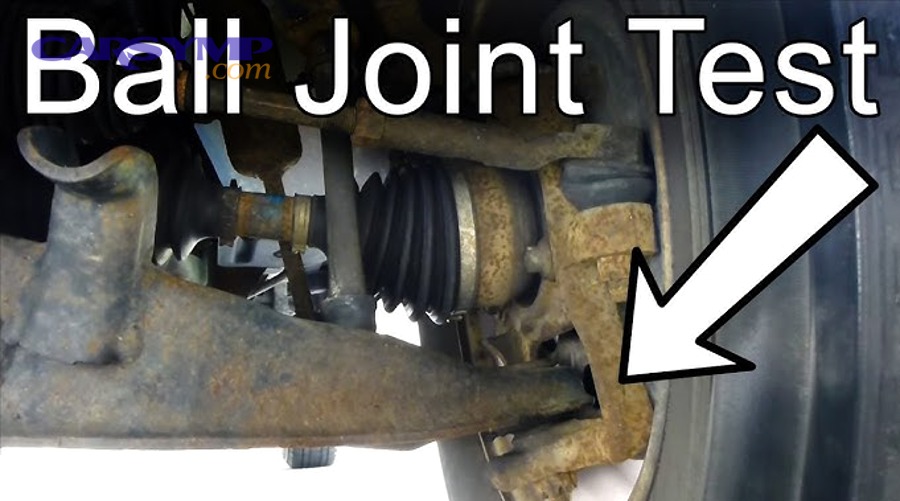
Where the ball joint sits in the front suspension (and why load matters)
Most vehicles use an upper and/or lower ball joint between the control arm and steering knuckle; some joints are “loaded” (carry spring/vehicle weight) while others are “follower” joints that mainly guide motion. To connect this to symptoms, focus on when forces peak: braking, turning, and bump impacts.
Cụ thể hơn: A loaded joint can feel tight at rest but clunk under suspension compression; an unloaded joint may show more obvious looseness during lift-and-check tests because the knuckle is easier to move by hand.
How wear develops: boot damage, grease loss, and metal-to-metal play
Most premature wear starts when the rubber boot tears, grease leaks out, and water/grit enter the socket—accelerating abrasion until the stud no longer fits tightly. To understand the next sections, remember this chain: boot damage → contamination → increasing clearance → shifting knuckle.
As the clearance grows, the wheel can “steer itself” slightly when you hit bumps, and that’s the root of wandering, vibration, and abnormal tire wear.
What are the earliest ball joint failure symptoms you can notice while driving?
The earliest ball joint failure symptoms are usually a faint clunk over bumps, a subtle steering looseness, or a small change in straight-line stability—because the joint starts moving before it should. Next, you’ll learn how to spot these early bad ball joint signs before they become dangerous.
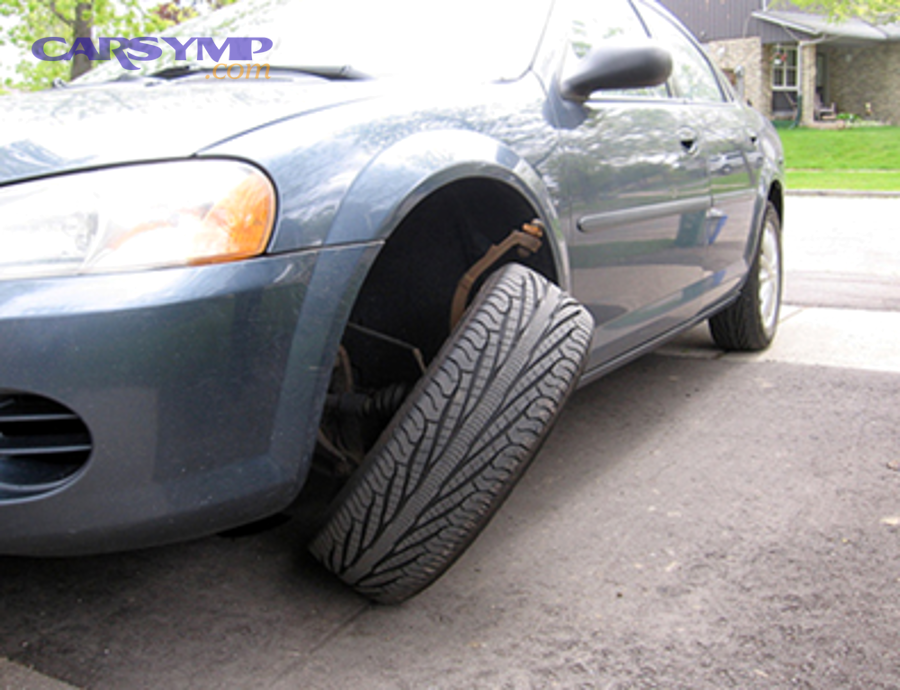
Intermittent clunking over small bumps (the “first whisper” symptom)
Early on, the sound is often intermittent: you’ll hear it when one corner loads quickly—like a driveway lip, pothole edge, or speed bump at an angle. After that, pay attention to repetition: as wear progresses, the clunk becomes louder and more frequent.
Tiếp theo: Once you can reproduce the noise, you can narrow down whether it’s ball joint play or another component by matching the sound to suspension movement and steering input.
Steering that feels “light,” delayed, or slightly vague around center
A worn joint can create a tiny delay between steering wheel input and tire response, especially at low speeds in parking lots or when making small corrections on the highway. To make this practical, compare how the wheel feels in a steady straight line versus during gentle lane changes.
Để bắt đầu: If your vehicle needs constant micro-corrections to stay centered, treat it as a handling symptom worth inspecting immediately—especially combined with any clunking.
Small alignment drift that seems to come and go
As the stud shifts in the socket, your toe/camber can vary slightly under load, so the car may track straight on smooth roads but feel “off” on rough pavement. Hơn nữa: this intermittent nature is a clue that a moving joint (not just a fixed misalignment) may be involved.
Which noises most strongly indicate a bad ball joint (and when do they happen)?
Yes—clunking or knocking from one corner over bumps or during turns is one of the strongest ball-joint-related noise patterns, because the joint shifts when suspension load changes abruptly. Next, you’ll map specific noise timing to specific conditions to reduce guesswork.
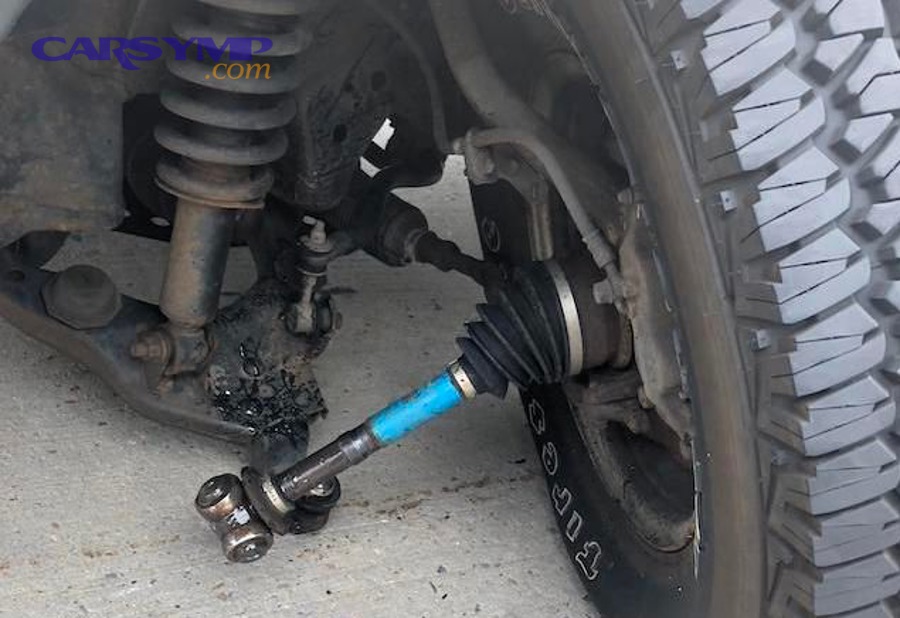
Clunking over bumps: suspension compression and rebound
When you hit a bump, the control arm moves up and the knuckle experiences a rapid load change; if the ball joint has play, it can “snap” into a new position, creating a clunk. Cụ thể: diagonal bumps (one wheel at a time) tend to highlight corner-specific faults more than straight-on bumps.
Đặc biệt: If the clunk is louder with passengers/cargo (more load), that can further point toward a joint that’s sensitive to load changes.
Knock during turning or braking: force vectors that pry the joint
During turns, lateral forces push the tire and knuckle sideways; during braking, forces pull and twist suspension links. If the joint is loose, these forces can pry the stud within the socket, creating a knock. Tiếp theo: Use a safe, empty parking lot to test at low speed—turn the wheel left/right slowly and listen for a consistent knock.
Squeaking: dry movement or contaminated boot (less specific, still relevant)
Squeaks can occur when the joint’s lubrication is compromised, but squeaking is less exclusive to ball joints because bushings and sway bar links can squeak too. Tuy nhiên: if squeaking is paired with looseness and tire wear, it becomes more meaningful and should be inspected with the wheel unloaded/loaded as recommended for your suspension design.
Can a failing ball joint cause steering wander, vibration, or pulling?
Yes—a failing ball joint can cause wander, vibration, or pulling because the wheel alignment angles can shift under load, making the tire point slightly differently depending on bumps, braking, and turns. Next, you’ll learn how to separate ball joint effects from tire balance and wheel bearing issues.
Wander: constant corrections to stay in lane
Wander feels like the car won’t “lock in” on center; you’re always guiding it back. Cụ thể: a worn joint lets the knuckle move a tiny amount, which changes toe moment-to-moment—so the car reacts to road crown and grooves more strongly than before.
Hãy cùng khám phá: If the wander worsens over bumps or during light braking, that’s a stronger suspension-play signal than a tire-only issue.
Vibration: why it may appear at certain speeds or road textures
Ball joint play can transmit vibration by allowing the wheel to oscillate slightly when it hits small repetitive bumps; this can feel like a shimmy in the steering wheel. In contrast, tire imbalance tends to be speed-specific and smoother-road reproducible.
Trong khi đó: If vibration changes dramatically when you tap the brakes lightly (without hard braking), that suggests front-end looseness rather than pure imbalance.
Pulling: when a “moving alignment” mimics brake or tire problems
Pulling can come from many causes, but ball joint looseness may create a pull that’s inconsistent—worse on rough roads or during braking transitions. Ngoài ra: if your pull direction changes after rotating tires, you should still inspect joints, but also consider tire conicity as a separate factor.
How does ball joint wear create uneven tire wear and alignment drift?
Ball joint wear creates uneven tire wear by letting camber and toe vary while driving, so the tire scrubs more on one edge instead of rolling evenly. Next, you’ll connect specific wear patterns to what the joint is doing under load and why delaying repair often multiplies costs.
Inside or outside edge wear: camber change under load
If the knuckle tilts inward/outward because the joint is no longer holding position, the tire leans and overloads one edge. Cụ thể hơn: you might see feathering or a sharper wear line on one shoulder—especially if you do lots of turns, braking, or rough-road driving.
Tiếp theo: Edge wear often appears together with a steering feel change because both come from the same root—geometry shifting while you drive.
Feathering and “sawtooth” tread: toe variation while rolling
Toe issues often cause feathered tread blocks: run your hand across the tire and feel for a rough direction and a smooth direction. If toe is changing due to ball joint play, the feathering can be patchy and inconsistent across the tread width.
Quan trọng hơn: This is the kind of wear that can quickly ruin a good tire, so it’s a cost signal—not just a comfort issue.
Why new tires won’t fix it (and may hide it briefly)
Fresh tires can temporarily feel smoother, masking small suspension looseness, but the underlying movement still exists—and the new tread may start wearing abnormally faster. Tổng kết lại: if you’re buying tires and also noticing clunks or looseness, you should inspect joints first so the tire investment actually lasts.
What visual and hands-on checks confirm ball joint wear safely?
You can confirm ball joint wear by inspecting the boot and checking for play using the correct lift method for your joint type, because the goal is to load/unload the joint in a way that reveals clearance. Next, you’ll follow a safe, repeatable checklist that reduces false positives.
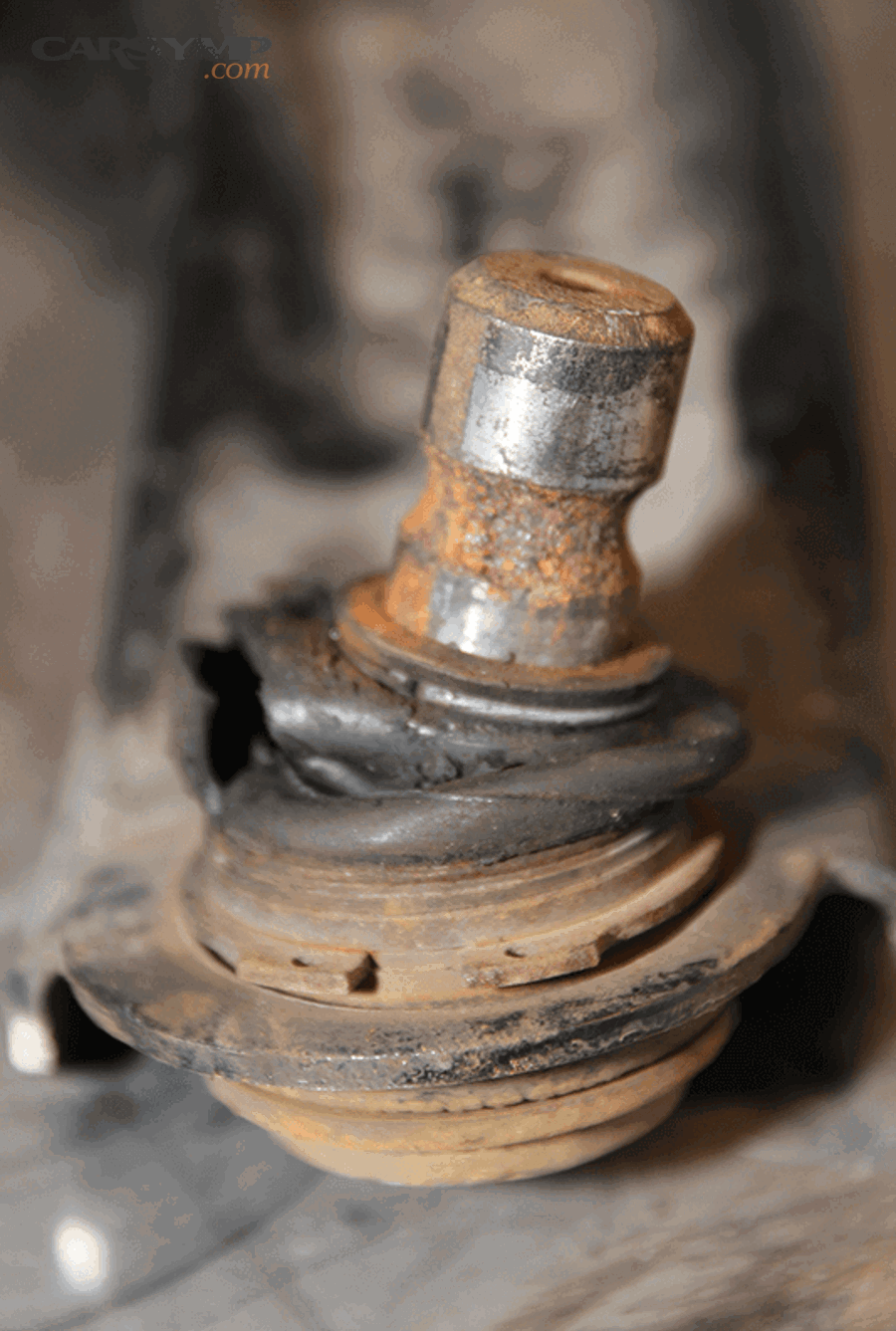
Boot inspection: tears, grease leakage, and rust-colored dust
Start with the simplest evidence: a torn boot, wet grease sling, or gritty residue around the joint. Cụ thể: rust-colored dust can be a sign that metal surfaces are wearing and oxidizing inside the joint area.
Để minh họa: Even if play isn’t obvious yet, a torn boot is a strong predictor of future failure—because contamination accelerates wear.
Play check basics: what you’re trying to feel (and what “normal” isn’t)
The core idea is to look for movement between the control arm and steering knuckle at the joint, not just tire wiggle from other components. Tiếp theo: Use firm, controlled force—if movement is visible at the stud/socket interface, it’s meaningful.
Hơn nữa: Some vehicles specify measurable allowable play with a dial indicator, but even without tools, a clear “click” or visible shift at the joint should be treated seriously.
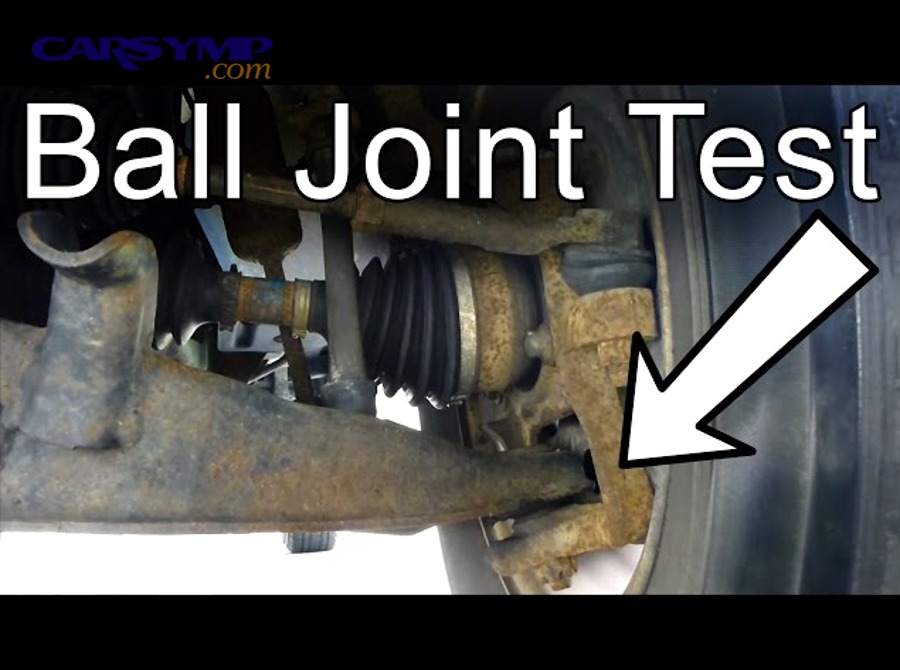
Loaded vs. unloaded joint tests: why the jack point matters
For some designs, you support the lower control arm to keep suspension load on the joint; for others, you let the suspension hang to unload it. Cụ thể: the correct method depends on whether the joint carries spring load. If you’re unsure, follow a vehicle-specific procedure or have a shop confirm—because a wrong lift point can hide looseness or create unsafe conditions.
Đặc biệt: If you use a pry bar method, apply gentle leverage and watch the joint interface for movement rather than forcing components aggressively.
Quick differentiation from tie rod ends and wheel bearings
When you shake the wheel side-to-side, tie rod looseness often shows at the steering linkage; when you shake top-to-bottom, you may reveal ball joint or bearing play. Tuy nhiên: bearings can mimic top-to-bottom play, so confirm by observing where movement occurs—at the joint, at the hub, or at the linkage connection.
Tóm lại: Don’t rely on “wheel wiggle” alone; always locate the movement source visually at the component level.
When is it unsafe to drive with ball joint failure symptoms?
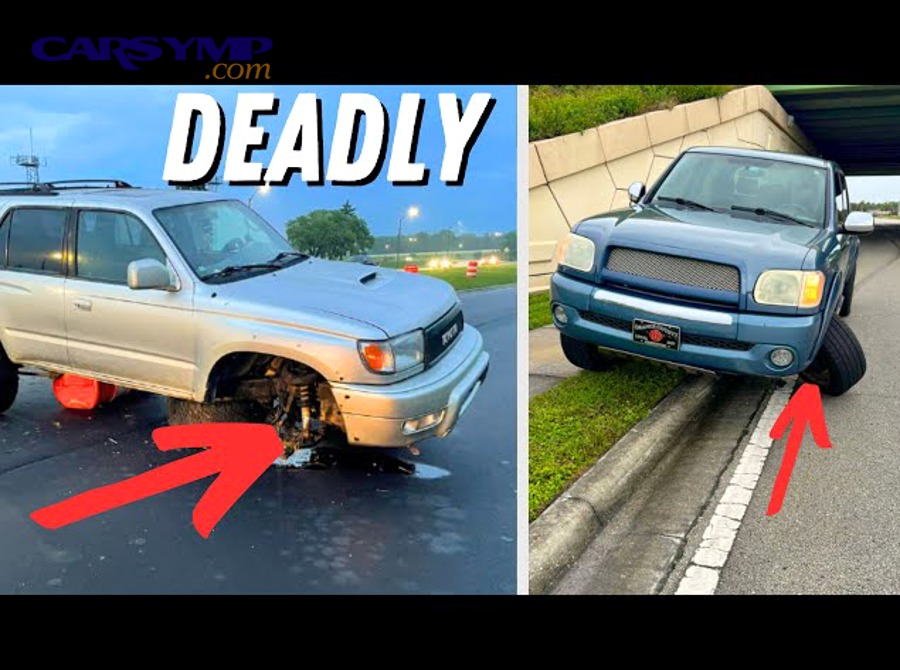
It’s unsafe to drive if symptoms escalate to loud clunks, obvious looseness, sudden steering changes, or visible joint damage, because a severe ball joint failure can allow the wheel to misalign dramatically and risk loss of control. Next, you’ll use a simple urgency scale to decide your immediate action.
Red-flag symptoms that mean “stop driving and tow”
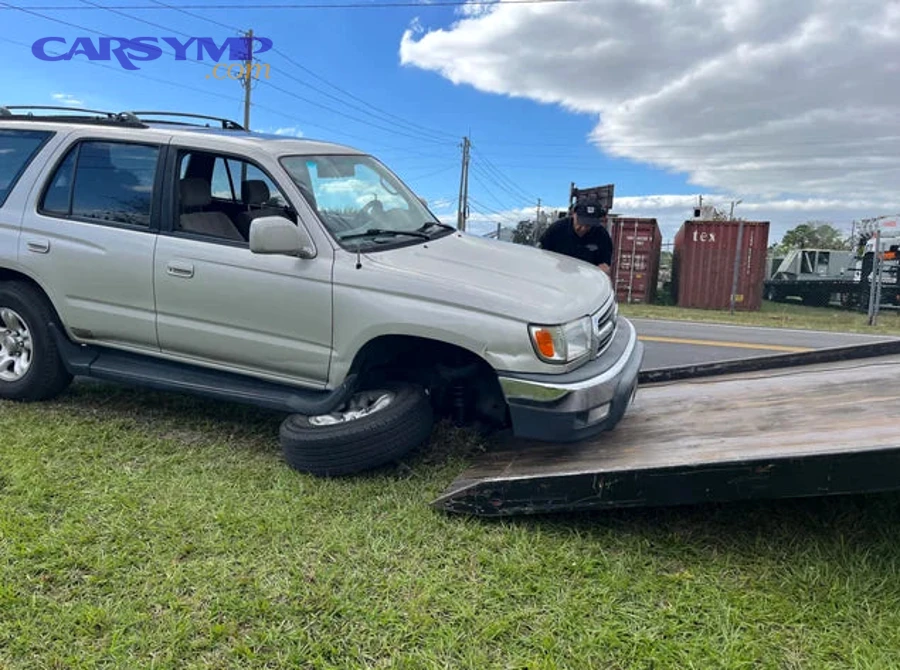
Stop driving if you notice: (1) a loud, repeated clunk with every bump, (2) steering that suddenly feels unstable or unpredictable, (3) a wheel that appears tilted compared to the other side, or (4) a boot completely missing with severe play. Để bắt đầu: If the car feels like it could “jump lanes” over bumps, treat it as an immediate safety issue.
Quan trọng hơn: If you can see the joint moving with the car on the ground while someone turns the steering wheel slightly, that’s a strong sign the joint is beyond “monitor” stage.
Moderate symptoms: drive only short distances, avoid highway speed
If symptoms are mild but consistent—light clunking, slight wander, early uneven wear—you may be able to drive carefully to a shop, but avoid high speeds, sharp turns, and rough roads. Tiếp theo: Keep braking smooth and increase following distance, because sudden load transfers amplify joint movement.
Why “waiting it out” increases the repair scope
As the joint loosens, it can accelerate wear on tires, stress control arm bushings, and magnify alignment problems. Tổng kết lại: Repairing earlier often means replacing fewer related parts and preserving tire life; delaying can turn one worn joint into a broader front-end refresh.
Contextual border: Up to this point, you’ve focused on diagnosing ball joint failure symptoms and deciding urgency. Next, you’ll move beyond symptoms into what service typically involves, how long it takes, what it costs, and what to do afterward to restore stable handling.
What should you expect during service and right after the repair?
You should expect the worn joint to be replaced, related components inspected, and the vehicle checked for geometry changes—because any suspension work that alters knuckle position can affect how the car tracks and how tires wear. Next, you’ll translate that into time, money, and post-service steps you can verify.
How long does the job usually take (and why it varies so much)?
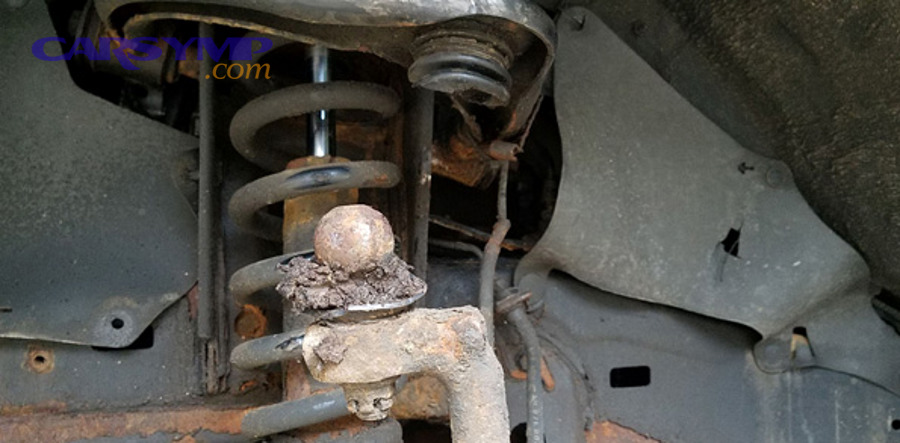
For many vehicles, ball joint replacement can take roughly one to two hours per joint, but some setups take longer when the joint is pressed into the control arm, rusted in place, or bundled with control arm replacement. Tiếp theo: This is why two shops can quote different labor—method and access matter.
Để minh họa: A simple bolt-in joint can be quicker, while a press-fit joint may require a press tool and more disassembly, especially in corrosion-prone regions.
Ball joint replacement labor time is also influenced by whether additional parts (control arms, tie rods, sway links) must be moved to access the joint.
How to build a realistic budget without guessing
A good Ball joint replacement cost estimate combines parts cost, labor time, and any required add-ons like hardware, shop supplies, or related worn components discovered during inspection. Tiếp theo: Ask the shop to separate parts and labor on the estimate so you can compare quotes fairly.
Hơn nữa: If your joint is integrated into a control arm assembly, the parts cost may be higher but labor can be simpler; if it’s press-fit, parts may be cheaper but labor higher. This tradeoff is normal.
Below is a table that helps you connect common symptom clusters to typical service outcomes and urgency so you can prioritize what to fix first.
| Symptom cluster | Most likely meaning | Suggested urgency |
|---|---|---|
| Faint clunk + slight wander | Early-to-moderate play developing | Schedule soon (days to weeks) |
| Loud clunk + uneven tire edge wear | Significant play affecting geometry | Repair ASAP (avoid highway) |
| Visible boot tear + grease leak | High contamination risk, wear accelerating | Inspect immediately |
| Wheel tilt + sudden steering instability | Severe wear / near-failure condition | Stop driving, tow |
Is alignment needed afterward, and what should you verify?
Often, Alignment needed after ball joint replacement is a smart assumption, because even small differences in joint position or fastener seating can change toe/camber, and many shops recommend checking alignment after suspension work. Tiếp theo: Confirm whether your vehicle’s design makes alignment adjustment likely, and ask for before/after measurements if performed.
Đặc biệt: If tie rod ends, control arms, or the knuckle were loosened or replaced alongside the joint, alignment becomes even more important for tire life and stable steering.
How to reduce repeat failures: parts choice, lubrication, and driving factors
Repeat wear happens when boots tear again, contamination returns, or related components keep overloading the joint. Tiếp theo: Ask about boot quality, whether the joint is sealed or serviceable, and whether your vehicle’s ride height or suspension modifications increase joint angle.
Hơn nữa: Keeping tires properly inflated, avoiding severe pothole hits, and addressing worn shocks/struts can reduce the impacts that accelerate joint wear.
FAQ (Common questions drivers ask)
Can ball joint failure symptoms feel like wheel bearing problems?
Yes, both can create vibration and looseness, but wheel bearings often produce a growl/hum that changes with speed and turning load, while a ball joint more often produces a clunk tied to bumps and suspension travel. Tiếp theo: The key is locating movement—bearing play is at the hub, ball joint play is at the joint interface.
Do I need a video-guided test to confirm a bad joint?
A video can help you understand the motion to look for, especially for pry-bar or wheel-shake methods; it’s most useful when you compare what you see on your vehicle to a known example. Below is a practical inspection video you can follow conceptually (always prioritize safety and correct lift points).
How quickly do bad ball joint signs get worse?
Progression varies: contamination and road impacts can accelerate wear rapidly, while mild wear may linger for a while. Tuy nhiên: once clunking becomes consistent or you see a torn boot with grease loss, the risk curve steepens—so schedule inspection promptly.
Is it normal for only one side to fail first?
Yes, one side can fail first due to pothole hits, curb impacts, or uneven load history. Tiếp theo: Even if only one joint is clearly bad, the opposite side should be inspected because similar age and mileage can mean similar wear stage.
What should I tell the shop to get a faster diagnosis?
Describe: the exact noise (clunk/knock/squeak), when it happens (bumps, braking, turning), which side you hear it on, and whether steering wander or uneven tire wear is present. Hơn nữa: Mention any recent suspension work or curb impacts that may have triggered the change.
Does “Car Symp” tracking help with suspension issues?
If you keep a simple Car Symp log—date, road condition, speed, and symptom triggers—you make it easier to reproduce intermittent noises and confirm whether the repair actually resolved the issue. Tổng kết lại: Consistent symptom notes reduce misdiagnosis, especially when the problem appears only on certain bumps or angles.