


Press-in vs bolt-on ball joint differences come down to how the joint is retained in the suspension, which directly affects serviceability, failure modes, and what “doing it right” actually looks like in your driveway.
Next, you’ll see how each design handles load paths, tolerances, and real-world wear so you can predict what will fail first and why—before you spend money or time.
Beyond that, we’ll connect the mounting style to practical decisions like whether you should replace only the joint or step up to a complete control arm/knuckle assembly, especially when corrosion or distortion is involved.
To wrap it up, Giới thiệu ý mới: you’ll get a clear checklist of installation pitfalls and longevity factors so you can choose the safest, most durable route for your vehicle and driving conditions.
What is a press-in ball joint, and what does “press fit” really mean?
A press-in ball joint is retained by an interference fit between the joint’s outer housing and the bore in the control arm or steering knuckle, so the metal-to-metal squeeze (not bolts) is what prevents movement.
To start, that “press fit” isn’t a vague idea—it’s a dimensional relationship where the ball joint housing is intentionally slightly larger than the hole it’s pressed into, creating friction and hoop stress that locks it in place.
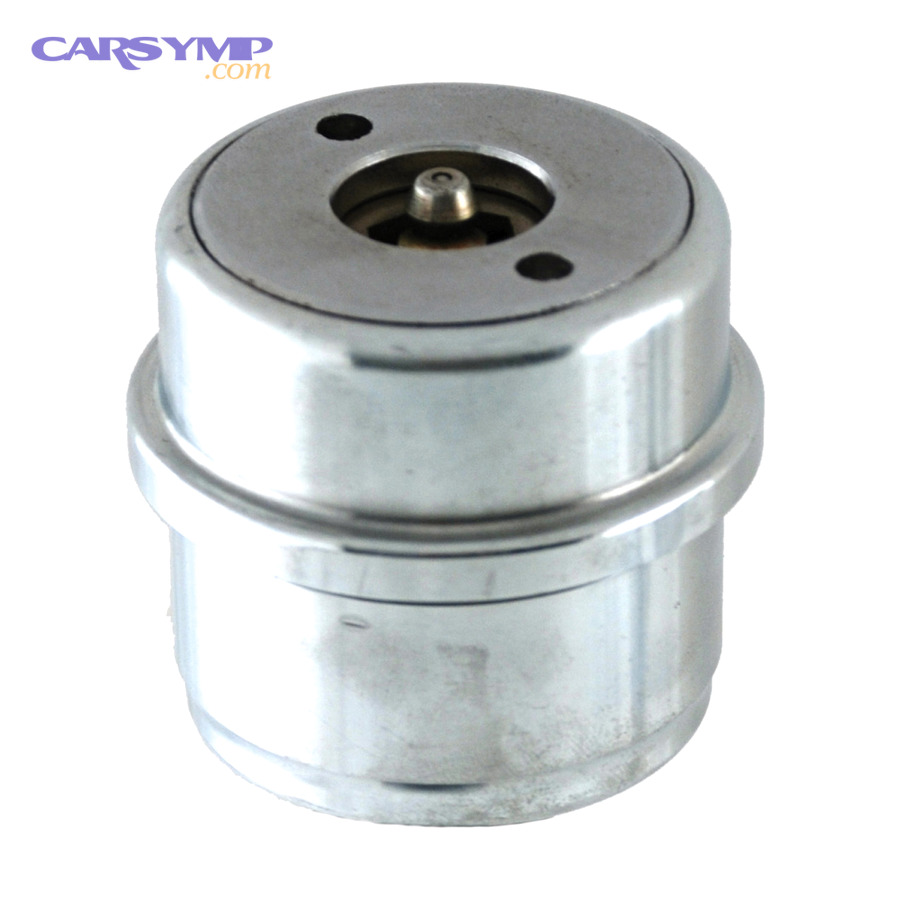
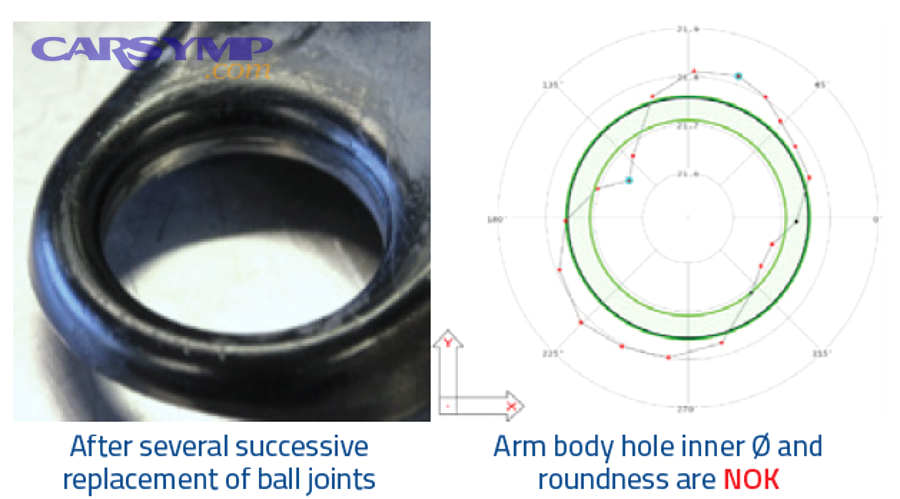
Specifically, the “difference” you feel during service is that the joint doesn’t “unscrew” or “unbolt” from its seat—you must overcome the interference to push it out, then recreate correct interference when pressing the new one in. If the bore is stretched, egg-shaped, cracked, or rust-thinned, the joint may not hold even if the stud and socket are brand new.
Theo nghiên cứu của AutoZone từ Technical Bulletin (Duralast FA2101 Press-In Ball Joint Service), vào (không nêu rõ tháng/năm trong tài liệu), thiết kế OEM thường nhắm tới khoảng 0.002 inch interference fit và nếu không đạt tối thiểu ở hai hướng đo vuông góc thì khuyến nghị thay cả control arm để đảm bảo giữ chặt.
In practice, that’s why press-in designs often come with cautions about how many times the same bore can be serviced: every removal/installation risks micro-galling, bore growth, or distortion if the joint is pressed crooked or hammered. And that point leads directly to the next question—why do some vehicles avoid press fits and use bolts instead?
What is a bolt-on ball joint, and how is it secured differently?
A bolt-on ball joint is retained by fasteners—typically 2–4 bolts through a flange—so the joint is clamped to the control arm or knuckle instead of being locked by interference.
Next, that means the load path is split: the tapered stud carries steering/suspension forces into the knuckle, while the flange-and-bolts interface carries retention forces that prevent the housing from walking out of its mount.
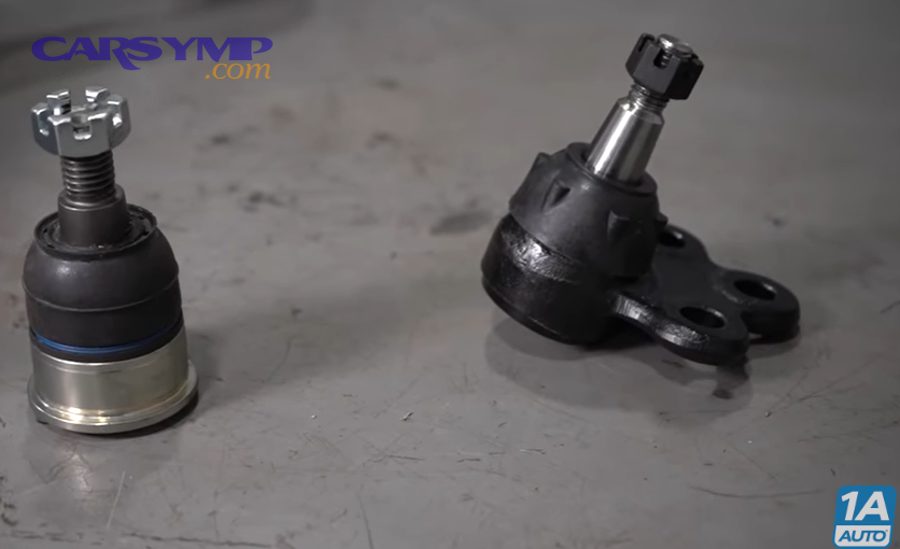
Concretely, bolt-on designs can be more forgiving during service because the “seat” isn’t a precision press bore that can be stretched; you’re relying on flat mating surfaces and correct bolt torque. That’s why many DIYers like the predictability: remove bolts, swap joint, torque bolts, then torque the stud nut properly.
However, bolt-on does not mean “simpler by default.” If the tapered stud isn’t fully seated in the knuckle taper, the stud can spin while tightening, and people sometimes compensate with unsafe shortcuts. Technical guides often recommend methods that apply upward load to seat the taper before final torque.
Theo nghiên cứu của MOOG từ Technical Content (Tech Tips), vào (không nêu rõ tháng/năm trong trang hướng dẫn), một cách thực hành để seat taper là dùng jack nâng knuckle để tăng lực ép lên taper trước khi siết nut theo quy trình.
So the retention method is different (clamp vs interference), and that difference becomes most visible when you compare strength, failure modes, and what “worn mounting surface” looks like in each design.
Which is “stronger”: press-in vs bolt-on, and what does strength mean here?
Press-in is typically strongest at resisting housing movement when the bore is healthy, while bolt-on is strongest at predictable service retention when fasteners and mating surfaces are intact—so “stronger” depends on whether you mean retention security or service robustness.
However, a fair comparison separates three criteria: (1) resistance to the housing shifting in its mount, (2) resistance to stud/taper loosening, and (3) tolerance to corrosion and repeated service. Those criteria often point to different “winners,” which is why you’ll see both designs across OEMs and platforms.
To illustrate, press-in retention can be extremely secure because the interface is full 360° contact—if the interference and bore condition are correct, the housing is effectively “keyed” by friction and hoop stress. But if the bore is deformed or fatigued, the very mechanism that makes it strong disappears, and the joint can feel loose even when new.
By contrast, bolt-on retention is “discrete”: bolts can loosen, stretch, or corrode; flange surfaces can fret; and improper torque can reduce clamp load. Yet, when the mating surfaces are flat and hardware is torqued correctly, retention is consistent and less sensitive to hidden bore damage—because there is no press bore to get damaged in the first place.
When we talk about wear inside the joint (not just the mount), lubrication and material pairs dominate. Studies on ball joint wear commonly focus on tribology—contact stresses, lubrication regimes, and abrasive contamination—and those factors can overwhelm mounting style if the boot fails.
Theo nghiên cứu của MDPI từ Coatings (tribological study on automotive ball joint components), vào 02/2021, mài mòn liên quan mạnh đến điều kiện ma sát/bôi trơn và tương tác vật liệu, cho thấy bảo vệ khỏi bụi bẩn và duy trì bôi trơn có thể quan trọng hơn kiểu bắt (press/bolt) khi xét tuổi thọ bề mặt trượt.
Before we turn this into a simple “pick one,” it helps to see the tradeoffs in one place.
This table compares how each mounting style behaves in real service so you can match it to your constraints (tools, rust, repeat repairs, and safety margin).
| Factor | Press-in | Bolt-on | What it means for you |
|---|---|---|---|
| Retention mechanism | Interference fit in bore | Flange clamped by bolts | Press-in depends on bore health; bolt-on depends on torque/hardware |
| Primary service tool | Press kit + adapters | Hand tools + torque wrench | Press-in is tool-intensive and alignment-sensitive |
| Common mount failure mode | Oversized/oval bore, loss of press | Loose bolts, fretting, elongated bolt holes | Both can “feel loose,” but for different reasons |
| Repeat service risk | Higher (bore can degrade) | Lower (swap joint without deforming seat) | If you keep cars long-term, bolt-on can be more repeatable |
| Rust sensitivity | High at bore interface | High at fasteners | Choose your battle: seized in bore vs seized bolts |
Now that you’ve seen what “strength” really means, the next step is the question most DIYers actually care about: which one is easier and safer to replace at home?
Which design is easier for home service, and where do DIY attempts go wrong?
Bolt-on is usually easier for home service because removal is bolt-based, while press-in is usually harder because it demands alignment, correct adapters, and controlled force—so DIY mistakes are more likely with press-in installs.
Next, the biggest DIY trap with press-in work is “crooked pressing”: if the joint starts even slightly off-axis, you can shave metal, gall the bore, or distort the seat so the new joint never achieves full interference. Quality how-to guidance stresses keeping the press square and the joint level through the entire stroke.
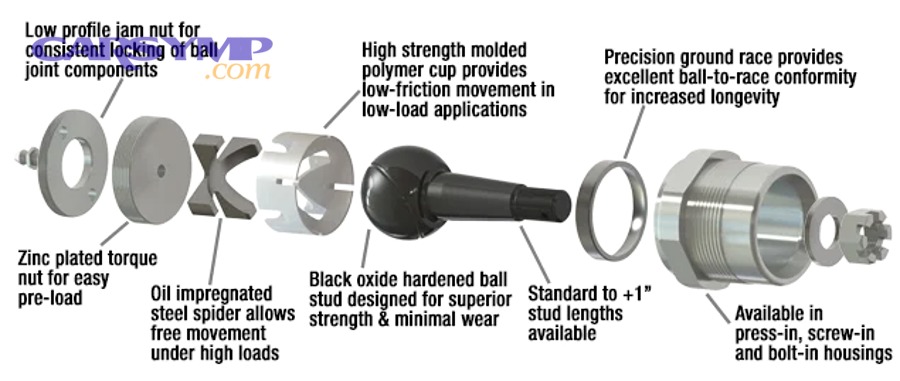
Another trap is using impact force (hammering) where controlled pressing is required. Even if it “works,” shock loads can damage the bore, nick the joint, or tear the boot—problems that might not show up until the joint loosens or starts clicking months later.
For bolt-on joints, the classic DIY failure is under-torqued bolts or contaminated mating surfaces (rust scale trapped between flange and arm). That reduces clamp load and can allow micro-movement (fretting), which can slowly loosen hardware. The second failure is improper seating of the tapered stud: if the taper isn’t engaged, the stud can spin and the nut never reaches true torque, leaving the joint insecure.
Because this is a safety-critical component, “ball joint replacement” should be treated as a controlled procedure: correct torque, correct seating, and a final inspection for boot integrity and cotter pin/safety device use where required. If you’re unsure, that uncertainty itself is one of the biggest DIY ball joint replacement risks—because the symptoms of a bad install can be subtle until they suddenly aren’t.
And that naturally leads to the next practical question: before you even buy parts, how do you know which type you have on your vehicle?
How can you tell if your vehicle uses press-in or bolt-on without guessing?
You can usually tell by looking at the joint’s mounting interface: a press-in joint has a smooth cylindrical housing seated in a bore (often with a snap ring), while a bolt-on joint has a visible flange with bolts attaching it to the arm or knuckle.
To start, begin at the control arm side: if you see a round “cup” disappearing into the arm with no bolts around it, you’re likely looking at a press-in style; if you see bolt heads or nuts around a triangular/rectangular flange, it’s bolt-on. Then, check for a snap ring groove—many press-in joints use a retaining ring as a secondary safety feature, depending on application.
Next, confirm the service location: some vehicles use a press-in joint in the steering knuckle (common on certain front suspensions), while others press into the control arm; bolt-on joints more commonly attach to the control arm with a flange. If you’re looking at aftermarket catalog images, don’t assume your mount style is “universal”—it can vary by trim, drivetrain, and model year.
A practical diagnostic is to inspect the perimeter around the joint: bolt-on flanges leave a bolt pattern footprint; press-in designs leave a clean bore edge with possible corrosion ring and press marks. If you see witness marks from pressing tools on the knuckle/arm, that’s another clue you’re dealing with press-in service history.
Once you know which style you have, the next question is the one that prevents rework: what installation details actually matter most for each style?
What installation details matter most for press-in joints to stay tight?
For press-in joints, the critical details are correct interference, a clean undamaged bore, and perfectly square pressing—because any bore damage or misalignment reduces holding power immediately.
Next, treat the bore like a precision seat: remove rust scale, inspect for cracks or out-of-round distortion, and never “beat” the old joint out in a way that stretches the opening. Technical bulletins warn that improper removal (hammering out or pressing on an angle) can elongate the bore and destroy the ability to maintain a proper press fit.
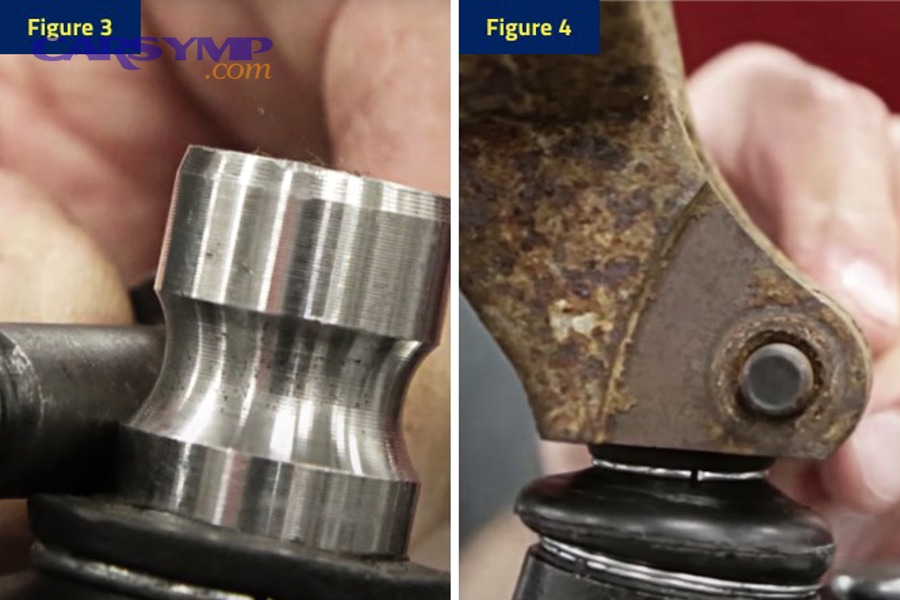
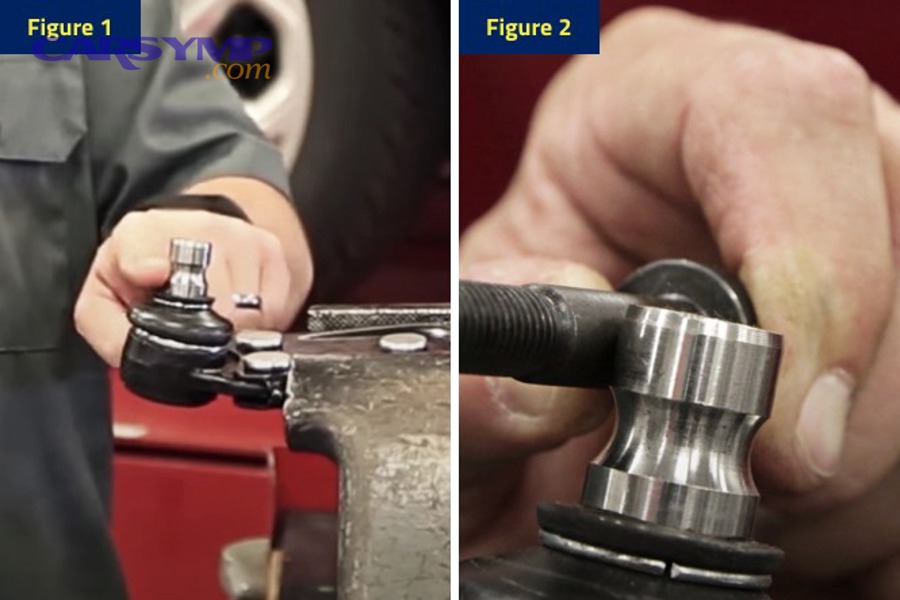
Then, match adapters to the joint geometry: press on the correct surfaces so you don’t load the stud or tear the boot. How-to procedures emphasize keeping the joint level and centered, tightening the press by hand first, and only then applying wrench force—so you can correct alignment before high load is applied.
Also, consider the “how many times” question realistically. Some OEM-style guidance notes that certain press-in applications may only allow one service replacement opportunity before the recommended repair becomes replacing the entire knuckle assembly, because repeated pressing can change the seat’s integrity.
If you are doing ball joint replacement at home, a useful safety heuristic is: if the new joint does not require meaningful press force, assume something is wrong. A joint that slides in easily is not “lucky”—it’s often a warning sign that the bore is no longer within spec.
Now compare that with bolt-on: you’re not chasing interference, but you are chasing clamp load and correct taper seating—two details that fail surprisingly often.
What installation details matter most for bolt-on joints to stay secure?
For bolt-on joints, the critical details are clean mating surfaces, correct hardware torque, and fully seated taper engagement at the stud—because clamp load and taper friction are what keep everything locked in place.
Next, start with surface prep: rust flakes between the flange and the control arm can “crush” later, reducing bolt preload and letting the joint shift microscopically. Clean, flat, dry contact surfaces are the foundation for a stable clamp.
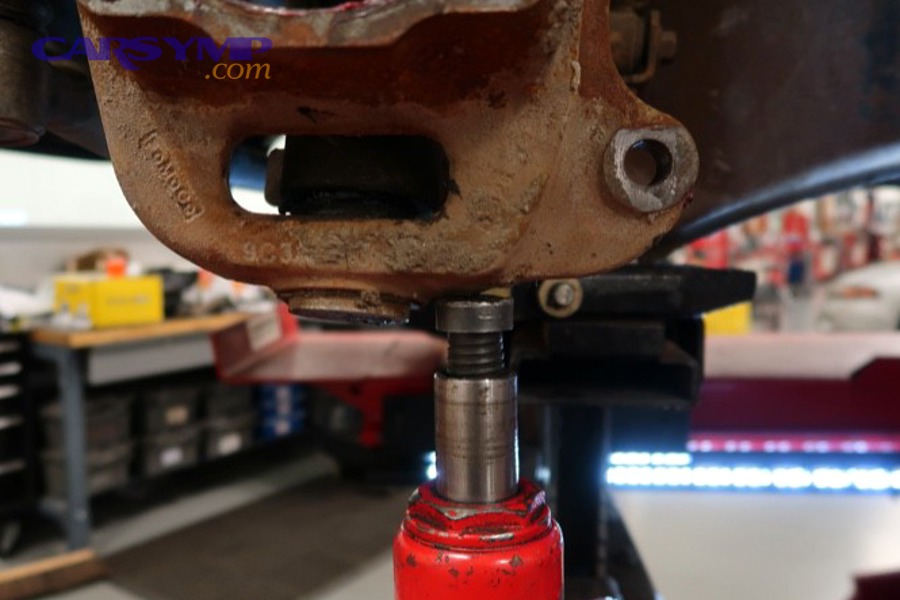
Then focus on taper seating. If the stud is not seated in the knuckle taper, tightening the nut can spin the stud and give you a false sense of “tight.” A common service technique is to apply upward force (for example, supporting the knuckle with a jack) to engage the taper before final tightening.
Also, don’t ignore locking features: many designs use self-locking nuts and/or cotter pins. Mixing old hardware with new can change friction and torque outcomes, so follow the procedure and replace hardware when specified.
Finally, remember that bolt-on retention can hide problems differently than press-in. The joint might feel “solid” right after install, but if bolt torque is wrong or the surface is contaminated, fretting can start quietly and progress over time. So after a short drive, re-inspecting for witness marks and verifying torque (when procedure allows) is a smart precaution.
At this point, you understand the “how.” The next step is deciding “how far” to go—because sometimes replacing only the joint is not the best repair.
When should you replace the whole control arm or knuckle instead of only the joint?
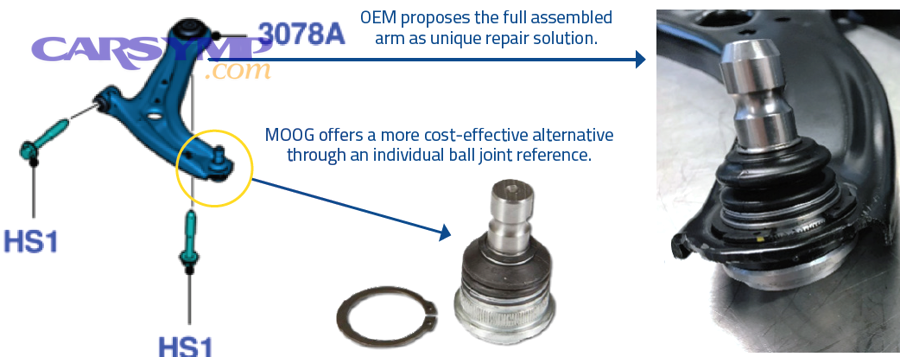
You should replace the entire control arm or knuckle when the mounting seat is compromised—because a perfect new ball joint cannot compensate for a distorted bore, cracked arm, or damaged flange interface.
Next, for press-in designs, the red flags are explicit: if the housing wobbles in the control arm hole, if the hole measures larger than the joint housing, or if the opening is elongated/out-of-round, the proper fix is often a complete arm replacement rather than trying to “make it fit.”
Rust changes the equation too. Heavy corrosion can reduce wall thickness around a press bore or weaken a stamped arm, turning a marginal seat into a safety hazard. Likewise, repeated pressing operations can fatigue the area around the bore. If you see cracking, deformation, or severe pitting around the seat, stop treating the joint as the only replaceable element.
For bolt-on designs, you step up to an assembly when bolt holes are elongated, the flange seat is warped, or corrosion has eaten into the mounting face so badly that you cannot restore flat, clampable contact. In those cases, replacing only the joint may “work” short-term but can be structurally unreliable.
In safety investigations and recalls, the through-line is consistent: retention failures often happen when a structural detail cracks, loosens, or deforms beyond what normal service can correct. For example, some NHTSA recall documents describe ball joint-related concerns tied to cracking or separation risk that required component replacement rather than routine adjustment.
So if your decision feels like “joint-only is cheaper,” reframe it as “seat integrity is the real part.” And that framing is the contextual border between core comparison and the broader longevity picture.
Contextual border: Up to now, we focused on mounting style (press-fit vs bolts). Next, we’ll zoom out to the small, often-overlooked factors that decide whether either design lasts—because the same joint can live a long life or die early depending on boot, lubrication, alignment, and contamination.
What else affects ball joint lifespan beyond mounting style?
Beyond press-in vs bolt-on, ball joint life is most affected by boot sealing, lubrication regime, operating loads, and corrosion exposure—so you can often extend life more by controlling these factors than by obsessing over mounting style alone.
Next, think of mounting as “how it stays in place,” while lifespan is “how the internal surfaces survive.” Tribology research on ball joint components emphasizes friction, lubrication, and material interactions as key drivers of wear progression.
How does a torn boot shorten ball joint life so quickly?
A torn boot accelerates failure because it lets water and abrasive grit enter while grease escapes, turning the joint into a contaminated bearing that wears rapidly under load.
To start, once the seal is compromised, you’re no longer dealing with “normal” boundary lubrication—you’re dealing with contaminated contact that grinds surfaces and increases play. That play can show up as clunks, wandering, or vibration long before a catastrophic event, so catching boot damage early is one of the most effective strategies for Preventing premature ball joint wear.
Does greaseable vs sealed matter more than press-in vs bolt-on?
Often yes: grease management can matter more than mount style because a well-lubricated joint resists wear better, while a dry or contaminated joint wears regardless of how it’s attached.
Next, engineering studies and technical literature on self-lubricating or solid-lubricant approaches show how friction control and lubricant behavior are central to durability goals, especially under varying environmental exposure.
How do alignment and driving conditions change the “best” choice?
Misalignment, lifted suspensions, and rough-road impacts can increase articulation angles and loads, which accelerates internal wear and can stress the mounting interface in either design.
Next, if your vehicle sees frequent potholes, off-road articulation, or heavy payloads, the practical advantage is not automatically press-in or bolt-on—it’s choosing a joint and assembly that matches the duty cycle, then installing it with correct seating and torque so the taper and mount share loads as intended.
What role does corrosion play in the press-in vs bolt-on decision?
Corrosion pushes press-in toward “seized in bore” problems and pushes bolt-on toward “seized fastener” problems, so the best choice is whichever failure mode you can safely manage with your tools and environment.
Next, in rust-belt conditions, press-in jobs can turn into bore damage during removal, while bolt-on jobs can snap bolts or ruin threads; in both cases, planning for corrosion (penetrant, heat strategy, correct replacement hardware, and realistic assembly replacement) is part of doing the job safely.
FAQ
Is press-in always OEM and bolt-on always aftermarket?
No—both are OEM designs depending on platform and packaging, and aftermarket parts follow the vehicle’s original mounting architecture rather than choosing press or bolt arbitrarily.
Can you convert a press-in ball joint to a bolt-on style?
Usually no for normal street vehicles, because the control arm/knuckle geometry and load paths are engineered around a specific retention method; conversions are typically limited to specialty motorsport components and purpose-designed housings.
Why does a new press-in ball joint sometimes feel loose in the arm?
The most common reason is seat damage: an oversized or out-of-round bore can’t maintain interference, so the housing can wobble even though the joint itself is new.
What’s the safest way to learn press-in replacement technique?
Use a step-by-step procedure that emphasizes squareness and adapter selection, and watch a reputable demonstration so you understand how the press should be aligned throughout the stroke.
After replacing a ball joint, do you need an alignment?
Often yes, because suspension disassembly and any change in joint position can affect geometry; many service guides recommend finishing the job with an alignment to restore handling and tire wear behavior.
What’s the quickest way to avoid redoing the job?
Match the repair to the seat condition: if the mount is compromised, replace the entire arm/knuckle; if the mount is healthy, focus on correct taper seating, correct torque, and boot protection to maximize life and safety.