


A tire repair that appears complete can still fail silently. Checking for slow tire leaks after repair is the critical final step that most drivers skip — and that omission is exactly why a freshly patched tire ends up flat again three days later. The repair process is only truly finished when you have confirmed, through systematic post-repair verification, that no air is escaping from any point on the tire or wheel assembly.
Understanding what a slow leak looks like after a repair is different from diagnosing one on an untouched tire. Once a tire has been plugged, patched, or reseated, new failure points can be introduced: a valve stem that was jostled loose, a bead that was not properly resealed, or a secondary puncture that went unnoticed during the original fix. Each of these scenarios produces a leak that behaves slowly and deceptively — losing just enough pressure to be dangerous without being immediately obvious.
The warning signs that a tire repair did not hold are specific and recognizable, but only if you know what to look for. A vehicle that pulls slightly to one side, a TPMS light that reactivates two days after inflation, or a tire that appears visually lower after a short drive are not coincidences — they are data points telling you the repair is incomplete. Knowing how to read these signals transforms a guessing game into a structured diagnosis.
Beyond the standard soapy water test, there are advanced methods available for leaks so slow they defy conventional detection. For drivers dealing with a tire that loses only one or two PSI per week, or one where a tire puncture repair was performed but pressure still drops inconsistently, the submersion test, overpressure technique, and bead inspection protocol offer a level of precision that surface-level checks cannot match. Next, this article walks through every layer of post-repair verification — from the first pressure check to the rarest leak sources — so you can be certain your repair held.
What Is a Slow Tire Leak and Why Can It Persist After Repair?
A slow tire leak is a gradual, continuous loss of air pressure caused by a small gap, puncture, or failed seal that allows air to escape too slowly to produce an audible hiss or rapid deflation. Unlike a blowout or a sudden flat, a slow leak can take days or even weeks to fully deflate a tire, making it one of the most deceptive and underestimated forms of tire damage.
Specifically, the reason a slow leak can persist after a repair comes down to the nature of what was — and was not — addressed during the fix. A repair that correctly seals one puncture site may leave three other potential leak zones completely unchecked.
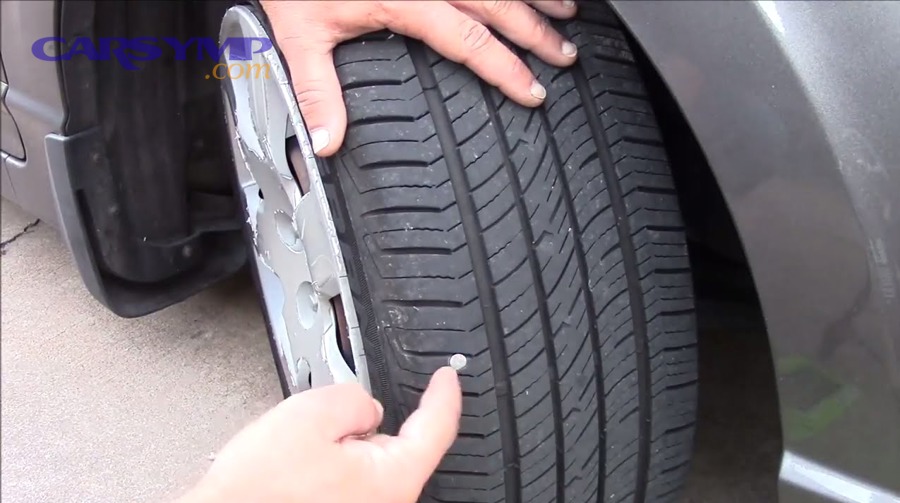
The four most common reasons a repair fails to eliminate a slow leak are:
- Incomplete plug seal: A plug inserted into the tread puncture may not have fully bonded with the surrounding rubber, leaving a micro-gap that widens under driving pressure.
- Missed secondary puncture: Tires can carry more than one embedded object. A repair focused on the visible nail may entirely overlook a second screw or wire fragment in a different tread zone.
- Valve stem not replaced: During a repair, the valve stem — particularly the valve core — is often not replaced or even inspected. A worn or corroded valve core can allow a slow, steady release of air that mirrors a tread puncture in behavior.
- Rim corrosion left untreated: When a tire is dismounted for patching and then remounted without cleaning the rim’s bead seat, any existing corrosion creates an imperfect seal that immediately begins leaking again.
How Much PSI Loss After a Tire Repair Is Normal?
A properly repaired tire should lose no more than 1 PSI per month under normal conditions, and most well-executed repairs will hold pressure indefinitely with zero measurable loss between weekly checks. Any consistent loss greater than 2 PSI per week following a repair is a clear indicator that the fix did not fully seal the leak.
To put this into practical terms: if you inflate your tire to the manufacturer’s recommended pressure — typically found on the door jamb sticker — and return 48 hours later to find even a 3–4 PSI drop, that is not a residual settling effect. That is a repair that is actively failing. The 1 PSI per month threshold is the professional standard used by tire technicians as a baseline for a confirmed successful repair, and anything beyond it warrants immediate re-inspection.
It is also worth noting that temperature changes affect tire pressure by approximately 1 PSI per 10°F change in ambient temperature. When benchmarking post-repair PSI loss, always check pressure at the same time of day and in similar temperature conditions to eliminate environmental variables from your readings.
Can a Tire Have More Than One Slow Leak at the Same Time?
Yes, a tire can absolutely have more than one slow leak operating simultaneously, and this scenario is more common than most drivers realize — especially on older tires or vehicles regularly driven on roads with road debris. When a tire is repaired for one puncture and then continues to lose pressure, a second or even third leak source is frequently the explanation.
This is why professional tire puncture repair protocols require a full 360-degree inspection of the tire’s tread, both sidewalls, the entire bead circumference, and the valve stem — not just the area surrounding the known puncture. A repair technician who removes a nail, plugs the hole, and remounts the tire without this comprehensive inspection has only addressed one variable in what may be a multi-point pressure loss equation. Drivers using a DIY puncture repair kit should be especially mindful of this limitation, as most kit instructions only guide users to the most visible puncture and do not prompt a secondary sweep of the remaining tire surface.
How Do You Check for a Slow Tire Leak After a Tire Repair?
There are four main methods to check for a slow tire leak after a repair: the soapy water bubble test, tire pressure gauge monitoring over time, TPMS observation, and systematic visual inspection — each applied in a specific sequence to cover every potential leak zone.
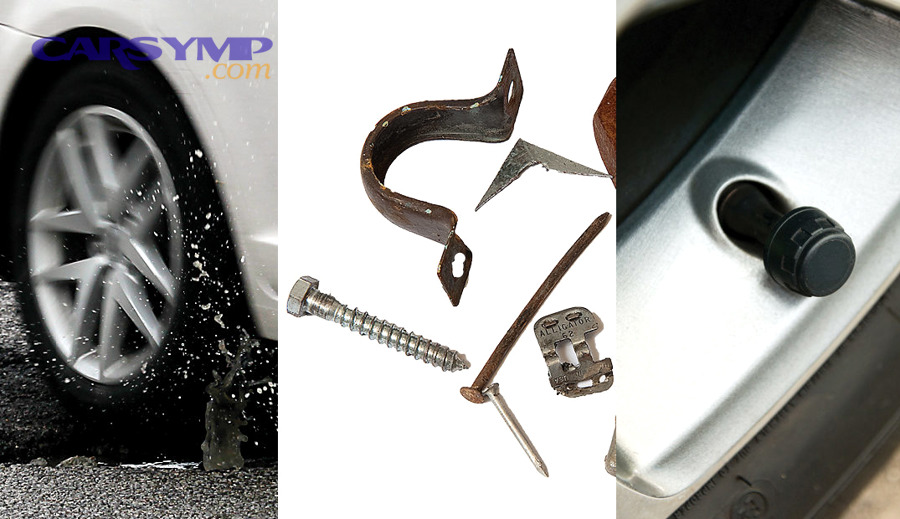
To better understand how each method works and when to use it, the following sections break down the process step by step.
How to Use the Soapy Water Test to Detect Remaining Leaks
The soapy water test works by applying a dish soap and water mixture to the tire surface — when air escapes through a leak, it passes through the solution and creates visible bubbles, revealing the exact leak location even when the loss is too slow to hear or feel.
To perform the test correctly after a repair, follow this sequence:
- Inflate the tire to the recommended PSI using the door jamb specification — not the maximum printed on the tire sidewall.
- Prepare the solution using one tablespoon of dish soap per cup of water, mixed in a spray bottle for even application.
- Spray all five critical zones systematically: the tread surface (including the repair site), both sidewalls, the valve stem and valve core, the bead seal on both sides of the rim, and the rim surface itself.
- Wait a minimum of 60 seconds per zone before concluding it is leak-free. Micro-leaks produce very slow, small bubbles that can take up to two minutes to form visibly.
- Look for growing bubbles, not just foam. A stationary foam coat drying on the surface is normal. A bubble that grows in size and eventually detaches is confirmation of active air loss at that point.
If bubbles appear at the original repair site, the plug or patch has not held. If bubbles appear at the valve stem, the core needs tightening or replacement. If bubbles appear along the bead line, the rim requires cleaning and resealing before the tire can be considered properly repaired.
How to Use a Tire Pressure Gauge to Confirm the Repair Held
Using a tire pressure gauge to confirm a repair involves recording a baseline PSI reading immediately after the repair, then comparing it to readings taken at 24 hours, 48 hours, and 7 days post-repair under consistent temperature conditions — a stable reading across all checkpoints confirms the repair held.
This method is the most objective and quantifiable way to verify a successful repair because it removes subjectivity from the process entirely. The numbers either hold or they do not.
The following table summarizes the recommended post-repair pressure monitoring schedule and what each reading indicates:
| Checkpoint | Expected Result | What a Drop Indicates |
|---|---|---|
| Immediately after repair | Baseline PSI (e.g., 35 PSI) | Reference point only |
| 24 hours post-repair | Within 1 PSI of baseline | Normal; temperature variation |
| 48 hours post-repair | Within 1 PSI of baseline | Repair is likely holding |
| 7 days post-repair | Within 1–2 PSI of baseline | Repair confirmed successful |
| 7 days post-repair | 3+ PSI below baseline | Active leak still present |
This table illustrates the pressure monitoring checkpoints that should follow any tire puncture repair, whether performed professionally or using a DIY puncture repair kit. Any reading that shows a drop of 3 or more PSI at any checkpoint — particularly within the first 48 hours — should trigger an immediate re-inspection using the soapy water method.
Does the TPMS Warning Light Reliably Detect a Slow Leak After Repair?
No, the TPMS warning light does not reliably detect a slow leak after repair on its own, because the system is only programmed to activate when tire pressure drops approximately 25% below the vehicle manufacturer’s recommended level — which translates to roughly 5–8 PSI below normal before any alert appears on your dashboard.
This threshold means that a tire losing 1–2 PSI per week — a perfectly active and dangerous slow leak — could go undetected by TPMS for three to five weeks before the light triggers. By that point, the tire has been operating in an underinflated state long enough to cause measurable sidewall stress, uneven tread wear, and increased heat buildup during highway driving.
TPMS should be treated as a late-stage safety net, not a confirmation tool. A tire that passed its TPMS check immediately after repair has only confirmed that it is not catastrophically deflated — it has not confirmed the repair sealed successfully. Always pair TPMS monitoring with the pressure gauge schedule and soapy water inspection described above for a complete post-repair verification.
According to the National Highway Traffic Safety Administration (NHTSA), underinflated tires — including those losing pressure slowly due to undetected post-repair leaks — are a contributing factor in thousands of vehicle crashes annually, reinforcing why relying on TPMS alone is insufficient for post-repair safety validation.
What Are the Signs That a Tire Repair Did Not Hold?
There are five primary signs that a tire repair did not hold: recurring PSI loss between check-ups, TPMS reactivation within days of inflation, visible tire deflation after a short drive, the vehicle pulling to one side, and a tire that feels noticeably softer than the other three when pressed by hand.
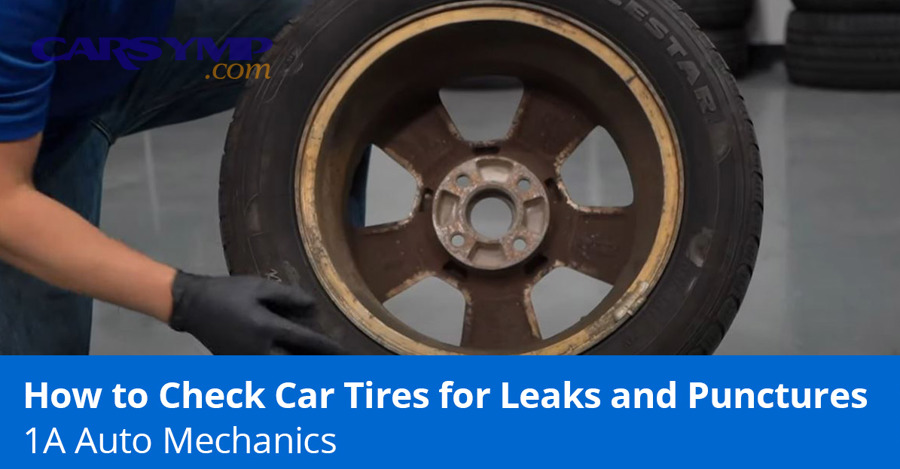
Moreover, recognizing these signs early can be the difference between a simple re-repair and a full tire replacement — or worse, a blowout on the highway.
Does a Car Pulling to One Side After Repair Indicate a Leak?
Yes, a car pulling to one side after a tire repair can indicate a leak, particularly when the repaired tire is on the front axle and has lost enough pressure to create a measurable difference in rolling resistance compared to the tire on the opposite side. However, pulling can also be caused by wheel alignment issues, so context matters.
The key distinction is timing and consistency. If the vehicle tracked straight before the repair and began pulling to one side within 24–48 hours afterward, the most likely explanation is pressure loss in the repaired tire creating asymmetric resistance. If the pull is gradual and progressive — worsening over several days — that pattern strongly aligns with a slow leak that is steadily reducing pressure on one side of the axle.
To differentiate between a leak-related pull and an alignment issue, check the tire pressure on both front tires simultaneously. If the repaired tire reads 4 or more PSI lower than its counterpart, the pull is almost certainly leak-related. If both tires read within 1 PSI of each other and the pull persists, an alignment inspection is warranted.
What Does It Mean If the Repaired Tire Looks Low Again After Driving?
If a repaired tire looks visually lower than the other tires after a short drive, it means the repair has failed to create an airtight seal and the tire is actively losing pressure at a rate fast enough to produce visible deflation within hours of inflation. This is one of the clearest and most urgent signs that the fix did not hold.
Visual deflation after driving is particularly significant because driving generates heat, which expands air inside the tire. A tire that looks low after driving — when pressure should theoretically be at its highest — is losing air faster than heat can expand the remaining air volume. This scenario indicates a leak rate that has likely moved beyond the “slow” category and into territory requiring immediate professional attention.
Do not re-inflate and continue driving in this situation. Repeated inflation and deflation cycles on a compromised tire accelerate internal structural degradation and can cause the tire to fail without warning. Instead, use the soapy water test immediately to identify the leak source, and evaluate whether the repair can be redone or whether tire replacement is the appropriate next step.
Which Areas of the Tire Should Be Re-Inspected If the Leak Continues?
There are four primary areas of the tire that must be re-inspected if a slow leak continues after repair: the valve stem and valve core, the bead seal and rim contact surface, the original puncture site, and the full tread and sidewall surface for any secondary damage.
In addition, understanding why each zone is a re-leak risk helps technicians and DIY drivers prioritize their inspection in order of statistical likelihood, saving time and avoiding the frustration of a missed diagnosis.
How to Check the Valve Stem for Leaks After a Tire Repair
To check the valve stem for leaks after a repair, apply soapy water directly to the valve core, the base of the valve stem where it meets the rim, and the valve cap threads, then observe for 60–90 seconds for any bubble formation at any of these three points.
The valve stem is one of the most frequently overlooked post-repair leak sources, particularly in vehicles driven in cold climates where road salt accelerates corrosion at the base of the stem. The valve core — the small threaded pin inside the valve stem — can work loose during a repair, especially if air tools were used or if the tire was inflated quickly after remounting. A loose valve core produces a leak that is virtually indistinguishable from a tread puncture in terms of PSI loss rate.
To test the valve core specifically:
- Use a valve core tool (available at any auto parts store for under $5) to check that the core is snugly seated — a half-turn tighter is often all that is needed.
- Apply soapy water to the exposed valve core threads with the cap removed. A bubbling response here confirms the core is leaking.
- Check the base of the stem where rubber meets the rim. Cracking, drying, or visible deformation at this junction indicates the stem itself needs replacement.
If the valve stem base is cracked or the rubber has lost flexibility, the entire valve stem must be replaced — not just the core. Tire puncture location rules generally dictate that valve stem issues are always repairable, but only through proper component replacement, not patching or sealant.
How to Inspect the Bead Seal and Rim Contact After Repair
To inspect the bead seal after a repair, apply soapy water along the entire circumference of both the inner and outer bead contact lines — where the tire rubber presses against the rim flange — and look for bubbles that grow slowly along the rim edge, which indicate that air is escaping through an imperfect tire-to-rim seal.
The bead seal is the zone most commonly damaged by aluminum wheel corrosion and is a disproportionately common source of slow leaks that resist standard tread-focused repairs. When the aluminum oxidizes, it creates a microscopically rough and uneven surface that prevents the tire bead from seating flush — and no amount of tread plugging will resolve a leak that originates at this junction.
Proper bead seal re-inspection requires the following:
- Remove the tire from the rim if significant corrosion is visible or suspected.
- Use a wire brush to clean the bead seat area on the rim, removing all oxidation down to clean metal.
- Clean the tire’s rubber bead surface as well, removing any debris or bead sealer residue from the previous mount.
- Apply fresh bead sealer to both mating surfaces before remounting.
- Re-inflate and re-test with soapy water before returning the wheel to the vehicle.
Should You Re-Examine the Original Puncture Site After Repair?
Yes, the original puncture site should always be re-examined after a repair, because plugs can back out under driving pressure and patches can delaminate from the inner liner if the surface was not properly prepared during the repair process. A repair site that appears sealed immediately after installation can begin failing within the first 24–48 hours of road use.
Signs that the original repair site is failing include:
- Bubbles forming directly at or adjacent to the plug during a soapy water test
- The plug appearing to have moved or shifted position relative to its original insertion point
- A visible depression or dimple forming in the tread rubber around the plug, indicating that air pressure is deforming the repair
According to the Rubber Manufacturers Association’s tire repair standards, a plug-only repair that was not paired with an internal patch is considered a temporary fix only and should not be expected to hold indefinitely, particularly at highway speeds. A proper permanent repair involves a combination plug-patch applied from the interior of the tire — and a repair site that continues to bubble after the soapy water test is a strong indicator that a plug-only fix was used where a combination repair was required. This is one of the most important limitations of DIY puncture repair kit safety and limits — while convenient for roadside emergencies, a kit plug alone should always be followed by a professional inspection and proper internal patch.
Is It Safe to Drive on a Tire That Was Repaired but May Still Be Leaking?
No, it is not safe to drive on a tire that was repaired but may still be leaking, because even a small, ongoing drop in tire pressure increases the risk of tire overheating, sidewall flexion damage, and sudden blowout — especially at highway speeds or under load.
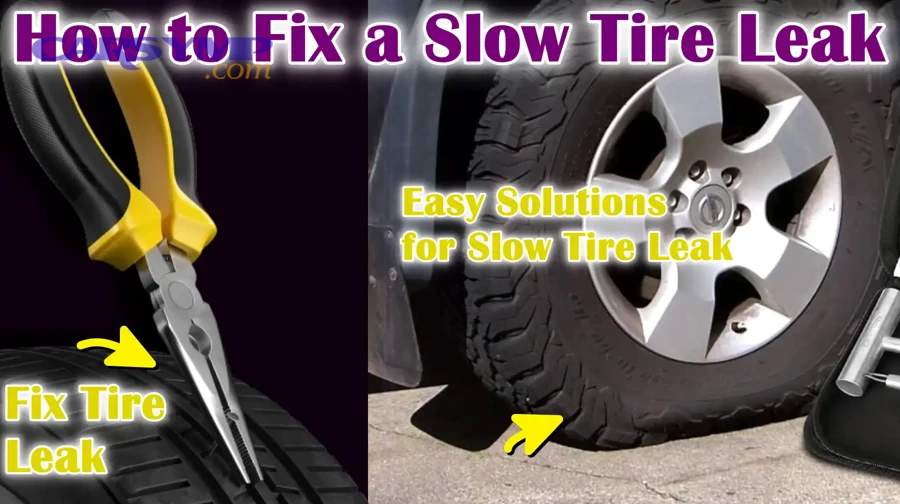
However, the degree of risk depends directly on how much pressure the tire is losing and at what rate. A tire that loses 10 PSI over 24 hours represents a far more urgent safety situation than one that loses 2 PSI over a week. Both scenarios warrant investigation, but the former requires that the vehicle not be driven until the leak is resolved.
The practical safety rule is straightforward: if you cannot confirm through pressure gauge monitoring and soapy water testing that the repair is holding, do not drive the vehicle for extended distances or at highway speed. For short, low-speed movement — such as repositioning the vehicle in a driveway — the risk is limited. For any journey longer than a few blocks, the consequences of a tire failure from an unresolved slow leak are too serious to accept.
According to data published by the NHTSA, tire-related crashes are most commonly associated with underinflation rather than outright blowouts, reinforcing the point that a slowly leaking post-repair tire is not a minor inconvenience — it is an active and developing safety hazard that must be resolved before normal driving resumes.
Advanced and Specialized Methods for Finding Slow Leaks That Standard Checks Miss
There are three advanced methods for finding slow tire leaks that standard checks miss: the water submersion test, the controlled overpressure technique, and a detailed inspection protocol comparing plug repair versus patch repair integrity — each suited to leaks that are too slow or too location-specific for surface soapy water application to detect.
More importantly, these methods move post-repair diagnosis from guesswork into precision — and they are the same approaches used by professional tire technicians when a standard inspection comes back inconclusive.
How to Use the Water Submersion Method to Find an Invisible Slow Leak
The water submersion method works by placing the entire dismounted wheel and tire assembly into a container of water deep enough to cover the bottom portion of the tire, then slowly rotating the assembly and watching for a continuous stream of fine bubbles rising to the surface — which reveal the exact leak location even when the air loss rate is too low for surface spraying to detect.
This method is particularly valuable for leaks losing only 1–2 PSI per week — a rate at which the soapy water spray test often fails because the air escapes in volumes too small to form visible bubbles on an exposed surface. Submerging the tire concentrates air escape into a single visible stream that becomes unmistakable against the still water background.
To perform the submersion test:
- Use a large plastic storage bin, bathtub, or utility sink large enough to accommodate the wheel diameter.
- Fill with water to a level that submerges at least the lower third of the mounted tire and rim.
- Inflate the tire to the recommended PSI or slightly above (within 5 PSI of maximum cold inflation) to maximize bubble visibility.
- Rotate the wheel slowly — one full revolution over approximately two minutes — watching the waterline and surface for rising bubbles at any point.
- Mark the leak location with a grease pencil or chalk once identified before removing the wheel from the water.
- Wait a minimum of 10 minutes per quadrant if the leak is extremely slow, as the bubble stream at 1 PSI/week loss may take several minutes to become visible.
Does Overpressurizing the Tire Help Detect a Leak the Repair Missed?
Yes, temporarily overpressurizing the tire to 50–60 PSI — well above the standard 32–36 PSI operating range but within the structural capacity of most passenger tires — significantly amplifies the air escape rate at micro-leak points, making them visible to the soapy water test when standard pressure produces bubbles too small or slow to detect.
The physics behind this technique are simple: air escapes through a gap at a rate proportional to the pressure differential between the inside of the tire and the atmosphere. Doubling the internal pressure approximately doubles the air escape rate, which converts a near-invisible micro-bubble into a clearly visible growing bubble during soapy water application.
Safety parameters for overpressure testing:
- Never exceed the maximum inflation pressure printed on the tire sidewall.
- Never perform this test with the tire mounted on the vehicle — always conduct on a dismounted wheel placed flat or safely propped.
- Deflate to normal operating pressure immediately after completing the inspection.
- Do not overpressurize tires with visible sidewall damage, cracking, or dry rot — structural failure risk increases substantially above normal pressure in compromised tires.
This technique is particularly effective for detecting bead seal leaks and rim corrosion gaps, as these locations often produce bubbles at normal pressure that are too diffuse along the bead circumference to localize, but become clearly defined at elevated pressure.
Is a Plug Repair or a Patch Repair More Likely to Hold Against a Slow Leak?
A combination plug-patch repair wins in long-term sealing reliability and is the industry standard for permanent tire repair; a plug-only repair is best suited for temporary emergency use only; and a patch-only repair is optimal for tires with interior liner damage where no exterior channel exists for plug insertion.
The distinction between these repair types is directly relevant to post-repair slow leak persistence, because the repair method used determines both the failure mode and the durability of the seal under road conditions.
The following table compares the three primary tire repair types across sealing mechanism, reliability, and recommended use case:
| Repair Type | Sealing Mechanism | Long-Term Reliability | Recommended Use Case |
|---|---|---|---|
| Plug only | Fills the puncture channel from outside | Moderate — can back out under heat and load | Emergency roadside fix only |
| Patch only | Seals inner liner from inside | Good — stable but no channel fill | Small punctures with clean channels |
| Combination plug-patch | Fills channel + seals inner liner | Highest — industry standard for permanent repair | All repairable punctures in tread area |
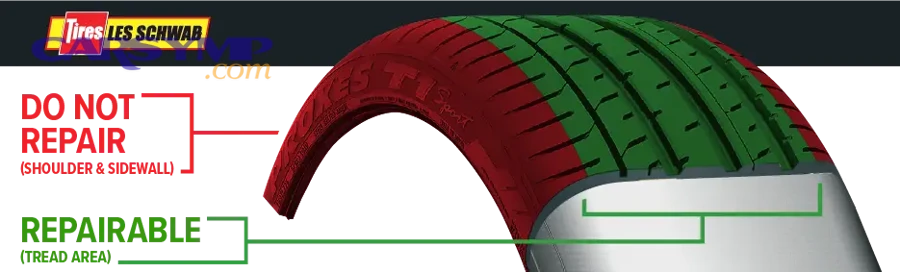
This table outlines the three primary tire repair types in terms of their sealing mechanisms and reliability, making clear why a combination plug-patch is the only method that truly addresses both the exterior puncture channel and the interior liner simultaneously. Tire puncture location rules further constrain all repair types — no repair of any kind is valid in the sidewall or shoulder zone, and any puncture larger than ¼ inch in diameter or at an angle exceeding 35 degrees from vertical is considered non-repairable regardless of method.
How Does Rim Corrosion Cause a Slow Leak to Return After Repair?
Rim corrosion causes a slow leak to return after repair by creating a microscopically uneven bead seat surface on the aluminum wheel that prevents the tire rubber from forming a continuous, airtight contact along the full circumference of the rim — even when the tread puncture has been perfectly sealed.
This is one of the rarest and most frequently misdiagnosed post-repair leak sources precisely because it is invisible from the exterior of a mounted tire, does not respond to tread-focused soapy water tests, and produces a pressure loss pattern that is easily attributed to a failed plug or recurring puncture. Drivers in regions where vehicles are exposed to road salt during winter months — where sodium chloride accelerates aluminum oxidation at the wheel’s bead seat — are disproportionately affected by this issue.
The correct remediation sequence for a rim corrosion leak is:
- Dismount the tire completely from the corroded wheel.
- Inspect the full bead seat circumference for oxidation, pitting, or visible white/grey corrosion deposits on the aluminum surface.
- Clean the bead seat aggressively using a wire wheel on an angle grinder or a stiff wire brush, removing all corrosion until bare, clean aluminum is exposed.
- Clean the tire’s bead rubber with a wire brush to remove any contamination transferred from the corroded rim surface.
- Apply bead sealer — a specialized rubber-based sealant product — to both the rim’s bead seat and the tire’s bead contact surface before remounting.
- Replace the valve stem simultaneously, as rim corrosion often extends to the valve stem hole and compromises the stem seal independently.
- Re-inflate and perform a full soapy water test along the entire bead circumference before returning the wheel to service.
In cases where aluminum corrosion has progressed to the point of creating visible pitting deeper than surface oxidation, bead sealer alone may not provide a permanent solution. Wheel refinishing or replacement becomes the appropriate recommendation at that stage, as no tire repair — however well executed — can compensate for a structurally compromised seating surface.
Checking for slow tire leaks after repair is not a single action — it is a structured, layered process that moves from pressure monitoring, to soapy water testing, to zone-by-zone re-inspection, and finally to advanced methods for leaks that resist standard detection. A repair is only confirmed when pressure holds consistently over seven days, every zone of the tire and rim tests bubble-free, and the vehicle handles without pulling. Anything short of that standard is a repair that deserves a second look before the road gets another chance to prove it wrong.