


After a tyre puncture repair, your TPMS requires specific attention — not just a reinflation and a reset. The Tire Pressure Monitoring System in your vehicle is a safety-critical component, and the process of dismounting, repairing, and remounting a tyre introduces real risks to the sensor, the system’s calibration, and the accuracy of future warnings. Every driver who has just completed a tire puncture repair needs to understand three things: whether the sensor survived the repair process intact, whether the system needs a manual reset, and whether the warning light behavior afterward signals a problem or simply a normal recalibration cycle.
The confusion begins with how TPMS works in the first place. Many drivers assume the warning light will simply go away once the tyre is reinflated. In practice, whether your vehicle uses a direct sensor mounted inside the wheel or an indirect system reading ABS data, neither type resets automatically the moment pressure is restored. Understanding which system your car uses, and what triggers its alerts, is the first step toward knowing whether everything is working as it should after a repair.
A second layer of concern involves the repair method itself. Whether your tyre shop used a plug-and-patch method, a plug-only approach, or whether you deployed an emergency foam sealant from a roadside mobility kit, each of these methods carries different implications for the sensor inside your tyre. Sealant-based solutions in particular are a known hazard to direct TPMS sensors, yet many drivers use them without realizing the potential damage until the warning light persists for weeks.
The third layer involves sensor replacement and reprogramming — a step many drivers skip entirely because they assume the tyre fitter has handled it. In many cases, especially at smaller independent shops, sensor verification is not part of the standard workflow unless the driver specifically asks. Next, this guide walks through every consideration in sequence, so you leave nothing to chance after your next puncture repair.
What Is TPMS and Why Does It Matter After a Puncture Repair?
TPMS is a safety system — either sensor-based or ABS-derived — that continuously monitors tyre inflation and alerts the driver when pressure drops to an unsafe level, making it especially critical to verify after any puncture repair event.
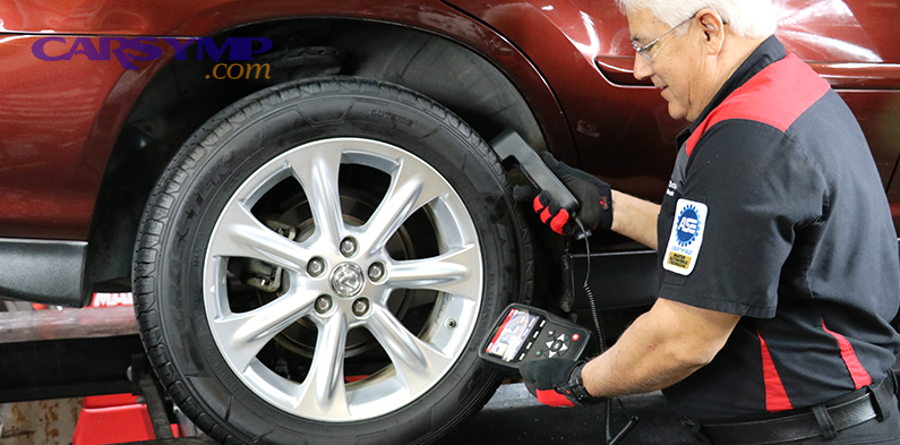
To better understand why a puncture repair creates unique TPMS considerations, it helps to know exactly how the system functions and what distinguishes its two main types. Both types serve the same protective purpose, but they interact with the tyre repair process in different ways.
What Is the Difference Between Direct and Indirect TPMS?
There are two main types of TPMS systems — direct and indirect — classified by the method they use to detect tyre pressure loss.
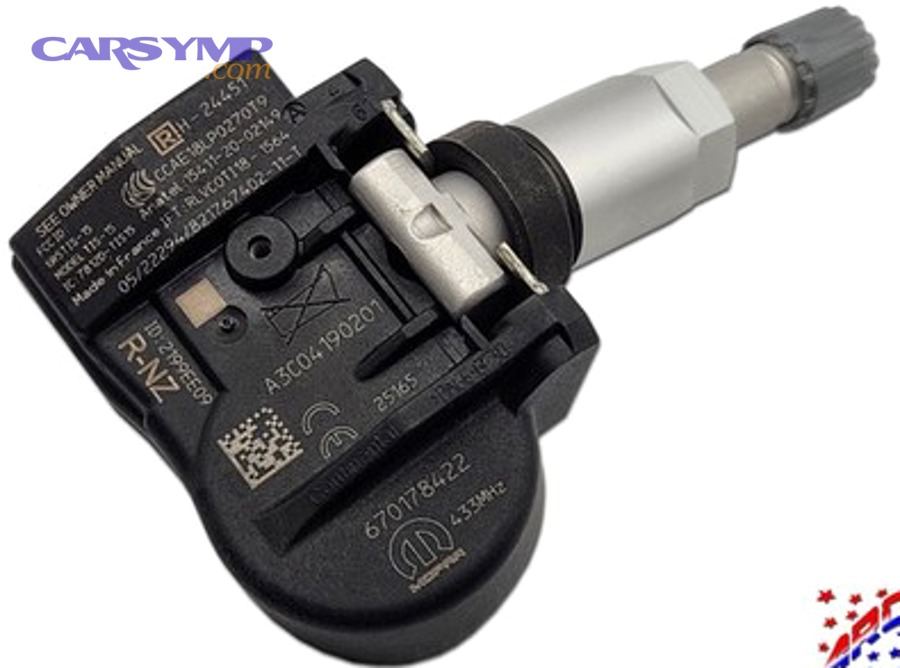
Direct TPMS uses a dedicated pressure sensor mounted physically inside each tyre, typically attached to the valve stem or banded to the wheel rim. This sensor measures the actual air pressure in real time and transmits the reading via radio frequency to the vehicle’s ECU. Because the sensor sits inside the tyre, it is physically present during the dismounting process — which is precisely why it can be damaged if the tyre fitter is not careful when breaking the bead.
Indirect TPMS does not use pressure sensors at all. Instead, it infers tyre pressure by monitoring wheel rotation speeds through the existing ABS sensors. When one tyre has lower pressure, its effective circumference shrinks slightly, causing it to rotate faster than the others. The system detects this speed differential and triggers the warning light. Because indirect TPMS has no physical component inside the tyre, it is not at risk of physical damage during a puncture repair — but it does require a recalibration reset afterward, since the repair process changes the tyre’s dimensions temporarily.
The table below summarizes the key differences between direct and indirect TPMS to help you identify which system your vehicle uses and what to expect after a repair.
| Feature | Direct TPMS | Indirect TPMS |
|---|---|---|
| Sensor location | Inside the tyre/wheel | External ABS sensors |
| Measures actual PSI | Yes | No |
| Risk of damage during repair | Yes (bead-breaking) | No |
| Requires sensor reprogramming | Sometimes | No |
| Reset method | Button or scan tool | Steering menu or scan tool |
| Common on vehicles from | 2008+ (US mandate) | Older EU vehicles, some newer models |
How Does a Puncture Trigger the TPMS Warning Light?
A puncture triggers the TPMS warning light when tyre pressure drops by approximately 25% below the manufacturer’s recommended PSI — a threshold mandated for all vehicles manufactured after 2008 in the United States.
Specifically, the way the warning presents itself carries diagnostic meaning. A steady TPMS light typically indicates that one or more tyres are currently underinflated — which is the expected response to a puncture. A flashing TPMS light that blinks for 60–90 seconds before going steady indicates a fault within the TPMS system itself, such as a dead sensor battery, a damaged sensor, or a lost signal — which is a different problem altogether and requires diagnostic attention.
In the case of a slow puncture, the light may appear gradually, first showing up after a cold overnight period when thermal contraction reduces tyre pressure further. Car Symptoms like slight pulling to one side, reduced fuel efficiency, or a subtle change in handling feel may appear before the TPMS light activates, particularly with indirect systems that need a larger pressure differential to trigger.
Can a Puncture Repair Damage or Affect Your TPMS Sensor?
Yes — a puncture repair can damage your TPMS sensor, primarily during the tyre dismounting process, if the technician is not experienced with TPMS-equipped vehicles or does not take precautions around the sensor’s position on the rim.

This is one of the most underappreciated risks in the tire puncture repair process. The physical act of removing a tyre from the rim — specifically the bead-breaking step — creates a moment of high mechanical stress exactly where the sensor is mounted.
What Happens to the TPMS Sensor When a Tyre Is Dismounted?
When a tyre is dismounted for puncture repair, the sensor faces its highest risk of physical damage at the bead-breaking stage, where a machine applies force to separate the tyre bead from the rim.
More specifically, if the bead breaker tool contacts the valve stem side of the rim — where most direct TPMS sensors are mounted — it can crack the sensor body, shear the valve stem, or break the internal circuitry. The sensor may survive this damage visually but fail electronically, producing no pressure reading or an erratic one. A competent tyre fitter will position the bead breaker away from the sensor, but this only happens reliably if the fitter knows the sensor is present and takes deliberate care. Before any dismounting begins, it is worth telling the fitter explicitly: “This vehicle has TPMS sensors in the wheels — please be careful around the valve stem side.”
Band-mounted sensors (which sit on the inside of the rim, away from the valve stem) carry slightly less risk of impact damage but can still be dislodged or cracked if the tyre machine is operated without awareness of their position.
Do Tyre Sealants and Plug Kits Damage TPMS Sensors?
Yes — liquid tyre sealants can damage TPMS sensors, and this is one of the most common causes of persistent TPMS warnings following an emergency roadside repair.
For example, foam or liquid sealants from mobility kits — the type commonly found in newer vehicles that carry no spare tyre — work by injecting a viscous compound into the tyre interior. This compound coats the sensor’s pressure port, blocks the sensing membrane, and can cause the sensor to transmit incorrect readings or stop transmitting entirely. Some manufacturers, including BMW and certain EV brands, include explicit warnings in their owner’s manuals stating that sensor inspection or replacement is required after mobility kit use.
In contrast, a professional plug vs patch repair (or combined plug-and-patch) carried out at a tyre shop is generally safe for TPMS sensors, provided the dismounting is handled carefully. The repair itself does not introduce any material that contacts the sensor. According to guidance from the Tire Industry Association, a proper two-piece repair — involving an internal patch and an external fill plug — remains the only permanent method of tyre puncture repair and poses no chemical risk to the sensor.
What Should You Check on Your TPMS Immediately After a Puncture Repair?
There are three essential checks every driver should perform after a puncture repair: confirm the sensor is transmitting correctly, verify the tyre is inflated to the correct manufacturer PSI, and assess whether the warning light clears after a short drive.
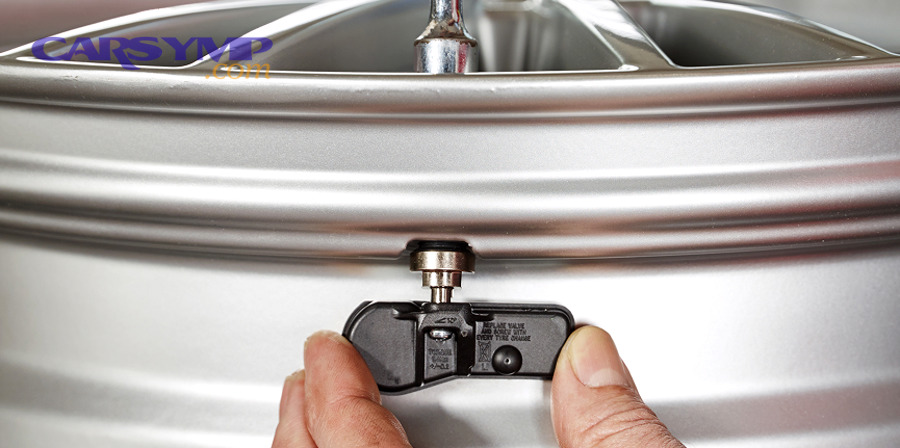
Below is a structured walkthrough of each check, in the order you should perform them.
How Do You Confirm the TPMS Sensor Is Still Working After Repair?
The most reliable way to confirm your TPMS sensor is functioning after a repair is to ask the tyre fitter to scan each sensor with a dedicated TPMS diagnostic reader before you drive the vehicle away.
This tool communicates directly with the sensor via radio frequency and confirms whether it is transmitting a live pressure signal. If your vehicle’s dashboard displays individual per-tyre PSI readings, you can also verify this on the instrument cluster after the repair — each tyre should show a reading within a few PSI of the others. If one wheel shows no reading, a zero reading, or a wildly inaccurate figure, the sensor has either been damaged or has lost its programming.
Car symptoms that suggest a damaged sensor include: a flashing TPMS light that will not clear after multiple reset attempts, a single tyre always showing as the outlier in pressure readings, or the TPMS light returning within minutes of resetting regardless of correct inflation.
What Tyre Pressure Should You Set After a Puncture Repair?
After a puncture repair, all four tyres — including the repaired one — should be inflated to the manufacturer-recommended cold PSI, which is found on the tyre placard inside the driver’s door jamb or in the owner’s manual.
Do not rely on the tyre fitter’s default setting. A common issue raised in owner community forums is that technicians default to a generic 35 PSI across all four tyres, which may differ significantly from your vehicle’s specification — particularly on vehicles where front and rear axles carry different recommended pressures. More importantly, if your vehicle is equipped with TPMS sensors on the spare tyre, that wheel must also be inflated to its specified pressure, otherwise it will trigger a separate low-pressure alert the next time it is mounted.
Is It Normal for the TPMS Light to Stay On Right After a Repair?
Yes — it is entirely normal for the TPMS warning light to remain on immediately after a puncture repair, and this does not necessarily indicate a problem with the repair or the sensor.
After reinflation, the sensor needs time to transmit the updated pressure reading to the vehicle’s ECU. This transmission happens at intervals — not continuously — and in most direct TPMS systems, the vehicle needs to be driven for several minutes at speeds above 25 mph before the ECU receives and processes the new data. A light that persists for up to 10–15 miles of driving following correct reinflation and a manual reset is within normal range. A light that returns repeatedly after this distance, however, is a signal that something requires further investigation.
How Do You Reset the TPMS After a Puncture Repair?
Resetting the TPMS after a puncture repair involves a 3-step process — correct inflation, button reset or menu recalibration, and a validation drive — with the exact method depending on whether your vehicle uses a direct or indirect system.
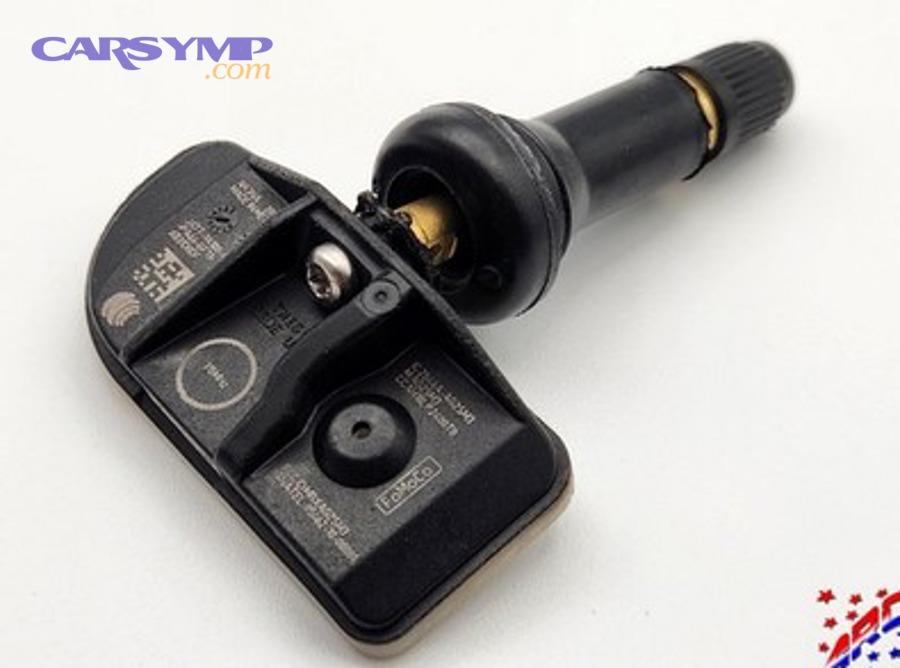
To follow the correct procedure, you need to identify your system type first, then apply the matching reset method below.
How Do You Manually Reset the TPMS Warning Light?
To manually reset the TPMS warning light on a direct-sensor vehicle, inflate all tyres to the correct cold PSI, then press and hold the TPMS reset button until the warning light blinks three times.
Here is the standard procedure for most vehicles:
- Ensure all four tyres (and spare, if applicable) are inflated to the manufacturer’s specified cold PSI.
- Turn the ignition to the ON position without starting the engine.
- Locate the TPMS reset button — typically found beneath or to the left of the steering column.
- Press and hold the button until the TPMS warning light blinks three times slowly, then release.
- Start the engine and drive for at least 15–30 minutes at speeds above 30 mph.
- The light should extinguish once the ECU has received updated readings from all sensors.
On some vehicles — particularly those from certain European manufacturers or luxury brands — this button-based reset is not available, and the system requires a dedicated TPMS scan tool to clear stored sensor data and re-link sensor IDs. If the light persists after the drive cycle, consult your owner’s manual or visit a workshop with TPMS diagnostic capability.
How Is an Indirect TPMS (ABS-Based) Recalibrated After a Repair?
An indirect TPMS system is recalibrated after a puncture repair by accessing the vehicle’s instrument menu to initiate a set/reset procedure, followed by a calibration drive of approximately 20 miles at mixed speeds.
Specifically, indirect systems work by learning the baseline rotation speed of each wheel under normal inflation. After a repair, the tyre’s circumference may differ slightly — both because of the repair itself and because the tyre was deflated and reinflated — which causes the system to detect a false pressure differential. This is why owners sometimes report that the TPMS light returns after 10–15 miles despite correct pressure: the system is comparing new wheel speeds against an outdated baseline.
The plug protrusion issue referenced in owner forums — where a rubber plug repair kit leaves a small raised section on the tread — can cause a similar effect on indirect systems, as the tyre’s effective rolling circumference is fractionally altered until the plug wears flush. In most cases, a full recalibration reset resolves this within one or two drive cycles.
When Does a TPMS Sensor Need to Be Reprogrammed After a Tyre Change?
A TPMS sensor requires reprogramming after a tyre change when a new sensor is installed, when the sensor has been replaced due to damage, or when sensors are rotated to different wheel positions on vehicles that track sensor location by axle.
Reprogramming involves writing a new sensor ID into the vehicle’s ECU so that it associates the correct wheel position with each sensor’s radio signal. Without this step, the ECU may show pressure readings attributed to the wrong wheel, making it impossible to identify which tyre is actually low. The tools needed to perform this programming range from consumer-grade TPMS activation tools (for simple relearns) to professional scan tools for full reprogramming. A Tire puncture repair cost estimate for TPMS reprogramming typically falls between $25 and $75 at an independent shop, or may be included in the cost of sensor replacement at a dealership.
When Should You Replace a TPMS Sensor After a Puncture Repair?
You should replace a TPMS sensor after a puncture repair when it shows no live pressure reading, when the TPMS light will not clear after correct inflation and reset procedures, or when the sensor is physically damaged, corroded, or approaching the end of its 5–10 year service life.
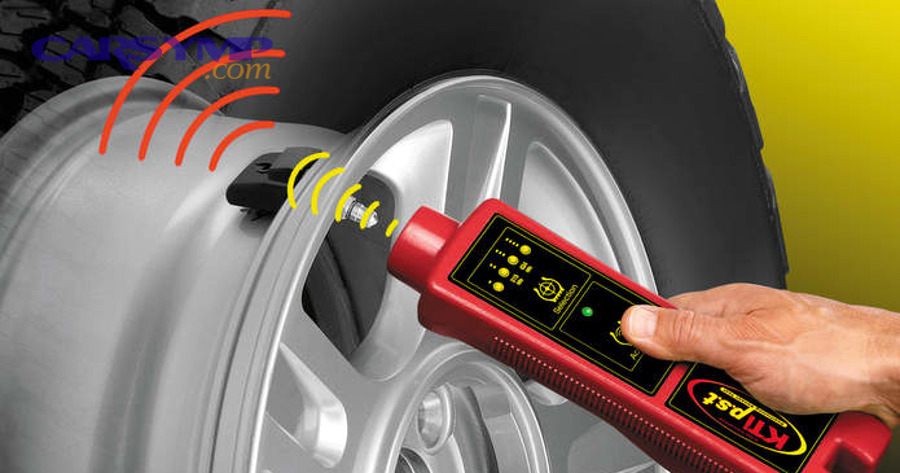
However, the decision is not always straightforward, and several diagnostic signs help narrow it down.
What Are the Signs That a TPMS Sensor Was Damaged During Puncture Repair?
There are four primary signs that a TPMS sensor was damaged during puncture repair: no pressure reading for one wheel, a continuously flashing TPMS light after reset, wildly inaccurate pressure data, or visible physical damage to the valve stem.
More specifically:
- No reading on one wheel: If your dashboard displays per-tyre PSI and one wheel consistently shows no data or zero, the sensor is not transmitting — either because it was cracked, the battery connection was broken, or the sensor body was shattered during bead-breaking.
- Flashing TPMS light that won’t clear: As distinct from a steady light (low pressure), a continuous flash after correct inflation and multiple reset attempts signals a system fault — which in the context of a recent repair almost always points to sensor damage.
- Wildly inaccurate readings: A sensor reporting 60 PSI or 5 PSI when the tyre is correctly inflated to 35 PSI has likely had its sensing membrane contaminated or physically damaged.
- Damaged valve stem: A visible crack, lean, or snapped valve stem means the sensor body — which is integrated with the stem in most direct TPMS designs — has been compromised and must be replaced as a unit.
How Long Do TPMS Sensors Last and Should You Replace Them With New Tyres?
TPMS sensors last an average of 5 to 10 years or approximately 100,000 miles, and replacing them proactively when fitting new tyres is considered best practice by most tyre industry professionals.
The sensor’s built-in battery — which powers the continuous pressure transmission — is non-replaceable in the vast majority of sensor designs. When the battery depletes, the entire sensor unit must be replaced. Replacing sensors at the same time as tyres is economically sensible because the tyre is already dismounted, eliminating the additional labor cost of a separate dismounting-and-remounting job. A typical tire puncture repair cost estimate for a new TPMS sensor ranges from $50 to $150 per sensor for most mainstream vehicles, rising to $200 or more for luxury or performance models. According to guidance published by the Tire Industry Association, proactive sensor replacement at the 7-year mark — even if the battery has not yet failed — significantly reduces the risk of undetected low-pressure events caused by mid-life sensor failure.
In regions with heavy road salting during winter months, sensor corrosion is an accelerating factor. Salt infiltration around the valve stem base can corrode the sensor’s aluminum body, causing air leaks that are often misdiagnosed as slow punctures. When a tyre is dismounted for a puncture repair on a vehicle with corroded sensors, the fitter may also need to replace the TPMS service kit — the set of replacement seals, valve cores, and retaining nuts — to ensure an airtight seal is restored.
Special TPMS Scenarios Drivers Often Overlook After Tyre Repair
There are four TPMS scenarios that standard puncture repair guidance rarely addresses: run-flat tyre behavior, emergency mobility kit contamination on EVs and spare-free vehicles, warranty implications on leased cars, and the inherent limitations of relying on TPMS alone as a post-repair monitoring tool.
Each of these scenarios applies to a specific category of driver, but all four carry safety and financial consequences that make them worth understanding before a puncture occurs rather than after.
Does TPMS Behave Differently on Run-Flat Tyres After a Repair?
Yes — TPMS behavior on run-flat tyres after a puncture is particularly deceptive, because run-flat tyres are specifically designed to maintain their shape and support the vehicle’s weight even when pressure is significantly reduced, which can delay or suppress the TPMS alert that would otherwise appear immediately on a standard tyre.
Run-flat tyres use reinforced sidewalls to carry the vehicle’s load without air pressure for a limited distance — typically up to 50 miles at a maximum speed of 50 mph. Because the tyre does not visibly deflate, drivers may not notice the pressure loss through handling car symptoms in the way they would with a conventional tyre. The TPMS system will still eventually trigger, but the delayed nature of the alert means the tyre may already be damaged beyond the repairable zone by the time the warning appears.
More critically, most run-flat tyres are not eligible for standard puncture repair. The structural reinforcement in the sidewall can sustain hidden internal damage during even a brief period of running flat — damage that is invisible from the outside but creates a catastrophic blowout risk if the tyre is patched and returned to service. Most major tyre manufacturers recommend replacement rather than repair for any run-flat tyre that has been driven on while deflated, regardless of where the puncture is located.
What Are the TPMS Implications When Using an Emergency Mobility Kit (EV or Spare-Free Vehicles)?
Using an emergency mobility kit — the foam sealant and compressor combination found in most modern EVs and spare-free vehicles — creates a high risk of TPMS sensor contamination that can require sensor replacement even if the tyre itself is successfully repaired afterward.
Specifically, the liquid or foam compound injected into the tyre coats the interior surface, including the direct TPMS sensor’s pressure port. Once this port is blocked or fouled, the sensor either transmits inaccurate readings or stops transmitting entirely. Several OEM mobility kits sold by BMW, Volkswagen, and certain EV manufacturers carry printed warnings on the packaging stating that the TPMS sensor must be inspected and cleaned — or replaced — after the sealant has been used.
For EV drivers in particular, this creates a compounded cost scenario: the sealant kit is consumed and must be replaced (typically $80–$150), the tyre may still require professional repair or replacement, and one or more TPMS sensors may need replacing as well. Drivers who frequently travel long distances should consider carrying a portable tyre inflator with a pressure gauge as an alternative first-response tool for slow punctures, preserving the mobility kit as a true last resort and avoiding unnecessary sensor contamination.
How Do TPMS Considerations Change After a Puncture Repair on a Leased or Warranty Vehicle?
On a leased or manufacturer-warrantied vehicle, using a non-approved puncture repair method can void warranty coverage for TPMS-related faults, creating financial exposure that goes beyond the immediate repair cost.
Most vehicle manufacturers specify in their warranty documentation that tyre-related repairs must be performed by trained technicians using approved methods and materials. If a liquid sealant is used — particularly a non-OEM product — and the TPMS sensor subsequently fails, the manufacturer or leasing company may decline to cover the sensor replacement under warranty, arguing that the contamination resulted from an unapproved repair. The same risk applies to plug-only repairs performed without full dismounting, which violate industry standards (British Standard BS AU 159 in the UK; USTMA guidelines in the US) and may be cited as a reason to deny warranty coverage for any subsequent tyre-related failure.
Best practice for leased vehicles: always use a certified tyre workshop, request a written record of the repair method used, and retain the receipt. This documentation creates a defense against any warranty dispute related to TPMS or tyre integrity following the repair.
Is TPMS Enough on Its Own, or Should Drivers Still Check Pressure Manually After a Repair?
No — TPMS alone is not sufficient after a puncture repair, and manual pressure checks with a calibrated gauge are essential for the first two to four weeks following any tyre fix.
This is perhaps the most important distinction in the TPMS conversation: the system tells you when pressure is already dangerously low, while manual checks are preventive. TPMS only activates when pressure has already fallen by 25% or more from the recommended baseline. A repaired tyre that is slowly losing pressure at a rate of 2–3 PSI per week may not trigger the TPMS warning for several weeks, during which time the driver is operating on a marginally underinflated tyre with reduced braking performance, increased wear, and elevated blowout risk.
According to guidance from TyreSafe, the UK’s independent tyre safety charity, drivers should check tyre pressure manually at least once per month as a baseline practice — and this frequency should increase to once per week for any tyre that has undergone a puncture repair, until the repair has been confirmed stable over a minimum of 30 days of normal driving. Investing in a quality digital tyre pressure gauge ($15–$30) and keeping it in the vehicle is one of the simplest and most cost-effective safety measures available to any driver, regardless of whether their vehicle is equipped with a direct or indirect TPMS system.