


A repaired tire can last anywhere from a few weeks to the full remaining life of the tire — but only if the right repair method is used, the damage qualifies for repair, and the work is done by a professional. A plug-patch combination repair, which is the gold standard endorsed by the U.S. Tire Manufacturers Association (USTMA), can restore a punctured tire to near-new reliability and hold up for 7 to 10 years or for the entire remaining tread life of the tire. A plug alone, on the other hand, is considered a temporary measure that may hold air for weeks or months but should never be trusted as a permanent fix.
What determines how long that repair actually holds up goes well beyond the repair itself. The location of the puncture, the size of the damage, the number of previous repairs on that tire, how the vehicle is driven after the repair, and whether the job was done professionally or with a DIY kit all play a direct role in how many miles and years a driver can safely expect from a repaired tire.
Not all repair methods are equal. A tire plug works quickly and costs very little but lacks structural integrity over the long term. A tire patch takes longer and requires removing the tire from the rim, but it seals the inner liner more thoroughly. The plug-patch combo addresses both the puncture channel and the inner liner simultaneously, making it the only method that qualifies as a permanent repair under USTMA guidelines.
Understanding when a repaired tire is safe to keep driving on — and when replacement is the only responsible choice — is just as important as knowing how long a repair lasts. Sidewall damage, punctures larger than one-quarter inch, and tires that have been driven while flat all fall outside the boundary of safe repair. Next, this article breaks down every factor that shapes the lifespan of a repaired tire, from repair type to road conditions to special vehicle scenarios.
What Is a Repaired Tire and What Types of Repairs Are Available?
A repaired tire is a punctured tire that has been restored to operational condition through one of three methods — plugging, patching, or a plug-patch combination — each with a different durability profile and level of industry approval.
To better understand which repair method delivers the longest lifespan, it helps to examine how each one works from the inside out.
What Is a Tire Plug and How Does It Work?
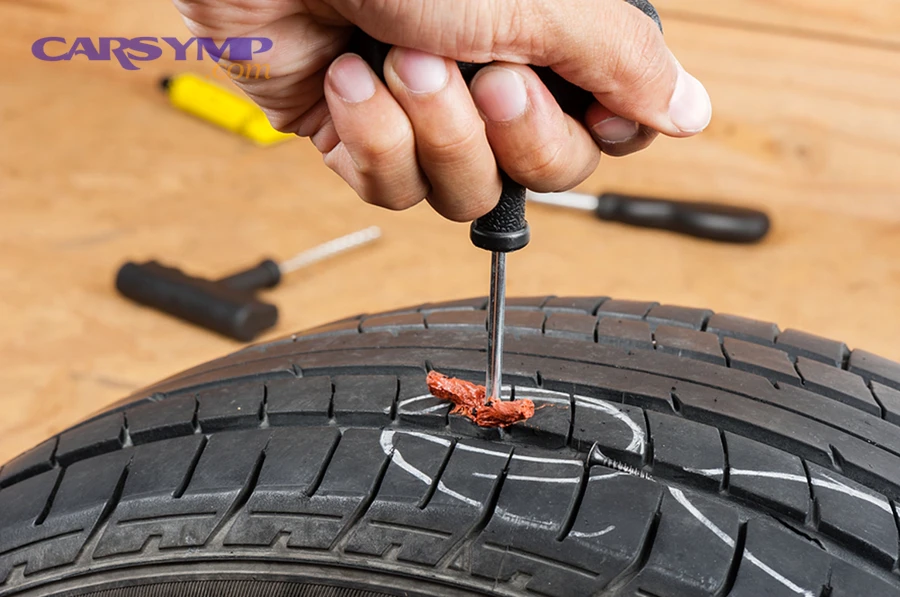
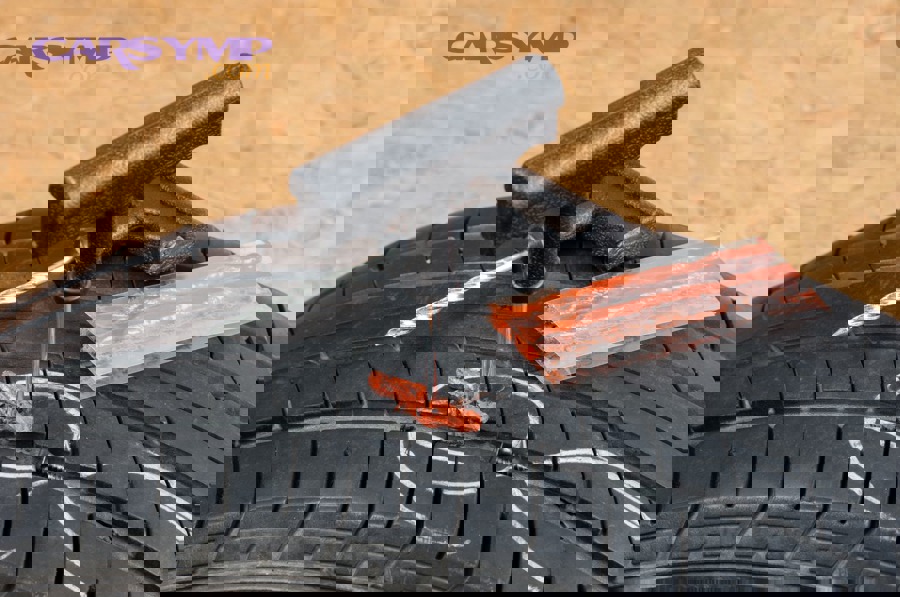
A tire plug is a sticky, expandable rubber strip inserted directly into the puncture from the outside of the tire without removing it from the rim. The plug fills the hole from the puncture channel outward and relies on the surrounding rubber to hold it in place under pressure.
- The process takes only a few minutes and can often be performed roadside or at a shop without dismounting the tire
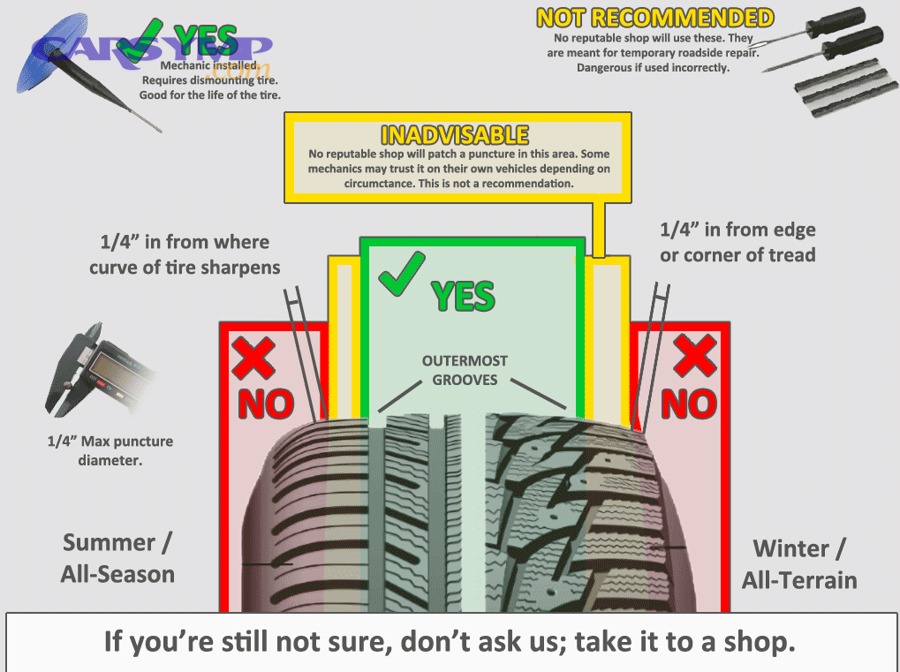
- Plugs are best suited for small tread punctures — typically under one-quarter inch in diameter — in the center of the tire tread
- The USTMA does not approve plugs alone as a safe or permanent repair because they do not seal the inner liner of the tire, leaving the tire’s internal structure exposed to potential air infiltration and moisture
Despite being fast and inexpensive, a plug should be treated as an emergency measure to get the vehicle to a professional shop for a proper repair. Relying on a plug for the long-term life of the tire introduces unnecessary safety risk, particularly at highway speeds.
What Is a Tire Patch and How Is It Different from a Plug?
A tire patch is a thin, flexible piece of rubber affixed to the inner liner of the tire using vulcanizing cement, applied after the tire has been removed from the rim and the puncture area has been buffed smooth.
- Unlike a plug, a patch seals from the inside, addressing the inner liner directly where air pressure acts against the repair
- The process involves removing the tire from the rim, inspecting the casing for internal damage, buffing the area around the puncture, applying vulcanizing cement, pressing the patch with a roller to ensure full adhesion, and allowing time to cure before remounting
- A patch alone is still not USTMA-approved as a permanent repair because it does not fill the puncture channel itself — air can still travel along the cords if the channel is not sealed
A properly applied patch by a skilled technician can last 7 to 10 years on average, but it is most reliable when used as part of a combination repair rather than on its own.
What Is a Plug-Patch Combo and Why Is It the Recommended Standard?
A plug-patch combination repair seals both the puncture channel from the inside and the inner liner of the tire simultaneously, making it the only repair method that qualifies as a permanent fix under USTMA guidelines.
- The combo repair is performed with the tire off the rim, giving the technician full access to inspect the inner casing for hidden structural damage before proceeding
- The plug component fills the puncture channel, preventing air from traveling inward along the tire cords; the patch component seals the inner liner against air loss
- When installed correctly by a professional, a plug-patch combo repair can last for the full remaining tread life of the tire
This is the repair method that most reputable tire shops use as their standard procedure. For any driver asking how long a tire repair will hold up under real-world driving conditions, the plug-patch combo consistently delivers the most durable and trustworthy result.
How Long Does a Repaired Tire Last?
A repaired tire lasts between a few weeks and the full remaining tread life of the tire, depending on which repair method was used, with a plug-patch combo lasting the longest and a plug alone lasting the shortest amount of time.
Specifically, the lifespan figures vary meaningfully across repair types, and understanding those differences helps drivers make the most informed decision after a tire puncture repair.
How Long Does a Tire Plug Last?
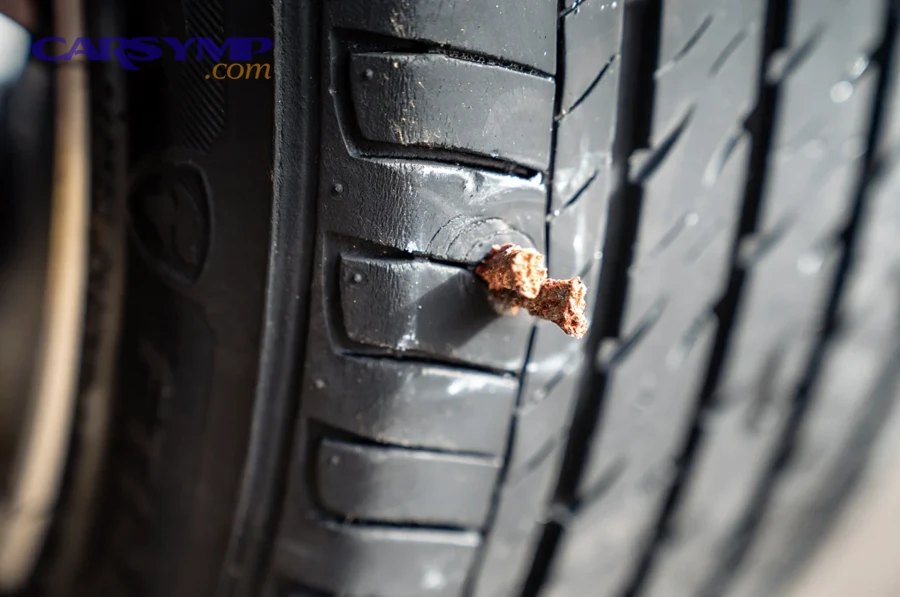
A tire plug may hold air for days, weeks, or even months, and under ideal conditions some estimates suggest a correctly inserted plug could hold up for approximately 25,000 miles — but this figure comes with significant caveats.
- Because a plug is inserted from the outside without removing the tire, it is nearly impossible to verify that the plug has been positioned correctly or that the inner liner has not been compromised
- Plugs are designed and sold as temporary emergency solutions, not long-term repairs
- The USTMA explicitly states that plugs alone do not meet the standard for a safe, permanent repair
Drivers who have had a tire plugged should arrange for a proper plug-patch combo repair as soon as possible. Continuing to drive on a plug-only repair, particularly at sustained highway speeds or with heavy loads, increases the risk of unexpected air loss.
How Long Does a Tire Patch Last?
A professionally applied tire patch lasts an average of 7 to 10 years, provided the damage was in the repairable tread zone, the puncture was under one-quarter inch in diameter, and the patch was applied correctly using vulcanizing cement and proper buffing technique.
- According to tire service experts cited by Phil’s Service, a proper plug and patch combination can last from seven to ten years under normal driving conditions
- A patch alone offers more durability than a plug alone because it addresses the inner liner directly, but it still leaves the puncture channel unsealed, which is why it is not classified as a permanent repair on its own
- DIY patch kits, while available and inexpensive, frequently produce inferior results because the buffing, cement application, and curing steps are often skipped or done incorrectly
For the patch to reach its full potential lifespan, regular tire pressure checks and rotation schedules must be maintained after repair.
How Long Does a Plug-Patch Combo Last?
A plug-patch combo repair can last for the entire remaining tread life of the tire when it is professionally installed on a tread-zone puncture that meets repair eligibility criteria.
- If a tire has 40,000 miles of tread life remaining at the time of repair, a correctly performed combo repair should hold for those 40,000 miles
- The combo is the only USTMA-approved method for permanent tire puncture repair
- Tire age still plays a role: even a perfectly repaired tire should be replaced when it reaches 6 to 10 years of total age, regardless of remaining tread depth, because rubber compounds degrade over time
The plug-patch combo is the answer for any driver who wants a repaired tire to last as long as safely possible without replacing the tire outright.
What Factors Determine How Long a Repaired Tire Lasts?
There are five primary factors that determine how long a repaired tire lasts: repair type, puncture location, repair quality, driving behavior, and the number of prior repairs on the tire.
Each of these factors interacts with the others, and understanding them collectively gives drivers a clearer picture of what to expect after Tire puncture repair steps at a shop have been completed.
Does the Location of the Puncture Affect Repair Lifespan?
Yes — puncture location is one of the single most important factors in determining whether a repair will last. Punctures in the central tread zone are the only ones that qualify for a safe, long-lasting repair.
- The tread zone is reinforced with steel belts and thick rubber, giving patches and plugs a stable, structural surface to bond with
- The shoulder and sidewall flex significantly during every rotation, which prevents patches or plugs from maintaining a secure seal — repairs in these areas fail quickly and can lead to blowouts
- Punctures too close to a prior repair, even if in the tread zone, reduce the surrounding rubber’s structural integrity and often make the tire unrepairable
The table below summarizes how puncture location affects repairability and expected repair lifespan:
| Puncture Location | Repairable? | Expected Repair Lifespan |
|---|---|---|
| Center tread zone | Yes | 7–10 years or full tread life (combo) |
| Near shoulder | Not recommended | Very short; replacement advised |
| Sidewall | No | Not repairable; replace tire |
| Adjacent to prior repair | Rarely | Reduced; professional evaluation required |
This table illustrates the relationship between where a puncture occurs and how realistic it is to expect a long-lasting repair.
Does Professional vs. DIY Repair Affect How Long the Fix Lasts?
Yes — professional tire repairs consistently outlast DIY repairs because technicians follow a multi-step process that includes casing inspection, mechanical buffing, proper cement application, and controlled curing that most DIY kits cannot replicate.
- A professional removes the tire from the rim to inspect the inner casing for damage that is not visible from the outside — damage that, if left unaddressed, would cause the repair to fail prematurely
- DIY plug kits allow insertion from the outside without dismounting, meaning internal damage, improper plug seating, and inner liner compromise all go undetected
- Vulcanizing cement requires a tacky dry state before the patch is applied; this timing is critical and is frequently skipped in home repairs, causing poor adhesion
Checking for slow leaks after repair is a step that professional shops perform as a standard quality check — inflating the tire and submerging the repair area or using soapy water to confirm there is no remaining air loss before the vehicle leaves the shop. This final verification step is rarely performed in DIY repairs, which is another reason professional repairs last longer.
How Do Driving Behavior and Road Conditions Impact Repair Lifespan?
Aggressive driving, sustained high speeds, rough road surfaces, extreme temperatures, and heavy vehicle loads all accelerate wear on a repaired tire and can cause the repair to fail earlier than expected.
- High-speed driving generates heat in the tire, which stresses the bond between the patch and the inner liner over repeated cycles
- Rough terrain introduces lateral flex and impact shock that can dislodge a plug or compromise patch adhesion over time
- Overloading the vehicle beyond its tire’s load rating concentrates stress on the repaired area and shortens the repair’s effective life
To maximize repaired tire longevity, drivers should check tire pressure at least twice per month, rotate and balance tires every 5,000 to 7,000 miles, and avoid sustained high speeds on tires with plug-only repairs.
How Many Times Can a Tire Be Repaired Before It Must Be Replaced?
A tire should generally not be repaired more than once, and it should never be repaired in the same area twice or with overlapping repairs.
- Each repair introduces a small zone of structural compromise; multiple repairs compound that compromise and reduce both the strength and the speed rating of the tire
- Overlapping repairs cannot form a proper bond and are universally considered grounds for tire replacement rather than additional patching
- According to tire repair specialists, patching a tire more than once can negatively affect the speed rating and increase the risk of blowouts at highway speeds
When a puncture is not repairable — due to sidewall damage, a hole larger than one-quarter inch, prior repairs too close to the new damage, or a tire that has been driven while flat — replacement is always the correct decision. No repair method can safely restore a tire that has sustained structural damage to its casing or sidewall.
Is a Repaired Tire Safe to Drive On?
Yes, a repaired tire is safe to drive on — provided the repair was performed professionally using a plug-patch combination on a tread-zone puncture that meets USTMA repair guidelines, and the tire has not been compromised by prior damage, sidewall injury, or internal casing destruction from being driven flat.
However, that answer changes significantly depending on which repair method was used and the condition of the tire before and after repair.
Is a Plugged Tire Safe for Long-Distance or Highway Driving?
No — a tire repaired with a plug alone is not considered safe for sustained long-distance or highway driving, and most tire manufacturers and repair professionals explicitly advise against treating a plug as a permanent solution.
- A plug does not seal the inner liner, which means the tire’s internal cords remain exposed to moisture and air infiltration that can weaken the tire’s structural integrity over time
- At highway speeds, heat buildup stresses the plug’s bond with surrounding rubber, increasing the risk that the plug will work loose or allow a sudden pressure drop
- A plugged tire should be driven only far enough to reach a professional tire shop for a proper plug-patch combo repair
For safety, treat a plug-only repair as a temporary measure with a hard deadline — not as a solution that can be forgotten once the tire holds air again.
Is a Patched or Plug-Patch Combo Tire Safe for Everyday Use?
Yes — a tire repaired with a professionally installed plug-patch combination is safe for everyday use, including highway driving, when the puncture was in the tread zone, the damage met repair eligibility criteria, and the inner casing showed no signs of structural damage.
- The plug-patch combo restores the tire’s air retention and structural integrity in the repaired zone to near-original levels
- Repaired tires that pass a post-repair inspection and slow-leak check present no greater safety risk than an unrepaired tire of the same age and tread depth
- The only ongoing precautions are consistent tire pressure monitoring and visual inspections for any signs of patch separation or unusual wear around the repair area
The safety boundary shifts immediately, however, when the damage involves the sidewall, shoulder, a puncture larger than one-quarter inch, or a tire that was driven flat before repair — all of which render the tire unsafe regardless of the repair method attempted.
How Does a Repaired Tire Compare to a New Tire in Lifespan and Performance?
A new tire wins in overall lifespan and structural integrity; a repaired tire is best for cost-effectiveness and near-term reliability on qualifying damage; and replacement is optimal when the tire is old, the damage exceeds repair limits, or the vehicle requires matched tires across all four wheels.
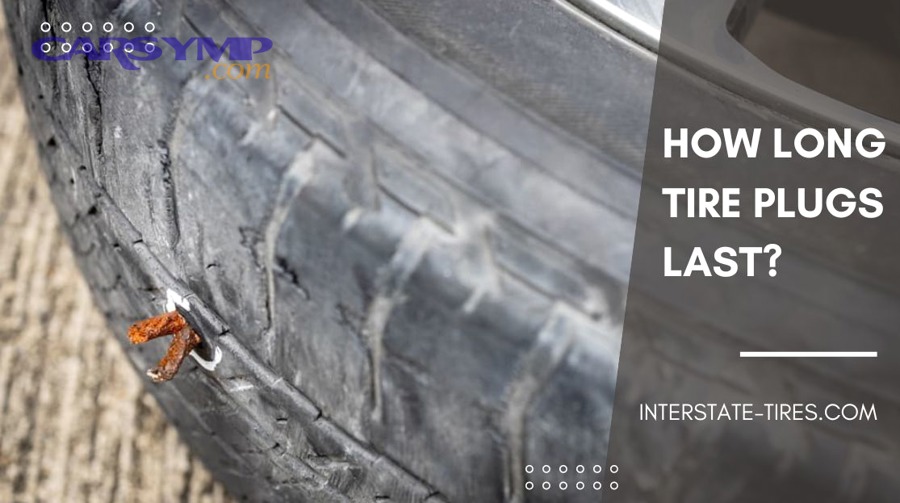
This comparison matters because the decision to repair or replace is rarely as simple as “is the tire flat?”
Does a Repaired Tire Last as Long as a New Tire?
No — a repaired tire cannot last as long as a new tire in absolute terms, because even the best combo repair is capped by the remaining usable life of the existing tire, not the lifespan of a tire starting from zero miles.
- A new tire carries no structural history, no prior punctures, and a full tread life of typically 40,000 to 70,000 miles depending on the tire model and compound
- A repaired tire, by contrast, carries whatever mileage it had accumulated before the puncture occurred, plus the small zone of structural compromise introduced by the repair itself
- Tire rubber also degrades chemically over time regardless of tread depth; most manufacturers and safety organizations recommend replacing tires after 6 to 10 years from the manufacture date, meaning a repaired 8-year-old tire may have only 2 years of safe service life regardless of how well the repair was done
In terms of day-to-day driving performance — handling, braking, fuel efficiency — a properly repaired tire in the tread zone performs comparably to its pre-puncture state under normal conditions. The difference between a repaired tire and a new tire becomes most significant at the extremes: sustained high speeds, maximum load, and long-term aging.
When Should You Replace a Tire Instead of Repairing It?
Replacement is the correct choice in six specific situations where no repair method can restore the tire to a safe operating condition.
The following scenarios define when a puncture is not repairable and replacement is mandatory:
- Sidewall or shoulder puncture: These areas flex constantly during driving, and no patch or plug can maintain a reliable seal in flexing rubber; a blowout risk is too high
- Puncture larger than one-quarter inch: Larger holes exceed the size that a plug or patch can seal reliably under sustained driving pressure
- Tire driven while flat: Internal casing damage from driving on a deflated tire is often invisible from the outside but compromises the tire’s ability to contain pressure safely after repair
- Multiple prior repairs or overlapping damage: Each additional repair compounds structural weakness; overlapping repairs cannot bond properly and create new failure points
- Tire aged 6 to 10 years or older: Even if tread depth appears adequate, rubber degradation reduces the tire’s ability to hold a repair bond and perform safely under stress
- Damage in the same area as a previous repair: Re-patching an already-repaired zone reduces structural integrity and is considered unsafe by professional tire repair standards
Replacing a tire in any of these circumstances is not an overcautious decision — it is the only decision that protects the driver, passengers, and everyone else sharing the road.
Special Scenarios That Affect How Long a Repaired Tire Lasts
Several vehicle-specific and environmental factors can significantly shorten the lifespan of an otherwise properly executed tire repair, particularly for AWD vehicles, run-flat tires, older tires at the time of repair, and drivers in regions with extreme seasonal temperature swings.
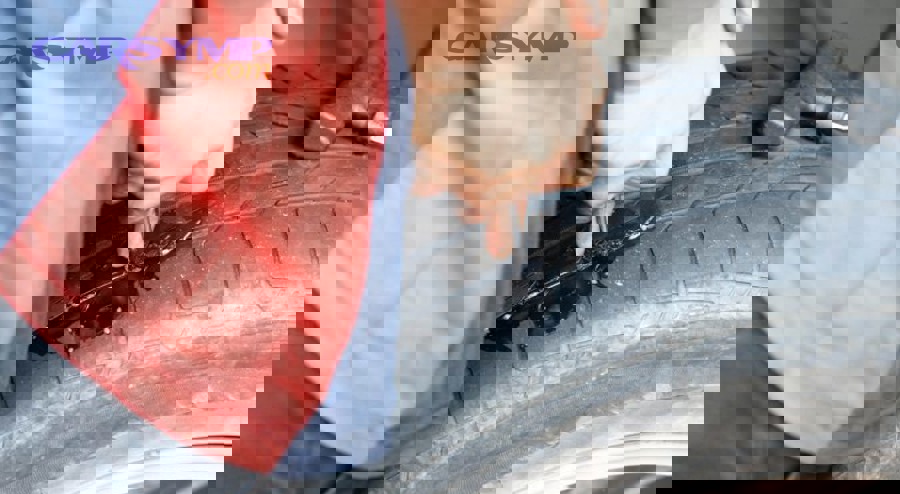
These micro-niche scenarios represent the edge cases where standard repair lifespan estimates do not fully apply, and where drivers need additional guidance to make the right decision.
Does a Repaired Tire Last as Long on an AWD or 4WD Vehicle?
On an AWD or 4WD vehicle, a repaired tire may need to be replaced sooner than its repair lifespan would otherwise suggest — because AWD systems require all four tires to remain within approximately one-quarter inch of tread depth of each other to prevent drivetrain damage.
- If the repaired tire has significantly different tread wear than the other three tires on the vehicle, the tread mismatch causes the AWD differential to work harder than designed, potentially causing expensive mechanical damage
- In some cases, a tire repaired on an AWD vehicle that has even modest tread depth mismatch forces the owner to replace all four tires simultaneously to restore uniform tread depth — making the repair economically counterproductive
- Subaru, Audi, and other AWD manufacturers specifically address this issue in their owner’s manuals, recommending that any replaced tire match the remaining tread depth of the other three within a tight tolerance
For AWD drivers, the calculation around whether to repair or replace is more complex than for two-wheel-drive vehicles, and consulting the vehicle’s owner manual before proceeding with a repair is strongly advised.
Can a Run-Flat Tire Be Repaired, and Will It Last as Long?
In most cases, run-flat tires cannot be safely repaired after they have been driven in a deflated state, and most manufacturers advise replacement rather than repair for any run-flat tire that has been used past zero pressure.
- Run-flat tires are constructed with reinforced sidewalls that support the vehicle’s weight even with no air pressure, allowing drivers to continue at reduced speed for a limited distance after a puncture
- When a run-flat is driven deflated, the reinforced sidewall sustains internal stress and heat damage that is not visible from the outside but compromises the tire’s structural integrity
- Because the internal damage cannot be reliably assessed without destructive disassembly of the tire, most tire manufacturers — including Bridgestone, Michelin, and Continental — explicitly state that run-flat tires that have been driven while flat should be replaced, not repaired
Drivers with run-flat tires should be aware that the convenience of continuing to drive after a puncture comes with the trade-off of likely needing a full tire replacement rather than a low-cost repair.
Does the Age of the Tire at the Time of Repair Affect How Long the Fix Lasts?
Yes — the age of the tire at the time of repair directly caps how long the repair will be useful, because no repair can extend a tire’s life beyond its safe service limit of 6 to 10 years from the manufacture date.
- A tire that is already 7 years old at the time of a tread puncture may deliver only 1 to 3 additional years of safe service regardless of how well the repair was performed
- Rubber compounds harden and become more brittle with age, which also reduces the vulcanizing cement’s ability to maintain a strong, flexible bond between the patch and the inner liner over time
- The manufacture date is molded into every tire’s sidewall as a four-digit DOT code — the first two digits indicate the week of manufacture, the last two indicate the year — making it straightforward to calculate a tire’s age before deciding whether a repair is cost-effective
Investing in a professional plug-patch combo repair on a tire that is already approaching the end of its safe service life is rarely cost-effective. In those cases, replacing the tire with a new unit of matching size and load rating is the smarter long-term decision.
How Do Extreme Temperatures and Road Stress Affect Patch Adhesion Over Time?
Extreme temperature cycling — the repeated expansion and contraction of rubber as temperatures swing between hot and cold — is one of the least-discussed but most structurally significant stressors on a tire repair bond over the long term.
- During summer heat, the rubber surrounding a patch expands; during winter cold, it contracts; each cycle applies a small shear force to the interface between the patch and the inner liner
- In climates with extreme seasonal temperature variation — such as regions where temperatures swing from below freezing in winter to above 95°F in summer — the cumulative effect of thousands of expansion-contraction cycles can gradually weaken patch adhesion even when the original repair was correctly performed
- Road stress from potholes, curb impacts, and rough pavement generates impact shock that travels through the tire casing and concentrates at structural discontinuities like repair zones
Drivers in high-temperature-variance climates or regions with poor road infrastructure should inspect repaired tires more frequently — ideally at every seasonal tire rotation — to check for any signs of patch separation, unusual bulging, or slow pressure loss near the repair area. Catching early patch degradation before it becomes a road failure is the most effective way to extend the safe service life of a repaired tire.
A repaired tire’s lifespan ultimately depends on the intersection of repair method, damage eligibility, professional execution, and ongoing maintenance — with a plug-patch combo on a qualifying tread puncture, performed by a certified technician, delivering the longest and most reliable result. For any situation where the damage falls outside repair guidelines, where the tire is approaching the end of its service life, or where the vehicle’s drivetrain demands matched tires, replacement remains the safest and most responsible path forward.