


A tire puncture is not repairable when the damage falls outside the tread’s central repair zone, exceeds 6mm in diameter, or occurs alongside structural compromise such as sidewall cracking, exposed cords, or belt separation. These conditions cross the threshold defined by the Tire Industry Association (TIA) and British Standard BSAU159, beyond which no patch-plug combination can restore safe, long-term performance. Understanding where that threshold lies is the difference between a $25 repair and a $200+ replacement — and more importantly, between a safe drive and a blowout at highway speed.
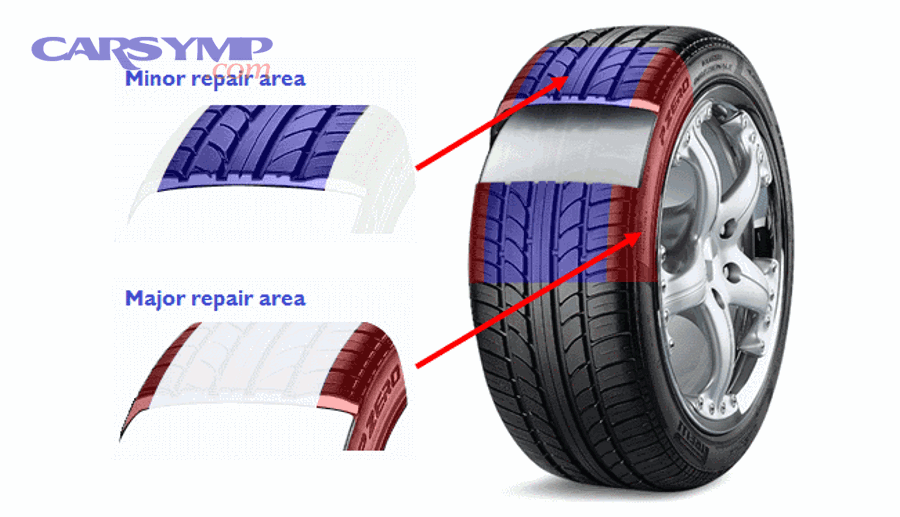
The location of a puncture is the single most decisive factor in any tire puncture repair assessment. Damage confined to the central three-quarters of the tread — known as the minor repair area — may qualify for a proper plug-patch repair. Anything in the shoulder, sidewall, or bead area is structurally off-limits. These zones absorb the greatest mechanical stress during normal driving, and any repair attempted there is prone to failure under load.
Beyond location, the size, depth, and pre-existing condition of the tire all play a role in the decision. A nail hole measuring 4mm in the center tread of a tire with healthy tread depth is a very different situation from a 3mm hole in a tire with worn-down rubber, a previous improper repair, or a bulge on the sidewall. Both may look like “just a puncture,” but only one is safely fixable.
What many drivers do not realize is that driving even a short distance on a flat — before reaching a shop — can silently transform a repairable puncture into an irreparable one. Next, this article walks through every condition that makes a puncture non-repairable, so you can accurately assess your tire and make the right call before risking your safety on the road.
What Does It Mean When a Tire Puncture Is Not Repairable?
A non-repairable tire puncture is a category of tire damage in which the location, size, or structural context of the injury prevents a safe, permanent seal from being achieved using industry-approved repair methods.
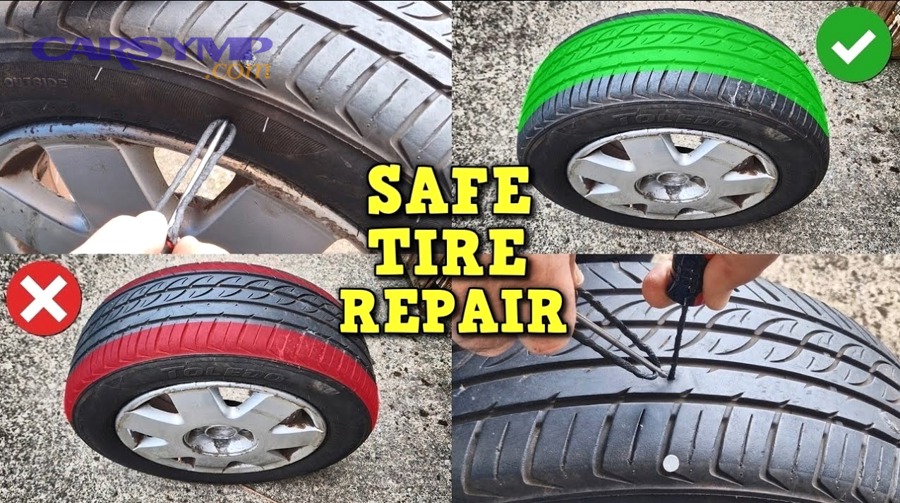
To better understand this definition, it helps to know what a proper repair actually involves. Specifically, a legitimate tire puncture repair requires a trained technician to fully dismount the tire from the rim, inspect the innerliner for hidden damage, prepare the puncture channel, and install a combination plug-patch from the inside. This process seals both the penetration channel and the inner surface of the tire simultaneously. When any condition makes that process unsafe or ineffective — whether because the puncture is in the wrong location, too large, or the tire itself is too compromised — the puncture is classified as non-repairable and the tire must be replaced.
What Industry Standards Determine Whether a Puncture Can Be Repaired?
Two authoritative frameworks govern tire repair decisions globally: the Tire Industry Association (TIA) Puncture Repair Procedures in the United States, and British Standard BSAU159 in the United Kingdom. Both establish nearly identical criteria and exist specifically to prevent improper repairs that could lead to catastrophic tire failure.
Key standards shared by both frameworks include:
- Repair zone: Only the central ¾ of the tread surface (the “minor repair area”) qualifies for repair.
- Maximum puncture diameter: No repair should be attempted if the hole exceeds ¼ inch (6mm) in diameter.
- Mandatory dismounting: The tire must be removed from the rim before any repair is performed; external-only plug repairs do not meet the standard.
- Innerliner inspection: Every repair requires a full internal inspection to rule out hidden carcass or belt damage.
- Repair method: A plug-patch combination is the only acceptable permanent repair; a plug alone or a patch alone does not meet TIA or BSAU159 standards.
According to the Tire Industry Association, when a puncture is properly repaired within these limits, the tire can be expected to deliver thousands of additional miles of safe, reliable performance — with no reduction in its original service life.
Is Every Flat Tire a Sign That the Tire Cannot Be Saved?
No — not every flat tire means the tire is beyond saving. Many flat tires result from a nail or screw entering the central tread area, which, if the tire was not driven flat for any meaningful distance, is often fully repairable under industry standards.
However, the critical distinction lies in what caused the flat and where on the tire the damage occurred. A slow leak from a roofing screw embedded in the center tread of a tire with 5mm of remaining tread depth is a strong candidate for repair. A flat caused by hitting a pothole at speed, running over jagged metal debris, or driving on a deflated tire for several miles is far more likely to have triggered secondary damage — sidewall pinching, belt separation, or innerliner tearing — that cannot be seen from the outside and cannot be repaired.
The key takeaway: the flat itself is not the problem. The type, location, and size of the damage — and the condition of the tire before and after the flat — determine whether repair or replacement is the correct course of action.
Where Is a Tire Puncture Not Repairable? (Location Rules)
There are four zones on a tire where a puncture is not repairable: the sidewall, the shoulder, the bead area, and any point outside the central ¾ tread repair zone — regardless of how small the hole appears.
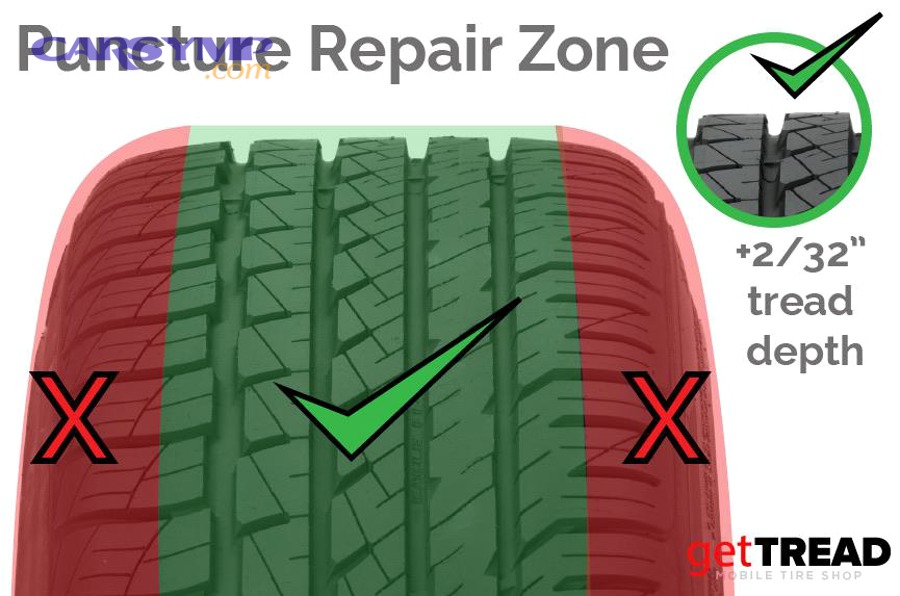
These Tire puncture location rules are non-negotiable under both TIA and BSAU159 standards, and any shop deviating from them is putting its customers at risk. More specifically, the tread of a tire is divided into a repairable center section and non-repairable outer sections. The table below summarizes each zone and its repairability status:
| Tire Zone | Location Description | Repairable? | Reason |
|---|---|---|---|
| Center Tread | Central ¾ of tread width | ✅ Yes (if ≤6mm) | Lowest stress zone; plug-patch holds reliably |
| Shoulder | Edge of tread, near sidewall | ❌ No | High flex and stress concentration |
| Sidewall | Side face of the tire | ❌ No | Maximum flex zone; repairs detach under load |
| Bead | Inner edge that seats on rim | ❌ No | Structural integrity of rim seal compromised |
This table covers the four primary zones evaluated during any professional repairability assessment.
Why Can’t a Sidewall Puncture Be Repaired?
A sidewall puncture cannot be repaired because the sidewall is the highest-flex, highest-stress zone of the entire tire, and no repair patch can maintain a permanent bond under the continuous bending forces it endures with every revolution.
For illustration: with every mile driven, a tire completes hundreds of revolutions. With each revolution, the sidewall compresses under the vehicle’s weight and then expands again as it rotates away from the contact patch. This cyclic flexing generates heat and mechanical stress that would cause any repair patch applied to the sidewall to progressively detach — eventually leading to sudden tread separation or a blowout.
There is an additional reason sidewall repairs are prohibited. When a tire runs flat — even briefly — the sidewall is pinched between the wheel rim and the road surface with no air pressure to maintain its shape. This pinching crushes the internal cords and fabric plies that give the sidewall its strength. The resulting damage is invisible from the outside but renders the tire structurally unsafe, even if the original puncture was small. This is why tire professionals universally advise against driving any distance on a flat tire: it can convert a repairable situation into a replacement situation in less than a mile.
Why Is Shoulder and Bead Damage Also Not Repairable?
The shoulder and bead regions are equally off-limits for repair, though for slightly different structural reasons. The shoulder is the transitional zone between the tread and the sidewall — it experiences both the flexing forces of the sidewall and the impact forces of the tread. A repair patch in this area faces stress from two directions simultaneously, making adhesion failure highly likely.
The bead, meanwhile, is the stiff inner edge of the tire that locks onto the wheel rim and maintains the airtight seal between tire and wheel. Any deformation, cracking, or puncture in the bead area compromises this seal in a way that cannot be safely restored. According to TIA guidelines, if there are punctures or damage in the shoulder or sidewall of the tire, it is not repairable — and tires with bead damage must be scrapped outright.
What Size of Puncture Is Too Large to Repair?
A puncture larger than ¼ inch (6mm) in diameter is too large to repair safely, as the plug-patch combination cannot achieve a permanent, airtight seal once the damage exceeds this threshold.
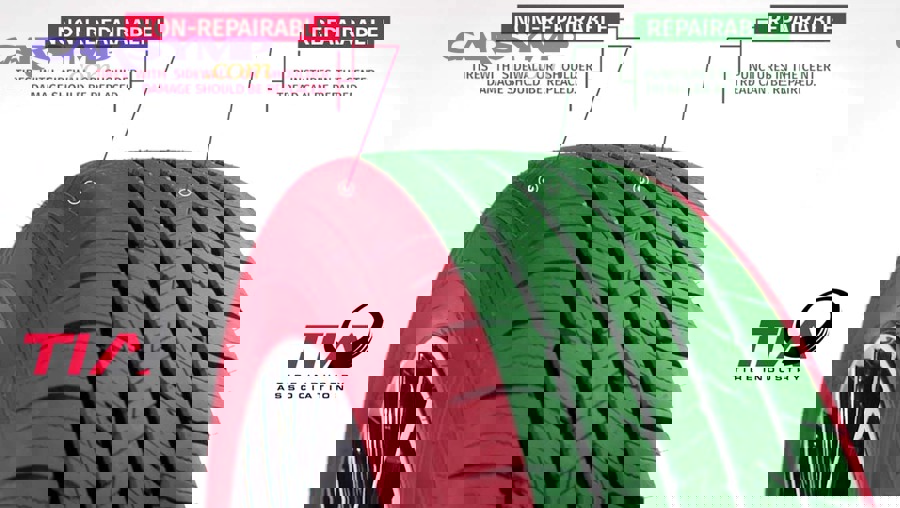
This 6mm rule is one of the most consistently applied standards across the tire industry worldwide. To give it physical context: a standard roofing nail typically measures 2–3mm in diameter, while a wood screw runs 3–5mm — both potentially within the repairable range if located in the center tread. A larger bolt, chunk of metal, or jagged road debris that creates a hole at or beyond 6mm crosses into replacement territory.
It is worth noting a distinction for tire construction type. For fabric-ply tires (common on standard passenger vehicles), the limit is ¼ inch (6mm). Some sources and manufacturers cite a slightly more generous 3/8 inch limit for steel-belted radial tires in specific contexts, though the TIA’s universal recommendation remains ¼ inch as the safe ceiling for all tire repair work. When in doubt, the more conservative limit applies.
Can a Tire with Two Punctures Still Be Repaired?
Yes — a tire with two punctures can still be repaired, but only under strict conditions that must all be met simultaneously.
According to Firestone Complete Auto Care and TIA repair guidelines, both punctures must be located in the minor repair area (center tread), neither puncture may exceed 6mm in diameter, the two punctures must be at least 16 inches apart, and the total number of repairs on the tire must not exceed two lifetime repairs. If the two punctures are positioned so that their repair patches would overlap, or if they are located directly opposite each other on the tire circumference, the tire cannot be repaired and must be replaced.
Prior repair history also matters. If the tire has been previously repaired, that earlier repair must have been performed correctly using a plug-patch combination with full dismounting and innerliner inspection. An external-only plug or sealant-only prior repair disqualifies the tire from further repair work, regardless of where the new puncture is located.
What Tire Conditions Make a Puncture Irreparable Regardless of Location?
There are five pre-existing tire conditions that make a puncture irreparable regardless of where it is located or how small it is: insufficient tread depth, structural damage (bulges, exposed cords, belt separation), dry rot, running-flat damage, and improper prior repairs.
These conditions matter because they speak to the overall safety and structural fitness of the tire as a whole. Even if a new puncture lands squarely in the center of the tread and measures only 4mm, a tire that was already unsafe before the puncture cannot be made safe by repairing that puncture alone. To illustrate each of these conditions:
Is a Puncture Repairable If the Tire Tread Is Too Worn?
No — a puncture is not repairable if the tire’s tread depth has dropped below the legal minimum, regardless of where the puncture is located.
The legal minimum tread depth is 1.6mm in the UK and EU, and 2/32 inch (approximately 1.6mm) in the United States. If any point around the full circumference of the tire has worn down to the tread wear indicators — the raised bars molded into the tread grooves — the tire must be replaced, not repaired. Attempting to repair a worn tire is both a safety violation and a liability issue for any tire professional who performs the work.
Additionally, if the tire is unevenly worn to the point where internal steel cords or fabric plies are visible anywhere on the tread surface, the tire is structurally compromised and must be scrapped immediately. According to Kwik Fit’s tire repair policy, if the remaining tread is less than 1.6mm anywhere around the entire circumference, or if the sidewall exhibits bulging or exposed cords, a repair should not be attempted as the tire is no longer fit for purpose.
Does Driving on a Flat Tire Make the Puncture Unrepairable?
Yes — driving on a flat tire frequently makes the puncture unrepairable, even if the original damage was in a perfectly repairable location.
When a tire loses air pressure and the vehicle continues moving, the sidewall collapses and is repeatedly crushed between the rim and the road surface. This pinching shears the internal cord structure and can separate the plies from the innerliner — damage that is invisible from the outside but catastrophic to the tire’s structural integrity. A technician who dismounts the tire for inspection will find innerliner cracking, ply separation, or bead distortion that immediately disqualifies the tire from any repair.
The run-flat exception applies here in a limited way. Run-flat tires are built with reinforced sidewalls that resist this collapse, allowing the vehicle to travel up to 50 miles at no more than 50 mph after a puncture. However, if a run-flat tire is driven below 15 PSI for any extended distance, the same internal damage can occur, and most manufacturers and shops will not repair a run-flat tire that has been operated under those conditions.
What Other Tire Damage Makes Repair Impossible?
Beyond tread depth and flat-driving damage, several additional types of tire damage make any puncture repair impossible, regardless of where the new hole is located.
- Bulges or bubbles on the sidewall: These indicate internal impact damage — broken cords beneath the rubber surface. A bubble means the structural plies have already failed in that area; the tire is a blowout waiting to happen.
- Cuts, splits, and gouges: Unlike a clean puncture from a nail, cuts and tears cannot be sealed with a plug-patch. They compromise too much surface area of the rubber and innerliner.
- Exposed cords: Any visible steel or fabric cord on the tread or sidewall surface means the protective layers of rubber have worn or torn away. This is an immediate replacement situation.
- Belt separation: A subtle symptom often felt as vibration or scalloping on the tread surface. Belt separation means the steel reinforcement layers have delaminated from the rubber, and the tire is structurally failed.
- Dry rot: Age-related oxidation causes the rubber compound to become brittle and develop a network of fine surface cracks. Dry rot cannot be repaired; it progresses invisibly through the tire body and leads to sudden structural failure.
How Do You Know If Your Tire Needs Replacing Instead of Repairing?
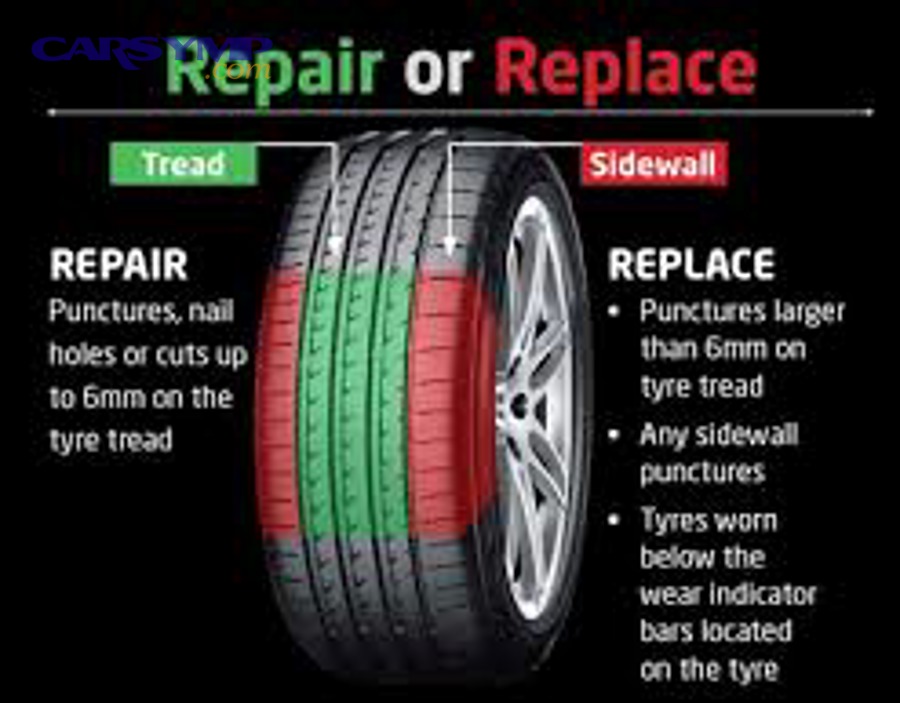
You can determine whether your tire needs replacing instead of repairing by checking six key criteria: puncture location, puncture size, tread depth, visible structural damage, driving history after the flat, and prior repair record.
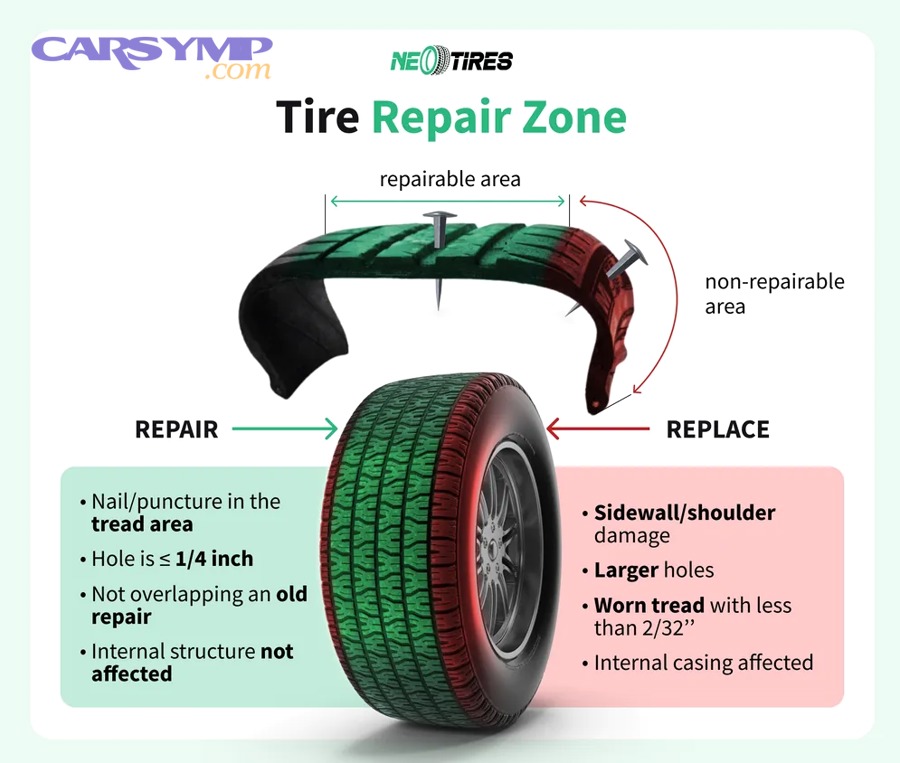
However, it is critical to understand that not all of these signals are visible from the outside. The most dangerous tire damage — innerliner cracking, ply separation, belt delamination — requires the tire to be fully dismounted and internally inspected before any conclusion can be drawn. What looks like a simple nail-in-tread situation from the outside can conceal serious hidden damage that makes repair unsafe. This is why the TIA mandates internal inspection as a non-negotiable step in any legitimate repair process.
The following comparison table provides a clear side-by-side guide to help you understand when repair is viable versus when replacement is the only safe option:
| Criterion | Repairable | Must Replace |
|---|---|---|
| Puncture location | Central ¾ of tread | Sidewall, shoulder, bead |
| Puncture size | ≤ 6mm (¼ inch) | > 6mm (¼ inch) |
| Tread depth | ≥ 1.6mm full circumference | < 1.6mm anywhere |
| Structural damage | None visible or internal | Bulge, bubble, exposed cords, belt separation |
| Driven flat? | No / very short distance | Yes / extended distance |
| Prior repairs | Max 1, properly done, 16″+ away | Overlapping, improperly done, or 3+ repairs |
| Tire age/condition | Normal wear, no dry rot | Dry rot, cracking, aged rubber |
This table is intended as a first-assessment guide only. A professional inspection remains the definitive standard — and after repair, a proper check for slow leaks (After repair: checking for slow leaks is a standard step in any shop’s post-repair protocol) confirms the seal is airtight before the vehicle returns to the road.
According to the Tire Industry Association, when a puncture is within established repair limits and is properly fixed using TIA-approved procedures, the repaired tire can be expected to deliver the same safe, reliable performance as before the damage — with no reduction in remaining service life.
What Are Your Options When a Puncture Is Not Repairable?
When a puncture is confirmed as non-repairable, there are three immediate options available: use an emergency sealant kit as a short-term measure to reach a tire shop, use the vehicle’s spare tire if one is fitted, or arrange for roadside assistance and direct tire replacement.
Of these three, replacement is the only permanent and safe resolution. The other two options exist purely to get the vehicle off the road and to a professional — they are not solutions in themselves. Below, each secondary scenario is examined in depth to help drivers navigate their specific situation.
Can a Tire Sealant or Inflator Kit Be Used on a Non-Repairable Puncture?
Yes — a tire sealant or inflator kit can be used as a temporary emergency measure on a non-repairable puncture, but it does not make the tire safe for continued use and introduces complications for the replacement process.
Emergency sealants work by injecting a foam or liquid compound through the valve stem to temporarily plug the puncture from the inside. They can restore enough pressure to drive slowly to the nearest tire shop. However, there are several important limitations that drivers must understand before relying on them:
- They do not work on sidewall damage, large tears, or bead failures. Sealants are only effective on small tread-area holes — the same situations a proper repair could also have addressed.
- They can damage the Tire Pressure Monitoring System (TPMS). The sealant compound coats the interior of the tire and can clog TPMS sensors, requiring additional servicing.
- They make professional repair or inspection harder. Many tire shops will refuse to perform a standard repair on a tire that has been treated with sealant because the compound obscures the innerliner and contaminates the repair area.
- They are not effective in freezing temperatures, as the foam or liquid compound can freeze inside the tire before sealing the puncture.
The bottom line: treat a sealant kit as a last resort to reach safety, not as a substitute for proper assessment and replacement.
Are Run-Flat Tires Repairable After a Puncture?
Run-flat tires are sometimes repairable after a puncture, but only under a narrow set of conditions — and many shops will decline to repair them as a standard policy.
Run-flat tires (branded as ZP or EMT by Michelin, RSC by Bridgestone, and SSR by BMW/Continental) feature reinforced sidewall inserts that support the vehicle’s weight even when the tire is fully deflated. This is a unique attribute that allows the driver to travel up to 50 miles at 50 mph after a puncture without the catastrophic sidewall collapse that would destroy a conventional tire.
However, this same reinforced construction creates a repairability problem. Once a run-flat tire has been driven on while deflated — even at the reduced speed and distance limits — the internal reinforcement inserts and sidewall structure may have sustained heat and compression damage that is invisible externally. According to Michelin’s tire repair guidelines, run-flat tires can be repaired once, provided the puncture is in the tread area, does not exceed the standard 6mm limit, and the tire was never operated below 15 PSI for an extended distance.
In practice, most independent tire shops and many dealerships decline run-flat repairs as a policy choice, citing liability concerns and the difficulty of confirming internal condition. Drivers with run-flat tires should always consult the tire manufacturer’s specific guidance and seek a shop trained in run-flat assessment.
What Happens If You Drive on a Tire That Cannot Be Repaired?
Driving on a tire that cannot be repaired creates four escalating risks: blowout, loss of vehicle control, suspension and wheel damage, and legal liability.
Blowout risk is the most immediate danger. A tire with a non-repairable puncture — whether from sidewall damage, a hole larger than 6mm, or compromised structural integrity — is operating with a progressively failing pressure seal. Under highway speeds and load, the remaining rubber and cord structure can fail suddenly and completely, causing an explosive deflation that throws the vehicle into an uncontrolled swerve.
Loss of control following a blowout is particularly dangerous at speeds above 60 mph, where the steering and braking response required to recover the vehicle exceeds the capability of most drivers. NHTSA data consistently identifies tire failure as a contributing factor in thousands of serious road accidents annually in the United States.
Wheel and suspension damage compounds the cost of ignoring an irreparable tire. Continued driving on a deflating or flat tire rapidly destroys the tire’s internal structure, and the rim itself can crack or bend from direct road contact — turning a $150 tire replacement into a $500+ wheel replacement.
Legal implications apply in jurisdictions where driving on a tire below the legal tread limit or with visible structural damage constitutes a traffic offense. In the UK, driving on an unroadworthy tire carries a fine of up to £2,500 per tire and three penalty points on the driver’s license.
How Much Does It Cost to Replace a Tire vs. Repair One?
A professional tire repair costs between $15 and $30 on average, while a single tire replacement typically ranges from $100 to $300 or more depending on the tire brand, size, and vehicle type.
This cost gap is significant, which is why many drivers feel the pressure to push for a repair even when replacement is the safer choice. However, the cost comparison changes dramatically when the full picture is considered:
| Scenario | Estimated Cost |
|---|---|
| Professional plug-patch repair | $15 – $30 |
| Budget passenger tire replacement | $80 – $120 |
| Mid-range all-season replacement | $150 – $220 |
| Premium or performance tire replacement | $250 – $400+ |
| Wheel/rim replacement (from driving flat) | $200 – $600+ |
| Suspension repair (from blowout damage) | $400 – $1,500+ |
| Insurance deductible after blowout accident | $500 – $2,000+ |
The table above illustrates the financial argument for replacing a tire promptly when it is confirmed as non-repairable. The cost of a replacement tire is a fraction of the downstream expense that follows a blowout or accident caused by driving on a structurally compromised tire. When a technician confirms that a puncture cannot be safely repaired, that assessment is not an upsell — it is a safety determination backed by industry standards designed to prevent exactly the kind of cascading failures shown in the right column of this table.
In short, the $25 you save by avoiding a replacement today can cost you a thousand dollars — or far worse — tomorrow. When a puncture is not repairable, replacement is not just the recommended option. It is the only safe one.