


tire replacement cost typically ranges from $460 to $1,280 for a full set of four tires, with individual tires priced anywhere from $50 to over $1,000 depending on type, brand, and vehicle class. Most car owners, however, are caught off guard not by the tire price itself but by what surrounds it — labor, balancing, disposal fees, and warranties that quietly inflate the final invoice. Understanding what a complete estimate really looks like before you walk into a shop is one of the most practical things you can do for your vehicle budget.
The total cost of tire replacement is rarely a single number. It is shaped by a combination of variables — tire type, vehicle size, retailer choice, and the condition of related components like TPMS sensors — each of which adds or subtracts meaningfully from the bottom line. Knowing which factors apply to your specific situation allows you to compare quotes intelligently rather than accepting the first number you are given.
Choosing where to buy and install your tires matters just as much as which tires you select. A set of tires purchased at a wholesale club like Costco may include free mounting, balancing, rotation, and a road hazard warranty in a single bundled price, while a dealership may charge separately for each of those services and still quote you a higher unit price per tire. The retailer decision is often where the biggest savings are found.
Finally, knowing when to repair versus when to replace — and whether replacing one tire is sufficient or whether all four need to go — is the difference between a $40 fix and a $1,000 expenditure. Below, this guide walks through every layer of the tire replacement estimate, from average costs and hidden fees to smart comparisons and specialized vehicle scenarios, so you can make a fully informed decision before spending a dollar.
What Is a Tire Replacement Cost Estimate?
A tire replacement cost estimate is a comprehensive financial projection — not just the advertised per-tire price — that includes every charge applied from the moment a new tire is ordered to the moment your vehicle leaves the shop. This covers the tire unit price, mounting, balancing, valve stem replacement, disposal fees, TPMS recalibration, and any optional add-ons like road hazard warranties.
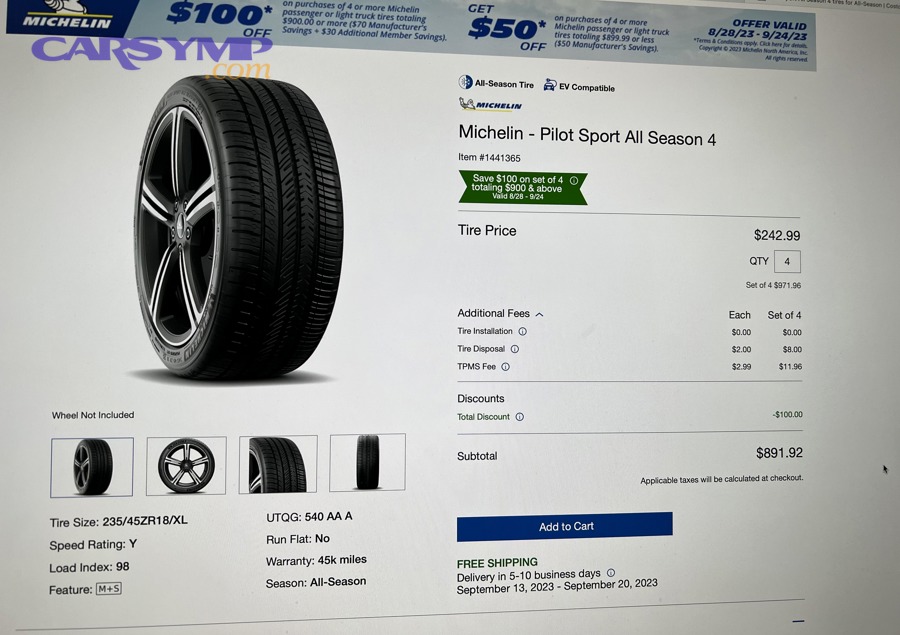
To better understand what this means in practical terms, it helps to examine each line item that appears on a typical tire replacement invoice.
What Does a Tire Replacement Cost Estimate Include?
A complete tire replacement estimate is built from several distinct cost components that are frequently bundled together — or deliberately separated — depending on the retailer. The following table outlines each component and its typical cost range so you can immediately identify whether a quote you receive is fair or missing charges that may surface later.
The table below breaks down every cost component commonly included in a tire replacement estimate:
| Cost Component | Typical Cost Range | Notes |
|---|---|---|
| Tire unit price | $50 – $1,000+ per tire | Varies by type, brand, size |
| Mounting fee | $10 – $15 per tire | Removing old tire, fitting new one |
| Balancing fee | $10 – $15 per tire | Ensures smooth rotation |
| Valve stem replacement | ~$11 per tire | Often replaced during installation |
| Disposal/environmental fee | $1.50 – $2 per tire | State-regulated recycling cost |
| TPMS sensor service | ~$40 per sensor | Required on most post-2008 vehicles |
| Road hazard warranty | ~$32 per tire | Optional but commonly offered |
| Alignment check | $50 – $100 | Recommended with new tire installation |
Specifically, the mounting and balancing fees alone can add $80 to $120 to a four-tire installation. When you add a TPMS service for all four sensors ($160) and a road hazard warranty ($128), the supplementary charges on top of the tire price can exceed $400 for a full set — a figure that surprises many car owners who budgeted only for the tires themselves.
Is a Tire Replacement Estimate the Same as a Tire Repair Estimate?
No — a tire replacement estimate and a tire repair estimate are not the same thing, and confusing the two can lead to either overspending or underestimating the severity of your tire damage.
Tire repair refers to addressing damage that does not require a new tire — most commonly a puncture in the tread area that can be sealed with a plug or patch. A standard tire plug costs between $10 and $25, while a more thorough internal patch repair typically runs $20 to $50. A complete flat tire repair, including removal, inspection, patching, remounting, and rebalancing, generally costs $50 to $100 per tire. Tire replacement, by contrast, involves discarding the damaged tire entirely and installing a new one. Replacement becomes necessary when the damage is located on the sidewall, when the tread depth has worn below 2/32 of an inch, when the tire shows visible bulging or cracking, or when the tire is more than ten years old. According to data published by Consumer Reports, tread depth below the legal minimum is the leading cause of tire-related replacement decisions, accounting for 64% of new tire purchases among surveyed drivers.
How Much Does Tire Replacement Cost on Average?
For the average car owner, tire replacement costs between $115 and $300 per tire for a mid-range all-season option, with a full set of four typically landing between $460 and $1,280 including installation. Premium tires, performance models, and large-format SUV or truck tires can push those numbers significantly higher.
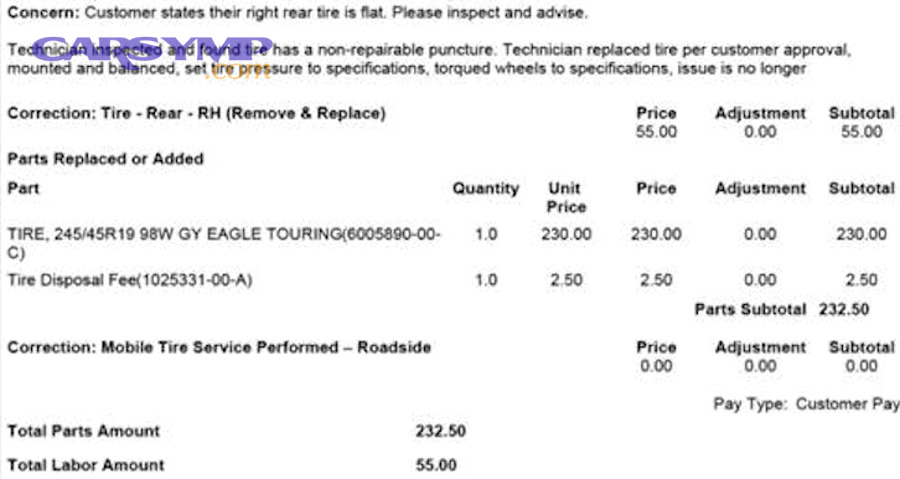
To understand the full picture, it is worth breaking the average cost down by whether you are replacing a single tire, a pair, or a complete set.
How Much Does It Cost to Replace One Tire?
Replacing a single tire costs anywhere from $50 to over $1,000 depending on the tire category, with most mainstream replacement tires for passenger vehicles falling in the $100 to $250 range per unit. The table below shows approximate per-tire pricing by category, excluding installation:
| Tire Category | Cost Per Tire (Tire Only) |
|---|---|
| Budget / entry-level | $50 – $100 |
| Mid-range all-season | $100 – $200 |
| Premium all-season | $150 – $300 |
| Winter / snow tire | $89 – $307 |
| Performance / summer | $200 – $500+ |
| Truck / SUV all-terrain | $150 – $400+ |
| Luxury / specialty | $300 – $1,000+ |
It is important to note that replacing only one tire is appropriate in limited circumstances — primarily when the remaining three tires retain at least 70% of their tread life. On all-wheel-drive vehicles in particular, a single new tire paired with three worn tires can create significant drivetrain stress, and most manufacturers recommend replacing tires in pairs or as a full set on AWD platforms.
How Much Does It Cost to Replace All Four Tires?
Replacing all four tires at once is the most common and recommended approach for most drivers, and the total out-the-door cost typically ranges from $460 to $1,280 for standard passenger vehicles, rising to $800 to $2,000 or more for trucks, SUVs, and performance cars. According to Consumer Reports’ 2024 tire buyer survey, the median price paid per tire in 2023 was $223, which places a realistic four-tire replacement cost — including median installation of $31 per tire — at approximately $1,016 for the average driver.
For reference, here is a typical total cost range by vehicle class:
| Vehicle Class | Estimated Full Set Cost (Installed) |
|---|---|
| Compact / subcompact sedan | $460 – $800 |
| Midsize sedan / hatchback | $550 – $950 |
| Crossover / small SUV | $650 – $1,100 |
| Full-size SUV / truck | $800 – $1,600 |
| Performance / luxury car | $1,000 – $2,500+ |
How Much Does Tire Installation and Labor Cost?
Tire installation and labor costs typically range from $50 to $120 per tire for a full-service installation that includes mounting, balancing, valve stem replacement, and TPMS recalibration, with most shops charging $20 to $35 per tire for mounting and balancing alone. Labor costs represent the most variable line item in any tire replacement estimate, fluctuating based on shop type, geographic location, and the complexity of the vehicle’s wheel and sensor system.
To use a concrete example: at Walmart Auto Care Centers, mounting runs approximately $11 per tire, balancing costs $15, and a road hazard warranty adds another $10, bringing the installation subtotal to roughly $36 per tire, or $144 for four tires. At a dealership or a premium tire chain, that same service package can cost $60 to $90 per tire. Choosing the right service channel — covered in detail in the retailer comparison section below — is often where the most meaningful savings are found.
What Factors Affect the Total Cost of Tire Replacement?
There are four primary factors that affect tire replacement cost: tire type, vehicle type, brand selection, and geographic location — each of which can shift the final estimate by hundreds of dollars. Understanding these variables in advance gives you the leverage to anticipate costs accurately and negotiate more confidently.
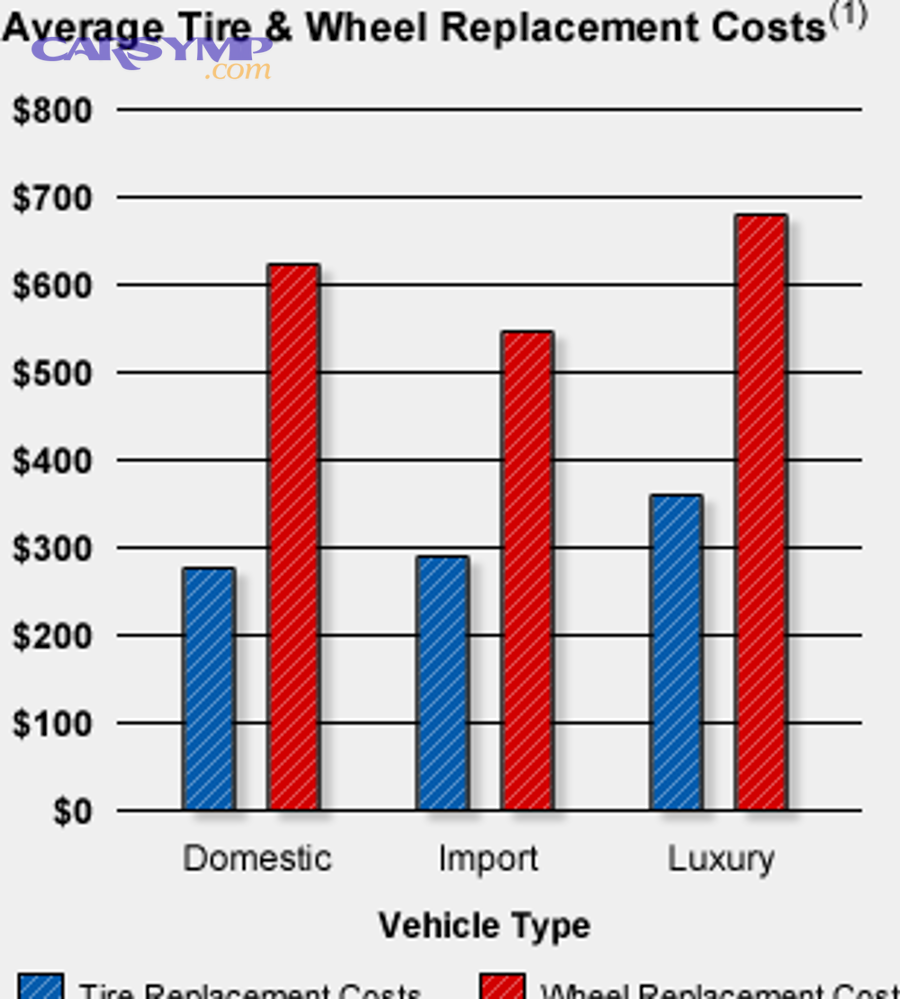
Let’s explore each factor in detail.
How Does Tire Type Affect Replacement Cost?
There are four main tire types that affect replacement cost — all-season, winter, summer/performance, and all-terrain — based on their intended use, rubber compound, and tread design complexity. All-season tires are the most affordable and widely available option, making them the default replacement choice for the majority of passenger car owners. Winter tires use a softer rubber compound engineered for sub-40°F performance, which increases manufacturing cost slightly and reduces the tire’s overall lifespan in warm conditions — meaning you pay for replacement more frequently if winter tires are used year-round. Summer and performance tires carry the highest unit price and wear faster than all-season alternatives, making total lifecycle cost an important consideration. All-terrain tires, designed for light off-road use and truck fitment, sit at a premium price point due to their reinforced construction and specialized tread patterns. According to pricing data from Performance Plus Tire, the Bridgestone Blizzak WS90 winter tire ranges from $89 to $221 per unit, the Michelin Pilot Alpin PA4 performance winter tire reaches $273 to $842 per tire, and budget all-terrain options for trucks begin around $150 per tire and rise sharply for premium brands.
How Does Vehicle Type Affect Tire Replacement Cost?
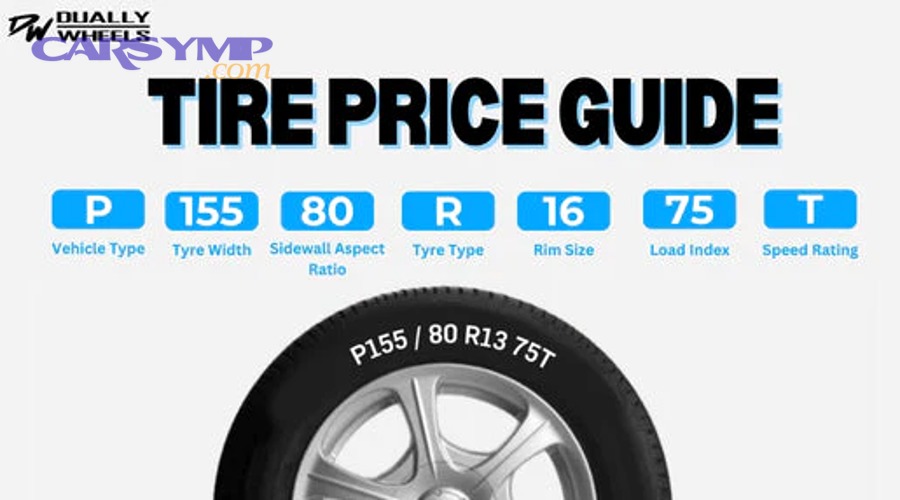
Vehicle type affects tire replacement cost primarily through tire size and load rating — larger diameter tires for SUVs and trucks cost more to manufacture, ship, and install than smaller tires designed for compact sedans. A 15-inch tire for a subcompact car might cost $80 to $120, while an equivalent-quality 20-inch tire for a full-size SUV can run $200 to $400 or more per unit. Beyond size, performance and luxury vehicles frequently require tires with proprietary speed ratings, load indexes, or noise-canceling foam inserts — specifications that dramatically limit the pool of compatible replacements and push prices higher. For example, a BMW 7 Series or Mercedes S-Class often requires OEM-approved tires that carry a 30 to 50% price premium over standard-fitment equivalents. Knowing your vehicle’s exact tire specification — found on the driver’s door jamb sticker or in the owner’s manual — is the essential first step in getting a realistic replacement cost estimate.
Does Tire Brand Affect How Much You Pay for Replacement?
Yes — tire brand significantly affects replacement cost, with premium brands like Michelin, Bridgestone, and Continental commanding prices 30 to 80% higher than budget alternatives such as Nexen, Kumho, or Sentury. However, brand price differences are not purely a reflection of marketing. Premium tires typically deliver treadwear warranties of 50,000 to 80,000 miles, compared to 30,000 to 40,000 miles for budget options — meaning the cost-per-mile of a more expensive tire is often lower than its sticker price suggests. The Hankook Kinergy PT, for example, offers a 90,000-mile treadwear warranty at approximately $165 per tire, representing strong long-term value relative to budget alternatives with half the warranty coverage. According to Consumer Reports’ 2024 tire satisfaction survey, Michelin earned a “much-above-average” owner satisfaction rating across all four tire categories evaluated, correlating with its premium pricing and long warranty terms.
How Do You Compare Tire Replacement Costs Across Retailers?
Specialty tire chains offer the best balance of price, service, and warranty coverage for most car owners, while wholesale clubs provide the lowest total out-the-door cost for drivers who prioritize bundled value, and dealerships are best suited for OEM-spec replacements on warranty-sensitive or luxury vehicles. The retailer you choose can create a $200 to $500 difference in your final bill for an identical set of tires.
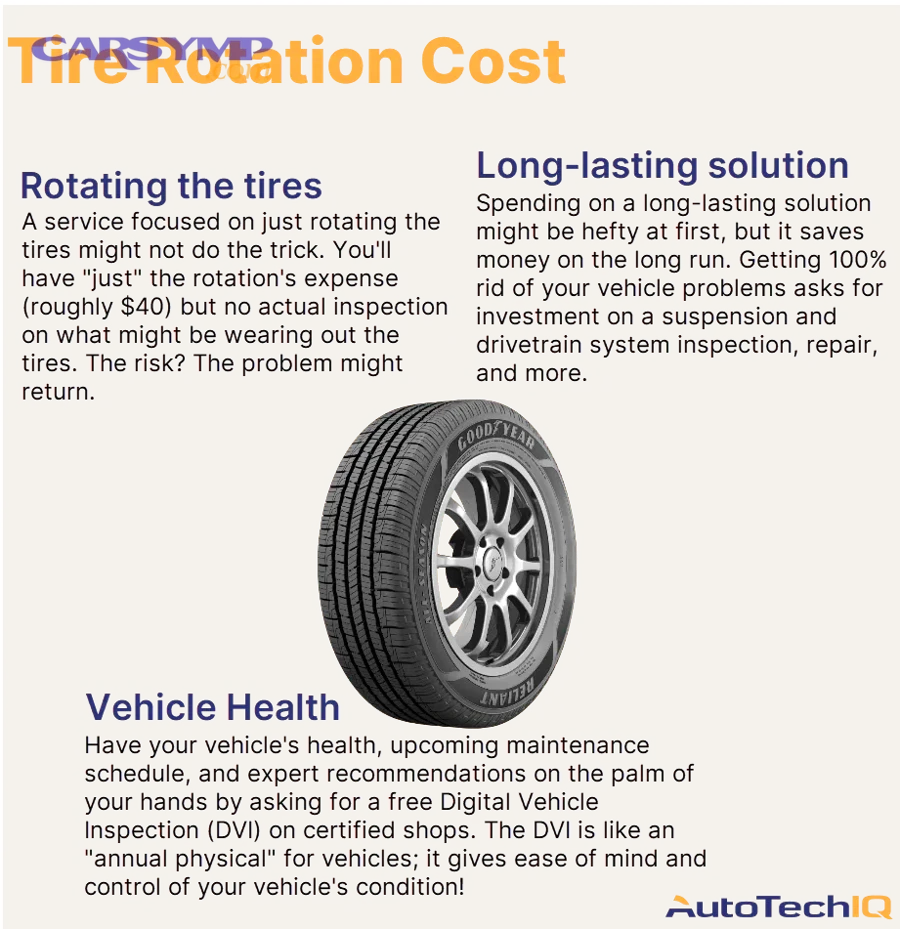
To better understand How to read a tire quote and fees, it helps to know what each retailer type includes in their base price and what they charge separately.
Which Is Cheaper: Dealership, Tire Shop, or Wholesale Club (Costco/Sam’s Club)?
Wholesale clubs win on total out-the-door price, specialty tire shops offer the most flexibility, and dealerships are most expensive but best for OEM-matching. The following table summarizes the key trade-offs:
| Retailer Type | Typical Price Level | Includes in Base Price | Best For |
|---|---|---|---|
| Dealership | Highest | Installation, OEM fitment | Luxury, warranty-sensitive vehicles |
| Specialty chain (Discount Tire, Tires Plus) | Mid-range | Mount, balance, rotation, warranty | Most drivers; best promotions |
| Wholesale club (Costco, Sam’s Club) | Lowest total cost | Mount, balance, rotation, road hazard, TPMS | Budget-conscious buyers |
| Independent shop | Variable | Varies widely | Negotiation, older vehicles |
| Online + local installer | Lowest tire price | Installer fee separate | Tech-savvy buyers with specific models in mind |
According to Consumer Reports’ tire buyer survey, more than half of surveyed drivers had their tires installed free, which directly reflects the bundled pricing model offered by wholesale clubs and specialty chains running promotional campaigns.
Is It Cheaper to Buy Tires Online and Have Them Installed Locally?
Yes — buying tires online and having them shipped to a local installer is often the cheapest path for drivers who know exactly which tires they need, but the savings require careful accounting of all associated fees. Major online tire retailers such as Tire Rack and SimpleTire offer competitive unit prices and maintain networks of affiliated local installers who accept shipped tires, with installation fees typically ranging from $15 to $30 per tire. The primary trade-off is warranty coverage — tires purchased online may not qualify for the same road hazard protection available through in-store purchases, and some manufacturers limit warranty claims on tires installed by non-authorized dealers. Before purchasing online, verify that your chosen installer accepts shipped tires, confirm the installer’s per-tire fee in writing, and check whether the online retailer or tire manufacturer offers a standalone road hazard warranty for mail-order purchases. When all fees are factored in, online purchasing typically saves 10 to 25% compared to in-store retail prices at specialty chains.
Should You Repair or Replace Your Tires?
You should repair your tire if the damage is a puncture smaller than ¼ inch located in the central tread area, and you should replace the tire if the damage involves the sidewall, tread depth below 2/32 of an inch, visible structural damage, or the tire is more than ten years old. Making the wrong call in either direction costs money — unnecessary replacement wastes hundreds of dollars, while delaying a needed replacement creates genuine safety risk.
When Is Tire Repair Enough Instead of Full Replacement?
Tire repair is a sufficient and safe solution when three specific conditions are met: the puncture or damage is located entirely within the tread area (not the shoulder or sidewall), the hole or cut is no larger than ¼ inch in diameter, and the tire has not been driven on while flat for any meaningful distance. When these conditions are satisfied, a professional plug-and-patch repair costs $20 to $50 and restores the tire to full service. However, repair is never appropriate for sidewall damage — the sidewall flexes continuously under load, and any compromise to its structural integrity creates blowout risk that no patch can safely address. Similarly, a tire that has been driven flat, even briefly, may have suffered internal delamination that is invisible from the outside but structurally significant. When tire replacement is required, understanding When to replace tires based on tread depth (the penny test indicates replacement at 2/32″) and age (manufacturer maximum of ten years from production date) is the most reliable guide.
Is It Worth Replacing One Tire or Should You Replace All Four?
Replacing one tire is appropriate only when the remaining three tires retain more than 70% of their original tread depth — otherwise, replacing at minimum two tires (in a matching pair on the same axle) is strongly recommended, and replacing all four is ideal for optimal safety and handling balance. On all-wheel-drive vehicles, the drivetrain transfers torque across all four wheels simultaneously, meaning a significant tread depth mismatch between tires can force the AWD system to compensate continuously, accelerating wear on the center differential and transfer case. Most AWD manufacturers recommend replacing all four tires simultaneously. On front-wheel-drive and rear-wheel-drive vehicles, the two-tire replacement rule applies — new tires should always be installed on the rear axle to maintain rear traction stability, regardless of which tires were damaged. According to Tire Rack’s installation guidelines, placing new tires on the rear axle reduces the risk of oversteer and loss of vehicle control in wet conditions.
What Else Should Car Owners Know Before Budgeting for Tire Replacement?
Beyond the core estimate, there are four supplementary areas that meaningfully affect your total cost and ownership experience: hidden invoice fees, money-saving strategies, EV-specific replacement costs, and run-flat tire pricing — each of which addresses a micro-niche scenario that standard cost guides rarely cover in full.
What Are the Hidden Fees in a Tire Replacement Invoice?
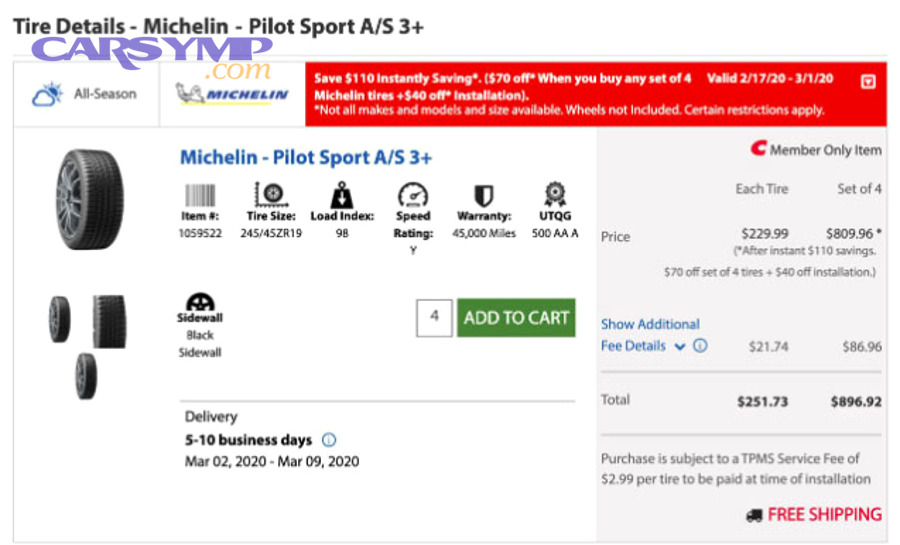
Hidden fees in a tire replacement invoice include TPMS sensor service, road hazard warranties, environmental recycling charges, alignment upsells, and nitrogen inflation upgrades — none of which are reflected in an advertised per-tire price. The most commonly overlooked charge is the TPMS sensor service fee. On virtually all passenger vehicles manufactured after September 2007, federal law requires a tire pressure monitoring system, and each sensor must be inspected, reprogrammed, or replaced whenever new tires are installed. A TPMS sensor replacement costs approximately $40 per sensor, meaning a four-wheel service can add $160 to your invoice with no advance warning if you have not asked about it. The road hazard warranty — typically $25 to $35 per tire — is optional but worth evaluating: Consumer Reports data shows that approximately 25% of drivers who purchased road hazard coverage had used it by the time of the survey. Environmental and disposal fees are non-negotiable state-regulated charges that add $1.50 to $3 per tire. Alignment checks, while genuinely useful for extending new tire life, are an upsell that adds $50 to $100 but is legitimately recommended when replacing a full set. Understanding how to read a tire quote and fees — specifically by requesting an itemized written estimate before approving any work — is the most effective way to avoid bill shock.
How Can You Save Money on Tire Replacement Without Compromising Safety?
The most effective way to save money on tire replacement is to plan your purchase before your tires reach a critical condition, allowing you to shop for rebates, compare retailers, and avoid the premium pricing that comes with urgent, same-day replacement needs. Specifically, tire manufacturers and major retailers run seasonal promotions — most commonly in spring and fall, coinciding with winter tire changeover periods — that offer $50 to $200 rebates on qualifying tire sets. Purchasing from a wholesale club like Costco, which bundles mounting, balancing, rotation, inflation checks, and road hazard warranty into a single price with no additional fees, consistently delivers the lowest total out-the-door cost for standard passenger vehicles. Mid-range brands such as Hankook, Cooper, and Nexen offer strong performance and treadwear warranties at 20 to 35% below equivalent Michelin or Bridgestone pricing, making them a sound choice for drivers who want durability without the premium brand markup. Additionally, after new tire installation, following proper Break-in and first 500 miles tips — which include avoiding hard braking, sharp cornering, and high speeds during the initial 500 miles — allows the tire’s release compounds to wear off and the rubber to seat properly on the rim, extending tread life and protecting your investment from the very first day.
How Much Does Tire Replacement Cost for Electric Vehicles (EVs)?
EV tire replacement costs run $50 to $150 more per tire than equivalent-size tires for internal combustion engine vehicles, driven by the reinforced load ratings, acoustic foam lining, and low-rolling-resistance compounds required to handle an EV’s battery weight and support range efficiency. A Tesla Model 3, for example, requires tires with a specific load index to support the vehicle’s heavier curb weight — tires that are not interchangeable with standard fitment options for a comparable gas-powered sedan. The situation is compounded by wear rate: EV tires wear 20 to 30% faster than ICE vehicle tires due to the instant torque delivery of electric motors, which accelerates tread abrasion from the first acceleration. This means EV owners face more frequent replacement cycles — potentially every 20,000 to 30,000 miles rather than the 50,000 to 60,000 miles typical for conventional vehicles — making the true long-term tire budget for EV ownership meaningfully higher than for comparable gas vehicles. Michelin’s e.Primacy All Season tire, released in February 2025, was specifically engineered to address EV wear rates and delivered an estimated service life of 45,764 miles in Federal Highway Administration testing — approximately 13,000 to 15,000 miles beyond its nearest competitors, according to Performance Plus Tire.
What Is the Cost of Replacing Run-Flat Tires vs. Standard Tires?
Run-flat tires cost 40 to 80% more per tire than standard equivalents, cannot typically be repaired after a puncture, and require specialized mounting equipment — making them the most expensive per-unit tire replacement scenario for mainstream vehicle owners. Run-flat tires are factory-fitted on many BMW, Mini, and select Mercedes models, as well as certain Cadillac and Chevrolet Corvette trims. Their self-supporting sidewall construction allows the tire to remain driveable for up to 50 miles at reduced speed after a complete pressure loss — eliminating the need for a spare tire — but this engineering comes at a significant cost premium. Because the reinforced sidewall cannot be safely repaired from the inside after a puncture forces the tire to operate under load, most tire technicians and manufacturers recommend full replacement rather than repair in virtually all run-flat damage scenarios. For budget comparison: a standard Michelin Primacy all-season tire for a BMW 5 Series might cost $180 per tire, while the run-flat equivalent in the same size runs $250 to $320. Over the life of a vehicle, the cumulative difference in replacement costs can exceed $500 to $700 per full-set cycle, which is a material factor when budgeting for long-term ownership of a run-flat-equipped vehicle.
In short, getting an accurate tire replacement cost estimate means looking beyond the sticker price and accounting for every variable — from tire type and vehicle size to retailer fees, hidden invoice charges, and your specific driving profile. Whether you are replacing a single tire after a blowout, planning a full set upgrade before winter, or navigating the specialized requirements of an EV or run-flat-equipped vehicle, the most important step is always the same: request a complete itemized written estimate, compare at least two or three retailers, and time your purchase to take advantage of seasonal rebates. A well-planned tire replacement is not just a safety decision — it is one of the highest-return maintenance investments you can make for your vehicle.