


A true 24/7 auto shop is the right choice when you need repairs performed immediately—not just a place to park your car—because it has a technician workflow that can diagnose and fix urgent issues overnight, not merely accept drop-offs.
However, many “after-hours shop options” are intake systems (key drop, night drop box, tow-yard receiving) that keep your repair moving forward by securing the vehicle and starting paperwork, even if no wrench turns until morning.
To choose correctly, focus on what you need right now: safe stabilization (lights, location, towing), a fast diagnosis path, or an actual overnight repair window—with clear proof of staffing, pricing rules, and parts availability.
Introduce a new idea: below is a practical, driver-first guide that clarifies what’s real, what’s marketing, and how to get help fast without wasting time or taking unsafe risks.
What does “24/7 (round-the-clock) auto shop” mean—are repairs actually performed overnight?
A 24/7 auto shop is a repair facility that can accept your car and perform diagnostic or repair work at any hour, typically because it has on-call or scheduled overnight staff and a process for after-hours parts access and approvals.
Next, it helps to separate “open doors” from “active repairs” so you don’t arrive at a lit building that can’t actually help you.
Is a 24/7 shop staffed with technicians all night?
Yes—if it’s truly 24/7 for repairs, it’s staffed (or has an on-call technician pipeline), and you can usually confirm it through three practical signs: (1) a real person answers and can describe services available right now, (2) they can produce a work order after midnight, and (3) they can quote an after-hours labor policy without hesitation.
To better understand the difference, remember that some listings say “Open 24 hours” simply because the lot is accessible or phones are forwarded.
Here’s what “staffed” commonly looks like in the real world:
- Full overnight shift (rare): A technician and/or service writer is physically present overnight. This is more common at specialty tire shops, heavy-duty fleets, and certain metro repair chains.
- On-call model (more common): The shop is closed to walk-ins, but can dispatch a tech for specific situations (no-starts, minor roadside repairs, towing intake).
- Phone-only availability (common but misleading): Calls route to an answering service that can schedule you—but cannot authorize immediate work.
A quick confirmation script that forces clarity:
- “If I arrive in 30 minutes, will a technician diagnose it tonight?”
- “Can you create a work order and take payment authorization after hours?”
- “What repairs do you typically complete overnight—battery/alternator, tires, brakes, coolant leaks?”
What repairs can and can’t be done overnight at a 24/7 shop?
There are two main overnight repair categories—same-night stabilizers and true overnight fixes—based on parts availability and how long the job realistically takes.
Then, once you know which bucket your problem fits into, you can decide whether the 24/7 premium is worth it.
Often doable overnight (when parts are available):
- Battery replacement, charging system checks, alternator tests
- Tire patch/plug, tire replacement, TPMS re-learn (depending on vehicle)
- Minor cooling system repairs (hose/clamp), fluid top-up + leak triage
- Brake inspection and limited brake work (pads/rotors) on common models
- No-start basics: jump, starter test, fuel delivery checks (limited)
Usually not truly “overnight” (even if intake is 24/7):
- Complex drivability diagnosis requiring extended test drives
- Transmission internal work, major engine teardown, timing chain jobs
- Repairs needing dealer-only parts programming or immobilizer pairing
- Anything requiring a machine shop, alignment rack scheduling, or specialty calibration
Practical rule: If your fix depends on a specific part that isn’t stocked locally or needs programming, 24/7 may only help you secure the car and start diagnosis, not finish the repair.
What counts as an “after-hours shop option” and how is it different from 24/7 service?
An after-hours shop option is any system that lets you drop off, secure, and document your vehicle outside normal business hours, even if repair work starts later; it differs from 24/7 service because it prioritizes intake and continuity, not immediate wrench time.
Specifically, once you see after-hours as “secure handoff + faster morning start,” the options become much easier to compare.
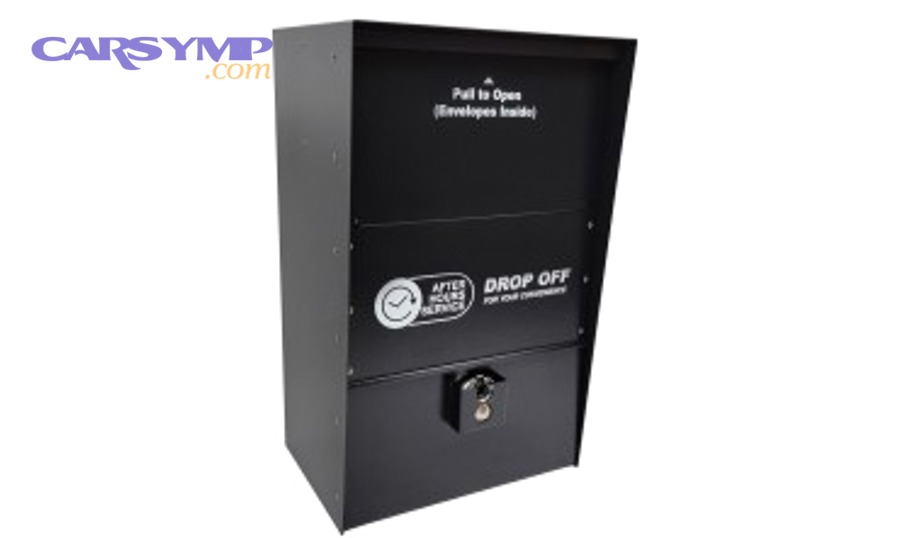
Does after-hours key drop count as 24/7 service?
No—key drop is not 24/7 repair service, because it does not guarantee a technician is available to diagnose or fix the car overnight; it provides (1) secure drop-off, (2) paperwork/notes for symptoms, and (3) earlier queue placement for morning work.
However, key drop can still be the fastest option when your goal is first-available diagnosis rather than midnight repairs.
Key drop works best when:
- The car is safe to park and you’re not risking engine damage by driving
- Your symptom is well-described (warning lights, noises, leaks, timeline)
- You can leave contact info and authorize a diagnostic fee
Key drop is risky when:
- You’re unsure the vehicle is safe to drive to the shop
- You must remove valuables and need a staffed handoff
- You’re in a high-theft area and the lot is poorly secured
What are the common after-hours shop models (key drop, night concierge, tow-yard intake)?
There are three main types of after-hours shop options—key drop intake, staffed receiving, and tow-yard intake—based on who takes custody and what happens next.
Moreover, each model changes how quickly you get an estimate and how secure your vehicle is overnight.
- Key drop / night drop box intake
- You park, lock, drop keys and notes
- Work begins when the shop opens
- Best for: stable cars, non-urgent repairs, next-morning diagnosis
- Staffed receiving (limited hours, not full 24/7)
- Someone verifies vehicle condition, creates a ticket, may take photos
- Often available late evening, not necessarily 3 a.m.
- Best for: insurance claims, accident intake, uncertain symptoms
- Tow-yard intake / secured lot receiving
- Towing company or partner lot accepts your car after hours
- Repair starts later, but custody is controlled and documented
- Best for: unsafe-to-drive cars, breakdowns on highways, severe leaks
If a listing says “after-hours,” ask one question that reveals the model instantly:
“Who physically takes custody of the keys and vehicle at 1 a.m.—and where is it stored?”
Which option should you choose right now—24/7 repair, after-hours key-drop, or an alternative?
You should choose 24/7 repair when you need immediate diagnosis or stabilization, after-hours key-drop when the car is safe and you want a faster morning start, and an alternative (roadside/towing) when driving could worsen damage or put you at risk.
To begin, treat this like triage: safety first, damage prevention second, speed third.
Should you search for a true 24/7 shop immediately?
Yes—if your car is unsafe where it is or the symptom can cause rapid damage, because (1) immediate stabilization can prevent expensive secondary failures, (2) you reduce personal safety risks from being stranded, and (3) you shorten downtime by starting diagnosis sooner.
In addition, drivers searching “emergency car repair near me” usually aren’t looking for a next-week appointment—they’re trying to regain control of the situation tonight.
Choose 24/7 repair now if:
- The car is overheating, losing coolant rapidly, or leaking fuel
- You have brake failure signs (soft pedal, grinding + pulling, brake warning)
- The car won’t restart and you’re in an unsafe location
- You’re stuck with a flat tire you cannot safely change
Choose after-hours drop-off if:
- The car still drives normally but has a check engine light and mild symptoms
- You can park securely and want a first-slot inspection in the morning
- Your priority is an estimate and a repair plan, not instant completion
What’s the fastest path to a diagnosis after hours?
The fastest path is (1) stabilize and document the symptoms, (2) contact a shop with a defined after-hours intake, and (3) authorize diagnosis and communication rules, which typically gets you a clear plan by morning.
Then, once you follow a simple sequence, you avoid the common time-waster: driving to multiple “open” places that can’t actually write the ticket.
- Capture evidence: dashboard lights, leak location, unusual sounds (short video)
- Gather essentials: VIN (or plate), mileage, recent repairs, warranty info
- Call the shop and ask “availability truth” questions:
- “Can you diagnose tonight, or are you intake-only after hours?”
- “What’s your diagnostic fee and after-hours labor policy?”
- “Do you accept tows after midnight?”
- Set communication rules: “Text estimates only,” “Call before replacing parts,” “Cap spending at $X.”
This is also where Getting an emergency estimate fast becomes realistic: your “estimate speed” depends less on your urgency and more on whether the shop already has permission to diagnose and a clear symptom record.
What if you can’t find a 24/7 shop—what are your next-best alternatives?
If you can’t find a true 24/7 repair shop, there are three next-best alternatives—roadside assistance, towing to a secure lot with after-hours intake, or safe self-stabilization until morning—based on your safety and the risk of further damage.
Especially when listings are misleading, these alternatives often get you help faster than chasing “open” signs.
- Roadside assistance: jump start, tire change, lockout, fuel delivery
- Tow to a shop with key drop: fastest way to get into the morning queue
- Tow to a secured yard: best when you can’t access the shop lot safely
- Wait safely: only if you’re not in danger and the car is stable
How do 24/7 vs after-hours options compare on cost, speed, and what you actually get?
24/7 repair usually wins on speed-to-action, after-hours drop-off often wins on total cost, and alternatives (roadside/towing) win on safety and damage prevention—depending on your situation and vehicle condition.
However, the important part is not the label—it’s what the shop can guarantee at your arrival time.
Before the table, here’s what it compares: what you pay for, how fast something happens, and what you actually receive when you show up after hours.
| Criterion | True 24/7 repair | After-hours key drop | Roadside + tow alternative |
|---|---|---|---|
| Immediate diagnosis | Usually yes | No (morning) | Sometimes (basic triage) |
| Labor rates | Often higher after hours | Standard business rates | Tow fee + standard shop rates |
| Parts access | Limited overnight | Normal daytime sourcing | Normal daytime sourcing |
| Speed to “plan” | Tonight or early AM | Early AM | Depends on tow + queue |
| Best for | Urgent, unstable issues | Stable cars, fast morning start | Unsafe-to-drive or unsafe location |
Which is cheaper: 24/7 repair or after-hours drop-off?
After-hours drop-off is usually cheaper, while true 24/7 repair can cost more because (1) staffing and overhead are higher overnight, (2) diagnostics may be billed at emergency rates, and (3) parts sourcing may require expedited options.
On the other hand, 24/7 can still be the cheaper outcome if it prevents severe damage (for example, stopping an overheat before it warps a head).
Cost drivers to ask about:
- After-hours labor multiplier (if any)
- Minimum diagnostic charge overnight
- Tow-in fee vs drive-in
- Storage fees (rare but worth asking)
- Parts sourcing: in-stock vs special order
Which is faster for getting back on the road?
24/7 repair is fastest for getting back on the road when the fix is simple and parts are available, while after-hours drop-off is fastest when your goal is “first diagnosis tomorrow,” and towing is fastest when your car cannot safely move under its own power.
Meanwhile, the time you lose most often comes from uncertainty—arriving somewhere that can’t intake you properly.
Speed tips that actually work:
- Choose shops that can create a work order immediately (even if repair starts later)
- Provide symptom videos so the first diagnostic step is obvious
- Authorize diagnosis up front to avoid “waiting for approval” delays
What changes in the warranty, parts sourcing, and payment process after hours?
After hours, the biggest changes are parts availability constraints, approval friction, and payment/authorization logistics, not the mechanical standards of the repair.
More importantly, you need to know whether the shop can legally and practically proceed without you physically present.
- Parts stores may be closed, forcing “stock only” repairs
- Some warranty companies require daytime authorization calls
- Payment may require remote authorization or a card-on-file
- You may receive a preliminary diagnosis tonight but final confirmation after a morning test
Evidence (visibility and safety context): According to a study by Virginia Tech from the Virginia Tech Transportation Institute, in 2020, researchers reported that a 1 lux increase in lighting level can reduce crashes by as much as 9%, highlighting why well-lit facilities and lots matter when you’re navigating after-hours service environments. (vtrc.virginia.gov)
How can you verify a shop is truly available after hours and avoid misleading “open now” listings?
You can verify real after-hours availability by confirming staffing, intake capability, and pricing rules in a single call, and by checking for operational proof like tow acceptance, work-order creation, and documented after-hours policies.
Next, you’ll want to filter out the most common trap: listings that route to a call center that can’t actually help you tonight.

How can you confirm hours, staffing, and services in one phone call?
Use a three-part confirmation: service capability, intake capability, and cost clarity—so you don’t drive across town for nothing.
Specifically, the right questions force the truth quickly.
Ask:
- Capability: “If I arrive at 1 a.m., what can you do tonight—diagnosis, tire repair, battery/alternator test?”
- Intake: “Can you create a work order now and accept a tow after midnight?”
- Cost clarity: “Is there an after-hours diagnostic fee or labor rate difference?”
If they hesitate or respond vaguely (“We’re open, just come”), follow up:
- “Who will meet me?”
- “What is the after-hours process step-by-step?”
- “If no one is there, where do I leave the keys and how is custody documented?”
What are the red flags of misleading listings and call centers?
There are five common red flags that signal “open now” doesn’t mean “can repair now,” based on how the business answers and what it can document.
Besides, you can often detect this within 60 seconds.
- They won’t state what repairs are available after hours
- The person answering cannot quote any diagnostic fee or policy
- They can’t explain tow intake or key custody procedures
- They insist you “just show up” without confirming staffing
- They won’t provide an address-specific explanation (some chains have mixed hours)
A high-confidence green flag:
- They can explain exactly what happens if you arrive after midnight: who takes the keys, where the car goes, when diagnosis starts, and how you approve the estimate.
How to protect yourself when leaving your car after hours?
Protect yourself by removing valuables, documenting condition, and creating a clear paper trail, because after-hours custody introduces ambiguity you want to eliminate.
In addition, these steps reduce disputes and speed up estimate approval.
Do this before you walk away:
- Take photos: odometer, fuel level, dash lights, exterior (all sides), existing dents
- Remove valuables and personal documents (registration can stay; avoid leaving mail/billing)
- Leave written symptoms + contact method preference
- Ask whether the lot is monitored and how keys are stored
- Confirm the “no work without approval” rule in writing (text is fine)
When should you choose mobile/roadside service or towing instead of any shop option?
You should choose mobile/roadside service when the issue is a quick fix on-site and the location is reasonably safe, and choose towing when driving could cause damage or create safety risk—because the wrong movement decision can turn a manageable repair into a major one.
To better understand this, treat the decision as risk management, not optimism.
When is roadside assistance a better choice than a shop?
Roadside assistance is better when the repair is simple and location access is safe, because (1) it can restore mobility faster than towing, (2) it’s often cheaper than emergency shop labor, and (3) it keeps you from waiting overnight in a queue.
However, roadside help is not a substitute for diagnosis when warning lights indicate deeper issues.
Best roadside wins:
- Jump start / battery test
- Flat tire change (spare) or plug in limited cases
- Lockout service
- Fuel delivery
- Minor loose-terminal fixes (in some cases)
If your goal is strictly to get moving safely, roadside is often the fastest “bridge” to a proper shop visit later.
When is towing non-negotiable?
Yes—towing is non-negotiable when driving is likely to cause engine/transmission damage or create a road hazard, because (1) overheating can escalate quickly, (2) brake or steering faults can cause a crash, and (3) severe leaks can create fire or environmental hazards.
More importantly, towing replaces guesswork with controlled transport.
Tow immediately if:
- Engine temperature is rising and coolant is leaking
- Oil pressure light is on or oil is pouring out
- Brakes are failing, grinding heavily, or pedal is sinking
- Steering is unstable, wobbling, or making loud clunks
- You smell fuel strongly or see fuel leaking
- The car stalls repeatedly in traffic
Towing vs driving decision checklist
The Towing vs driving decision checklist is a simple set of checks—location safety, warning severity, and damage risk—that helps you decide in under two minutes with fewer regrets.
Then, once you answer these questions, your next step becomes obvious.
Drive (slowly, hazards on, shortest route) only if ALL are true:
- No overheating, no oil pressure warning
- Brakes and steering feel normal
- No fuel smell, no major fluid pouring
- You can maintain safe speed and shoulder access exists
- The shop is very close and you can stop immediately if symptoms worsen
Tow if ANY are true:
- Red warning lights (oil pressure, temp) or violent shaking
- Smoke, burning smell, or fuel odor
- You cannot maintain speed safely or you’re on a dangerous shoulder
- The car dies intermittently or won’t restart reliably
Contextual border: once you’ve made the movement decision safely, the remaining “best choice” is often about policies, edge cases, and preparation—not just hours.
What edge cases, policies, and special scenarios change the best choice after hours?
Edge cases—like EV towing rules, AWD restrictions, insurance authorization, and shop custody policies—can change the best after-hours option because they affect what you’re allowed to do, what’s safe mechanically, and how quickly work can legally begin.
Next, these scenarios expand beyond “24/7 vs after-hours” and into how the system actually works when things go wrong.

What to keep in your emergency car kit
What to keep in your emergency car kit comes down to visibility, power, basic tools, and communication—because after-hours problems are often safety problems before they’re repair problems.
Specifically, the right kit reduces risk while you wait for help.
High-value kit essentials:
- Reflective triangles or flares (where legal), reflective vest
- Flashlight/headlamp + spare batteries
- Phone power bank + cable
- Basic first aid kit
- Tire inflator and sealant (if compatible with your tire type)
- Blanket, water, and gloves (seasonal)
- Paper with emergency contacts + insurance/tow numbers
Bonus for winter regions:
- Ice scraper, small shovel, traction aid, hand warmers
Getting an emergency estimate fast
Getting an emergency estimate fast is easiest when you provide the shop with a complete symptom package and pre-authorization rules, because the estimate timeline depends on (1) diagnostic permission, (2) parts identification, and (3) your approval speed.
In addition, you can reduce back-and-forth by controlling the format.
Do this to speed it up:
- Send photos/video of symptoms immediately (dash lights, leaks, noises)
- Provide VIN, mileage, and a brief timeline (“started after refuel,” “worse at idle,” etc.)
- Set a spending cap for diagnosis + ask for a written estimate before repairs
- Ask what parts are likely and whether they can source them tomorrow morning
If you’re comparing options quickly, a site like carsymp.com can be used as a starting point for symptom context—but the final estimate should always come from a shop that has seen your vehicle or run diagnostics.
What special rules apply for EVs, hybrids, and all-wheel drive towing?
EVs, hybrids, and AWD vehicles often require specific towing methods, because the wrong tow setup can damage driveline components or violate manufacturer handling rules.
Moreover, after-hours towing is where mistakes happen most—so you want to state your vehicle type clearly.
Practical rules to ask the tow operator:
- “Is a flatbed required for my vehicle?” (often safest)
- “Are there any ‘no dolly’ or ‘no wheel-lift’ restrictions?”
- “Do you know the proper tow points for this model?”
If you’re unsure, default to:
- Flatbed towing when possible, especially for AWD or uncertain driveline conditions.
How do insurance, extended warranties, and fleet programs handle after-hours repairs?
Insurance and warranties can slow after-hours repairs if they require adjuster approval, documented inspections, or business-hours authorization lines, even when the shop is capable of working overnight.
To sum up, your “repair speed” may be limited by paperwork—not mechanics.
To avoid delays:
- Ask the shop: “Can you start diagnosis without insurer approval?”
- Ask your insurer/warranty: “What is the after-hours authorization process?”
- If it’s a fleet vehicle: confirm the spending cap and required documentation
Evidence (visibility and night risk context): Nighttime driving conditions increase visibility challenges, which is why well-lit facilities, clear hazard lighting, and safe stopping behavior matter during after-hours breakdowns. (vtrc.virginia.gov)