


A puddle under your parked car is most likely engine oil when it looks amber-to-black, feels slick and thick, and carries a petroleum or “burnt oil” odor—so your fastest path to an answer is to combine color + smell + texture instead of guessing from color alone.
Next, you can avoid the most common misdiagnosis by comparing engine oil to the usual “lookalikes” (ATF/transmission fluid, coolant, brake fluid, and power steering fluid) using a simple checklist: odor signature, feel (watery vs oily), and where the puddle lands.
Then, you can narrow down what’s leaking by matching the puddle’s position to common leak zones—front, middle, or rear—because fluids often drip from the lowest point, not the actual leak point.
Introduce a new idea: once you know what the puddle is and where it’s coming from, you can decide whether it’s safe to drive, confirm the leak at home, and prevent repeat leaks without relying on luck.
What does an engine oil leak puddle look and smell like?
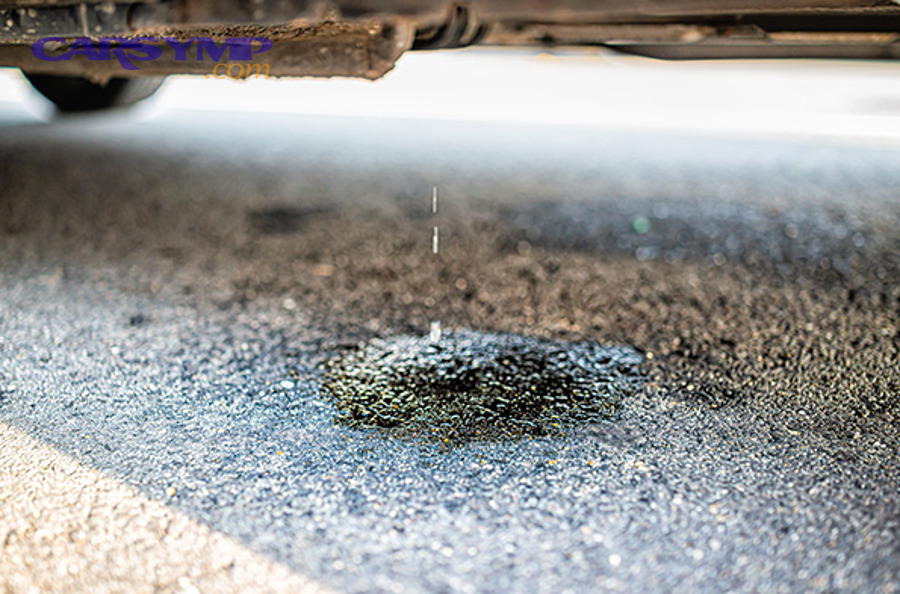
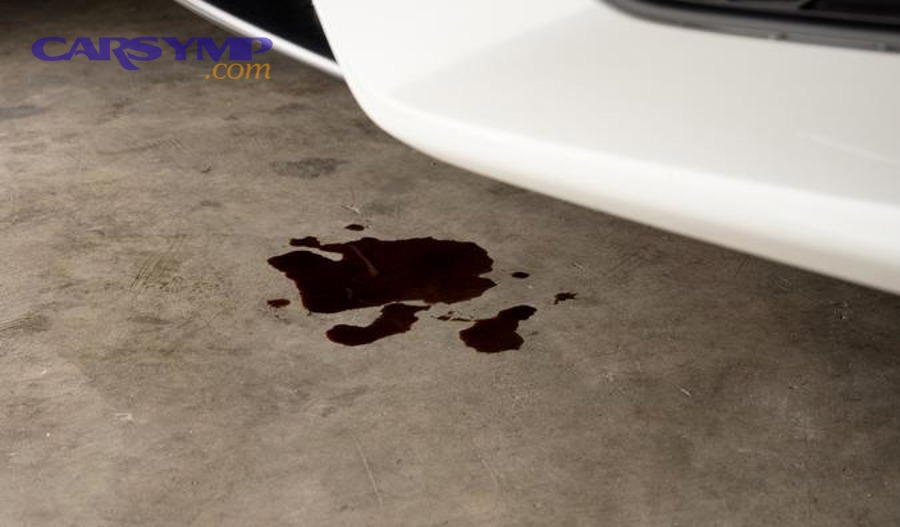
An engine oil leak puddle is typically amber to dark brown/black, slick and viscous, and smells like petroleum or burnt oil when oil hits hot metal—so your most reliable identification comes from combining color, smell, and feel in one quick check.
To better understand what you’re seeing on the ground, start with the “baseline” signature of oil and how it changes with age and heat.
What colors can engine oil puddles be (amber, brown, black), and what does each color usually indicate?
Engine oil puddles can be amber, brown, or black based on how long the oil has been in service and what it has picked up inside the engine, so color is most useful when you treat it as a range instead of a single label.
Amber (honey/golden):
- Usually indicates relatively fresh engine oil or a leak that started soon after an oil change.
- Fresh oil can still look darker when it’s on asphalt or soaked into porous concrete.
- If the puddle is amber and appears soon after service, look for “simple” causes first, like a loose filter, wrong gasket placement, or a drain plug sealing issue—this is where Oil filter and drain plug leak diagnosis often pays off quickly.
Brown (tea/caramel):
- Often indicates used oil that has darkened from normal heat cycles and contamination.
- Brown oil can be “normal used oil” or “oil mixed with grime” if it travels along the underbody and collects dust before dripping.
Black (dark coffee/tar-like):
- Common when oil has spent many miles in the engine and has collected soot and carbon.
- Black doesn’t automatically mean “worst leak,” but it often means the leak has been present long enough for oil to discolor and spread.
A practical way to reduce color confusion is to test color on a white background:
- Place a piece of white paper towel under the drip.
- Let a drop land, then observe the center vs outer ring; oil often shows a darker center with a translucent oily halo.
This matters because many people search “oil leak under car” and focus only on puddle color—yet multiple fluids can look dark when dirty. Color is your starting clue, not your final verdict.
What does engine oil smell like, and what does a burnt oil smell mean?
Engine oil usually smells like petroleum (oily, slightly sharp), while a burnt oil smell suggests oil is contacting hot components such as the exhaust manifold, catalytic converter heat shield, turbo housing, or downpipe.
Here’s how to interpret common smell outcomes:
- Petroleum/oily smell (no smoke):
Often points to a leak that’s dripping and pooling on a cool surface, like an oil pan edge, subframe, or undertray. You may see stains without immediate smoke. - Burnt oil smell (sometimes with smoke):
Strongly suggests oil is landing on a hot surface. The leak may be above the puddle—oil can drip down after it spreads across the engine or undertray. If you smell burning oil after a drive, treat it as more urgent than a cold “drip-only” leak. - “Chemical/sweet” smell:
More consistent with coolant than engine oil (coolant also tends to feel more watery than oily). When smell doesn’t match oil, shift to comparison checks rather than forcing the oil diagnosis.
Burnt oil smell is a “directional” clue: it doesn’t just tell you “oil is present,” it hints at where it’s going—onto something hot—so your next inspection should move upward from the puddle to the hottest nearby surfaces.
Is the puddle slick and thick enough to be oil ?
Yes—engine oil is usually slick and thicker than water-based fluids, and you can confirm it safely by using a paper towel or glove, a wipe test, and a simple smear check.
To stay safe, follow a basic approach:
- Let the car cool if you just drove it, especially if you suspect oil is burning.
- Wear nitrile gloves or use a folded paper towel.
- Touch only the puddle, not unknown hot parts above it.
Quick “feel” cues:
- Engine oil feels lubricious and slippery even in a thin film.
- It smears into a greasy streak and tends to cling rather than evaporate.
- Water/AC condensation feels thin and dries quickly.
- Coolant can feel slippery but is typically less oily and more watery.
A safe “smear test” method:
- Dab a small amount with a paper towel.
- Rub the towel between two fingers (through the towel).
- If it stays slick and leaves a greasy residue, oil is likely.
This simple sensory confirmation builds a strong hook chain into the next step: once you’ve established “oil-like behavior,” you can compare it against other fluids that can still confuse the eye.
Is this puddle engine oil or another car fluid?
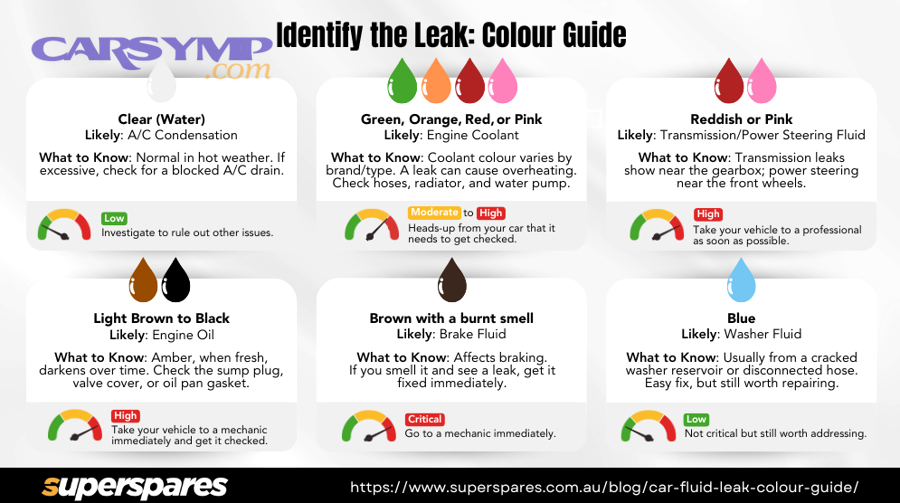
Engine oil wins in slickness and thickness, coolant is best identified by a watery feel and sweet/chemical smell, and ATF/transmission fluid is most recognizable by its distinct odor and possible red-to-brown color shift—so a quick comparison beats guessing from color alone.
However, the problem is that fluids age, darken, and spread, so the real solution is to compare smell + feel + location together.
Before the details, the table below summarizes what most drivers want to know: “What does it look like, what does it smell like, and what should I do next?”
Quick comparison table (engine oil vs common lookalikes):
| Fluid | Typical look on ground | Typical smell | Feel/texture | Common “first check” |
|---|---|---|---|---|
| Engine oil | Amber → brown → black | Petroleum or burnt | Slick, thicker | Check dipstick level |
| ATF / transmission fluid | Red/pink → brown (aged) | Distinct oily/chemical | Slick, medium | Check trans fluid level (if dipstick-equipped) |
| Coolant | Green/orange/pink/blue (varies) | Sweet/chemical | Watery, can feel slippery | Check coolant reservoir level (cold engine) |
| Brake fluid | Clear to amber/brown | Mild chemical | Slippery, thin | Check brake fluid level + pedal feel |
| Power steering fluid | Red/amber/brown | Oily | Slick, medium | Listen for steering pump whine; check reservoir |
| A/C condensation | Clear | Odorless | Water-thin | Normal after A/C use |
Is it engine oil vs transmission fluid (ATF): how do color and smell differ?
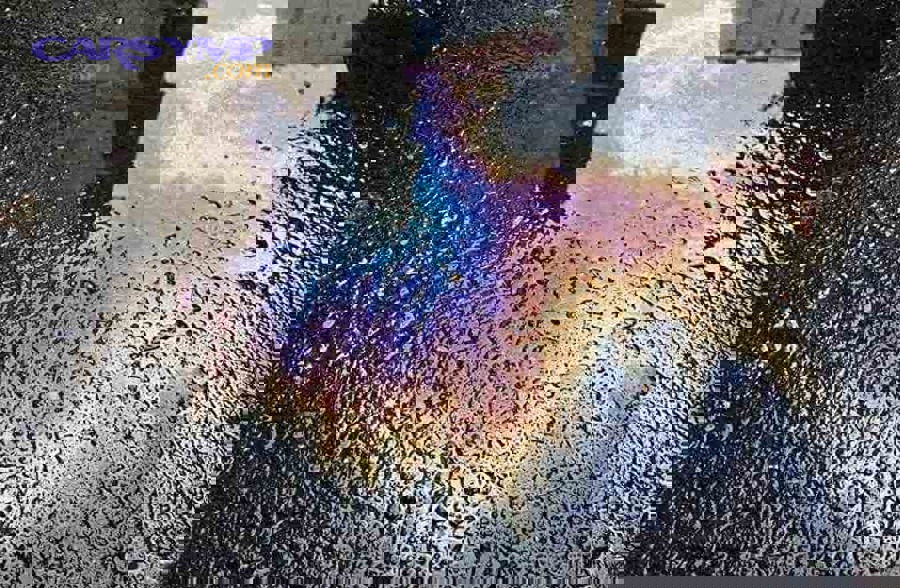
Engine oil wins in sooty darkening and “burnt oil” smell, while ATF is best identified by its distinct odor and its tendency to start red/pink and then age into brown, which can look deceptively similar to oil.
Color reality check:
- ATF that’s new is often red or pink, but used ATF can become brown, especially if it’s old or overheated.
- Engine oil starts amber and trends brown/black with use.
- Because both can appear brown on the ground, smell and location matter more than color.
Smell differences:
- Engine oil: petroleum-like; burnt oil smell if contacting hot surfaces.
- ATF: often a sharper, chemical/oily odor; “burnt ATF” can smell acrid.
Location clues:
- Engine oil puddles often appear under the engine area.
- ATF leaks often show under the center of the car near the transmission pan, cooler lines, or where the transmission mates to the engine.
A key takeaway: “brown fluid” is not a diagnosis. If you’re trying to separate engine oil vs ATF, treat it like a two-step test:
- Smell test (most discriminating), then
- Location test (engine zone vs transmission zone).
Is it engine oil vs coolant: how do color and smell differ (and why coolant smells sweet)?
Engine oil is darker and greasier, while coolant is typically brighter in color, more watery, and can smell sweet or chemical because many coolants are glycol-based.
Why coolant can confuse people:
- Coolant colors vary widely by formula and brand: green, orange, pink, blue, even yellow.
- Coolant can leave a crusty residue after drying (especially around a radiator or hose leak).
- Coolant can feel slippery, but it doesn’t leave the same greasy film as oil.
Fast differentiators you can trust:
- Coolant feels thin/watery compared to oil.
- Coolant often has a sweet/chemical odor (never taste it).
- Oil leaves a greasy stain that spreads as a slick patch; coolant is more likely to dry and leave a residue.
If you suspect coolant, your safest immediate check is level change:
- Check the coolant reservoir only when the engine is cold.
- A dropping level plus a sweet odor is a strong sign the puddle is not engine oil.
Is it engine oil vs brake fluid or power steering fluid: what are the quick differentiators?
Engine oil wins in greasy residue and typical engine-zone location, brake fluid is best flagged by safety risk and thin slickness, and power steering fluid is most associated with steering symptoms and leaks near steering components.
Brake fluid quick flags:
- Often clear to amber/brown.
- Thin, slippery feel.
- Associated symptoms: soft pedal, warning light, reduced braking performance.
- If brake fluid is leaking, treat it as high urgency—brakes are not a “monitor later” system.
Power steering fluid quick flags (for hydraulic systems):
- Often red or amber, but can be darker when old.
- Medium slickness.
- Associated symptoms: whining noise while turning, heavy steering, reservoir level drop.
- Location: often toward the front where steering rack lines run.
Because these can overlap, use a symptom-first mindset:
- If braking or steering feel changes, prioritize brake/power steering checks before assuming engine oil.
Could it be condensation water from AC instead of a leak?
Yes, it could be A/C condensation if the puddle is clear, odorless, and water-thin, especially after running the air conditioner, and it usually appears near the passenger side firewall area.
Use a simple yes/no confirmation:
- Yes, it’s probably condensation if it dries quickly and leaves no stain.
- No, it’s likely a fluid leak if it feels slick, smells like petroleum/chemical, or leaves residue.
This matters because the most common “false alarm” puddle is water dripping from the evaporator drain. Once you rule that out, you can move confidently into leak-source logic.
Where is the puddle located—and what does that suggest about the leak source?
There are 3 main leak-location zones—front, middle, and rear—and each zone points to a different cluster of likely oil leak sources based on how oil travels and where it tends to drip from the underbody.
More importantly, puddle location is not always the leak location, so you should think in terms of drip path rather than “spot equals part.”
To make this actionable, treat the following section as Common leak spots by location under car—a practical map you can use before you crawl underneath.
If the puddle is under the front of the engine, what are the most common oil leak sources?
If the puddle is under the front of the engine, the most common sources are the oil filter area, valve cover seepage that runs forward, timing cover seals, and oil cooler or filter housing leaks.
Start with “easy-to-check” leak points because they’re common and sometimes fixable without major disassembly:
- Oil filter / oil filter housing area
- After an oil change, a loose filter, a double-stacked gasket, or a damaged O-ring can leak.
- Oil can drip down the front of the engine and then fall onto the subframe.
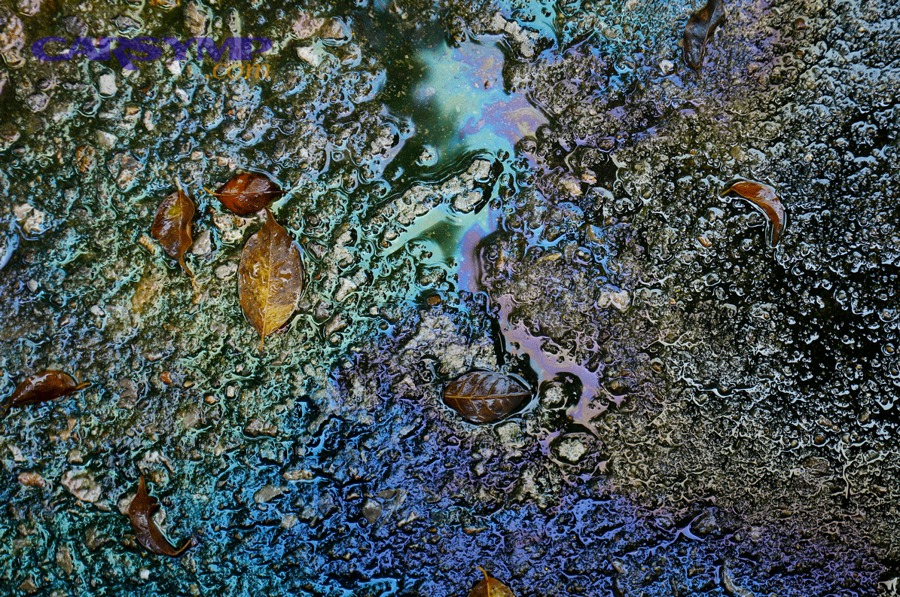
- Valve cover gasket seepage
- Often starts as a seep, then becomes a drip.
- Oil can run along engine surfaces before dripping, making the puddle appear “ahead” of the actual gasket.
- Timing cover area (front seals)
- Leaks near the crank seal/timing cover can drip down and appear near the front edge of the engine bay.
A helpful habit: look for the “highest wet point.” Oil almost never originates at the lowest point you can see; it accumulates there.
If the puddle is under the middle, what oil leak sources are likely?
If the puddle is under the middle, the likely sources include the oil pan gasket, drain plug sealing surface, oil cooler lines (depending on routing), and undertray accumulation that releases oil after parking.
This is where Oil filter and drain plug leak diagnosis becomes especially practical because you can verify two common culprits quickly:
Oil pan and drain plug area
- A drain plug can leak if the crush washer is reused, missing, or the sealing surface is damaged.
- Over-tightening can strip threads or distort the sealing area, turning a simple leak into a costly repair.
Oil pan gasket
- Often presents as “oily wetness” around the pan perimeter before it becomes a drip.
- Road grime can thicken the oil and make it appear tar-like.
Undertray/splash shield
- If your car has a plastic undertray, oil can pool on it and drip from an edge that’s not directly below the leak.
- That’s why you may see the puddle “in the middle” even if the leak is higher up.
A good workflow is:
- Confirm oil is the fluid,
- Identify zone (middle),
- Inspect oil pan perimeter and drain plug region,
- Consider undertray drip migration.
If the puddle is near the rear (bellhousing area), is it rear main seal or something else?
A rear puddle near the bellhousing can indicate a rear main seal leak, but it can also be transmission fluid or oil traveling backward with airflow, so you should compare location and odor before calling it a rear main seal.
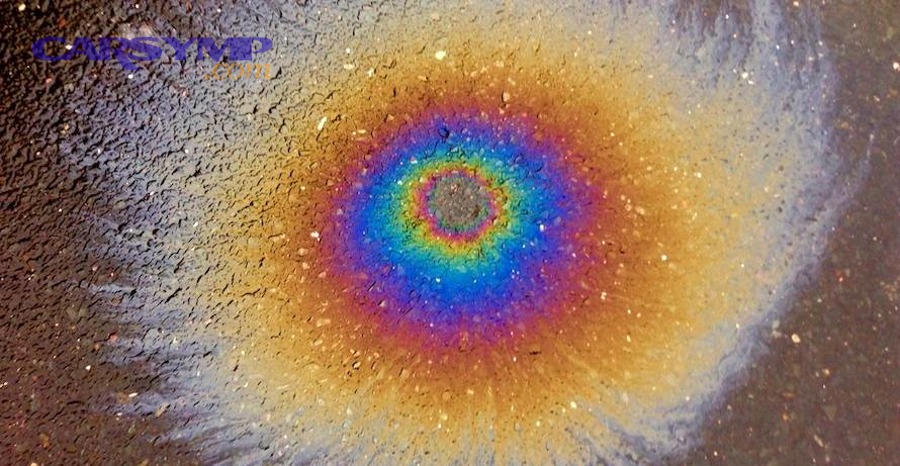
Use a disciplined checklist:
- Rear main seal clues: oil appears at the engine-to-transmission junction; oily residue at the bellhousing; recurring drips after driving.
- Transmission fluid clues: possible red/pink tint (if fresh), different odor; may be closer to transmission pan/cooler line regions.
- Drip migration clue: oil can blow rearward while driving and drip at the back once you stop.
If you’re unsure, do not default to “rear main seal” as the diagnosis—it’s a common fear because it can be expensive. Instead, confirm fluid type and trace the leak path upward with cleaning and re-checking (covered later).
Can you drive with an oil leak puddle—and when should you stop immediately?
Yes, you can sometimes drive with a small oil leak puddle, but only when (1) the oil level stays safe, (2) there is no oil pressure warning, and (3) there’s no burning smell or smoke—otherwise you should stop immediately to prevent engine damage or fire risk.
More importantly, your driving decision should be based on rate of loss and warning signs, not on hope.
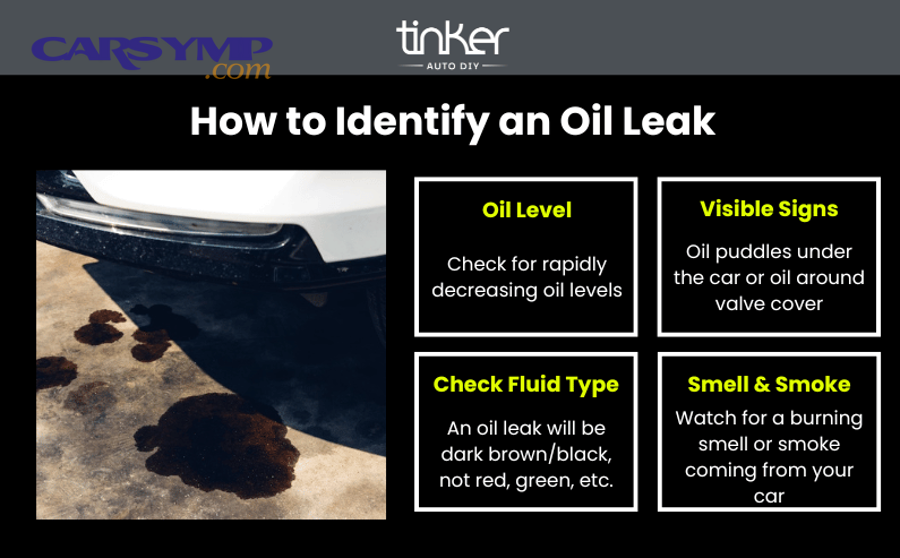
Is it safe to drive if it’s a slow drip, and what checks should you do first?
Yes, it can be safe to drive short distances if it’s a slow drip and your oil level remains within the safe range, but you should check level first and monitor the leak because oil loss can accelerate without warning.
Use this practical checklist before you start the engine:
- Check the dipstick level
- If the level is below the safe zone, top up with the correct oil and investigate immediately.
- A level that drops noticeably over a day or two indicates more than a harmless seep.
- Estimate leak rate
- A few drops overnight is different from a puddle that grows by inches each hour.
- Place cardboard under the car to measure spot size and frequency.
- Look for secondary signs
- Fresh wetness around the oil filter, drain plug, or pan edge.
- Oil smell in the cabin after stopping.
If you’re seeing an oil leak under car and you’re deciding “drive or not,” level is your controlling variable. Oil doesn’t protect the engine by existing in the driveway—it protects by staying in the sump and circulating.
Should you stop driving if you smell burning oil or see smoke?
Yes, you should stop driving if you smell burning oil or see smoke because the oil may be landing on hot exhaust components, which increases the risk of fire and can quickly worsen as oil spreads.
Here’s the logic:
- Burning smell indicates the leak is contacting a hot surface.
- Heat can thin the oil, making it run farther and drip faster.
- Smoke can reduce visibility and signals active burning on hot parts.
Immediate steps:
- Pull over safely.
- Turn off the engine.
- Do not open the hood if you suspect active fire; call for assistance if needed.
- If there’s no fire, wait for cooling before inspecting.
This is one of the clearest “stop now” conditions because it combines leakage with ignition heat.
Does an oil pressure warning mean the leak is already dangerous?
Yes—an oil pressure warning generally means lubrication pressure is critically low, and continuing to run the engine can cause rapid damage because bearings and cam surfaces rely on pressurized oil to prevent metal-to-metal contact.
Treat the oil pressure light as an action signal:
- Stop the engine as soon as it’s safe.
- Check oil level after waiting briefly.
- If level is normal, the issue may be a pressure problem (pump pickup, sensor, bearing clearance) and should be inspected professionally.
Even if the leak seems small, oil pressure warnings are not “drive it home” alerts. They’re “protect the engine now” alerts.
How can you confirm an engine oil leak quickly at home (without special tools)?
You can confirm an engine oil leak at home by using a cardboard spot test, wipe-and-smear test, level monitoring, and a clean-then-recheck routine, which together reveal both fluid identity and leak direction without requiring special tools.
Specifically, you’re trying to answer two questions: “Is it oil?” and “Where is it coming from?”
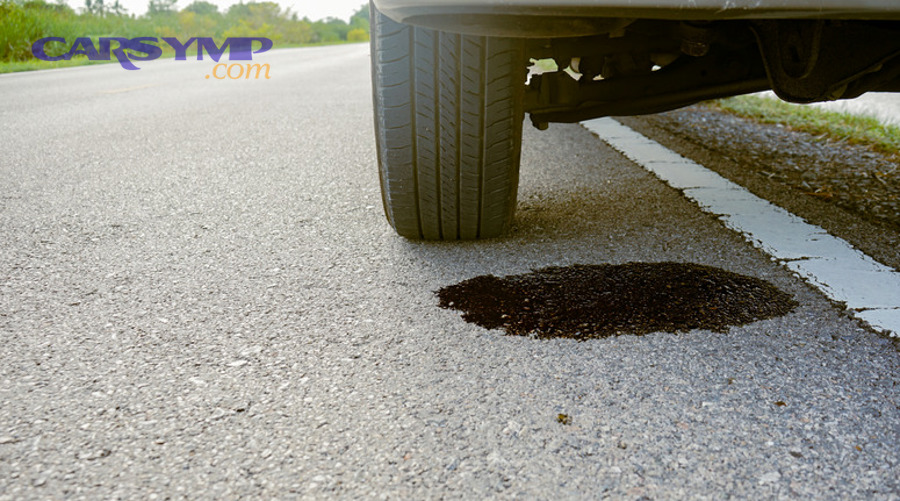
Can a cardboard test and wipe test confirm the fluid type?
Yes, a cardboard test and wipe test can confirm the fluid type because they reveal color spread, residue behavior, and odor in a controlled way that ground texture and lighting often hide.
Cardboard test (overnight):
- Park on level ground.
- Place clean cardboard under the engine and centerline.
- Note the spot location relative to the bumper and wheels.
- Check in the morning for new drops and size.
Wipe test:
- Dab the spot with a white paper towel.
- Observe if it leaves a greasy stain (oil), a watery mark (condensation/coolant), or a thin slick film (some other fluids).
- Smell the towel from a safe distance; petroleum suggests oil.
This test also helps you see whether the leak is constant (dripping while parked) or heat-related (shows up after driving).
Should you clean the area first to trace the leak accurately?
Yes, you should clean the area first because old oil residue can make a small new leak look huge, and cleaning creates a clear baseline that lets you see where fresh oil begins.
A safe and effective approach:
- Use a degreaser on a cool engine and wipe accessible surfaces.
- Avoid spraying directly into electrical connectors and avoid high-pressure washing sensitive areas.
- Drive briefly, then inspect for the first reappearance of oil.
This is where many people get trapped by puddle location. Oil may originate above and travel along surfaces; cleaning breaks that illusion and reveals the actual path.
Also, this step clarifies the difference between DIY tightening vs proper gasket fixes:
- Tightening a loose oil filter or replacing a drain plug washer can stop a leak.
- Tightening a gasketed joint that’s already compromised often fails—and can crack components or strip threads.
Cleaning helps you identify which category you’re dealing with before you apply force.
What should you tell a mechanic (color, smell, location, frequency) to speed up diagnosis?
You should tell a mechanic the puddle’s color range, smell, exact location under the car, frequency, and what changed recently because those details narrow the diagnostic tree and reduce labor time spent hunting.
Use this exact checklist:
- Fluid ID clues: “slick, black, petroleum smell” vs “watery, sweet smell”
- Puddle location: front/middle/rear; driver/passenger side; near centerline
- Timing: appears after driving, overnight, only when hot, only after long trips
- Rate: a few drops/day, palm-sized overnight, or rapid pooling
- Recent work: oil change, filter replacement, skid plate removal, gasket work
If you suspect a recent service connection, mention it directly. A lot of “new leaks” are actually installation errors—especially around the oil filter or drain plug—so clear communication supports faster resolution.
How can you prevent future under-car oil leaks and reduce misdiagnosis?
You can prevent future under-car oil leaks by reducing seal stress, keeping oil service points correctly sealed, and improving leak tracing—because prevention comes from good sealing practices + pressure control + better detection, not from repeatedly tightening bolts.
More importantly, prevention reduces repeat “mystery puddles” that waste time and lead to wrong repairs.
Does high crankcase pressure (PCV issues) make oil leaks worse or appear suddenly?
Yes, high crankcase pressure can make oil leaks worse or appear suddenly because pressure pushes oil past seals and gaskets that were previously only seeping.
What to watch for:
- New leaks after a period of stability
- Oil seepage that increases after highway driving
- Oil residue around seals that should normally stay dry
Practical prevention step:
- Treat PCV maintenance as leak prevention, not just emissions maintenance. When crankcase ventilation is restricted, the engine becomes more likely to “find the weakest seal.”
Can UV dye and a blacklight find the exact leak point faster than guessing?
Yes, UV dye and a blacklight can find the exact leak point faster because dye makes fresh oil glow, revealing the first appearance point even when oil spreads over large surfaces.
When it helps most:
- Leaks that spread across undertrays or skid plates
- Slow leaks that only show after long drives
- Multiple potential leak points in the same zone
How to use it safely (high level):
- Add dye compatible with engine oil.
- Drive for the recommended time.
- Inspect with UV light in a dim area and look for the brightest “start point,” not the lowest drip.
UV tracing is often the cleanest way to stop misdiagnosis because it replaces guesswork with visible evidence.
Is “rear main seal leak vs transmission fluid” a common mix-up, and how do you avoid it?
Yes, “rear main seal leak vs transmission fluid” is a common mix-up because both can drip near the bellhousing area, and both can appear brown when dirty—so you avoid it by confirming fluid type and checking both levels before assuming a rear main seal.
A reliable avoidance plan:
- Compare odor: engine oil vs ATF smells different.
- Check engine oil level trend vs transmission fluid level trend (if accessible).
- Look for dye-traced origin points if you can’t see the start point.
This is also where “Common leak spots by location under car” matters: the rear zone has fewer “simple fixes,” so you want high confidence before paying for major labor.
Should you change habits (oil change checks, undertray inspection, parking spot monitoring) to catch leaks early?
Yes, simple habits catch leaks early because most leaks start as small seeps and only become costly when they’re ignored long enough to drop oil level, foul belts, or burn on hot components.
A practical routine that works:
- After any oil change, inspect the area around the oil filter and drain plug within 24–48 hours.
- Check the dipstick weekly for a month if you’ve recently noticed a puddle.
- If your car has an undertray, inspect for pooled oil during maintenance—oil can hide there and drip later.
This is where DIY tightening vs proper gasket fixes becomes a real-world principle:
- Tighten only what is designed to be tightened (like a filter to spec or a drain plug to spec).
- If a seal is failing, plan for the correct gasket/O-ring replacement rather than continuing to add torque.
Evidence (if any)
None included.