


STEP 1 — Title and outline analysis (required)
Main keyword (keyword focus): battery light and charging system diagnosis
Predicate (main verb/action): diagnose / test / troubleshoot
Relations Lexical used: Meronymy (the battery light is a part of the wider dashboard warning lights system; the charging system includes the alternator, belt drive, wiring, grounds, and battery)
Outline intent type: Primarily How-to (diagnosis workflow), supported by Definition (what the light means), Grouping (tools, causes, fault patterns), and Comparison (battery vs alternator, normal vs abnormal readings).
Primary intent (from the Title): Provide a complete, step-by-step diagnostic method to identify why the battery light is on and what part of the charging system is failing.
Secondary intent 1: Explain what the battery light actually indicates (and what it doesn’t).
Secondary intent 2: Identify the tools and measurements needed .
Secondary intent 3: Translate test results into clear “replace/repair/clean/tighten” decisions.
When the battery light turns on, you should treat it as a charging system warning, meaning the car may be running on battery power instead of alternator output—so the correct diagnosis is a short, structured test sequence that confirms voltage, load response, belt drive integrity, and wiring health.
Next, you’ll learn what the battery light really measures in most vehicles—because it is often a system-voltage mismatch signal, not a direct “bad battery” label, and that difference determines whether you can keep driving or should stop.
Then, you’ll use a simple tool set (multimeter, basic inspection, and sometimes scan data) to pinpoint whether the issue is the alternator, battery, belt, connections/grounds, or a control problem—without guessing or replacing parts blindly.
Introduce a new idea: once you can read the results like a map, you’ll also know how this fits into broader dashboard warning lights diagnosis so you don’t confuse charging faults with unrelated warnings that require completely different safety decisions.
What does the battery light actually mean on your dashboard?
The battery light means the charging system is not maintaining proper system voltage, usually because alternator output (or the control of it) is not matching the electrical demand—so the vehicle may be depleting the battery while running.
More specifically, this light is typically triggered when the vehicle detects a difference between expected alternator field/output behavior and actual system voltage.
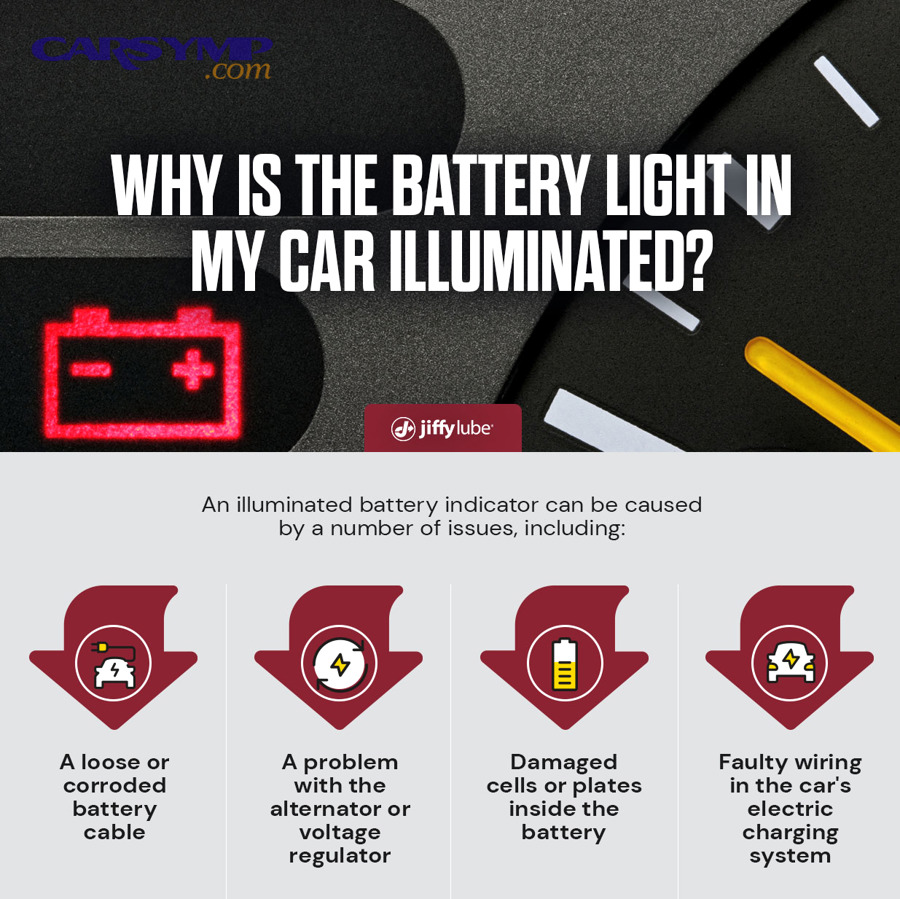
Is the battery light always a bad battery?
No—battery light + charging system diagnosis points to the alternator system first, for three main reasons: (1) the lamp logic often monitors alternator/voltage regulation behavior, (2) a weak alternator can still start the car but fail under load, and (3) connection or belt problems can mimic “battery failure” even when the battery is fine.
To illustrate, a battery can be healthy but still drain quickly if charging voltage never rises above resting voltage.
Practical takeaway: if the engine is running and the battery light is on, assume charging is compromised until proven otherwise—because you’re diagnosing recharge, not storage.
What’s the difference between a battery light and a “charging system” message?
A battery icon and a “charging system/service battery charging system” message are closely related signals that point to the same core problem: system voltage regulation is outside expected limits.
However, the message often implies the vehicle’s control module has detected a more specific fault pattern (for example, a regulated-voltage command that doesn’t produce the expected voltage response).
In practice, both require the same core workflow: verify voltage at rest, verify charging voltage, verify load response, then isolate belt/wiring/alternator/control.
When is it safe to keep driving with the battery light on?
It is sometimes safe for a short distance, but only if (1) the car is not overheating, (2) steering/brake assist feels normal, and (3) voltage remains high enough to keep critical modules alive; otherwise, stop because the engine may stall once the battery is depleted.
In addition, some vehicles drive the water pump with the same belt system that drives the alternator—so a belt failure can quickly become an overheating event.
A simple rule: if the battery light comes on and you notice dimming lights, flickering dash, loss of power accessories, or warning cascades, you’re likely minutes away from a stall—diagnose immediately.
What tools and information do you need for charging system diagnosis?
You need 5 core tools/info sources for battery light and charging system diagnosis: (1) a digital multimeter, (2) visual inspection lighting, (3) basic hand tools for terminals/belt checks, (4) scan data when available, and (5) vehicle-specific specs (voltage setpoint, belt routing, and charging control type).
To better understand the problem, each tool answers a different “layer” of the system.

Which measurements matter most (voltage, current, ripple, and voltage drop)?
The most useful measurements are:
- Battery resting voltage (engine off, after sitting) → indicates approximate state of charge
- Charging voltage (engine running) → indicates alternator/regulator performance
- Voltage under load (headlights, blower, defrost) → reveals weak alternator, belt slip, or wiring limits
- Voltage drop (across cables/grounds) → reveals resistance at connections
- AC ripple (if your meter supports it) → suggests alternator diode/rectifier issues
Here’s a quick-reference table (these are typical targets; always prioritize manufacturer specs where available):
| Test point | Typical healthy reading | What it suggests if low | What it suggests if high |
|---|---|---|---|
| Battery (engine off, rested) | ~12.6V fully charged | battery discharged/weak | surface charge just after charging |
| Battery (engine running, no load) | ~13.8–14.7V | alternator not charging / wiring loss | regulator/control fault risk |
| Battery (engine running, loaded) | stays above ~13.5V | weak alternator/belt slip/voltage drop | overcharging risk |
Evidence note: Battery capacity and effective performance can drop significantly in cold conditions; Battery University reports that a battery delivering 100% capacity at 27°C typically delivers about 50% at −18°C, which can make marginal charging systems show symptoms sooner. (batteryuniversity.com)
How do you safely test a charging system without damaging electronics?
You can test safely by following three habits:
- Never disconnect the battery while the engine is running (older myths can trigger voltage spikes).
- Avoid shorting the alternator output; always measure across safe points (battery posts, dedicated test lugs).
- Use proper meter settings (DC volts for charging tests; correct range; secure probe contact).
Also, keep your probes on the battery posts (not the clamp) when you want accurate battery voltage—then compare against measurements at the alternator output to reveal cable losses.
When should you use scan data or an OBD2 scanner?
You should use scan data when the vehicle uses computer-controlled charging (common on many modern vehicles), because the alternator’s behavior may be command-based (duty cycle, target voltage, load management).
This is where Using an OBD2 scanner for warning lights becomes practical: you may see battery voltage PID, generator command %, load shedding events, and stored charging-related DTCs.
Scan data doesn’t replace a multimeter—it tells you what the car is asking for, while the meter tells you what the car is getting.
How do you diagnose battery light and charging system problems step-by-step?
A reliable method is a 7-step charging diagnosis sequence that starts with simple checks and ends with targeted isolation tests, producing a clear result: “battery issue,” “alternator issue,” “belt issue,” “connection/ground issue,” or “control issue.”
Next, we’ll walk through that sequence in the same order technicians use to avoid false conclusions.
Step 1–2: Quick visual checks (belt, connectors, obvious damage)
Step 1: Belt drive check
- Confirm the belt is present, routed correctly, and not glazed/cracked
- Listen for squeal on startup or under load (can indicate slip)
- Check belt tensioner behavior if visible (wobble, weak tension)
Step 2: Connector and cable check
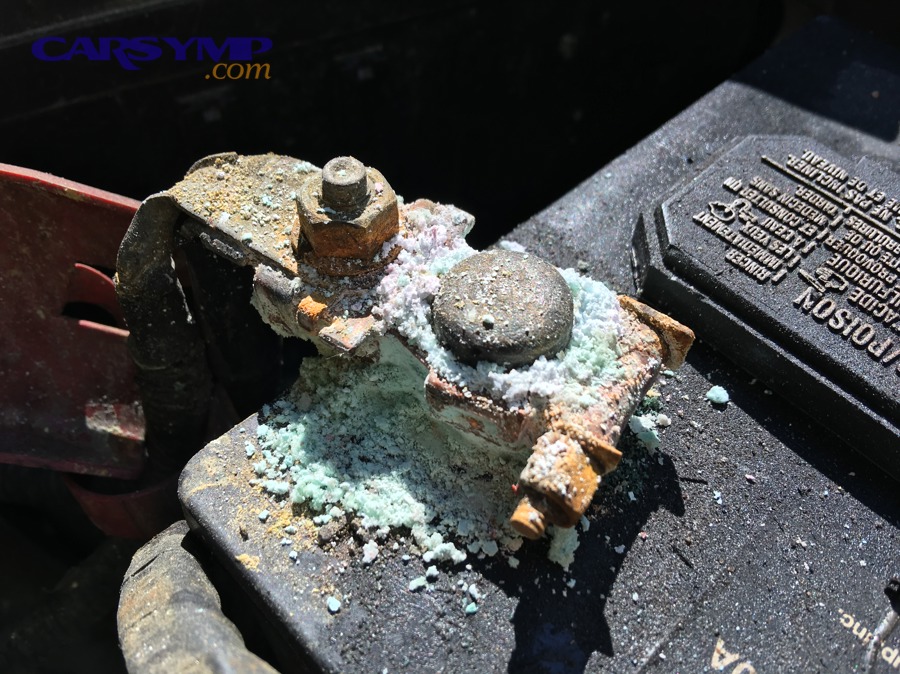
- Inspect battery terminals for looseness, corrosion, or heat damage
- Inspect alternator plug and output cable for looseness or melting
- Inspect grounds (battery-to-body, engine-to-body straps)
Why this matters: a loose terminal can create intermittent voltage drops that look like alternator failure—especially under load.
Step 3: Baseline voltage test (engine off)
Measure voltage at the battery posts (not the clamps). Use this quick interpretation:
- ~12.6V: likely near full charge
- ~12.2V: roughly mid-charge
- ~12.0V or below: discharged (charge first before final conclusions)
If the battery is deeply discharged, recharge it before you declare the alternator “bad,” because some systems will reduce charging output or behave erratically when voltage is very low.
Step 4: Charging voltage test (engine running)
Start the engine and measure battery voltage:
- If voltage rises into a stable charging range (often ~13.8–14.7V), the alternator is producing output at least at idle.
- If voltage stays near resting voltage (~12V range), you likely have a no-charge condition (alternator, belt, wiring, or control).
If the battery light is on but voltage seems normal, don’t stop here—intermittent faults often require load testing and voltage-drop testing.
Step 5: Loaded charging test (force demand)
Turn on:
- Headlights (high beam if safe)
- Blower fan
- Rear defrost
- Seat heaters or other loads (if available)
Then check:
- Does voltage hold relatively steady?
- Do lights flicker?
- Does voltage sag sharply then recover?
A weak alternator often looks “fine” with no load but collapses under load. A belt slip may show as voltage that drops when you rev or load the system and may be accompanied by squeal.
Step 6: Voltage-drop tests (positive and ground sides)
If charging is low or unstable, measure voltage drop:
- Positive side drop: alternator B+ output → battery positive post
- Ground side drop: alternator case → battery negative post
You’re looking for excessive drop that indicates resistance in cables, terminals, or grounds. Even small resistances become big problems at high current.
A good habit: test drops during load (blower + lights) because that’s when cable losses show up.
Step 7: Ripple/diode sanity check (when symptoms are weird)
If you have flickering lights, random module faults, or repeated battery light warnings with “okay” voltage, check AC ripple if your meter supports it. Excess ripple can indicate rectifier/diode problems that don’t always show as low DC voltage.
Evidence sentence: According to a study by Massachusetts Institute of Technology from the Laboratory for Electromagnetic and Electronic Systems, in 2000, experimental results showed that alternator control/rectification design changes can significantly affect output capability and efficiency—highlighting why “voltage looks okay” isn’t the whole story in charging diagnostics. (per.mit.edu)
How do you identify the root cause from your test results?
There are 5 main root-cause buckets for battery light and charging system diagnosis: (1) battery condition, (2) alternator/regulator failure, (3) belt drive problems, (4) wiring/connection/ground resistance, and (5) vehicle charging-control logic or sensor inputs.
More importantly, each bucket has a “signature” you can match to your numbers and symptoms.
Battery vs alternator vs wiring: what patterns tell you which is failing?
Use this quick pattern recognition:
A) Battery likely the main issue when:
- Engine off voltage is low and the battery won’t hold charge after proper charging
- Cranking is slow even after charging
- Charging voltage is normal, but the battery repeatedly goes dead after sitting (possible parasitic draw too)
B) Alternator/regulator likely the main issue when:
- Charging voltage never rises above resting voltage
- Voltage rises but collapses under load
- Battery light is on and you see unstable voltage behavior (surging)
- You detect abnormal ripple behavior (diodes)
C) Wiring/connection/ground likely the main issue when:
- Alternator output seems present, but battery-post voltage stays low
- You measure significant voltage drop on the positive or ground side under load
- Symptoms are intermittent (bumps, rain, heat)
A key technician trick: compare voltage at the alternator B+ and at the battery posts while loaded. A big difference is not an alternator—it’s a delivery problem.
What are the most common failure points in the charging system?
Most common real-world failure points include:
- Battery terminal corrosion or loose clamps
- Engine ground strap degradation
- Alternator internal wear (brushes, bearings, diode/rectifier)
- Belt glazing, tensioner weakness, pulley misalignment
- Damaged alternator connector or sense wire issues
Evidence sentence: According to a study by AAA, in 2016, battery-related failures were among the most common roadside assistance requests—showing why accurate charging diagnosis matters before replacing parts blindly. (newsroom.aaa.com)
How do control systems and sensors create “false” battery light warnings?
Modern vehicles may adjust charging based on temperature, load, battery management strategy, and efficiency goals. This can create confusing cases where:
- Voltage is temporarily lower than “old-school” expectations during deceleration/idle
- The system reduces charge to protect the battery or improve fuel economy
- A sensor or communication issue causes the module to misjudge charging behavior
That’s why combining multimeter tests with scan data is powerful: scan data tells you the command/target, and the meter tells you reality.
What should you do after diagnosis (repair, confirm, and prevent recurrence)?
After you identify the failing bucket, you should follow a 3-part closeout plan: (1) fix the cause (repair/replace/clean), (2) confirm with repeat testing and a controlled load test, and (3) prevent recurrence with maintenance checks that match your failure type.
Then, you avoid the common trap: “new alternator, same problem” because the cable/ground/belt was the real cause.
Which fixes are DIY-friendly vs when should you visit a shop?
Often DIY-friendly (with basic tools):
- Clean and tighten battery terminals
- Replace worn belt (if access is reasonable)
- Replace a damaged ground strap
- Replace battery (after confirming it fails a load/health test)
Usually better for a shop (or advanced DIY):
- Alternator replacement on tight-engine-bay vehicles
- Charging-control diagnostics involving LIN/BSS/ECM strategies
- Diagnosing intermittent wiring faults deep in harnesses
- Diagnosing module-related ripple/network issues
A smart decision point: if voltage-drop testing shows issues and you’re not comfortable tracing cables, a shop can locate high-resistance points quickly with professional tools.
How do you confirm the repair is actually successful?
Use a repeatable confirmation checklist:
- Battery-post voltage at rest (after charging and rest) is healthy
- Charging voltage is stable at idle and under load
- Voltage-drop numbers improve (especially under load)
- No flicker, no warning lamp, no “voltage swing” behavior
- If scan data is available, commands and results match (target vs actual)
If you replaced the alternator, always recheck belt tension and pulley alignment—because a slipping belt can kill a new alternator’s performance and your confidence in the repair.
How do you prevent the battery light from returning?
Prevention is mostly about reducing resistance and keeping the charging system within design limits:
- Clean terminals and protect against corrosion (proper terminal protectant)
- Inspect belt condition and tensioner performance during oil changes
- Ensure grounds are intact, tight, and not heat-damaged
- Avoid repeated deep discharges (they shorten battery life)
- If the car sits, use a maintainer and check for parasitic draw
Evidence sentence: According to a study by Blekinge Institute of Technology from the Department of Electrical Engineering, in 2013, researchers noted that battery voltage-based state-of-charge methods require stabilization time and are sensitive to conditions like temperature and aging—reinforcing why consistent test conditions improve diagnostic accuracy. (diva-portal.org)
What less-common issues can mimic charging problems?
Less-common causes include parasitic draw, abnormal ripple, blown fusible links, smart charging strategies, and other warning-light interactions that confuse the diagnosis—so you should widen your checks only after the core charging tests are complete.
Besides, this is the point where micro-semantics matter: you’re looking for “charging look-alikes,” not repeating the same alternator test.
How can parasitic draw look like an alternator failure?
A parasitic draw can drain a healthy battery overnight, making it feel like the alternator didn’t charge—when the real issue is something staying awake after shutdown.
Common signs:
- Battery dies only after sitting
- Charging voltage tests normal while running
- Battery passes health testing but keeps going flat
A practical reference: many modern vehicles target low quiescent draw; some guidance notes manufacturer specs can be under 50 mA depending on the vehicle. (motor.com)
How does alternator ripple cause strange electrical symptoms?
Excess ripple (often from rectifier/diode issues) can create:
- Flickering lights
- Random module communication faults
- Intermittent warning lamps unrelated to charging
This is one reason “battery light off” doesn’t always mean “charging system perfect,” especially on networked vehicles. (tirereview.com)
How do other warning lights change your decision-making?
This is where dashboard warning lights diagnosis helps you avoid dangerous assumptions:
- Airbag/SRS light causes and safety: an SRS warning is a safety-system fault; it does not mean the vehicle will stall, but it can mean airbags may not deploy correctly—handle separately and don’t “ignore it because it drives fine.”
- Check engine vs service engine soon meaning: both relate to emissions/engine management faults; they may coexist with charging issues, but they do not automatically confirm alternator failure.
If multiple warnings appear at once (ABS, traction, steering, battery), suspect low system voltage causing modules to drop offline—then prove it with voltage and load testing before chasing each warning individually.