


Radiator cap failure symptoms usually show up as overheating that comes and goes, coolant loss without an obvious puddle, or a “hot smell” after driving—even when the radiator, hoses, and fans look fine at a glance. The cap is a small part, but it controls pressure, boiling point, and recovery flow in the entire cooling system.
Beyond basic symptoms, most drivers want two things: a fast way to tell whether the cap is truly the cause, and a safe plan to avoid engine damage while troubleshooting. That’s why you’ll see quick “yes/no” checks, then deeper diagnosis steps that separate cap issues from thermostat, fan, and internal engine problems.
You’ll also learn how to test the cap safely, how to choose the correct pressure rating, and what supporting parts to inspect so you don’t replace a cap and miss the real leak. This matters because cooling problems often have “stacked causes,” where one weak component triggers another.
To begin, let’s connect what the cap actually does to the symptoms you feel behind the wheel—then follow a step-by-step path that keeps your engine protected while you narrow it down.
What does a radiator cap do, and why can a bad one cause big symptoms?
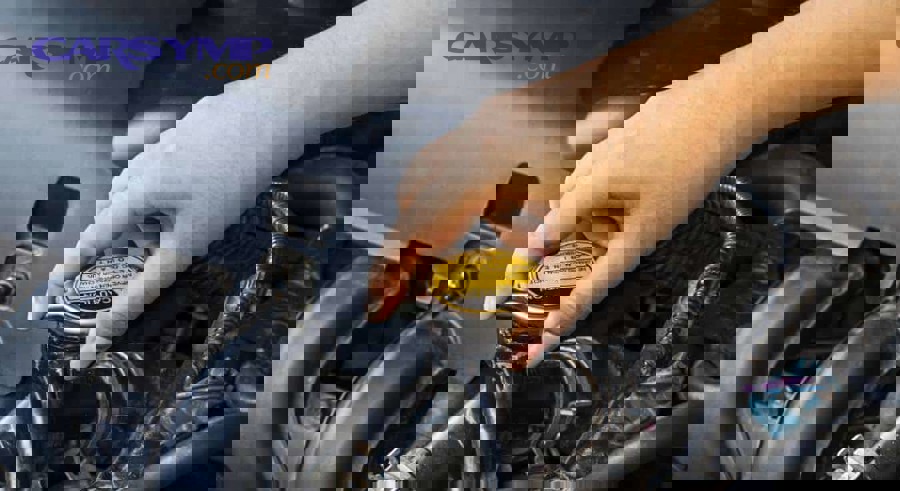
A radiator cap is a pressure-control and one-way valve assembly that raises coolant boiling point and manages coolant expansion and return, so a small sealing failure can mimic larger cooling-system faults. Next, understanding its internal parts makes the symptoms easier to “read” in real time.
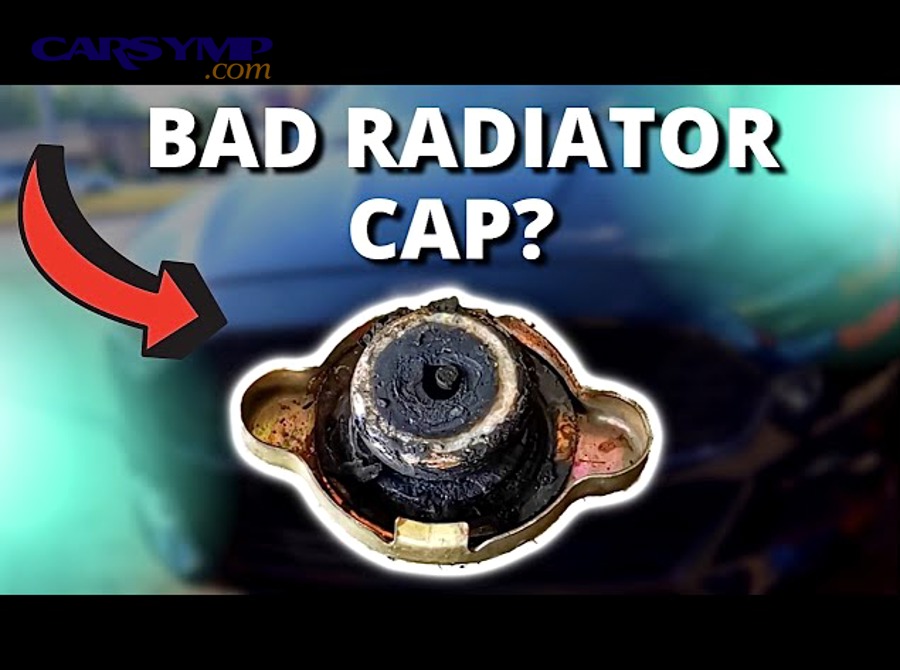
Most people think of the cap as “just a lid,” but it is a calibrated regulator. In a typical system, the cap’s spring-loaded pressure valve holds coolant pressure up to its rated limit. Higher pressure raises the boiling point of the coolant mixture, which helps prevent localized boiling at hot spots like the cylinder head, turbo coolant lines, or heater core passages.
To illustrate, consider the cap as the cooling system’s “gatekeeper.” When pressure climbs, the cap decides when coolant is allowed to move to the overflow/expansion area. When the engine cools, the cap’s vacuum valve decides when coolant is pulled back in. Therefore, a cap that cannot hold pressure, cannot vent correctly, or cannot pull coolant back will create different symptom patterns.
Internally, you can think of the cap as having three functional “pieces” (a practical meronymy): the sealing gasket, the pressure spring/valve, and the vacuum return valve. If the gasket is hard or cracked, you lose pressure early and may see coolant smell or residue around the neck. If the pressure spring is weak, you may vent too soon, lose coolant, and overheat under load. If the vacuum valve sticks, the system may not recover coolant, leading to low level in the radiator and intermittent overheating.
In other words, the cap doesn’t just prevent leaks; it manages phase change. If coolant boils, it forms steam pockets that do not transfer heat well. Consequently, the temperature gauge can spike suddenly, then drop when the bubble moves—creating an “unpredictable” overheating story that confuses diagnosis.
What are the most common radiator cap failure symptoms you can notice while driving?
There are several common radiator cap failure symptoms—especially fluctuating temperature, coolant odor, repeated low coolant level, and wet residue near the cap area—that often worsen under highway load or after shutdown. Next, you’ll see each symptom grouped by what the cap is failing to do.
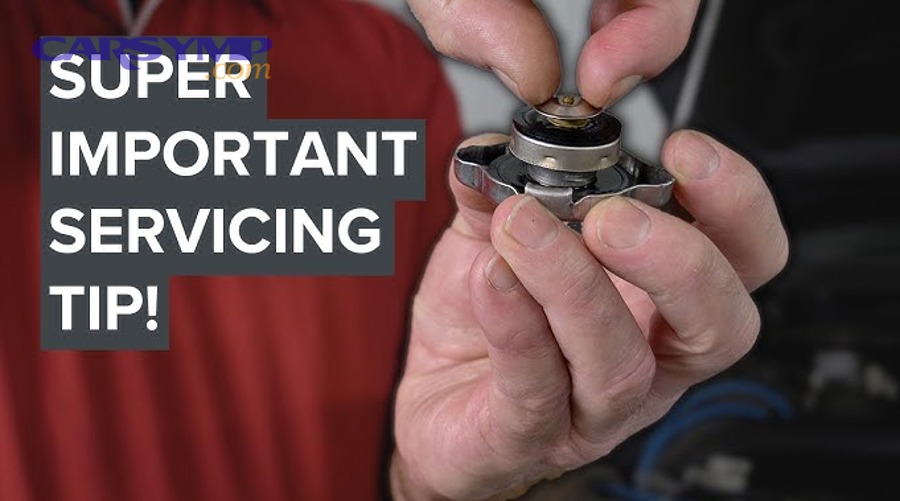
Here are the symptom clusters that most reliably point toward the cap, not just the rest of the system:
- Temperature swings instead of steady overheating: The gauge rises on hills or during acceleration, then settles when you cruise or stop. This often aligns with pressure loss and localized boiling rather than a constant flow restriction.
- Coolant smell after a drive: You may smell sweet coolant near the front of the car, especially after you park. A cap that vents early can push vapor and mist out around the neck.
- Coolant “disappears” without a clear puddle: Slow venting and evaporation can reduce system level, particularly if the cap vents to an overflow path that doesn’t obviously leak onto the ground.
- Wetness or crusty residue at the fill neck/cap seat: Dried coolant leaves white/green crust. This is a strong visual clue because many other cooling issues leak elsewhere.
- Heater output changes: Intermittent weak heat at idle can appear if coolant level drops in the radiator and air pockets reach the heater core circuit.
- Hoses feel “less firm” than expected when warm: With a healthy cap, hoses generally pressurize and feel firm when hot. A non-holding cap can leave them softer (note: hose feel varies by design, so use it as a clue, not a verdict).
To connect the dots, match symptoms to cap behaviors: an early-venting cap can cause coolant loss and smell; a non-sealing cap can cause residue and pressure loss; a stuck vacuum valve can cause repeated low coolant level in the radiator even when the reservoir looks “okay.”
However, symptoms alone aren’t enough. So, the next step is to ask a direct yes/no question: can a cap really create overheating and boil-over behavior by itself?
Can a bad radiator cap cause overheating, boil-over, or repeated coolant loss?
Yes—radiator cap failure can cause overheating and coolant loss because reduced system pressure lowers boiling margin, triggers steam pockets, and pushes coolant out earlier than designed. Next, you’ll learn the “pattern” differences between cap-driven boiling and other overheating causes.
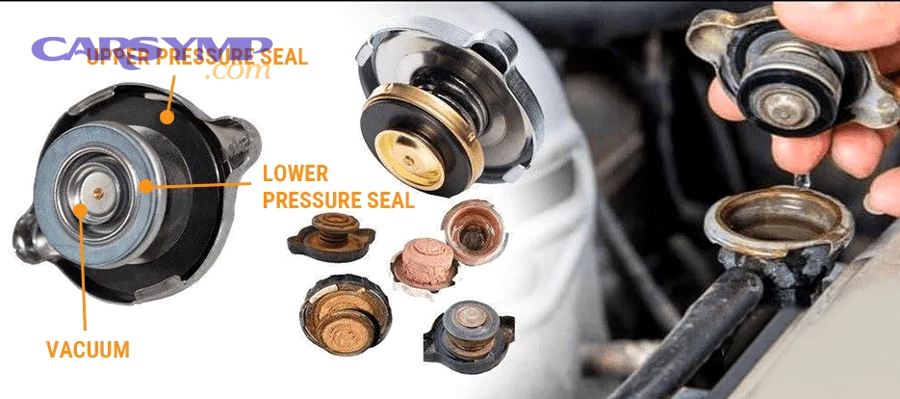
When pressure is too low, coolant is more likely to boil at hot spots. Boiling forms steam, and steam does not carry heat as effectively as liquid coolant. As a result, the temperature sensor can see rapid spikes. Then, once the steam bubble moves or collapses, the gauge may drop—making you think the issue “fixed itself.”
Another classic cap-driven pattern is “overheats after a highway run, then vents after shutdown.” Here’s why: you arrive, park, and airflow stops. Under-hood temperature rises, coolant expands, and pressure peaks. If the cap vents too early, it pushes coolant out. Later, when the engine cools, a faulty return valve may fail to pull coolant back, leaving the radiator low the next morning.
This is also where you may notice bubbling coolant reservoir behavior in the overflow/expansion area. Sometimes the bubbling is simply hot coolant returning and releasing dissolved gases; other times it’s a sign the system is boiling because the cap isn’t maintaining pressure. The key is whether it correlates with overheating, coolant loss, and a low radiator level once cooled.
To make this practical, use a quick three-check sequence (with the engine fully cool): (1) confirm radiator level is truly full, (2) inspect cap seat and gasket for crust or damage, and (3) check whether the reservoir level seems to rise and never returns. If those align, the cap becomes a prime suspect.
However, overheating can also come from airflow problems, coolant flow restriction, or combustion gases. Therefore, the next section shows how to separate a cap issue from other common culprits without guessing.
How do you tell radiator cap failure from thermostat, fan, leaks, or head gasket issues?
You can differentiate radiator cap failure by looking for pressure-control clues (cap-neck residue, poor coolant recovery, inconsistent overheating) rather than constant overheating, persistent bubbling, or confirmed combustion gas in coolant. Next, you’ll compare symptom signatures side-by-side.
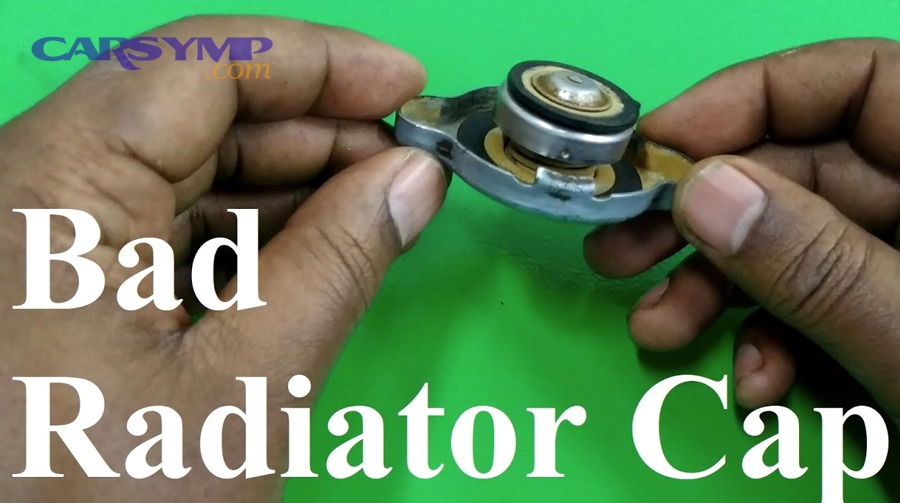
Diagnosis becomes easier when you compare “when it overheats” and “what the coolant level does afterward.” Use these practical comparisons:
Cap failure vs. thermostat stuck closed
A failed cap often causes intermittent spikes and coolant loss over time, while a thermostat stuck closed more often causes rapid overheating from cold start and consistently poor heater output. Next, check how quickly the upper radiator hose warms to confirm flow behavior.
With a thermostat stuck closed, the engine may overheat quickly, and the radiator stays relatively cool because coolant isn’t circulating. With a cap issue, the radiator may warm normally, but pressure loss reduces boiling point, creating hot spots and spikes. Therefore, if your warm-up behavior seems normal yet you still see spikes under load, the cap stays on the suspect list.
Cap failure vs. cooling fan or airflow problems
Fan or airflow issues typically show up at low speed or idle, while cap issues can appear at highway load, after shutdown, or in any situation that pushes pressure beyond what the cap can hold. Next, note whether overheating improves immediately with vehicle speed.
If overheating disappears at speed and returns in traffic, suspect airflow: fans, fan relays, fan control, blocked condenser/radiator fins, or debris. If the reverse happens—fine in traffic but overheats climbing a hill—flow and pressure become more important, and the cap may still be in play.
Cap failure vs. an external coolant leak
External leaks usually leave visible wet trails on hoses, radiator tanks, water pump weep holes, or the heater core area, while cap failure often leaves residue concentrated at the neck and overflow path. Next, follow dried coolant “tracks” to the highest point they start.
Because coolant can evaporate on hot surfaces, not every leak leaves a puddle. So, use a bright light and look for crust lines. If the crust is strongest at the cap seat and the overflow tube, that’s a strong cap/neck clue. If crust starts at a hose clamp or radiator seam, the cap may be fine and simply reacting to pressure changes caused by the real leak.
Cap failure vs. head gasket or combustion-gas intrusion
Combustion-gas intrusion tends to cause persistent pressure, repeated overheating, and continuous bubbles under many conditions, while cap failure more often causes pressure loss and inconsistent boil-over patterns. Next, treat continuous bubbling and hard hoses as “high priority” for deeper testing.
A bad cap does not create combustion gases; it only mismanages pressure. If you see constant bubbling that doesn’t settle, unexplained coolant pressurization, or repeated coolant push-out soon after startup, that may point beyond the cap. In that case, the cap can still be replaced as a low-cost step, but it should not be the only diagnostic action.
To bring this together, use the cap as the “simplest controllable variable.” If the symptoms match cap patterns and the cap is old, replacing or testing it is a rational next move. So, let’s move from comparison to hands-on verification.
How can you inspect a radiator cap and filler neck without special tools?
You can often confirm radiator cap failure symptoms by inspecting the gasket, spring tension, and filler neck seat for corrosion or damage, because sealing integrity depends on both the cap and the neck. Next, you’ll follow a short checklist that catches the most common hidden issues.
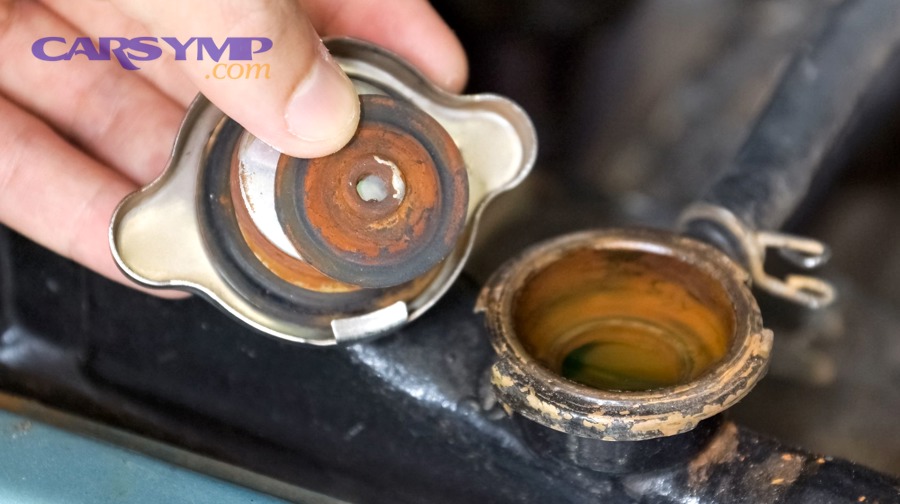
Do this only when the engine is fully cold. Then:
- Check the rubber gasket: It should be pliable, not cracked, swollen, or flattened. A hardened gasket can leak pressure even if the spring feels strong.
- Look at the sealing surfaces: Inspect the cap’s metal plate and the filler neck seat. Corrosion, pitting, or dents can prevent a uniform seal.
- Inspect the spring and valve movement: Press the valve plate gently; it should resist and return smoothly. A weak spring can vent early.
- Check the vacuum valve: Many caps have a smaller center valve for coolant return. It should move freely, not stick.
- Inspect the overflow/return hose: Ensure it’s not cracked, kinked, or loose at the nipple. A perfect cap cannot recover coolant through a leaking return line.
Next, pay attention to the neck itself. A damaged or warped filler neck can cause repeat failures even with a new cap. For example, if the cap “clicks” into place but still shows residue afterward, the seat may be uneven or the neck may be cracked.
To make the inspection more actionable, the table below maps common observations to what they most often mean and what you should do next.
Table: Symptom-to-clue mapping for radiator cap-related issues
| What you notice | Cap-related clue | Best next action |
|---|---|---|
| Crusty residue concentrated at cap/neck | Sealing surface leak or early venting | Replace cap; inspect neck seat for corrosion/pitting |
| Reservoir rises when hot but doesn’t return when cold | Sticking vacuum valve or return-hose leak | Replace cap; verify return hose integrity and routing |
| Intermittent overheating under load | Pressure loss reducing boiling margin | Test cap; verify coolant level and remove trapped air |
| Coolant smell after shutdown | Vapor venting at cap area | Replace cap; clean and recheck for fresh seepage |
| Hoses stay unusually soft when hot | System not holding pressure | Pressure-test cap/system; inspect for external leaks |
Once you’ve done the visual checks, the next best step is a direct functional test—because a cap can look “fine” and still vent at the wrong pressure.
How do you test a radiator cap safely with a pressure tester?
The most reliable way to confirm radiator cap failure symptoms is to use a radiator/cooling-system pressure tester with a cap adapter, because it verifies the cap’s holding pressure and release behavior under controlled conditions. Next, you’ll follow a safe, minimal-risk testing routine.
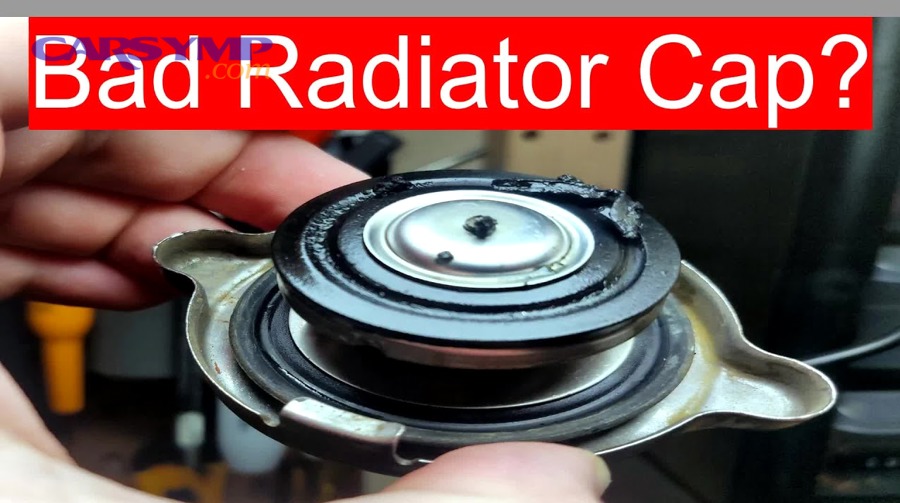
Safety first: Never remove a cap on a hot engine. Wait until it is fully cold, and relieve any residual pressure slowly using the cap’s first detent (if equipped) before fully removing.
Here’s a practical test workflow:
- Confirm the cap rating: The cap is stamped with a pressure value (varies by vehicle). Testing only makes sense against its specified rating.
- Attach the cap to the tester adapter: Ensure the gasket sits flat and the adapter matches the cap style.
- Pump pressure gradually: Watch the gauge and listen/feel for early venting. A healthy cap should hold close to its rating before releasing.
- Observe stability: If the gauge bleeds down quickly, the cap is leaking through the seal or valve seat.
- Test repeatability: Pump up again. Inconsistent release points can indicate a weak spring or sticking valve.
To connect this to symptom patterns: an “early-release” cap aligns with overflow and coolant loss; a “can’t-hold” cap aligns with pressure loss and localized boiling; a “sticky” cap can cause unpredictable spikes as pressure control becomes erratic.
However, testing the cap alone doesn’t guarantee the system is healthy. Therefore, many technicians pair this with a system pressure test—because a cap may be responding to an underlying leak that bleeds pressure and creates boil-over conditions.
Now that you can verify the cap’s behavior, the next question is: when should you replace it, and how do you choose the correct one without creating new problems?
When should you replace the radiator cap, and how do you choose the correct pressure rating?
You should replace the radiator cap when the gasket is hardened, the cap fails a pressure test, or you see repeated coolant recovery issues, and you must match the factory pressure rating to maintain correct boiling margin without overstressing components. Next, you’ll learn selection rules that prevent costly mistakes.
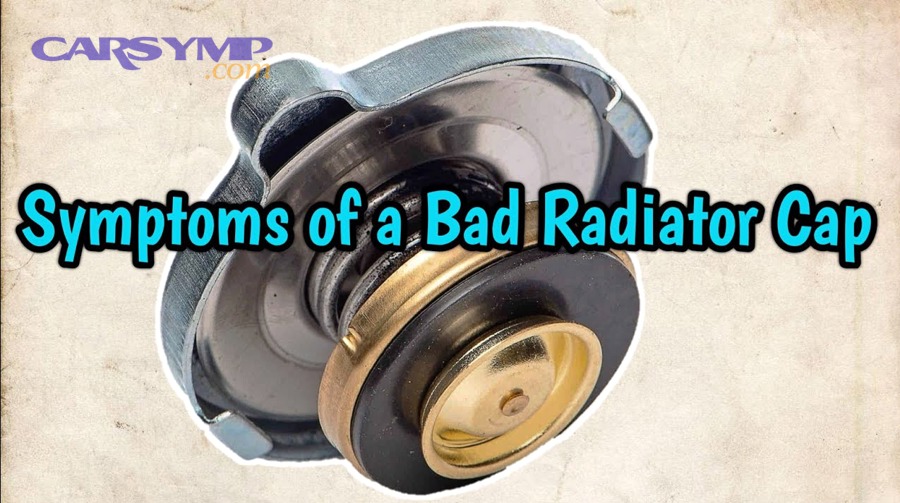
A radiator cap is inexpensive compared with the risk of overheating. Still, “cheap” does not mean “any cap works.” The correct cap must match:
- Pressure rating: Too low reduces boiling margin; too high can stress hoses, radiator seams, and heater core components.
- Depth and seat design: Some caps are “short reach” vs “deep reach,” and mismatching can prevent proper sealing or recovery.
- System style: Some vehicles use a radiator cap on the radiator; others use a pressurized expansion tank cap. They are not always interchangeable even if they look similar.
As a practical rule, match OEM specification. If you cannot confirm the rating, use the cap currently specified for your exact engine and model year, not just “fits” by diameter. However, if your existing cap is not original, verify using a reliable parts catalog and the vehicle’s service information.
Replacement timing can be symptom-driven or preventive. Symptom-driven replacement makes sense when you see residue at the neck, repeated low coolant level, or intermittent overheating. Preventive replacement is also reasonable for high-mileage vehicles or when you are already servicing the cooling system and the cap is old.
Next, do a quick post-replacement validation: clean the neck area, refill correctly, run to operating temperature, and recheck for fresh residue after a heat cycle. This simple step prevents “false confidence,” where you replace the cap but still have a slow leak elsewhere.
What safe steps should you take if you suspect cap failure while on the road?
If you suspect radiator cap failure symptoms while driving, the safest approach is to reduce load, increase cooling airflow, and avoid opening the system hot, because pressure loss and boiling can escalate quickly into severe overheating. Next, you’ll use a road-safe decision path to protect the engine.
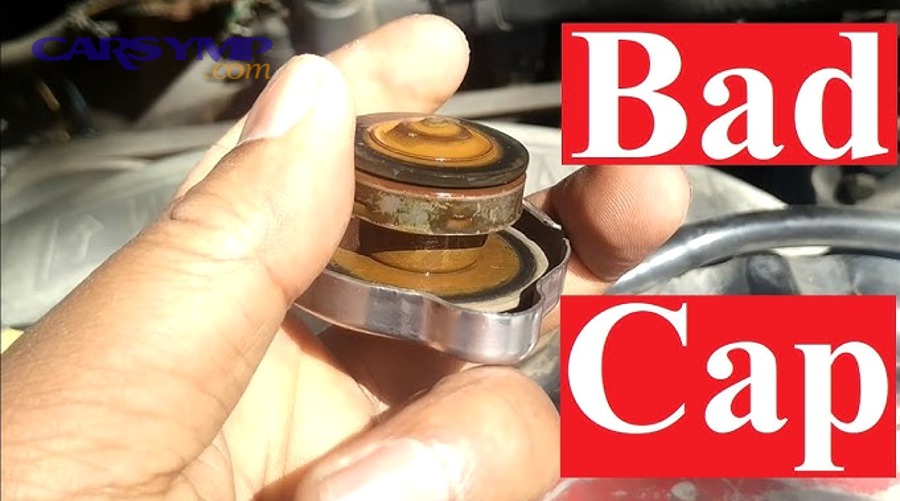
When the temperature gauge climbs or a warning appears, your priority is preventing engine damage, not proving the cap is bad. Use this sequence:
- Turn off A/C and reduce load: Lower engine load and heat production. Avoid hard acceleration and long climbs if possible.
- Increase airflow: If safe, keep moving at moderate speed to improve radiator airflow. Stop-and-go can worsen heat soak.
- Use cabin heat as a temporary heat sink: Turn the heater on high to pull heat from coolant. It’s uncomfortable, but it can buy time.
- Pull over before red zone: If the gauge approaches the danger zone, stop. Driving “just a little farther” can warp components.
- Do not open the cap hot: Even a weak cap can allow superheated coolant to flash-boil when opened.
After shutting down, let the engine cool fully. If coolant has vented, you may see wetness or residue around the cap area. If you have water/coolant and must top up to move to safety, do it only when cool—and only as a temporary measure to reach a safe location for proper diagnosis.
In many real-world cases, drivers report bubbling in the reservoir area during or after overheating. In that moment, focus on the decision: keep the engine out of the danger zone and avoid opening the system hot. The detailed cause can be confirmed later with inspection and testing.
Next, once you’re safely parked and cool, you’ll want to confirm whether the system has air trapped from service or whether the bubbling indicates ongoing boiling and pressure-control failure.
What checks should you do after replacing the cap if symptoms continue?
If radiator cap failure symptoms persist after a new cap, you should confirm coolant level, remove trapped air, and verify system flow and leak integrity, because the cap often reveals—rather than causes—an underlying issue. Next, you’ll follow a structured set of follow-up checks that prevents “parts swapping.”
Start with the basics that most often invalidate a “cap-only” fix:
- Correct fill level in the correct place: Some vehicles must be full at the radiator; others at a pressurized tank. Confirm you’re checking the right component.
- Bleed air properly: Air pockets can cause spikes and heater inconsistency. Follow the proper bleeding method for your vehicle.
- Inspect for external leaks under pressure: A cap that holds correct pressure can make a small leak obvious, especially at clamps or radiator seams.
- Verify fan operation and airflow: Confirm fans engage as expected and the radiator face is not blocked by debris.
Beyond that, you should run Thermostat and water pump checks as part of a “flow verification” routine. Specifically, verify that the thermostat opens at the correct time (temperature rises smoothly, then stabilizes) and that coolant circulation is strong (heater performance, hose temperature differentials, and absence of cold radiator when the engine is hot). A weak water pump impeller, slipping belt, or internal restriction can keep heat trapped even with a perfect cap.
Next, consider the radiator itself: internal clogging reduces heat transfer, and external fin damage reduces airflow effectiveness. If you notice overheating at speed and the radiator is partially blocked internally, the cap may get blamed because venting happens when pressure spikes—but the root cause is insufficient heat rejection.
Finally, if you still observe persistent bubbling, repeated coolant push-out, or rapid pressurization soon after startup, escalate to deeper tests rather than continuing to replace parts. The cap is a controller, but it cannot fix combustion gas intrusion, severe restrictions, or failing major components.
Contextual Border: Up to this point, you’ve focused on direct, high-probability diagnosis and actions. Next, we’ll expand into rarer patterns, system variations, and nuanced scenarios that can confuse even experienced DIY troubleshooting.
Rare patterns, system variations, and deeper questions for stubborn cases
Some cooling systems use different cap locations, return paths, and pressure behaviors, so rare radiator cap-related problems show up as “odd” recovery issues, misleading bubbling, or repeat failures after service. Next, you’ll learn advanced scenarios and how to avoid false conclusions.
How do pressurized expansion-tank caps change the symptom pattern?
On vehicles with a pressurized expansion tank, the “cap” may sit on the tank rather than the radiator, so recovery and level behavior must be evaluated at that tank, not the radiator neck. Next, trace the system’s highest point and confirm where pressure is actually regulated.
In these systems, a low coolant level in the tank can directly cause air ingestion and temperature spikes. A failing tank cap can also vent vapor into the engine bay with little visible leakage. Therefore, interpreting symptoms requires knowing where the pressure boundary is and where the system expects coolant to be “full.”
Additionally, cracked plastic tanks can mimic cap failure because the crack opens under pressure. The cap may be blamed since residue appears near it, but the tank body is the true leak path. So, inspect the tank seam, nipple connections, and underside for staining.
What “normal vs abnormal” bubbling looks like after cooling-system service
Some bubbling can be normal briefly after service due to trapped air purging, while persistent bubbling paired with overheating and coolant loss suggests boiling or gas intrusion. Next, evaluate timing, duration, and whether the system stabilizes after full bleed cycles.
To clarify the nuance, remember: When bubbles are normal after service is typically when you’ve drained/refilled coolant and the system is purging air in the first heat cycles. In that scenario, the heater output improves over time, the temperature stabilizes, and the coolant level settles into a consistent “cold mark.”
In contrast, abnormal bubbling tends to persist, correlate with temperature spikes, and accompany repeated loss of coolant. If the system never stabilizes, do not assume it is “still bleeding” indefinitely—confirm proper bleeding procedure and test for leaks and pressure anomalies.
How to decide if it’s safe to drive when you see bubbling and coolant movement
Driving can be safe only if temperature remains stable, coolant level is correct, and there is no active overheating, but it becomes risky when bubbling aligns with rising temperature, coolant push-out, or repeated low level after cooling. Next, use a conservative rule set to avoid engine damage.
This is where Safe driving guidance with bubbling coolant becomes practical: if the gauge stays in the normal range, there are no warning lights, and coolant level remains stable after cooldown, you can often drive short distances while monitoring closely. However, if the temperature climbs, if you smell coolant strongly, or if the system pushes coolant out, stop and diagnose. Overheating damage can occur faster than many drivers expect, especially under load.
Also, avoid opening the system hot to “check” it. A cap problem plus a hot engine is a recipe for sudden coolant release. Instead, cool down fully, confirm level, and proceed only with stable readings and a plan to stop immediately if temperature rises again.
FAQ: Quick answers to common radiator cap symptom questions
Q: Can a radiator cap be “bad” even if it looks clean?
A: Yes. Springs weaken, valves stick, and gaskets harden with age. Visual inspection helps, but a pressure test confirms function.
Q: If the reservoir level is fine, can the radiator still be low?
A: Yes. A stuck vacuum return valve or a leaking return path can prevent coolant from being pulled back, leaving the radiator low even when the reservoir looks acceptable.
Q: Should I buy a higher-pressure cap to stop overheating?
A: No. Higher pressure can stress hoses, radiator seams, and heater core components. Match the specified rating and fix the underlying cause of overheating.
Q: Why do radiator cap issues seem worse after I park?
A: Heat soak after shutdown increases coolant expansion and pressure. A weak cap can vent during that peak, and a faulty return valve can fail to recover coolant during cooldown.
Q: What’s the most common mistake when diagnosing cap-related overheating?
A: Assuming the cap is the only problem without confirming coolant level, bleeding air correctly, and checking for pressure-dependent leaks elsewhere.