


Thermostat and water pump checks are the fastest way to confirm whether an overheating, heater failure, or erratic temperature gauge is caused by coolant flow control, coolant circulation, or something else entirely.
They also help you avoid “parts darts”: swapping a thermostat when the real issue is airflow, low coolant, a weak cap, or a hidden leak that only shows up under pressure.
Beyond basic inspection, a good check routine turns scattered clues—hose temperatures, cabin heat behavior, fan timing, and leak traces—into a clear decision: test more, replace a part, or stop driving.
To introduce the next idea, the sections below walk you from quick driveway checks to deeper tests that separate a stuck thermostat from a slipping pump, cavitation, or a system that can’t hold pressure.
What do thermostat and water pump checks reveal about overheating and heater loss?
They reveal whether the engine is failing to regulate temperature (thermostat control) or failing to circulate coolant (pump/flow), which are the two most common “core causes” behind sudden heat spikes and no-cabin-heat symptoms.
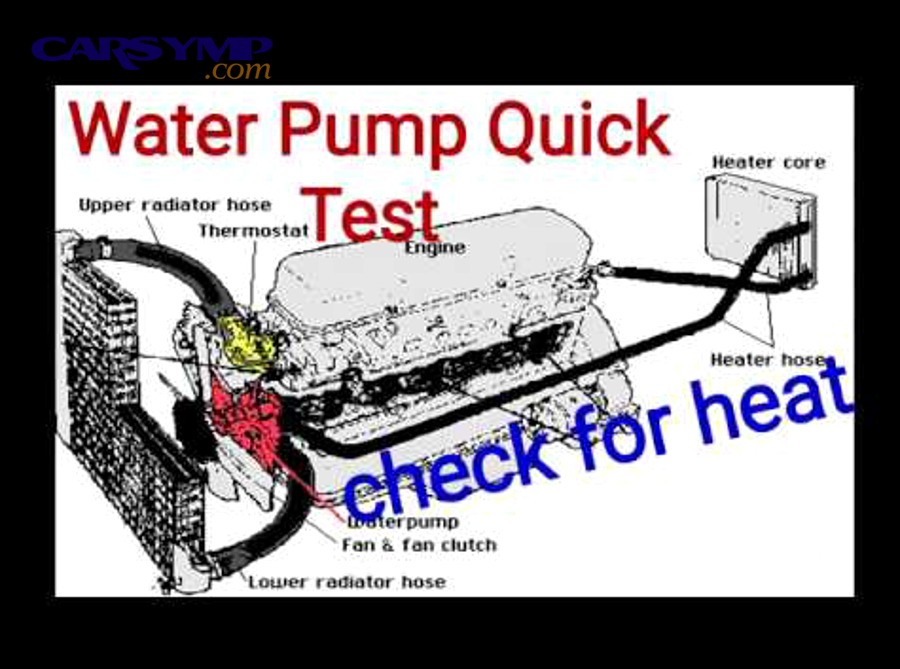
To begin, think in two loops: control (when coolant is allowed to leave the engine) and circulation (how strongly coolant moves through the system). A thermostat can be “stuck closed” (engine overheats fast, upper hose stays cool), “stuck open” (slow warm-up, weak heat in cold weather), or “lazy” (opens late or inconsistently). A water pump can leak, wobble, slip, cavitate, or lose impeller efficiency, all of which reduce heat transfer even if the thermostat is fine.
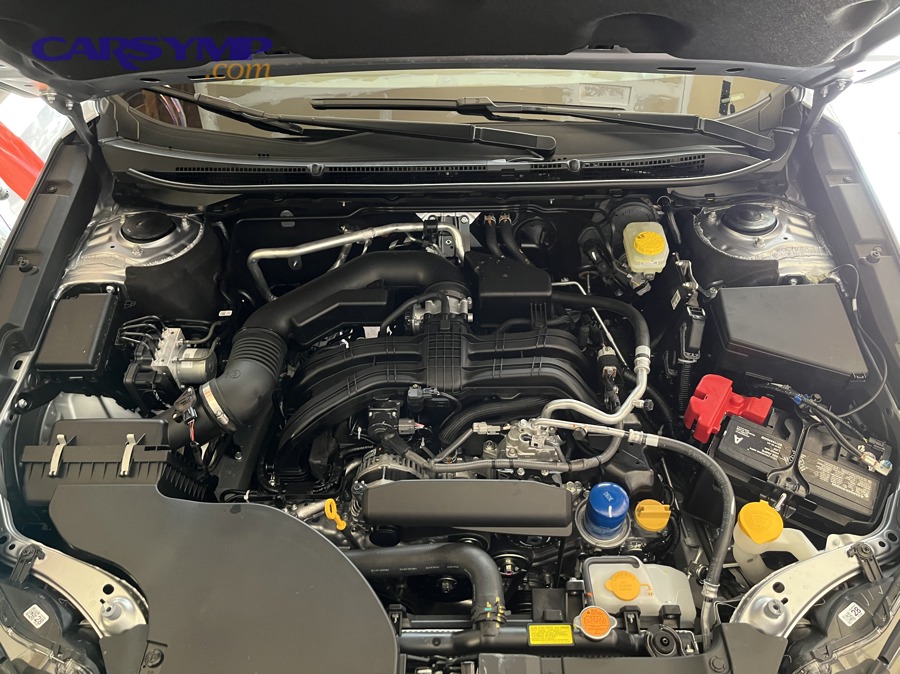
More specifically, thermostat and water pump checks translate symptoms into measurable patterns:
- Warm-up pattern: How quickly the gauge climbs from cold, and whether it stabilizes.
- Hose gradient: Temperature difference between upper and lower radiator hoses once warmed up.
- Heater behavior: Whether cabin heat is steady, fades at idle, or surges with RPM.
- Leak signature: Dried coolant trails, crust, or wetness at the pump weep hole, thermostat housing, or hose joints.
- Pressure behavior: Whether the system holds rated pressure and keeps coolant from boiling at operating temperature.
According to J.D. Power’s automotive guidance (July 2024), overheating is a common symptom when a thermostat sticks closed, because coolant is prevented from reaching the radiator for heat rejection.
Which tools make thermostat and water pump checks accurate at home?
You can do reliable checks with a small set of tools: temperature measurement, pressure testing, and visual inspection, plus optional scan data for modern vehicles.
Next, choose tools that match the symptom: temperature tools for “gauge problems,” pressure tools for “coolant loss,” and mechanical checks for “noise and wobble.”
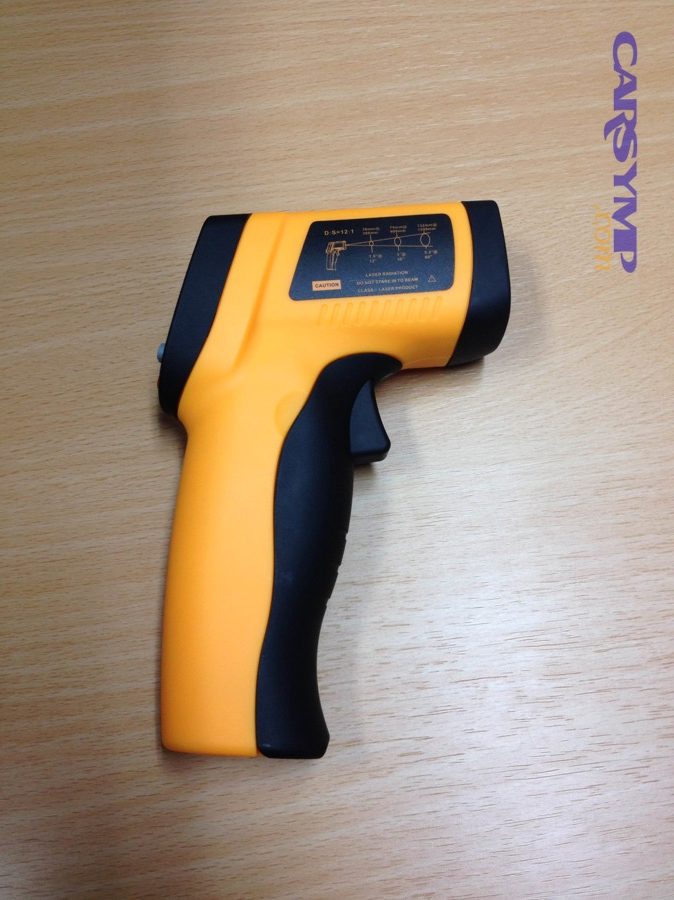
- Infrared thermometer: Spot-check hose, thermostat housing, radiator inlet/outlet, and heater hose temps.
- Scan tool (basic OBD): Read live coolant temperature (ECT) to compare to the dash gauge, and watch fan-on thresholds.
- Cooling system pressure tester: Find leaks and confirm pressure hold without guessing.
- Radiator cap tester (optional): Verifies the cap opens/holds at its rated pressure.
- Flashlight + mirror: For pump weep hole traces, belt path, and hidden seepage.
- Gloves + shop towels: Safe handling and wipe checks for fresh coolant.
- Basic hand tools: Clamp checks, hose squeeze feel, belt tension inspection.
For advanced troubleshooting, a vacuum fill tool and a combustion-gas test kit can save time, but you can still reach a strong diagnosis with the core tools above.
How do you perform thermostat checks without removing it?
You can check a thermostat in-car by comparing warm-up timing, hose temperature changes, and radiator inlet/outlet behavior to expected patterns at idle and light revs.
To understand it clearly, you’re looking for the “opening event”: a noticeable shift where the upper hose and radiator inlet rapidly heat as the thermostat begins flowing hot coolant.
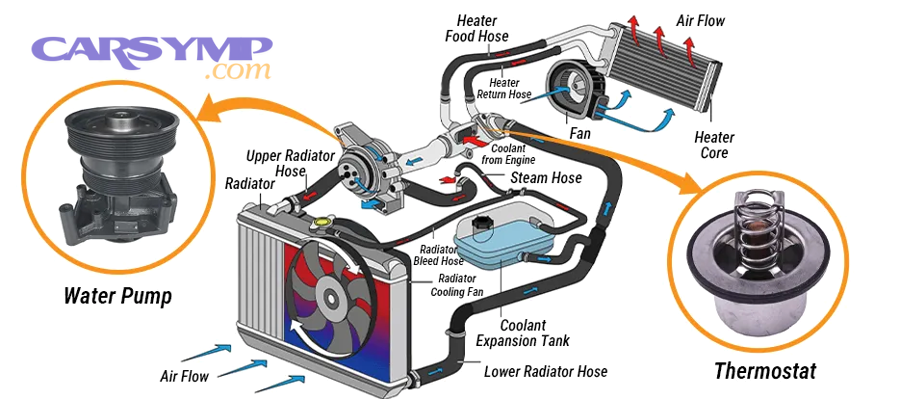
Step-by-step in-car thermostat check (no disassembly):
- Start cold: Let the engine sit long enough to cool fully. Set HVAC to heat, fan low.
- Monitor ECT and gauge: Use a scan tool if available; otherwise use the dash gauge plus IR thermometer readings.
- Feel/measure upper hose: It should stay relatively cool early, then warm quickly when the thermostat opens.
- Measure radiator inlet vs outlet: After opening, inlet gets hot first; outlet warms after coolant passes through the core.
- Watch for stability: A healthy system stabilizes and fan cycles predictably, not in panic spikes.
Interpretation patterns:
- Stuck closed or not opening: ECT climbs fast; upper hose stays much cooler; heater may blow hot briefly then go lukewarm as coolant stops circulating effectively.
- Stuck open: Slow warm-up; weak heat at speed changes; ECT may run lower than normal and fluctuate with airflow.
- Intermittent (“lazy”) operation: Temperature surges, then suddenly drops when the thermostat finally opens; this often creates the “it overheats then recovers” story.
To illustrate the technique visually, this short video demonstrates a simple functional test approach and what “normal” looks like during warm-up.
According to SAE International’s work on electronically controlled thermostats (published 03 Apr 2018), controlling thermostat behavior can improve thermal management and efficiency, underscoring how sensitive engine temperature stability is to thermostat control.
How do you bench-test a thermostat safely and correctly?
You can bench-test a thermostat by heating it in water and verifying it begins opening near its rated temperature and continues opening smoothly rather than sticking or moving unevenly.
Next, treat this as a precision test: your goal is not just “opens or not,” but whether it opens on time, opens far enough, and closes properly when cooled.
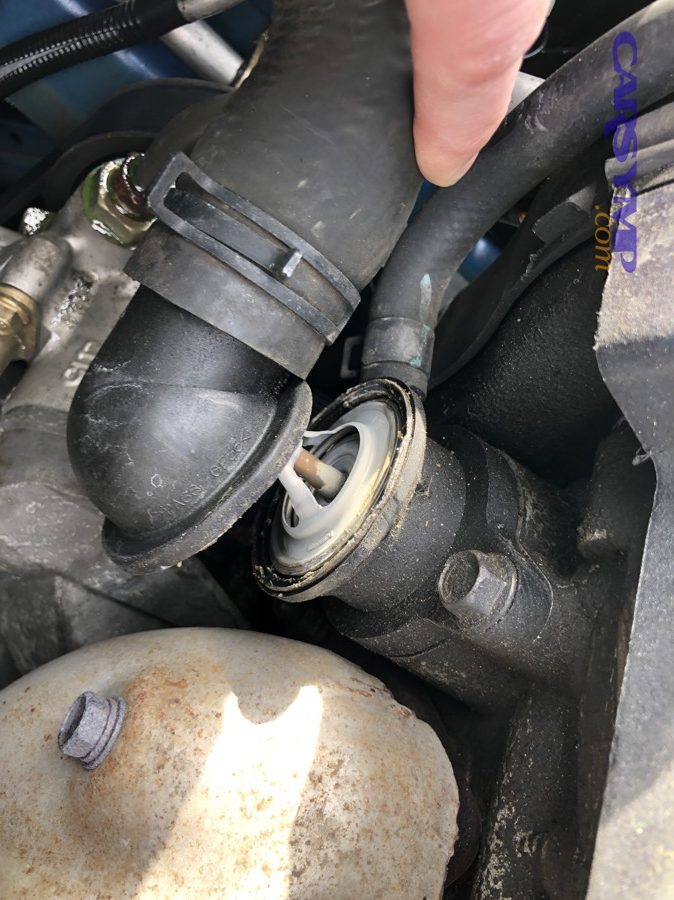
- Remove and inspect: Look for corrosion, pitting, bent frame, or debris that could jam the valve.
- Use a pot and thermometer: Suspend the thermostat so it doesn’t touch the pot bottom (hot spots can mislead).
- Heat gradually: Stir water to avoid stratification; watch the valve closely.
- Record opening behavior: Note the temperature where it first cracks open and where it appears fully open.
- Cool and re-check: It should close as temperature drops; sticky closure can cause slow warm-up or weird cycling.
Common bench-test “gotchas” that cause false conclusions:
- Touching metal surfaces: Contact with the pot can heat the thermostat faster than the water temperature.
- No stirring: Water near the bottom can be hotter than the thermometer reading.
- Wrong thermostat spec: A different opening temperature than OEM can shift gauge behavior and fan timing.
If your thermostat looks physically damaged, moves inconsistently, or fails to open smoothly, replacement is usually the correct call—especially compared to the labor cost of repeating coolant service.
How do you inspect a mechanical water pump for leaks, wobble, and belt drive issues?
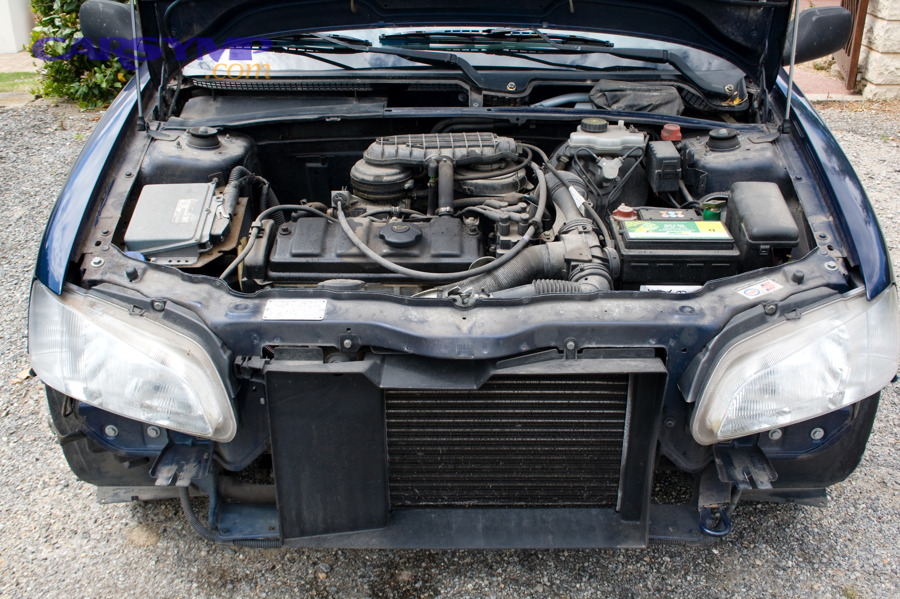
You inspect a mechanical water pump by checking for external leaks, bearing play, pulley alignment, belt condition, and audible bearing noise—because these are the most direct “physical proofs” of pump failure.
Next, do the inspection in layers: first visual and dry evidence, then movement checks, then operational checks under load.
1) Leak and residue inspection:
- Weep hole trace: Many pumps have a weep hole; dried coolant streaks or crust below it strongly suggests seal failure.
- Housing seam and gasket: Look for wet edges or chalky residue around the pump body.
- Front cover splash pattern: Coolant thrown by a pulley often creates a fan-shaped residue trail.
2) Bearing and pulley checks (engine off):
- Wobble: Grab the pulley and attempt to rock it—any noticeable play suggests bearing wear.
- Spin feel: A rough, gritty spin indicates bearing damage.
- Alignment: Misalignment can cause belt squeal and slip, reducing pump speed under load.
3) Belt drive verification (engine on/off):
- Belt condition: Cracks, glazing, or contamination reduces traction.
- Tension and tensioner: Weak tensioners allow slip at high demand (A/C on, hot day, idle).
- Accessory noise correlation: If noise changes with RPM and load, listen closely around the pump area.
According to KTH/DiVA’s Scania-focused thesis on electric coolant pump use (2019), pump control and performance matter significantly to overall cooling behavior, which is why mechanical losses like slip and bearing drag can show up as temperature instability under certain conditions.
How do you diagnose weak coolant circulation when the pump “looks fine”?
You diagnose weak circulation by correlating temperature distribution, heater performance at idle vs RPM, and pressure/flow indicators—because a pump can fail internally without dramatic external leaks.
To begin, treat circulation as a “system output,” not just a part: the impeller, belt drive, hose integrity, and internal restrictions all shape real flow.
Key circulation clues that often point to pump-side problems:
- Heat improves with RPM: Cabin heat weak at idle but stronger at 2,000 RPM can suggest marginal flow at low pump speed.
- Hot spots in the radiator: A radiator inlet that’s very hot while the rest remains cool can indicate poor flow or a thermostat not opening fully.
- Temperature swings after highway exits: Stable at speed, then spikes at idle can implicate airflow issues, but if fans work normally, suspect marginal circulation.
- Persistent “noisy” flow: Gurgling or rushing sounds behind the dash can be trapped air, but it can also indicate flow instability under low pressure.
Practical temperature pattern test (IR thermometer):
- Warm the engine until near normal operating temperature.
- Measure thermostat housing, upper hose, radiator inlet, radiator outlet, and heater inlet/outlet hoses.
- Repeat at idle and again at ~2,000 RPM for 30–60 seconds.
What you want to see: consistent gradients (hotter at inlet, cooler at outlet) and stable readings, not chaotic jumps or a radiator that never “fills in” with heat. If gradients appear only at higher RPM, the circulation margin at idle may be too low.
In research on coolant behavior, bubble dynamics and cavitation are known to affect pump performance; for example, studies of coolant/antifreeze effects discuss how bubbles and cavitation can contribute to damage and performance changes in cooling system components.
What is a fast decision tree for thermostat and water pump checks using symptoms?
A fast decision tree uses three observations—warm-up behavior, hose temperature contrast, and leak/pressure evidence—to narrow the likely fault to thermostat control, pump circulation, or a pressure/air problem.
Next, use the table below as a symptom-to-test map so you don’t jump straight to parts replacement.
This table contains common symptom patterns, what they usually mean, and the first test that gives you the most information with the least risk.
| Symptom pattern | Most likely direction | First high-value test | What “confirming evidence” looks like |
|---|---|---|---|
| Gauge climbs fast from cold; upper hose stays cool | Thermostat not opening / restricted outlet | IR hose/housing warm-up timing | Upper hose remains much cooler until late; sudden surge when it opens (or never surges) |
| Slow warm-up; weak heat in cold weather | Thermostat stuck open | ECT vs ambient and drive cycle | ECT stays below typical operating range; heater output improves only after long drive |
| Overheats at idle; improves at speed | Airflow/fan, but verify circulation | Fan operation + radiator temp spread | Fans fail to engage or radiator doesn’t show even heat distribution |
| No cabin heat + temp swings | Low coolant / trapped air / circulation issue | Coolant level + heater hose temps | Heater hoses uneven temps; level drops after cool-down; gurgling noises |
| Coolant loss; crust near pump | Water pump seal failure | Visual + pressure test | Pressure drop with visible seepage at pump/weep hole |
| Intermittent overheat; returns to normal | Thermostat lazy, cap/pressure issue, or air pockets | Pressure test + warm-up pattern | Pressure won’t hold or temperature oscillates with sudden drops |
How to use the map: pick the row that matches your “story,” do the first test, then only move to deeper tests if evidence stays consistent. This prevents mixing multiple small issues into one confusing diagnosis.
Contextual Border: The main checks above focus on thermostat control and pump circulation. Beyond this line, the goal shifts to “look-alikes” that mimic thermostat or water pump failure, especially pressure and air-related faults that distort your readings.
False positives that mimic thermostat or water pump failure
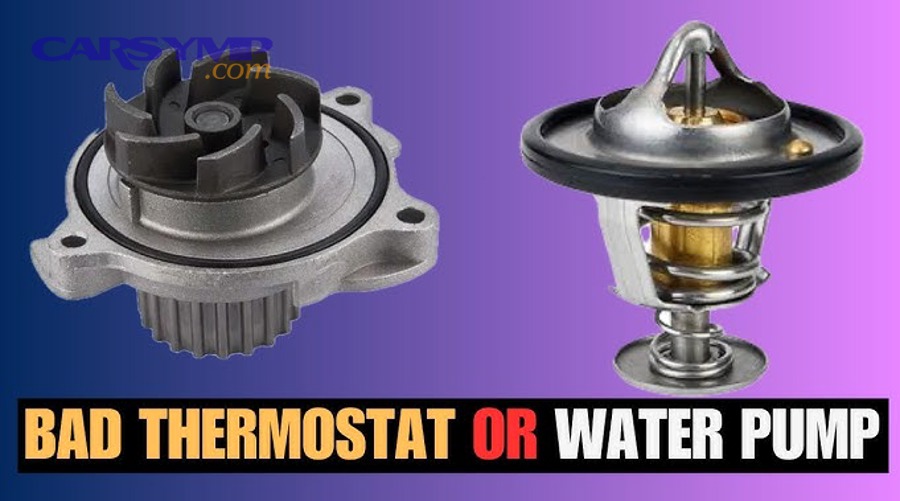
Many overheating diagnoses go wrong because pressure loss, trapped air, or combustion-gas intrusion can produce the same symptoms as a bad thermostat or weak pump.
More importantly, these look-alikes often explain why a new thermostat or water pump “didn’t fix it,” so validating them protects your time and money.
How does cooling-system pressure change your results?
A weak pressure cap or poor sealing can make coolant boil earlier, create localized hot spots, and reduce effective circulation—so your thermometer readings and heater behavior can mislead you.
To connect the dots, pressure raises the coolant boiling point, which helps prevent vapor pockets that behave like “flow loss.” The phrase Radiator cap failure symptoms often shows up when drivers notice overflow, frequent top-offs, or overheating that seems random rather than load-dependent.
According to MACS (Mobile Air Climate Systems Association) guidance (Apr 19, 2021), each psi of pressure increases the boiling point by about 3°F, and a 15 psi cap can raise a 50/50 coolant boiling point substantially—meaning a weak cap can trigger boiling and hot spots sooner.
In practical terms, if pressure is not maintained, you can see steam pockets near the thermostat housing, poor heater output, and sudden gauge spikes that “look like” a stuck thermostat but are really vapor formation under low pressure.
How can trapped air create “flow loss” even with good parts?
Air in the system reduces heat transfer, blocks heater cores, and can create pump cavitation, producing symptoms that resemble a failing pump or thermostat.
To illustrate, many owners describe a bubbling coolant reservoir during warm-up or after shutdown; the Causes of bubbles in coolant reservoir range from normal purging after service to leaks that ingest air or more serious combustion-gas issues.
If you recently replaced coolant, hose parts, or a thermostat housing, the phrase How to bleed cooling system properly matters because incomplete purging can leave air pockets at high points, causing heater fluctuation and unstable gauge behavior.
From a fluid perspective, cavitation and bubble behavior in pumps has been studied broadly; for example, research on cavitation bubble characteristics in centrifugal pumps notes measurable bubble behavior under varying conditions, reinforcing why aeration can change pump performance.
Practical “air pocket” indicators: heater blows cold at idle but hot with RPM, gurgling behind the dash, and a coolant level that drops after cool-down as air migrates out and coolant refills spaces.
When should you suspect combustion-gas intrusion rather than a thermostat or pump?
Suspect combustion-gas intrusion when bubbles persist after correct filling, pressure builds unusually fast from cold, or coolant is pushed out repeatedly without an external leak.
Next, separate normal burping from abnormal gas production: normal purging diminishes as the system reaches steady state, while combustion-gas intrusion often keeps producing bubbles and can over-pressurize hoses quickly. A chemical block test and a pressure test that rises “on its own” can be decisive.
If you suspect this condition, stop repeated overheating events—because even a perfect thermostat and water pump cannot compensate for gas loading that creates vapor pockets and displaces coolant.
FAQ lightning round for thermostat and water pump checks
Q: Can I drive if the temperature spikes then drops? A: You should treat spikes as a warning; intermittent drops can mean late thermostat opening, air pockets moving, or pressure loss, and repeated spikes can damage head gaskets and seals.
Q: Why does the heater go cold when the engine is hot? A: The heater core needs flow; low coolant, trapped air, or weak circulation can make the engine hot while the heater core goes cold.
Q: Should I replace the thermostat and pump together? A: Only if evidence supports both; otherwise you risk masking the root cause. Use warm-up patterns for the thermostat and leak/wobble/flow evidence for the pump.
Q: What’s the safest “first test” if I’m not sure? A: Start with coolant level (cold engine), visual leak checks, and scan/IR temperature monitoring—then do a pressure test if loss or boiling is suspected.
Thermostat checks; water pump inspection; cooling system pressure test; heater core flow diagnostics; engine temperature gauge validation; coolant circulation patterns; cavitation and aeration; belt-driven accessory slip.