


A clogged radiator produces eight distinct warning symptoms that every driver should identify early — including a rising temperature gauge, engine overheating, steam under the hood, low coolant levels, discolored coolant, coolant leaks, weak heater output, and uneven radiator heat distribution. Recognizing these clogged radiator symptoms before your engine overheats can mean the difference between a simple radiator flush and a catastrophic engine failure costing thousands of dollars in repairs. The radiator serves as the heart of your vehicle’s cooling system, and when its internal passages become blocked by rust, sludge, or mineral deposits, the entire system begins to break down in predictable and identifiable ways.
Understanding what causes a radiator to clog is equally important as recognizing the symptoms themselves. Old or contaminated coolant, mixing incompatible coolant types, and external debris accumulation on radiator fins are the three primary causes behind most radiator blockages. Each cause triggers a chain reaction that gradually restricts coolant flow and leads to the poor cooling performance that drivers eventually notice through the symptoms listed above.
Once you identify these radiator problems symptoms, knowing what to do next determines whether you save or damage your engine. In some cases, a professional radiator flush can clear minor clogs and restore normal function. However, severe blockages with physical damage — cracks, bulges, or heavy corrosion — typically require a full radiator replacement to restore proper cooling performance.
Besides recognizing symptoms and understanding causes, it is also critical to differentiate a clogged radiator from other cooling system failures that produce similar warning signs. A faulty thermostat, a failing water pump, or even a compromised head gasket can mimic the Signs of a failing radiator. Below, this article walks through each symptom in detail, explains the underlying causes, outlines the appropriate responses, and clarifies how to distinguish a clogged radiator from other common cooling system issues.
What Is a Clogged Radiator and Why Is It Dangerous?
A clogged radiator is a condition where internal or external passages of the radiator become blocked by rust, sediment, or debris, restricting the flow of coolant and preventing proper engine heat dissipation. This blockage is dangerous because it directly leads to engine overheating, which can warp cylinder heads, blow head gaskets, and cause irreversible internal engine damage.

To better understand why a clogged radiator poses such a serious threat, it helps to first examine how a healthy radiator operates and what changes inside the radiator when blockages develop.
How Does a Car Radiator Work Under Normal Conditions?
A car radiator works by circulating coolant through a closed-loop system that absorbs heat from the engine and releases it into the atmosphere. Under normal conditions, the water pump pushes coolant from the engine block through the upper radiator hose and into the radiator. Once inside, the coolant passes through a network of narrow tubes and thin aluminum fins. As air flows across these fins — either from vehicle motion or the radiator fan — heat transfers from the hot coolant into the air. The now-cooled coolant exits through the lower radiator hose and returns to the engine to absorb more heat, completing the cycle.
The thermostat plays a critical role in this process by regulating when coolant enters the radiator. When the engine is cold, the thermostat remains closed, keeping coolant circulating only within the engine block to help it reach operating temperature quickly. Once the engine warms up to the thermostat’s rated temperature — typically between 195°F and 220°F — the thermostat opens and allows coolant to flow into the radiator for cooling.
The radiator fan provides additional airflow when the vehicle is moving slowly or idling, ensuring that heat continues to dissipate even when there is no natural airflow from driving. Together, the water pump, thermostat, radiator fan, and the radiator itself form a synchronized cooling system that maintains the engine within a safe operating temperature range. When every component functions properly, this cycle repeats thousands of times without issue, keeping the engine cool and running efficiently.
What Happens Inside a Radiator When It Becomes Clogged?
When a radiator becomes clogged, the narrow internal passages that normally allow coolant to flow freely become partially or fully blocked by rust particles, mineral scale, sludge, or chemical deposits. This restriction fundamentally disrupts the cooling cycle described above, and the consequences escalate quickly.
Specifically, as deposits accumulate on the walls of the radiator tubes, the cross-sectional area available for coolant flow decreases. The water pump continues to push coolant at the same rate, but the restricted passages create a bottleneck. Coolant moves slower through the radiator, spending less time exposed to airflow across the fins. As a result, heat is not adequately transferred from the coolant to the air. The coolant that does return to the engine carries more residual heat than it should, causing engine temperatures to climb.
More importantly, the blockage also creates increased pressure within the cooling system. When coolant cannot pass freely through the radiator, pressure builds behind the restriction point. This excess pressure stresses hoses, gaskets, and the radiator cap, eventually forcing coolant out through the weakest points in the system. This is why Coolant leaks at radiator tanks diagnosis often leads back to an internal blockage rather than a physical crack.
As the blockage worsens, certain sections of the radiator may become entirely non-functional. Hot coolant channels through the few remaining open passages, while blocked tubes sit idle and contribute nothing to cooling. This creates a situation where the radiator’s effective cooling surface area is dramatically reduced, even though the radiator may look perfectly fine from the outside. The result is a progressively failing cooling system that exhibits specific, identifiable symptoms.
What Are the 8 Symptoms of a Clogged Radiator?
There are 8 main symptoms of a clogged radiator based on observable changes in engine temperature, coolant condition, and heating system performance: a rising temperature gauge, engine overheating, steam under the hood, low coolant levels, discolored coolant, coolant leaks, weak cabin heater output, and uneven radiator heat distribution.
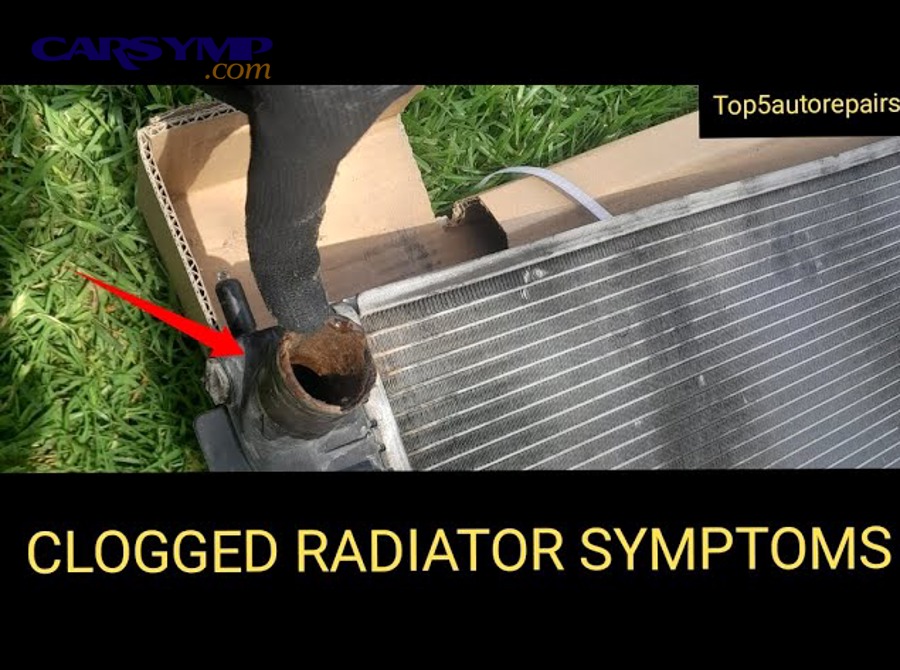
Let’s explore each of these symptoms in detail so you can identify them early and take action before permanent engine damage occurs.
Does a Rising Temperature Gauge Indicate a Clogged Radiator?
Yes, a rising temperature gauge is one of the earliest and most reliable indicators of a clogged radiator, for three key reasons. First, when radiator passages become restricted, coolant flow slows down and heat builds up in the engine block faster than the cooling system can remove it. Second, the temperature sensor located near the engine reads this elevated coolant temperature and sends the signal to the dashboard gauge. Third, unlike sudden mechanical failures that cause immediate overheating, a clogged radiator typically causes the gauge needle to climb gradually over days or weeks, giving drivers a visible early warning.
However, a rising temperature gauge does not automatically confirm a clogged radiator. A faulty thermostat, low coolant level, or malfunctioning temperature sensor can all cause the needle to climb. The distinguishing factor with a clogged radiator is that the gauge tends to rise during specific driving conditions — particularly during prolonged highway driving, uphill climbs, or when the air conditioning system places additional thermal load on the engine. If you notice the needle creeping toward the red zone primarily during these conditions, a clogged radiator should be high on your list of suspects. Overheating at speed radiator clues like these are among the most telling early signs of restricted coolant flow.
Can Engine Overheating Be Caused by a Clogged Radiator?
Yes, engine overheating is the most common and dangerous consequence of a clogged radiator, and it occurs for three primary reasons. First, blocked radiator tubes prevent sufficient coolant from reaching the radiator core, which means less heat gets dissipated into the air. Second, the reduced coolant flow means the engine is essentially trying to cool itself with a fraction of the coolant volume it was designed to use. Third, as the blockage worsens, the cooling system reaches a tipping point where it simply cannot keep up with the heat generated by combustion, and the engine temperature spikes rapidly.
For example, the engine may run at normal temperature during city driving at low speeds, where the thermal load is moderate. But on the highway, where the engine works harder and generates more heat, the partially blocked radiator cannot compensate. The temperature gauge climbs quickly, and in severe cases, the engine management system may trigger a warning light or even put the vehicle into a reduced-power “limp mode” to protect against damage.
Persistent overheating from a clogged radiator can warp cylinder heads, damage head gaskets, and score cylinder walls. According to data published by the American Automobile Association (AAA), engine overheating is one of the leading causes of roadside breakdowns in the United States, and cooling system failures — including clogged radiators — are responsible for a significant portion of these incidents.
Is Steam or Smoke Under the Hood a Sign of a Blocked Radiator?
Yes, steam or white smoke rising from under the hood is a clear sign of a blocked radiator, and it demands immediate attention for three critical reasons. First, the steam indicates that coolant has reached its boiling point — typically around 223°F in a pressurized system — meaning the cooling system has failed to regulate temperature. Second, the steam often appears when hot coolant escapes through the radiator cap, overflow hose, or a compromised gasket as a direct result of the pressure buildup caused by the blockage. Third, by the time steam is visible, the engine has already exceeded safe operating temperatures, and continued driving risks catastrophic internal damage.
More specifically, steam under the hood is not a first-stage symptom. It typically follows a period of ignored warning signs, such as a rising temperature gauge and declining coolant levels. When you see steam, you should pull the vehicle over safely, turn off the engine immediately, and allow it to cool completely before opening the hood or attempting to check the cooling system. Never open the radiator cap on a hot engine, as the pressurized coolant can cause severe burns.
Does Low Coolant Level Mean Your Radiator Is Clogged?
Yes, a persistently low coolant level can mean your radiator is clogged, though it requires further diagnosis to confirm for three reasons. First, a clogged radiator increases system pressure, which can force coolant out through the overflow valve, cap, or weakened hose connections — reducing the total coolant volume in the system. Second, the pressure imbalance caused by blocked passages can create micro-leaks at gasket joints and hose clamps that allow coolant to seep out slowly over time. Third, if coolant levels continue to drop after every refill despite no visible external leaks, the blockage may be causing coolant to be consumed internally through a compromised head gasket — a secondary failure triggered by the overheating.
To illustrate, many drivers notice they need to add coolant every few weeks or even every few days. They inspect the ground beneath the vehicle, find no puddles, and assume the system is fine. However, the coolant may be escaping as steam through the overflow, being pushed past the radiator cap under excessive pressure, or leaking internally into the combustion chamber. A persistent need to top off coolant is one of the most commonly overlooked radiator problems symptoms, and it frequently points to an internal blockage that is creating abnormal system pressure.
What Does Discolored or Rusty Coolant Tell You About Radiator Blockage?
Discolored or rusty coolant is both a cause and a direct symptom of radiator blockage. Healthy coolant is typically bright green, orange, pink, or blue depending on the formulation. When coolant turns brown, muddy, or takes on a gel-like consistency, it indicates that internal corrosion, rust particles, or chemical breakdown products have contaminated the fluid and are actively clogging radiator passages.
For example, coolant that has exceeded its service life loses its anti-corrosion additives, allowing rust to form on the internal metal surfaces of the engine block, heater core, and radiator. These rust particles circulate through the system and eventually settle in the narrowest passages — the radiator tubes. The discoloration you see when inspecting the coolant reservoir or draining the radiator is visual evidence that this process is underway. In advanced cases, the coolant may resemble a thick brown sludge rather than a transparent colored fluid.
Additionally, mixing different coolant types — such as combining organic acid technology (OAT) coolant with inorganic additive technology (IAT) coolant — can trigger chemical reactions that produce gel-like substances. These gels are extremely effective at clogging radiator passages and are much harder to remove than simple rust deposits. If you open your coolant reservoir and the fluid looks thick, discolored, or has visible particles floating in it, the radiator is very likely already partially blocked.
Is Coolant Leaking a Symptom of a Clogged Radiator?
Yes, coolant leaking is a direct symptom of a clogged radiator for three important reasons. First, when internal blockage restricts coolant flow, the system pressure rises beyond normal operating levels, forcing coolant out at the weakest connection points — typically the radiator cap, hose clamps, overflow tank, and the seams of the radiator tanks themselves. Second, prolonged pressure buildup accelerates the deterioration of rubber hoses and gaskets, creating new leak points that did not previously exist. Third, corrosion from contaminated coolant — the same contamination causing the clog — weakens the physical structure of the radiator, particularly at the plastic-to-metal joints where tanks connect to the aluminum core.
In practice, coolant leaks at radiator tanks diagnosis often reveals that the root cause is not external damage but internal pressure created by a partially blocked core. You may notice small puddles of coolant under the vehicle after parking, a sweet antifreeze smell near the front of the car, or visible wetness around hose connections and the radiator cap. If the leak occurs at the radiator itself — particularly at the top or bottom tank seams — it is a strong indication that internal pressure from a blockage has compromised the radiator’s structural integrity.
Can a Clogged Radiator Cause Weak Heater Output Inside the Car?
Yes, a clogged radiator can cause weak or absent heater output inside the car for three interconnected reasons. First, the vehicle’s cabin heater relies on hot coolant flowing through a small secondary radiator called the heater core, which is located behind the dashboard. Second, when the main radiator is clogged and coolant flow is restricted throughout the system, insufficient hot coolant reaches the heater core. Third, without adequate hot coolant flowing through the heater core, the blower fan circulates only lukewarm or cold air into the cabin, regardless of the temperature setting.
More specifically, this symptom is most noticeable during cold weather and in stop-and-go traffic conditions. You may notice that the heater initially blows warm air after the engine reaches operating temperature, but the warmth fades quickly and does not return to full strength. This pattern occurs because the limited coolant flow briefly delivers some heat to the heater core, but the restricted circulation cannot sustain it. The poor cooling performance caused by the clogged radiator simultaneously manifests as a heating deficiency — the same blocked passages that prevent the radiator from cooling the engine also prevent the heater core from warming the cabin.
This is an important but often overlooked sign because many drivers do not associate a cold cabin heater with a radiator problem. They may suspect a faulty blend door actuator, a failing blower motor, or a low coolant level. However, if reduced heater output appears alongside other symptoms such as a rising temperature gauge or discolored coolant, a clogged radiator is the most likely common cause connecting all of these issues.
What Does Uneven Heat Distribution on the Radiator Surface Mean?
Uneven heat distribution on the radiator surface means that certain internal tubes or sections are blocked while others remain clear, creating hot and cold zones across the radiator face. This is a definitive diagnostic symptom of an internally clogged radiator because a healthy radiator with proper coolant flow should exhibit a relatively uniform temperature gradient from the inlet (hotter) to the outlet (cooler).
To illustrate, if you carefully feel different areas of the radiator after the engine has been running and the thermostat has opened, a healthy radiator will be consistently warm across its entire surface, with a gradual temperature decrease from top to bottom. A clogged radiator, however, will have distinct areas that feel noticeably cooler or even cold to the touch, surrounded by areas that are very hot. These cold spots correspond directly to blocked tubes where coolant is no longer flowing.
For a more precise assessment, using an infrared thermometer allows you to measure exact temperatures at various points across the radiator face without risking burns from direct contact. Temperature variations of more than 20–30°F between adjacent sections strongly suggest internal blockage. This method provides a quick, non-invasive way to confirm a clogged radiator before committing to a teardown or replacement. Among all eight symptoms, uneven heat distribution is the most direct physical evidence that specific radiator passages are obstructed.
The following table summarizes all eight clogged radiator symptoms, their root causes within the cooling system, and the typical severity level that each symptom represents:
| Symptom | What It Indicates | Severity |
|---|---|---|
| Rising temperature gauge | Coolant flow restriction beginning to affect heat removal | Early warning |
| Engine overheating | Cooling system unable to maintain safe operating temperature | High |
| Steam under the hood | Coolant has reached boiling point; system pressure exceeded | Critical |
| Low coolant level | Pressure-induced leaks or internal coolant consumption | Moderate |
| Discolored or rusty coolant | Internal corrosion and contamination actively blocking passages | Moderate |
| Coolant leaks | Excess pressure forcing coolant out at weak points | Moderate to High |
| Weak heater output | Insufficient coolant flow to the heater core | Early warning |
| Uneven radiator heat | Specific internal tubes or sections completely blocked | Confirmed blockage |
What Causes a Radiator to Become Clogged?
There are three main categories of causes that lead to a clogged radiator based on the origin of the blockage: internal contamination from degraded or mixed coolant, internal corrosion from aging coolant that has lost its protective additives, and external debris accumulation that restricts airflow across the radiator fins.
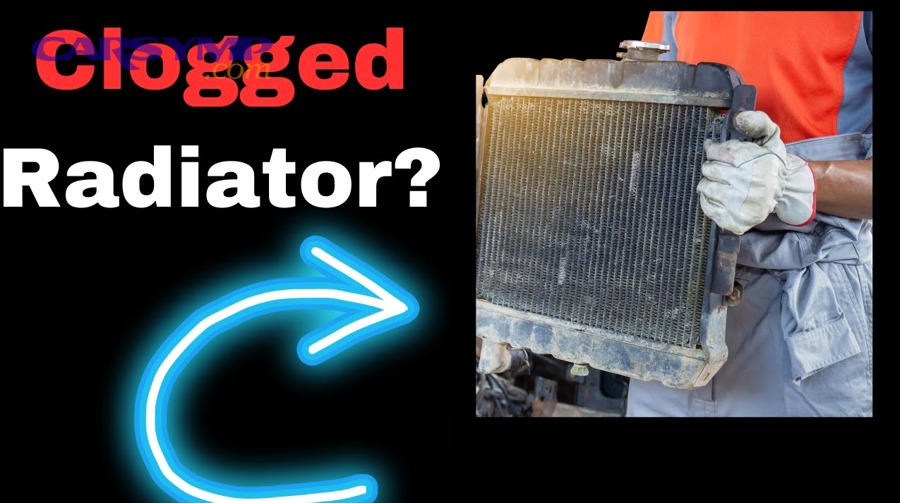
Specifically, understanding these causes helps you not only diagnose existing problems but also take preventive steps to avoid radiator blockages in the future.
Does Old or Contaminated Coolant Cause Radiator Clogs?
Yes, old or contaminated coolant is the single most common cause of radiator clogs for three well-documented reasons. First, coolant contains anti-corrosion additives that break down over time, typically losing effectiveness after 30,000 to 50,000 miles or 3 to 5 years depending on the formulation. Second, once these additives degrade, the coolant can no longer protect the metal surfaces inside the engine block, heater core, and radiator from oxidation. Third, the resulting rust particles, scale, and corrosion byproducts circulate through the system and settle in the narrowest passages — the radiator tubes — gradually building up until flow is significantly restricted.
Moreover, coolant can become contaminated by external factors beyond simple aging. A failing head gasket can introduce engine oil or combustion gases into the cooling system, turning the coolant into a thick sludge that rapidly clogs radiator passages. Tap water used to top off coolant introduces minerals and chlorine that accelerate corrosion. Even air entering the system through a faulty radiator cap promotes oxidation. Each of these contaminants compounds the problem and accelerates the rate at which blockages form.
Most vehicle manufacturers recommend coolant replacement intervals as part of routine maintenance. Following these intervals is one of the most effective ways to prevent radiator clogs and maintain consistent cooling system performance.
Can Mixing Different Coolant Types Block a Radiator?
Yes, mixing different coolant types can block a radiator, and it happens for three specific chemical reasons. First, different coolant formulations — such as IAT (Inorganic Additive Technology), OAT (Organic Acid Technology), and HOAT (Hybrid Organic Acid Technology) — use different additive packages that are not chemically compatible with each other. Second, when these incompatible formulations are mixed, they can react to form gel-like precipitates or thick sludge that has a consistency similar to pudding. Third, this gel is far more difficult to flush from the system than standard rust deposits and can completely obstruct radiator tubes in a very short period of time.
For example, mixing a green IAT coolant with an orange OAT coolant is one of the most common mistakes that leads to severe radiator blockage. The additive packages in each formulation neutralize each other, and the resulting chemical reaction produces a thick substance that settles directly in the radiator core. Once this gel forms, even aggressive flushing may not fully remove it, and radiator replacement becomes the only reliable solution.
To avoid this issue, always use the coolant type specified by your vehicle’s manufacturer, which can be found in the owner’s manual. If you are unsure what coolant is currently in your system and need to top off, use distilled water as a temporary measure and schedule a full coolant drain and refill as soon as possible.
Does External Debris Clog a Radiator From the Outside?
Yes, external debris can clog a radiator from the outside, reducing its cooling efficiency for three practical reasons. First, the radiator sits directly behind the front grille of the vehicle, making it the first component to encounter bugs, leaves, dirt, road grime, and other airborne debris at highway speeds. Second, these particles accumulate on the thin cooling fins that surround the radiator tubes, gradually forming a layer that insulates the radiator from incoming airflow. Third, without adequate airflow passing through the fins, the radiator cannot transfer heat from the coolant to the air efficiently, even if the internal passages are completely clear.
More importantly, external clogging is a fundamentally different problem from internal clogging, but it produces a very similar outcome — poor cooling. A radiator that is externally blocked by a thick layer of bugs and road debris will cause the engine to run hotter than normal, trigger the radiator fan to run more frequently, and may eventually lead to overheating during high-demand driving conditions such as towing, steep hill climbing, or extended highway driving in hot weather.
The good news is that external clogging is relatively easy to address. A careful cleaning with a garden hose — spraying from the engine side outward to push debris off the fins rather than deeper into them — can restore airflow. Compressed air can also be used for lighter debris. Regular visual inspection of the radiator face during oil changes or routine maintenance helps catch external buildup before it becomes severe enough to affect cooling performance.
What Should You Do When You Notice Clogged Radiator Symptoms?
When you notice clogged radiator symptoms, you should take two immediate steps: stop driving to prevent engine damage and assess whether the blockage can be resolved with a radiator flush or requires a full radiator replacement. The correct response depends on the severity of the blockage and whether the radiator has sustained physical damage.
To better understand which course of action applies to your situation, let’s examine both options in detail.
Can a Radiator Flush Fix a Clogged Radiator?
Yes, a radiator flush can fix a clogged radiator when the blockage is minor to moderate and the radiator is structurally intact, for three practical reasons. First, flushing uses a chemical cleaning solution that dissolves rust deposits, mineral scale, and light sludge buildup inside the radiator passages. Second, the flushing process forces cleaning solution and water through the entire cooling system — including the radiator, heater core, and engine block — pushing loosened debris out through the drain. Third, refilling with fresh coolant after the flush restores the anti-corrosion protection that prevents new deposits from forming.
Specifically, the standard radiator flush procedure involves three steps. First, the old coolant is drained from the system through the radiator petcock or lower radiator hose. Second, a radiator flush solution is added along with water, and the engine is run for 10 to 15 minutes to allow the cleaner to circulate and break down deposits. Third, the system is drained again, rinsed with distilled water one or more times until the water runs clear, and then refilled with the manufacturer-specified coolant mixed to the proper concentration — typically a 50/50 coolant-to-water ratio.
A radiator flush is most effective as a preventive maintenance step or when symptoms have just begun to appear — such as a slightly elevated temperature gauge or mildly discolored coolant. It is less effective when the radiator has been severely clogged for an extended period, as hardened deposits may resist chemical cleaning. Most automotive service organizations recommend a cooling system flush every 30,000 to 60,000 miles or as specified by the vehicle manufacturer.
When Should You Replace a Clogged Radiator Instead of Flushing It?
A radiator replacement is the better choice over a flush when three conditions are present: the radiator has physical damage such as cracks, bulges, or heavy external corrosion; the blockage is severe enough that flushing does not restore adequate coolant flow; or the radiator is old enough that even a successful flush would only delay a near-term failure.
On the other hand, a flush costs between $100 and $200 at most service shops, while a radiator replacement — including parts and labor — typically ranges from $300 to $900 depending on the vehicle make, model, and year. Despite the higher upfront cost, replacement is the more cost-effective long-term solution when the radiator has reached the end of its functional life.
In terms of deciding between the two, here are the key comparison factors to consider:
| Factor | Radiator Flush | Radiator Replacement |
|---|---|---|
| Best for | Minor clogs, routine maintenance | Severe blockage, physical damage |
| Typical cost | $100–$200 | $300–$900 |
| Effectiveness | Clears light deposits and sludge | Fully restores cooling system capacity |
| Longevity | Temporary if radiator is aging | Long-term solution with new unit |
| When to choose | Early symptoms, no visible damage | Persistent overheating after flush, visible corrosion or cracks |
If you flush the radiator and the symptoms return within a few weeks or months, it is a strong signal that the blockage is too severe for chemical cleaning and replacement is necessary. In this scenario, continuing to flush and drive with a compromised radiator risks escalating damage to the engine, water pump, thermostat, and heater core.
How Is a Clogged Radiator Different From Other Cooling System Failures?
A clogged radiator differs from other cooling system failures in that it specifically involves restricted coolant flow through the radiator’s internal passages, whereas other failures — such as a faulty thermostat, a failing water pump, or a compromised head gasket — disrupt different components within the same cooling circuit. Differentiating between these failures is essential because each requires a different repair approach, and misdiagnosis can result in unnecessary expense and continued overheating.
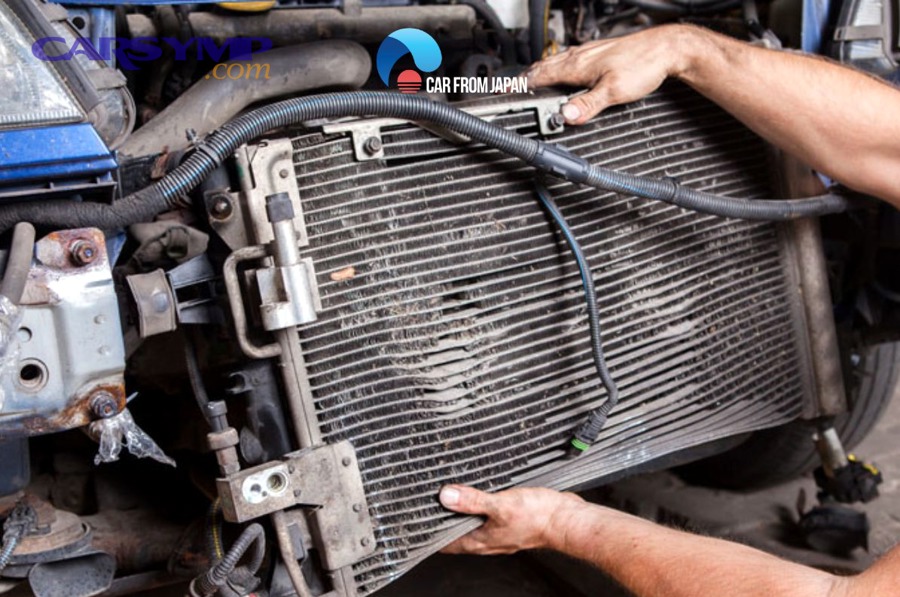
Specifically, several cooling system failures produce symptoms nearly identical to those of a clogged radiator. Below, we examine the three most commonly confused conditions and explain how to distinguish each one from a radiator blockage.
What Is the Difference Between a Clogged Radiator and a Faulty Thermostat?
A clogged radiator restricts coolant flow within the radiator itself, while a faulty thermostat prevents coolant from ever reaching the radiator in the first place. The distinction matters because both cause engine overheating, but through entirely different mechanisms.
Meanwhile, a stuck-closed thermostat keeps the coolant circulating only within the engine block, never allowing it to enter the radiator for cooling. A clogged radiator, by contrast, allows coolant to enter but restricts its passage through the internal tubes. The diagnostic difference is observable at the radiator hoses. If the upper radiator hose is hot and the lower radiator hose remains cool or cold after the engine reaches operating temperature, the radiator is likely clogged — coolant enters at the top but cannot pass through to exit at the bottom. If both hoses remain cool, the thermostat is likely stuck closed and is not opening to release coolant into the radiator at all.
A thermostat replacement is a relatively inexpensive repair — typically $150 to $300 including labor — so if there is any uncertainty, many mechanics will recommend replacing the thermostat first as a low-cost diagnostic step before investigating the radiator.
Can a Failing Water Pump Mimic Clogged Radiator Symptoms?
Yes, a failing water pump can mimic clogged radiator symptoms because both conditions result in inadequate coolant circulation and engine overheating. However, the root cause is different: a clogged radiator restricts flow due to blocked passages, while a failing water pump reduces flow due to worn impeller blades, a slipping drive belt, or a compromised bearing.
On the other hand, the most distinguishing clue for a failing water pump is audible. A worn water pump bearing produces a whining, grinding, or squealing noise from the front of the engine, especially at idle or low speeds. A clogged radiator is silent. Additionally, a failing water pump may leak coolant from the weep hole located on the pump housing — a small hole designed to release coolant when the internal seal begins to fail. If you observe coolant dripping from the water pump area combined with engine overheating, the pump is the likely culprit rather than the radiator.
In some cases, both problems can exist simultaneously. A water pump struggling to push coolant through a partially clogged radiator accelerates wear on the pump’s impeller and bearings. This is why a thorough diagnosis should evaluate the entire cooling system rather than focusing on a single component.
How Can You Use an Infrared Thermometer to Diagnose a Clogged Radiator?
An infrared thermometer is a handheld, non-contact device that measures surface temperature by detecting infrared radiation. It can diagnose a clogged radiator by revealing temperature variations across the radiator face that indicate blocked and open tubes — a method that is more precise, safer, and more reliable than the traditional hand-touch approach.
To illustrate, the diagnostic procedure works as follows. First, start the engine and allow it to reach full operating temperature so the thermostat opens and coolant flows through the radiator. Second, point the infrared thermometer at various spots across the front face of the radiator — scanning horizontally and vertically in a grid pattern. Third, record the temperatures at each point. A healthy radiator will show a relatively uniform temperature that gradually decreases from the inlet side (usually the top) to the outlet side (usually the bottom). A clogged radiator will show distinct cold zones — areas where the temperature is 20°F to 40°F lower than surrounding areas — indicating blocked tubes where coolant is not flowing.
This method is especially valuable because it requires no disassembly, can be performed in a driveway or parking lot, and provides objective temperature data rather than subjective guesswork. Infrared thermometers suitable for this purpose are widely available at auto parts stores and hardware stores for under $30, making this a cost-effective diagnostic tool for any driver experiencing signs of a failing radiator.
Can a Clogged Radiator Damage the Transmission in Cars With Integrated Coolers?
Yes, a clogged radiator can damage the transmission in vehicles equipped with integrated transmission coolers — a configuration found in many trucks, SUVs, and automatic-transmission vehicles. This cross-system failure occurs because the radiator serves a dual purpose in these vehicles: cooling both the engine coolant and the automatic transmission fluid (ATF) through a separate internal chamber or tube-within-a-tube design built into the radiator.
Besides the primary engine cooling function, this integrated cooler relies on the same airflow and the same radiator efficiency to keep transmission fluid at safe operating temperatures. When the radiator becomes clogged, the restricted airflow and reduced heat dissipation affect both the coolant and the transmission fluid simultaneously. The transmission fluid overheats, loses its viscosity and lubricating properties, and begins to degrade — leading to harsh shifting, transmission slippage, and accelerated wear on internal clutch packs and bands.
In severe cases, a catastrophic radiator failure can even allow coolant to mix with transmission fluid through a ruptured internal barrier. This cross-contamination — sometimes called a “strawberry milkshake” because of the pink, frothy fluid it produces — can destroy a transmission entirely. The cost to replace a transmission typically ranges from $2,000 to $5,000 or more, making this one of the most expensive potential consequences of ignoring clogged radiator symptoms in vehicles with integrated coolers.
If your vehicle has an integrated transmission cooler and you are experiencing any of the eight clogged radiator symptoms described in this article, it is especially critical to address the issue promptly. Checking the transmission fluid dipstick for unusual color, consistency, or a burnt smell can help you catch cross-contamination early before the damage becomes irreversible.