


Overheating and boiling coolant diagnosis is about figuring out why the cooling system can’t keep engine temperature under control, causing coolant to flash into steam, surge into the tank, or spill out under pressure.
To start, you’ll learn how to tell “true overheating” from misleading symptoms like a bad gauge reading, a stuck fan, or a pressure cap that can’t hold rated pressure—because those failures can mimic severe engine damage.
Next, you’ll follow a step-by-step workflow to locate the root cause: loss of pressure, loss of flow, loss of airflow, or an internal leak that pushes gas into the cooling system.
To tie it together, Giới thiệu ý mới: you’ll use a simple decision path—what you see, what you smell, what the hoses feel like, and what tests confirm—so the fix matches the real failure instead of guesswork.
What does boiling coolant during overheating actually mean?
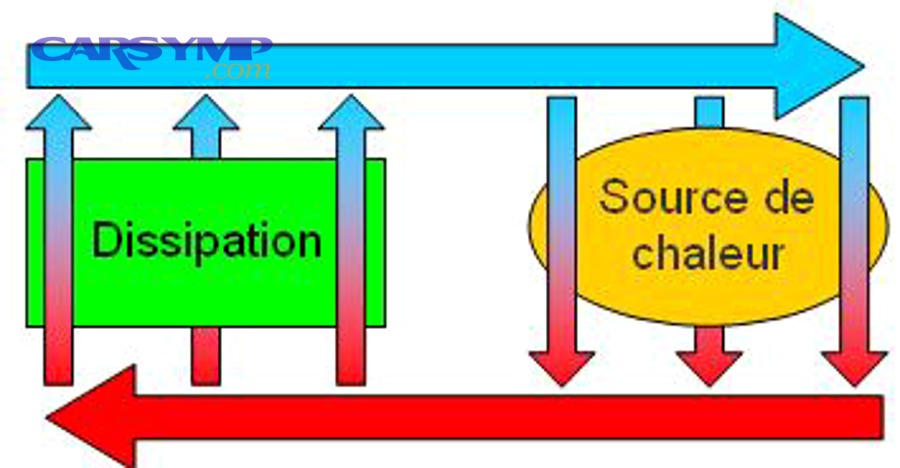
Boiling coolant means the system has crossed a temperature-and-pressure threshold where liquid coolant turns to vapor, so heat transfer drops sharply and temperature spikes faster.
To connect the “why” to the “how,” the key is understanding that cooling systems are designed to stay sealed and pressurized, so boiling usually signals a pressure loss, a flow problem, or extreme heat load.
Why boiling is a bigger problem than “running hot”
When coolant stays liquid, it carries heat away from the cylinder head, combustion chambers, and exhaust ports efficiently. Once it boils, vapor pockets form, metal temperatures rise, and the cooling system can “push out” coolant even if the reservoir still looks partially full.
Specifically, vapor doesn’t absorb or move heat like liquid does, so you can get a sudden jump from “slightly warm” to “danger zone” within minutes—especially climbing hills, towing, or idling with the A/C on.
What the pressure cap is supposed to prevent
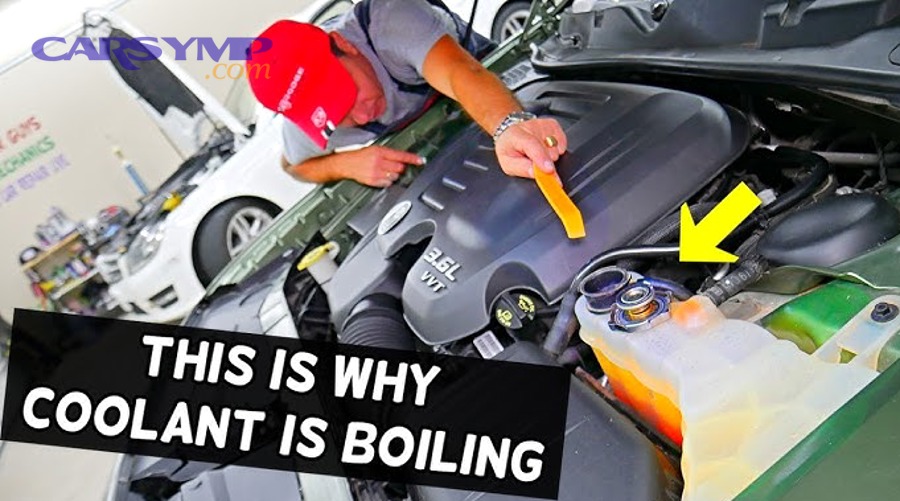
The radiator or surge-tank cap is a calibrated valve that raises the boiling point by maintaining pressure, then vents excess pressure safely. If it can’t hold its rated pressure, coolant can boil at a lower temperature and escape sooner, which starts a vicious cycle.
According to MACS Worldwide, in April 2021, “every pound of pressure raises the boiling point about 3°F,” and a typical 15 psi system can keep a 50/50 coolant mix near about 265°F before boiling becomes likely.
What “normal” temperature still looks like in the real world
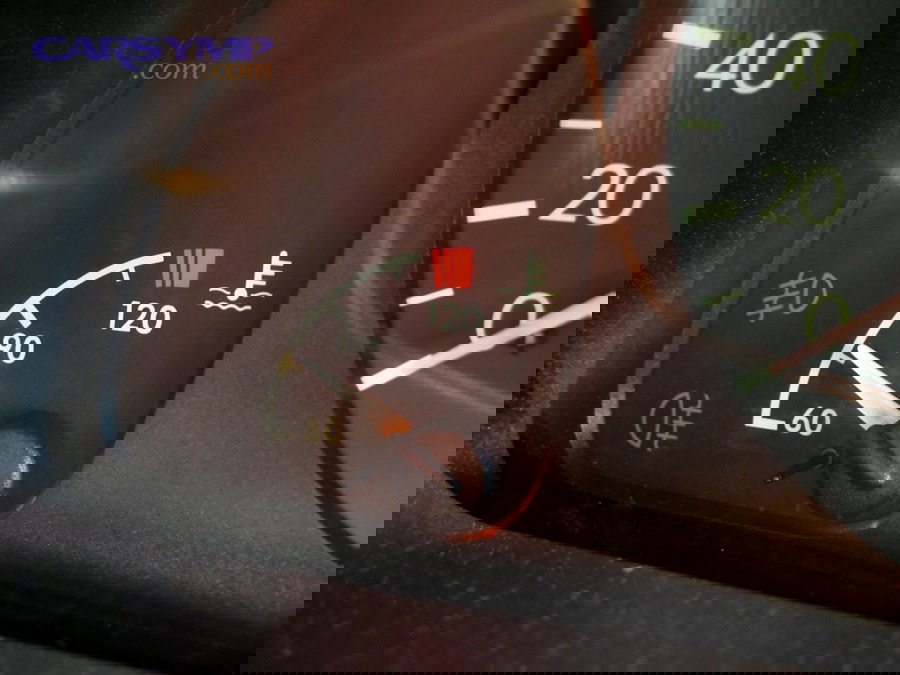
Many engines run hotter than drivers expect, especially modern designs tuned for efficiency. Normal operation can be around the mid-gauge area with the fan cycling on and off. The diagnostic trigger is not “warm,” but uncontrolled rising temperature or coolant pushing out after the system should be stable.
According to Argonne National Laboratory, in January 2011, a final project report on engine cooling notes that heavy-vehicle cooling systems are designed to use a 50/50 ethylene glycol/water mixture and keep coolant in the liquid state for effective heat removal.
Is it safe to keep driving when coolant is boiling?
No—driving with boiling coolant is unsafe because you can overheat the cylinder head, warp components, and turn a small leak or fan fault into major engine damage within a short distance.
However, there’s a practical next step: the safest “action plan” is to reduce load immediately, stop before the temperature peaks, and confirm the system can cool down without losing pressure or dumping coolant.
Three reasons boiling coolant escalates damage quickly
First, boiling creates steam pockets that prevent coolant from touching hot metal, so localized temperatures surge. Second, pressure spikes can force coolant out, leaving less liquid to absorb heat. Third, once coolant level drops, the water pump may cavitate and stop circulating effectively.
To illustrate, even if the gauge falls briefly after you stop, the engine can still have “hot spots” in the head that continue cooking the gasket and valves.
What to do in the first 60 seconds
Turn off A/C, turn the heater to full hot (this adds a small auxiliary radiator effect), ease off the throttle, and look for a safe place to stop. If the gauge is climbing into the red or a warning light appears, shut down the engine as soon as it’s safe.
Next, do not open the cap while hot; a pressurized system can flash-boil and spray scalding coolant. Wait until hoses cool enough to squeeze and pressure is clearly reduced.
A quick reality check to avoid false alarms
Sometimes drivers see coolant “moving” in the reservoir and assume boiling. Real boiling often comes with a rising gauge, a sweet smell, steam, or coolant pushing out. A stable gauge with slight surface movement may be normal expansion, not a crisis—so the diagnosis always starts with temperature behavior over time.
According to a work instruction published via NHTSA dated February 2013, a coolant pressure leak test should be performed with engine coolant temperature below about 90°F to reduce risk and improve test accuracy.
What are the most common causes of boiling coolant and overheating?
There are four main cause groups: (1) pressure loss, (2) coolant flow loss, (3) airflow loss, and (4) internal gas intrusion—each group has distinct clues you can confirm with targeted checks.
To move from symptoms to root cause, the fastest approach is to identify which “control” failed: pressure control, circulation control, airflow control, or sealing control.
Group 1: Pressure loss (cap, leaks, cracked tank, hose, radiator)
If the system can’t hold pressure, the boiling point drops and coolant escapes. Common signs are dried residue near the cap, wet seams on the radiator, crust at hose ends, or a reservoir level that rises and vents after a drive.
Specifically, you may see boiling after shutdown because heat soak raises coolant temperature while pressure bleeds off through a weak cap or leak.
Group 2: Coolant flow loss (thermostat, water pump, blockage, air lock)
Flow problems show up as hot upper hose with a cooler radiator, inconsistent cabin heat, or overheating that worsens with rpm or load. A stuck-closed thermostat blocks flow to the radiator; a slipping belt or eroded pump impeller reduces circulation; internal deposits restrict passages.
For a fast check, compare hose temperatures and look for strong return flow in the tank (where visible) once the thermostat should be open.
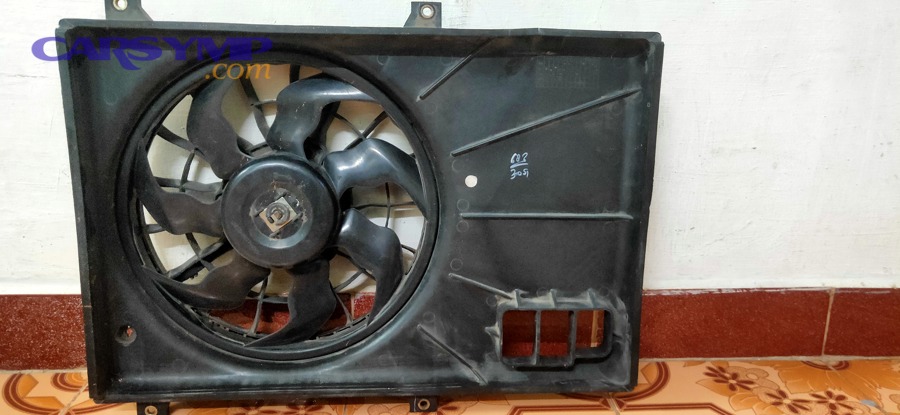
Group 3: Airflow loss (fan, shroud, radiator fins, condenser blockage)
If the radiator can’t shed heat, overheating is worst at idle or slow traffic, then improves at highway speed. Fan issues, blown fuses, bad relays, failed fan modules, or missing shrouds are typical. External fin blockage (debris, bugs, bent fins) also reduces heat rejection.
In contrast, overheating that is worst at highway speed often points more toward flow or internal sealing problems than airflow alone.
Group 4: Internal gas intrusion (head gasket, cracked head/block, EGR cooler on some engines)
When combustion gases enter the cooling system, pressure rises quickly, bubbles appear, coolant gets pushed out, and overheating can occur even when fans and thermostat work. The clue is “pressure early” (hard hoses soon after start) or repeated coolant loss with no external leak.
According to Block Tester operating instructions (April 2020), exhaust gases entering the cooling system can be detected by drawing air from the radiator through test fluid and watching for a color change that indicates combustion gases are present.
How do you confirm the cooling system can hold pressure?
Use a pressure tester to pump the system to its rated cap pressure and watch whether it holds; if it drops, you have a leak or a pressure-control failure that can trigger boiling.
To keep the workflow clean, test the cap first, then the system—because a bad cap can mimic a leak by venting too early.
Step-by-step: cap test and system test
Step 1: Let the engine cool fully. Remove the cap only when pressure is gone. Step 2: Inspect cap seal, spring tension, and stamped rating. Step 3: Test the cap with the correct adapter; it should hold near its rated pressure and release predictably above that range. Step 4: Attach tester to the fill neck or surge tank and pump to the cap rating. Step 5: Hold pressure and inspect for external leaks at hoses, radiator seams, thermostat housing, heater hoses, and water pump weep hole.
Next, if the gauge drops but you see no external drip, suspect internal leaks (into cylinders, exhaust, or oil) or slow evaporation from a hot surface.
What “holds pressure” should look like
A stable gauge reading over the test window is the target. A slow drop suggests a seep or a small leak that becomes worse when hot; a fast drop suggests a larger leak, a loose clamp, or a cracked plastic tank/neck.
According to an NHTSA-published work instruction dated February 14, 2013, technicians are directed to verify a 15–16 psi cap rating and test that the cap holds pressure at about 15 psi, then monitor system pressure for about 15 minutes while cautioning against over-pressurizing beyond the rated range.
Why pressure testing connects directly to “boiling coolant” complaints
If the cap vents at a much lower pressure than designed, the coolant can boil sooner, especially after shutdown when temperature rises but the pump and fan may stop. That’s why drivers often report “it only boils after I park” even though the car seemed fine while moving.
To conclude this section, a pressure test is the fastest way to separate “temperature control failure” from “pressure control failure” before you replace expensive parts.
How do you diagnose thermostat and coolant circulation problems?
Diagnose circulation by confirming the thermostat opens on time and the pump moves coolant strongly; if coolant can’t circulate through the radiator, temperature climbs and boiling follows.
To move from suspicion to proof, use temperature comparisons and observable flow checks instead of replacing parts blindly.
Signs the thermostat is stuck closed or opening late
Common clues include a rapidly rising gauge from a cold start, little or no cabin heat, a hot engine with a relatively cool radiator, and an upper radiator hose that stays cool longer than expected then suddenly gets very hot.
Specifically, if the thermostat doesn’t open, coolant stays in the engine and can boil locally near combustion chambers even when the reservoir level seems normal.
Practical checks that don’t require special tools
Hose temperature check: As the engine warms, the upper hose should heat up when the thermostat opens; the lower hose should warm as the radiator begins shedding heat. Heater output check: If the heater blows cold while the gauge climbs, flow or air pockets are likely. Return-flow check: On systems where you can see the return stream in the tank, flow should increase after the thermostat opens.
Next, if behavior is inconsistent (sometimes fine, sometimes overheating), suspect intermittent thermostat sticking, collapsing hoses under suction, or a pump impeller that slips on the shaft.
When the water pump is the real culprit
Water pumps can fail by leaking, bearing wobble, or reduced pumping. Reduced pumping can come from impeller erosion, cavitation damage, or internal separation. This can cause overheating at highway speed or under load even when fans work correctly.
According to a Ford technical service bulletin published in December 2019, technicians are instructed to pressurize the cooling system and check for combustion gases as part of a structured overheating/coolant-intrusion diagnosis—highlighting that “flow parts” and “sealing faults” must be separated with tests, not guesses.
How can you tell trapped air from combustion gas pushing bubbles?
You can differentiate them by timing, behavior, and repeatability: trapped air typically decreases after proper bleeding, while combustion gas tends to increase with throttle and returns after every drive.
To connect observation to confirmation, you’ll watch how bubbles behave cold vs hot, idle vs rev, and whether the system pressurizes unusually fast.
What trapped air looks like in practice
Trapped air often appears after a coolant drain/refill, thermostat replacement, radiator replacement, or heater-core service. You may see occasional burps in the tank as the thermostat opens, the heater circuit fills, and the remaining air exits the highest points.
In that situation, the phrase When bubbles are normal after service applies: bubbles may show briefly, then fade as the coolant stabilizes, cabin heat becomes steady, and the level stops dropping after a few heat cycles.
What combustion gas bubbles look like
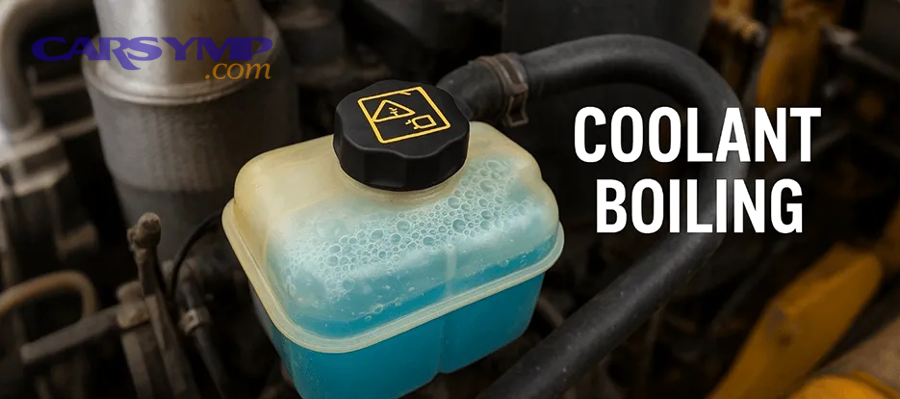
Combustion gases tend to create a continuous stream of fine bubbles rather than occasional “burps.” The bubbling coolant reservoir symptom often worsens as engine load increases because cylinder pressure rises, pushing more gas past a compromised sealing surface.
Specifically, you may notice the upper hose becomes rock-hard quickly after a cold start, or coolant gets pushed out even before the engine is fully warm.
Simple checks that point you in the right direction
Timing test: If hoses get hard within minutes of a cold start, suspect gas intrusion. Load test: If bubbles increase noticeably when you lightly rev the engine, suspect gas intrusion. Bleed test: If careful bleeding and correct fill procedure fixes the symptom permanently, trapped air was likely the cause.
According to Block Tester operating instructions (April 2020), the test is designed to sample air from the cooling system (not coolant) through the test fluid for about a minute; a color change indicates exhaust gases are present, which supports an internal leak diagnosis.
How do you confirm an internal leak that causes overheating and boiling?
Confirm internal leaks by combining pressure behavior, cylinder inspection, and a chemical exhaust-gas check; this triad reduces false conclusions and prevents expensive misdiagnosis.
To begin cleanly, you’ll rule out obvious external leaks first, then test for gases in the cooling system only when the coolant is warm and circulating.
The chemical “exhaust gas” check and why it matters
A chemical tester draws vapor/air from the radiator neck or pressurized expansion tank through a reactive fluid. If exhaust gases are present, the fluid changes color. The phrase Coolant contamination and combustion gas test matters here because a contaminated sample (coolant pulled into the tool) can ruin accuracy—so you must sample air, not liquid.
According to Mastercool’s instruction manual (August 2022) for a combustion gas leak tester kit, if the test fluid turns yellow, CO2 is leaking into the cooling system; if it remains blue, CO2 is not detected—while also warning not to open a hot pressurized system.
Pressure behavior that strongly suggests internal leakage
If the system builds pressure rapidly from cold, repeatedly pushes coolant out, or forms persistent bubbles with throttle, an internal leak becomes more likely. Another clue is coolant loss with no external drip and sweet-smelling exhaust, especially after an overnight sit.
Next, if you suspect coolant entering a cylinder, a borescope inspection after a pressure hold can reveal a “steam-cleaned” piston or wet cylinder.
Use the right order: pressure hold → inspect → confirm gases
Order matters: pressurize and hold first (to reproduce the leak path), then inspect spark plugs/cylinders for coolant, then confirm gases if symptoms point that way. This avoids chasing bubbles that are simply trapped air.
According to a Ford technical service bulletin published in December 2019, technicians are instructed to pressurize the cooling system to about 138 kPa (20 psi), hold for hours, and “check for cooling system combustion gases,” then inspect for coolant presence in cylinders—showing a structured method to confirm internal intrusion rather than guessing.
How do you stop repeat boiling after repairs and verify the fix?
Stop repeat boiling by restoring pressure, flow, and airflow, then validating with heat cycles; if you skip validation, small leaks or trapped air can recreate the same overheating pattern.
To keep the repair durable, you’ll verify the system holds pressure cold, stays stable hot, and returns to the correct level after cooldown.
Post-repair validation checklist that catches comebacks
Pressure validation: Re-test cap and system after repair and verify no drop within the test window. Temperature validation: Confirm fans cycle, heater stays hot, and the gauge stabilizes under idle and light driving. Cool-down validation: After full cool-down, confirm level returns to the correct mark and does not keep dropping across days.
Next, if the level keeps dropping with no visible leak, you must revisit internal leak checks instead of adding coolant repeatedly.
Bleeding and fill technique that prevents air-related overheating
Use the correct coolant type and mix for the vehicle, fill slowly, open bleed points if equipped, and run the engine until the thermostat opens and the heater is hot. Some vehicles require vacuum fill tools to avoid trapped air, especially with complex heater circuits or high-mounted radiators.
Importantly, recheck level after the first heat cycle and again the next morning, because small pockets can migrate and change the level.
When “it still overheats” means you missed the real root cause
If overheating persists after replacing the thermostat, suspect airflow control (fan command issues), restricted radiator core, collapsing hoses, or a pump problem. If overheating is accompanied by persistent bubbling and coolant being pushed out, suspect internal gas intrusion even if no external leaks are found.
According to MACS Worldwide (April 2021), system pressure meaningfully increases boiling point; therefore, any unresolved pressure-control fault (cap or leak) can cause repeat boiling even when other parts are new.
Contextual Border
Beyond the main diagnosis path, the next section covers edge cases and prevention details that are easy to overlook but often decide whether the problem stays fixed long-term.
Edge cases and long-term prevention for boiling coolant
Prevention comes down to keeping the correct coolant chemistry, maintaining pressure integrity, and ensuring the system can shed heat in real-world conditions like traffic, towing, and high ambient temperatures.
To deepen your accuracy, these micro-details help you distinguish borderline failures from normal behavior and avoid repeat overheating.
Coolant mix and pressure: why “wrong mix” can boil sooner
A proper coolant mix protects against corrosion and raises boiling point; too much water can lower boiling resistance, and contamination can reduce heat transfer. If the cap can’t hold pressure, even a correct mix can boil earlier than expected.
This table shows approximate boiling thresholds for common situations so you can connect pressure integrity to your symptom.
| System pressure | Approx. boiling (water) | Approx. boiling (50/50 coolant) | Why it helps diagnosis |
|---|---|---|---|
| 0 psi (open) | 212°F (100°C) | ~226°F | If it boils easily, suspect cap/leak or severe heat load |
| 15 psi (typical) | ~250°F | ~265°F | If boiling occurs below this, pressure control may be failing |
| Higher than normal | Higher | Higher | Excessive pressure can indicate gas intrusion or blockage |
According to MACS Worldwide (April 2021), each psi raises boiling point about 3°F, and a typical system operating around 15 psi can keep a 50/50 mix near about 265°F before boiling becomes likely.
Radiator and condenser airflow: the “hidden blockage” scenario
Even with good coolant flow, blocked fins or a packed condenser can trap heat, especially with A/C running. Look through the grille with a light: debris, bent fins, or an oil film can reduce airflow. Cleaning must be gentle to avoid fin damage.
In stop-and-go traffic, if temperature rises but drops quickly once you drive at speed, airflow is a prime suspect—so confirm fan operation and shroud integrity before replacing engine parts.
Coolant contamination: oil, rust, and deposits that break heat transfer
Oil in coolant can coat passages and reduce heat transfer, while rust sludge can clog the radiator core or heater core. A muddy reservoir, floating sheen, or persistent discoloration suggests the system needs more than topping off—it needs flushing and the contamination source addressed.
In parallel, if you find coolant in oil (milky appearance), treat it as urgent, because lubrication failure can follow quickly.
How to keep a repaired system stable over the next 30 days
Track cold levels consistently, monitor for sweet odor, watch for pressure build from cold starts, and inspect for crust at hose ends. If the level drops without external evidence, re-run pressure testing and consider an exhaust-gas check again after several heat cycles.
According to an NHTSA-published coolant pressure leak test work instruction dated February 2013, technicians are advised to verify cap rating, pressurize carefully to the specified psi range, and monitor pressure—practices that also serve as a strong post-repair validation routine.
FAQ: quick answers drivers ask during boiling-coolant diagnosis
These answers summarize the most common “in the moment” questions so you can decide what test or check comes next.
To keep the flow practical, each FAQ points to the next diagnostic action rather than just giving theory.
Why does coolant boil after I shut the engine off?
Heat soak raises coolant temperature when the pump stops, and if pressure control is weak (cap or leak), the boiling point drops and coolant can surge into the reservoir or vent. Next, pressure-test the cap and system cold to confirm.
Why is my reservoir bubbling but the temperature gauge looks normal?
Small movement can be normal expansion, but persistent bubbling may indicate trapped air or gas intrusion. Next, confirm stable heater output and bleed procedure; if bubbling increases with throttle, consider an exhaust-gas check.
Can a bad radiator cap alone cause overheating and boiling?
Yes—because it can vent early, lower boiling threshold, and allow coolant loss that leads to overheating. Next, test the cap with a pressure tester; replace if it can’t hold its rated pressure.
Does a thermostat always cause overheating when it fails?
No—some thermostats fail open and cause slow warm-up, but a sticking or closed thermostat can cause rapid overheating and localized boiling. Next, compare hose temperatures and confirm thermostat opening behavior.
If a chemical test is positive, is it definitely a head gasket?
Not always; it strongly suggests combustion gases are entering the cooling system, which can be from a head gasket, cracked head, cracked block, or certain cooler failures on some engines. Next, combine test results with pressure behavior and cylinder inspection for a confident diagnosis.